 Published on and written by Cyril Jarnias
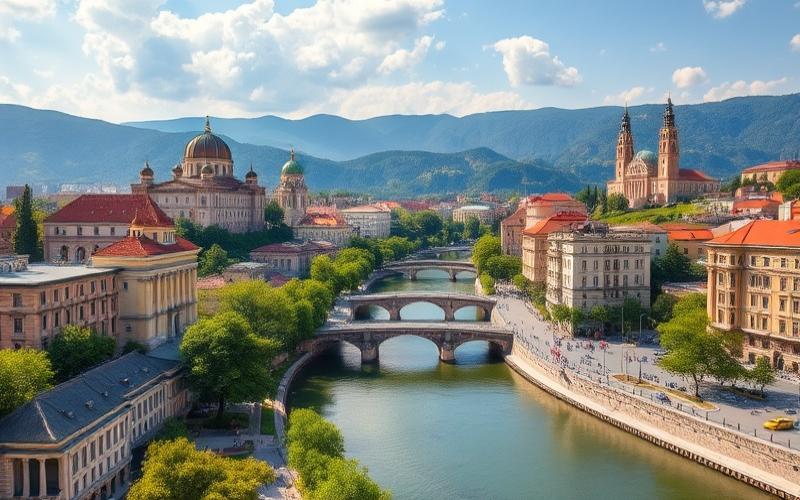
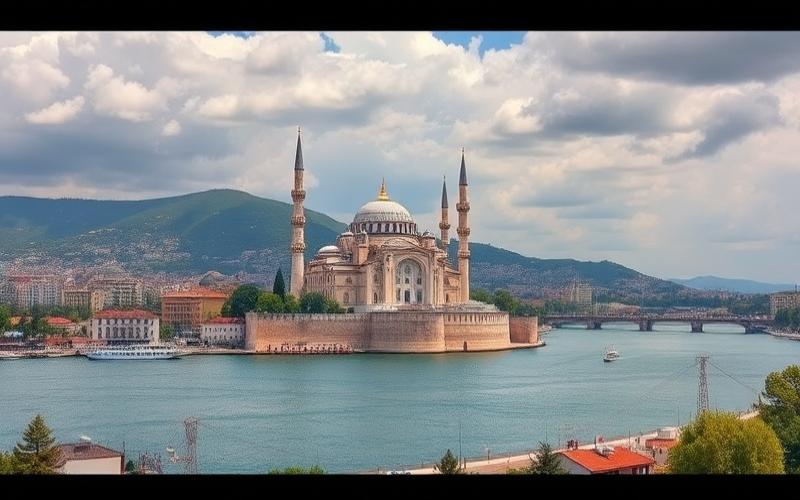
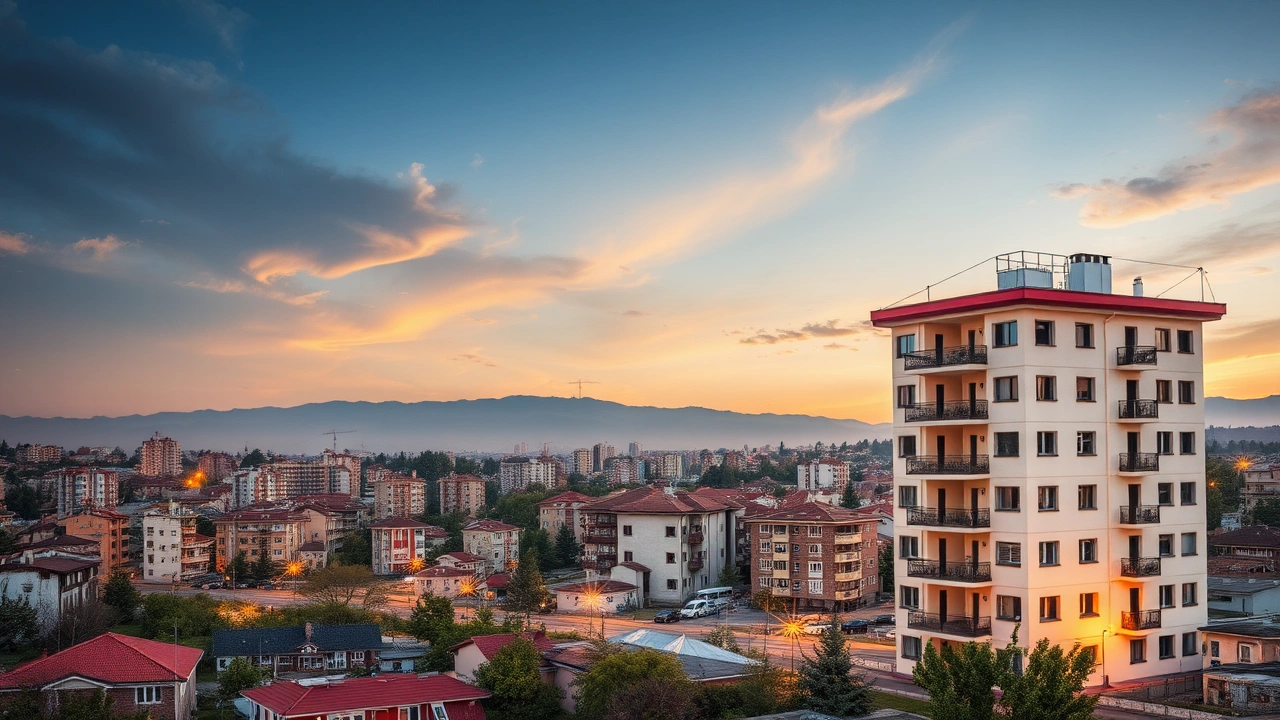
In the heart of the Thracian plain, between Sofia and the Black Sea, Plovdiv stands out as one of the most dynamic real estate markets in Eastern Europe. Bulgaria’s second city, European Capital of Culture in 2019, and the continent’s oldest continuously inhabited urban center, it combines heritage, economic growth, tourist appeal, and still-affordable prices. For an investor, this is a rare combination: purchase prices lower than in most major European cities, decent rental yields, and potential capital appreciation supported by rising demand.
This article offers a detailed overview of Plovdiv’s real estate market: price and rental levels, yields, most interesting neighborhoods, acquisition and holding costs, taxation, financing, as well as the major trends that will shape returns in the coming years.
A Fast-Growing, Yet Still Affordable Market
The first element that attracts investors to Plovdiv is price. The average apartment trades for around €1,150 per square meter, with a general range between €1,150 and €1,500/m² depending on the neighborhood and standard. In practical terms, a standard 70 m² apartment costs on average between €80,000 and €100,000. This places the city significantly below comparable major Bulgarian metropolises.
Plovdiv Compared to Other Major Bulgarian Cities
Comparing average prices per square meter, the gap is clear:
| City | Average Price per m² (approx.) | Summary Comment |
|---|---|---|
| Sofia | €1,980 to €2,250 | Capital, more mature and expensive market |
| Varna | €1,550 to €2,500 | Coastal city, strong pressure from seaside demand |
| Burgas | €1,200 to >€2,000 | Coastal, more expensive center |
| [Plovdiv] | €1,150 to ~€1,500 | 30 to 40% cheaper than Sofia |
Even taking more recent data, which estimates the current price in [Plovdiv] at around €1,500/m² in 2025, the city remains 30 to 40% cheaper than Sofia. The differential is even stronger compared to Varna or Burgas in their central sectors.
60
Price increase in Plovdiv between 2019 and 2024, representing a compound annual growth rate close to 8.9%.
In summary, the market is not stagnant: it is appreciating rapidly, while starting from a price level that is still moderate on a European scale.
Prices by Property Type: From Studio to Family Apartment
To prepare a purchase project, one must drill down to the level of property types. Available data allows for a fairly precise idea of the necessary budgets.
| Property Type | Average Price in [Plovdiv] |
|---|---|
| Studio | ~€59,065 |
| 1-Bedroom Apartment (2-room) | ~€94,900 |
| 2-Bedroom Apartment (3-room) | ~€143,000 |
| 3-Bedroom Apartment and larger | ~€215,910 |
| Standard 70 m² Apartment | €80,000 – €100,000 |
In peripheral areas or in older buildings, a 2-room apartment can still be found for around €75,000–€80,000, which remains very competitive relative to local incomes, especially since Plovdiv is ranked among Europe’s most affordable cities in terms of home ownership. On average, residents can buy nearly 1 m² per year in peripheral neighborhoods, and about 0.6 m² in more central areas, according to reports comparing real estate prices and average salaries.
A Strong Economic Fabric, Driver of Rental Demand
If Plovdiv attracts investors, it’s not only for its prices. The city is one of Bulgaria’s main economic engines. It hosts the country’s largest industrial cluster, with over 200 Bulgarian and international companies in various sectors: electronics, aerospace and automotive parts, mechatronics, agri-food, chemicals, textiles, furniture, metallurgy. These activities represent more than 75,000 jobs and nearly 37% of local value added.
Good to know:
Alongside its industrial base, the region is developing a technology and services hub: the IT and BPO sector employs more than 8,500 people with an annual productivity growth close to 9%. Furthermore, the nearby Thrace Economic Zone is one of the largest industrial zones in Southeast Europe and has attracted around €3 billion in investments.
This economic dynamism translates into favorable demographics. Plovdiv is one of the few Bulgarian cities with a growing population, with a continuous flow of students (about 34,000 enrolled in local universities, including many foreigners), young professionals, and expatriates (nearly 18,000, including digital nomads). Between 2010 and 2018, local GDP grew by about 6.5% per year. This mix of growth, job diversity, and quality of life creates a solid foundation for sustained rental demand.
Rental Yields: Around 5% Depending on Strategy
The other asset of Plovdiv, often highlighted by experts, lies in the balance between acquisition prices and rental levels. Average gross yields are generally between 4.7% and 5.5% for classic residential real estate, which compares favorably to the Bulgarian national average (4.53% in Q2 2025) and to cities like Sofia (4.71%) or Varna (4.52%).
Rental Levels
Rents obviously vary according to apartment size and location. For a long-term investment in an apartment, the orders of magnitude are as follows:
| Property Type | Average Monthly Rent in [Plovdiv] |
|---|---|
| Studio | ~€250 |
| 1-Bedroom Apartment (2-room) | ~€435 (range €350–€500) |
| 2-Bedroom Apartment (3-room) | ~€550 (range €400–€800) |
| 3-Bedroom Apartment and larger | ~€650 |
In statistics in Bulgarian leva, a central 2-room apartment shows an average rent of about 804.56 лв (i.e., €400–€600 depending on exchange rate), and around 575 лв in the periphery. For a central 4-room apartment, it’s around 1,400 лв (approx. €700), and 1,034 лв (€550–€600) outside the center.
Attention:
Standard leases, usually signed for 12 months, offer good cash flow visibility. However, it is important to note that net yields are approximately 1.5 to 2 percentage points lower than gross yields, once taxes, management fees, charges, and possible vacancy periods are deducted.
Short-Term Rental and Student Segment Strategies
Profitability can be significantly increased by betting on short-term rentals (Airbnb, tourism, professional stays) or student shared housing. Certain segments, particularly housing near universities and cultural neighborhoods, show yields that can rise to 10% gross.
Example:
In the old town of Plovdiv, an apartment purchased for about €63,000 and dedicated to tourist rental can generate an estimated annual net profit of over €5,500, which corresponds to a net yield of about 8.7%. Furthermore, for a small apartment bought for €36,800 and intended for student rental, an annual net income of about €3,300 represents a yield close to 9%.
Typical rent levels in these segments are as follows:
| Segment | Indicative Average Rent / Price |
|---|---|
| Room in student shared housing | €100–€200/month |
| Student studio | €150–€300/month |
| Studio for short-term rental | €25–€45/night |
| 2-room apartment for short-term rental | €35–€60/night |
| 3-room apartment for short-term rental | €50–€85/night |
These figures vary depending on the season (tourist peak in summer and around major cultural events), exact location, and property quality, but give an idea of the cash-flow potential for an active investor.
Neighborhood Focus: Where to Buy in Plovdiv?
One of Plovdiv’s strengths is its network of highly contrasted neighborhoods. Between historic old town, commercial center, renovated communist-era large housing estates, recent residential areas, and suburbs in full boom, investment strategies are numerous.
Center and Old Town: Prestige, Tourism, and Heritage Value
The historic center and Old Town constitute the prime segment of the residential market. Prices there generally range between €1,600 and €1,950/m², with peaks at €1,800/m² in renovated buildings and character properties. Some sources even mention transactions above €2,200–€2,800/m² for exceptional locations in 2024.
In this sector:
– Historic houses for renovation are around €400–€600/m².
– Already renovated apartments trade more between €800 and €1,200/m².
– Luxury penthouses easily reach €1,200–€1,800/m².
Supply is limited: only 200 to 300 properties change hands each year in the Old Town, which maintains price pressure. However, long-term rental yields are sometimes lower there (one can easily find studios around €85,000 rented for €230/month, i.e., 3.25% gross) but very interesting for short-term tourist rentals, where demand is strong year-round.
Kapana: Artistic Neighborhood and Airbnb Potential
Right next to the old town, the Kapana district is experiencing a real renaissance. Once a declining sector, it has become the creative heart of [Plovdiv], with numerous cafés, workshops, galleries, and cultural spaces. Prices per square meter there are among the highest in the city, around €2,500–€3,000/m² for the most sought-after properties, but the short-term profitability matches it.
Tip:
The Kapana district benefits directly from the European Capital of Culture label and the old town’s candidacy for UNESCO World Heritage status. These distinctions fuel growing tourist traffic, with an estimated +15% annual visitors. For an investor oriented toward Airbnb-style rentals, it’s one of the most promising sectors, particularly for small units.
Kamenitsa-1 and Kamenitsa-2: The Surprise of High Prices
Market data shows that the Kamenitsa-1 neighborhood rivals, or even surpasses, the center in terms of price: around €1,686–€1,702/m² for 2 and 3-room apartments, with large apartments nearing €1,660/m². The precise reasons for this high level remain difficult to explain, even for some local agents, but central proximity and quality of life clearly play a role.
Kamenitsa-2 shows slightly lower but still high prices, around €1,400/m² for family apartments, driven by proximity to a large shopping mall (Mall Plaza) and numerous social and urban projects. For an investor, these neighborhoods are to be considered for capital appreciation rather than gross rental yield.
Marasha: Small, Expensive, and Highly Sought After
The Marasha neighborhood is another “classic” among expensive sectors. Adjacent to the center, very small in size, it suffers from extremely limited supply. Prices there are close to those in the center, around €1,700/m² for 2 and 3-room apartments. Its long-standing popularity, the impossibility of developing new complexes, and proximity to main thoroughfares make it a safe bet for value preservation and resale, but not necessarily the best price/rental yield ratio.
Karshiyaka: A Balance Between Standard and Profitability
Located on the other side of the Maritsa River, Karshiyaka (or Kurshiyaka) concentrates many modern complexes and offers a good compromise between accessibility and quality. One can find studios around €57,000 rented for €268/month (gross yield about 5.64%), 2-room apartments at €99,200 for a rent of €420/month (5.08%), and 3-room apartments at €150,000 rented for €511/month (4.09%).
1500
The median construction price in the neighborhood is estimated at €1,500 per square meter.
Trakia: Large Estates, New Projects, and Good Value for Money
Trakia, long considered a development area with large parks, wide boulevards, and respectable air quality, is experiencing a real construction boom. Large complexes like Oasis, Gerbera, Olympia, or Tomov Plaza have been built, and a huge residential project (“Residential Park Plovdiv”) plans 58 buildings on over 130,000 m², with shops, offices, parking, green spaces, schools, and sports facilities.
Prices there remain attractive, around €1,440/m² on average, with typical studios at about €54,181 rented for €250/month (5.54%), 2-room apartments around €87,795 rented for €409/month (5.59%), and 3-room apartments at €131,000 for €500/month (4.58%). The abundance of new developments tends to moderate prices, offering good opportunities for an investor seeking a decent yield and a stable clientele (families, young couples, students).
Hristo Smirnenski and the West: Rapid Growth but Strong Competition
To the west, the Hristo Smirnenski neighborhood was long perceived as particularly attractive: relatively cleaner air, large green spaces around the stadium and rowing base, proximity to the city’s first large shopping mall. Today, the proliferation of high-rise buildings and the intensification of construction, particularly towards Proslav and the Otdih i Kultura park, are changing the situation somewhat.
Real Estate Prices in Hristo Smirnenski, Plovdiv
Overview of average prices and rental yields for different property types, illustrating market dynamics and investment opportunities.
2-room: ~€1,103/m² | 3-room: ~€1,161/m². Prices remain close to the city average.
Purchase price: ~€63,568 | Rent: €275/month | Yield: 5.19%.
Purchase price: ~€103,200 | Rent: €500/month | Yield: 5.81%.
Strong competition among new projects, helping to contain prices. Opportunity for investors seeking new builds at accessible prices.
Kiuchuk Parizh (Southwest) and Yuzhen (South): Lively Periphery, Solid Yields
The neighborhoods of Vastanicheski/Kiuchuk Parizh and Yuzhen, to the south and southwest, long attracted families with children due to a significant supply of schools. Today, urban densification is being felt: small streets overloaded with high-rise buildings, increasing lack of parking, urbanization towards the Pazardzhik road. Despite this, these sectors remain popular for their “city but not right in the center” feel.
The yield figures there are interesting:
| Neighborhood | Type | Average Price | Average Rent | Gross Yield |
|---|---|---|---|---|
| Vastanicheski/Kiuchuk P. | Studio | €54,735 | €215/month | 4.71% |
| Vastanicheski/Kiuchuk P. | 2-room | €90,000 | €383/month | 5.11% |
| Vastanicheski/Kiuchuk P. | 3-room | €127,120 | €435/month | 4.11% |
| Yuzhen | 2-room | €88,700 | €388/month | 5.25% |
| Yuzhen | 3-room | €122,923 | €455/month | 4.44% |
In some southern areas (Belomorski, Komatevo, Ostromila), construction is lower and there is more space, especially in recent gated communities. The drawback lies more in the lack of nearby infrastructure (shops, transport) which often requires owning a car.
Other Up-and-Coming Sectors: Ostromila, Belomorski, North and East
Ostromila, Belomorski, and some eastern sectors around the old Kamenitza factory are among the developing areas. Prices there sometimes start around €1,000/m² for recent projects, or even from €350/m² for land or older houses to renovate on the periphery. These sectors suit investors aiming for medium-term capital appreciation rather than immediate maximized rental profitability.
Finally, the north of the city, long highly sought after by families (high number of schools), is now experiencing over-densification. Narrow streets lined with tall buildings and parking problems are prompting some buyers to look towards other sectors, which can create interesting entry points for those who know how to select the exact location.
Is There a “Best” Neighborhood for Investing?
Rankings of the most attractive neighborhoods in Plovdiv follow one another, but a constant emerges from local analyses: the choice remains deeply personal. Proximity to work, lifestyle habits, presence of children, seeking animation or calm—all these elements weigh as much as price or yield indicators.
For an investor, the logic is a bit different. It’s about weighing up:
Real Estate Investment Criteria
Key elements to define to guide your rental investment project.
The purchase amount and initial financing you can mobilize.
The type of occupants targeted: students, families, expatriates, or tourists.
The primary objective: rental yield, capital gain on resale, or a mixed approach.
Your preference between new construction and older property for renovation, or between periphery and hyper-center.
In practice, several combinations emerge:
– To maximize short-term yield: Old Town, Kapana, extended center, certain stretches of Karshiyaka or areas near universities.
– For student and young professional long-term rental: central and semi-central neighborhoods (Marasha, Kamenitsa, areas near faculties), Trakia (well-served), Smirnenski.
– For middle-income families: Trakia, Hristo Smirnenski, Yuzhen, some sectors of Ostromila and Belomorski.
– For long-term heritage value appreciation: Old Town, Kapana, Marasha, Kamenitsa-1, certain locations in Karshiyaka.
Acquisition and Holding Costs: What You Actually Pay
Beyond the listed property price, the investor must factor in all additional costs: taxes, notary, agents, bank fees, and recurring charges.
Purchase Costs
Overall, costs related to acquisition represent between 5% and 10% of the property price. For a €150,000 apartment, one can thus expect an additional cost of €7,500 to €15,000.
The main items are:
Real Estate Acquisition Costs in Bulgaria
Detail of the main costs and taxes to anticipate when purchasing real estate in Bulgaria. Percentages are generally calculated on the value of the property or loan.
2% to 3.5% of the purchase price. In Plovdiv, the rate commonly reaches 3%.
Generally 0.1% to 1.5% of the value, with a cap around 6,000 BGN.
Land registry registration fees, about 0.1% of the value.
In practice 2% to 5% of the price, most often around 3%, borne by the buyer.
Highly recommended, especially for foreigners. Budget between €500 and €1,500.
0.5% to 1.5% of the loan amount in case of bank financing.
Taxation and Recurring Charges
Bulgaria stands out for a relatively simple and low taxation:
10
Flat tax rate on rental income and real estate capital gains in Bulgaria.
Condominium and maintenance charges vary by building type. In a standard building, they range between €6 and €20 per month, whereas in luxury or gated complexes, they can rise to €30–€50 monthly. To this are added water, electricity, heating, and waste bills, for a total often between €60 and €150 per month for a medium-sized apartment.
Financing: What Options for Foreign Investors?
Bulgarian residents can finance a property purchase with a down payment of 15 to 20% and typical monthly installments around €390–€430 for an average property over 25 years at a rate of about 3.2%.
For foreigners, conditions are a bit stricter:
Real Estate Financing in Bulgaria for Non-Residents
Main conditions and market players for obtaining a mortgage as a foreigner.
Generally required between 30% and 50% of the property price for a non‑resident.
From 10 to 20 years at most banks for foreigners, can go up to 25 years for creditworthy European residents.
Around 4.5% for a 20-year fixed loan, with overall ranges from 2.9% to 5.7% for the best applications.
UniCredit Bulbank, UBB (United Bulgarian Bank), and DSK Bank are among the main players lending to non‑residents.
The price‑to‑income ratio in Plovdiv (9) and the average salary level suggest that purchase remains affordable for many local households, even if the share of income dedicated to the loan can be significant (nearly 69% in some cases). For a foreign investor paid in a strong currency, these constraints weigh less, further accentuating the market’s appeal.
Status of Foreigners and Legal Framework
Bulgaria applies a regime rather favorable to property owners, with eviction procedures relatively simpler than in some Western European countries. The legal framework distinguishes based on the buyer’s status:
Good to know:
EU/EEA citizens can freely purchase any type of real estate (apartments, houses, land). Non-EU nationals can directly purchase apartments, but generally must create a Bulgarian company to acquire houses or building land; the purchase of agricultural land is highly regulated. A real estate investment of at least €512,000 can allow one to obtain a residence permit, then, under conditions, permanent residency and eventually citizenship.
The purchase process, from the preliminary contract to the notarial deed, generally lasts four to six weeks. The presence of an independent lawyer is highly advised to verify titles, ensure the absence of debts attached to the property (unpaid taxes, charges), check building permits for new developments, and secure payment conditions.
Rental: Practical Functioning of the Market in Plovdiv
For long-term rental, the process is relatively simple. The documents usually required from a tenant are an ID, proof of income, and a security deposit. Some landlords request references or an employment contract. Freshly listed ads can be found daily on major national platforms like Rentola.bg or Realistimo.
46000
The maximum monthly rent for a rental property, while the minimum is 140 лв.
– Central or semi-central neighborhoods.
– Areas around universities.
– Areas well-served by public transport.
These sectors concentrate demand from students and young professionals, who constitute the core of the rental market in [Plovdiv].
Outlook: What Can an Investor Expect Over 5 to 10 Years?
Analyses from specialized firms (Colliers, InvestRopa, national real estate associations) converge: Bulgaria, and [Plovdiv] in particular, are in a bullish phase set to continue, but with a gradual moderation of growth rates.
Forecasts indicate: the climatic, economic, and social trends to come.
Good to know:
Prices are expected to peak in 2025 before slowing to 8–10% per year in 2026‑2027. Demand remains strong for new and energy-efficient apartments, as well as properties in major cities and tourist areas. The general price increase continues, with an average annual progression of 15.1% in the first quarter of 2025.
In [Plovdiv], realistic scenarios mention a 30 to 40% appreciation over ten years for a well-chosen property, in addition to rental income. For investors considering a holding period of at least 3 to 5 years (or even 10 years), purchase is considered more profitable and stable than renting, provided leverage is well calibrated and a safety margin is kept in case of vacancy.
Opportunities and Risks: A Promising Market, but Not Without Caution
Despite solid fundamentals, the [Plovdiv] market is not without risks. The main points of caution concern:
Attention:
Several factors require particular attention: variable quality of new projects, advising to favor reputable developers; possible overheating in certain segments, despite rising incomes and low rates; urban density problems (lack of parking, reduction of green spaces, congestion); potential future stricter regulation on short-term rentals; and finally, macroeconomic uncertainties (interest rates, euro adoption, international economic conditions).
Conversely, several structural elements favor an optimistic scenario:
Good to know:
Gradual entry into the eurozone is perceived as a confidence factor. The city continuously improves its infrastructure (urban train projects, ring road, bridges over the Maritsa, transport modernization). It positions itself as the industrial, logistics, cultural, and educational hub of southern Bulgaria. A growing community of expatriates, European retirees, and digital nomads is attracted by the moderate cost of living, good connectivity, and pleasant living environment.
Conclusion: For Which Investor Profile is Plovdiv Suitable?
Investing in real estate in Plovdiv appeals to several profiles:
Investor Profiles in Plovdiv
Discover real estate investment opportunities in Plovdiv suited to different profiles and strategies.
Benefit from low entry prices, simple taxation, and interesting capital appreciation prospects over 10 years to diversify outside your country.
Find a good security/profitability balance (5 to 9% gross) with studios, 2 and 3-room apartments in student, cultural, and semi-central neighborhoods.
Combine a pied-à-terre with rental (Airbnb) in the old town, Kapana, the center, Karshiyaka, or Trakia.
Take advantage of 20 to 35% discounts in developing suburbs (Ostromila, Belomorski, East) or new projects in launch phase.
The key, as always, remains selection: neighborhood, property type, developer, purchase price, and realistic rent projection. With serious study, local legal support, and a medium/long-term vision, [Plovdiv] today combines solid economic fundamentals, sustained real estate growth, and a relatively low-cost entry point into the European Union real estate market.
In a European context where major capitals see their yields compressed, the Bulgarian city appears as a rare compromise between yield, appreciation potential, quality of life, and manageable risks. For investors ready to venture off the beaten path, Plovdiv real estate clearly deserves a place on the shortlist.
Disclaimer: The information provided on this website is for informational purposes only and does not constitute financial, legal, or professional advice. We encourage you to consult qualified experts before making any investment, real estate, or expatriation decisions. Although we strive to maintain up-to-date and accurate information, we do not guarantee the completeness, accuracy, or timeliness of the proposed content. As investment and expatriation involve risks, we disclaim any liability for potential losses or damages arising from the use of this site. Your use of this site confirms your acceptance of these terms and your understanding of the associated risks.

Cyril Jarnias is an independent expert in international wealth management with over 20 years of experience. As an expatriate himself, he is dedicated to helping individuals and business leaders build, protect, and pass on their wealth with complete peace of mind.
On his website, cyriljarnias.com, he shares his expertise on international real estate, offshore company formation, and expatriation.
Thanks to his expertise, he offers sound advice to optimize his clients' wealth management. Cyril Jarnias is also recognized for his appearances in many prestigious media outlets such as BFM Business, les Français de l’étranger, Le Figaro, Les Echos, and Mieux vivre votre argent, where he shares his knowledge and know-how in wealth management.