 Published on and written by Cyril Jarnias
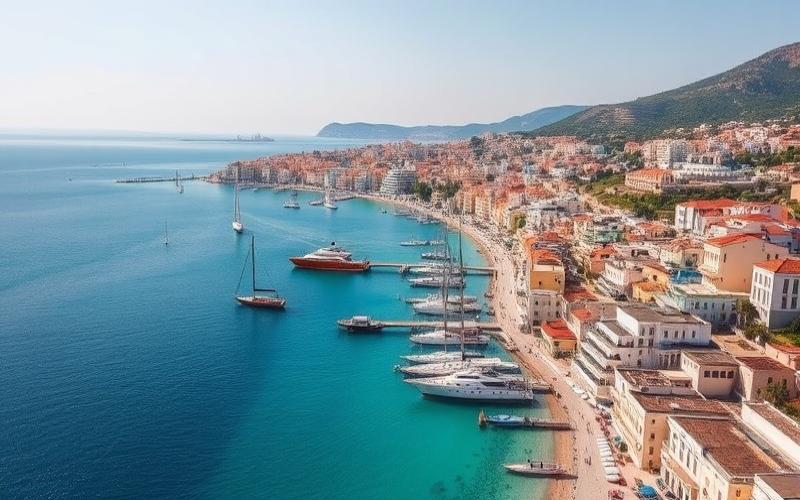
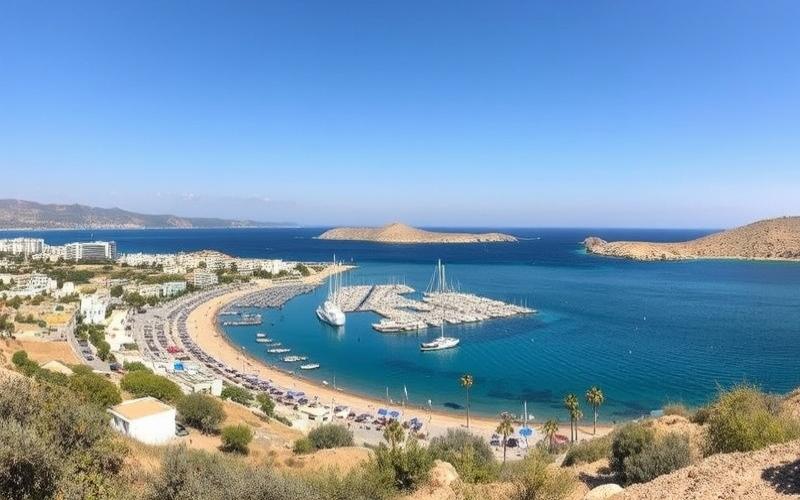
Nestled on the southeast coast of Cyprus, the city of Larnaca long remained in the shadow of Limassol and Paphos. That era is over. A port undergoing complete redevelopment, an international airport minutes from the center, major public projects, an influx of expatriates and tourists: all signals point upward. For a real estate investor, Larnaca now combines three advantages rarely found together in the Mediterranean: still reasonable entry prices, solid rental yields, and strong appreciation momentum.
Why Larnaca is Now Attracting Investors
The city was long perceived as a quiet seaside resort. But the market has changed scale. Recent data shows a rapid transformation: demand is increasing, prices are rising, but they remain lower than in other major Cypriot cities, leaving interesting room for growth.
Good to know:
Larnaca’s economy no longer relies solely on tourism. Sectors like financial services, education, healthcare, aviation, logistics, and information technology are booming. The presence of major corporations (Bank of Cyprus, Hellenic Bank, KPMG, Cyprus Airways) and international tech companies (like DataArt) stimulates housing demand. This demand comes notably from permanent residents, relocated executives, students, and digital nomads.
The Cypriot macroeconomic context reinforces this momentum: GDP growth around 3–4%, advantageous taxation, political stability, and membership in the European Union. The construction sector represents over 3 billion euros in contracts and is described as the “engine of the economy” by authorities.
For the real estate investor, this translates into a market in an expansion phase, with rather bullish price cycles, yet still far from the saturation seen in Limassol.
A Rising Market, Yet Still Accessible
Price figures confirm this impression of a “sweet spot” between accessibility and growth.
Price Levels and Recent Trends
The most recent data places the average residential price in Larnaca in a range of €2,100 to €2,400 /m², with strong variations based on location and property quality. New high-end waterfront or downtown constructions can reach up to €2,856 /m², while older or peripheral buildings start around €1,330–€1,800 /m².
4-5
This is the average annual increase in Larnaca real estate prices over the past five years, outperforming the Cypriot average.
The latest quarters confirm this trend, with an acceleration in the apartment segment.
| Indicator (Larnaca) | Latest Available Data |
|---|---|
| Average Residential Prices | €2,100–€2,400 /m² |
| New Apartments – District Average | ≈ €196,000 |
| New Houses – District Average | ≈ €340,000 (slight decrease vs. previous period) |
| Annual Apartment Growth (Q3–Q4 2024) | +8.1% (inflation-adjusted) |
| Annual House Growth (Q3–Q4 2024) | +7.4% (inflation-adjusted) |
| Quarterly Apartment Increase (Q1 2025) | +5.61% (strongest in Cyprus) |
| Quarterly House Increase (Q1 2025) | +4.78% |
| Annual Apartment Growth (Early 2025) | +11% |
| Annual House Growth (Early 2025) | +2% |
Despite these increases, Larnaca remains significantly cheaper than its Cypriot competitors. In 2024, the average price per m² reached about €6,485/m² in Limassol and €4,733/m² in Paphos, compared to a Cypriot average of €2,500–€3,200 /m². [Larnaca] thus positions itself below the average of the most expensive cities, while offering the strongest recent momentum for apartments.
Transactions and Buyer Profiles
The pace of activity is high. In 2024 alone, the Larnaca district recorded 3,270 residential transactions, including 2,410 apartment sales and 860 house sales. In 2025, the ramp-up is striking: in the first quarter, apartment sales jumped over 66% year-on-year (321 units, €60M), and house sales by over 77% (62 units, €24M).
Attention:
Nearly half of the real estate transactions in Larnaca in Q2 2025 were made by non-residents, primarily from Germany, Israel, the United Arab Emirates, and the United Kingdom. This trend mirrors that observed nationally, where foreigners were already involved in nearly half of acquisitions in 2023-2024.
The entry ticket remains relatively affordable: the majority of residential sales in the country involve properties below €250,000, reflecting [Larnaca]’s positioning as an accessible market.
Rental Yields Among the Best on the Island
For an investor, the other key question is the rental yield. Here again, [Larnaca] scores points.
National studies place the gross yield of Cypriot apartments around 5.4–5.5%, with a lower level for houses (around 3%). But in Larnaca, particularly downtown and on the coast, performances are better oriented.
Aggregated data reveals the following situation:
| Rental Segment in Larnaca | Indicative Gross Yield |
|---|---|
| Apartments (overall average) | 5.4–7.4% |
| Downtown Apartments | 6.76–7.41% |
| Villas and Houses | ≈ 5–6% |
| Offices | ≈ 5.6% |
| Standard Long-term Rental | 5–7% |
| Seasonal Rentals Near Beach (peak season) | Yield above averages |
The increase in rents confirms this strength. Indices show annual increases around 7–10% for apartments in 2023–2024, with some recent deceleration, a sign of a stabilizing market that is not running out of steam.
837
The average monthly rent for a 1-bedroom apartment downtown is 837 euros, a level consistent with the local average net salary of 1,335 euros.
For an investor targeting a long-term rental income stream, a stabilized gross yield between 5.5 and 6.5% on an apartment is considered realistic, with potential for outperformance in certain micro-sectors.
Overview of Main Neighborhoods and Opportunities
One of Larnaca‘s strengths is the diversity of its sub-markets. Waterfront, old town center, quiet residential neighborhoods, coastal or suburban villages: each area meets a different investment profile.
Downtown, Finikoudes, and Marina: The Premium Heart
The Finikoudes seafront – famous palm-lined promenade – and the Marina area (Chrysopolitissa, Harbor) concentrate the highest-end products in urban residential. This is where you find new buildings with sea views, serviced residences, and emblematic projects linked to the port and marina redevelopment.
Price data clearly shows the premium of these sectors.
| Sub-market in Larnaca District | Average Apartment Prices | Average House Prices |
|---|---|---|
| Larnaca (city, including center) | ≈ €3,120 /m² | ≈ €2,342 /m² |
| Marina / Premium Port Areas | Up to €2,856 /m² | n.a. |
| More Affordable Peripheral Areas | €1,330–€1,800 /m² | €1,700–€2,100 /m² |
Rents follow. In the port and seafront perimeter, a one-bedroom apartment of 69 m² with sea view rents for around €1,400 per month, new 2-bedroom units can reach €2,500/month, and rare well-located older 2-bedroom units on the beachfront often exceed €1,000.
In the immediate vicinity of the new Marina, several iconic developments clearly target an international, high-net-worth investor audience. Projects like NOX, EOS, GAIA, or QN Kition combine port views, luxury finishes, services, and smart home technology. A two-bedroom apartment in QN Kition (approx. 247 m²) sells for over €2M (+ VAT), for example, while units in EOS start at €560,000 and in NOX around €1.2M.
This “Marina – Finikoudes – Harbor” zone presents a rare triptych: strong depth of tourist demand, appeal to expatriates and executives, and direct impact from public investments (€1.2 billion on port and marina redevelopment, over €180M in urban infrastructure by 2027). Studies estimate that such projects can lead to a 10–15% revaluation of surrounding properties within 2–3 years of their completion.
Tip:
To optimize yield, it is crucial to choose the right property type. Ultra-premium products offer secure rental yields but potentially limited speculative capital gains. Conversely, mid-range buildings or renovations in the old town and the historic Skala neighborhood present stronger potential for value appreciation.
Mackenzie: Beach, Lifestyle, and Seasonal Yield
On the southern edge of the center, Mackenzie Beach has established itself as Larnaca’s trendy beach neighborhood. Fine sandy beach, design cafes, restaurants, bars, water sports, immediate proximity to the airport: the area attracts young professionals, nomads, vacationers, and international retirees.
Prices here are high but still slightly lower than the heart of Finikoudes. Data indicates a range of €2,000 to €2,300 /m² for apartments, with examples of 63 m² 1-bedroom units around €215,000 and new 2-bedroom units between €250,000 and €315,000 (+ VAT). A 105 m² 2-bedroom apartment in a high-end residence with sea view trades around €365,000 (+ VAT).
On the rental side, demand is almost continuous thanks to the combination of tourism + expatriates, with a peak during the high beach season. A small 1-bedroom easily rents for around €900/month long-term, while short-term rentals can achieve high daily rates in summer (approx. €80/night for a 1-bedroom, €120/night for a 3-bedroom in peak season).
For an investor focused on yield and dynamic management (Airbnb, Booking, specialized platforms), Mackenzie offers an excellent playground, provided the fairly strict regulatory framework on short-term rentals is respected.
Livadia, Drosia, Faneromeni: Safe Residential Values
A few minutes north and west of the center, neighborhoods like Livadia, Drosia, or Faneromeni stand out as stable residential markets, highly sought after by families and expatriates looking for peace, green spaces, and prices slightly lower than the seafront.
Example:
The Livadia area, seaside near the Marina, is experiencing strong residential expansion. Apartment prices there typically range between €2,100 and €2,400 /m², with new projects starting at €2,300 /m². Villas are even more expensive. Renting a 90 m² ground-floor 2-bedroom apartment costs about €750/month, a rate that remains competitive for a young expatriate couple.
Drosia, closer to the center and schools, attracts professionals and families who prioritize quality of life. The average price there is around €2,200 /m², and developments like Casa Jaguar or Ria Court offer 2-bedroom units over 100 m² in the range of €180,000–€250,000. In Faneromeni, often considered one of the most “chic” areas of [Larnaca], prices are even higher, but proximity to Finikoudes (five minutes’ walk) and the neighborhood’s tranquility make it a prime long-term location.
For a long-term rental investor targeting families or executives, these neighborhoods combine good liquidity, limited vacancy, and indirect exposure to the overall market rise.
Oroklini, Pyla, Kiti, Pervolia: Coastal Villages and Attractive Periphery
Around Larnaca, several villages and municipalities complete the picture:
Real Estate Market Overview in Southern Larnaca
Discover the characteristics and price ranges of the main residential areas south of Larnaca, from international village life to the most exclusive waterfront segments.
Appeals with its mountain views, proximity to the sea, and international village vibe. Apartments around €2,400 /m², villas up to €3,750 /m². Ideal for second homes, vacation rentals, or retirement.
Close to UCLan Cyprus university and the Dhekelia tourist area, attracts academic and professional clientele. Example: Modern 87 m² 3-bedroom at ~€195,000, 4-bedroom villa with pool for rent ~€2,200/month.
Quiet, well-connected residential areas near the airport, gaining popularity. In Kiti, high-tech houses ~€300,000. In Meneou, 3–4 bedroom waterfront villas ~€600,000.
Exclusive waterfront segment: first-line villas, gated compounds, village atmosphere. Prices from ~€330,000 to nearly €2.7M. Rents reflecting the positioning, e.g., 3-bedroom beachfront villa ~€5,500/month.
These areas are particularly suited for seasonal rental strategies, second homes, or long-term investment. They benefit from proximity to less crowded beaches, while remaining a few minutes’ drive from Larnaca’s services.
Aradippou, Kamares, Tersefanou, Xylofagou: Budget, Yield, and Development
For investors seeking a lower entry ticket or enhanced yields, several inland areas offer opportunities:
– Aradippou, on the northern outskirts of Larnaca, is a well-connected municipality to major road axes, with reputable schools and new subdivisions. Average apartment prices hover around €2,460 /m², with examples of 84 m² 1-bedroom units at €120,000 (+ VAT). It’s a relevant choice for long-term rentals to families and employees.
– Kamares, Drosia, and other more inland areas combine open views, modern architecture, and quick access to shops. In Kamares, a 90 m² 2-bedroom rents for about €1,200/month, driven by the presence of the city’s unique cinema and a new shopping center.
– Tersefanou and Xylofagou are among the most affordable locations in the district, with apartments around €1,580–€1,900 /m² and houses around €1,690–€1,702 /m². For an investor, these villages represent “small entry points” into the market, with revaluation potential if infrastructure improves.
In these sectors, demand is driven mainly by permanent residents and workers, favoring long-term leases and a more predictable income stream than in ultra-touristic zones.
Legal and Tax Framework: An Environment Favorable to Foreigners
One of Cyprus’s – and therefore Larnaca‘s – major advantages is the clarity of the legal framework for foreign buyers.
Purchase Rights for EU and Non-EU Citizens
Citizens of the European Union enjoy the same rights as Cypriots: no restrictions on type, size, or number of properties, and no special permission required. They can acquire as many residential or commercial properties as they wish.
Non-Europeans (referred to as “third-country nationals”) can also purchase, but under certain conditions. Generally, they are limited to one residential property (house or apartment) on land not exceeding approximately 4,014 m², although in practice authorities can approve, on a case-by-case basis, the acquisition of two homes, or one home accompanied by a small commercial or office space. Purchasing purely commercial property is possible but sometimes requires specific structures (local company) and special permits.
Good to know:
For a non-EU buyer, acquiring property requires approval from the Council of Ministers, obtained via the district officer. This step is usually a formality, with a typical timeframe of 1 to 3 months. Refusal is rare if fund origin is transparent and the file is in order. A draft bill in progress aims to reduce this timeframe to a maximum of two weeks to facilitate foreign investment.
Residency via Investment: The Cypriot “Golden Visa”
Cyprus offers a permanent residency by investment scheme (often called “golden visa”), very attractive for non-EU investors wishing to establish a foothold in the European Union.
The most used route is based on the purchase of one or more new real estate properties for a minimum amount of €300,000 (excluding VAT), with an effective payment of at least €200,000 originating from abroad. The investor must also demonstrate a secure annual income of €30,000 (increased by €5,000 per spouse and dependent child, and €8,000 per dependent parent or parent-in-law). Income can come from salaries, pensions, rents, dividends, etc.
The permit is permanent, covers spouse, minor children, dependent adult children up to 25 years, and parents, and allows entry and residence in Cyprus without time limit, provided the country is visited at least once every two years. After seven years of actual residence within a ten-year period, naturalization by residence is theoretically possible.
100000
Minimum real estate investment amount to access the “F” category residency for more modest budgets.
Taxation on Purchase, Holding, and Sale
The total acquisition cost generally exceeds the listed price by 10 to 12%, a fairly standard proportion for a European country.
On a new property, VAT is in principle 19%. However, a reduced rate of 5% applies for first-time buyers using the property as their primary residence, within surface and value limits (e.g., 130 m² covered area, capped price, etc.). Beyond thresholds, the excess portion is taxed at 19%. If the property is later resold or rented within ten years, a portion of the VAT benefit may need to be reimbursed, except for exceptions (divorce, job relocation, etc.).
On a resale property (no VAT), the buyer pays transfer fees to the land registry (3–8% depending on value brackets), with a 50% reduction if VAT was previously paid on the property. Notary and land registry deposit fees remain moderate, while lawyer fees typically range between 1 and 2% of the value, or a flat rate of €2,000–€5,000.
Good to know:
Since 2017, the old national property tax (IPT) has been abolished. Therefore, there is no longer a recurring national tax on property value. Only modest municipal taxes remain (garbage, street lighting, road maintenance, sewerage), calculated on 1980 valuation bases, which generally amount to a few hundred euros per year.
Upon resale, capital gains are taxed at 20%, but significant allowances apply. Each seller benefits from a lifetime allowance of approximately €17,000, increased to over €85,000 if the sold property was their primary residence for at least five consecutive years. Expenses like transfer fees or documented renovation costs can also reduce the taxable base. Furthermore, there is no inheritance tax or gift tax in a direct line for real estate in Cyprus.
For rental income, the regime is progressive income tax, with a non-taxable first bracket up to €19,500, then progressive rates. A special defense contribution (3% on 75% of gross rents) may be added for “domiciled” residents, but not for non-domiciled ones.
Purchase Process: A Clear Procedure, Suited for Non-Residents
The typical progression of a purchase in Larnaca follows relatively simple and transparent steps, but it is highly recommended to use an independent lawyer.
The buyer starts by selecting a property via a local agency or specialized portals. Once the property is chosen, a reservation deposit is paid (often €5,000–€10,000 or 10% of the price) to take the property off the market. The lawyer then conducts due diligence: verifying the title deed, absence of debts or mortgages on the property, compliance of building permits, verifying the issuance or future issuance of “separate title deeds” for apartments.
Good to know:
After signing the preliminary sale agreement, which details all conditions, non-European buyers must submit an application for approval to the Council of Ministers. This file, including the agreement, proof of payment, bank statements, and a clean criminal record, is typically processed in a few months, sometimes less.
The signing of the final contract and its registration at the Department of Lands and Surveys legally secures the buyer, even before formal delivery of the final title. Payments are made in euros only, by bank transfer, sometimes with staged payments for off-plan properties, based on construction progress.
The entire procedure can be handled remotely via a power of attorney given to the lawyer, including virtual tours, contract signing, land registry filing, and tax payment.
Regulation of Rentals, Particularly Seasonal
For investors targeting short-term rentals (Airbnb, Booking, etc.), [Larnaca] operates within a now highly regulated national framework.
Attention:
Since 2020, Cypriot law mandates obtaining an online license for any non-hotel tourist accommodation rented short-term. The owner must provide a building permit, insurance certificate (fire, natural disasters, liability), an energy performance certificate, and proof of compliance with safety standards (fire extinguishers, first aid kit).
The license costs just over €200 and is valid for three years, renewable. It must be displayed on all listings, and platforms (Airbnb, Booking, VRBO…) are required to collect and transmit transaction data to Cypriot tax authorities. Owners operating without a license face fines that can reach several thousand euros, or even prison sentences for repeat offenses.
1200
Number of accommodations registered for short-term rental in Larnaca, out of over 8000 in the entire Republic.
For an investor, it is therefore crucial, from acquisition, to verify that the building and homeowners’ association allow seasonal rental use, ensure the property meets required standards, and integrate into the business plan the costs (management fees, cleaning, maintenance, platform commissions) and applicable taxation.
Infrastructure and Major Projects: The Fuel for Appreciation
While price and yield figures are already attractive, it is especially the major projects underway that give Larnaca’s trajectory its particularity.
The emblematic project is that of Larnaca port and marina: a total investment of €1.2 billion, led by a private consortium under state supervision. The goal is to transform aging infrastructure into a modern maritime and leisure hub, with improved terminals, new marina quays, pedestrian promenades, cafes, public spaces, shops, and residences. Even if the project has faced hurdles, authorities remain committed and work on the seafront is progressing.
100
Public investments planned for the development of the Dhekelia coastal corridor will exceed this amount in millions of euros.
Simultaneously, the city is modernizing its road network, parks (like Salina Park), cultural spaces, and educational and health infrastructure. Finikoudes is being outfitted with new bike lanes, widened sidewalks, redesigned lighting, while a Cyprus University of Technology marine sciences campus is under construction at Mackenzie, eventually hosting up to 2,000 students. The new general hospital, the presence of the large Metropolis mall, international schools (American Academy, Pascal English School), and museum and cultural center projects further strengthen residential appeal.
8000000
Larnaca Airport welcomed approximately 8 million passengers in 2023, a figure up over 20% in certain periods.
Impact studies on real estate value tend to show that this type of major infrastructure project generates average capital gains of 10 to 15% on properties located in directly served areas, within a few years of completion. For the investor, positioning early in these perimeters can therefore be particularly remunerative, provided solid, well-located, and technically reliable projects are selected.
Cost of Living, Quality of Life, and Rental Demand
Beyond the numbers, [Larnaca] owes much of its real estate success to its living environment. Mediterranean climate with mild winters and sunny summers, lively yet human-scale seafront, historic old town, cultural events, cafes open year-round: the city cultivates a more relaxed vibe than Limassol, while offering modern infrastructure.
5800
Average annual fees charged by international schools, a key element of the cost of living for families.
This “quality of life / reasonable cost” equation attracts more and more expatriates, retirees, digital nomads, and families seeking sun in a stable EU country. Some villages like Oroklini already host residents from over 30 different nationalities, and the expatriate social scene is described as active and welcoming. This structural demand base, more stable than tourist flows, largely secures annual rental demand.
Financing: Credit Possibilities for Non-Residents
Cypriot banks willingly finance real estate, including for foreigners, but with more stringent criteria than for residents. Mortgage interest rates range between 3.5–6%, with possible financing up to 65–80% of the property value for a foreigner (more for a well-established European resident).
Tip:
Loan applications are assessed based on several key elements: stable income (preferably in euros), bank statements covering a 6 to 12 month period, a satisfactory credit history in the country of origin, and provision of a Cypriot tax identification number. For investors benefiting from the residency by investment program, access to credit is often more restricted: banks typically require a higher personal contribution and may favor cash purchases for this client segment.
Even though bank leverage can improve return on equity, the total cost (interest, application fees, insurance, valuation) must be kept in mind. However, the current context of gradually decreasing rates in Europe could offer windows of opportunity to lock in attractive financing conditions.
Risks, Limitations, and Best Practices
No market is free from risks, and [Larnaca] is no exception. Several points of vigilance deserve mention.
Local authorities and professionals first mention the risk of overheating in certain very specific segments (ultra-premium waterfront, luxury residences, overly ambitious off-plan projects), especially in a context of 15–18% construction cost increases since 2022. Quality new supply in these segments is still limited, but a multiplication of poorly calibrated projects could, in the long run, weigh on values if foreign demand were to slow down.
Tip:
Partial dependence on tourism exposes the rental market to exogenous shocks (geopolitical crises, pandemics, etc.), which can cause demand for seasonal rentals to fluctuate. It is therefore advisable to combine, when possible, a mixed clientele (touristic and residential) and not base your financial model solely on high-season revenue assumptions.
The regulation of short-term rentals, increasingly strict, can represent a challenge for some owners who may not have anticipated licenses, compliance upgrades, or tax obligations. Again, the solution is to inform oneself beforehand, work with a lawyer and/or local manager, and integrate these constraints into the business plan.
Tip:
The most frequent mistakes in the Cypriot market include: buying a property without a separate title deed, excessive trust in developers’ verbal promises, failure to verify debts or planning irregularities related to the property, and underestimation of ancillary costs (VAT, transfer fees, management fees, renovation…). To mitigate these risks, systematic use of an independent lawyer, not linked to the developer, is considered a near-requirement.
Finally, an important legal point: it is strongly advised not to invest in real estate located in the occupied northern part of the island, which does not fall under the jurisdiction of the Republic of Cyprus. Property titles there are frequently contested, the local currency (Turkish Lira) is volatile, and several European court decisions have already ordered the demolition of constructions on land belonging to Greek Cypriots.
Conclusion: Larnaca, A Window of Opportunity Still Open
Bringing together all the elements – entry price, value momentum, rental yield, infrastructure projects, legal and tax framework, quality of life – [Larnaca] today appears as one of the most promising real estate markets in Cyprus.
Good to know:
Compared to Limassol (saturated and expensive) and Paphos (seasonal tourism), this city offers a unique balance between growth and accessibility. Its appeal is driven by the redevelopment of the port and marina, the enhancement of the Dhekelia seafront, the airport expansion, and the development of peripheral neighborhoods, creating a favorable context for medium-to-long-term investors.
Forecasts anticipate a continuation of residential price increases on the order of 3–7% per year until 2026, with pockets of outperformance around the Marina, Livadia, Drosia, or certain coastal villages. Rental yields should remain in a range of 5–7% for apartments, with possible additional gains for those mastering seasonal rentals in sectors like Mackenzie or Pervolia.
Attention:
Rising prices, the arrival of new investors, and increasing construction costs will gradually reduce the advantageous price gap that currently makes Larnaca an attractive opportunity with a balanced risk/return profile in the Cypriot market.
For a Francophone investor, the key will be to combine a good understanding of micro-locations, the support of a reputable local lawyer and agent, and a clear vision of the strategy (long-term rental income, seasonal, capital gains, personal residence, or mixed). Within this framework, Larnaca offers, more than just a Mediterranean postcard, a genuine investment platform at a European scale.
Disclaimer: The information provided on this website is for informational purposes only and does not constitute financial, legal, or professional advice. We encourage you to consult qualified experts before making any investment, real estate, or expatriation decisions. Although we strive to maintain up-to-date and accurate information, we do not guarantee the completeness, accuracy, or timeliness of the proposed content. As investment and expatriation involve risks, we disclaim any liability for potential losses or damages arising from the use of this site. Your use of this site confirms your acceptance of these terms and your understanding of the associated risks.

Cyril Jarnias is an independent expert in international wealth management with over 20 years of experience. As an expatriate himself, he is dedicated to helping individuals and business leaders build, protect, and pass on their wealth with complete peace of mind.
On his website, cyriljarnias.com, he shares his expertise on international real estate, offshore company formation, and expatriation.
Thanks to his expertise, he offers sound advice to optimize his clients' wealth management. Cyril Jarnias is also recognized for his appearances in many prestigious media outlets such as BFM Business, les Français de l’étranger, Le Figaro, Les Echos, and Mieux vivre votre argent, where he shares his knowledge and know-how in wealth management.