 Published on and written by Cyril Jarnias
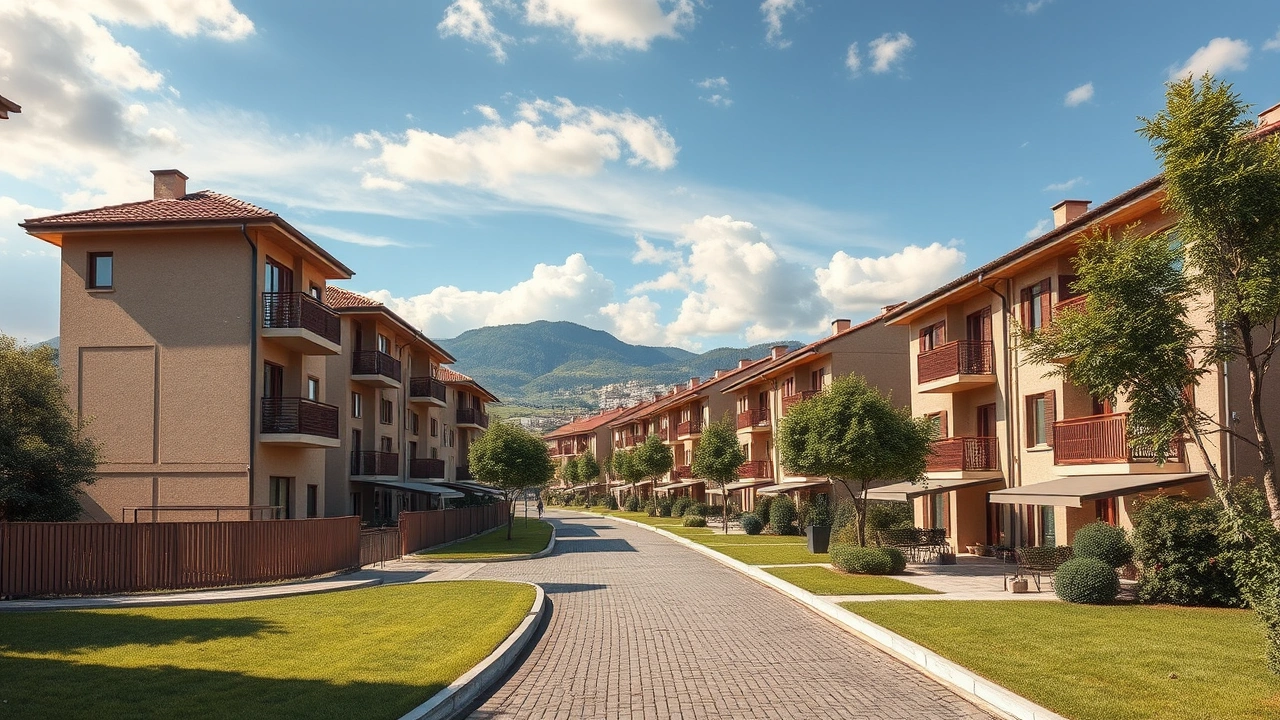
Located on the southwestern edge of the Nicosia metropolitan area, Lakatamia is attracting an increasing number of buyers and investors looking for a quiet, modern, and well-connected residential alternative to the Cypriot capital. While not yet a media “star” of the market, the city ticks a large number of boxes sought by investors: a significant population, solid municipal infrastructure, recent high-energy-performance real estate projects, and, above all, a legal and banking framework favorable to property investment in Cyprus.
This article provides a detailed analysis of the Lakatamia real estate market, integrating local specifics with Cypriot national regulations concerning the purchase, financing, and management of properties. It aims to give investors, both residents and foreigners, the concrete information needed to assess the relevance of an investment in this area, select the appropriate property type, and organize financing optimally.
Lakatamia, a Major Residential Suburb of Nicosia
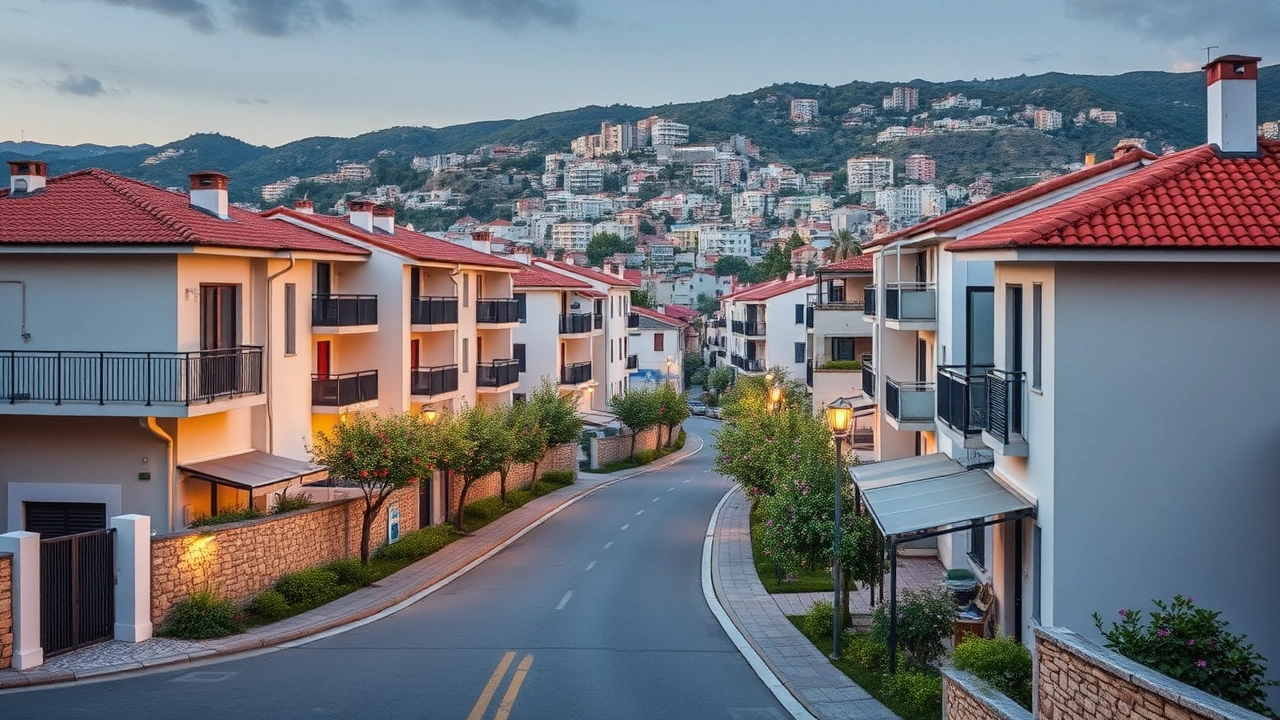
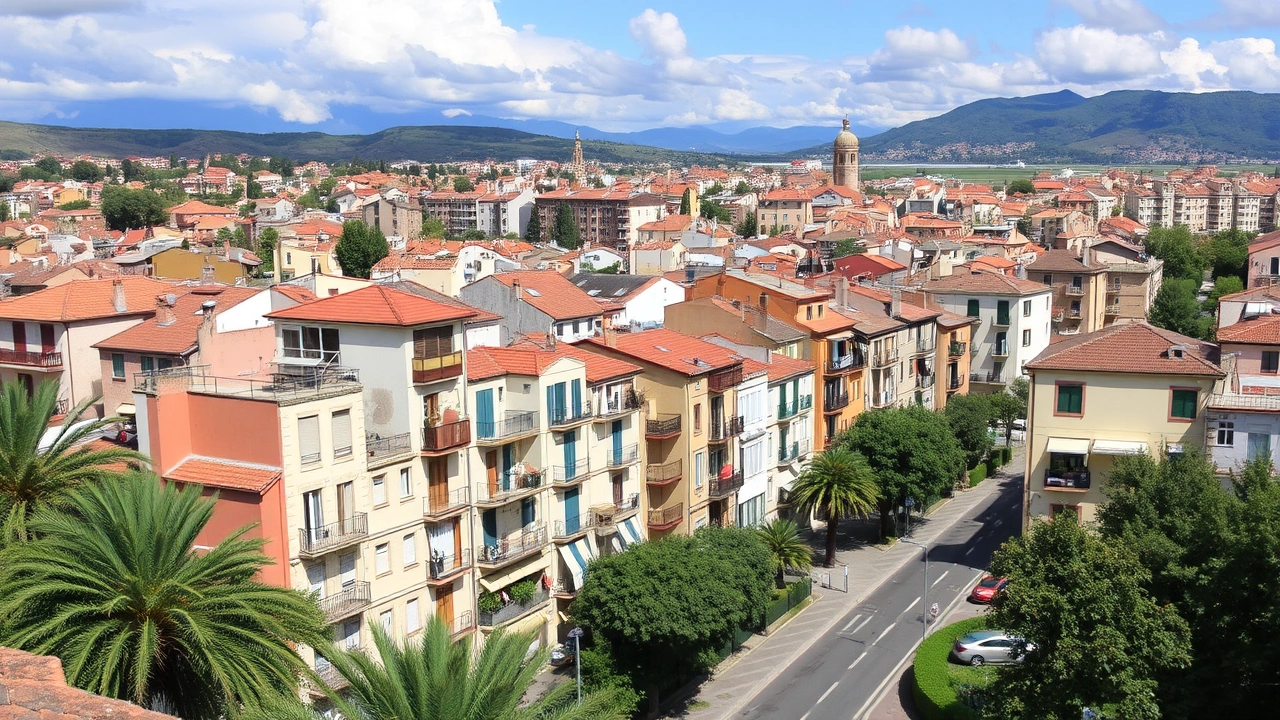
Lakatamia is not just an outlying neighborhood. The municipality is one of the seven towns that make up “Greater Nicosia” and ranks as the third municipality in the Nicosia district, and the fifth in all of Cyprus. With about 39,000 to 40,000 inhabitants spread over 29 km², it offers moderate density, typical of a residential suburb rather than a saturated urban center.
Percentage of the population that voted in favor of transforming the community into a municipality in a referendum.
In practice, Lakatamia is located just over 7 km from central Nicosia. It is therefore close enough to be integrated into the daily flows of work and leisure, while maintaining a quieter, more residential profile. This duality – proximity to employment in the capital and quality of life on the periphery – is a key factor for rental demand and long-term appreciation.
An Urban Setting and Municipal Infrastructure Conducive to Property Value
The value of a real estate investment depends not only on the property itself but also on the infrastructure surrounding it. On this point, Lakatamia has several structural advantages.
The municipality has developed a fairly dense network of public facilities for a suburb: a 2,000-seat municipal amphitheater inaugurated in the 1990s, a municipal gallery, a complete sports center with a stadium and pool – including a pool meeting Olympic standards – as well as a health center offering primary care. For families, the presence of these sports and cultural facilities carries as much weight as the size of a living room or the number of bedrooms in an apartment.
The Lakatamia Municipality has its own water authority, the Lakatamia Water Board, independent from other municipalities. This institutional autonomy allows for direct management and planning of basic services (water, sanitation, waste), which stabilizes the quality of life and strengthens residential demand, a positive factor for investors.
A major element adds to the picture: a large private hospital and medical campus has been announced for Lakatamia. This project, described as a state-of-the-art healthcare infrastructure, plans for specialized services (cardiology, neurology, orthopedics, pediatrics), modern equipment, enhanced emergency services, green spaces, and an eco-friendly approach (energy-efficient technologies, sustainability initiatives). In real estate terms, such a public-private investment is a classic catalyst for increasing values in the surrounding area: it generates jobs, attracts healthcare professionals, increases rental demand for good quality housing, and strengthens the municipality’s status as an urban hub.
Local authorities publish information on infrastructure projects ‘under study’ or ‘under construction’, as well as the town plan. For an investor, consulting these documents is an essential reflex. Indeed, in any market, price and rental growth is strongly correlated with the dynamics of public facilities, such as roads, schools, transportation, and health centers.
Demographic Profile, Lifestyle, and Residential Appeal
With nearly 40,000 residents and a population composed of Cypriots and people from other countries, Lakatamia presents a cosmopolitan suburban profile. The past coexistence of Greek and Turkish communities in Lower Lakatamia testifies to a historically mixed social fabric.
It is a recent and growing city, offering a tranquil atmosphere. It combines sports and cultural facilities, a substantial offering of restaurants and bars, and annual events rooted in rich local tradition. Although tourists are present, it is primarily a primary residence market, not a purely tourist destination like some Cypriot coastal areas.
This residential focus is reflected in the real estate offering: many recent projects are small-scale buildings or single-family home developments with high energy performance. Investors targeting a clientele of families, young professionals, or professionals working in Nicosia find a solid and relatively predictable demand base here.
Key Real Estate Segments in Lakatamia
The local market is currently structured around three main segments: new highly efficient apartments, well-located small condominiums, and modern single-family homes in secure or “gated” projects.
New Apartments in Small Buildings
Several recent developments illustrate the trend towards constructing small-scale buildings, often with 6 to 7 units, with a strong focus on energy performance (Class A), technical equipment (photovoltaics, basic home automation), and comfort (generous balconies, storage spaces, covered parking).
One surveyed project includes a building with 7 apartments served over two levels, all rated with energy efficiency A, each unit benefiting from a covered parking space and private storage. This compact format tends to attract investors looking for products that are easy to rent and manage, ideally located near main roads and services.
A building of 7 units, ideally located near a Metro supermarket, schools, and essential services. The apartments combine modern comfort and high-performance equipment.
Spacious balconies, contemporary finishes with high-end ceramics and sanitary ware, technogranite countertops, and custom carpentry.
Thermally insulated aluminum double-glazed windows, air conditioning in all rooms, electric radiators, and solar panels.
Water pressure systems and water heaters. The two-bedroom units include preparation for a 2 kWh photovoltaic system.
Security and practicality are not forgotten, with glass balcony railings, motion detectors in common areas, video intercom with card and code access, fire-rated entrance doors, accessibility for people with reduced mobility, and the ability to control the exterior door from a smartphone. The apartments on the top floors are completely independent, which can increase their appeal (less noise, better light).
The table below summarizes some of the data for this type of project:
| Main Characteristics | Typical Values Observed |
|---|---|
| Number of Apartments | 6 to 7 |
| Typologies | 1 to 2 bedrooms |
| Covered Area | 51 to 85 m² (examples B425) |
| Veranda Area | 9 to 45 m² |
| Energy Class | A |
| Indicative Prices (excl. VAT) | €120,000 to €215,000 |
| Parking | 1 covered space / unit |
| Storage | Yes, systematic |
| Photovoltaics (2 bedrooms) | Pre-installation or included |
These price levels – for new, high-efficiency products in a developing suburb close to Nicosia – position Lakatamia as a more affordable alternative than some highly sought-after areas like Limassol, while offering interesting potential returns if rents follow the upward trend of the Cypriot market.
B425 Apartment Complex: Focus on Returns
Another complex in Lakatamia, referenced as B425, illustrates well the standard product sought by long-term investors. The project aligns 6 apartments: two one-bedroom units, four two-bedroom units, all with covered terrace, parking space, storage, and, for the two-bedroom units, a photovoltaic system. The penthouses additionally have a private roof terrace.
The announced delivery time for these new homes, from the start of construction, is 24 months.
Eco-Friendly Single-Family Homes in a Secure Development
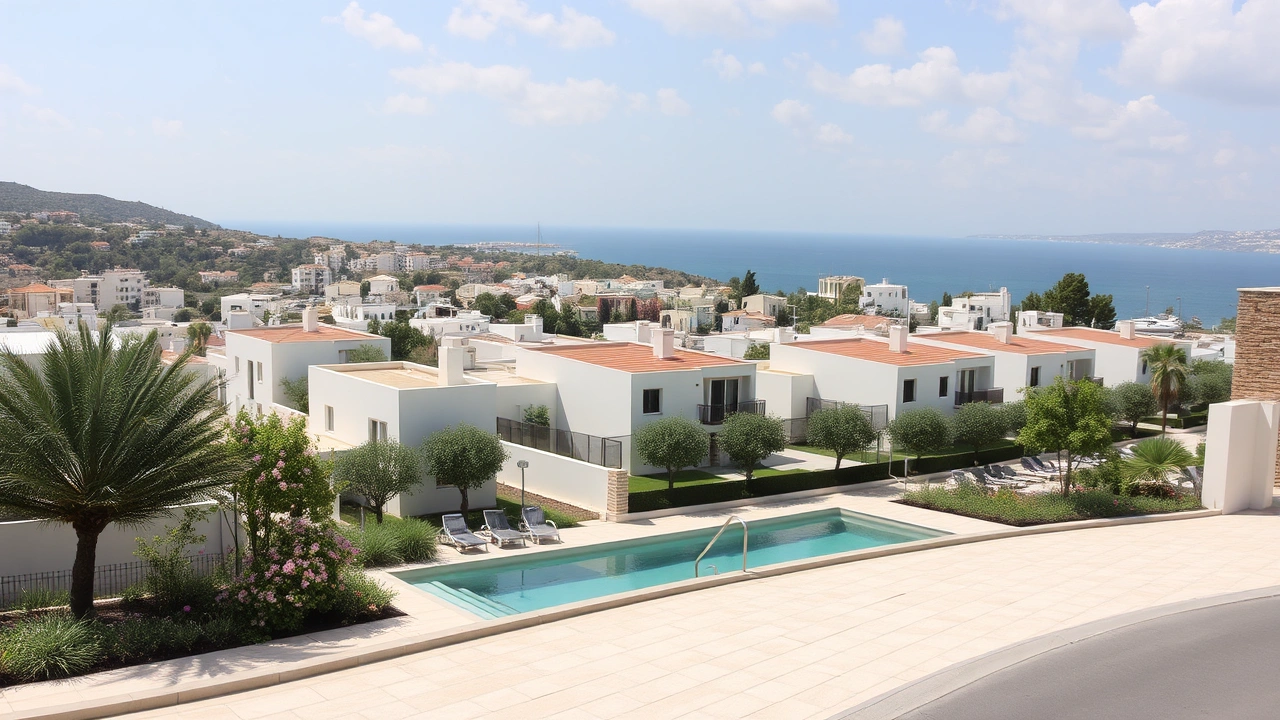
Another key segment in Lakatamia: contemporary houses in secure complexes. An eco-friendly project groups 25 single-family homes, with modern design, within a closed complex. Each house has about 152 m² of covered area on two levels, on a plot of about 244 m². The typical configuration includes 3 bedrooms, 3 bathrooms, an outdoor barbecue area, and a technical or storage room.
The asking price for this certified Class A energy performance, integrating photovoltaic panels and solar water heaters, is approximately €310,000 excl. VAT.
The following table summarizes this type of product:
| Element | Indicative Value |
|---|---|
| Property Type | Single-family home in a complex |
| Number of Units | 25 |
| Interior Area | ≈ 152 m² |
| Plot Area | ≈ 244 m² |
| Bedrooms / Bathrooms | 3 / 3 |
| Price (excl. VAT) | ≈ €310,000 |
| Energy Class | A |
| Technologies | Photovoltaic, solar, pressure |
| Status | Under construction (delivery Q4 2026) |
For an investor, these houses can target a clientele of middle to upper-income families, looking for a secure setting, outdoor spaces, and an energy-efficient home. They may also interest buyers for a primary residence project financeable with a mortgage loan, while keeping in mind a potential for resale or future rental.
Rental Market: Rental Levels and Concrete Examples
On the rental side, you can find large family homes in Lakatamia. A concrete example: a 245 m² house, comprising 4 bedrooms, 1 main bathroom, 2 en-suite bathrooms, and a guest toilet, is offered for rent at €1,800 per month. This type of property illustrates the demand for spacious houses suitable for families with children, possibly expatriates working in Nicosia.
Based on this example, an investor can start estimating a gross return order of magnitude: if a property of comparable value trades between €350,000 and €400,000 on the market, a rent of €1,800/month corresponds to €21,600 per year, i.e., a theoretical gross yield of around 5.4% to 6.2%. This calculation then needs to be refined by integrating expenses, taxation, possible vacancy periods, and management fees.
Financing Your Investment in Lakatamia: The Cypriot Mortgage Framework
As Lakatamia is in the Nicosia district, the entire Cypriot legal, banking, and tax environment applies. The Cypriot mortgage market is organized around the Immovable Property (Transfer and Mortgage) Law No. 9/65, which sets the basic principles for real estate guarantees. Mortgages must be registered with the Department of Lands and Surveys.
Access to Credit for Foreigners
Non-residents can, in theory, obtain mortgage financing in Cyprus, but conditions differ depending on whether the investor is an EU/EEA citizen or a third-country national.
For EU/EEA citizens, it is possible to take out a loan without having permanent residency, provided they are registered as a resident (in practice, proof of registration and stable income, preferably in euros).
For non-European nationals and, since Brexit, British nationals, purchasing a property requires a residence permit and authorization from the Council of Ministers. This application can take from a few weeks to several months, but occupancy of the property is often possible before the decision is obtained. For a bank loan, permanent resident status is generally required.
Classic criteria include: being of legal age, having an age at the end of the loan not exceeding 65 to 70 years, having sufficient income so that no more than about 30-35% of monthly income is devoted to repayment, having a correct credit history (minimum score of about 650), and not being over-indebted otherwise.
Personal Down Payment and Loan-to-Value Ratios
Personal down payment requirements vary according to the borrower’s profile and the nature of the property:
Minimum percentage of personal down payment often required for a non-resident wishing to acquire a property in Cyprus.
Banks base their decision on their own valuation report, not exclusively on the listed purchase price. For properties for resale without a clear title deed, conditions often tighten (down payment of 40‑50%).
Amounts, Terms, and Interest Rates
Cypriot mortgages typically cover amounts from €75,000 to €500,000, over terms of 10 to 35‑40 years. The average observed term is about 22 years.
The dominant products are euro loans with variable rates, indexed to a base rate (e.g., European Central Bank or Central Bank of Cyprus) to which the bank adds its margin. Overall, the rates (base rate + margin) are often between 4.6% and 5.5% per annum, with specific bank offers ranging, for example, from 3.45% (Ancoria Bank, variable) to over 5% (Bank of Cyprus, variable rates from 4.95% to 5.50%).
Additional premium in percentage points that may be applied to non-residents compared to residents on a mortgage loan.
One element to consider: Cypriot rates are significantly above the eurozone average, which increases the overall cost of borrowing but can be offset by above-average rental yields if the investment is well targeted.
Additional Costs and Insurance
In addition to the property price and down payment, the investor must budget for several fees related to financing and the transaction:
– Bank arrangement/processing fees, often around 1% of the loan amount.
– Property valuation fees (approx. €200 to €500).
– Stamp duty on the purchase contract: 0.15% on the first €170,000 and 0.20% above that, capped at €20,000.
– Land Registry fees for mortgage registration.
– Possible early repayment fees.
– Life insurance and home insurance (fire), generally mandatory.
In the context of a project in Lakatamia, these elements are added to the 19% VAT on new properties, with the possibility of a reduced rate of 5% for a primary residence within certain surface area limits (up to 200 m²) and value.
Understanding and Calculating Returns in Lakatamia
To objectively compare an investment in Lakatamia to other options (central Nicosia, coastal areas, abroad), the investor must rely on a structured analysis of returns, distinguishing between gross yield and net yield.
Gross Yield: First Filter
The gross yield is obtained by dividing the annual rent by the property value (or its purchase price), then multiplying the result by 100:
Gross Yield (%) = (Annual Rent / Property Value) × 100
Referring back to the example of the house rented for €1,800 per month (€21,600 per year), if the property value is estimated at €380,000, the gross yield would be:
> 21,600 ÷ 380,000 ≈ 5.68%
This percentage serves as a basis for comparison, but does not account for expenses or rental vacancy.
Net Yield: The Relevant Measure for Decision-Making
To refine, the occupancy rate and annual expenses (maintenance, homeowners association fees, taxes, insurance, management, minor repairs) must be integrated. A commonly used formula is:
Rental Net Yield Calculation× 100″]
Imagine a new apartment in Lakatamia purchased for €200,000, rented for €900 per month, with 95% annual occupancy and €3,000 in annual expenses (excluding loan):
– Theoretical annual rent: 900 × 12 = €10,800
– Rent effectively collected (at 95% occupancy): 10,800 × 0.95 = €10,260
– Net income before loan: 10,260 – 3,000 = €7,260
– Net yield: 7,260 ÷ 200,000 × 100 ≈ 3.63%
This type of calculation allows for comparing different typologies (apartments vs. houses), different neighborhoods or cities, and deciding if the risk premium of a given market is properly compensated.
Tracking Performance Indicators
Good investors track several key indicators over time:
Essential metrics for effectively analyzing and managing a rental real estate portfolio.
Measures the percentage of rented units over a given period, opposite of vacancy rate. Indicator of demand health.
Allows comparison of the property’s profitability and pricing positioning relative to the local market.
Average annual maintenance and repair expenses per unit. Crucial for budgeting and valuation.
Cash flow remaining after deducting all expenses and loan repayment. Indicator of net profitability.
Ratio between Net Operating Income (NOI) and the property’s market value. Measures gross yield.
Professional platforms exist to track these metrics at the portfolio level, but even an individual investor can build a simple dashboard. The ability to maintain a high occupancy rate is particularly critical in a residential market like Lakatamia: a rate close to 95% is often the target in stable markets.
The following table illustrates some property management indicators to track, regardless of location:
| Indicator | Simplified Formula | Indicative Target |
|---|---|---|
| Occupancy Rate | Rented Units / Total Units | ≥ 93‑95% |
| Vacancy Rate | 100% – Occupancy Rate | ≤ 5‑7% |
| Gross Yield | Annual Rent / Property Value | To be compared to market |
| Net Yield | (Net Rent – Expenses) / Property Value | Target 3‑5% (depending on risk) |
| Cap Rate | NOI / Property Value | 4‑7% on residential |
| Tenant Turnover Cost | Re-leasing Cost / number of tenant changes | To be minimized |
The Role of Health Infrastructure in Lakatamia’s Appreciation
The announcement of the new private hospital and its medical campus in Lakatamia is a determining factor for the city’s future appeal. Beyond improving access to care, this type of project has structural effects on real estate:
1. Creation of skilled jobs: doctors, nurses, technicians, administrative staff. A significant portion of these professionals will seek to live nearby, generating stable demand for modern apartments and family homes.
2. Strengthening of local services: establishment of pharmacies, paramedical practices, shops, and complementary services in the vicinity, which increases neighborhood vitality and residential desirability.
An eco-friendly hospital, equipped with state-of-the-art facilities and integrating green spaces, strengthens the perception of the city as a quality living place, modern and well-serviced.
4. Specific rental potential: in the long run, furnished medium-term rentals may target healthcare professionals on assignment, medical students, or patients undergoing treatment coming from other regions.
For an investor, identifying the influence perimeter of this medical campus (access routes, reasonable walking or driving distance, potential future public transport) will be strategic for pinpointing areas of Lakatamia with higher potential for capital appreciation.
Purchase Procedure and Best Practices in Lakatamia
Even if the targeted property is in a specific town like Lakatamia, the process remains that of a property purchase in Cyprus. A few key steps emerge.
First, define your investment objective: primary residence, secondary residence with occasional rental, pure rental investment (long-term), or a more speculative buy-to-sell strategy after a few years. The expected return, risk tolerance, and holding period influence the choice of neighborhood, property type, finishing level, and financing structure.
For an accurate evaluation, it is essential to consult reports from platforms like Properstar to obtain price and rental data for Lakatamia. The analysis must differentiate between typologies (apartments vs. houses, new vs. old) and take into account projects underway as well as announcements of major infrastructure, like the new hospital.
Using a well-established local real estate agent – RE/MAX Cyprus, M.Residence or other players present in Nicosia and Lakatamia – greatly facilitates understanding micro-markets: more sought-after streets, transforming sectors, actual rental levels achieved, typical tenant profiles.
Inspecting properties, whether new or old, is a crucial step. For a new building, check the quality of construction, finishes, common areas, parking, access, and security devices. For an older property, pay particular attention to any necessary work (structure, plumbing, electricity) and the regularity of the title deeds.
On the legal front, it is highly recommended to involve an independent lawyer accustomed to transactions for foreigners in Cyprus. They will check the titles, any encumbrances, planning compliance and assist you with the purchase authorization procedures from the Council of Ministers if necessary.
Finally, financing must be structured realistically: calculate what the loan burden represents (principal + interest) relative to income, estimate a prudent profitability scenario (with assumptions for rental vacancy and maintenance), and choose between fixed or variable rates based on your interest rate risk tolerance.
Why Lakatamia May Interest an Investor Today
By cross-referencing context elements and the specific characteristics of Lakatamia, several arguments support this city as an investment target:
– Critical size and proximity to the capital: Lakatamia is neither an isolated village nor an anecdotal neighborhood, but a major municipality in Greater Nicosia, a few kilometers from the center, well integrated into the urban area and the economic flows of the capital.
– Municipal infrastructure already in place: amphitheater, sports center with Olympic pool, health center, structures for seniors, and a local administration mastering key competencies (roads, sanitation, environmental protection, water).
– Upcoming structural projects: the announced private medical campus reinforces the prospect of growing residential demand, particularly for modern housing nearby.
Many new programs, like Class A apartments or houses equipped with photovoltaic panels and solar water heaters, are designed to meet tenant and owner expectations for comfort and control of energy costs.
– Still competitive prices for the region: examples of new apartment prices (around €120,000 to €215,000 for small units, or about €310,000 for new 152 m² houses) position Lakatamia as an accessible market compared to the most expensive areas of Cyprus, while offering interesting return potential.
– Primarily residential and long-term rental market: unlike seaside resorts highly dependent on seasonal tourism, Lakatamia relies on primary residence and annual rental demand linked to Nicosia’s dynamics. This limits seasonal fluctuations and makes it easier to anticipate rental cash flows.
– Structured mortgage framework: despite higher interest rates than the eurozone average, the Cypriot mortgage market is well regulated, with the possibility for foreigners to finance their purchase, subject to certain residency, down payment, and solvency conditions.
However, a successful investment in Lakatamia is not just about buying “anything, anywhere.” It requires a rigorous approach: selection of promising locations (proximity to main roads, the hospital, schools, shops), choice of well-managed and well-constructed programs, precise calculation of net yield, and anticipation of regulatory and tax changes at the national level.
In summary, Lakatamia is in that pivotal phase where a major suburb, endowed with solid infrastructure and a major health project, is beginning to attract the attention of more savvy investors, without yet having reached the price levels of already saturated markets. For those looking to position themselves in a primarily residential Cypriot market, with a holding horizon of several years, the city clearly merits in-depth analysis and on-site visits.
Disclaimer: The information provided on this website is for informational purposes only and does not constitute financial, legal, or professional advice. We encourage you to consult qualified experts before making any investment, real estate, or expatriation decisions. Although we strive to maintain up-to-date and accurate information, we do not guarantee the completeness, accuracy, or timeliness of the proposed content. As investment and expatriation involve risks, we disclaim any liability for potential losses or damages arising from the use of this site. Your use of this site confirms your acceptance of these terms and your understanding of the associated risks.

Cyril Jarnias is an independent expert in international wealth management with over 20 years of experience. As an expatriate himself, he is dedicated to helping individuals and business leaders build, protect, and pass on their wealth with complete peace of mind.
On his website, cyriljarnias.com, he shares his expertise on international real estate, offshore company formation, and expatriation.
Thanks to his expertise, he offers sound advice to optimize his clients' wealth management. Cyril Jarnias is also recognized for his appearances in many prestigious media outlets such as BFM Business, les Français de l’étranger, Le Figaro, Les Echos, and Mieux vivre votre argent, where he shares his knowledge and know-how in wealth management.