 Published on and written by Cyril Jarnias
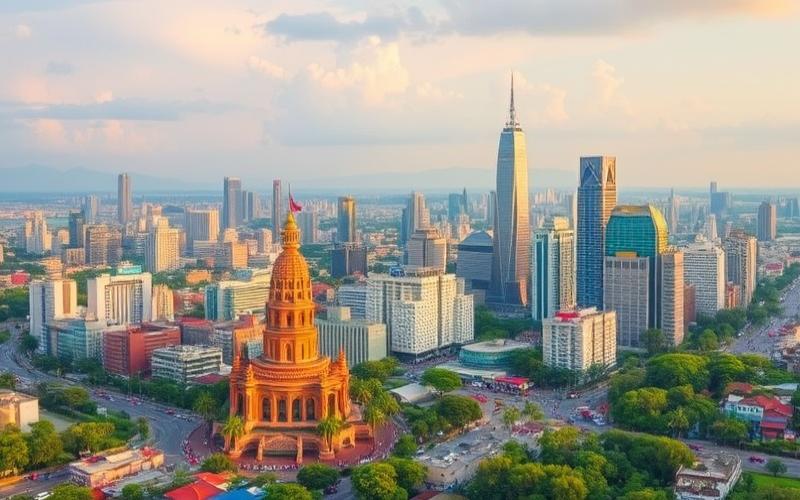
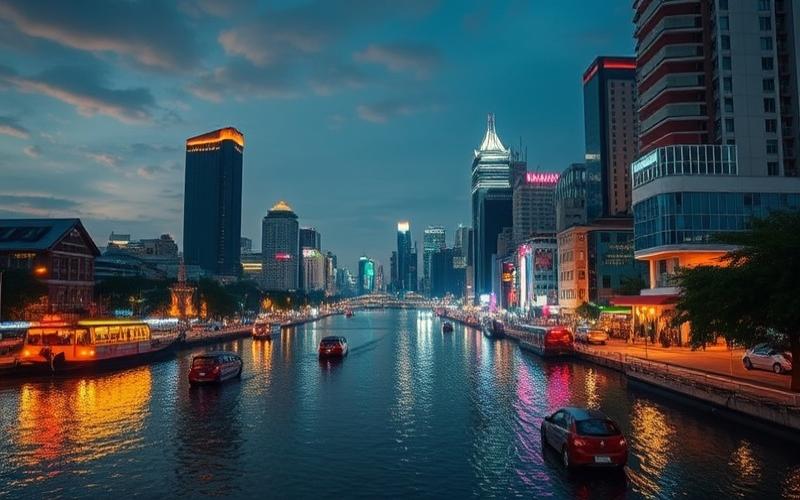
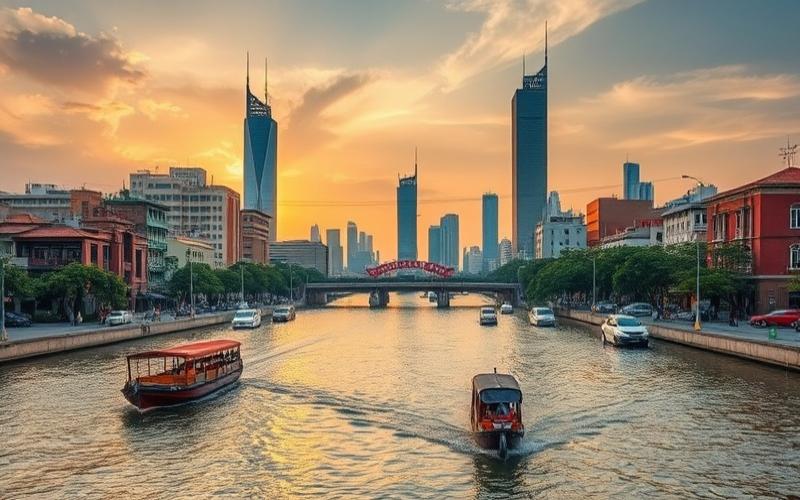
Vietnam, a nation undergoing rapid transformation, is preparing to welcome a new era of dynamic urban development with a series of ambitious projects shaping its modern face. From the vibrant metropolis of Ho Chi Minh City, poised to see bold skyscrapers rise, to Hanoi, where efforts are made to preserve the balance between modernity and tradition, infrastructure initiatives are intensifying, reflecting the country’s rapid economic growth.
These fascinating projects, spanning areas from sustainable urban planning to the renovation of historic neighborhoods, showcase a forward-looking vision set to transform the daily lives of Vietnamese citizens and attract global attention to this dynamic Southeast Asian region.
Vietnam’s Major Construction Projects of Tomorrow
Vietnam’s major construction projects of tomorrow are profoundly transforming the country’s urban and economic landscape. Several large-scale projects are underway or planned, with priority given to transportation infrastructure, development of new economic zones, and integration of sustainable practices.
Key Infrastructure and Urbanization Projects
- Highway Network Development
The Eastern North-South Expressway project aims to connect the country’s main economic hubs. By 2025, 3,000 km of expressways are expected to be completed, with a target of 5,000 km by 2030. This will reduce travel times, further integrate regions, and support economic growth. - Major Airport Projects
Terminal T3 at Tan Son Nhat International Airport (Ho Chi Minh City) and the new Long Thanh International Airport represent strategic investments to increase passenger capacity and support urban and tourism development. - Railway and Logistics Network Expansion
New railway lines, such as the Lao Cai-Hanoi-Hai Phong route, will strengthen connections with China and facilitate goods transit to Europe. - Deployment of Sustainable Urban Transport
The metro systems in Hanoi and Ho Chi Minh City are expanding, with new lines planned to improve urban mobility, reduce traffic congestion, and limit pollution.
| Project | Main Objective | Target Date | Expected Impact |
|---|---|---|---|
| North-South Expressway | National Connectivity | 2025-2030 | Accelerated Trade |
| Hanoi & HCMC Metros | Sustainable Urban Mobility | 2025-2030 | Reduced Traffic Jams, Pollution |
| Long Thanh Airport | Regional Air Hub | 2025-2030 | Increased International Traffic |
| New Economic Zone | Industrial/Urban Development | 2025-2030 | Attract Investments, Jobs |
Housing and Urban Planning Projects Facing Densification
- Construction of new residential neighborhoods integrating modern infrastructure to meet urban population growth.
- Promotion of social housing and programs for the middle class, particularly in major cities.
Ecological Initiatives and Sustainable Practices
- Integration of green building standards in new constructions (insulation, sustainable materials, energy efficiency).
- Development of smart neighborhoods, optimized waste management, and promotion of green spaces.
International Partnerships and Foreign Investments
- Foreign direct investments (FDI) play a crucial role in financing infrastructure projects, particularly in transportation, energy, and real estate sectors.
- Several projects are implemented in partnership with Japanese, South Korean, European, or Chinese companies.
- Recent reforms in public investment laws and public-private partnerships (PPP) aim to attract more capital and simplify procedures.
Major Obstacles and Challenges
- Administrative complexity and bureaucratic delays, although reforms are underway to streamline procedures.
- Funding issues, particularly given the scale of required investments.
- Environmental constraints, necessity to balance growth and sustainability.
- Adaptation to climate change, especially in coastal areas threatened by rising sea levels.
Vietnam’s major infrastructure projects, driven by massive investments and international openness, are shaping a new urban era focused on sustainable mobility, inclusive growth, and environmental resilience.
Good to Know:
Vietnam’s major construction projects of tomorrow include ambitious urban development initiatives such as metro network expansions in Hanoi and Ho Chi Minh City, designed to boost sustainable transport and reduce congestion. The country also envisions developing new economic zones to attract investment and energize the local economy. To address the pressure from a growing urban population, affordable housing projects are underway, incorporating green building practices to promote sustainable development. International partnerships, particularly with foreign investors, are fundamental for funding and accelerating these projects, although challenges such as complex administrative procedures and the need for political consensus may slow progress.
A Transformation of Vietnam’s Real Estate Market
Recent legislative reforms are profoundly transforming Vietnam’s real estate market. The amended land law effective January 2025 aims to enhance transparency, fairness, and sustainability in land management. Notable changes include:
- Flexible land rental payments
- Extension of land use rights for overseas Vietnamese
- Market-based land price determination
- Strengthened regulations on land reclamation
This reform creates a more attractive legal environment for foreign investors while improving the sector’s balance and sustainable development.
Starting July 2025, a major administrative reform will introduce a two-tier local administration model and merge some provincial units. This will:
- Reduce administrative complexity
- Improve approval process efficiency
- Remove certain regulatory barriers that previously hindered real estate projects
These developments are seen as crucial for attracting more foreign investment, thanks to better predictability and reduced legal inconsistencies.
Current Real Estate Investment Trends
The market is experiencing increased diversification with:
- Growing interest in high-end residential properties (apartments, villas)
- Massive development of modern offices in major cities (Hanoi, Ho Chi Minh City)
- Rapid growth in commercial and logistics investments (shopping centers, industrial parks)
Demand is driven by:
- Rapid urbanization
- Emergence of a middle class aspiring to homeownership
- Increased establishment of multinational companies seeking modern offices and warehouses
| Sector | Current Dynamics |
|---|---|
| Residential | Strong growth: new premium developments |
| Commercial | High demand for Grade A offices |
| Industrial | Growing logistics/warehousing |
| Hospitality | Post-pandemic recovery |
Economic Impact on the Real Estate Market
Rapid economic growth (+6-7% annually for several years) leads to:
- Significant increase in urban purchasing power
- Growing need for modern housing and commercial infrastructure
- Enhanced dynamism around major economic hubs
This translates into sustained launches of new integrated urban projects including residential housing, green spaces, commerce, and services.
Major Recent or Planned Real Estate Projects
Some emblematic examples:
| Project | Location | Nature | International Partners |
|---|---|---|---|
| Vinhomes Grand Park | Ho Chi Minh City | Smart City | Vingroup + Japanese/Singaporean investors |
| Ecopark | Hanoi | Residential Eco-district | South Korean partners |
| Empire City | District 2 – HCMC | Mixed-use Tower | Keppel Land (Singapore) |
Singaporean, Japanese, and South Korean funds are now present in almost all major Vietnamese urban projects.
Persistent Sector Challenges
Summary of main challenges:
- Persistent regulatory complexity despite reforms
- Sometimes limited access to financing for local developers facing strict banking requirements
- Environmental issues: pressure on natural resources, increasing urban pollution
- Urgent need for stricter green standards and ecological certifications
⚠️ Outlook remains favorable but conditional on real regulatory stability and widespread adoption of sustainable construction practices addressing major environmental challenges facing the country
Good to Know:
Vietnam’s real estate market is undergoing a major transformation thanks to recent legislative reforms that facilitate foreign access and simplify purchasing processes, thereby stimulating international investor interest. The country’s rapid economic growth, fueled by increasing urbanization, creates heightened demand for residential and commercial properties, with ambitious projects like Vinhomes Grand Park and Thu Thiem New Urban Area leading the way. However, challenges remain, including strict regulations, difficulty accessing financing, and growing environmental sustainability concerns. Current trends show a preference for mixed-use complexes integrating green spaces and sustainable solutions, reflecting a commitment toward more environmentally friendly urban developments, even as the country strives to improve infrastructure to support this rapid expansion.
Investing in the Future: A Winning Bet in Vietnam
Vietnam is undergoing a major urban transformation, driven by ambitious infrastructure projects, government policies attractive to foreign investors, and a strong commitment to integrating sustainability and connectivity into its cities.
Key Urban Development and Infrastructure Projects
- Creation of 1,000 urban areas by 2025 and up to 1,200 by 2030.
- Target of five international-level cities by 2045 serving as regional and global connectivity hubs.
- Development of new urban centers in Hanoi and Ho Chi Minh City, as well as strategic regions like the Mekong Delta.
- Modernization of transport infrastructure:
- Expansion of metro networks in Hanoi and Ho Chi Minh City.
- Construction of highway and railway links connecting major urban centers.
- Deployment of logistics corridors to support industrial growth and exports.
| Project | Location | Main Objective | Target Date |
|---|---|---|---|
| Hanoi Metro | Hanoi | Urban Mobility, Congestion Reduction | 2025-2030 |
| Ho Chi Minh City Metro | Ho Chi Minh City | Urban Mobility, Economic Attractiveness | 2025-2030 |
| Dong Anh Smart City | Hanoi Periphery | Smart City, Ecology | 2030 |
| Mekong Delta Development | Southern Vietnam | Logistics Hub, Climate Adaptation | 2030 |
Government Incentives and Attractiveness for Foreign Investors
- Tax exemptions for several years for investors in special economic zones.
- Simplified administrative procedures for business registration.
- Priority access to industrial land and advanced infrastructure.
- Active promotion of digitalization and green economy through subsidies and public-private partnerships.
Initiatives for Sustainable and Connected Cities
Objective: sustainable urbanization harmonizing economic growth and environmental protection.
- Deployment of fiber optic networks and high-speed Internet coverage for over 80% of urban households by 2025.
- Energy renovation programs for older buildings, development of ecological neighborhoods and low-carbon transport solutions.
- Promotion of soft mobility (cycling, pedestrianization, electric transport).
Economic Opportunities for Investors
- Urban areas are expected to represent 75% of national GDP by 2025 and 85% by 2030.
- Growing demand for residential real estate, offices, shopping centers, urban logistics.
- Rapid expansion in technology sectors, financial services, renewable energy, and urban healthcare.
Potential Challenges to Anticipate
- Increased competition for land and skilled labor in major cities.
- Risks of saturation of existing infrastructure if urban growth is not managed.
- Need to comply with increasingly strict environmental standards.
- Adaptation to transparency and governance requirements for international investors.
Technological and Ecological Ambitions
- Massive development of smart cities integrating IoT, smart energy management, big data, and connected urban services.
- Integration of circular economy and carbon neutrality in new urban areas.
- Support for innovation through incubators, technology hubs, and industrial clusters.
Recent Data Illustrating Urban Growth and Investment Trends
- Urbanization rate: 45% in 2025, over 50% in 2030, and 70% targeted by 2050.
- Average area per capita: 28 m² in 2025, 32 m² in 2030.
- Urban growth in the Mekong Delta: +4.7% annually between 2016 and 2020, urbanization at 47.8% of regional population.
- Foreign direct investments (FDI): strong growth in real estate, infrastructure, and technology, driven by incentive policies and macroeconomic stability.
Key Takeaways:
Vietnam, through the scale of its urban projects, incentive policies, and technological and environmental commitment, is establishing itself as a preferred destination for long-term investments in a rapidly changing Southeast Asia.
Key Success Drivers for Investors:
- Seize opportunities in real estate, technology, and green infrastructure.
- Anticipate challenges related to rapid growth and regulatory requirements.
- Engage in partnership and innovation to contribute to the rise of tomorrow’s Vietnamese cities.
Good to Know:
Vietnam is positioning itself as fertile ground for investors thanks to its ambitious urban development projects, including new transport infrastructure such as the Hanoi Metro and bus rapid transit line extensions in Ho Chi Minh City. The government offers attractive tax incentives to lure foreign investors, while pursuing initiatives for more connected and sustainable cities, like the Hoiana eco-city project. Despite challenges like bureaucracy and economic policy fluctuations, economic opportunities abound, stimulated by sustained GDP growth, around 7% in 2022, and the country’s growing technological ambitions. Vietnam is firmly committed to ecological development, with ambitious goals to reduce carbon emissions, thereby strengthening its appeal for ESG-conscious investors.
Disclaimer: The information provided on this website is for informational purposes only and does not constitute financial, legal, or professional advice. We encourage you to consult qualified experts before making any investment, real estate, or expatriation decisions. Although we strive to maintain up-to-date and accurate information, we do not guarantee the completeness, accuracy, or timeliness of the proposed content. As investment and expatriation involve risks, we disclaim any liability for potential losses or damages arising from the use of this site. Your use of this site confirms your acceptance of these terms and your understanding of the associated risks.

Cyril Jarnias is an independent expert in international wealth management with over 20 years of experience. As an expatriate himself, he is dedicated to helping individuals and business leaders build, protect, and pass on their wealth with complete peace of mind.
On his website, cyriljarnias.com, he shares his expertise on international real estate, offshore company formation, and expatriation.
Thanks to his expertise, he offers sound advice to optimize his clients' wealth management. Cyril Jarnias is also recognized for his appearances in many prestigious media outlets such as BFM Business, les Français de l’étranger, Le Figaro, Les Echos, and Mieux vivre votre argent, where he shares his knowledge and know-how in wealth management.