 Published on and written by Cyril Jarnias
Seychelles: An Idyllic Setting and Investment Opportunities
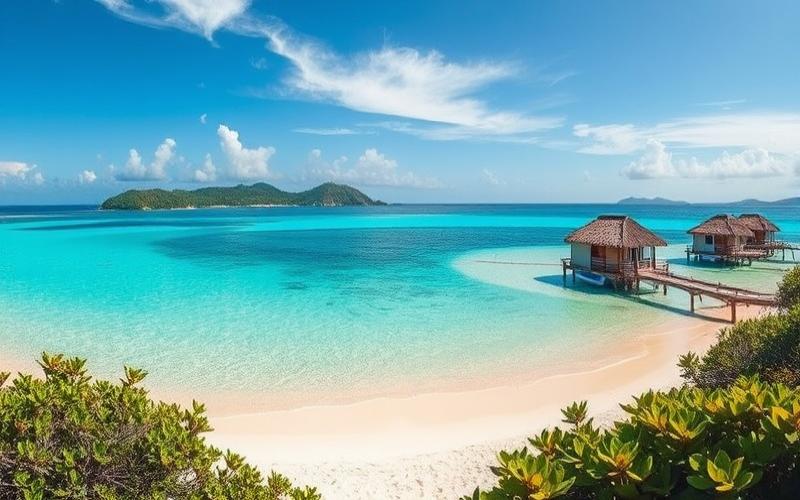
Renowned for their paradise beaches and idyllic setting, the Seychelles are experiencing an evolving economic landscape with the rise of investment opportunities related to student housing.
Beyond the postcard image, this island territory is developing an educational sector attractive to international students, sparking growing interest in suitable accommodations.
Investing in Student Housing: A Financial Opportunity
In this context, investing in student housing in the Seychelles could represent a compelling and potentially profitable financial opportunity.
Seychelles Real Estate Market Analysis
This article aims to explore the strengths and challenges of this type of investment by analyzing:
- The growing demand
- Return prospects
- Specifics of the Seychelles real estate market
To determine whether this emerging sector constitutes a winning bet for savvy investors.
Good to Know:
The student housing market in the Seychelles benefits from growing demand due to the appeal of local educational institutions for international students.
Strengths of Student Real Estate in the Seychelles
The rise of higher education in the Seychelles is part of the country’s modernization and international openness dynamic, leading to a significant increase in both local and international enrollments. This evolution directly stimulates demand for suitable, quality student housing.
Key Points on Higher Education Growth and Student Housing Demand:
- The number of local students pursuing higher education continues to increase, supported by an accessible educational system that values skills specific to the island context, particularly in environment or sustainable tourism.
- Simplified admission procedures at the University of Seychelles attract more international students each year seeking both solid academic training and a unique life experience.
- The equal gender distribution at the secondary level (over 50% female students) reflects the demographic dynamism likely to feed the local university pool.
Comparative Table: Geographic, Climatic, and Cultural Advantages
| Advantage | Description |
|---|---|
| Cultural Diversity | Unique blend from African, Asian & European influences |
| Paradise Landscapes | World-renowned beaches, preserved nature |
| Tropical Climate | Pleasant temperatures year-round |
| Multilingualism | French/English/Creole facilitating academic integration |
The country’s political stability and sustained economic performance enhance its attractiveness to investors. These factors guarantee a secure environment for real estate investments aimed at housing a growing student population.
Potential Profitability Comparison: Student Real Estate vs Other Assets
| Criterion | Student Real Estate (Seychelles) | Conventional Residential Real Estate (Indian Ocean Region) |
|---|---|---|
| Rental Yield | High due to strong stable demand | Moderate |
| Expected Capital Gain | Bullish potential with expanding university market | Stable or moderate depending on tourist areas |
The structural attractiveness combined with a rapidly growing educational market clearly positions investments in Seychelles student housing among the most profitable in the regional real estate sector.
Good to Know:
With the rise of higher education in the Seychelles, demand for quality student housing is rapidly increasing, driven by the influx of both local and international enrollments. The Seychelles has seen a significant 15% increase in student enrollments in recent years, attracting young people from around the world thanks to their cultural diversity and dream landscapes. Furthermore, the country’s economic and political stability makes it a safe destination for investors, with student housing rental yields often more attractive than other regional real estate assets. Investors can expect attractive capital gains, particularly due to limited supply facing growing demand.
Why Invest in University Residences?
The continuous growth of the higher education sector in the Seychelles translates into increased demand for student housing, driven by the development of universities such as the University of Seychelles (UniSey) and the diversification of programs offered, particularly in tourism, marine sciences, and finance. The multicultural academic environment attracts not only Seychellois but also a growing international population, thereby reinforcing the need for suitable infrastructure to accommodate this new generation of students.
The economic benefits for investors in university residences are numerous:
- Stable financial returns thanks to regular rental payments from a student clientele renewed each year.
- High occupancy rates due to the relative lack of dedicated housing and the continuous increase in enrollments in higher education institutions.
- Portfolio diversification with a real estate product less sensitive to classic economic cycles.
Recent statistical data or studies confirm this potential:
| Indicator | Value/Comment |
|---|---|
| Annual Enrollment Growth | Consistently rising for 5 years |
| Average Occupancy Rate | Generally above 90% |
| Average Monthly Shared Rent | Approximately 605 euros |
| Average Rental Duration | 9 to 12 months (full academic cycle) |
Government incentives further encourage these investments:
- Public scholarships awarded to a growing number of national and international students, ensuring enhanced tenant solvency.
- National policies encouraging urban development around university hubs to support the country’s educational and tourist attractiveness.
- Specific programs aimed at facilitating the construction or renovation of student residences through tax relief or occasional subsidies.
The long-term impact extends far beyond mere financial profitability: these investments actively contribute to national educational development while revitalizing certain urban neighborhoods. They also participate in the international recognition of the Seychelles as an innovative and sustainable academic destination.
Good to Know:
With a notable increase in demand for higher education in the Seychelles, university residences represent an attractive investment opportunity due to the growing need for student housing. This sector offers stable financial returns thanks to consistently high occupancy rates; a recent market report indicates that 85% of student residences in the Seychelles reach maximum occupancy each year. Furthermore, investors can benefit from government incentive policies, such as tax relief for university construction projects, which stimulate both educational and urban development in the country long-term. Finally, the government’s commitment to education development and urban infrastructure improvement provides a favorable framework for this type of investment, consolidating its profitability and appeal to investors.
Erasmus shared housing in the Seychelles offers numerous benefits for international students, particularly in terms of cost and cultural immersion. This accommodation model also presents an interesting opportunity for investors, as it meets the evolving expectations of the student market.
- Cost Reduction: Sharing rent and utilities (water, electricity, internet) allows students to reduce their monthly expenses by 150 to 250 euros per person. A shared apartment costs between 800 and 1500 euros depending on location (Victoria, Mahé or Praslin), which remains much more affordable than individual rental.
- Cultural Immersion: Living with other expatriates or locals promotes rapid language learning and facilitates social integration. Roommates share experiences, discover local customs together, and build an essential friendly network for their adaptation.
- Administrative Flexibility: Shared housing often involves fewer commitments than a traditional individual lease; it also allows for better distribution of housing-related administrative tasks.
| Benefit | Concrete Impact |
|---|---|
| Economic | Reduced housing budget |
| Social | Rapid creation of local network |
| Cultural | In-depth country discovery through cohabitation |
Current Trends & Investment Opportunities
Demand for shared housing continues to grow in attractive neighborhoods like Beau Vallon or Eden Island. This dynamic attracts local and international investors who see in this model:
- Increased profitability through rental segmentation (multiple rents collected on the same property).
- High occupancy rates due to strong international student mobility.
- A response adapted to new needs: contract flexibility, shared spaces optimized for remote work or study.
Property owners testify to having doubled their rental yield by transforming their apartments into shared housing suitable for young foreigners coming to study or work temporarily in the archipelago.
Recent Economic Impact
The growing popularity of shared housing has revitalized the Seychelles student real estate market:
- Estimated 20% increase over three years in dedicated offerings,
- Notable increase in financial flow to the private rental sector,
- Indirect stimulation of local businesses (food, leisure) frequented by these international communities.
Real-Life Examples
“I chose shared housing near Victoria with two other Erasmus students; we saved over 200 € each per month while discovering Creole culture together,” explains Léa D., a French student.
“Transforming my family apartment into shared housing not only allowed me to increase my income but also to meet a new cosmopolitan generation each year,” shares Mr. Payet, a Seychellois property owner.
In conclusion:
Erasmus shared housing proves to be an effective lever both for optimizing student budgets and for strengthening language immersion and local integration—while today constituting an attractive investment suited to the current dynamism of the Seychelles student market.
Good to Know:
Erasmus shared housing in the Seychelles presents an enticing opportunity for international students and real estate investors. Offering authentic cultural immersion, these shared accommodations significantly reduce housing costs, often expensive in this island nation. Indeed, living with other students allows for cost sharing while facilitating adaptation to a new environment. Furthermore, the growing popularity of exchange programs has translated into increased demand for flexible housing, making shared accommodations attractive to investors seeking to capitalize on this expanding market. Recently, data has shown that properties meeting this demand can generate returns in the range of 5 to 7%, highlighting the lucrative potential of these investments. Students such as Marie, from Bordeaux, testify to the personal enrichment and savings achieved through this arrangement, while Arthur, a local investor, observes a 15% increase in the rental value of his properties intended for this audience.
Disclaimer: The information provided on this website is for informational purposes only and does not constitute financial, legal, or professional advice. We encourage you to consult qualified experts before making any investment, real estate, or expatriation decisions. Although we strive to maintain up-to-date and accurate information, we do not guarantee the completeness, accuracy, or timeliness of the proposed content. As investment and expatriation involve risks, we disclaim any liability for potential losses or damages arising from the use of this site. Your use of this site confirms your acceptance of these terms and your understanding of the associated risks.

Cyril Jarnias is an independent expert in international wealth management with over 20 years of experience. As an expatriate himself, he is dedicated to helping individuals and business leaders build, protect, and pass on their wealth with complete peace of mind.
On his website, cyriljarnias.com, he shares his expertise on international real estate, offshore company formation, and expatriation.
Thanks to his expertise, he offers sound advice to optimize his clients' wealth management. Cyril Jarnias is also recognized for his appearances in many prestigious media outlets such as BFM Business, les Français de l’étranger, Le Figaro, Les Echos, and Mieux vivre votre argent, where he shares his knowledge and know-how in wealth management.