 Published on and written by Cyril Jarnias
In Brazil, where culture is as diverse as its landscapes, artist villages are emerging as creative oases blending local aesthetics with global influences.
But behind the picturesque appearance and cultural vibrancy of these artistic microcosms, an intriguing question arises: are they primarily havens of selfless creation or economically strategic projects seeking to attract investors and tourists?
By exploring the complex dynamics between authentic creativity and potential profitability, this article delves into the heart of the unique interactions between culture and economy revealed by these villages, questioning the hidden intentions and tangible impacts of these rapidly developing initiatives.
Emergence of Artistic Communities in Brazil
Artistic communities in Brazil emerged during the colonial period around religious and urban centers, then became structured in the 19th century with the Imperial Academy, before undergoing radical transformation with the modernism of the 1920s and the cultural institutionalization of the post-war period.
Key Evolutionary Moments
- Colonial Baroque period: networks of workshops linked to the Church, which monopolized commissions, training, and dissemination; major figures like Aleijadinho and Mestre Ataíde structured regional artistic hubs, particularly in Minas Gerais.
- 19th century and French Artistic Mission: creation of a national school via the Imperial Academy, professionalization of artists and production of official iconography (Victor Meirelles, Pedro Américo) that consolidated communities around Rio’s institutions.
- 1922 Modern Art Week (São Paulo): aesthetic break, hybridizations between European avant-gardes and local repertoires (Pau-Brasil, Anthropophagy), catalyzing circles of artists and galleries in urban centers.
- 1951 and after: São Paulo Biennial and modern museums positioned the country in international circuits, fostering the formation of local scenes connected to abstraction, constructivism, and multimedia experiments.
- 1950s-1970s: public folklore and popular culture policies (campaigns, commissions) legitimized vernacular art and hybrid practices, broadening the social base of artistic communities.
European and Indigenous Influences
- European heritage: Portuguese Baroque was reconfigured in a colonial context of scarcity, with the Church playing a central role in commissions and artistic urbanity; in the 19th century, academicism and national history became established; in the 20th century, European avant-garde influenced Brazilian modernism.
- Indigenous and popular heritages: modernism promoted the “swallowing” of foreign influences via the Anthropophagic Manifesto (1928), seeking a Brazilian visual identity nourished by indigenous and Afro-Brazilian cultures; interest in folklore became institutionalized and infused contemporary formal research.
Examples of Artist Neighborhoods and Villages
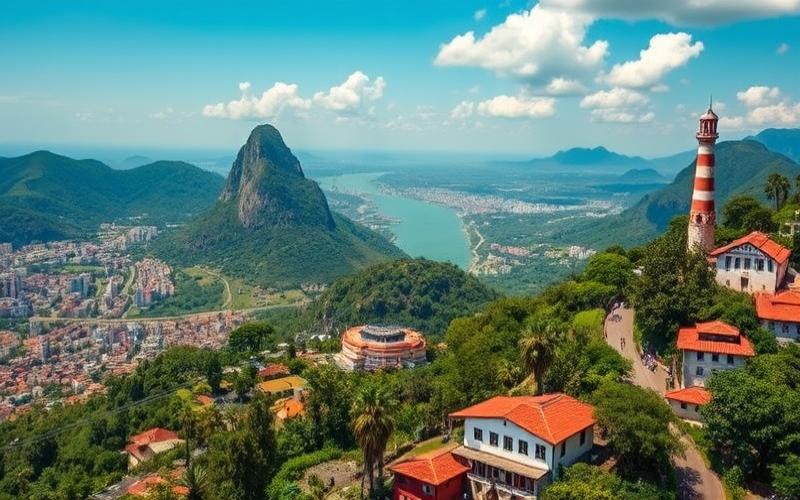
- Santa Teresa (Rio de Janeiro): former residential neighborhood turned into a hub of workshop-galleries, public art and events, emblematic of urban reconversion through concentration of artists and cultural spaces, with effects on tourism and the local creative economy.
- São Paulo, around Avenida Paulista and the modernist center: formation of networks around the Museum of Modern Art and the Biennial, attracting galleries, collectives and workshops, transforming the urban and real estate ecosystem.
- Minas Gerais (historic Baroque cities like Ouro Preto and Congonhas): heritage continuities around Aleijadinho’s works and sacred art, generating clusters of artisans, restorers and cultural mediation.
Challenges Faced
- Funding and resources: dependence on institutional commissions (Church, State, museums), fragility of private income, and inequalities in access to production and exhibition infrastructure.
- Institutionalization vs. autonomy: tensions between official cultural policies (museums, biennials, folklore campaigns) and local initiatives, with risks of standardization and marginalization of peripheral practices.
- Urban pressure and gentrification: rising rents and displacement of residents and workshops in revitalized neighborhoods, threatening the continuity of artistic communities.
Local Socio-Economic Impacts
- Territorial development: rise of cultural tourism, revitalization of local commerce and hospitality, job creation in mediation, production and conservation.
- Symbolic capital and cohesion: heritage revaluation, visibility of popular and indigenous cultures, strengthening of local identity and citizen participation.
- Ambivalent effects: risks of neighborhood museumification, socio-spatial exclusion and dependence on flagship events (biennials, festivals).
Sustainability or Failure Factors
- Favorable:
- Institutional anchoring (museums, biennials, schools) and stable public policies supporting folklore and contemporary arts.
- Mix of local and international influences, fostering innovation and attractiveness.
- Revenue diversification (tourism, markets, commissions, training) and inclusive local governance.
- Unfavorable:
- Overdependence on a single funder, unstable political cycles and budget cuts.
- Rapid gentrification, loss of workshops and commercial homogenization.
- Low recognition of non-academic or peripheral practices, limiting access to resources.
Table — Key Dynamics
| Period | Institutional Drivers | Dominant Aesthetics | Effects on Communities |
|---|---|---|---|
| Colonial Baroque | Church, convents, brotherhoods | Luso-Brazilian Baroque, sacred art | Workshop networks, urban/missionary anchoring |
| 19th Century Academic | Imperial Academy, State | Historicism, history painting | Professionalization, centralization in Rio |
| Modernism (1920s) | Artist groups, salons | Pau-Brasil, Anthropophagy | Hybridizations, scenes in São Paulo |
| 1950-1970 | Museums, São Paulo Biennial, folklore policies | Abstraction, constructivism, experimentation | Internationalization, social broadening |
Cultural Investment or Profitable Economic Enterprise?
- As cultural investment: these communities produce heritage, aesthetic innovation and social cohesion, while valuing local memories and integrating popular and indigenous cultures into public space.
- As economic enterprise: they generate value chains (art market, tourism, creative industries), but returns are volatile and sensitive to economic cycles and competing cultural offerings; sustained profitability requires professional governance and dissemination strategy.
- Nuanced position: their success depends on balancing cultural mission and economic viability; sustainable cases combine public support, private initiative and community participation.
Effects of Globalization on Brazilian Art
- Strengthened connections through São Paulo Biennial and modern museums, inserting artists and collectives into transnational networks, accelerating circulation, co-productions and visibility.
- Updated anthropophagic dynamic: critical appropriation of global trends and re-semantization from indigenous and popular matrices, consolidating a plural identity on the world stage.
- Risks: curatorial standardization, dependence on international agendas and increased competition for resources; opportunities: professionalization, new audiences and diversified funding.
Good to Know:
The emergence of artistic communities in Brazil has its roots in European and indigenous cultural influences that gave rise to diverse artistic movements. In Rio de Janeiro, the Santa Teresa neighborhood perfectly illustrates this evolution, having transformed into a vibrant artist village through a unique blend of creativity and tradition. However, these communities face challenges such as lack of funding and limited access to resources, impacting their sustainability. Economically, these artist villages can revitalize local neighborhoods, creating jobs and attracting tourism, but they oscillate between cultural investment and profitable enterprise. With globalization, Brazilian art is opening to new influences, constantly redefining its identity. The success of these communities often depends on their ability to balance tradition and innovation, as well as adapt to new economic and cultural paradigms.
Renovation Projects and Artist Farms
Renovation projects integrate with Brazilian artist villages by combining preservation of vernacular architecture, redevelopment of public spaces and local technical training. In favelas like Santa Marta and Vila Cruzeiro (Rio), large-scale artistic interventions included façade restoration (plastering, finishes) before painting, creating a shared visual identity while improving construction quality and residents’ self-esteem. These projects, carried out with teams of paid and trained youth, strengthen intangible heritage (skills, local storytelling) and revalue the urban landscape, transforming a stigmatized image into a cultural landmark.
Initiatives transforming old buildings into artistic spaces rely on triangular partnerships between local authorities, artists and private investors. At Fazenda Catuçaba (São Paulo), the “We Are Nature” program created an ecosystem where artist residencies, certified experimental architecture (LEED Platinum) and iconic installations (Campana Brothers’ Bamboo Cathedral) connect with village communities and cultural tourism, positioning Catuçaba and Picinguaba as national references in “architecture in nature” and ecological practices. This hybrid governance enables patient capital mobilization for restoration and activation of buildings (modernist houses, indigenous structures) while gaining resident support through educational programs and shared uses. Additionally, agricultural-cultural projects like the revaluation of a century-old house in Serra Negra aim to convert rural heritage into ecotourism centers and engaged cafés, combining permaculture, hospitality and cultural transmission, through participatory funding and local skills.
Role and Functioning of Artist Farms in These Communities:
- They operate as residency and production hubs: hosting artists in immersion, prototyping works in situ, open workshops, and knowledge circulation (vernacular architecture, design, agroecology).
- They structure artistic collaboration through co-creation devices, training workshops (e.g., Mehinako tribe oca construction) and transdisciplinary collaborations between designers, architects, artisans and communities.
- They generate a creative ecosystem linking creation, hospitality and nature: accommodations, culture-nature itineraries, public programming, attracting audiences and patrons, while anchoring activity in the local economy (crafts, agriculture, guiding).
Economic Benefits: Cultural Investment or Profitability?
- Direct revenue: residencies, accommodations, dining, events and visits generate tourist flows and local spending (hosts, guides, artisans).
- Spillover effects: real estate and commercial revaluation of rehabilitated centers, skills upgrading (jobs in renovation and mediation), and increased village media visibility converted into sustainable attractiveness.
- Projects remain primarily cultural investments with high social utility (cohesion, identity, inclusion), but some show territorial profitability trajectories: environmental labels, high-end off-grid offerings, and territorial branding supporting sustained prices and occupancy rates. Hybrid models (donations, patronage, ticketing, hospitality, sustainable agriculture) improve financial viability.
Concrete Examples and Stakeholder Perspectives:
- Santa Marta and Vila Cruzeiro (Rio): “Back to Rio” networked international artists, local youth and institutional partners to restore and paint 34 buildings (7,000 m²), pay and train 25 youth, and re-anchor public space as cultural stage; for residents, the work strengthens pride and job opportunities; for public/private investors, it improves urban image and perceived safety.
- Fazenda Catuçaba / We Are Nature (São Paulo): promoters advocate an integrated art-education-conscious living vision, with award-winning residencies, experimental architecture and international recognition; neighboring communities benefit from national positioning in familiar tourism and ecology; for private partners, environmental labeling and cultural programming structure a differentiated and exportable offering.
- Serra Negra (century-old house): conversion into ecotourism center and engaged rural café illustrates citizen capital entry and mixed activity creation (agroecology + culture), with promise of local impact and progressive revenue autonomy.
Challenges and Criticisms:
- Social sustainability: risk of cultural gentrification and rising rents; need for local access clauses, solidarity pricing and shared governance to avoid resident exclusion.
- Dependence on patronage: fragile models if events decline; importance of diversifying revenue (accommodation, training, crafts, agriculture).
- Sensitive heritage preservation: avoiding folklorization of local cultures; co-design with indigenous and Afro-Brazilian communities, respect for cultural rights.
- Environment and maintenance: operating costs of rehabilitated buildings (materials, energy, maintenance) and imperative of ecological standards (water, waste, energy) to keep footprint limited.
- Safety and continuity: vulnerable urban contexts require local mediation, continuity plans and institutional anchoring to survive crises and political uncertainties.
Table — Value Levers and Warning Points
| Axis | Value Levers | Warning Points |
|---|---|---|
| Built Heritage | Rehabilitation, visual identity, attractiveness | Maintenance costs, aesthetic standardization |
| Local Economy | Tourism, skilled jobs, short circuits | Seasonality, subsidy dependence |
| Creative Ecosystem | Residencies, co-creation, training | Capture by elites, lack of inclusion |
| Environment | Eco-construction, labels, off-grid | Greenwashing, resource pressure |
| Governance | Public-private-community partnerships | Transparency, real participation |
Recommended Action Lists to Maximize Impact:
- Establish co-governance charters with community use quotas.
- Anchor renovations to paid training programs for residents.
- Diversify revenue mix (accommodation, ticketing, crafts, agroecology).
- Adopt verifiable ecological standards (water, energy, materials).
- Implement shared indicators: local jobs, local audience share, economic benefits, carbon footprint.
- Protect accessibility through anti-speculative mechanisms (cultural social leases, preemption rights).
Good to Know:
In Brazil, renovation projects in artist villages, such as those in Tiradentes and Embu das Artes, revitalize local heritage by transforming historic buildings into art-dedicated spaces, involving collaboration between local authorities, artists and private investors. These initiatives stimulate the creative economy and not only preserve architectural heritage but also foster artistic collaboration dynamics within artist farms, like at Inhotim, which become nerve centers of innovation. Although these projects are perceived as cultural investments, they can also offer profitability by attracting tourism and generating revenue for local crafts; however, criticisms sometimes highlight lack of long-term sustainability and potentially negative social impact if commercial interests override cultural benefits.
Creative Eco-Villages and Their Economic Impact
Creative eco-villages in Brazil are intentional communities combining ecovillage principles (self-sufficiency, community governance, ecological practices, permaculture) with an explicit vocation of artistic and cultural creation (residencies, workshops, festivals), to articulate environmental sustainability and income-generating creative activities. They differ from classic artist villages through systemic integration of sustainability (agroecology, renewable energy, eco-construction, shared governance) and their function as demonstrators of alternative lifestyles connected to transition networks, beyond simple artist clusters.
Main Differences with Artist Villages
- Anchoring in a model of material self-sufficiency (food production, water/energy management) and explicit community governance.
- Role of education and dissemination of socio-environmental innovations (training, living laboratories) articulated with sustainability networks.
- Goal of low footprint and circularity (reuse, permaculture, eco-construction), beyond simple cultural economy.
Economic Impact: Mechanisms and Expected Effects
Stimulation of Local Economy via:
- Cultural and ecological tourism: artist residencies, events, educational visits, increasing demand for accommodation, dining and local services.
- Sustainable value chains: sale of agroecological products, crafts, bio-sourced design, training and applied ecology consulting services.
- Capital and talent attraction: settlement of creators, cultural and green micro-enterprises, strengthening local entrepreneurial ecosystem.
- Spillover effects: diffusion of practices (composting, agroforestry, local materials) to neighboring farms and businesses, reducing costs and increasing territorial resilience.
Internal Economic Instruments:
- Pooling of tools and infrastructure (workshops, collective kitchens, performance spaces), reducing fixed costs and facilitating incubation of creative projects.
- Continuous training (permaculture, eco-construction, applied arts), generating educational revenue and exportable skills.
Attraction of Artists and Creators, Cultural Tourism and Jobs
Attractiveness Factors:
- Ecological setting (biodiversity, natural materials), shared studios and workshops, sufficient Internet for creation and dissemination.
- Opportunities for residencies and transdisciplinary co-creation, with impacts on local cultural programming.
- Community quality of life and peer-to-peer learning (permaculture, arts, crafts), enhanced by participatory governance.
Long-term Jobs:
- Direct jobs: regenerative agriculture, site management, cultural programming, education, ecological construction.
- Indirect jobs: tourism, transport, dining, maintenance, digital services, local supply chains.
Brazilian Examples and Economic Benefits
Gaiana Ecovillage (Serra Grande, Bahia):
- Tropical site with water resources, agroforestry (cocoa, coconut, mango plantations), community infrastructure and good Internet connectivity, facilitating educational, creative activities and visitor reception.
- Offering of permaculture courses and a “Garden of Arts,” combining eco-training and artistic practices likely to generate learning tourism and local sales.
- Development by plots and shared equipment favoring settlement of creative actors and sustainable land value of the site.
Role of Brazilian Eco-Villages in Networks:
Eco-villages operate as nodes for diffusion of innovations and sustainable practices connected to other movements (education, agriculture, culture), amplifying regional economic impact through interconnections and collaborative projects.
Challenges and Limits
Economic Sustainability:
- Potential dependence on training/event revenue and visitor flow; volatility linked to seasons and macro shocks (pandemics, crises).
- Maintenance costs of ecological and cultural infrastructure; need for hybrid models (agroforestry + education + culture).
Funding:
- Complexity in mobilizing patient capital and subsidies; varied and sometimes heterogeneous legal structures in communities, source of decision delays.
- Risks of real estate drift (price increases) if land value rises faster than local incomes, calling for anti-speculative mechanisms.
Governance and Cohesion:
- The collective dimension is both asset and challenge: vision divergences, governance burden, and conflict risks potentially hindering execution of economic projects.
- Conceptual ambiguities around the term “ecovillage” potentially creating divergent expectations among partners and funders.
Evaluation of Profitability as Model for Other Brazilian Regions
Success Conditions:
- Resilient productive base (agroforestry/permaculture) ensuring income security and local supply.
- Diversified activity portfolio: education, culture, ecotourism, crafts, sustainability consulting, to smooth economic cycles.
- Network connections (municipalities, universities, cultural institutions) for access to funding, markets and audiences.
- Essential infrastructure (water, energy, Internet connectivity) for creative activities and reception.
Replicability Potential:
Eco-villages, as demonstrators of alternative lifestyles and nodes of sustainability networks, present a potential profitable economic model when adapted to local resources, aligned with cultural and environmental policies, and managed by solid governance. Contexts with natural and cultural assets (e.g., Bahia coast) and active tourist or educational markets are most conducive; integration of artistic workshops and training programs strengthens viability and employment.
Table — Economic Levers of a Creative Eco-Village
| Lever | Resource/Action | Economic Effect |
|---|---|---|
| Agroforestry/permaculture | Local production, workshops | Recurrent revenue, food security |
| Culture and residencies | Festivals, exhibitions, studios | Cultural tourism, local spending, branding |
| Education and consulting | Courses, training, consulting | Stable cash-flow, service export |
| Eco-construction | Participatory construction, bio-sourced materials | Local jobs, lower CAPEX/OPEX |
| Networks and partnerships | Universities, municipalities, NGOs | Funding, visibility, outlets |
| Digital connectivity | Reliable Wi-Fi, online content | Sales/marketing, creative remote work |
Priority Action Lists for Scaling
- Define a hybrid and resilient revenue model (agriculture, culture, education, tourism).
- Secure access to water/energy and connectivity for creation and reception.
- Establish clear governance, charters and anti-speculative mechanisms.
- Forge cultural and academic partnerships for programs and residencies.
- Deploy a territorial branding strategy centered on creative ecology and training.
Good to Know:
Creative eco-villages in Brazil, such as Piracanga and Aldeia, stand out through their harmonious integration of artistic and environmental practices, marking a clear difference from traditional artist villages. By promoting sustainable initiatives like agroforestry and eco-responsible art, these communities energize the local economy, attracting tourists and creators seeking authenticity and culture. These villages thus become economic engines, generating jobs and stimulating ancillary sectors like hospitality and dining. However, they face economic sustainability challenges and often require external funding to maintain long-term development. The success of notable examples shows that, with appropriate management, these eco-villages can constitute a viable economic development model for other Brazilian regions, combining profitability and environmental responsibility.
Cultural Investment vs Financial Profitability
“Cultural investment” in Brazilian artist villages involves preservation of local heritage, promotion of creation and support for artists through workspaces, training and mediation, articulating territorial identity, skills transmission and public access to art.
- Heritage preservation
- Restoration of traditional houses, cultural landscapes and artisanal techniques.
- Living archives: open workshops, residencies, guided heritage circuits.
- Strengthening of local languages, music and rituals through co-created programming with communities.
- Promotion of art and culture
- Artist residencies, in-situ galleries, festivals, rural biennials.
- Cultural mediation: school visits, participatory workshops, socio-cultural programs.
- Support for local artists
- Access to shared workshops, accommodation, production grants.
- Networking with curators, galleries, and buyers; legal and commercial structuring.
- Skills development (marketing, copyright, project management).
Public and Private Funding Sources and Associated Objectives
- Public funding
- Federal: Rouanet Law (tax incentives), National Culture Funds; objectives of cultural democratization, circulation and accessibility.
- States/municipalities: funds and calls (e.g., Minas Gerais: Circula Minas mobility grants; multidisciplinary visual arts/installation lines), support for circulation, professionalization and internationalization.
- International cooperation and mobility: dedicated mechanisms for dissemination, residencies and scene interconnectivity.
- Private funding
- Corporate patronage and corporate collections; partnerships with foundations, banks and creative industries.
- Event sponsors, space naming, artwork purchases; objectives of image, CSR, territorial attractiveness.
- Impact investment and philanthropy: infrastructure perpetuation, arts education, inclusion.
- How these fundings encourage creation and sustainability
- Fiscal leverage effect: orientation of private budgets toward selected projects.
- Multi-annuality: stabilization of teams and programming; amortization of fixed costs.
- Professionalization: training, governance, impact evaluation; capacity to capture new resources.
- Diversification: ticketing, licenses, derivatives, tourism, art e-commerce.
Analysis of Financial Profitability in Artist Villages
- Revenue streams
- Cultural tourism: ticketing, guided tours, hospitality (cafés, accommodations, shops); average baskets stimulated by experience and seasonality.
- Sale of works and editions: direct sales in workshop, galleries, local fairs; consignment/commission models.
- Events: festivals, temporary exhibitions, paid workshops; venue rental and co-production revenue.
- Complementary revenue: reproduction rights, residencies paid by partner institutions, training.
- Costs and risks
- High fixed costs (heritage maintenance, security, conservation, mediation).
- Tourist demand volatility, dependence on programming and marketing.
- Subsidy payment delays; need for working capital.
- Key indicators
- Cost coverage rate by own revenue.
- Cultural RevPAR (revenue per visitor), average shop/artwork basket.
- Workshop/residency occupancy rate; public/private mix.
Comparison: Long-term Cultural Investment vs Immediate Profitability
- Long-term advantages of cultural investment
- Positive externalities
- Strengthening social fabric: inclusion, education, reduced social vulnerability.
- Tourism development: extended stay duration, deseasonalization.
- Local economic impact: direct/indirect jobs, local supply chain (accommodation, dining, transport, crafts).
- Territorial resilience: destination branding, local pride, residential and entrepreneurial attractiveness.
- Intangible capital: reputation, networks, talent pipeline.
- Positive externalities
- Limits of seeking immediate profitability
- Risk of gentrification, folklorization, loss of authenticity.
- Market-driven programming to the detriment of mission and artistic diversity.
- Underinvestment in conservation and mediation, weakening sustainability.
- Arbitration
- Recommended investment horizon: 5–10 years, with progressive increase in own revenue.
- Reinvestment of part of surpluses in conservation, training, and emerging creation.
Challenges, Dilemmas and Balance Strategies
- Challenges
- Tension between accessibility (prices, social free access) and economic sustainability.
- Governance: balance between artists, community, sponsors, public authorities.
- Infrastructure and logistics in rural areas (transport, connectivity, artwork security).
- Impact measurement and multi-funder accountability.
- Strategies to harmonize culture and finances
- Hybrid revenue model
- 30–50% subsidies/patronage (multi-annual).
- 25–40% own revenue (ticketing, shop, editions, workshops).
- 15–25% events and space rentals.
- Social pricing and yields
- Differentiated resident/visitor rates; annual passes; targeted free access funded by sponsors.
- Experience bundles: visit + workshop + limited edition.
- Shared governance
- Council including artists, community, heritage specialists, funders.
- Anti-gentrification charters, local anchoring clauses in sponsorship contracts.
- Heritage asset management
- Multi-annual CAPEX/OPEX plans; conservation reserves.
- Preventive maintenance solutions; adapted insurance.
- Market development
- Online platforms for artwork sales; accessible price editions.
- Cooperations with schools, universities, tourist operators.
- Impact evaluation
- Cultural, social and economic KPIs; independent audits.
- Shared dashboards with funders and community.
- Hybrid revenue model
Brazilian Examples and Lessons
- Inhotim (Brumadinho, Minas Gerais)
- Open-air museum-garden with large contemporary installations, landscape park and educational program.
- Major initial private funding and recurrent tourist revenue; approximately a quarter million visitors/year in its early years, showing capacity to anchor a cultural destination outside metropolis.
- Lessons
- Scale of private capital can catalyze major facilities.
- Art-nature combination attracts broad public and stimulates local economy (accommodations, dining, transport).
- Need for robust governance and revenue diversification for sustainability.
- Pipa/Porto de Galinhas of local arts and workshop routes (Northeast, multiple cases)
- Coastal villages developing artist workshop circuits, author craft markets, street festivals.
- Revenue drawn from art and tourism integrated into local economy; success conditioned by mediation quality and offer authenticity.
- Lessons
- Light, distributed and seasonal formats reduce risk and favor inclusion of local artists.
- “Souvenir vs artwork” tension requires clear segmentation and public education.
- Paraty (Rio de Janeiro) – colonial heritage and FLIP (Literary Festival)
- Heritage valuation associated with flagship event attracting high-spending cultural tourism.
- Spillover effects on galleries, workshops, bookstores, hospitality; need to manage real estate pressure and residential balance.
- Lessons
- A signature event can become a territorial asset indirectly funding local artistic scene.
- Housing policies and commercial use quotas protect social fabric.
- Embu das Artes (São Paulo)
- Town recognized for its art market and workshops; historic anchoring of crafts and naïve painting.
- Mix direct revenue (artwork sales) and proximity tourism; dependence on attendance and marketing.
- Lessons
- Public space regulation and curatorial quality strongly influence perceived value and revenue.
- Vale do Jequitinhonha (Minas Gerais) – traditional ceramics
- Female cooperatives, intergenerational transmission, workshop circuits and selective export.
- Strong social impact (income, economic autonomy) with risk of hyper-standardization if demand explodes.
- Lessons
- Origin labels and quality charters protect authenticity while improving value.
Comparative Table: Cultural Investment vs Immediate Profitability
| Criterion | Cultural Investment (LT) | Immediate Profitability (CT) |
|---|---|---|
| Objective | Preservation, inclusion, territorial branding | Quick cash-flow, volumes |
| Funding | Subsidies, patronage, partnerships | Ticketing, sales, event sponsorship |
| Risks | Slow financial return, public dependence | Loss of authenticity, demand volatility |
| Externalities | Social fabric, sustainable tourism, local jobs | Revenue concentration, gentrification |
| Sustainability | High if governance/multi-annuality | Fragile without reinvestment |
Priority Action List for an Artist Village Project
- Establish a 5–10 year hybrid business plan with revenue diversification targets and reserves.
- Constitute multi-stakeholder governance and a cultural and social impact charter.
- Implement inclusive pricing policy and entry products (editions, workshops).
- Develop educational and tourist partnerships; create a signature event.
- Protect authenticity: labels, local artwork quotas, curatorial criteria.
- Measure and publish impact; adjust programming based on data and community feedback.
Finding balance involves accepting progressive and diversified financial profitability, backed by strong commitments to preservation, inclusion and curatorial quality, to transform cultural investment into a sustainable engine of local development.
Good to Know:
Investing in artist villages in Brazil represents an effort to preserve local heritage, promote art and support artists, often funded by public and private funds oriented toward sustainable artistic creation. These villages generate revenue through cultural tourism, artwork sales and events, but the balance between long-term cultural investment and immediate financial profitability remains complex. For example, the village of Embu das Artes prospered by developing its tourist offerings and artistic activities, thereby strengthening social cohesion and positively impacting the local economy. To succeed, it is crucial to find strategies that value art while achieving financial objectives, drawing lessons from villages like Olinda, where tensions between economic and cultural interests required adjustments to maintain their artistic identity while benefiting from tourism’s economic contributions.
Disclaimer: The information provided on this website is for informational purposes only and does not constitute financial, legal, or professional advice. We encourage you to consult qualified experts before making any investment, real estate, or expatriation decisions. Although we strive to maintain up-to-date and accurate information, we do not guarantee the completeness, accuracy, or timeliness of the proposed content. As investment and expatriation involve risks, we disclaim any liability for potential losses or damages arising from the use of this site. Your use of this site confirms your acceptance of these terms and your understanding of the associated risks.

Cyril Jarnias is an independent expert in international wealth management with over 20 years of experience. As an expatriate himself, he is dedicated to helping individuals and business leaders build, protect, and pass on their wealth with complete peace of mind.
On his website, cyriljarnias.com, he shares his expertise on international real estate, offshore company formation, and expatriation.
Thanks to his expertise, he offers sound advice to optimize his clients' wealth management. Cyril Jarnias is also recognized for his appearances in many prestigious media outlets such as BFM Business, les Français de l’étranger, Le Figaro, Les Echos, and Mieux vivre votre argent, where he shares his knowledge and know-how in wealth management.