 Published on and written by Cyril Jarnias
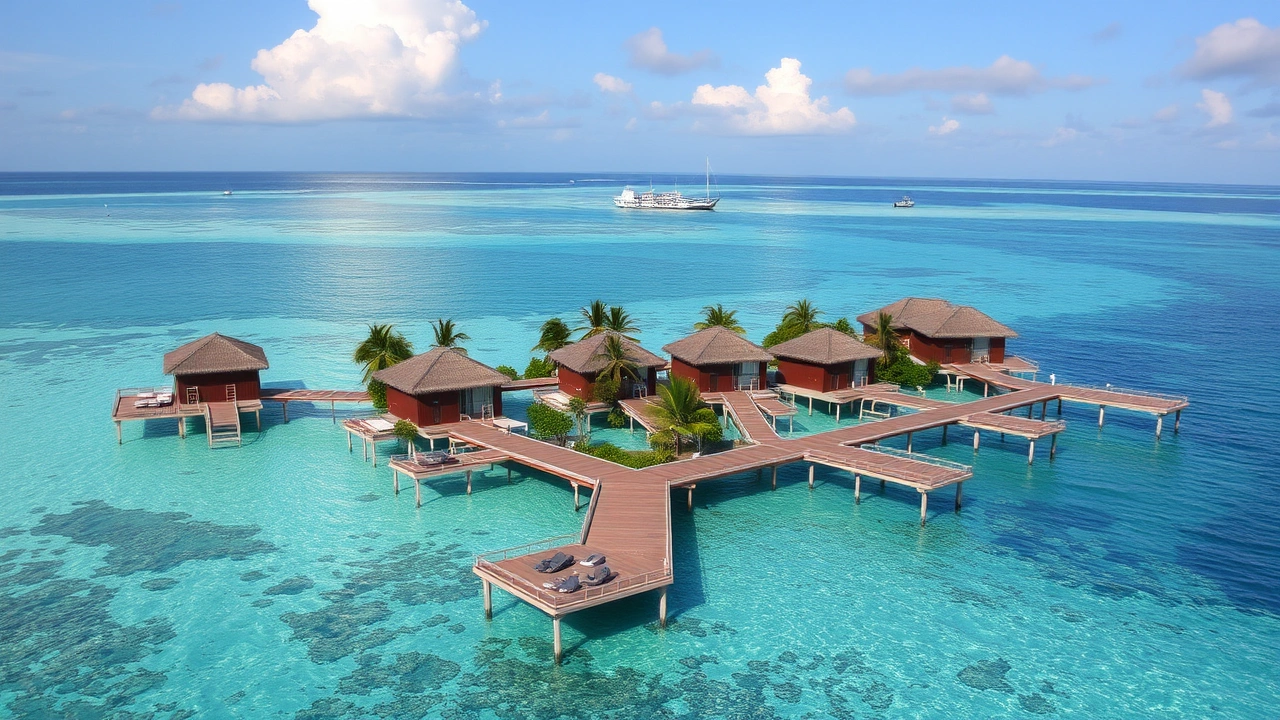
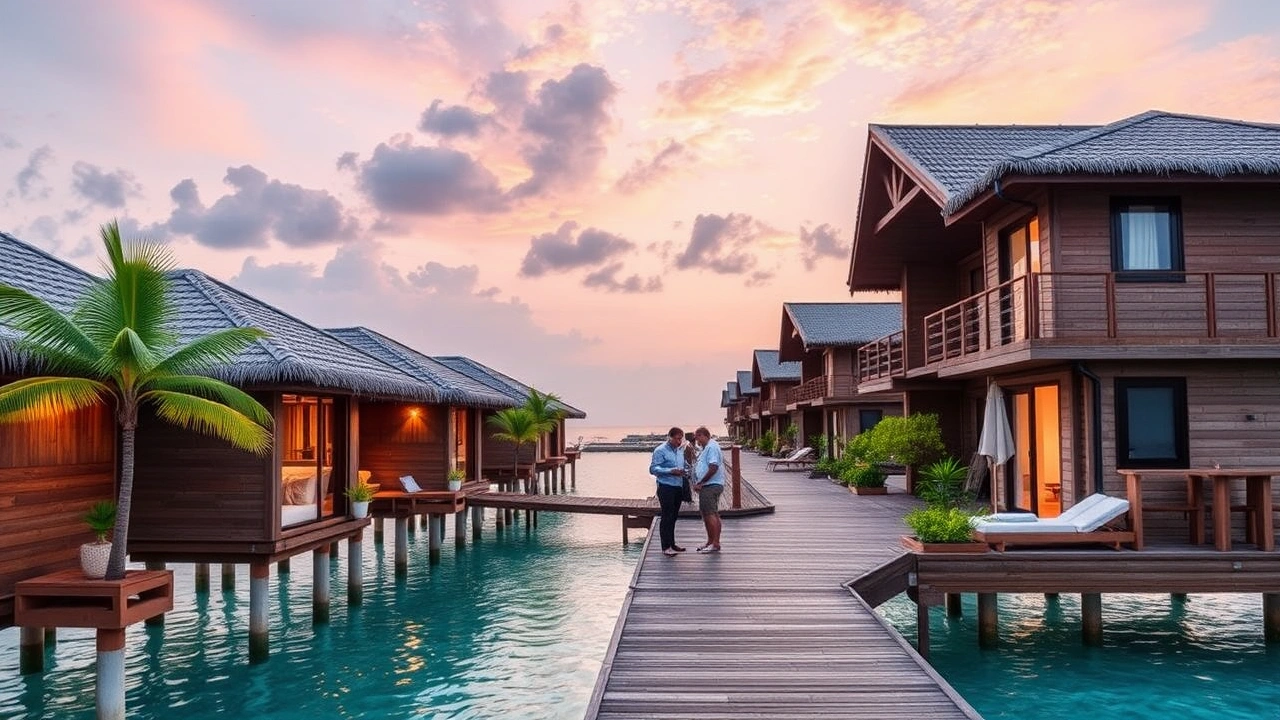
A postcard archipelago lost in the middle of the Indian Ocean, the Maldives are a dream for tourists… and increasingly for investors. Behind the overwater villas and white-sand beaches, the country harbors a very particular real estate market, where land scarcity, dependence on tourism, and a strict legal framework create a potent cocktail for returns… provided you choose the right location.
Foreigners cannot own land outright in the Maldives. Investments are structured via emphyteutic leases and are primarily concentrated in tourist zones or integrated projects. The key question for an investor is therefore determining where and how to invest, rather than considering the purchase of a vacation home as one might in Europe.
This article reviews the best neighborhoods, atolls, and projects for investing in the Maldives, based on the most recent market data, the legal framework, and major infrastructure dynamics. The goal: to give you a clear view of the most promising areas, their price levels, yields, and risks.
Understanding the Framework Before Choosing Your Neighborhood
Before delving into the details of the best neighborhoods for investing in the Maldives, we must set the scene: no “good area” makes sense if one ignores what the law actually allows foreigners to do.
The Maldivian constitution reserves land ownership for citizens. A foreign investor therefore cannot buy land outright. However, they can obtain usage rights via long-term leases, typically for 50 to 99 years. Practical options include: leasing an entire island for a resort, purchasing a villa or apartment under strata-title within a tourist complex, or participating in a Maldivian company that holds the master lease.
Since the Integrated Tourism Model of 2019, authorities have allowed mixed developments with a residential component and have regulated the leasing of villas or rooms in resorts via a “Regulation on the Long-Term Strata Leasing of Villas or Rooms.” It is this evolution that paved the way for managed residences, branded villas, or hotel apartments that can be sold to international buyers.
Investments are governed by a set of specific laws and policies, including the Foreign Investment Act, the Land Act of 2002, the Special Economic Zones (SEZ) policy, and the recent “Sustainable Townships” category. The latter requires a minimum investment of 500 million dollars and imposes strict sustainability standards, such as the use of renewable energy, waste management, integrated agriculture, and the presence of essential on-site services.
For investors, this translates into a few constants: secure but time-limited leases, yields often above 5%, the current absence of capital gains tax, but significant indirect taxation (6% GST on acquisitions and rents, tourism land rent, a 6-dollar per tourist night Green Tax). Within this framework, location becomes the primary tool for maximizing yield and appreciation.
Greater Malé and Hulhumalé: The Urban Heart Where Demand is Exploding
When discussing the best neighborhoods for investing in the Maldives, it’s impossible to bypass the Greater Malé region, which concentrates nearly half the national population and an overwhelming share of services, jobs, and infrastructure. This is where the capital Malé, the artificial island of Hulhumalé, and neighboring islands connected by bridges and ferries are located.
Malé: Extreme Scarcity and High Rents
Malé is a textbook case of hyper-urban density. Over about 8 km², more than 250,000 inhabitants share saturated land, with one in six homes being rented and demand far exceeding available supply. Rents reflect this imbalance: a simple room can exceed the equivalent of 1,000 dollars per month, and family apartments trade for much more.
The acquisition price per square meter can exceed €5,000 for the best locations in Malé, due to intense land pressure.
Hulhumalé: The “Smart City” Redrawing the Investment Map
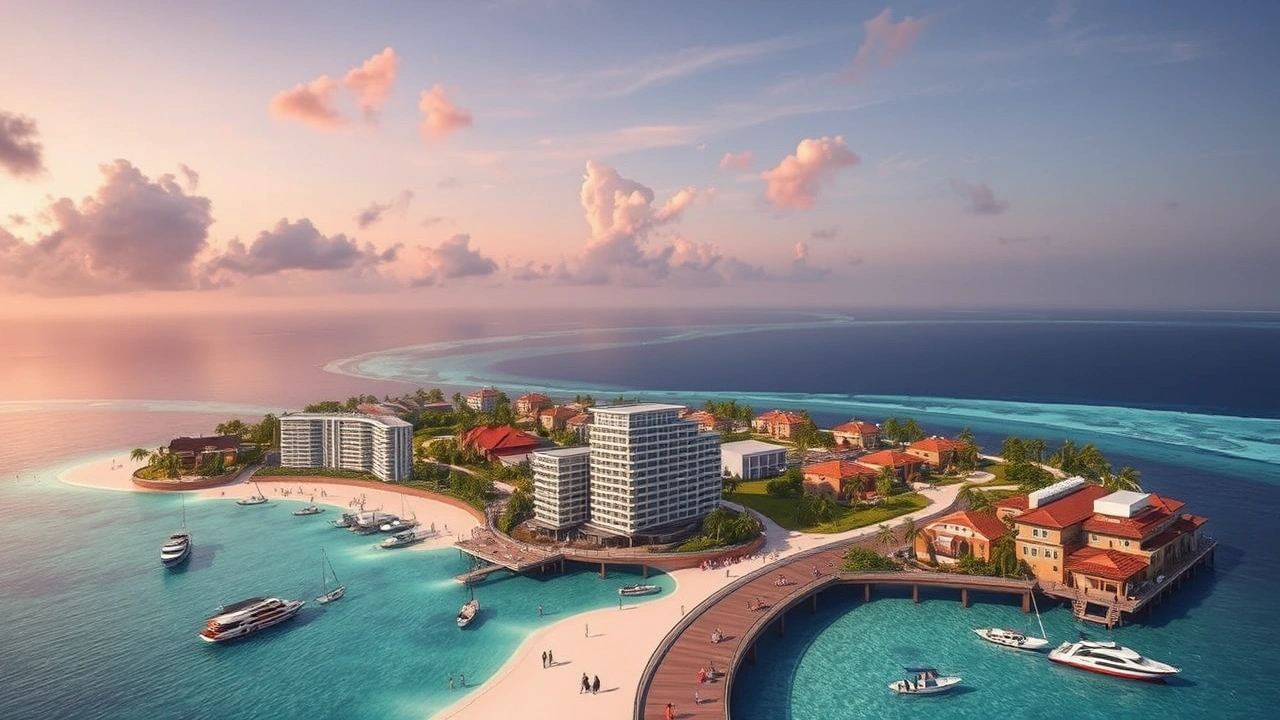
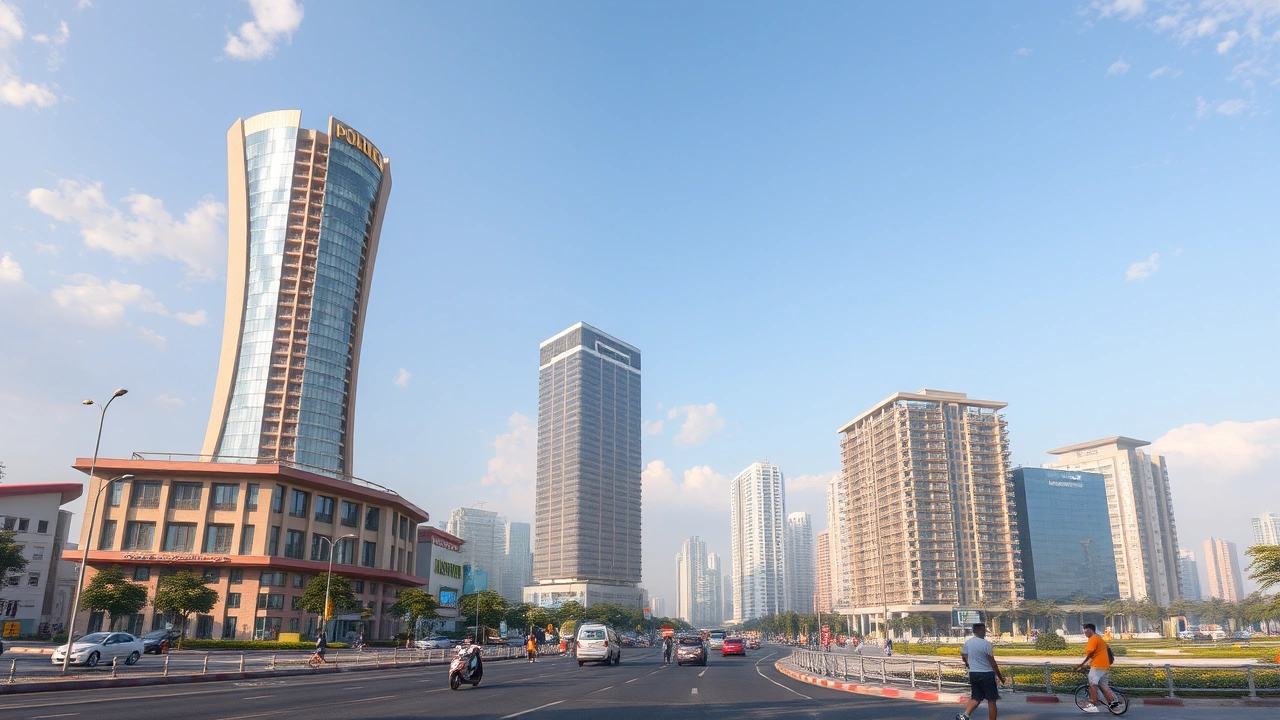
Hulhumalé is arguably the most strategic neighborhood for those seeking a residential or mixed-use investment in the Maldives. This artificial island, whose land reclamation began in 1997, was conceived as a planned urban extension of Greater Malé. Today, covering about 4 km² and already home to over 50,000 inhabitants by the end of 2019, it aims to accommodate up to 240,000 people in the medium term.
Connected to Velana Airport and Malé by causeway and bridge (Sinamalé Bridge), Hulhumalé offers what the capital no longer has: space to build, modern urban planning, infrastructure designed for quality of life and, above all, a rental market in full boom. The Housing Development Corporation (HDC), the state-owned company in charge of development, spearheads residential, office, technology park, public facility projects here, as well as sales of land for residential and commercial use.
Synthesis of market data compiled over 18 months, revealing a very interesting profile for investors.
Market data compiled and analyzed over an 18-month period, offering a robust and meaningful view of trends.
The results highlight a very interesting investment profile, characterized by opportunities and favorable dynamics.
| Key Indicator | Value Observed in Hulhumalé |
|---|---|
| Gross Rental Yield City Center | 8.23% |
| Gross Rental Yield Outside Center | 8.08% |
| Average Purchase Price Center (MVR/ft²) | ~3,527 (range 2,499 – 7,730) |
| Average Purchase Price Outside Center (MVR/ft²) | ~2,719 (range 1,858 – 3,500) |
| Average Monthly Rent 1-Bed Center | ~14,222 MVR |
| Average Monthly Rent 3-Bed Center | ~26,000 MVR |
This table illustrates a key point: in Hulhumalé, gross rental yields already exceed 8%, which is high for an urban market, even as the city is still in a growth phase. The price-to-rent ratio, around 12, suggests a reasonable balance between purchase price and rental income, especially in a context where average salaries (around 17,250 MVR net per month) are significantly lower than housing costs, fueling strong rental demand.
For Maldivians, HDC organizes sales of waterfront or second-line plots, with prices from 4,000 to 5,500 MVR/ft², and auctions that have climbed to over 9,700 MVR/ft² during waves of land speculation. Even though these plots are reserved for nationals and fully local companies, these price levels give an indication of the temperature: the market anticipates strong future appreciation for Hulhumalé.
For a foreign investor, acquiring strata-titled apartments in managed residences or government-approved developer programs is the preferred route. These properties, especially high-end units like penthouses or apartments with sea views, can rent for between 3,000 and 8,000 dollars per month, rents comparable to some regional capitals.
Hulhumalé also has a rarely highlighted asset: a “liveability” index developed with the UNDP, which evaluates each neighborhood according to five pillars (social inclusion, economic sustainability, environmental sustainability, governance, innovation). This tool, coupled with a “digital twin” city project, already allows targeting the most promising areas within the island itself (Phase I, Phase II, future developments). For a long-term investor, this is a valuable guide.
In summary, Hulhumalé stands out as the number one urban neighborhood for a residential or mixed-use investment, with strong rental demand, yields above 8%, clear governance via HDC, and an environment increasingly geared towards services (knowledge park, offices for SMEs, port zones in Gulhifalhu and industrial zones in Thilafushi).
Dynamic Local Islands: Maafushi, Thulusdhoo, Dhigurah
Alongside the urban core, another segment is attracting more and more investors: local islands open to tourism, where guesthouses, small hotels, restaurants, and dive centers are sprouting up rapidly. Here, the challenge is less about buying a strata-titled villa in a resort than developing or acquiring a commercial tourism asset, in partnership with a local partner.
Maafushi: The Pioneer of Local Tourism
About 30 minutes by speedboat from Malé, Maafushi has become the archetype of a local tourist island. Waterfront lined with guesthouses, dive centers, cafes, family restaurants, lively atmosphere, and prices softer than in resorts: the island attracts a young, budget-conscious, but regular clientele. Long-term rents remain “affordable” by Maldivian standards, between 1,200 and 3,000 dollars per month for well-located units.
For an investor, the island of Maafushi is better suited for guesthouse, boutique hotel, or restaurant projects than for purchasing individual apartments. However, competition is already strong, beaches are smaller than on other islands, and tourist density affects the overall experience. Future growth will depend more on improving the quality of the offer than on a significant increase in prices.
Thulusdhoo: Surf Capital and Eco-Lab
45 minutes by speedboat from Malé, Thulusdhoo is known for its waves (the Cokes and Chickens spots are among the best in the country) and its creative atmosphere, with colorful murals, a community of surfers, and first co-working spaces. The clientele profile is specific: digital nomads, long-stay surfers, travelers attracted by a more alternative lifestyle.
Long-term rents range between 1,500 and 4,000 dollars per month, depending on the quality of the property and its proximity to the waterfront. The island also stands out for its pioneering eco-initiatives: community projects, strong sensitivity to reef protection, a desire to limit tourism impact. For an investor, this translates into an ideal positioning for surf + eco-lodge concepts, coliving, co-working, and medium-stay programs.
Dhigurah: The High-End Bet in the Heart of Ari Atoll
Located in Ari Atoll, Dhigurah offers a completely different face. The island, among the longest in the country (over 3 km), is famous for year-round sightings of whale sharks and manta rays within a protected area. Transfers from Malé take one hour by domestic flight or two hours by speedboat, which naturally filters the clientele towards a higher-end segment.
Here, rents for luxury villas and residences range between 5,000 and 12,000 dollars per month, with a handful of intimate resorts and high-end villas available on annual lease. This is clearly a niche: clientele passionate about marine life, diving and snorkeling stays, immersive nature experiences. For an investor, Dhigurah resembles more of a “boutique luxury + nature” bet, with potential for high rates but a limited volume of units.
Analysis of the Luxury Real Estate Market in Dhigurah
Rental Comparison of Main Local Islands
| Local Island | Travel Time from Malé | Typical Long-Term Rent | Dominant Positioning |
|---|---|---|---|
| Maafushi | ~30 min by speedboat | 1,200 – 3,000 USD/month | Budget / guesthouses |
| Thulusdhoo | ~45 min by speedboat | 1,500 – 4,000 USD/month | Surf / digital nomads |
| Dhigurah | 1h flight or 2h speedboat | 5,000 – 12,000 USD/month | Luxury nature / diving |
These islands illustrate well the range of possible strategies: volume and budget on Maafushi, surf niche on Thulusdhoo, luxury nature on Dhigurah. They are, however, subject to a different legal framework than resorts: prohibition of alcohol, obligation for dedicated “bikini” beaches, dress code rules, which influence the type of clientele.
Established Atolls: Kaafu, Ari, Baa, Lhaviyani, Addu
Beyond the local islands, the best “neighborhoods” for investing in the Maldives can also be read at the atoll scale. Some are mature markets, already extensively developed; others are in a growth phase. For the former, strength lies in the depth of demand and the visibility of yields.
Kaafu, which encompasses North Malé and South Malé Atoll as well as the capital, remains the historical gateway for tourism. Immediate proximity to the airport, short and inexpensive speedboat transfers (15 to 40 minutes, 50 to 100 dollars, compared to 400 dollars and more for a seaplane), density of resorts ranging from mid-range to ultra-luxury: all the conditions are met for sustained activity year-round.
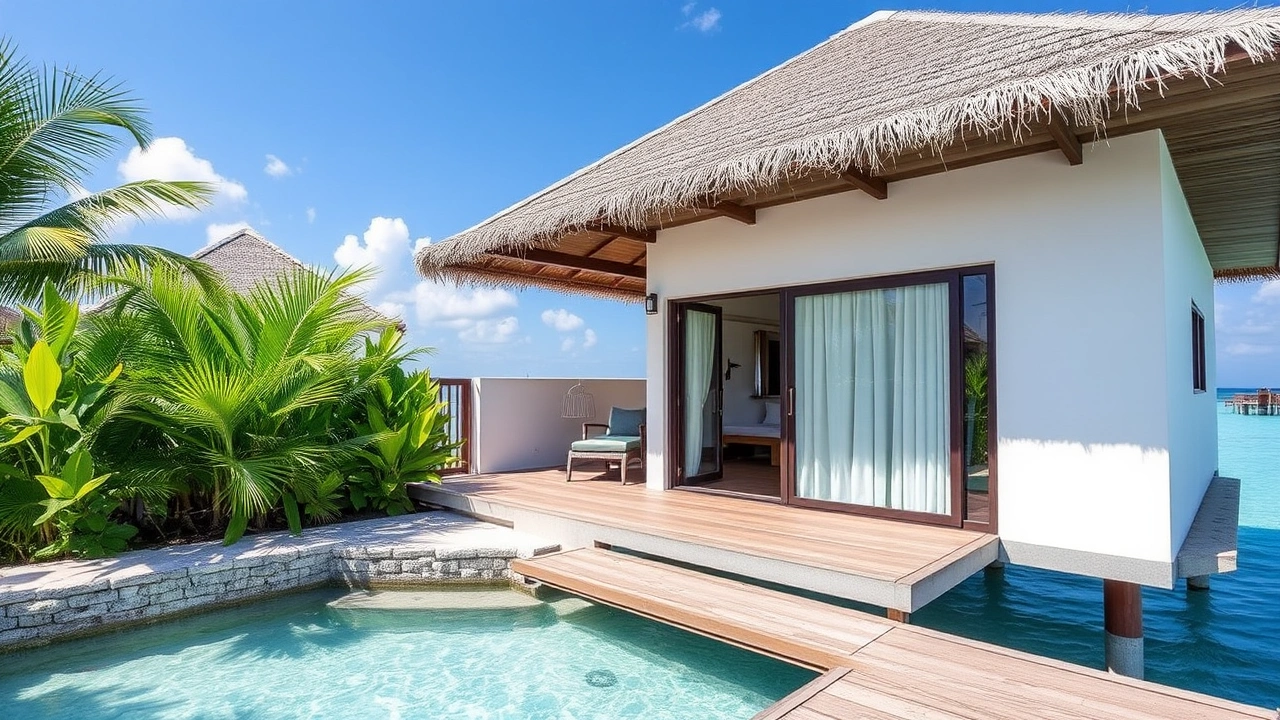
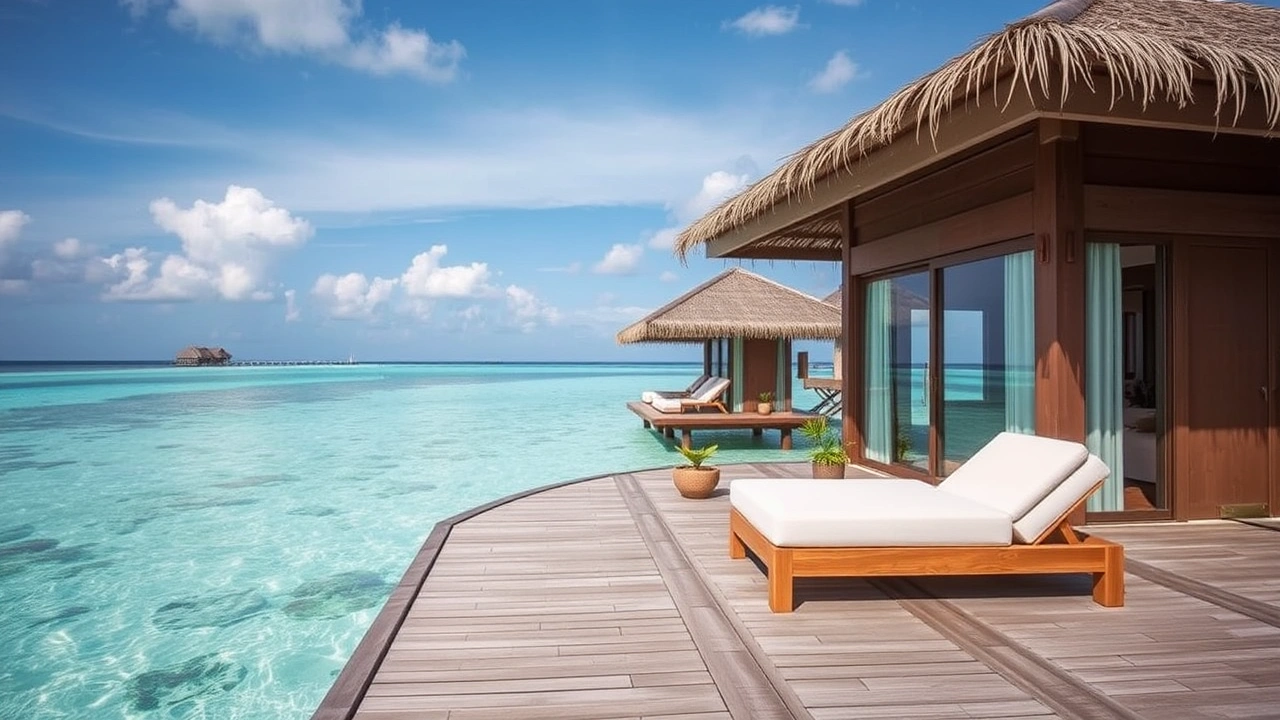
The price of a premium overwater villa can exceed 3.5 million dollars in the most established sectors.
Ari Atoll: Kingdom of Whale Sharks and Divers
Ari Atoll, and in particular South Ari, is the other classic. Designated as a marine protected area, it’s the only place where whale sharks can be observed year-round. The combination of an exceptional reef, a mix of mid-range and luxury resorts, and relatively easy access from Malé (25 to 45 minutes by seaplane, 400 to 500 dollars round trip) makes it a safe bet for tourism operators.
Speedboat transfer time to certain multi-island lagoons that can accommodate up to five developable islands.
Baa Atoll: The UNESCO Premium
Baa Atoll benefits from a rare advantage: its status as a UNESCO Biosphere Reserve, which attracts a clientele that is both very affluent and very sensitive to sustainability. Hanifaru Bay, where hundreds of manta rays gather each year, is its emblem. This visibility is reflected in the numbers: resort occupancy rates often exceed 80%, a high level even by Maldivian standards.
Projects focused on eco-luxury are multiplying here: massive use of solar power, coral restoration programs, strict waste management, high environmental standards. For an investor, the UNESCO premium comes at a cost: high entry prices, but room rates to match, hence robust yields. Branded villas here easily reach several million dollars, with products like Soneva Fushi illustrating this ultra-high-end segment.
Lhaviyani and Addu: Rising Value and Geographic Diversification
Lhaviyani Atoll stands out with seaplane access of about 50 minutes and a stock of villas already positioned on still-preserved reefs. Infrastructure improvements (domestic airport extension, coastal roads, future deep-water port) create an environment conducive to new resorts and even marine residential communities. Early buyers benefit from prices that remain below 1,500 dollars per ft², with projected yields between 8 and 9%.
Addu Atoll, in the south, is developing with its international airport and bridges linking its islands. Prices for investment villas there are lower (500,000 to 1.5 million dollars) than in Kaafu, with yields already attractive. Authorities aim to decentralize tourism there, making it a region with still-untapped potential.
Emerging Atolls: Where the Highest Capital Gains Are Hidden
While established areas offer security, the most beautiful capital gain prospects are likely found in the emerging atolls where the most aggressive investors are now turning. Raa, Shaviyani, Noonu, Laamu, Faafu, Meemu, Thaa, Gaafu Alifu, Gaafu Dhaalu, Haa Dhaalu, Dhaalu, and Lhaviyani embody this new generation of destinations.
Raa Atoll: Accessibility and Already Tangible Yield
Close to Malé while remaining less saturated than Kaafu, Raa Atoll benefits from improved logistics (roads, modernized seaplane terminal) and a coral restoration program that strengthens its environmental credibility. Early investors mention annual yields already between 5 and 7%, with peak occupancy rates approaching 85% and entry prices around 900 dollars per ft² for new villas.
The government offers 49-year leases for some projects here, coupled with incentives like VAT exemptions on construction materials. This is typically a market where entering early allows capturing the delta between the starting level and that of more mature atolls.
Shaviyani Atoll: Strong Supply Pressure and Potential for +30% in Three Years
Shaviyani attracts developers for three reasons: its still very preserved coral gardens, the recent opening of a domestic airport, and the prospect of being designated as a marine protected park. The combination of these factors, coupled with still limited supply, creates tension on pre-sales: some scenarios project capital growth of up to 30% over three years, with a price per ft² for villas with pools around 800 dollars.
Local authorities anticipate annual value growth of at least 15% over five years, boosted by road investment.
Noonu Atoll: Scarcity and Ultra-Luxury Image
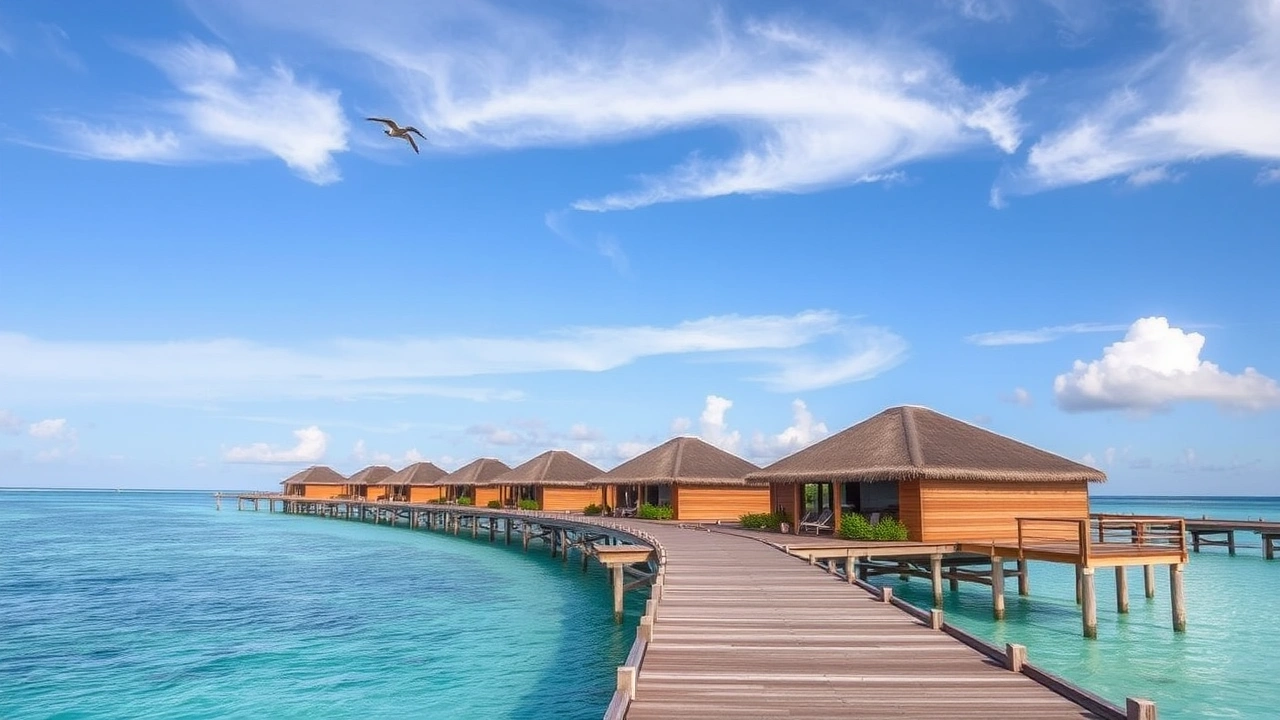
Noonu is already known to insiders for housing Soneva Jani and its iconic overwater villas, some of which sell from 3 million dollars per unit. The atoll relies on a low-density strategy: a select few resorts, a planned marina for private yachts, and architectures signed by international studios that valorize local craftsmanship.
With annual average tourism growth of 12% and entry prices that remain, for some projects, under 1,200 dollars per ft², Noonu already combines the ultra-luxury DNA and potential for further upscaling, for example through branded residences or private residential enclaves in large lagoons.
Laamu, Faafu, Meemu, Thaa: The Developing Southern Belt
Laamu, long favored by divers, is now pivoting towards a model of solar-powered eco-resorts (micro-grids), low-density overwater villas, and an improved network of jetties enhancing accessibility. A new port terminal and a runway extension project should further boost its appeal. Land values remain moderate, around 780 dollars per ft², an interesting starting base given expected future traffic increases.
Projected rental yields for overwater villas in Faafu could exceed this percentage once the airport is fully operational.
Meemu combines still-wild coastlines, a government policy accelerating resort permits, villas overlooking bioluminescent lagoons, and a focus on boutique diving. Current prices, under 850 dollars per ft², still lag behind neighboring atolls, suggesting gradual growth as new projects arrive.
Thaa, located less than 70 nautical miles from Malé, benefits from strengthened ferry links and a lighthouse restoration project that will serve as a hub for a set of heritage lodges and overwater suites. With an identity centered on maritime heritage, environmental improvements (waste management, desalination plant), and close collaboration with local communities, projections mention rental yields around 6% and significant capital appreciation, from entry levels around 820 dollars per ft².
Gaafu, Haa Dhaalu, Dhaalu: Ultra-Private, Superyachts, and Sustainable Townships
Gaafu Alifu, with its vast marine horizons, lends itself to ultra-private resorts nestled in coconut groves and, soon, to superyacht development thanks to a deep-water port designed to accommodate large vessels. Conservation zones here reinforce the appeal for an eco-conscious clientele. Some investors target an IRR beyond 12% over five years in these very selective projects.
Gaafu Dhaalu Atoll, now accessible via Kaadhedhoo Domestic Airport, is seeing the emergence of elevated villa projects designed to withstand climatic hazards and incorporating sustainable mooring devices. The first waterfront villas are offered from about 700 dollars per square foot, a price considered an affordable entry point for an atoll at the beginning of its tourism development.
Haa Dhaalu, in the far north, now benefits from a hydrofoil service that drastically reduces travel times and paves the way for a future multi-purpose marina. Developers envision beachfront promenades, gourmet restaurants, and private island concessions here, in a slightly cooler climate offering appreciated ocean winds.
Finally, Dhaalu Atoll stands out for a very advanced vision regarding sustainability: regenerative architecture, mangrove walkways, landscape-integrated overwater studios, obligation for green construction standards, and, soon, a domestic airport. Here, expected capital gains over five years are between 20 and 25%, with waterfront plots offered around 700 dollars per ft² and projected yields exceeding 9% as tourist flow increases.
Iconic Projects: Coral Residences, Maldives Floating City, Zamani Islands
Beyond atolls, certain “flagship” projects play a showcase role for the type of investment possible today in the Maldives. They illustrate the convergence between luxury, sustainability, land engineering, and products intended for international investors.
Coral Residences: The Archetype of Sustainable Villa-Investment
Developed on a private island accessible by catamaran from Malé, Coral Residences groups 60 custom villas imagined by an award-winning architecture firm. Floor-to-ceiling glass walls, natural materials (teak, coral stone), water recovery systems, solar panels, natural ventilation: everything is designed to reduce the carbon footprint. The construction site even aims for carbon neutrality.
The project features a private yacht club, an underwater observatory, a wellness center, and a highly crafted gastronomic offer, with a strong emphasis on marine conservation: coral rehabilitation programs, use of local products, rainwater harvesting. Villas are sold under a 50-year lease, with a professionally managed rental program for investors seeking passive income and a residential concierge service.
Minimum entry ticket, in dollars, for a branded residence in the resort-residence segment in the Maldives.
Maldives Floating City: Land Response and Mid-Range Investment Laboratory
In a context of land scarcity and climate vulnerability, the Maldives Floating City project stands out as an original response. It is a floating city of 5,000 homes, built on a shallow lagoon, with projected prices starting at 150,000 dollars for a studio and 250,000 dollars for a single-family house.
This project opens, for the first time, the possibility of a medium-sized residential investment in the Maldives, with potential residency rights through investment programs. It also serves as a test for floating solutions that could be replicated elsewhere in the archipelago, adding strategic interest beyond mere rental yield.
Zamani Islands, Aman Residences, Baccarat and Company: The Ultra-Prime Galaxy
On the ultra-prime side, Zamani Islands brings together eight islands over 70 hectares, with villa-mansions offered from 25 million dollars and investment properties from 1 million. It features the Maldives’ first superyacht marina, a major infrastructure to capture the ultra-high-end clientele.
Aman Residences Maldives plans for 16 residences with 5 to 10 bedrooms, Baccarat Hotel & Residences deploys 53 private residences on five islands in South Malé Atoll, and Samana Ocean Views by Elie Saab features pool apartments from 2.3 million dollars within an overall envelope of 600 million. These operations illustrate the speed at which the Maldives are rising in the hierarchy of global luxury markets, with a marked willingness from developers in the United Arab Emirates to inject more than 3 billion dollars by 2030.
For wealthy individuals, these projects are as much lifestyle purchases as investments. For the investor, they represent showcases of what the combination long-term lease + international brand + sustainability can produce in the archipelago.
Special Economic Zones and “Sustainable Townships”
Beyond resorts, some of the best “neighborhoods” for investment tomorrow may well be located in special economic zones (SEZ) and, more recently, the sustainable townships created by the 2025 reform. These large-scale developments, under unified management, must combine residences, essential services, integrated tourism, training or health centers, and rely on at least 60% renewable energy.
Investments benefit from significant exemptions: income tax and GST in Special Economic Zones (SEZ), exemption from customs duties on capital goods, and free repatriation of profits. For townships, income tax is 5% for 10 years, then 10% for the next 10 years, before aligning with the standard rate. Resales are subject to a progressive transfer duty, from 1% (first transaction) to 4% (third transaction).
These spaces, located in selected atolls, will likely concentrate in the future some of the best neighborhoods for investing: green residential quarters, doctor or retirement villages, educational hubs, residential complexes around marinas, etc. For now, they are mainly accessible to institutional investors or developers capable of mobilizing over 500 million dollars, but they should eventually lead to products for individual investors (residences, apartments, villas on lease).
Yields, Valuation, and Taxation: What the Numbers Say
The Maldivian real estate market shows an impressive trajectory. Over the past decade, the value of luxury properties has outperformed many established markets: 4 to 5% annual increase in 2010‑2015, 6 to 8% between 2016 and 2020, 3 to 5% during the COVID phase (2020‑2022), then 8 to 10% since 2023. Projections until 2027 align with GDP growth of 5.2 to 7% per year and price increases around 5 to 10% per year in premium segments.
Regarding rental yields, the observed averages are instructive:
| Asset Type | Typical Rental Yield |
|---|---|
| Premium branded overwater villas | 5 – 7% |
| Waterfront villas | 4 – 6% |
| Apartments in integrated resort | 7 – 9% |
| Urban apartments (Greater Malé / Hulhumalé) | 7 – 10% |
| Well-located guesthouses | 8 – 12% |
Transaction costs range between 8 and 12% of the purchase price for a foreigner, with a main item: the Goods & Services Tax at 6% on acquisitions and on rental income (often collected and remitted by the operator). Added to this are legal fees (1 to 1.5%), registration fees (0.1 to 0.2%), Tourism Land Rent (8 to 10 dollars per m² per year on the master lease), and the Green Tax of 6 dollars per tourist night. The absence of a specific capital gains tax partly compensates for this indirect taxation.
In Hulhumalé, the price-to-income ratio for urban rents is about 9.75 and the mortgage rate exceeds 12% per year. This situation makes buying a home inaccessible for a large part of the local middle class. This structural imbalance maintains strong rental demand, which, in turn, offers interesting yield prospects for investors with properties to rent.
Risks and Points of Caution: What Location Doesn’t Solve
Even in the best neighborhoods, an investment in the Maldives is not without risks. Some are inherent to the very nature of the archipelago: the flattest country in the world, with a highest point at 2.4 meters above sea level, extreme vulnerability to sea-level rise, coastal erosion, and coral bleaching. Half the state budget is already absorbed by climate adaptation, and several flagship projects (Hulhumalé, floating cities) are nothing other than responses to this emergency.
On an emerging atoll, a project of elevated villas, incorporating natural seawalls for erosion protection and advanced water management, presents a lower risk profile. This example illustrates the importance of integrating into the physical due diligence criteria such as altitude, anti-erosion protections, the quality of the surrounding reef, and resilience measures.
Another factor: the nature of leases. A 50 or 99-year lease constitutes a perishable asset. It can, in some cases, be renegotiated at the end of the term, but nothing guarantees it. The value of a property nearing the lease’s expiration will depreciate mechanically, which requires a clear strategy: intended holding period, exit timeline, resale target (other foreigners, transfer via the developer, etc.).
The government recently strengthened the investment framework (new foreign investment law, sectoral restrictions, notably in commerce and real estate) while actively promoting investment via special economic zones and residency programs. It is crucial for an investor to follow these developments, particularly in restricted sectors where rules may tighten.
Finally, the resale market remains narrow: few end-buyers, concentration on a few segments (ultra-luxury, branded residences), dependence on international tourism. Hence the importance, once again, of favoring the best locations within the best areas: proximity to hubs (Malé, domestic airports), integration within a strong resort or township, partnership with a recognized brand, or, in the case of local islands, anchoring in a destination already enjoying a steady flow of tourists (diving, surfing, nature).
How to Choose Your Investment Neighborhood in the Maldives
Faced with this mosaic of neighborhoods, atolls, and projects, how to decide? A simple framework can help.
First, one must choose between an urban strategy and a pure tourism strategy. For a profile seeking a compromise between yield, relative liquidity, and appreciation potential, Hulhumalé and Greater Malé constitute a solid base: strong rental pressure, service economy, multitude of public projects (bridges, airports, port zones, technology parks) that reinforce the centrality of the territory.
For an investor seeking a patrimonial product with moderate yield but very high usage value, villas located in resorts in Kaafu, Ari, or Baa atolls are a coherent option. These investments have high entry tickets but offer good visibility on demand, prestige, and exposure to consistently growing high-end tourism.
For a more opportunistic profile, willing to tolerate more risk, emerging atolls like Raa, Shaviyani, Noonu, Laamu, Dhaalu, or Gaafu Alifu offer a capital gain potential often higher, provided the developer is well-chosen, infrastructure is assured (domestic airports, fast ferries, ports, energy), and the project aligns with government priorities (sustainability, local integration, reef protection).
For an investor-operator ready to get involved in daily management, local tourist islands (like Maafushi, Thulusdhoo, Dhigurah, Ukulhas, Fulhadhoo) offer high-yield opportunities. These investments can take the form of guesthouses, dive centers, surf camps, or restaurants. Success essentially depends on the ability to develop an offer that differentiates itself in the market while scrupulously respecting local social and religious rules.
Regardless of the chosen neighborhood, three constants recur: working with lawyers specialized in Maldivian law, carefully checking master leases and government authorizations, and never underestimating the environmental dimension. In the Maldives, the best address isn’t just the one with the most beautiful lagoon view: it’s the one that will still be there, economically viable and physically protected, in twenty or thirty years.
Disclaimer: The information provided on this website is for informational purposes only and does not constitute financial, legal, or professional advice. We encourage you to consult qualified experts before making any investment, real estate, or expatriation decisions. Although we strive to maintain up-to-date and accurate information, we do not guarantee the completeness, accuracy, or timeliness of the proposed content. As investment and expatriation involve risks, we disclaim any liability for potential losses or damages arising from the use of this site. Your use of this site confirms your acceptance of these terms and your understanding of the associated risks.

Cyril Jarnias is an independent expert in international wealth management with over 20 years of experience. As an expatriate himself, he is dedicated to helping individuals and business leaders build, protect, and pass on their wealth with complete peace of mind.
On his website, cyriljarnias.com, he shares his expertise on international real estate, offshore company formation, and expatriation.
Thanks to his expertise, he offers sound advice to optimize his clients' wealth management. Cyril Jarnias is also recognized for his appearances in many prestigious media outlets such as BFM Business, les Français de l’étranger, Le Figaro, Les Echos, and Mieux vivre votre argent, where he shares his knowledge and know-how in wealth management.