 Published on and written by Cyril Jarnias
White sand, turquoise lagoons, stilt villas perched above a reef… Buying a seaside property in the Maldives is a dream for many investors and connoisseurs of exceptional destinations. But beyond the postcard image, the Maldivian real estate market is one of the most unique in the world: no freehold ownership for foreigners, a country threatened by rising sea levels, a tax system that is both attractive and complex, and projects often integrated into luxury resorts.
This guide details the essential aspects of buying seaside real estate in the Maldives: the legal framework, types of properties accessible, prices, rental yield, taxation, and acquisition procedures. It also addresses specific climate and legal risks, and identifies atolls and projects to watch. The objective is to provide a concrete analysis to assess whether this investment matches your profile and wealth strategy.
Understanding the Seaside Real Estate Market in the Maldives
The starting point is geography and economy. The Maldives, an archipelago of nearly 1,200 islands spread across 26 atolls in the Indian Ocean, has by definition an extremely limited stock of land. This scarcity fuels an ultra-luxury positioning, with over 130 resorts and an offering largely geared towards a wealthy international clientele.
An Ultra-Prime Market Driven by Tourism
Almost the entirety of Maldivian wealth is tied to the sea. Tourism alone accounts for about 28% of direct GDP, and up to 70% when including indirect effects (transport, construction, services). Before the pandemic, average economic growth was around 6.4% per year; current projections still estimate 5.2 to 7% annual growth until 2027, with a strong recovery in tourist arrivals (over two million visitors in 2024).
Annual percentage price increase for high-end beach villas over the past five years.
This pressure is even more pronounced in the Malé region, the capital, where apartments can reach US$5,000 to US$10,000 per square meter, or even more in the most sought-after locations. In the rest of the country, prices per square meter remain on average lower, but properties truly accessible to foreigners are concentrated in tourist projects or specific urban developments.
A Stable but Vulnerable Economic Context
On a macroeconomic scale, the Maldives shows a GDP of approximately US$5.7 billion, inflation around 3.5%, and a currency, the Maldivian rufiyaa (MVR), pegged relatively stably to the US dollar (approximately 15 MVR to 1 USD). The dollar is widely accepted for tourist and real estate transactions, which simplifies international investments.
The country has significant financial exposure: public debt >100% of GDP, dependence on tourist flows and fossil fuel imports, and colossal funding needs for climate adaptation. S&P’s “B” rating with a stable outlook reflects this dual reality of growth potential and structural fragility.
For a buyer, this means a real estate market driven by resilient tourism, but backed by a state that must constantly balance tourist development, debt sustainability, and investments to protect a territory that is extremely vulnerable to rising sea levels.
Legal Framework: Why You Will Never Own the Land
Before even looking at a stilt villa floor plan, one must grasp a fundamental reality: in the Maldives, a foreigner cannot buy land as freehold property. All land ultimately belongs to the state, and the Constitution reserves full land ownership for Maldivian citizens.
Freehold vs Leasehold: The Key to Understanding
In most international listings, one sees talk of “property” in the Maldives. Legally, this almost always refers to long-term leasehold rights, not freehold land ownership. The distinction is crucial:
| Type of Right | Typical Duration | Land Ownership | Transferable | Impact on Value |
|---|---|---|---|---|
| Freehold (Outright Ownership) | Unlimited | Owner / Individual | Yes | Stable / Appreciating |
| Leasehold (Lease) | 50 to 99 years | State or Local Owner | Yes (Rights) | Depreciates as remaining term shortens |
In the Maldives:
– The vast majority of foreign investors acquire long-term leasehold rights, often between 50 and 99 years, backed by a head lease held by an operator or directly by the state for an island or plot of land.
– Therefore, the value of your asset is intimately linked to the remaining term of the lease. The closer to the expiration date, the greater the discount, unless a clear and secure renewal mechanism has been negotiated.
Governing Texts for Foreign Investment
Several laws and regulations frame the rules for non-resident buyers:
The Constitution prohibits freehold land ownership for foreigners. Access to investment is defined by the Foreign Investment Act, which requires a license. Land use is regulated by the Land Act and Tourism Act for resorts. The Integrated Tourism Model (2019) allows mixed-use projects with sales via “strata-title.” Specific regulations also govern long-term leases for villas or rooms within resorts.
In very exceptional cases, foreign investors involved in large-scale projects can obtain specific concessions, but this remains the exception and requires a bespoke government agreement.
Eligible Zones and Types of Structures
Foreign investment is in practice concentrated in well-defined zones:
The Maldives offers different regulatory frameworks to attract investment into specific projects.
Entire islands or lagoons dedicated to a resort or integrated project.
Such as Hulhumalé Phase II, with a more flexible regulatory framework to attract investors.
Sometimes offering tax incentives and relaxed rules.
The main structures used are:
– Resort Development under Lease: a group obtains a head lease on an island for 50 to 99 years, builds a resort, then resells villas or residences under a sub-lease to individuals.
– Branded Residences: villas or apartments affiliated with a major hotel brand (Hilton, Four Seasons, Soneva, Baccarat, etc.), acquired via strata-title for the duration of the head lease.
– Tourism Joint Ventures: local companies (Maldivian Limited Company) with at least 5% Maldivian ownership, used mainly for large-scale projects.
For any purchase, the lease or strata rights must be registered with the competent authorities to be fully enforceable.
Types of Seaside Properties Accessible to Foreigners
In the Maldives, “seaside” often literally means in the sea. The properties accessible to foreigners are overwhelmingly linked to a tourism operation, whether independent villas, resort apartments, or leases on entire islands for institutional investors.
Stilt Villas, Beach Villas, and Private Islands
The most sought-after typology revolves around three main profiles:
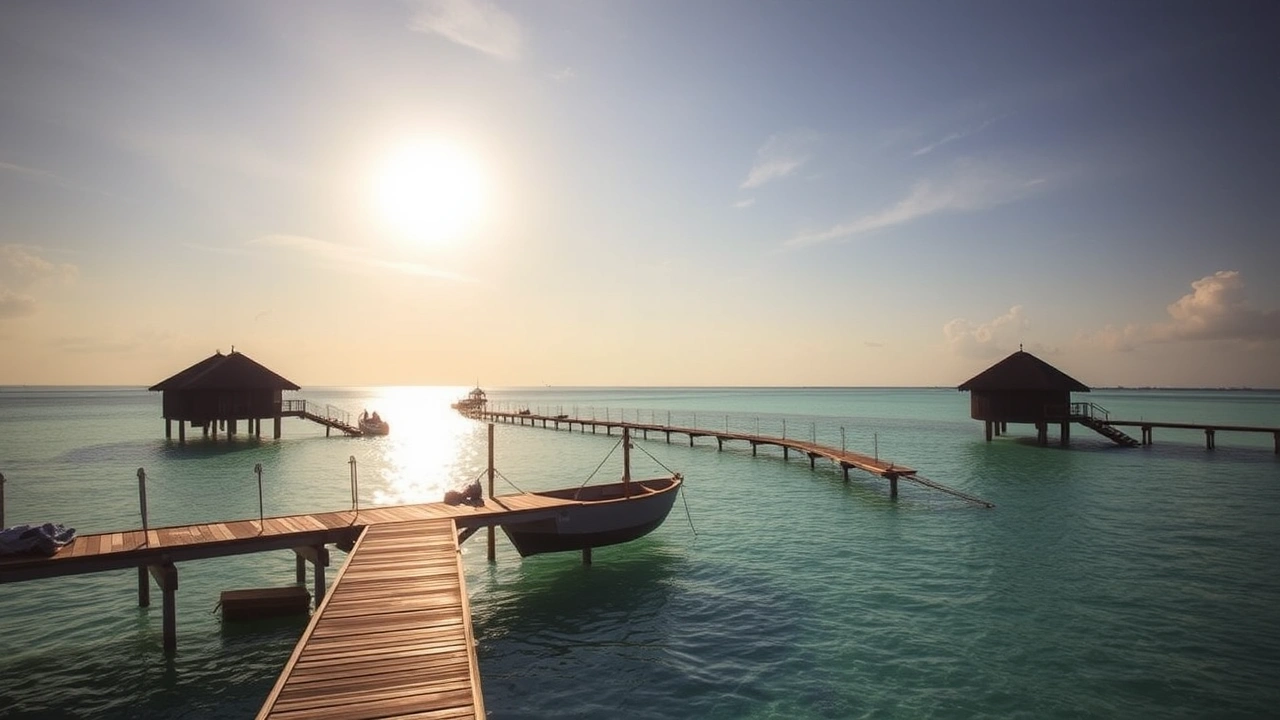
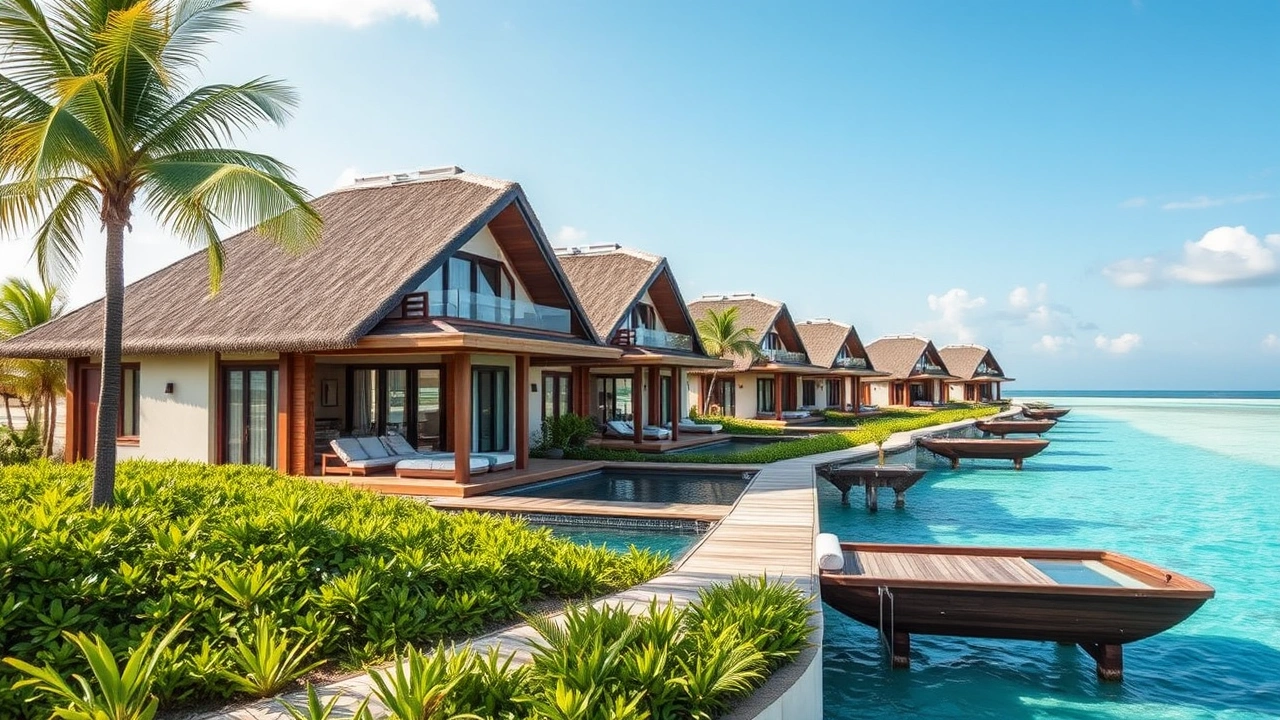
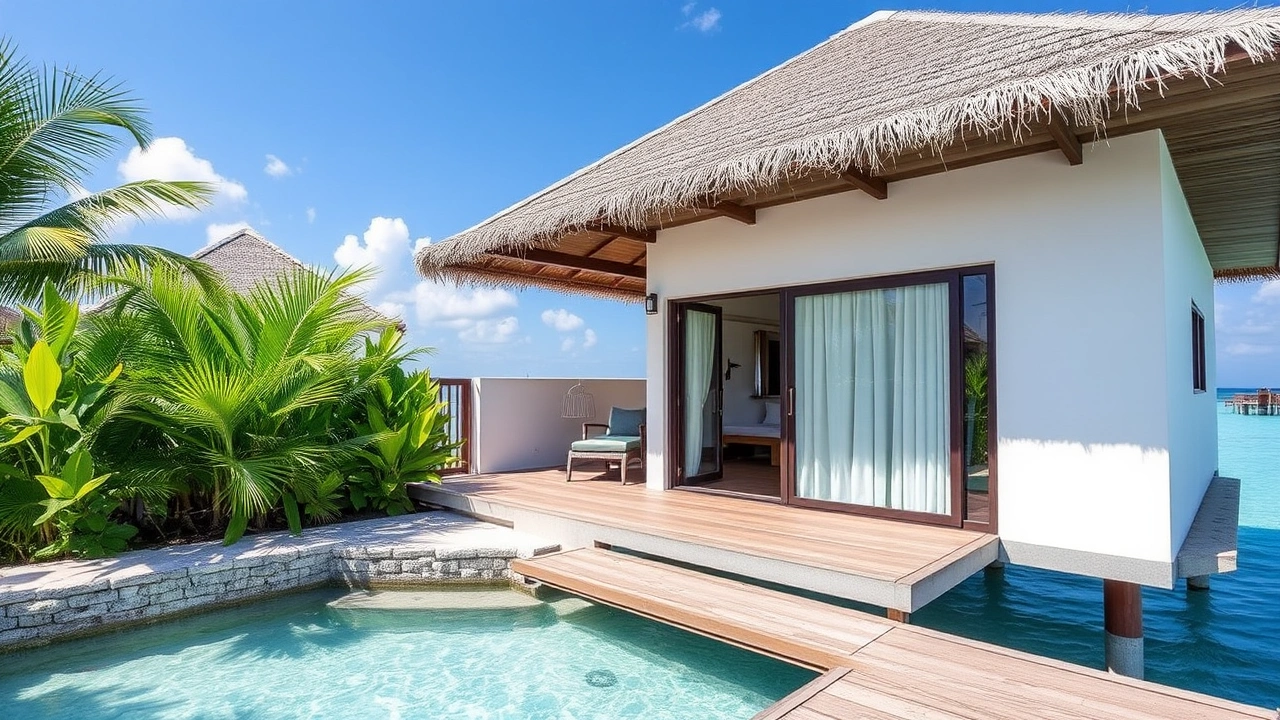
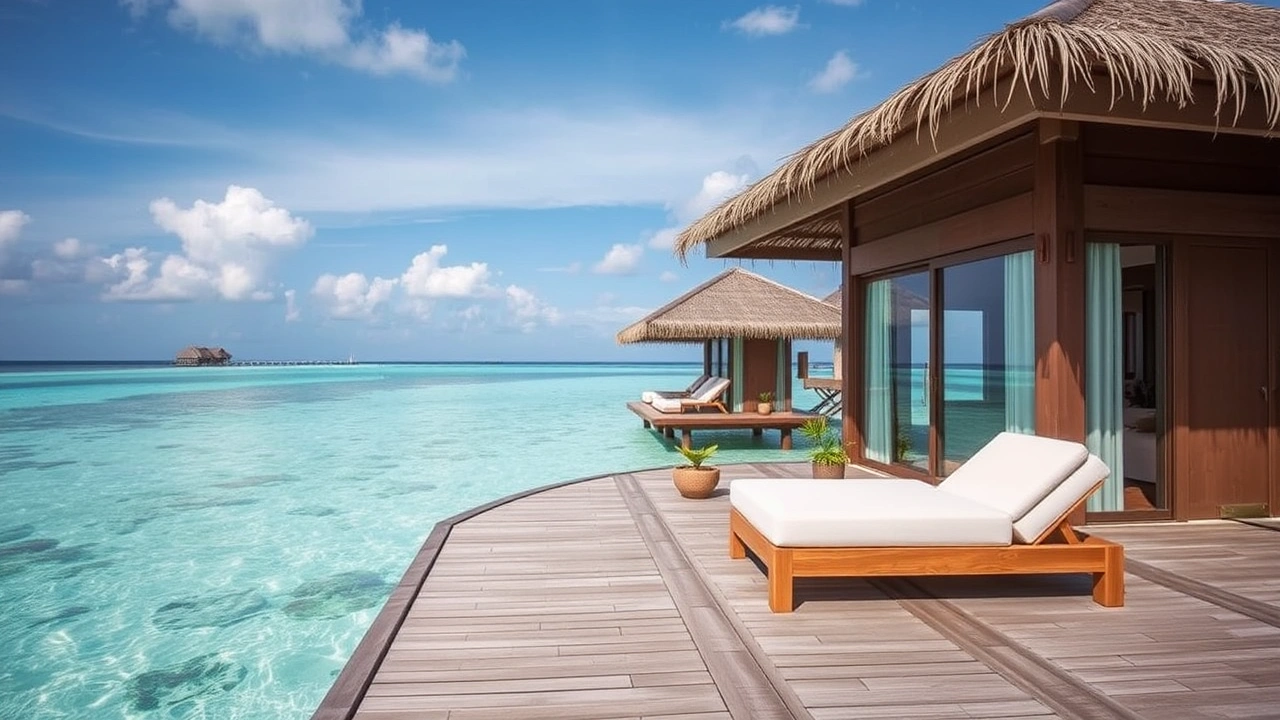
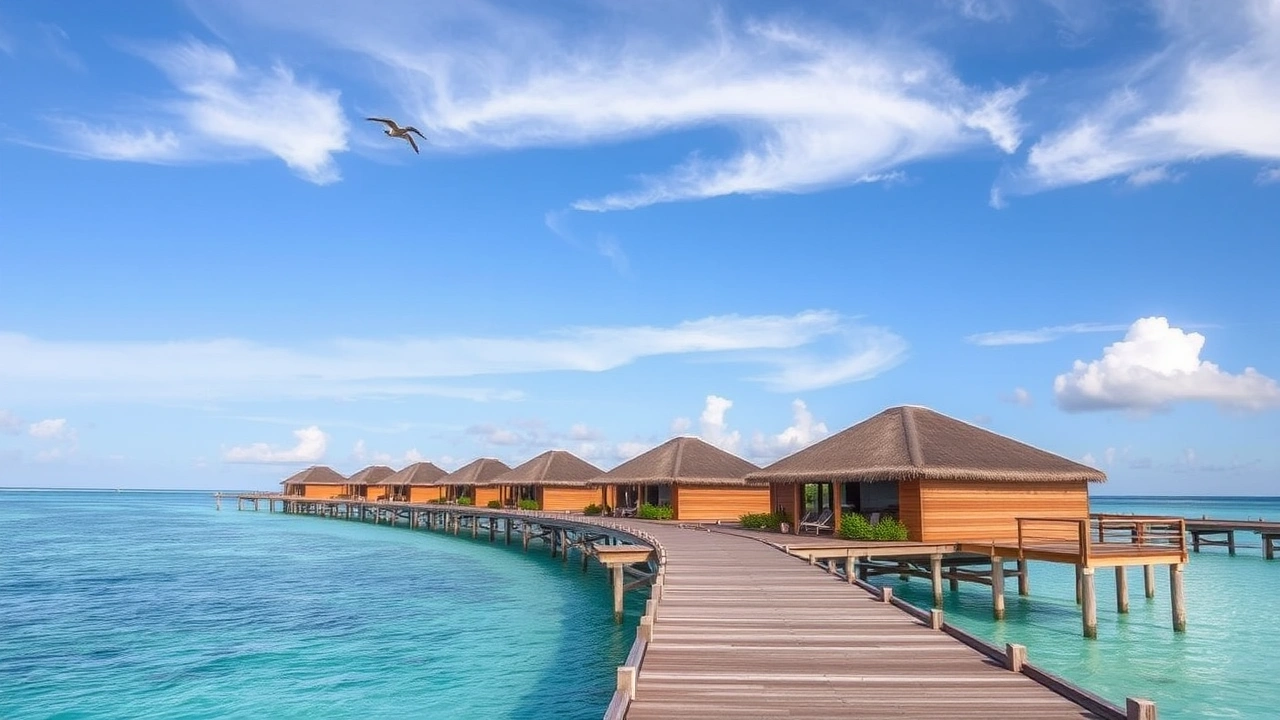
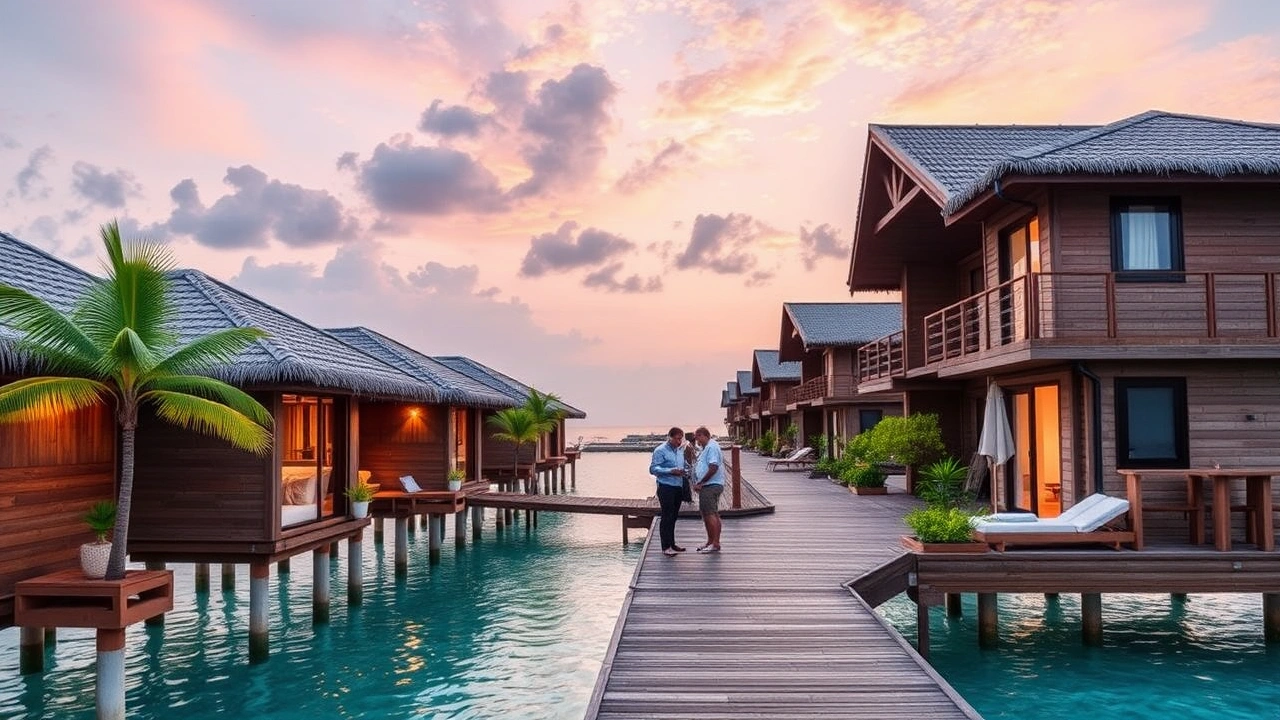
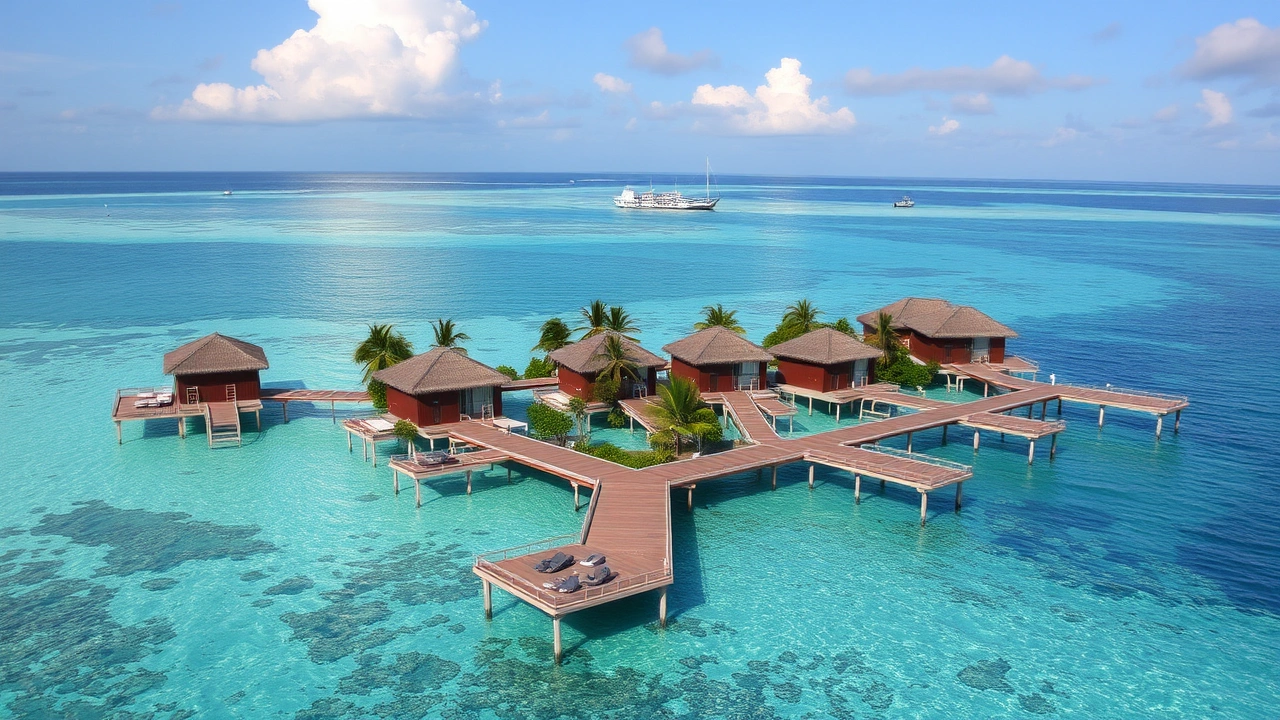
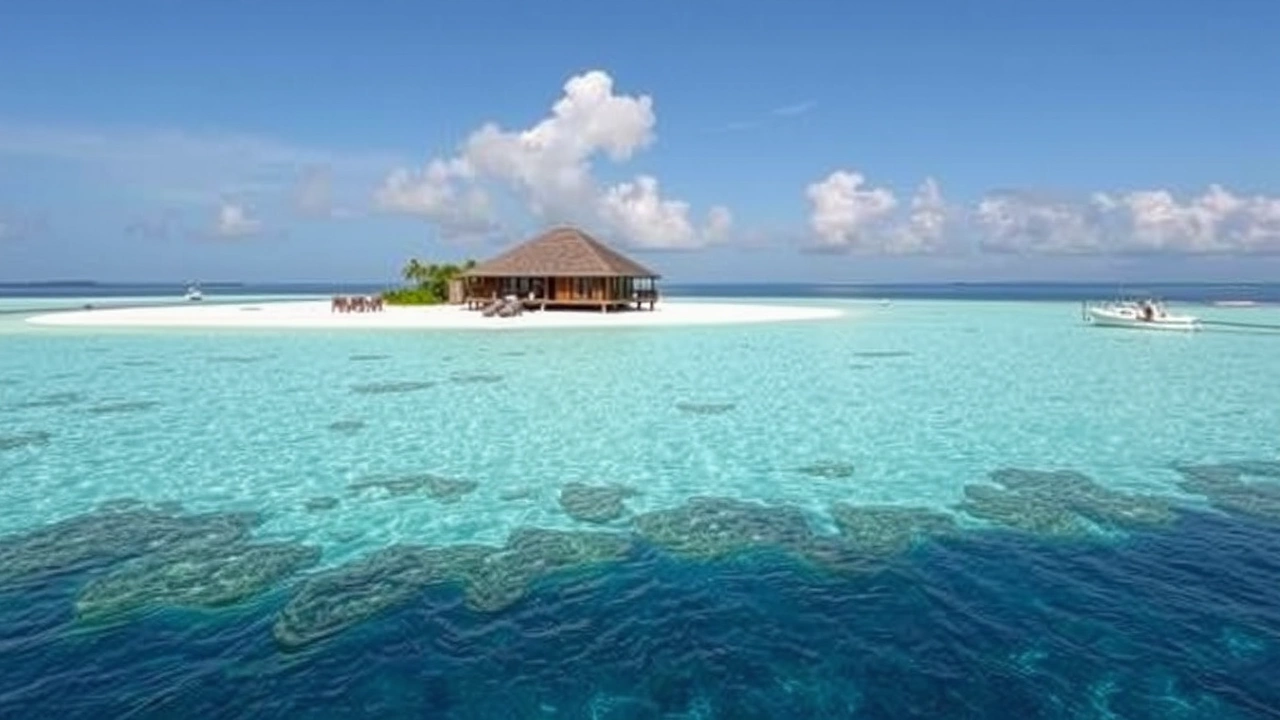
The Maldives offers luxurious accommodations like overwater villas, stilted bungalows with direct reef access, equipped with glass floors, infinity pools, waterslides, and butler service. Beach villas, nestled in vegetation, offer immediate sand access with private pools and decks. For major investors, private islands under lease, either undeveloped or partially developed, are available, with amounts that can exceed 100 million euros for entire resorts.
Concrete examples of prices illustrate these ranges:
| Type of Property / Project | Location (Atoll or Island) | Indicative Price Range |
|---|---|---|
| Premium Overwater Villa | North Malé Atoll | $1.8 to $3.5M (≈ $9,000–12,000/m²) |
| Stilt Residence | Lhaviyani Atoll | $0.9 to $2.2M |
| Investment Villas | Addu Atoll | $0.5 to $1.5M |
| Private Island Lease | Baa Atoll | $8 to $25M |
| Urban Apartment (Greater Malé) | Malé Region | $250,000 to $900,000 |
| Coral Residences (Resort Apartments) | Kandima, Dhaalu Atoll | From $1.2M |
| Baccarat Maldives Residences | South Malé Atoll | From $4.94M to over $42.5M |
| Soneva Fushi / Soneva Jani Villas | Baa & Noonu Atolls | $5M to $15M (e.g., $6M for a 1-bed at Soneva Jani) |
| Zamani Islands (5* Mega-Project) | South Malé Atoll | From $25M, up to >$40M |
These figures show that entry is clearly in the international high-end segment, with a few entry points around $500,000 to $1 million for modest-sized properties in less established atolls, but a majority of offerings above $1.5 to $2 million.
Apartments and Integrated Residences
Beyond individual villas, more and more projects offer: co-ownership apartments, townhouses, and serviced residences.
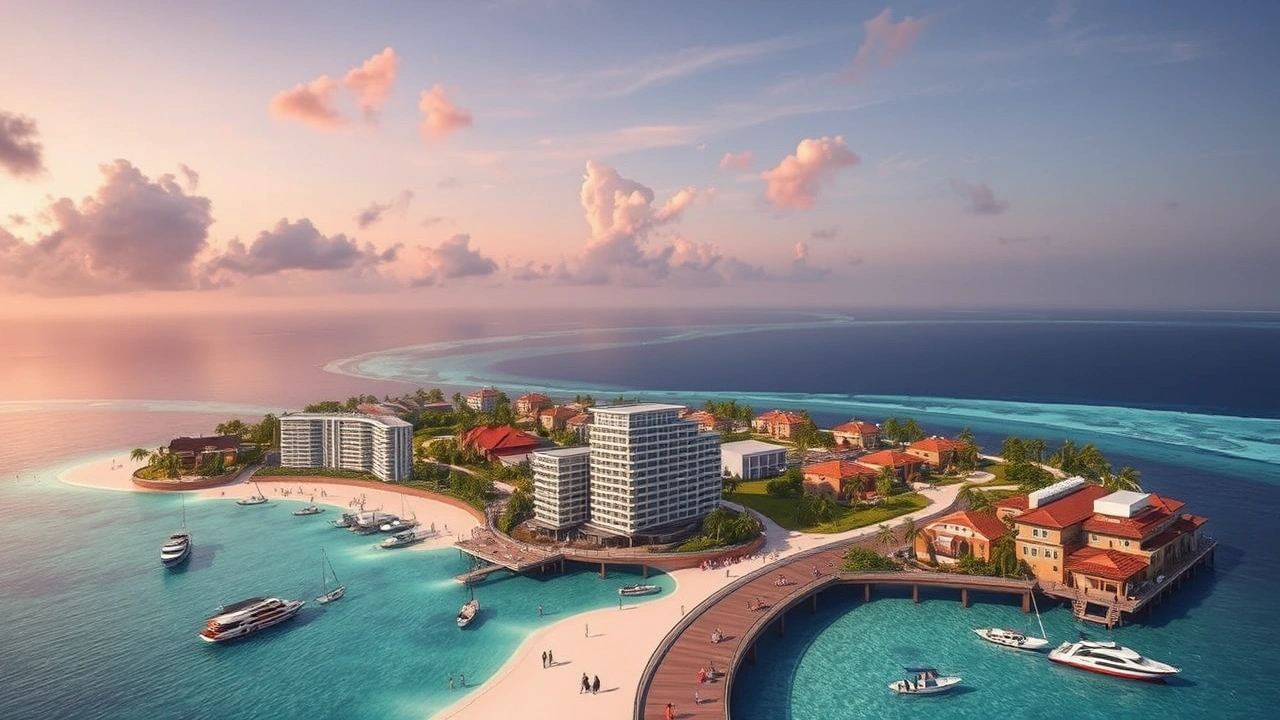
Beyond traditional villas, the Maldivian real estate market offers resort apartments, integrated into hotel complexes with services (pool, spa, restaurants), such as at Coral Residences on Kandima. It also includes innovative condominiums, such as the Maldives Floating City project: a sustainable floating neighborhood inspired by coral, designed to host about 20,000 residents with apartments and retail accessible via canals.
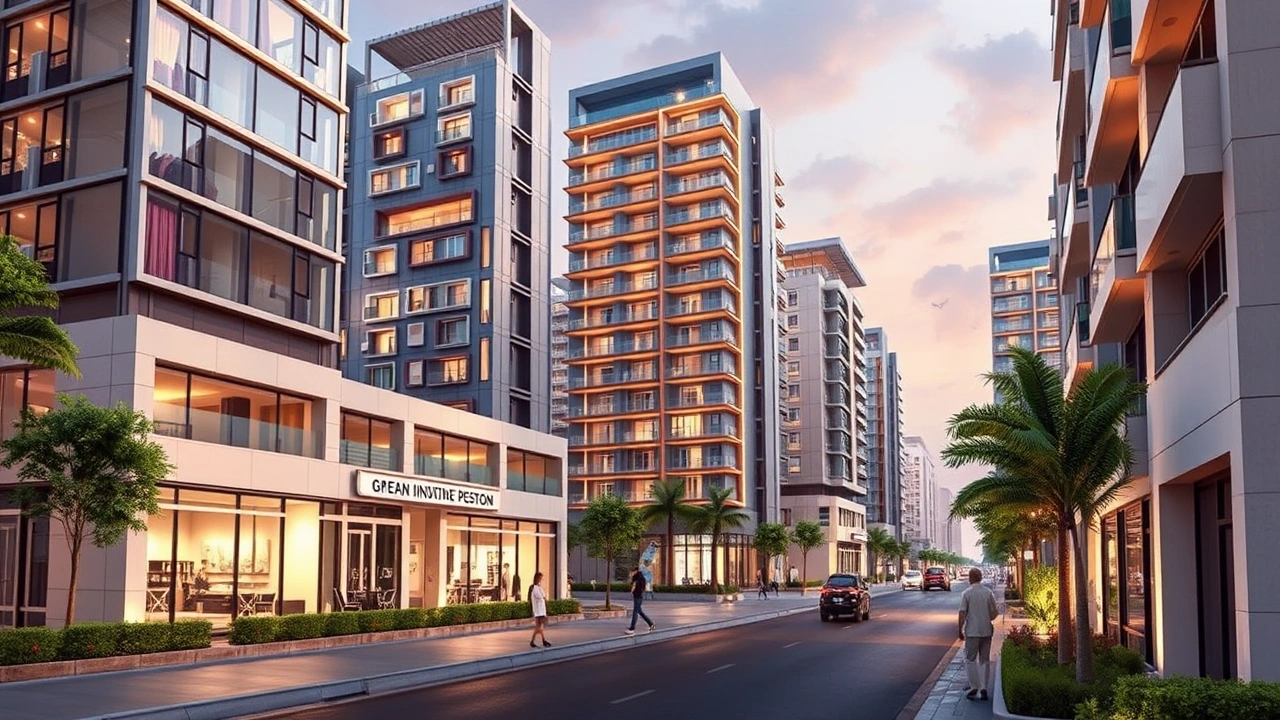
In the urban Malé region, “classic” apartments can offer sea views, although the density there is incomparable to the ambiance of remote atolls.
Where to Buy: Overview of Key Atolls and Zones
Not all Maldivian islands offer the same investment potential. Infrastructure, accessibility, tourist reputation, and ongoing projects play a determining role.
Must-Consider Atolls for a Seaside Investment
Several atolls stand out for investors targeting a seaside property:
| Atoll / Zone | Profile & Strengths | Trends & Key Figures |
|---|---|---|
| North Malé Atoll | Historic tourist heart, close to airport, marinas, seaplane hub | Rental yields above 8%, villas $1.8–4M |
| South Malé Atoll | Mix of accessibility and exclusivity, marina expansions | Villa prices at a 15-year peak |
| Baa Atoll | UNESCO Biosphere Reserve, manta ray spot (Hanifaru Bay), ecolodges | Strong interest in eco-responsible resorts |
| Noonu Atoll | Home to signature resorts (e.g., Soneva Jani), future marina complex | Branded villas with target yield 7–9% |
| Dhaalu Atoll | “Green luxury” developments, projects like Kandima / Coral Residences | Projected capital gains of 20–25% over 5 years |
| Raa & Shaviyani | Improved accessibility (roads, airports), preserved reefs | Yields already observed 5–7%, strong pre-sales |
| Lhaviyani Atoll | New deep-water marina, future seaplane terminal | Growing superyacht interest |
| Addu Atoll | International airport, catch-up potential | “Value” opportunities from $500,000 |
For a yield-oriented investor, atolls close to Malé and very high-end integrated projects often deliver the best occupancy rates and well-oiled management programs. Emerging atolls, on the other hand, can offer more capital appreciation potential, but with a higher risk regarding market depth upon resale.
Malé and Hulhumalé: Urban Market with Sea Views
The capital Malé and the artificial island of Hulhumalé constitute another facet of the market:
Gross residential yields can reach 14% on the city’s outskirts.
These assets do not match the image of an isolated stilt villa, but may appeal to an investor seeking a more urban asset, with rental demand driven by residents and workers in the tourism sector.
Rental Yield and Investment Potential
Buying seaside in the Maldives is not just about a prestige second home; in many cases, it’s a rental investment managed by a hotel operator.
Management Programs and Rental Income
The vast majority of resorts offer a rental program: when you are not using your villa, it is integrated into the hotel inventory, marketed like any other suite. In return:
The operator handles daily management, maintenance, marketing, and the booking platform. In exchange, revenues are shared: the owner typically receives between 40% and 60% of gross turnover, with the remainder covering operational costs and the operator’s margin.
Expected net yields vary by property type:
| Property Type | Indicative Annual Net Yield |
|---|---|
| International Brand Stilt Villas | 5 to 7% |
| Beach Villas | 4 to 6% |
| Residences in Integrated Resorts | 6 to 8% |
| Greater Malé Urban Residential | 6 to 10% depending on location |
High occupancy rates (often above 70% in well-managed resorts) and high pricing in peak season support these performances, but they remain dependent on global tourism health and the resort’s ability to maintain its appeal.
Capital Appreciation and Holding Horizon
Regarding capital appreciation, several trends coexist:
Targeted annual growth rate for ultra-prime real estate in certain zones of the Maldives, driven by new infrastructure.
However, it’s essential to keep in mind that the leasehold nature of the asset works against it in the long term: the shorter the remaining lease term, the more the theoretical value contracts, unless a credible renewal scenario is contractually stipulated and the state maintains its policy of lease extensions.
Costs, Taxes, and Taxation: What a Seaside Villa Really Costs
The prices listed in brochures are only part of the bill. In the Maldives, transaction and holding costs include several layers: consumption taxes, tourist fees, lease rents, management fees, and potential profit taxes.
Transaction Costs at Purchase
A foreign investor should anticipate fees in the order of 8 to 12% of the purchase price:
| Cost Item | Indicative Level |
|---|---|
| Goods & Services Tax (GST) on Purchase | 6% of property price |
| Legal Fees | 1 to 1.5% of price |
| Registration Fees | 0.1 to 0.2% of price |
| Agency Fees | 0 to 3% (often borne by the seller/developer) |
| Technical & Legal Due Diligence | Fixed fee often between $5,000 and $10,000 |
| Stamp Duty, Miscellaneous Fees | Variable amount |
On top of this, there may be exchange fees (1 to 3%) for investors not buying in dollars, and international transfer fees.
Recurring Costs: Lease Rent, Management, Tourist Taxes
Once you own your leasehold right or your unit in a resort, several annual charges apply:
Main taxes, levies, and fees to consider in the financial management of a tourist island lease in the Maldives.
Calculated per square meter for the island’s head lease. Usually integrated into charges or revenue-sharing structure.
Paid by tourists: $6 to $12 USD per night/person depending on establishment type and size. Collected by the operator and paid to authorities.
6% tax applied to rental income. Usually managed by the resort operator.
15% rate for profits exceeding 500,000 MVR. No tax below this threshold for local corporate structures.
10% levy on certain payments made to non-resident beneficiaries.
Often covered by the resort via the revenue split key (40-60%). Some contracts include additional maintenance fees or a reserve fund.
Important point for individual investors: there is currently no generalized property tax nor a specific capital gains tax on real estate, even though profits can be captured via the business profit tax if the investment is structured through a company.
Attractive Taxation… But to be Aligned with Your Country of Residence
From the Maldivian perspective, the taxation on holding a seaside property thus appears moderate, especially compared to heavily taxed jurisdictions. However, the investor must absolutely consider:
Residents must consider their home country’s tax obligations (declaration of worldwide income, capital gains, offshore structures) and double taxation treaties, such as those between the Maldives and the United Arab Emirates and Bangladesh. The rapid evolution of international regulations on tax transparency now restricts the use of anonymous shell companies.
Visa, Residence, and Non-Financial Benefits
For many buyers, becoming the owner of a seaside villa in the Maldives is not just a financial investment: being able to stay regularly and easily in the country is a key element.
Visas Linked to Real Estate Investment
The Maldives has implemented several residency schemes associated with investments:
Discover the main programs for obtaining a right of stay or residence in the Maldives through investment, professional activity, or retirement.
For an investment of at least $250,000 in a registered company, valid for 5 years renewable.
Granted to buyers of properties of a minimum value of $250,000 in approved projects; renewable five-year residence right, including family.
Offers a 5-year renewable visa in exchange for a fixed deposit of $250,000 in a Maldivian bank.
Up to one year renewable, for persons involved in professional activity on-site.
These schemes do not lead to citizenship or permanent residence, but they offer flexibility for multiple stays, managing your property, and enjoying your villa throughout the year.
“Classic” Tourist Stay
Regardless of investment, the Maldives grants most nationalities a 30-day tourist visa on arrival, extendable up to 90 days. For “vacation home” use, many owners combine this standard regime with occasional longer stays under business or special residence visa cover.
Purchase Process and Due Diligence: How to Avoid Pitfalls
Given the specificity of Maldivian land law, the purchase of a seaside property should never be taken lightly. Due diligence, as much legal as technical and environmental, is mandatory.
The Main Steps of a Purchase
In practice, a typical process unfolds in several phases:
1. Project and Unit Selection You identify a resort or development (for example Coral Residences, Baccarat Maldives, Soneva Fushi, Zamani Islands) via a specialized agent, an international platform, or directly from the developer.
2. Reservation Agreement A Reservation Agreement is signed, accompanied by a deposit (generally between $10,000 and $50,000). This amount may be refundable or not depending on the conditions, hence the importance of reading the contract carefully.
During the due diligence period, which generally lasts from 14 to 30 days (sometimes up to 90 days), your advisors must imperatively verify: the island’s head lease (duration, renewal, alignment with resale rights), administrative authorizations (Tourism Act, environmental permits, zoning), the legality of the strata-title mechanism and its compliance with regulations, any mortgages, liens, or disputes, as well as the structure and projected profitability of the rental management.
4. Signing the Sales & Purchase Agreement (SPA) The SPA formalizes the price, payment schedule, delivery conditions (for off-plan properties), private usage rights, participation in the rental pool, as well as exit clauses (resale, potential buyback by the developer).
5. Staggered Payments and Construction (if applicable) For an off-plan property, payments follow milestones (foundations, lock-up, finishes…). For a completed property, an initial payment of 20 to 30% is common, with the balance paid upon handover.
Registering the lease with the competent authorities is a crucial step. It is this formality that makes your rights fully enforceable against third parties and formalizes the transaction. It is followed by the handover of possession of the property.
The total duration can range from a few weeks for an existing, fully cash-paid property to 2 or 3 years for a construction project.
Environmental Due Diligence: An Imperative on a Threatened Island
Beyond legal aspects, the vulnerability of the Maldives to climate change imposes an environmental check:
– Average island elevation and exposure to flooding (the country’s highest point is 2.4m, with an average of 1.5m).
– Nature and effectiveness of protection structures (dikes, rock armor, breakwaters).
– Condition of the coral reef and restoration projects (many reefs lost up to 75% of their coral during the massive bleaching event in 2016).
– Freshwater and waste management on the island, in a context where over 97% of islands no longer have potable groundwater.
This assessment allows you to judge whether the asset has a reasonable chance of retaining its appeal in 20, 30, or 40 years, while scientific projections mention a sea level rise of 0.5 to 1.1 meters by 2100 and a dramatic increase in flooding episodes.
Financing and Structuring: How to Pay for Your Maldivian Villa
In a market dominated by very high incomes, most transactions are made in cash. It is estimated that over 70% of international buyers pay cash, sometimes by mobilizing credit lines or refinancing in their home country.
Available Financing Options
Several options nevertheless exist:
Discover the main financing solutions available for acquiring real estate in the Maldives, tailored for residents and international investors.
Some real estate projects offer structured payment schedules, e.g., 30% upon signing, then the balance spread over several years or as work progresses, sometimes with a fixed interest rate around 5.2–5.5%.
Maldivian banks, like the Bank of Maldives, offer real estate loans. Access for non-residents and for purely tourist properties remains limited. Rates are relatively high, with average mortgage rates around 12.4% for certain local offers over 20 years.
International private banks or specialized lenders can finance acquisitions. This often requires a down payment of 20 to 40%, includes arrangement fees (0.5–2%), and rates linked to the borrower’s risk profile.
Many investors rather opt for:
– A bridge loan or mobilization of equity from an existing asset (securities-backed line of credit, mortgage refinancing in their country).
– Structuring via special purpose vehicles (SPV) to optimize taxation and transfer, taking into account new transparency rules on beneficial owners.
Management, Resale, and Exit: Think About the Holding Horizon from the Start
The purchase of a seaside property in the Maldives must not be thought of in isolation: the liquidity of resale is more limited than in a major capital, and the value depends on both the resort, the time remaining on the lease, and the country’s tourist appeal.
Management Models
Essentially, three approaches are distinguished:
For a passive investor, the resort-managed rental program is the most common solution. Your contract must imperatively detail the revenue-sharing split, your personal usage rights (number of weeks per year and blackout periods), maintenance standards, and performance indicators. Independent management is rarer and more complex, especially for villas within a resort where uniformity is crucial, although possible for some urban apartments. Finally, hybrid models exist, combining periods in the rental program and periods reserved for the owner’s exclusive use.
Resale and Time Horizon
The resale of a leasehold right or a resort unit often involves:
To sell your commercial lease, several steps are essential. First, you must find a buyer, whether another international investor or a local buyer willing to take over your position. Next, if your contract provides for it, you must absolutely obtain the approval of the operator or head lessor. Finally, be aware that the market is less deep than in major metropolises: a timeline of 6 to 12 months to finalize a sale is quite common and should not be a cause for concern.
One of the major determinants of resale value is the remaining term on the lease. When this falls below the 30-year mark, a significant discount generally applies, unless robust and already activated renewal clauses reassure buyers.
Some developments include buyback options by the developer, which can provide security, but these mechanisms must be examined closely (price, timing, conditions).
Risks and Mitigation Strategies
Buying seaside in the Maldives means accepting a particular risk/return profile. Among the main identified risks:
Real estate investment in the Maldives is exposed to several critical risks: high climate vulnerability (coastal erosion affecting over 90% of islands, coral bleaching, storms), political risk with planned tax changes (increase in tourist taxes in 2025) and regulatory shifts, dangerous economic concentration on tourism, and a very thin resale market, especially for luxury properties.
Several levers allow for reducing these risks:
– Choose islands and projects with good coastal protection and slightly higher elevation (Hulhumalé, for example, was raised to around 2m, with infrastructure designed for the future climate).
– Prefer solid international operators, capable of maintaining occupancy and adapting to market changes.
– Demand thorough legal due diligence, by an experienced local firm, to secure lease renewal, transfer, and buyback clauses.
– Subscribe to suitable insurance (natural disasters, business interruption if applicable).
– Avoid over-concentrating your wealth on a single island asset, however appealing it may be.
Buying Seaside in the Maldives: For Which Investor Profile?
At the end of this overview, one conclusion is clear: a seaside property in the Maldives is neither a classic real estate purchase, nor a simple financial investment. It is an enjoyment asset with a strong emotional dimension, situated in a country on the front line of climate change, with a very specific legal framework based on long-term leases.
This type of investment primarily appeals to profiles:
This type of investment in a Maldivian villa mainly suits individuals who already have a diversified portfolio, for whom it is a pleasure diversification. They must be able to absorb volatility in tourism-related income and a potentially lengthy exit. A significant financial commitment (often several million dollars) is required, with full awareness of the asset’s leasehold nature.
For these investors, the Maldives can offer an attractive compromise between rental yield, prestige, personal use, and status, with the possibility to enjoy a still exceptional natural environment, despite the pressures it faces. Provided the market is approached without naivety, with specialized advice, a deep understanding of local law, and a clear-eyed view of long-term climate challenges.
In summary, buying a seaside property in the Maldives is about combining pleasure and rigor: the pleasure of a spectacular setting and an extraordinary beachfront lifestyle; the rigor of an impeccable legal, financial, and environmental approach to transform a turquoise lagoon dream into a truly mastered investment.
Disclaimer: The information provided on this website is for informational purposes only and does not constitute financial, legal, or professional advice. We encourage you to consult qualified experts before making any investment, real estate, or expatriation decisions. Although we strive to maintain up-to-date and accurate information, we do not guarantee the completeness, accuracy, or timeliness of the proposed content. As investment and expatriation involve risks, we disclaim any liability for potential losses or damages arising from the use of this site. Your use of this site confirms your acceptance of these terms and your understanding of the associated risks.

Cyril Jarnias is an independent expert in international wealth management with over 20 years of experience. As an expatriate himself, he is dedicated to helping individuals and business leaders build, protect, and pass on their wealth with complete peace of mind.
On his website, cyriljarnias.com, he shares his expertise on international real estate, offshore company formation, and expatriation.
Thanks to his expertise, he offers sound advice to optimize his clients' wealth management. Cyril Jarnias is also recognized for his appearances in many prestigious media outlets such as BFM Business, les Français de l’étranger, Le Figaro, Les Echos, and Mieux vivre votre argent, where he shares his knowledge and know-how in wealth management.