 Published on and written by Cyril Jarnias
Owning a home facing the Pacific, a colonial apartment in Granada, or a finca in the mountains of Matagalpa is attracting more and more foreigners. But behind the postcard views, real estate purchase in Nicaragua remains a serious legal operation, with its strengths, unique aspects… and risks. Understanding the legal framework, transaction steps, taxation, and potential pitfalls is essential before signing any commitment.
This article details, step by step and based on available data, the complete process for a foreigner to acquire real estate in Nicaragua, from the initial property visit to the final receipt of the title deed.
A Surprisingly Open Legal Framework, But Not Without Gray Areas
The starting point is rather reassuring: Nicaragua is one of the Central American countries most open to foreign buyers. The Constitution, via Articles 27 and 44, guarantees the right to private property and equal treatment between Nicaraguans and non-residents. The Foreign Investment Law (Law 344) complements this framework by granting international investors the same rights as nationals.
Concretely, a foreigner can buy and hold a property in full ownership, in their own name, without a mandatory local partner and without a residency requirement. There is no minimum investment threshold to have the right to acquire a property, although certain amounts are required to benefit from residency programs.
Where things get complicated is in certain sensitive geographical areas and in the legacy of the country’s land history.
Restrictions in Coastal and Border Areas
Two major sets of restrictions govern foreign ownership.
It is prohibited for foreigners to directly own real estate located within 5 km of the land borders with Costa Rica and Honduras. For an area between 5 and 15 km from these borders, a purchase is theoretically possible but subject to obtaining prior special authorization (waiver), a process that can take one to two years.
Second, the coasts and shorelines, governed by the Coastal Law (Ley de Costas). The first 50 meters from the high-tide line are public domain and cannot be sold. Beyond that, and up to 200 meters inland, property and construction rights may be subject to concessions and specific permits. In some portions of the coastline or on historically public land, a “Certificate of Non-Objection” (CONO) issued by the Attorney General’s Office (PGR) is essential to register a transfer.
The table provided in the article lists and summarizes the main geographical restrictions affecting foreigners, such as regulated access zones or territories requiring special authorization.
| Area Concerned | Main Rule for Foreigners | Specifics / Key Documents |
|---|---|---|
| 0–5 km from Costa Rica / Honduras borders | Direct ownership prohibited | Possible structures via Nicaraguan company, legally sensitive |
| 5–15 km from borders | Ownership possible with special permit (waiver) | Processing time 1–2 years |
| 0–50 m beyond the high-tide line | Public domain, no private ownership possible | Guaranteed public access |
| 50–200 m from coasts (depending on case) | Ownership subject to concessions / specific certificates | Often requires a CONO or environmental permits |
| Indigenous and communal lands | Customary regime, private ownership very limited or impossible | More about concessions, questionable usage rights |
For a foreign investor, these rules do not make purchasing by the sea impossible, but they require strict filtering of properties and titles.
The Long Shadow of Land History
Another major specific feature: the country’s agrarian past. Between 1979 and 1990, the Sandinista government expropriated approximately 28,000 properties. Some of these properties have been subject to compensation or regularization, but many situations remain contentious or have generated complex chains of title.
The consequences are direct for the buyer:
– several people may lay claim to the same land;
– titles that appear “clean” can be contested later;
– the justice system is slow, sometimes influenced by political or economic interests.
U.S. authorities, via the embassy in Managua, explicitly recommend extreme caution on real estate purchases, especially in coastal areas. The golden rule then becomes: without thorough due diligence, no transaction.
Where Foreigners Look: From Colonial Cities to Pacific Beaches
Within this contrasting legal landscape, several areas stand out as main hubs for foreign investment, with very different profiles and prices.
Granada, León and the Colonial Cities
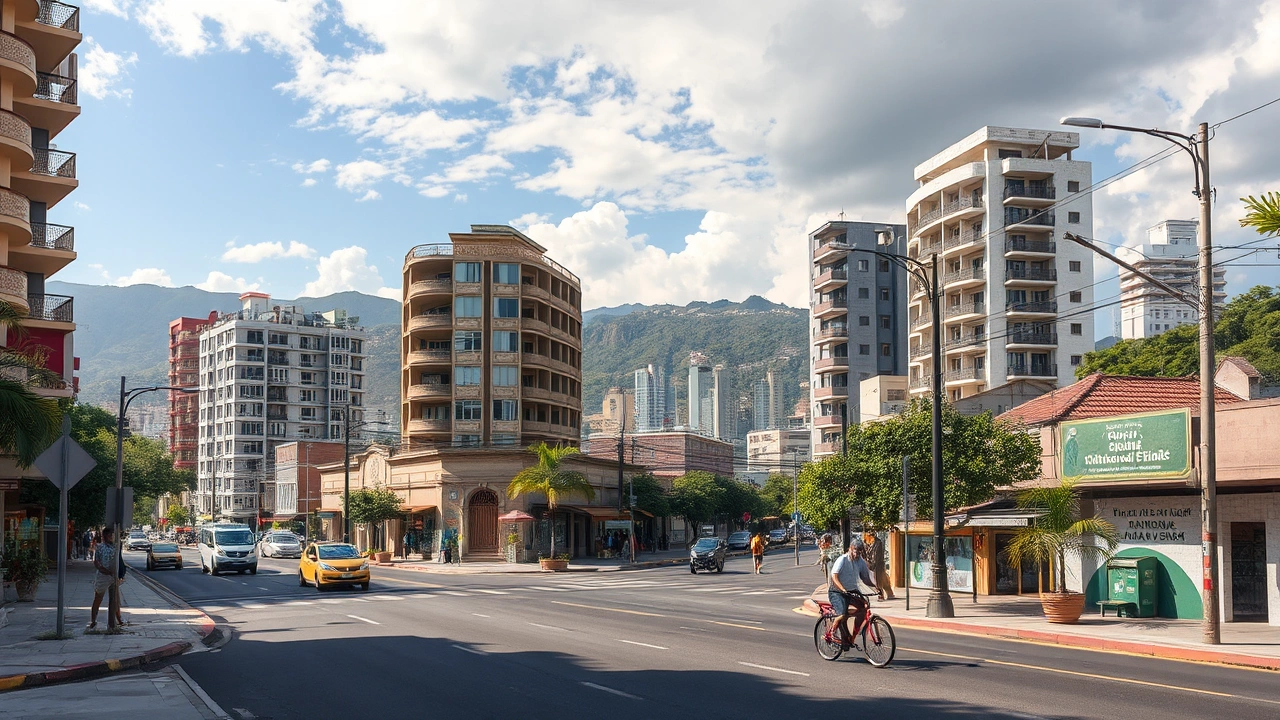
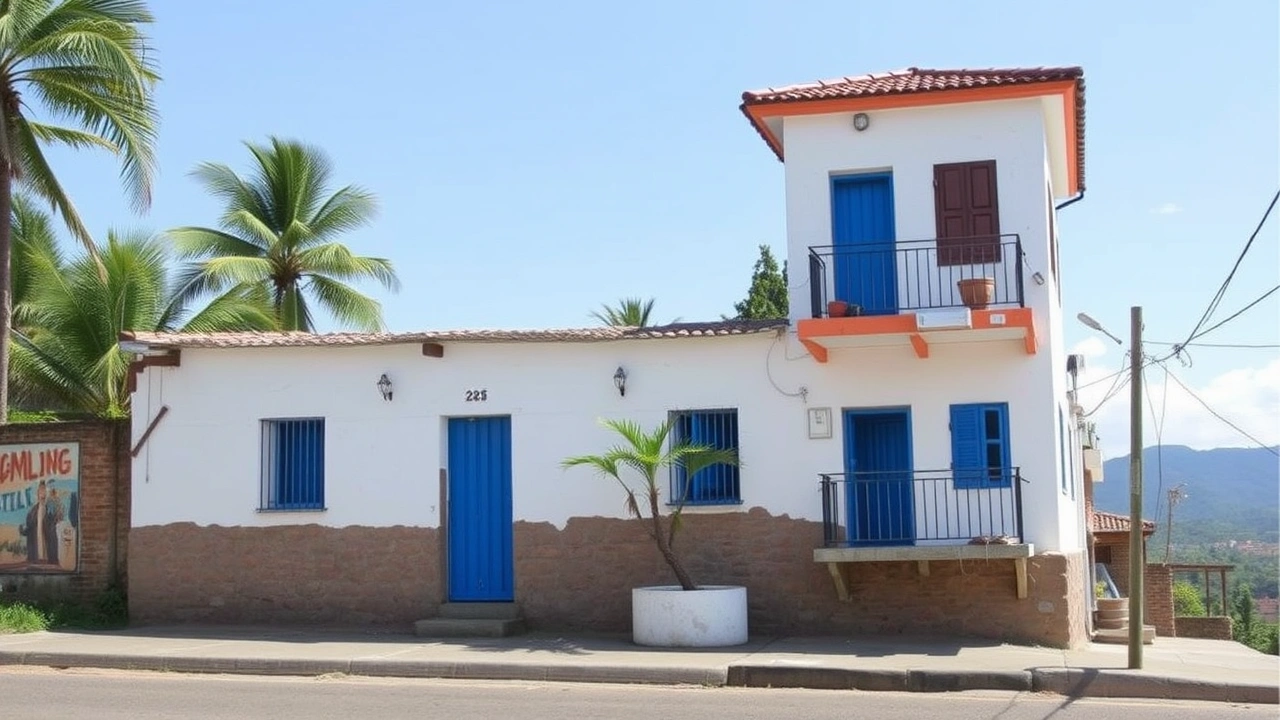
Granada, on the shores of the great lake, remains the country’s colonial icon. Its colorful facade houses, interior patios, and high ceilings attract retirees, digital nomads, and investors in boutique hospitality. Simple apartments can start at relatively low levels, while renovated colonial houses sell for hundreds of thousands of dollars. A typical two-bedroom house there ranges between $100,000 and $250,000.
Common price range for a two-bedroom house in the city of León, in dollars.
San Juan del Sur, Tola and the Pacific Coast
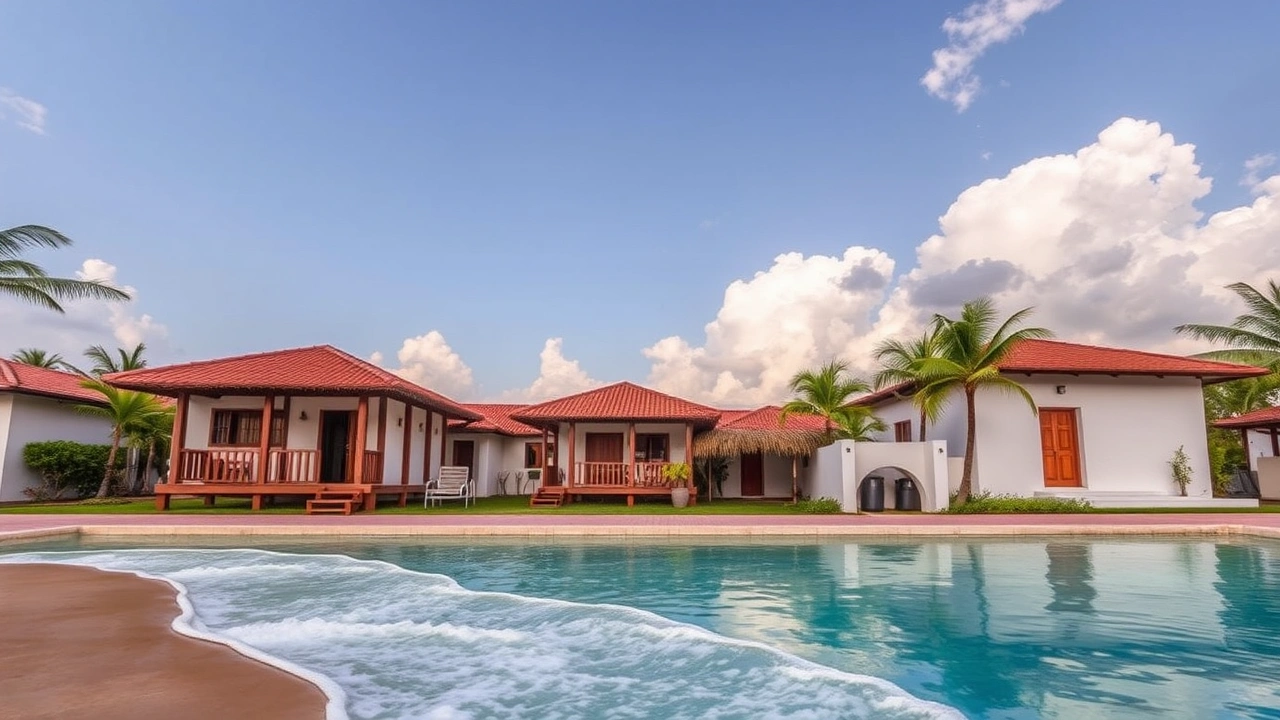
On the Pacific coast, San Juan del Sur has become the epicenter of foreign beach investment: surfing, nightlife, a dense expatriate community, international schools, and a significant seasonal rental market. Houses on the hills with bay views start around $150,000, while beachfront villas can far exceed a million.
The Tola region, nicknamed the “Emerald Coast,” is the high-end investment hub in Nicaragua. It hosts prestigious residential projects like Rancho Santana or Guacalito de la Isla, offering luxury villas, residences with golf, and eco-oriented resorts. Entry-level prices for an oceanfront property on the Pacific Ocean typically range between $150,000 and $250,000, while premium properties can exceed $500,000.
Managua, Mountains, and Islands
The capital, Managua, mainly interests investors looking for rental yield: apartments in modern neighborhoods, offices, shopping centers, and secure subdivisions. The price per square meter there averages between approximately $1,170 and $1,488, with cited yields of 8 to 11% for some rental segments.
Inland, mountain towns like Estelí or Matagalpa attract for their cooler climate and opportunities in agritourism or coffee projects. The price per square meter there is significantly lower, around $650 on average.
The following table provides some numerical benchmarks on prices and trends:
| Area / Market Type | Typical Price Level (order of magnitude) | Main Positioning |
|---|---|---|
| National average (housing, €/m²) | Approx. 930 USD/m² | Market still affordable vs. neighboring countries |
| Managua – apartments / houses | 1,170–1,488 USD/m² (sought-after urban areas) | Long-term rental, offices, middle/upper classes |
| Granada – 2-bedroom house | 100,000–250,000 USD | Primary/secondary residences, small hotels |
| León – 2-bedroom house | 80,000–150,000 USD | Students, cultural tourism |
| Pacific coast – entry-level beachfront | 150,000–250,000 USD | Vacation homes, short-term rentals |
| High-end villas (Emerald Coast, etc.) | > 500,000 USD, sometimes > 1,000,000 USD | International luxury market |
| Mountain towns (Estelí, Matagalpa) | ~650 USD/m² | Agritourism, countryside residences |
These figures illustrate the country’s relative attractiveness compared to Costa Rica or Panama, where equivalent properties often sell for much more.
How a Real Estate Purchase Actually Unfolds
Beyond the postcards, the legal mechanics of a purchase in Nicaragua follow a fairly clear pattern, similar in spirit to other civil law countries, but with strong administrative specificities.
First Phase: Selection, Offer, and Preliminary Agreement
It all starts with the property search. The absence of a national MLS complicates the task: listings are scattered among agencies, portals, social media, and word of mouth. Using a real estate agent licensed by INVUR and based locally, then an independent lawyer, is therefore highly recommended.
Once the property is identified, the buyer makes an offer, often accompanied by an “earnest money” deposit (e.g., $1,000) to show seriousness. If the seller accepts, the parties then sign a preliminary agreement, usually called a Promesa de Venta or private sales contract. This document sets the price, conditions precedent, deadlines, and provides for a deposit, typically 5 to 15% of the price, most often 10%, placed in an escrow account managed by a law firm.
This crucial step in the acquisition process goes beyond formality to precisely define the commitments and practical modalities of the transaction.
Anticipate measures and adjustments in case of unfavorable findings during the in-depth audit of the target company.
Clearly determine the allocation of various taxes and fees related to the transaction between the buyer and seller.
Establish the precise schedule and deadlines for payment of the purchase price.
Negotiate the terms of use and repayment of any loan granted by the seller to facilitate the transaction.
Second Phase: Legal and Cadastral Due Diligence
The due diligence is the heart of the process. A Nicaraguan lawyer specialized in real estate will:
– verify that the title deed (Escritura or título de propiedad) is correctly in the seller’s name and properly registered at the Public Registry (Registro Público);
– trace the chain of title (Historia Registral) for at least 10 years, and often much longer: generally back to 1979, or even before 1917 for coastal properties, to identify any episodes of confiscation or questionable regularization;
– obtain a certificate of free of liens (Libertad de Gravamen) attesting to the absence of current mortgages or seizures;
– collect a municipal solvency certificate (Solvencia Municipal) confirming that local taxes are up to date, as well as receipts for IBI (property tax) payments;
– compare the cadastral plan and topographic survey with the physical reality on the ground (boundaries, access, possible encroachments or undeclared easements);
– verify the existence of a potential CONO (Certificación de No Objeción) if the property is located in a coastal area, former cooperative, former public property, or subject to the agrarian laws of the 1990s.
This investigation can go as far as interviewing neighbors to detect the presence of squatters or families claiming prolonged possession, common in rural areas. If major, non-curable problems are identified, contracts generally provide for the buyer’s right to withdraw and recover their deposit.
Third Phase: Closing Before a Notary
When the due diligence is satisfactory, the closing takes place. Legally, the sale is materialized by a Escritura Pública de Compraventa, an authentic deed drafted and read by a public notary (Notario Público). This is a lawyer authorized by the Supreme Court, subject to enhanced control and anti-money laundering obligations.
The physical presence of the buyer and seller is required. If the buyer cannot travel, they can grant a special power of attorney (*Poder Especial*) to a representative on-site. This power of attorney must be signed in their country, then legalized (apostille or consular procedure) and sent to Nicaragua. Overly broad general powers of attorney (*Poder General*) should be avoided for legal security reasons.
Advice for Real Estate Transactions in Nicaragua
On the day of signing, the remaining funds are released from the escrow account or delivered by wire transfer or certified check. From that moment, the buyer legally becomes the owner, even if the registries are not yet updated.
Fourth Phase: Registration at the Public Registry and Cadastre
After closing, the complete file (signed Escritura, tax certificates, cadastral plan, SISCA forms, proof of transfer tax payment, etc.) is filed by the lawyer at the Registro Público and with the cadastral services. This step formalizes the enforceability of the ownership against third parties.
The registration timeframe varies by region and the complexity of the file: from 30–45 days in simple cases to several months, even up to 6–8 months for some coastal properties requiring a CONO or subject to additional requirements. During this time, the buyer keeps the closing statement and a certified copy of the Escritura as proof.
The complete process, from initial offer to final registration, usually takes between 65 and 90 days, but can last longer depending on the property’s specifics.
What a Transaction Really Costs: Taxes, Fees, and Insurance
From a purely financial perspective, real estate purchase in Nicaragua has a cost structure to know before starting. Between transfer taxes, notary fees, attorney fees, registration fees, and ancillary costs, it is prudent to budget between 5 and 9% of the property price in closing costs for the buyer, sometimes more in certain scenarios.
Transfer and Registration Taxes
The transfer tax (Impuesto de Traspaso or alcabala) applies to the declared value of the transaction or the fiscal value, whichever is higher. Depending on sources, it is either presented as a fixed rate around 4%, or as a progressive scale ranging from 1% to 7% based on value brackets (1% up to $50,000, 2% from $50,001 to $100,000, etc., reaching 7% above $500,000). In practice, many transactions fall in the 3–4% range.
The registration fee for a real estate transaction in Nicaragua is about 1% of the property value, with a common cap between $1000 and $1500.
Legal Fees and Miscellaneous Costs
The attorney’s fees for managing the operation are generally between 1 and 2% of the purchase price. The notary, who is often the same professional or an associate, also charges fees, typically between 0.5 and 2% of the property’s value.
Add fixed costs:
– preparation of the special power of attorney: $50–100;
– cadastral certificates and topographic surveys: $150–250, or $300–800 for certain surveys;
– escrow services: 0.5% of the price or about $400–1,000;
– fees for translation and legalization of foreign documents;
– international wire transfer fees: $25–100 per transfer.
Many buyers also opt for title insurance, available from international providers for about 0.5–1% of the insured value (e.g., around $500 for $100,000 in coverage).
The following table illustrates a typical fee budget for a $150,000 property:
| Expense Item | Calculation Basis | Approximate Amount (USD) |
|---|---|---|
| Transfer Tax (4% hypothetical) | 150,000 USD | 6,000 |
| Registration Fee (1%) | 150,000 USD | 1,500 |
| Attorney Fees (1.5%) | 150,000 USD | 2,250 |
| Notary Fees (0.5%) | 150,000 USD | 750 |
| Title Insurance (0.5%) | 150,000 USD | 750 |
| Certificates / Miscellaneous | Average flat fee | 300–500 |
| Estimated Total Closing Costs | – | ~ 11,550–11,950 |
Thus, costs easily exceed 7–8% of the purchase price. For a $100,000 investment, overall startup costs were cited on the order of $7,500 to $9,000.
Recurring Charges: Property Tax and Operating Costs
On the recurring side, the property tax (Impuesto de Bienes Inmuebles, IBI) is relatively moderate. It corresponds to approximately 1% of 80% of the cadastral value, the latter often being below market price. For a house valued at $100,000, the annual bill is typically between $800 and $1,000, with a discount of about 10% if paid before the end of March. Certain property categories benefit from exemptions, notably urban properties with a cadastral value below $40,000, or some small rural plots and agricultural land within size limits.
The maximum estimated annual maintenance cost for a medium-sized house in New Caledonia.
Cash Payment, Local Credit, or Seller Financing: How a Purchase is Financed
The Nicaraguan real estate market largely operates on a cash basis. The majority of transactions involving foreigners conclude without local bank credit.
Bank Credit: Rare, Expensive, and Restrictive
Nicaraguan banks like Banpro, Banco Lafise Bancentro, or BAC can theoretically lend to non-residents, but conditions are strict: complete financial file, sometimes local residency, income history, solid guarantees. Interest rates are frequently in high ranges, between 9 and 15%, with shorter terms than in Western countries. In certain micro-markets, like San Juan del Sur or Tola, banks simply do not finance real estate purchases.
To benefit from leverage, buyers often opt for refinancing in their home country (e.g., a mortgage on their primary residence) before presenting themselves as cash buyers in Nicaragua.
Seller Financing: The Flexibility Valve
To circumvent the absence or high cost of bank credit, one mechanism has become widespread: owner financing or vendor take-back. In this scheme, the seller effectively becomes the buyer’s “bank,” accepting payment of the price in installments.
A typical owner financing involves: a financing method where the seller agrees to finance the buyer’s purchase of a property, usually in the form of a loan or installment payments. This type of financing can facilitate the sale by offering more flexible terms than those offered by traditional banks or financial institutions.
– an initial down payment of 40 to 50% of the purchase price (in some markets, 50% has become the norm);
– installments over 2 to 5 years, sometimes up to 7 years for specific projects or developers;
– interest rates generally lower than bank rates, often between 0 and 8% depending on negotiation.
All financial terms (down payment amount, payment schedule, interest rate, penalties, guarantees) must be included in the Promesa de Venta and incorporated into the final deed. In a tight market with low inventory, sellers are more selective and often reject proposals with a low down payment or too long a financing term.
Full Cash Payment: The Strong Card in Negotiation
Arriving with available funds remains the major competitive advantage. A cash buyer offers:
– a faster process;
– reduced risk for the seller;
– greater negotiating leverage on the final price.
Funds are typically transferred via escrow accounts managed by a law firm or international provider, which guarantees a certain level of security and facilitates compliance with anti-money laundering (AML) rules.
Ownership Structures, Income Taxation, and Capital Gains
Once the property is acquired, the question arises of the best ownership structure and the applicable tax framework for income and resale.
Direct Ownership or via Nicaraguan Company
Two main options dominate:
– Direct ownership in one’s own name, simple and suitable for a personal residence or a modest rental property.
– Ownership via a Nicaraguan company (Sociedad Anónima – S.A.), or even via a foreign entity like an LLC, trust, or IRA for U.S. investors.
The corporate structure offers several advantages:
– a capital gains tax rate capped at around 15% at the corporate level, whereas an individual may be subject to a significantly higher rate on net gain (rates going up to over 30% are mentioned in some regimes);
– better estate planning, with transfer of shares rather than the land title;
– a certain degree of liability protection.
Creating a Sociedad Anónima (S.A.) requires at least two shareholders. It entails accounting and tax obligations, including filings and, potentially, a net worth tax on companies.
Rental Income Taxation and Territorial System
Nicaragua applies a territorial taxation system: only Nicaraguan-source income is taxable in the country. Pensions, interest, rents, or salaries received abroad are not taxed locally.
For rental income from Nicaraguan properties, the general rule for a non-resident is:
– a withholding at source of 15% on a taxable base corresponding to 70% of gross rent (a standard 30% deduction being assumed to cover expenses), or 80% for vacant land;
– resulting in an effective tax rate of approximately 10.5% of gross rent received.
For residents, tax is calculated on a progressive scale that can reach high rates. In contrast, non-residents are generally subject to withholding at source which constitutes a final tax.
Capital Gains and Other Taxes
In case of resale, a capital gains tax is due, calculated on the difference between the sale price and the documented acquisition value. For companies, the rate is generally around 15%. For individuals, it can climb significantly higher. If the initial acquisition cost is not documented, the tax authority may estimate a default calculation base (e.g., 60% of the sale price).
Other tax mechanisms complete the landscape, such as a definitive minimum tax on companies’ net assets above a certain threshold, or specific exemptions for projects in free trade zones or tourism (law 306) allowing up to ten years of exemption from income and property tax for certain tourism projects.
Buying to Relocate: Links Between Real Estate and Residency
Owning property in Nicaragua imposes no residency obligation. However, beyond a certain investment level, real estate purchase can open the door to legal residency.
Residency programs notably include: hospital internships, continuing education, mentoring by experienced physicians, and access to specialized educational resources.
The minimum monthly pension income required for retiree residency in Panama.
A real estate investment of at least $50,000 is often cited as the threshold for eligibility under the investor category. The procedure involves providing proof of investment, a clean criminal record, proof of income, medical exams, and apostilled identity documents. The residency obtained is initially temporary but can lead to permanent residency, and then to citizenship after several years of presence and proof of integration, including a certain mastery of Spanish.
Specific Risks and Best Practices for Protection
Despite a favorable legal framework on paper, several concrete risks weigh on a real estate purchase in Nicaragua. Knowing them well allows for implementing the right safeguards.
Questionable Titles, Squatters, and Judicial Slowness
The first risk is that of a defective title. The combination of agrarian reform, weak institutions, and sometimes opaque practices has produced many situations where:
– the same property has been transferred multiple times, via different regimes (agrarian title, título supletorio, right of possession, etc.);
– heirs contest an old sale;
– long-term occupants claim a right of possession.
The courts, often overloaded, can take months, even years, to render a decision. Moreover, the execution of judgments can be hindered by a lack of resources or by political or social resistance, such as squatters or former owners refusing to leave despite a legal injunction.
To limit these risks, it is essential to:
– have a thorough historical title search conducted over several decades, especially for coastal or rural properties;
– refuse to buy based solely on an untitled “right of possession” in sensitive areas;
– demand all up-to-date certificates (no-lien, solvency, CONO if applicable);
– favor known subdivisions and projects where the developer has already secured the chain of title.
AML Framework, Documentation, and Fund Traceability
Authorities have strengthened anti-money laundering rules. The Financial Analysis Unit (UAF) requires notaries, lawyers, and real estate agencies to verify the origin of buyers’ funds. Be prepared to provide:
– bank statements;
– tax returns;
– KYC forms;
– declarations of fund origin.
Prior controls are essential and condition the registration of the transaction. It is recommended to be assisted by an experienced law firm to prepare the file correctly.
Insurance, Local Will, and Post-Purchase Management
Given the complexity of the land system, taking out title insurance is highly recommended. Even if not all scenarios are covered, it’s an additional layer of protection against potential claims.
Regarding inheritance, it is advisable to draft a Nicaraguan will, as there is no public will registry in the country. Clarifying in advance the transmission of the property in case of death saves your heirs lengthy procedures.
Finally, in a country exposed to hurricanes and earthquakes, insuring the house (structure, contents, liability, possibly loss of rents) is a prudent reflex.
An Opportunity to Seize, But Only with Rigorous Preparation
Nicaragua offers a rare mix of still-contained real estate costs, geographical diversity, favorable territorial taxation, and attractive residency programs. The growth of foreign direct investment, infrastructure projects like the great coastal highway, and tourism growth suggest potential for long-term market appreciation.
But this environment should not obscure the reality: fragile institutions, turbulent land history, unpredictable administrative procedures, slow justice, and risks of title disputes. For a foreigner, successfully completing an acquisition therefore requires combining several essential reflexes:
For a secure real estate investment in Nicaragua, it is crucial to surround yourself with an independent, specialized local lawyer and to collaborate with a licensed, well-established real estate agency. Demand thorough due diligence, especially for rural or seaside properties. Systematically use an escrow service to secure funds. Budget for transaction costs of about 7 to 9% of the purchase price, and for resale, total costs potentially reaching 8.5 to 17% of the value. Finally, take the time to understand the local tax framework (IBI, rental income tax, capital gains) and consider, if necessary, structuring your investment via a company.
For candidates for long-term residency, it is also useful to align real estate strategy and migration strategy: amount invested, type of project (touristic, rental, agricultural), residency status sought (investor, retiree, rentista), and possible tax or customs advantages.
Nicaragua is a developing real estate market, affordable and open to foreigners. However, it requires a rigorous approach: the purchase must be treated as a legal, tax, and estate planning project, not just a simple impulse buy. Success relies on seriousness, patience, and expert guidance for a solid and lasting investment.
Disclaimer: The information provided on this website is for informational purposes only and does not constitute financial, legal, or professional advice. We encourage you to consult qualified experts before making any investment, real estate, or expatriation decisions. Although we strive to maintain up-to-date and accurate information, we do not guarantee the completeness, accuracy, or timeliness of the proposed content. As investment and expatriation involve risks, we disclaim any liability for potential losses or damages arising from the use of this site. Your use of this site confirms your acceptance of these terms and your understanding of the associated risks.

Cyril Jarnias is an independent expert in international wealth management with over 20 years of experience. As an expatriate himself, he is dedicated to helping individuals and business leaders build, protect, and pass on their wealth with complete peace of mind.
On his website, cyriljarnias.com, he shares his expertise on international real estate, offshore company formation, and expatriation.
Thanks to his expertise, he offers sound advice to optimize his clients' wealth management. Cyril Jarnias is also recognized for his appearances in many prestigious media outlets such as BFM Business, les Français de l’étranger, Le Figaro, Les Echos, and Mieux vivre votre argent, where he shares his knowledge and know-how in wealth management.