Published on and written by Cyril Jarnias
Nicaragua’s coastal real property market is attracting a growing number of expatriates, retirees, and investors seeking a tropical home base or an asset with high appreciation potential. The country remains one of the most affordable in Central America, with prices often half those found in Costa Rica or Panama, while benefiting from a tourism boom and relative macroeconomic stability. But behind the postcard images and perfect waves lies a complex legal and administrative environment, particularly along the coast.
This guide details the legal framework, attractive areas, prices, purchasing procedures, and main risks for acquiring coastal property in Nicaragua as an informed investor.
Why Target Nicaragua’s Coast
Buying coastal property in Nicaragua first means enjoying a price-to-quality ratio that’s hard to match in the region. On the Pacific coast as well as on some Caribbean islands, beachfront lots and houses remain well below levels seen in neighboring countries. Where an oceanfront lot can exceed $575,000 in Tamarindo, Costa Rica, a comparable lot in Nicaragua negotiates for around $250,000. Entry-level beach houses start between $150,000 and $250,000, while equivalent villas in Costa Rica or Panama typically start around $300,000 to $400,000 and easily go beyond a million.
Projected annual growth rate of the Nicaraguan real estate market until 2029.
For a buyer aiming for both personal use (sunny retirement, remote work, surfing, family life) and a bet on long-term appreciation, this cocktail of low prices, tourism growth, and a cost of living roughly 46% lower than Costa Rica’s makes the Nicaraguan coast a “deep value play” rather than a simple opportunistic investment.
Understanding the Coastal Legal Framework
Buying coastal property in Nicaragua isn’t just about signing a deed and settling in facing the waves. The coastal zone is strictly regulated by Law 690, known as the “Ley de Costas” (Coastal Law), which defines what can or cannot be owned, built, and operated near the ocean.
The 50-Meter Rule and the 200-Meter Zone
The basis of the regulation is simple on paper: the first 50 meters from the high-tide line belong to the state. This is an inalienable public domain, dedicated to public access. No private property can be created there, and construction is very strongly limited, except for rare pre-existing “grandfathered” rights (titles issued before modern laws came into effect).
Beyond the first 50 meters and up to 200 meters inland, the status of land is mixed (full ownership or concession). This zone remains subject to specific regulations concerning use, environment, public access, and construction. Furthermore, a recent interpretation of the law frequently requires a certificate of non-objection from the Procuraduría (State Attorney) to register any real estate transaction within this coastal strip.
Title or Concession: Two Very Different Realities
On the coast, two major families of rights coexist and it is crucial to distinguish them before buying.
A property with a “title” (freehold ownership) confers a complete right of possession, transferable, mortgageable, with the possibility of subdivision under conditions. These titles are recognized by Law 690; they are relatively rare directly facing the water as a large portion of coastal land was historically classified as national domain.
Concessions are long-term ground leases, granted by a community for renewable periods (usually 20 years, up to 59 years max for large tourism projects). The concessionaire must pay an annual fee, start their activity within 90 days, not leave the land unoccupied for more than a year, respect environmental laws, and guarantee public beach access. Any transfer requires approval from the granting authority.
In practice, a plot of land in freehold a few dozen meters back from the beach, but outside the public 50 meters, will often be more expensive than a concession right on the sand, because it offers a higher level of legal security and freedom of transfer. Nevertheless, many investors choose concessions when targeting large hotel or surf camp projects in the long term, provided they understand that the right held is a fixed-term usufruct right, not a freehold title.
Restrictions for Foreigners Near Borders
Independently of the coastal law, Nicaragua imposes foreign ownership limitations for national security reasons. Non-Nicaraguans cannot directly own land within a 5-kilometer radius around borders with Costa Rica and Honduras. Between 5 and 15 kilometers, a special permit is required, often obtained after procedures that can last one to two years.
In some coastal areas of Nicaragua, especially near the southern border, the regulation on foreign acquisition combines with border law. To partially bypass these restrictions while remaining legal, it is common for foreign investors to use Nicaraguan corporate structures to hold real estate assets.
Foreigners’ Rights: Equality in Principle, Complexity in Practice
Constitutionally, foreigners enjoy the same property rights as citizens. Law 344 on Foreign Investment explicitly protects non-national investors, and there is no general obligation to have a local partner or even resident status to buy. Purchase can be made in one’s own name or via a Nicaraguan company, the latter offering tax and transfer advantages (e.g., capital gains taxed at 15% for a company versus rates that can reach 30% for an individual).
In practice, the legal system remains marked by uneven application of the law, a high level of perceived corruption, and a heavy history: approximately 28,000 properties were expropriated during the Sandinista period (1979-1990), and some claims are still unresolved. Hence the need for particularly thorough due diligence as soon as one gets close to the sea.
Where to Buy on the Coast: Overview of Key Areas
Not all Nicaraguan coasts are equal from an investment perspective. Some areas concentrate infrastructure, tourism demand, and appreciation prospects. Others remain inexpensive but more speculative or legally riskier.
San Juan del Sur: Iconic Pacific Beach Town
San Juan del Sur is probably the name most known to foreign buyers. This bay-shaped port on the Pacific coast has become a hub for surfers, expat families, and remote workers. The town has fiber optics, restaurants, bars, two international schools (a third is planned), and a network of experienced real estate professionals. The region’s beaches, notably Playa Maderas or Playa Yankee, are regularly cited as premier surfing spots.
After a bubble fueled by speculation in the 2000s, prices fell by about 30% after the 2018 political crisis, returning to levels close to 2006-2007. Since 2020, the market has been consolidating and cautiously rising again, in an environment now described as healthier: buyers are more motivated by use (living there, reasonable rental, remote work) than by pure speculative betting.
The downtown area concentrates short-term rental demand, but supply there is limited. The price per square meter of land can reach about $1,000 there, with construction height allowed up to three stories. Oceanfront condos or condos with ocean views have sold between $300,000 and $450,000, while three-bedroom apartments near the beach are found around $200,000. Four or five-bedroom houses with private pools typically range between $400,000 and $700,000. At the other extreme, some condos or small houses can still be bought for around $100,000, or even less in more local neighborhoods.
Potential net yield of an Airbnb condo rental in La Talanguera, near San Juan del Sur.
The table below gives an order of magnitude for price ranges in the San Juan del Sur region for beachfront and immediate inland properties.
| Property Type (San Juan del Sur) | Approximate Location | Indicative Price Range |
|---|---|---|
| Condo 2–3 bedrooms with ocean view | La Talanguera / Bayfront | $190,000 – $450,000 |
| House 4–5 bedrooms with pool | Hills / Residential neighborhoods | $400,000 – $700,000 |
| Entry-level condo or small house | More local areas / Outside downtown | $80,000 – $150,000 |
| Buildable land in downtown (per m²) | El Centro | ~$1,000 / m² |
The gradual arrival of the new coastal highway, which is to run along San Juan del Sur and reduce travel time to the Costa Rican border, is expected to further improve accessibility and support long-term demand.
Tola and the “Emerald Coast”: High-End and World-Class Surf
Further north on the Pacific coast, the Tola area, often called the “Emerald Coast”, has quickly established itself as the high-end showcase of the Nicaraguan coast. It is home to developments like Rancho Santana, which has absorbed over $100 million in investment over about twenty years, or Hacienda Iguana, as well as eco-resort type projects.
This stretch of coast benefits from unique wind conditions that make it a surfing paradise. Popoyo is often cited as the country’s most famous spot, with a coastline featuring powerful breaks and more accessible beaches for beginners. The anticipated reopening of the Costa Esmeralda airport, combined with a recently completed road section that reduced travel time from Managua by over 30%, enhances the region’s appeal to a wealthier clientele.
The price of high-end condos at Hacienda Iguana, offering direct access to golf and beach, can approach or exceed this amount in dollars.
Popoyo and Guasacate: Surf Boom and Reasonable Speculation
The Popoyo–Guasacate couple, in the Tola municipality, is particularly representative of a market in full acceleration but still accessible to intermediate budgets. Guasacate concentrates restaurants, hostels, a few supermarkets, and many small houses and surfer hotels, while the area called Downtown Popoyo, south of the main break, is seeing hotels, businesses, and residential projects spring up.
Lots of land can still be found there starting at about $20 per square meter for inland locations, making it one of the last truly affordable segments for someone wanting to build a few minutes’ walk from the beach. Conversely, oceanfront hotels and restaurants, like an establishment at Playa Santana listed for $1.35 million (reduced from $1.75 million), illustrate investor appetite for income-generating tourism assets.
This micro-region also benefits from the knock-on effect of the coastal highway and the continuing growth in demand for surf, yoga, and wellness stays. However, one must keep in mind the potential mid-term saturation of the seasonal rental market in certain segments, as already seen in Tola where the number of listings on platforms like Airbnb or VRBO has exploded.
Corn Islands: Caribbean at Still Gentle Prices
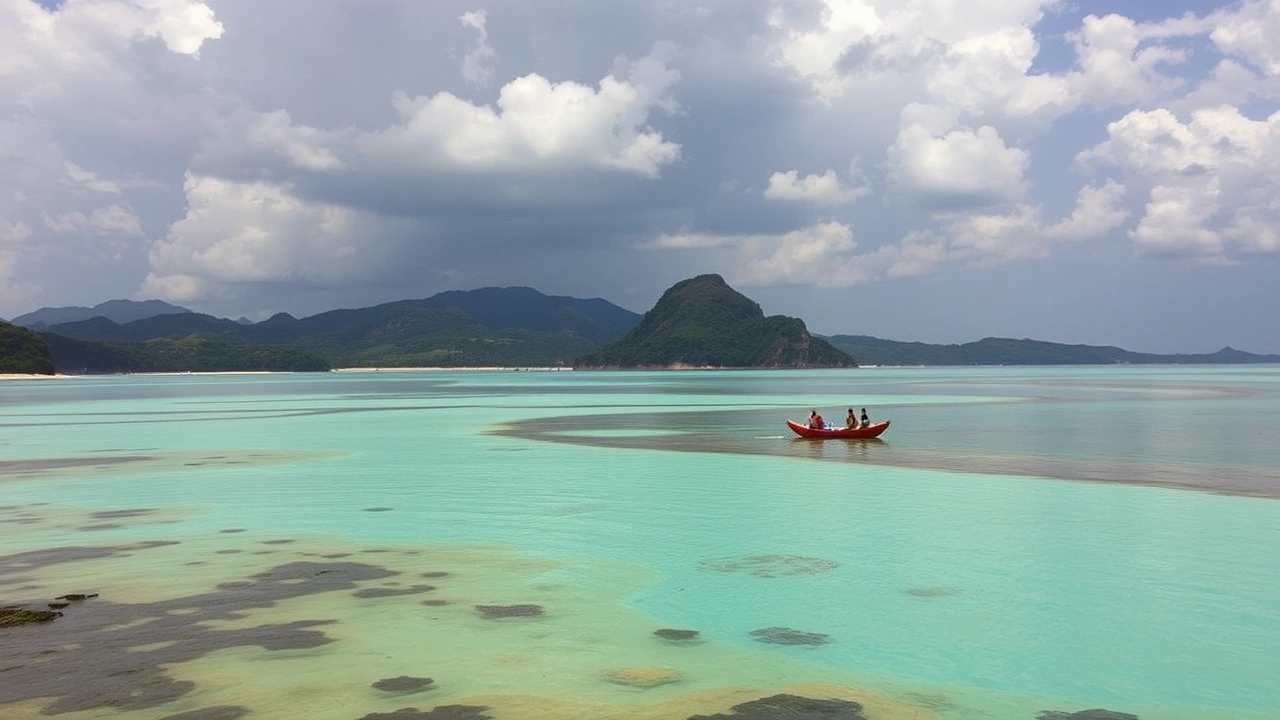
On the Atlantic coast, the Corn Islands (Big Corn Island and Little Corn Island) offer a completely different face: turquoise waters, Caribbean vibe, widely spoken English, and an end-of-the-world feel. Price-wise, these islands remain significantly cheaper than many other Caribbean destinations, with beachfront land starting at about $75,000 per acre, or less than $29 per square meter.
Summary of market trends and development projects likely to influence the region’s attractiveness.
Forecasts indicate a rise in oceanfront property prices, estimated between 3% and 7% in the coming years. This trend is primarily driven by growing interest from international investors in creating small boutique hotels.
Expansion projects are mentioned, including the modernization of Big Corn’s airport and the potential creation of an international airport in Bluefields. These developments aim to strengthen connectivity for the entire Caribbean coast.
The flip side is the additional complexity of land rights in the autonomous regions of the Caribbean coast, where indigenous communal lands (Propiedad Comunal) enjoy enhanced protection. In these areas, it is often not possible to acquire a classic title; only concessions or usage rights overseen by community authorities are feasible, requiring specialized legal assistance.
Other Areas to Watch
Beyond these main hubs, several regions merit attention depending on the buyer’s profile.
On the Pacific, Gran Pacifica, a large oceanfront development an hour and a half from Managua, offers houses designed to be self-sufficient (off-grid) starting at around $100,000, with up to 80% internal financing possible and even the option to pay in Bitcoin. The interest lies less in rental yield and more in the potential long-term appreciation in a secure, semi-rural setting.
Further north, beaches near León, like Poneloya or Las Peñitas, have seen oceanfront land offered at prices as low as $7 per square foot in some older reports, with small bungalows around $30,000. The road between León and these beaches has been repaved, improving access, but these markets remain essentially local and more exposed to weather hazards.
Finally, some investors choose to combine a coastal home base with an urban or colonial base to diversify risk and usage. Managua offers gross rental yields on the order of 8 to 11% for apartments in neighborhoods like Santo Domingo, while Granada offers colonial houses that rent well in season, with long-term yields around 6 to 8%.
How Much Does a Beach House Really Cost
To grasp the order of magnitude, it’s useful to compare different market segments, from raw land to turnkey condo.
| Property Type | Typical Price Range | Main Remarks |
|---|---|---|
| Oceanfront land (Pacific) | $50,000 – $200,000 | Title/concession status determining |
| “Entry-level” beach house | $150,000 – $250,000 | Secondary locations or modest size |
| Modern oceanfront villa | $250,000 – $500,000 | Main Pacific Coast (Tola, San Juan, etc.) |
| Luxury oceanfront villa | $500,000 – $1,000,000 and up | Rancho Santana-type projects, custom builds |
| Well-located beachfront condo | $200,000 – $450,000 | San Juan del Sur, Hacienda Iguana, etc. |
| Land in Popoyo / Guasacate (per m²) | ~$20/m² (inland) – much more on water | Ideal for self-build or small rental project |
To these acquisition prices are added all associated costs, often underestimated by foreign buyers.
Closing costs (notary, lawyer, registration, transfer taxes) commonly represent between 4 and 8% of the price, and can exceed 10% for properties over $500,000 if the maximum transfer rate of 7% applies. The breakdown typically includes around 1-4% transfer tax (progressive scale, typically 3% for a house between $100,000 and $200,000), about 1% registry fees (often capped at $1,000 or $1,500), 1-2% for legal and notary fees, and one-time costs (escrow, cadastral records, optional title insurance, topographic surveys) that can total $1,000 to $2,000.
Typical annual property tax (IBI) amount for a house purchased for $100,000, corresponding to about 1% of the cadastral value.
Recurring expenses (water, electricity, internet) generally run between $80 and $160 per month for a medium-sized house, while annual maintenance (painting, repairs, pool) is between $1,000 and $3,000. Gardening or security help can cost from $40 to $300 per month depending on the scope of tasks. Finally, complete rental management for vacation rentals will often absorb 20 to 30% of gross revenue.
Financing Your Beach House Purchase
The Nicaraguan real estate market is largely a “cash” market. Available data highlights that most transactions, especially on the coast, are done without recourse to local banks.
Institutions like Banpro, Banco Lafise Bancentro, or BAC are theoretically open to loans for foreigners, but conditions are rarely attractive: interest rates between 8.5 and 15%, term of 10 to 15 years (sometimes up to 25 years), requirement for residency, local banking history, and solid guarantees. Down payments of 40 to 50% are frequent, and processing times can reach six weeks or more.
In this context, several alternative options are favored.
Many buyers tap into the equity of their primary residence in their home country via refinancing or a home equity line of credit, thus obtaining cash at rates often lower than those offered in Nicaragua. Others simply draw from their savings, which strengthens their bargaining power with sellers who are often sensitive to firm offers and quick closings.
Owner financing is common, especially for properties that have been unsold for a long time. It usually requires a 30 to 50% down payment, followed by monthly payments over 3 to 7 years at rates of 5 to 10%. In tight markets (e.g., certain areas of San Juan del Sur or Tola), where supply is very low, sellers accept it less. The rare agreements are then made with a 50% down payment and a short term (e.g., 12 months).
Finally, institutional or private investors sometimes offer private loans at high rates, especially for development projects (hotels, villa complexes, surf camps). These “hard money loans” can be suitable for high added-value operations with a short horizon, but are not suitable for a classic second home.
Purchase Process: Steps and Points of Caution
Even if the Nicaraguan purchasing procedure broadly follows the general lines of international real estate transactions, the absence of a central database like MLS, the variability of local practices, and the land history require particular rigor.
Searching and Negotiating Without an MLS
The country does not have a single database listing ads and transactions. Each agency publishes its own listings, often incomplete or not updated; some sellers circulate their property simultaneously via several intermediaries, sometimes at different prices due to the “net price” system (the owner gives a net price, agents add their commission on top). Market comparables are therefore difficult to establish, and significant gaps can exist between listed prices and real values.
It is highly recommended to spend time on the ground, visit different beach neighborhoods, talk with owners, and consult several agents, rather than relying solely on online platforms. Teams like Nica Life Realty, The Agency Nicaragua, Nicaragua Real Estate Team, or other well-established local groups can serve as an entry point, but it remains essential that the buyer’s lawyer is completely independent of the agency.
Promesa de Venta, Deposit, and Escrow
Once the suitable coastal property is identified, the process generally opens with a formal offer and then, if accepted, with the signing of a preliminary contract called Promesa de Venta (purchase agreement). This document, written in Spanish, sets the price, conditions, deadlines, and lists documents to be provided by the seller. It is typically accompanied by a deposit of about 10%, placed in an escrow account managed by a lawyer or specialized provider.
The conditional phase of a sales contract allows the buyer to perform all necessary checks (like obtaining a loan) without risking losing the property. For the seller, it constitutes a guarantee of the seriousness of the buyer’s commitment. The contract also specifies the consequences in case of non-compliance by either party, such as the return or retention of the deposit, application of penalties, or extension of deadlines.
Enhanced Due Diligence in Coastal Zones
Verifying the title (title search) is the heart of the security of a transaction and must be particularly thorough on the coast. The buyer’s lawyer must obtain from the Public Registry (Registro Público de la Propiedad) the complete history of the property (Historia Registral), ideally for at least 30 years, and up to before 1917 for coastal land, the date of old laws that declared large portions of the coast as national domain.
At a minimum, it is necessary to ensure that:
Before the transaction, it is imperative to confirm that: the seller is indeed the current owner on the Registry; the property is free of any mortgage, lien, or charge; municipal and property taxes are up to date; the property does not belong to indigenous communal land or a lot expropriated in the 1980s; and that no legal proceedings are ongoing regarding the land or its former owners.
For properties within the 200-meter strip, it is often necessary to obtain a Certificación de No Objeción from the Attorney General’s office. This document certifies that the state does not claim a superior right over the land and that no major conflict is detected. Obtaining it can take six to eight months and costs about $1,000, usually at the seller’s expense. Non-delivery or prolonged blockage should raise an alert about the particular complexity of the file.
It is also recommended to order a new topographic survey (conducted by a licensed surveyor) to verify that physical boundaries correspond to cadastral plans, and to ensure the existence of legal access (public road or recorded easement). On the coast, the question of “derecho de vía” and beach access easements for third parties is crucial: an isolated property without formal access or crossed by undocumented rights-of-way can lose a large part of its value.
Technical Inspection and Natural Hazards
Beyond the law, the physical state of the beach house and its immediate environment must be analyzed. It is wise to hire an inspector or engineer to examine the foundations, structure, roof, electrical installation, and sanitation system. Near the sea, salt corrosion accelerates the degradation of metals and reinforced concrete, which can generate significant renovation costs.
The buyer must take into account natural hazards specific to the region, such as flooding in the rainy season, landslides in cliff areas, exposure to earthquakes or hurricanes, and the long-term threat of rising sea levels. Some sectors are officially classified as ‘Zonas de Alto Riesgo’ (high-risk zones), which can restrict building permits and make obtaining insurance more complex.
Signing the Deed and Registration
Once the due diligence is completed and the conditions of the Promesa de Venta are fulfilled, the parties proceed to sign the Escritura Pública (public deed) before a Nicaraguan notary. The buyer then pays the balance of the price, usually still via the escrow account, and the notary formalizes the sale on official stamped paper.
The next step is to register the deed at the Public Registry, the tax cadastre, and with the municipal tax authority. It is at this time that transfer taxes and registry fees are paid. This step can take several weeks, sometimes several months. Only once the registration is finalized is the buyer legally considered the full owner vis-à-vis third parties.
For buyers not wishing to be physically present, it is possible to grant a special power of attorney (Poder Especial) to the lawyer, legally safer than a general power, to sign on their behalf.
Buying Via a Nicaraguan Company
Many coastal investors choose to hold their villa or tourism project via a Nicaraguan company. This structure, even if it adds formation costs (about $1,250) and compliance costs, presents several advantages.
Structuring a property via a company can increase its value by up to 8% by avoiding certain taxes and legal fees.
Tax-wise, capital gains realized by a company can be taxed at a lower rate than for an individual, depending on the chosen tax regime and the nature of the activity. The Nicaraguan tax system being territorial, income generated outside the country is not taxed locally, opening optimization strategies for highly mobile owners.
In return, one must accept more administrative formalities (bookkeeping, annual filings, etc.) and, where applicable, the increased scrutiny related to anti-money laundering standards.
Residency, Taxation, and Long-Term Strategy
Buying a beach house does not automatically give the right to residency, but can contribute to a broader life project in Nicaragua.
Several residency pathways exist: pensionado (retiree) from age 45 with a pension income of at least $1,000 per month ($1,500 for a couple), rentista (passive income of at least $1,250 per month), or investor. In the latter case, a minimum investment of $30,000 in approved economic activities (tourism, agroforestry, local business) allows obtaining an investor residency, of which a real estate purchase structured as a commercial project (hotel, structured rental, etc.) can be a part. An investment of at least $50,000 is often cited as a threshold to make the application strong.
This residency offers an exemption from tax on foreign income, customs facilities for importing household goods, a vehicle, and certain building materials. Furthermore, in the tourism and renewable energy sectors, it allows significant reductions in corporate tax, VAT, and property tax for several years.
Longer term, naturalization is theoretically possible after five years of continuous legal residence, sometimes two years within certain investment structures, but practice remains fluctuating and depends on meeting conditions like physical presence, a clean criminal record, and basic knowledge of language and culture.
Synthetic Overview of Main Taxes Related to a Beach Property
| Nature of Tax / Fee | Typical Rate or Amount | Key Comment |
|---|---|---|
| Transfer tax on purchase | 1% to 4% (up to 7% for > $500,000) | Generally seller’s responsibility or negotiated |
| Registry fees | About 1% (often capped) | Paid by buyer |
| Legal / Notary fees | 1% to 2% of price | To budget in addition to notary fees |
| Annual property tax (IBI) | ~1% of 80% of cadastral value | Often significantly less than 1% of market price |
| Tax on rental income (non-res.) | 15% on a base of 70–80% of gross rents | Withheld at source, progressive rates for residents |
| Capital gains tax (company) | About 15% | Higher rates possible for individuals |
Major Risks to Consider Before Buying
Buying beach property in Nicaragua can be financially very attractive, but it is not a “risk-free” investment. A few major axes merit particular attention.
The legal risk remains central. The history of expropriations from the 1980s, the perceived weakness of the rule of law, and judicial slowness mean land disputes can last for years, even with an a priori solid case. In some instances, several parties dispute the same land, and even a favorable court decision is not always enforced.
The coastal law prohibits full ownership acquisition in the first 50 meters and imposes complex procedures (concessions, non-objection certificate). With about 60% of the coast belonging to the public domain, unverified setups present a very high risk of contestation by the state.
Natural hazards, on the other hand, are concrete: the country lies on the Pacific Ring of Fire, exposed to earthquakes, and both the Pacific and Atlantic coasts can be hit by tropical storms, torrential rains, and, longer term, the effects of erosion and sea level rise.
In highly sought-after tourist hubs like San Juan del Sur and Tola, the proliferation of listings on Airbnb and similar platforms has led to a drop in rental yields for some condos. This phenomenon illustrates the economic risk for an investor counting exclusively on generous rental cash flow, which can be disappointed by a decrease in occupancy rate or a decline in average rates.
Should You Buy an Existing House or Build on the Coast?
Two main options are available to the foreign buyer: acquire an existing, operational property, or buy land (titled or concession) to build their custom beach house.
Buying a house or condo already built generally allows moving in or renting within 30 to 60 days after the sale. It offers good visibility on costs (purchase price and refurbishment work) and avoids the challenges of managing a construction site remotely. In planned communities, the buyer also benefits from integrated infrastructure and services (security, pool, common area maintenance), though this can entail HOA or condo fees that are sometimes high.
Building offers total design freedom, the possibility to integrate eco-friendly solutions (solar, rainwater harvesting, climate-adapted materials), and to maximize land use. Construction costs vary widely, on the order of $450 to $1,600 per square meter depending on the standard, style, and site constraints. Timelines generally range from 6 to 18 months, provided one has a trusted team (architect, engineer, contractor) and rigorous construction oversight. It’s prudent to budget a reserve of 15 to 20% of the total to absorb unforeseen events and material cost overruns, especially since global prices for concrete, steel, and transport have increased strongly in recent years.
Difficult beachfront land can increase infrastructure costs by up to 30%.
How to Approach This Market as a Prudent Investor
Nicaragua’s coast is today a value market, more than a quick-yield market. Macroeconomic signals (GDP growth around 3.5%, contained inflation, tourism growth, FDI increase of over 25%, reforms favorable to foreign investment) support the thesis of 25 to 40% appreciation in real estate values by 2030 if the current trajectory is maintained. But low liquidity (a resale can take from a few months to several years), legal risk, and market cyclicality require a long-term vision.
An investor first defines their primary objective, such as a personal residence or a hotel project. They then choose corresponding areas: San Juan del Sur for community life, Tola for high-end surf, or the Corn Islands for a boutique-hotel concept. They must visit these areas in high season to assess the vibe, tourist traffic, and practical constraints before any decision.
They then surround themselves with an independent team: a lawyer specialized in real estate and familiar with coastal law, chosen before even speaking with agents; one or two trusted agents for on-the-ground access and opportunities; an accountant or tax advisor if a corporate vehicle is considered. They should not hesitate to buy a market analysis or specific “property pack” for their area to get a finer idea of prices and trends.
In negotiations, it is crucial to recognize that the market is still very cash-oriented. A firm, clear offer, with a reasonable closing timeline and a credible deposit, will carry more weight than a proposal conditional on uncertain local mortgage financing. For protection, one must systematically use a professional escrow, establish a contingency clause schedule centered on due diligence, and, if applicable, take out supplementary title insurance.
Finally, they accept that buying a beach house in Nicaragua is not a short-term “deal”, but a commitment to live with a real country, with its slowness, its institutional imperfections, and its raw beauty. It is by integrating these two sides that one can appreciate the true value of an investment on this still largely undervalued coast.
Disclaimer: The information provided on this website is for informational purposes only and does not constitute financial, legal, or professional advice. We encourage you to consult qualified experts before making any investment, real estate, or expatriation decisions. Although we strive to maintain up-to-date and accurate information, we do not guarantee the completeness, accuracy, or timeliness of the proposed content. As investment and expatriation involve risks, we disclaim any liability for potential losses or damages arising from the use of this site. Your use of this site confirms your acceptance of these terms and your understanding of the associated risks.

Cyril Jarnias is an independent expert in international wealth management with over 20 years of experience. As an expatriate himself, he is dedicated to helping individuals and business leaders build, protect, and pass on their wealth with complete peace of mind.
On his website, cyriljarnias.com, he shares his expertise on international real estate, offshore company formation, and expatriation.
Thanks to his expertise, he offers sound advice to optimize his clients' wealth management. Cyril Jarnias is also recognized for his appearances in many prestigious media outlets such as BFM Business, les Français de l’étranger, Le Figaro, Les Echos, and Mieux vivre votre argent, where he shares his knowledge and know-how in wealth management.