 Published on and written by Cyril Jarnias
Long marginalized from major capital flows, Nicaragua’s commercial real estate market is now attracting the attention of international investors. Steady economic growth, rising tourism, major infrastructure projects, attractive taxation, and still-low land costs create a rare cocktail in the region. But behind these numbers-driven prospects, the reality on the ground remains complex: an opaque market, sometimes contentious land titles, limited access to bank credit, and a controversial political environment.
To invest in commercial real estate in Nicaragua, it is essential to accurately identify real opportunities and implement strategies to mitigate risks in order to avoid costly failures.
An Expanding Commercial Real Estate Market
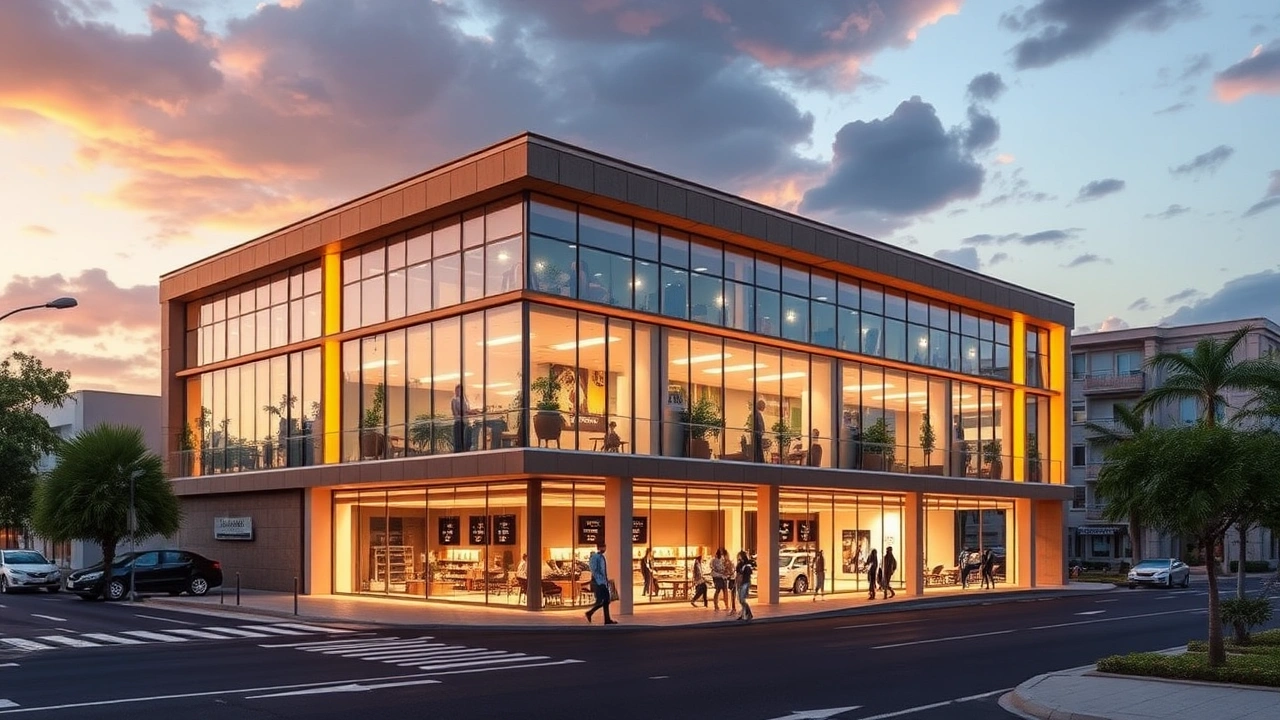
Commercial real estate in Nicaragua encompasses all properties used for professional purposes: offices, retail spaces, warehouses, industrial surfaces, or mixed-use developments combining housing, commerce, and leisure. This segment is in a full expansion phase, driven by several converging dynamics.
Data from Statista Market Insights indicates that the country’s overall real estate market is expected to grow by approximately 4.91% per year until 2029, with an average increase in property prices estimated between 4.9% and 7% per year over the next five years. Projections are recalibrated twice a year based on data from the IMF, World Bank, UN, and Eurostat, incorporating macroeconomic effects, including those of the war in Ukraine.
The country’s GDP stands at approximately 15 billion dollars, reflecting a diversified economy.
This economic backdrop translates into increased demand for commercial space: modern offices in Managua, new-generation shopping centers, industrial parks, hotels, resorts, tourist complexes, coworking spaces, or mixed-use buildings combining offices, retail, and residences.
A Largely Cash-Based and Still Unstructured Market
One of the major features of the Nicaraguan market is its essentially cash-based operation. Between 80% and 90% of acquisitions by foreigners are made in cash, as local bank loans remain very difficult to obtain for non-residents (residency requirement, local income, down payments of 40–50%, and interest rates around 8–10%).
The absence of a centralized system like MLS, incomplete public records, and sometimes underreported transaction values make the market opaque. This situation, characterized by fragmented databases and official prices often far from reality, complicates property valuation and can extend sales timelines. However, it also offers negotiation margins to investors capable of conducting their own comparative analyses.
To guide decision-making, serious players use international valuation methods – sales comparison, cost approach, and income capitalization – and, for complex assets (shopping centers, hotels, factories), certified experts working to USPAP or IVS standards.
Drivers of Demand for Commercial Real Estate
The dynamics of commercial real estate in Nicaragua rest on three main pillars: urban growth and the rise of a middle class, the accelerated boom in tourism, and a vast infrastructure program that is reshaping location maps.
Urbanization, Middle Class, and New Work Modes
Urbanization is progressing at nearly 1.9% per year, with the urban population expected to exceed 58% of the total population. Managua, home to over a million inhabitants, concentrates most new office developments, shopping centers, logistics parks, and gated residential complexes.
Local and international companies now seek modern, air-conditioned offices with fiber optics, parking, collaborative spaces, and on-site services. Demand is shifting towards high-end buildings with better security and ergonomic standards to attract and retain talent.
The rise of the gig economy and remote work is stimulating the coworking space market, particularly in Managua and tourist cities like Granada or San Juan del Sur. These spaces mainly attract freelancers, digital entrepreneurs, and digital nomads.
Tourism as a Catalyst for Hospitality and Retail
Tourism has become one of the most powerful drivers of the real estate market, particularly commercial. In 2023, the country welcomed about 1.2 million visitors, with estimated revenues around 1.5 billion dollars, a 24% year-on-year increase. WTTC projections estimate annual growth of close to 5.9% for the tourism sector until 2029, with an increase in average daily tourist spending (up nearly +9.5% in some recent quarters).
This growth translates into a massive need for commercial-use real estate, particularly in the Pacific coastal areas and colonial cities:
– Hotels, eco-lodges, resorts, condo-hotels
– Restaurants, bars, cafés, leisure spaces
– Boutiques, art galleries, concept stores
– Service centers (tour operators, surf shops, excursion agencies)
New projects in hospitality and related activities are mainly concentrated in the cities of San Juan del Sur, Granada, and León, as well as in Pacific Coast areas like Tola and Popoyo.
The high-end segment is particularly dynamic: the increase in wealthier visitors, attention from international media like Condé Nast Traveler which ranked the South Pacific coast among the region’s leading destinations, and growing interest from North American and European retirees are boosting demand for premium properties.
Infrastructure: Roads, Airports, and Urban Transport
The state has undertaken major investments in infrastructure, several of which are radically changing the game for real estate investors.
Key projects include:
| Project | Description | Main Real Estate Impact |
|---|---|---|
| Coastal Highway (Costanera) | Over $400M invested on the southern Pacific coast, serving San Juan del Sur and the Popoyo/Tola region | Reduction in travel times (>30%), increased accessibility, explosion in land value, new sites for hotels, shopping centers, and mixed-use complexes |
| National Road Program | Approx. 4,200 km of main roads modernized for a total cost of ~$5.2B | Opening up of rural regions, facilitation of logistics flows, emergence of logistics corridors and industrial parks |
| BRT Managua | Plan for 4 Bus Rapid Transit corridors by 2040 | Remodeling of prime axes in the capital, creation of commercial hubs around stations, increase in rents along structured corridors |
| Regional Improvements | Work on Carretera a Masaya, modernization of roads to León and the Pacific Coast | Price increases in previously neglected neighborhoods, early-buying opportunities |
These projects are leading to a rapid reassessment of land values, particularly in tourist and logistics areas. The coastal highway, for example, has already reduced travel time by over 30% between Managua and Popoyo, boosting transactions and construction in that area.
Where Are the Main Geographic Opportunities?
Opportunities in commercial real estate in Nicaragua are concentrated in a few well-identified hubs, each with a different risk profile, return, and cycle.
Managua: Economic Heart and Modern Offices
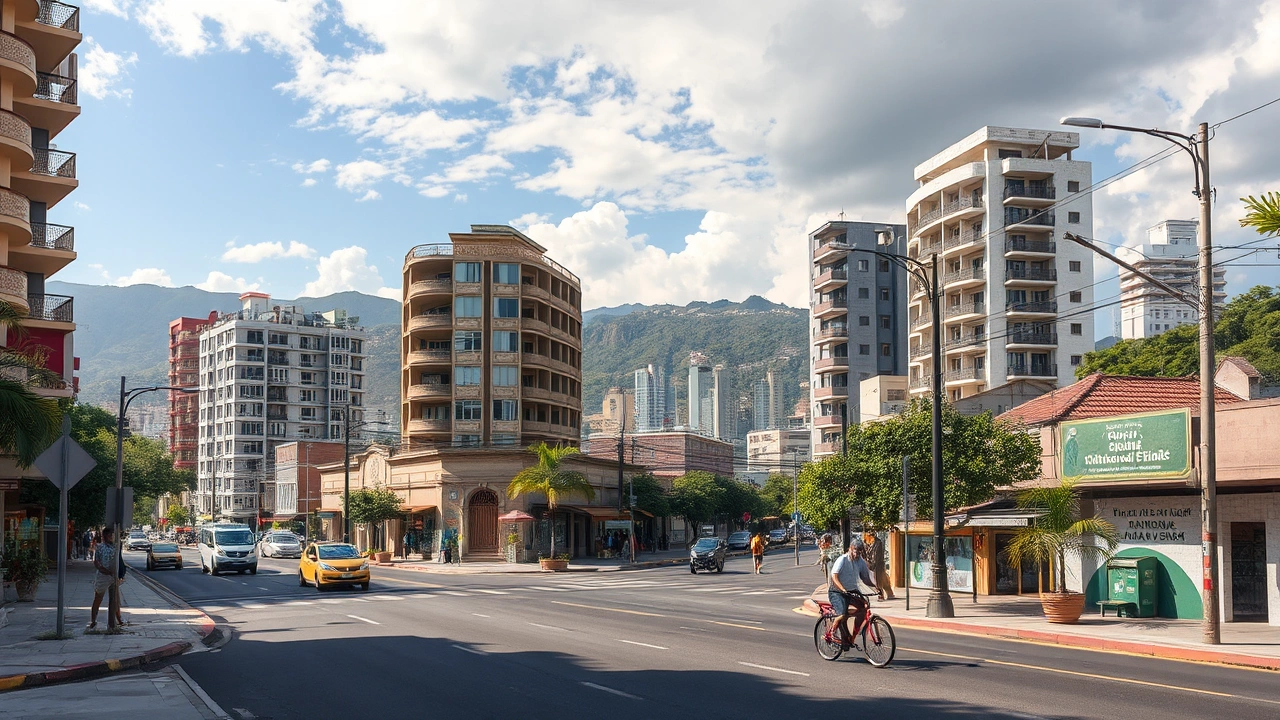
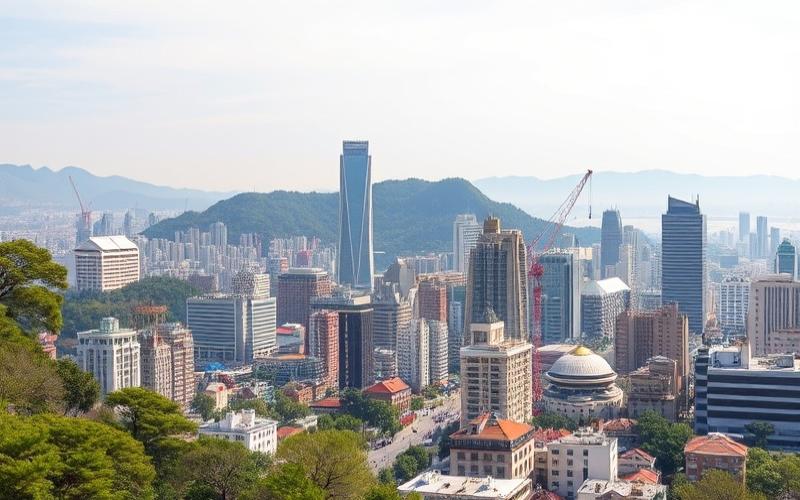
The political and economic capital, Managua concentrates most corporate headquarters, banks, big-box stores, and shopping centers. This is where demand for modern offices is strongest, fueled by the finance, services, technology, and distribution sectors.
Observations include: the importance of observation in behavioral studies.
– Expansion of shopping centers and hypermarkets
– Rise of Class A/B offices in upscale neighborhoods (La Colinas, Mirador de Santo Domingo, Villa Fontana Sur)
– Creation of commercial hubs along major arteries (Carretera a Masaya, Carretera a Masatepe, etc.)
Office rents remain competitive on a regional scale: some reports mention average costs around $14–15/m² for offices in Managua, well below most neighboring capitals. For an investor, the capital offers:
– Relatively stable rental income streams from offices and retail
– Possible redevelopment and renovation projects at low labor cost
– A national clientele (banks, insurance, call centers, services) less dependent on seasonal tourism
Granada and León: Cultural Tourism and Downtown Retail
The colonial cities of Granada and León combine heritage value, architectural charm, and significant tourist flows.
Discover growth sectors and investment possibilities in the dynamic city of Granada.
Capitalize on the constant influx of tourists thanks to unique historical heritage, like the Alhambra, by developing accommodations, restaurants, or experience services.
Take advantage of the city’s international reputation for Spanish learning by creating schools, student services, or cultural programs.
Establish stores offering local products, traditional handicrafts, or souvenirs in lively shopping districts.
Integrate into a growing ecosystem by investing in startups, digital services, or collaborating with the University of Granada.
Invest in the purchase, renovation, and leasing of properties, especially in the highly sought-after historic center.
Offer consulting, translation, logistics, or event services to support local and international businesses.
– Transformation of colonial houses into boutique hotels, restaurants, bars, or galleries
– Operation of retail spaces around the central park and Calle La Calzada
– Development of small tourist residences, upscale hostels, coworking spaces for expatriates and digital nomads
In León, the strong student presence (UNAN-León University has over 45,000 students) supports continuous demand for:
– Student housing, shared apartments, small rental buildings
– Neighborhood shops, cafés, bars, copy centers, and student services
– Small hotels and hostels for visitors attracted by volcanoes and the cultural scene
According to cited studies, gross rental yields in these cities can range from 6 to 10% for well-positioned assets, particularly in central neighborhoods.
San Juan del Sur, Tola, Popoyo: Hospitality, Retail, and Mixed-Use Complexes
The southern Pacific coast is the epicenter of beach tourism and surfing. San Juan del Sur, Tola, and Popoyo feature:
The area is characterized by a high concentration of luxury villas, condos, hotels, and resorts. The seasonal rental market is very active, with several hundred properties available for short-term rent according to the latest statistics. However, there is a relative lack of quality retail and structured services relative to the growing demand generated by this real estate development.
In this zone, the most interesting commercial niches include:
– Mini shopping centers or “plazas” with a supermarket, pharmacy, food services, medical services
– Small mixed-use complexes combining ground-floor retail and tourist accommodations upstairs
– Boutique hotels targeting the surf / wellness / eco-tourism segment, benefiting from the growing fame of spots like Popoyo
The full opening of the new coastal highway and the announced reopening of Costa Esmeralda Airport for private flights should increase the arrival of high-spending clientele, which could accelerate the appreciation of commercial properties.
Corn Islands and Other Tourist Hubs
The Corn Islands, Apoyo Lagoon, Ometepe, and certain areas around Masaya lend themselves to more targeted projects:
– High-end eco-lodges
– Small beachfront hotels
– Diving, yoga, wellness centers
– Food and beverage and leisure spaces
Available expert analyses mention, for the Corn Islands, a projected price increase of 3 to 7% for beachfront condos and luxury villas in certain years, in a context of still-limited supply.
High-Potential Segments: Offices, Retail, Hospitality, Industrial
Beyond geography, it is useful to distinguish the major families of commercial assets that offer interesting potential today.
Offices and Coworking
In Managua, the primary demand is for modern, secure offices with good connectivity and flexible layout possibilities. Two trends are emerging:
1. Classic buildings occupied by banks, insurance companies, service firms, call centers, or BPOs, often on medium/long-term leases.
2. Coworking and shared office spaces, targeting freelancers, small tech companies, architecture firms, communications, etc.
The rise of remote work and digital nomads also opens prospects in tourist cities: mixed “cowork + café + coliving” spaces are beginning to appear in Granada or San Juan del Sur.
Retail and Modern Commerce
The retail market is modernizing rapidly. The country recently had over 150 supermarkets and more than 3,500 small grocery stores and convenience stores. Chains like Walmart (Pali, Maxi-Pali, La Unión, Walmart) or La Colonia are multiplying new store openings.
For real estate investors, several levers exist:
Targeted approaches to develop high-performing commercial assets by capitalizing on urban and consumer dynamics.
Develop or acquire retail spaces in prime locations to attract prestigious brands or international franchises.
Create small shopping plazas (strip malls) along arteries experiencing a strong increase in vehicle traffic.
Invest in the peripheral neighborhoods of major cities, where growing purchasing power stimulates demand for medium-sized shopping centers.
The chart below synthesizes the retail sales structure, useful for measuring the weight of each channel:
| Distribution Channel (Retail) | Estimated Share of Retail Sales (net of tax) |
|---|---|
| Large grocery stores / local supermarkets | ~35% |
| Neighborhood grocery stores / small shops | ~31% |
| Retail e-commerce | ~6% |
| Convenience stores | ~4% |
| Hypermarkets | ~2% |
| Other formats (markets, independent boutiques, etc.) | ~22% |
This structure shows both the potential of supermarkets (already strong presence, but still expanding) and the considerable space occupied by informal channels, which modern retail projects can gradually capture.
Hospitality, Resorts, and Tourist Accommodation
The most obvious sector for commercial real estate remains hospitality in the broad sense:
– City hotels for business travelers in Managua, León, Estelí
– Beach resorts on the Pacific Coast
– Eco-lodges and boutique hotels in volcanic regions, lakes, or islands
The combination of continuous growth in visitor numbers, increasing average tourist spending, and very generous tax incentive policies makes it a key sector.
The new legislative framework for tourism (laws 1210 and 1211) can offer an approved hotel project:
Tourism projects benefit from several tax advantages: an income tax exemption for up to 10 years, exemption from VAT and import duties on materials and equipment during the investment phase, and an exemption from the property tax (IBI) for up to 10 years for areas exclusively dedicated to tourism.
The minimum investment amounts to access these advantages vary according to project size (approximately $300,000 for a major project, $50,000 for a tourism SME), making the scheme accessible not only to chains but also to individual investors or well-structured investor clubs.
Industrial Parks, Warehouses, and Free Zones
Industrial real estate is less publicized, but Nicaragua already has an active network of free zones (Free Trade Zones) that host:
– Textile and apparel factories
– Electrical harness and automotive component manufacturers
– BPO service centers and call centers
The free zone regime can offer:
– Income tax exemption for 10 years (renewable)
– Exemption from customs duties and VAT on machinery and inputs
– Exemption from certain municipal taxes and property transfer tax within the zone
For a real estate investor, two paths emerge: developing and leasing industrial/logistical buildings to already approved operators, or participating in the creation of new free zones in partnership with industrial investors and authorities.
Investment Conditions, Taxation, and Legal Structures
A major advantage of the country is equal treatment between national and foreign investors. Non-residents can own commercial property in full ownership, directly or via a local company, and freely repatriate their profits, subject to payment of corresponding taxes.
Ownership, Restrictions, and Holding Structures
Generally, a foreigner can acquire offices, retail spaces, hotels, agricultural land, or building plots without size limits, but two geographic constraints must be considered:
– Prohibition on direct acquisition of land within a 5 km radius of international borders
– Restrictions within the first 50 meters from the high tide line along the coasts, which belong to the public domain
Beyond that, and in the 50 to 200 meter band, special concessions or permits may be required, often difficult to obtain. Practically, many investors therefore choose parcels just inland from the public zone, allowing for the construction of hotels, restaurants, and retail with beach access.
The most commonly used forms of ownership are:
– Direct ownership in the name of an individual
– Nicaraguan corporation (Sociedad Anónima)
– Trust (Fideicomiso) for complex estate or family structures
A corporation is recommended for commercial assets exceeding $200,000 or involving multiple partners. It offers limited liability, flexibility for transfer via share sale, and, in some cases, a tax advantage (e.g., taxation at 15% on capital gains at the company level, versus a higher rate for an individual).
Real Estate Taxation and Sector-Specific Benefits
The real estate tax regime combines local taxes and sector-specific exemption schemes.
For a standard commercial asset:
| Type of Levy | Base | Indicative Rate |
|---|---|---|
| Property Tax (IBI) | Cadastral value (often < market value) | Approx. 0.25–1% / year |
| Transfer Tax | Declared value or reference value | 1–4% depending on brackets |
| Income Tax (rental) | Net income or presumed base | 15–30% depending on regime and status |
| Capital Gains Tax | Difference between sale price and tax base | For a corporation: approx. 15%; for an individual: up to 30% |
In addition to these basic charges, there are preferential regimes that can transform the economic equation:
Nicaragua offers an incentive-based fiscal framework for investors in key sectors, with exemptions on several taxes and duties.
Exemption from income tax, VAT, import duties, and property tax for several years for approved projects.
Near-total exemption from taxes (income, property, customs, VAT) for industrial or service companies located in free zones.
Extensive exemptions on income and imports of equipment for these projects.
The combination of still-affordable land, a growing market, and these tax breaks explains the theoretical return levels cited in some scenarios: studies mention, for beachfront condos or colonial houses used for tourist rentals, net yields of 6 to 12% annually, plus an expected capital appreciation of 3 to 8%.
Investor Residency and Other Facilitations
Real estate investment can also serve as a lever to obtain resident status. An investor residency program is accessible with an investment of around $30,000–35,000 in real estate, a business, or an approved project. This status grants:
– The right to work locally
– A simpler procedure for opening accounts, creating companies, etc.
– Possible naturalization after two years of permanent residence, under conditions
Specific statuses also exist for retirees and pensioners, with relatively modest monthly income requirements ($600 to $750) and exemptions on the import of personal goods or vehicles.
A Political and Legal Environment to Handle with Caution
Financial prospects should not obscure the reality of a complex political and legal environment. Several official reports, notably those from the US Department of State, highlight risks related to weak rule of law, political tensions, and historical property issues.
Political Risks, Expropriations, and Regulatory Uncertainty
Since 2018, the country has gone through a sociopolitical crisis marked by protests, repression denounced by the international community, and a withdrawal of funding from multilateral institutions. Cases of expropriations, confiscations of assets from certain NGOs or chambers of commerce, and administrative blockages have been documented.
Investors therefore face:
– Sometimes discretionary application of tax and administrative laws
– Risks of aggressive tax reassessments (with asset seizures in case of non-payment)
– A political climate that can evolve rapidly and affect macroeconomic prospects
Number of properties expropriated between 1979 and 1990, some of which are still subject to disputes.
Opaque Market, Uncertain Titles, and Importance of Due Diligence
The absence of an MLS, under-registration of real prices in the property registry, the widespread practice of “net sales” (where the broker adds their commission on top of the seller’s desired price), or the random processing times for files at the public registry impose rigorous due diligence discipline.
A serious verification process includes at a minimum:
Before any real estate purchase in Nicaragua, it is crucial to conduct thorough verifications. These include: a 30-year title search (or even before 1917 for coastal land); verification of the absence of liens, mortgages, occupants without rights (squatters), or hidden easements; checking payments of municipal taxes, IBI (property tax), and any arrears; requesting official certificates (Libertad de Gravamen for absence of mortgages, Solvencia Municipal for absence of local debts, updated cadastral plans); and analyzing risks related to specific laws (coastal law, high seismic or flood risk zones, indigenous lands, old agrarian reform titles).
In practice, the transaction follows a classic sequence, with an offer, promise of sale (“Promesa de Compra Venta”), deposit of 5 to 10% of the price, signing of the Public Deed (Escritura Pública) before a notary, then registration at the public registry. The complete timeline, from promise to registration, can take 2 to 6 months.
Being assisted by an experienced Nicaraguan lawyer, accustomed to transactions with foreigners, is not a luxury but a sine qua non condition. Using title insurance, even if some exclusions may be broad, provides a complementary safety net.
Entry Strategies for the Commercial Market
Faced with this contrasting environment – high return potential but real risks – how one enters the market matters as much as the choice of property.
Bet on the Winning Zones of Infrastructure
A first approach consists of targeting locations directly impacted by major works underway or planned. The history of real estate markets shows that a new road, airport, or major public transport axis often triggers:
– A rapid increase in land values nearby
– A concentration of retail, hotels, and offices around new nodes
– The possibility of capturing capital gains by entering before the maturity phase
On the ground, this translates into acquisitions or developments:
Discover the high-potential development zones in Nicaragua, ideally located to benefit from new transportation infrastructure.
Near the exits of the new coastal highway in the Tola/Popoyo region, offering privileged access to beaches and growing tourism.
Along the routes leading to the future BRT (Bus Rapid Transit) lines in Managua, ensuring excellent urban connectivity.
Near access to major ports or expanding industrial free zones, perfect for commerce and manufacturing.
Leverage Sector-Specific Incentives
A second strategy consists of structuring projects to meet the criteria for accessing incentives:
– Designing a hotel or eco-lodge project of sufficient size to be eligible for tourism exemptions
– Locating a warehouse or production unit within a free zone, or creating a mini turnkey free zone with other investors
– Integrating elements of sustainability (renewable energy, eco-responsible construction), sometimes with additional tax benefits
A project’s economics can be significantly improved by benefiting, for example, from a 10-year income tax exemption, coupled with the ability to import equipment and furnishings duty and tax-free.
Capitalize on the High Proportion of Cash Purchases
Since the market is largely cash-based and access to local credit is limited, players with significant liquidity enjoy a clear competitive advantage:
– They can negotiate substantial discounts on existing properties, especially during periods of political tension or temporary demand decline
– They are well-positioned to offer seller financing to secondary buyers, thus capturing complementary returns from interest
Combining opportunistic purchase of undervalued commercial buildings with, eventually, a partial resale by offering seller financing at attractive terms can generate an overall return superior to capital appreciation alone.
Conclusion: A Promising Market but Reserved for Well-Prepared Investors
Commercial real estate in Nicaragua is at a pivotal moment. On one hand, the numbers argue for strong potential:
– Projected real estate growth around 4.9–7% per year
– Tourism in continuous expansion, with average spending on the rise
– Cost of living and land well below neighbors, especially Costa Rica
– Major infrastructure projects reconfiguring the opportunity map
– Robust tax incentives in tourism, free zones, and strategic sectors
On the other hand, the investor cannot ignore:
Investment is exposed to fragility of the rule of law and a history of land disputes. The market is opaque, with no MLS system, making it difficult to obtain reliable comparables. Political risks exist, including documented cases of confiscations or pressure on economic actors.
In this context, commercial real estate in Nicaragua is neither an easy El Dorado nor a territory to systematically avoid. It is primarily suited for investors:
To succeed in real estate investment in Nicaragua, the investor must possess several qualities and adopt a rigorous approach. They must be able to mobilize funds quickly, in cash or near-cash, to seize opportunities. They must also be prepared to fund exhaustive due diligence, covering the legal, land, tax, and environmental aspects of the property. Surrounding oneself with a strong and reliable local network (lawyers, notaries, serious brokers, tax specialists) is essential to secure transactions. Finally, great patience is required to navigate a market where procedures can be lengthy and liquidity sometimes limited.
For those who meet these conditions, areas like Managua, Granada, León, San Juan del Sur, Tola/Popoyo, the Corn Islands, and certain industrial hubs offer real opportunities in offices, retail, hospitality, and logistics real estate. Provided that each operation is considered not as a simple purchase of walls, but as a full-fledged project to structure, secure, and manage over time.
Disclaimer: The information provided on this website is for informational purposes only and does not constitute financial, legal, or professional advice. We encourage you to consult qualified experts before making any investment, real estate, or expatriation decisions. Although we strive to maintain up-to-date and accurate information, we do not guarantee the completeness, accuracy, or timeliness of the proposed content. As investment and expatriation involve risks, we disclaim any liability for potential losses or damages arising from the use of this site. Your use of this site confirms your acceptance of these terms and your understanding of the associated risks.

Cyril Jarnias is an independent expert in international wealth management with over 20 years of experience. As an expatriate himself, he is dedicated to helping individuals and business leaders build, protect, and pass on their wealth with complete peace of mind.
On his website, cyriljarnias.com, he shares his expertise on international real estate, offshore company formation, and expatriation.
Thanks to his expertise, he offers sound advice to optimize his clients' wealth management. Cyril Jarnias is also recognized for his appearances in many prestigious media outlets such as BFM Business, les Français de l’étranger, Le Figaro, Les Echos, and Mieux vivre votre argent, where he shares his knowledge and know-how in wealth management.