 Published on and written by Cyril Jarnias
In Nicaragua, the rise of tourism is no longer measured solely by visitor arrivals or foreign exchange earnings. It is profoundly redrawing the country’s real estate map, from the Pacific to the highlands, passing through colonial cities. Behind the images of wild beaches, smoking volcanoes, and colorful towns, a much more structural transformation is now underway: the rise of a real estate market driven by vacationers, expatriates, and international investors.
Tourism stimulates construction and creates economic opportunities, but it also leads to rising real estate prices, contributes to gentrification, and generates tensions regarding housing access for the local population.
A tourist country still “affordable,” but in full catch-up mode
Nicaragua is often presented as “the most affordable country in Central America” for real estate and cost of living. Prices there remain significantly lower than in Costa Rica or Panama, two neighbors that have already experienced a tourism and real estate boom.
Data from various studies shows a market in a catch-up phase, with steady growth but still far from the saturation levels seen elsewhere in the region.
A tourism sector now an economic driver
Tourism is now the country’s second-largest industry. In 2010, Nicaragua surpassed the one-million-visitor mark for the first time, generating about 360 million dollars. Since then, the trend has not reversed, except for the parenthesis of the 2018 political crisis and the pandemic.
In 2023, direct tourism revenues reached nearly 739 million dollars.
The profile of visitors is also changing. Not only are there more of them, but they spend more: the average daily expenditure per foreign tourist increased from $41.1 to $43.3 between 2022 and 2023, and then by another 9.5% in certain quarters of 2024. Increasingly, affluent travelers are choosing Nicaragua, which alters demand, particularly for more upscale accommodations.
A real estate market in steady growth
This tourism boom fits within a moderate but stable growing national economy, with a GDP of about $15 billion and average expansion of around 3.5% per year. In this context, real estate appears as a favored investment pillar, largely fueled by the tourism dynamic.
Estimated annual growth rate of the real estate market until 2029.
The table below summarizes some structuring orders of magnitude.
| Indicator | Recent Value/Estimate |
|---|---|
| Nicaragua’s GDP | ~$15 billion USD |
| Average GDP Growth | ~3.5% per year |
| International Tourists (2023) | ≈ 1.2 – 1.5 million |
| Tourism Contribution (2023) | ≈ $1.5 billion USD |
| Expected Tourism Growth | ≈ 5.87% per year until 2029 |
| Median Apartment Price | ≈ $1,230 USD/m² |
| Median House Price | ≈ $930 USD/m² |
| Annual Real Estate Price Growth | 3 – 7% (forecasts until 2029) |
This numerical backdrop clearly shows that tourism and real estate are evolving in a closely correlated manner. When arrivals increase, real estate transactions follow, particularly in coastal areas and tourist cities.
How tourism fuels real estate demand
The relationship between tourism and real estate is not theoretical: it is very concretely observed in buyers’ journeys. In many destinations on the Pacific or in colonial cities, the story is always the same: a first vacation trip, a second longer one, then the idea of buying a property to rent, opening a small hotel, or settling down year-round.
From vacationers to owners: an acknowledged “conversion funnel”
Market studies show a strong correlation between levels of tourist visitation and real estate sales volumes. For many highly visited regions, the path to investment almost systematically goes through a tourist stay. Places like San Juan del Sur, Tola/Popoyo, or Granada function as true funnels: the traveler arrives for surfing or colonial charm, discovers the expatriate community, tries out a seasonal rental property… and ends up buying.
The influx of tourists and residents is amplified by a clientele with high purchasing power (North Americans, Canadians, Europeans) and by digital nomads, attracted by a cost of living about 46% lower than in Costa Rica, while benefiting from a similar setting of beaches, nature, and safety.
Simultaneously, the rise of remote work and the introduction of a specific visa for digital nomads, which led to a 15% increase in long-term stay bookings, are extending the duration of stays on-site and stimulating demand for comfortable, connected, and well-located housing.
The explosion of short-term rentals
The seasonal rental market illustrates the effect of tourism on real estate particularly clearly. A detailed analysis of the short-term rental segment (Airbnb, Vrbo, etc.) notably classifies several Nicaraguan markets based on their performance.
The following table summarizes some data from this analysis for four key municipalities.
| Market (Municipality) | Number of STR Properties | Average Monthly Revenue | Average Daily Rate | Approximate Occupancy Rate |
|---|---|---|---|---|
| San Juan del Sur | 562 | ≈ $1,426 USD | ≈ $193 USD | ≈ 32% |
| Managua | 277 | ≈ $407 USD | ≈ $62 USD | ≈ 30% |
| Granada | 249 | ≈ $932 USD | ≈ $110 USD | ≈ 36% |
| Tola (municipality) | 222 | ≈ $2,199 USD | ≈ $254 USD | ≈ 37% |
These figures reveal several structuring phenomena. First, the high concentration of supply in the most touristic coastal areas: San Juan del Sur and Tola, which host several hundred listings. Next, the ability of certain destinations to generate particularly high monthly revenues, especially Tola, where the average daily rate exceeds $250.
Potential revenue per night in dollars for some high-end properties in San Juan del Sur.
The tourist “virtuous circle”: more visitors, more real estate
As tourist arrivals increase, local revenues rise and infrastructure develops. Communities invest in roads, services, commerce, and activities. This makes destinations more attractive to an international clientele with high purchasing power.
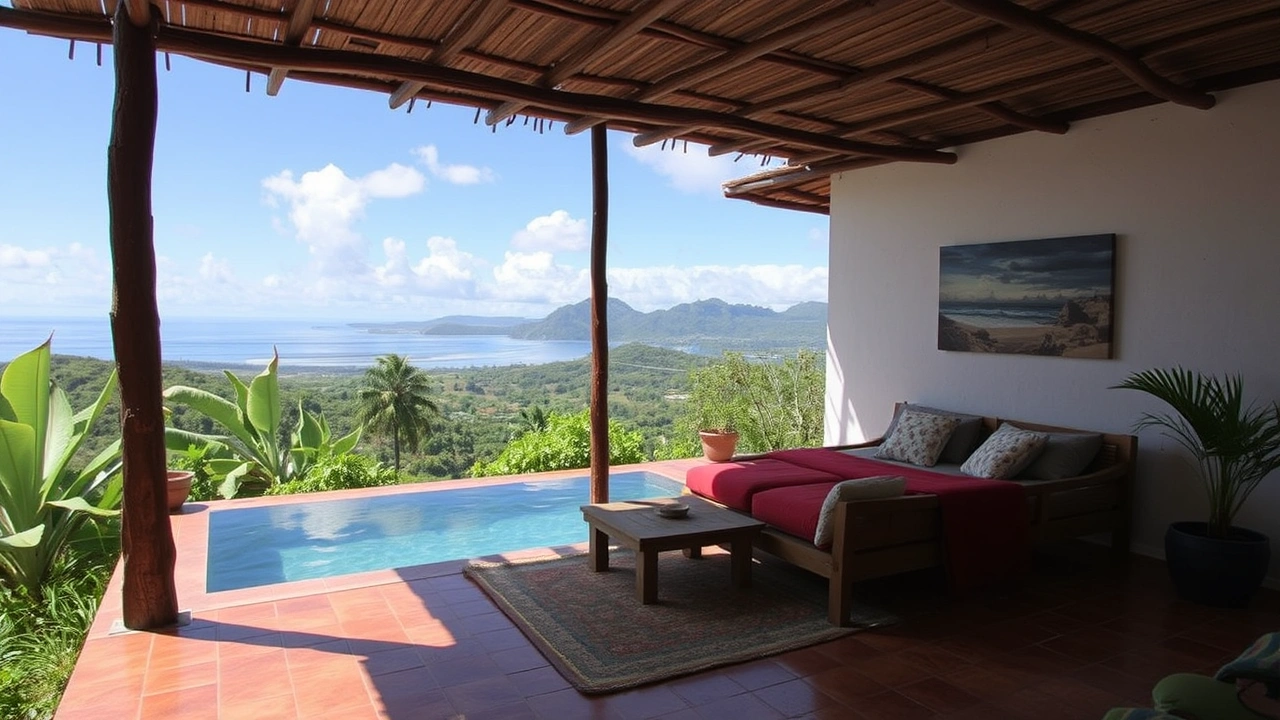
This clientele then becomes interested in buying vacation homes, beach villas, serviced apartments, or building lots. The establishment of these high-end properties in turn attracts even more affluent tourists, who seek comfort standards, infinity pools, breathtaking views, ecolodges integrated into nature, or secure residences with golf courses.
This circular mechanism, often referred to as a “virtuous circle”, largely explains the spectacular rise in land values in certain segments: on the Pacific coast, land bought for $30,000 to $60,000 has seen its value climb to $250,000 in a few years, and over the last decade, prices aimed at foreign buyers have sometimes increased by several hundred percent.
Mapping the main tourist and real estate hubs
The impact of tourism on real estate, however, is not uniform. It depends on the characteristics of each territory: accessibility, type of clientele, level of development, cultural identity, etc. Several distinct hubs emerge.
The Southern Pacific: San Juan del Sur, Tola, and the Costa Esmeralda
The Southern Pacific is the beating heart of the country’s tourism-real estate transformation. San Juan del Sur, an iconic beach resort, concentrates a large part of the expatriate community and seasonal activity. There you find seaside villas, condominiums with pools, boutique hotels, but also all the living infrastructure necessary for foreign families: restaurants, bars, shops, bilingual schools (like the San Juan del Sur Day School), logistics services (Destination Nica for shipping goods, or major local chains Siman and Sinsa).
The department of Rivas saw an approximate 12% year-over-year increase in house prices.
Further north, around Tola and Popoyo, the “Costa Esmeralda” is developing on a model more oriented towards surfing and discreet luxury: prestigious resorts like Rancho Santana, golf, nearly virgin beaches. There, land prices reach levels significantly above the national average, especially for beachfront plots.
Colonial cities: Granada and León, laboratories of tourist gentrification
Granada and León constitute the second major hub of tourist impact on real estate. Their colonial architecture, shaded squares, baroque churches, and proximity to Lake Cocibolca or volcanoes have made them destinations of choice. According to the Nicaraguan Institute of Tourism (INTUR), Granada is even considered the most popular city with visitors.
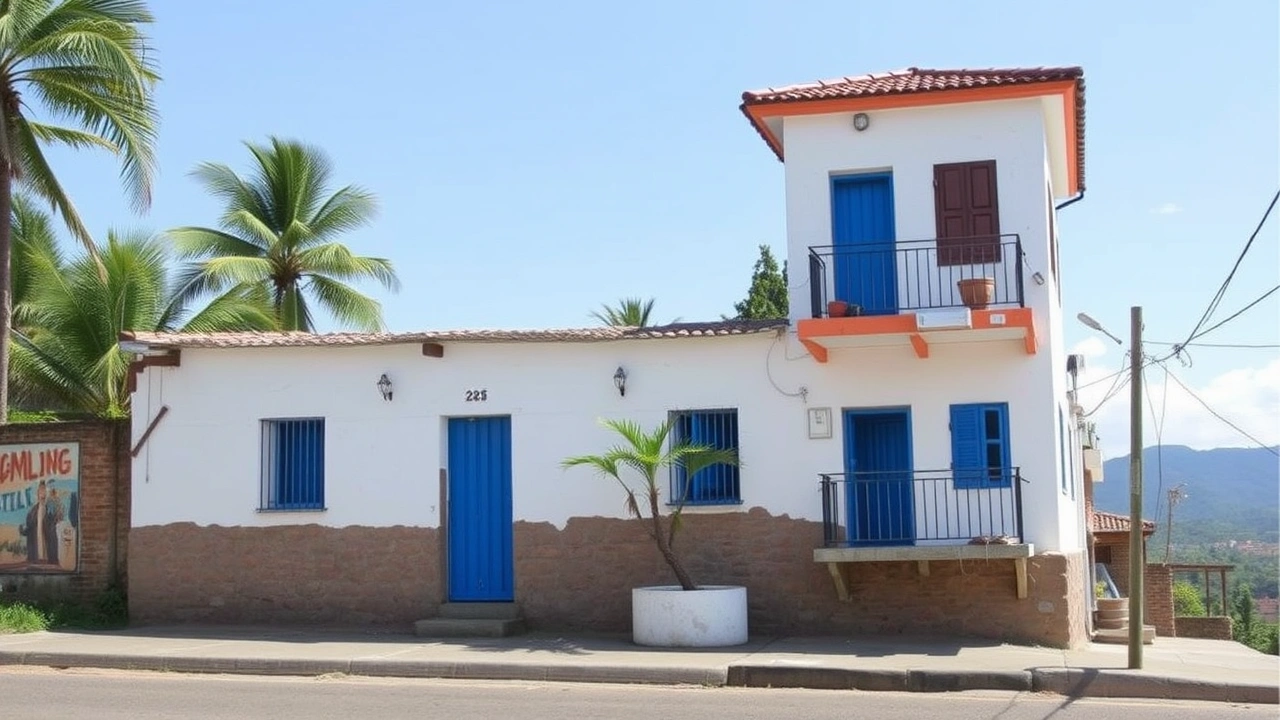
A study on Granada’s historic center shows a strong increase in real estate acquisitions by foreigners and affluent Nicaraguans. Colonial houses are being transformed into boutique hotels, restaurants, or vacation rentals. In some neighborhoods, more than half of these homes have been bought and restored by Americans, with prices reaching $300,000 to $500,000 for “turnkey” properties, while properties in need of renovation can cost less than $60,000.
The following table illustrates the price gap between some urban markets.
| City | Property Type | Approx. Median Price (USD/m²) | Price Trend (Annual) |
|---|---|---|---|
| Managua | Apartment | ≈ 1,235 | +11% |
| Rivas (coast) | House | ≈ 1,395 | +12% |
| Granada | Colonial House | ≈ 878 | +7% |
| Estelí | House | ≈ 679 | +2% |
In Granada as in León, the rise of tourist investments produces ambivalent effects: heritage rehabilitation, job creation in hospitality and restaurants, service improvements, but also displacement of local populations to the peripheries, under the effect of rising rents and the conversion of permanent housing into tourist accommodations.
Managua and urban markets: yield-driven real estate boosted by business
The capital Managua, the country’s economic center, is less directly linked to leisure tourism, but it benefits from the general movement. The increasing arrivals of investors, consultants, corporate expatriates, and diplomats fuel demand for modern apartments, offices, and commercial spaces.
In this zone, apartment prices have increased by about 11% over one year, with typical values between $100,000 and $300,000 in the most sought-after neighborhoods. Gross rental yields can reach 8 to 11% for well-located housing, thus offering an opportunity for urban diversification less dependent on tourist seasons, particularly appreciated by investors.
Islands and highlands: ecotourism niches and land opportunities
On the Caribbean coast, the Corn Islands offer a postcard setting, still underdeveloped. Land values there remain low compared to other Caribbean islands, with beachfront plots historically offered starting at $75,000 per acre. Their development, however, is hampered by climatic risks (hurricanes, tropical storms) and limited infrastructure, which weighs on tourism and real estate investments.
Conversely, the northern highlands around Matagalpa and Jinotega are gaining popularity among a public seeking cooler weather, ecotourism, and agritourism. Ecolodges like Selva Negra or community projects linked to coffee (CECOCAFEN, coffee tours) attract a clientele sensitive to sustainability. Land there remains affordable, with agricultural or forest land available at levels far below those of the coast, paving the way for investments oriented towards ecology and production as much as towards accommodation.
The state openly bets on the tourism–real estate tandem
The joint rise of tourism and real estate is not merely spontaneous: it is encouraged by an arsenal of laws and tax incentives designed to attract capital and foreign residents.
A legal framework favorable to foreign investors
Nicaragua stands out in Central America for a relatively welcoming legal framework for non-nationals. The Constitution, through its Articles 27 and 44, guarantees the right to private property and equal treatment between citizens and foreigners. The Foreign Investment Law (Law 344) reinforces these protections and ensures the possibility of freely repatriating profits.
Concretely, a foreigner can buy a property in their own name or via a Nicaraguan corporation (S.A.), with no minimum investment requirement for a simple real estate purchase. The only real restrictions concern certain sensitive zones: the first 50 meters from the high tide line, considered public domain, as well as border strips, where special permits or particular legal structures are sometimes required. The history of agrarian reforms also complicates title tracing on part of the territory, making thorough due diligence and title insurance subscription almost mandatory.
Holding a property via a corporation allows benefiting from a capital gains tax rate capped at 15%, versus 30% for an individual. Furthermore, annual property taxes are moderate, generally between 0.25% and 1% of the cadastral value, which is often lower than the market value.
Specific laws to stimulate tourism and construction
Several texts directly target tourism-related investments. Historically, Law 306 “Tourism Incentive Law” offered tax exemptions for hotel projects, ecolodges, restaurants, and other tourist services. It has been replaced by a new legislative package: Law 1210 (General Tourism Law) and Law 1211 (Tourism Development Incentives Law), whose regulations entered into force in late 2024.
This new framework provides for:
Investments in approved tourism projects benefit from income tax exemptions for up to 10 years on income related to the activity. They also benefit from VAT and customs duty exemptions for necessary construction materials, equipment, furniture, and accessories. Areas used exclusively for tourism purposes are exempt from property tax (IBI). A specific regime for SMEs provides for a reduced minimum investment threshold of $50,000.
Eligible projects cover a very broad spectrum, from hotels to condo-hotels, including ecolodges, restaurants, amusement parks, museums, art galleries, or craft centers. This openness encourages the gradual transformation of character homes, seaside land, or rural properties into tourism-oriented assets, which, in fact, supports the real estate value of these properties.
Residency and attractiveness for retirees and investors
The other incentive aspect concerns residency statuses. A real estate investment of approximately $30,000 to $35,000 can pave the way to an investor residency permit, while the law on retirees and pensioners (Law 360) grants tax advantages to persons with a retirement income modest by North American standards: exemption from duties on the importation of household goods, vehicles, even on certain equipment for a small tourism business.
This combination of relatively accessible residency, lenient taxation, low cost of living, and prospects of real estate returns helps strengthen the country’s appeal to baby boomers, pensioners, and families wishing to change their living environment while investing.
The decisive role of infrastructure in property valuation
Another decisive vector of the rise in real estate values in tourist zones lies in massive investments in transportation infrastructure. The Nicaraguan authorities, with the support of regional donors like the Central American Bank for Economic Integration (CABEI), have bet on a quality road network to stimulate tourism and, in its wake, real estate.
The new coastal highway, catalyst for the Southern Pacific
An emblematic project, the new coastal highway – often called “Costanera” or “Costa Esmeralda road” – runs along the Pacific, from the border with Costa Rica, passing through San Juan del Sur, Tola, Popoyo, and further north. Its cost exceeds $400 million, and entire sections are already operational.
The construction of new roads in Nicaragua has immediate and significant effects. In the Popoyo region, travel time from Managua has been reduced by over 30%, transforming the area’s accessibility and triggering an influx of real estate investments from buyers who previously considered it too isolated. Similarly, the town of San Juan del Sur already benefits from better connections with the capital and neighboring beaches, consolidating its position as a major tourist and residential hub.
Ultimately, the completion of this road should coherently link all the beaches from the South to the North of the Pacific, offering investors a corridor of opportunities where land that is still undervalued today could appreciate significantly.
Airports and urban transport: the network is densifying
Simultaneously, the country’s main international airport, Augusto C. Sandino in Managua, has been modernized and continues to receive investments. Seven international airlines operate there, facilitating the arrival of North American and Latin American tourists, while improvement or reopening projects for regional airports, like that of Costa Esmeralda, explicitly target a more affluent clientele, accustomed to private flights and direct access to coastal resorts.
The Bus Rapid Transit (BRT) project in Managua aims to structure urban transport. It should enhance the attractiveness of well-served neighborhoods and, consequently, increase the value of residential and office buildings located along future routes.
Overall, these major works contribute to a classic pattern: where access improves, tourism flows in, rents increase, land prices follow, and developers arrive.
Financial strengths, but also risks and limits of the model
For an investor, the story might seem idyllic: sustained tourism growth, still reasonable real estate prices, high potential rental yields, relatively light taxation. But the picture also has shadows.
Attractive yields… until saturation
In several segments, the advertised gross yields remain attractive. In urban markets like Managua, rental apartments can generate between 8 and 11% gross yield. On the coast, seasonal rental villas sometimes achieve 7 to 10%, with rates climbing to $500 per night in high season for luxury properties.
However, in some highly touristic areas, supply ends up exceeding demand. This is particularly visible on the Pacific, where the success of platforms like Airbnb has encouraged a proliferation of short-term rentals. In San Juan del Sur, the number of seasonal listings has exploded so much that average occupancy rates have declined, some calculations even reporting declining net yields, around 2.8% for some over-supplied properties.
This phenomenon illustrates a first limit of the model: if everyone bets on the same vacation rental strategy in the same neighborhoods, profitability erodes, and real estate valuation can stagnate or even correct at the margins.
Title problems, political risks, and climate vulnerabilities
The Nicaraguan context includes other fragilities. The history of expropriations and agrarian reforms in the 1980s generated a complex chain of land titles. Approximately 40% of households have experienced tenure conflicts. This translates today into disputes, title challenges, or unclear situations, particularly in some rural areas or on the Atlantic coast. Cases of abusive property seizures, with the complicity of corrupt actors, have been reported.
The political climate is perceived as uncertain, with a justice system accused of being dependent on power. Although the rights of foreign property owners have been respected during political transitions, this latent risk influences investors’ perception.
Environmentally, the country is located in a seismic and cyclonic zone. Floods, earthquakes, landslides, or coastal erosion weigh on certain locations, notably on the Caribbean coast and in exposed beachfront areas. Insurance premiums increase accordingly, which can erode the profitability of some projects, or even deter acquisitions directly on the oceanfront.
Perhaps more delicate, the rise of the tourism–real estate tandem raises acute social questions. The country has a housing deficit estimated at about 500,000 units, to which are added 250,000 dwellings requiring major repairs. The arrival of foreign capital focused on the high-end, in a country where per capita income remains low, tends to accentuate this divide.
The study on tourist gentrification in downtown Granada illustrates this process: under the effect of investments favoring tourism projects, the historic inhabitants of the old center were gradually pushed towards the periphery, no longer able to afford rents or purchase prices aligned with the expectations of an international clientele.
This “touristification” of central neighborhoods is not unique to Nicaragua. It has been observed in Venice, Barcelona, Lisbon, London, Mexico City, or New York. But in a developing country, where tourism is explicitly promoted as a lever against poverty, the trade-off between capturing real estate value and protecting local populations is even more sensitive.
In the best-case scenario, the urban requalification induced by gentrification can reduce urban sprawl, rehabilitate built heritage, increase local tax revenues, and stimulate commerce. In the worst case, it leads to an indirect expulsion of the popular classes – not by direct constraint, but by the financial impossibility of staying.
Sustainable tourism and new trade-offs for real estate
Facing these tensions, Nicaragua is trying to follow a path presented as “sustainable” and inclusive, gradually integrating these concerns into its tourism strategy and, consequently, into how real estate develops.
The rise of ecotourism and community tourism
Since the 1990s, the country began experimenting with ecotourism. Today, over 20% of the territory is protected, with 78 natural areas and 7% of the world’s biodiversity. Reserves like Bosawás or Indio Maíz, as well as volcanic islands like Ometepe, located on Lake Cocibolca and designated a UNESCO biosphere reserve, attract a specific public, often more concerned about the impact of their stay.
Around the sites, low-density accommodations integrate local communities: coffee fincas (CECOCAFEN), ecolodges (Finca El Zopilote, Finca Samaria) and small cooperatives (Asociación Puesta del Sol). These models generate complementary income for farmers and orient land investment towards conservation and landscape enhancement.
Demand seems to follow: globally, the sustainable tourism segment is projected with an annual growth rate of over 14% until 2033, and studies indicate that 96% of Millennials consider sustainability an important criterion in their purchasing decisions, including for housing. In this context, eco-designed, energy self-sufficient, or organically farm-oriented properties naturally gain attractiveness and value.
Towards more responsible real estate or “green” speculation?
The question remains whether these trends will actually correct the imbalances created by tourism pressure or will simply shift speculation to another niche, a “greener” one. A luxury ecolodge built on a wooded hill remains a high-end product, often out of reach for local residents, even if it claims to be sustainable.
The new legislation introduces incentives for SMEs and environmental obligations. Its effectiveness in better regulating developments will depend on rigorous application of the rules and the participation of local communities in project oversight.
Conclusion: a balance yet to be found between development and inclusion
In Nicaragua, tourism now acts as a powerful real estate engine. It fuels steady price growth, supports construction, attracts foreign capital, creates new markets – from Pacific beach villas to Granada’s colonial houses, to mountain ecolodges.
Public policies create a favorable environment for foreign investors through an adapted legal framework, targeted tax incentives, and ambitious infrastructure projects. Concrete opportunities include potentially high rental yields, good prospects for land appreciation, relative stability of property rights, and an advantageous cost of living. The market shows significant growth potential, being considered in an early cycle compared to neighboring markets already overheated.
But this boom comes with major challenges. The example of Granada shows how tourism can also translate into rapid gentrification, displacement of local populations, and increased tension in an already deficit housing market. Risks related to land titles, political uncertainties, and natural disasters add a layer of complexity that no serious investor can ignore.
The future of tourism real estate in Nicaragua depends on its ability to capitalize on its attractiveness without sacrificing the rights of residents, social cohesion, and ecosystems. The nature of future investments – inclusive and sustainable versus speculative – will determine whether this growth generates shared prosperity or creates new divides.
Disclaimer: The information provided on this website is for informational purposes only and does not constitute financial, legal, or professional advice. We encourage you to consult qualified experts before making any investment, real estate, or expatriation decisions. Although we strive to maintain up-to-date and accurate information, we do not guarantee the completeness, accuracy, or timeliness of the proposed content. As investment and expatriation involve risks, we disclaim any liability for potential losses or damages arising from the use of this site. Your use of this site confirms your acceptance of these terms and your understanding of the associated risks.

Cyril Jarnias is an independent expert in international wealth management with over 20 years of experience. As an expatriate himself, he is dedicated to helping individuals and business leaders build, protect, and pass on their wealth with complete peace of mind.
On his website, cyriljarnias.com, he shares his expertise on international real estate, offshore company formation, and expatriation.
Thanks to his expertise, he offers sound advice to optimize his clients' wealth management. Cyril Jarnias is also recognized for his appearances in many prestigious media outlets such as BFM Business, les Français de l’étranger, Le Figaro, Les Echos, and Mieux vivre votre argent, where he shares his knowledge and know-how in wealth management.