 Published on and written by Cyril Jarnias
The Nicaraguan real estate market is shedding its status as a “well-kept secret” to become one of the most closely watched in Central America. Driven by steady economic growth, a tourism boom, major infrastructure projects, and a continuous influx of foreign buyers, it now boasts transaction volumes near historical highs and prices trending upward, while remaining significantly more affordable than its better-known neighbors, particularly Costa Rica.
The Nicaraguan real estate market shows highly variable dynamics depending on the region (Pacific beaches, colonial centers, Managua, mountains), type of use (primary residence, rental, investment), and price ranges. To analyze trends, it is essential to cross-reference several criteria: price, rental yield, infrastructure, buyer profile, legal framework, and specific risks.
A booming market… yet still “deep value”
The first element that emerges from available data is the growth trajectory. The national real estate market has been on an upward trend for over fifteen years, with a marked cycle: strong appreciation before 2008, a moderate correction afterwards, a new boom until 2017, stagnation following the 2018 crisis, then recovery since 2021. Adjusted for inflation, sale values have now returned to levels from the pre‑2018 “boom” period and the pandemic peak.
Projected average annual growth rate for the real estate market by 2029, potentially leading to a doubling of values by the mid‑2030s.
For now, however, the country remains the most affordable in the region in terms of price per square meter. National figures place the median price of apartments around US$1,230/m² and that of houses around US$930/m², while comparable markets in Costa Rica or Mexico can show levels several times higher in tourist areas. In some cases, professionals mention gaps of around “1000%” for similar properties between the two countries.
This situation fuels the idea of a “deep value” market: rents and yields are not always spectacular, but the main argument remains the potential for long-term appreciation, coupled with a cost of living approximately 46% lower than Costa Rica’s.
Growth driven by the real economy
On the macroeconomic front, the country shows GDP growth of about 3.5% per year, with a projection of 3.5% for 2025 and 4% for 2026. Over five years, an expansion of 15.8% is expected, representing an annual average of approximately 3.2%. The economy, valued at around US$15 billion in GDP in 2024, rests on a fairly diversified basket: agriculture, manufacturing, construction, services, and especially tourism.
Urbanization in Nicaragua is progressing (nearly 1.9% in 2023), with Managua approaching 1.1 million inhabitants. The middle class, whose typical monthly incomes range between US$800 and US$2,800, is expanding and is particularly active in the real estate market for modern, safe, and well-located homes in the US$200,000 to US$400,000 price range.
Another pillar of this dynamic is foreign direct investment (FDI), which represents about 7% of GDP, with annual amounts exceeding US$1.2 billion. The state is clearly betting on infrastructure, industrial free zones, and tourism to continue attracting capital, notably by multiplying tax incentives and simplifying administrative procedures.
A largely “cash” market, less dependent on international cycles
Unlike most developed countries, real estate in Nicaragua operates largely in cash. Mortgages exist but remain difficult to access for foreigners and relatively costly for residents, with rates often between 8% and 14% depending on the currency and bank. Major national banks like BAC or Banpro typically require high down payments, an established banking relationship, and, for non‑residents, additional guarantees.
For international buyers, the most common alternative is to:
When acquiring property abroad, international buyers primarily have three financing options. They can choose to pay entirely in cash, which simplifies the transaction. Another possibility is to obtain financing in their home country, for example through a mortgage on an existing property. Finally, they can resort to an “owner financing” arrangement, where the seller themselves provides a loan over a 2 to 7 year period. This latter arrangement typically requires an initial down payment of 20 to 50% and offers a variable interest rate, often between 0 and 12%.
This predominance of cash transactions has an interesting effect: by reducing dependence on local interest rates, the market is partially insulated from international monetary shocks. While the United States and Canada have seen their mortgage rates climb to around 7% for 30‑year terms, a growing share of purchases there are now made in cash (about 34% of transactions), creating a certain continuity in behavior for buyers turning to Nicaragua, which is already accustomed to the “all‑cash” model.
Tourism, expats, and nomads: the new engine of demand
It’s impossible to analyze real estate in Nicaragua without talking about tourism. The sector has become one of the main drivers of the economy, with 1.2 million visitors recorded in 2023 and nearly 2 million in 2024, a year in which the country broke records both in traveler volume and per‑capita spending. Tourism revenues reached about US$1.5 billion in 2023, a 24% year‑on‑year increase.
Increase in average daily spending per tourist in the third quarter of 2024, according to INTUR.
This upgrade has direct consequences for real estate:
– proliferation of second homes and vacation houses,
– growth in investments in small boutique hotels, ecolodges, and luxury complexes,
– boom in short‑term rentals on platforms like Airbnb or Vrbo, especially on the Pacific coast.
According to estimates, over 60,000 Americans visit the country each year, and about 10% of them choose to settle there permanently. Added to this is the emergence of a clientele of remote workers and digital nomads, stimulated by a “Digital Nomad Visa”‑type program and by the increasing availability of good internet connectivity in tourist areas.
Major geographic zones: where is demand concentrated?
The Nicaraguan market is highly segmented. Some areas have become international hubs, others remain essentially local markets, and others still are emerging as more affordable or cooler (in a climatic sense) alternatives to flagship destinations.
The Southern Pacific Coast: San Juan del Sur, Tola, Popoyo and the Costa Esmeralda
The southern Pacific facade is the locomotive of the foreign market. It features several micro‑markets with distinct logics, but connected by a common thread: surfing, beaches, and spectacular landscapes.
San Juan del Sur has established itself as the iconic village‑town for expat families, retirees, remote workers, and seasonal rental investors. It offers attractive beaches, a well‑established international community, restaurants, active nightlife, varied services, and—a crucial point for many North American buyers—two already operational international schools and a third in the works. The hills overlooking the bay are filling with secure subdivisions offering panoramic views, while the downtown (“El Centro”) concentrates most of the rental demand thanks to immediate proximity to the beach and amenities.
The Tola and Popoyo region, on the Costa Esmeralda, has established itself as a destination for experienced surfers and nature lovers. It is home to iconic complexes like Rancho Santana and Guacalito de la Isla, along with numerous coastal real estate projects. Its appeal was recently boosted by road improvements from Managua, cutting travel time by over 30%.
Price trends reflect this “hotspot” status. In the Rivas department, which includes San Juan del Sur, house prices have climbed about 12% year‑on‑year to reach around 57,666 córdobas/m² (approximately US$1,395/m²). In some coastal areas of the Costa Esmeralda, beachfront villas typically trade between US$150,000 and US$500,000, while large luxury homes can easily exceed a million dollars.
Notably, land prices in some coastal subdivisions have soared since 2020: plots that were worth US$10,000 to US$15,000 now range from US$30,000 to over US$50,000.
Managua: economic hub, solid rental market, and moving upscale
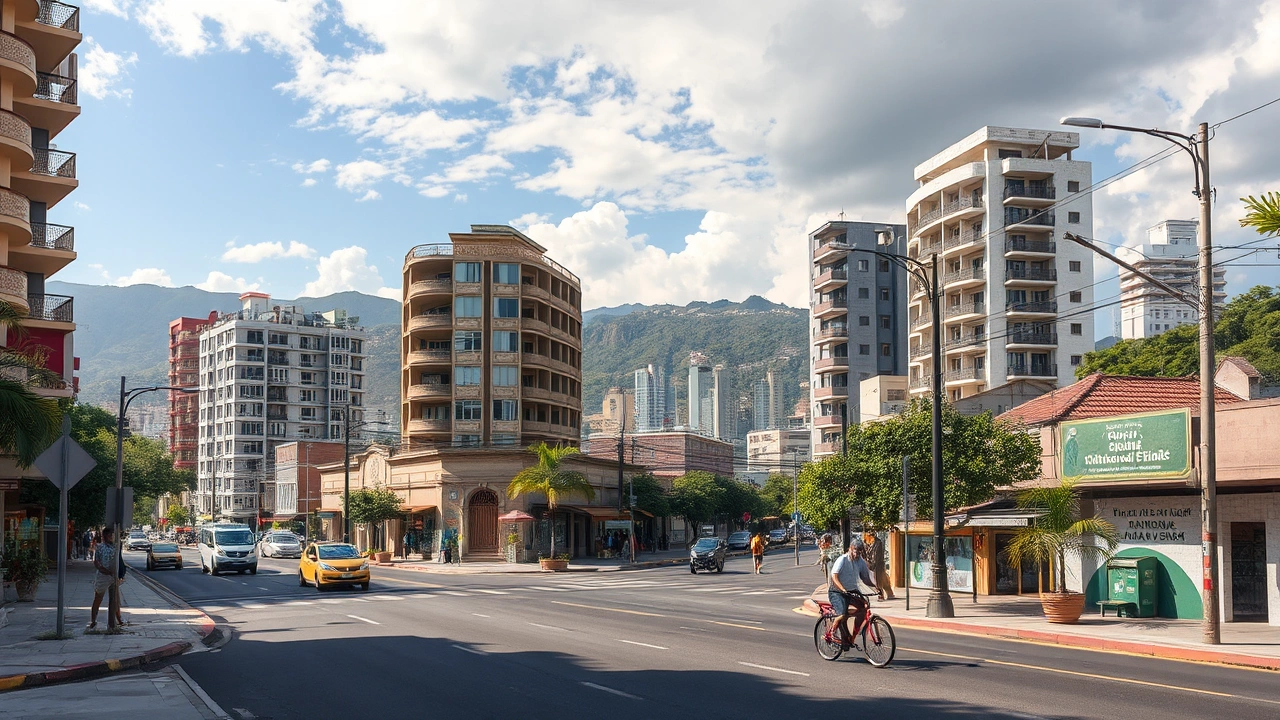
The political and economic capital, Managua remains the deepest market in terms of transaction volume, for both residential and commercial real estate. Recent data indicate an annual increase of about 11% in apartment prices, with an average around 45,339 córdobas/m² (approximately US$1,235/m²). Houses are a bit lower, around 42,883 córdobas/m².
The neighborhoods that concentrate demand are:
Overview of key sectors in the Nicaraguan capital, characterized by their dynamism, accessibility, and residential offerings.
Traditionally favored sectors for business travel, offering a strategic location.
Areas like Las Colinas or the Carretera a Masaya corridor, benefiting from road improvements reducing commute times.
Mirador de Santo Domingo or Villa Fontana Sur, where luxury housing projects are numerous, with a sometimes oversupplied market that can moderate prices.
For investors, Managua primarily offers higher rental yields than those seen on the Pacific coast. Estimates place gross apartment yields around 8 to 11%, and those of houses around 8%. Demand is supported by urban population growth, the establishment of industries in free zones, and the increasing number of young professionals seeking modern homes, often more modest in size but with recent amenities (parking, security, pool, common areas).
Granada and León: colonial charm, between price inflation and rental potential
Granada and León represent the country’s “culture and heritage” card. Granada, on the shores of Lake Cocibolca, has long been a landing spot for retirees and expats seeking colonial homes to restore or small boutique hotels. According to various sources, more than half of the large Spanish‑style houses in the historic center have already been bought and renovated by American buyers, which has boosted prices and reduced truly “bargain” opportunities.
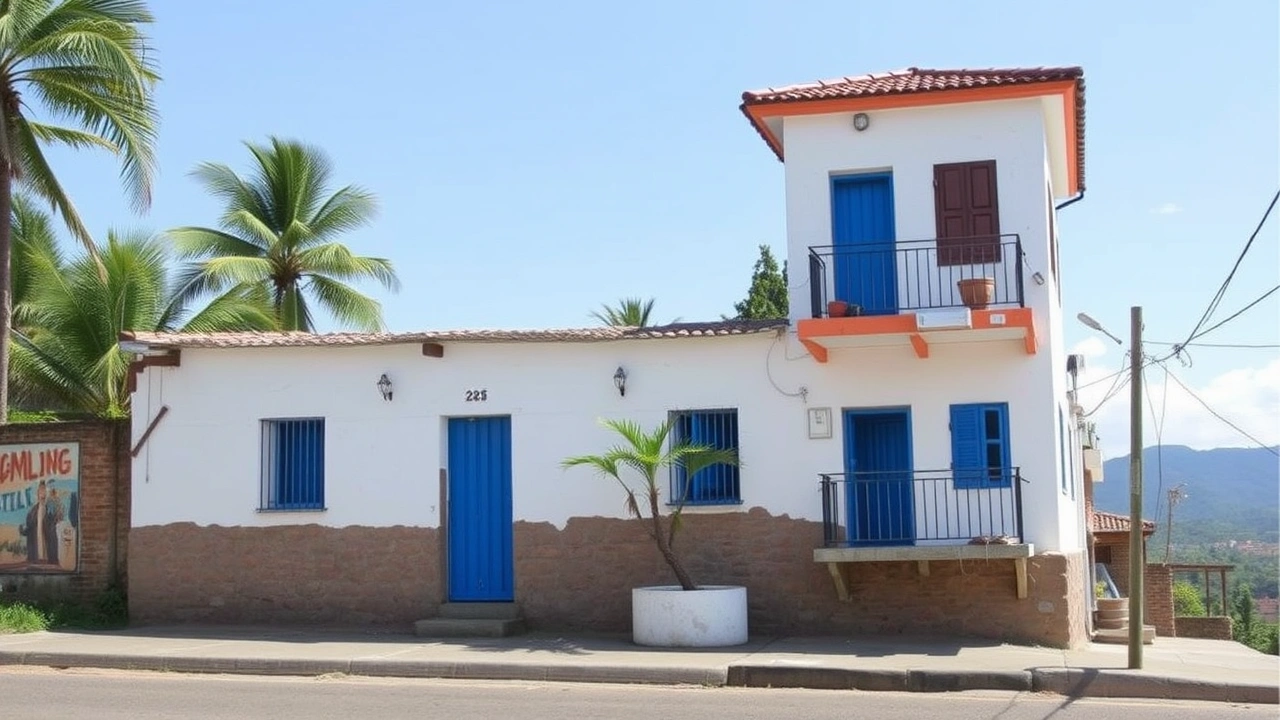
In Granada, colonial houses show an average price of about 34,899 córdobas/m² (nearly US$878/m²), with an estimated annual increase of 7%. Price ranges are very wide: small apartments can be found starting at around US$25,000, “modest” colonial houses around US$60,000, and turnkey restored properties between US$80,000 and US$200,000, even US$300,000 to US$500,000 for high‑standing mansions.
Starting price to acquire a beachfront bungalow near León, Nicaragua.
Interior regions and the Caribbean coast: niches and future bets
Outside the main tourist and urban corridors, several regions are beginning to attract a new generation of investors, often more sensitive to environmental issues and quality of life.
The mountains around Matagalpa and Jinotega, coffee‑growing regions, offer a cooler climate and lush landscapes. Prices remain low there: land along the Matagalpa‑Jinotega mountain road can be bought for around US$14,000 per acre, while a three‑acre lot with mountain views near Jinotega was offered at US$45,000. These areas are targeted for eco‑tourism, agrotourism, and “sustainable community” projects.
On the Caribbean coast, the Corn Islands and other English‑speaking areas are generating growing interest for small boutique hotel developments. Examples of seaside land priced below US$29/m² have been noted, in a context where other Caribbean destinations often charge US$1,300 to US$1,500/m² for comparable locations. This price difference highlights the potential but also comes with specific risks: some islands have complex land‑tenure conflicts, making thorough due diligence absolutely essential.
Prices, value, and yields: a two‑speed market
Price evolution at the national level masks strong local and sectoral disparities. Generally speaking, apartments appreciate faster than houses, coastal villas and urban condos drive the high end of the market, while some segments are suffering from early signs of saturation.
Price levels: numerical benchmarks
The table below summarizes some orders of magnitude from various sources for the main areas and property types.
| Area / Property Type | Indicative Average Price | Estimated Recent Trend |
|---|---|---|
| Apartments (national, median) | ~US$1,230/m² | +3–7% year‑on‑year |
| Houses (national, median) | ~US$930/m² | +3–7% year‑on‑year |
| Apartments – Managua | ~US$1,235/m² | +11% year‑on‑year, ~+30% since 2020 |
| Houses – Managua | ~US$930–1,000/m² | “Average” growth |
| Houses – Rivas (incl. San Juan del Sur) | ~US$1,395/m² | +12% year‑on‑year |
| Colonial Houses – Granada | ~US$878/m² | +7% year‑on‑year |
| Houses – Estelí (urban) | ~US$679/m² | +2% year‑on‑year |
| Premium Coastal Front (Pacific) | Villas US$150,000–500,000 (or more) | +15–25%/year in some niches |
| “Entry‑Level” Colonial Properties | US$60,000–80,000 (Granada, León) | Strong demand from expats |
These figures illustrate how affordable the country remains compared to other tourist destinations. In Granada, an apartment around US$25,000 can still be found, and in interior cities, houses sell at levels well below US$700/m².
Over a decade, prices of real estate targeted at foreign clientele have jumped by nearly 800%.
Rental yields: Managua wins, the coast weakens
From an investor’s point of view, the question is not only the purchase price, but rental profitability. Here again, the market splits in two.
Apartments in Managua show, according to several studies, gross yields around 11%, and houses about 8%. The stability of demand—linked to urban jobs, students, and free‑zone managers—makes it a rather predictable market for a long‑term investor.
Over 500 properties are listed for seasonal rental on platforms in the San Juan del Sur municipality.
This overabundance of supply has mechanically compressed long‑term rental yields, which have fallen in some cases to 2.8% net, while the best short‑term operations can still aim for 7 to 10% gross, but with increasingly strong competition and volatile occupancy rates. In Tola and the Costa Esmeralda, data converge on the same conclusion: the number of vacation homes is increasing faster than demand, forcing many owners to lower prices to fill their calendars.
The contrast can be summarized as follows:
| Segment | Typical Gross Rental Yield | Demand Stability |
|---|---|---|
| Apartments – Managua | ~8–11% | Fairly stable, urban |
| Houses – Managua | ~8% | Stable in the medium term |
| Colonial – Granada/León | ~5–7% | Mix of tourists / residents |
| Long‑Term Rental – San Juan del Sur | ~2.8% (case study) | Under pressure (high supply) |
| Short‑Term Rental – Pacific coast | ~7–10% for the best | Strong competition, seasonality |
A key idea emerges: Nicaragua is more of a long‑term appreciation market than a short‑term cash flow Eldorado, especially in the highly competitive vacation rental segment.
Major infrastructure projects: the “lever” effect
Public authorities consider infrastructure a central lever for modernization and attractiveness. Several major projects are already underway or planned, with direct impacts on real estate values.
Percentage reduction in travel time between Managua and Popoyo thanks to a section of the Coastal Highway, stimulating transactions and land value.
Beyond this coastal road, the state plans to invest approximately US$5.2 billion in improving 4,200 km of main roads. In the capital, a Bus Rapid Transit (BRT) project on four corridors by 2040 is under consideration, aimed at improving traffic flow and structuring urbanization.
Amount in millions of dollars of the Chinese loan for the extension of Managua’s Augusto C. Sandino International Airport.
Finally, energy projects—new LNG power plant, hydroelectric dams—aim to secure electricity supply and reduce costs, indirectly improving the viability of many real estate projects, especially in rural or remote areas.
Buyer profiles and new preferences: modern, safe, and sustainable
Current trends are not just about numbers. They also reflect a shift in buyer expectations, both national and foreign.
First, there is a clear shift toward modern housing, well‑equipped and better secured. Gated communities with 24/7 security, cameras, fences, and shared services are seeing impressive growth, especially around Managua, where more than fifty new developments of this type have been recorded over the last decade. In cities, the preference is for more modest‑sized apartments but with contemporary amenities: efficient air conditioning, fiber optic internet, co‑working spaces, gyms, pools.
Environmental sensitivity is becoming a major criterion in real estate. Studies indicate that 96% of Millennials value sustainability when making a purchase, 68% of people are concerned about the ecological impact of their housing, and a majority are willing to invest more for an eco‑friendly home. In response, public authorities offer tax incentives for “green” construction, and developers are creating projects like ecolodges, housing using local materials, or neighborhoods powered by renewable energy.
This evolution is seen on the ground: in the northern mountains, for example, projects like ecolodges or “agro‑ecological communities” are developing, and on the coast, residences showcasing bioclimatic architecture, solar systems, or responsible water and waste management are standing out with the international clientele.
Legal framework, taxation, and new regulations
Even if it remains a “low‑cost” country, Nicaragua has clearly strengthened its legal and regulatory framework around real estate and foreign investment in recent years.
Regarding property, the Constitution guarantees the protection of property rights (Article 44) and equal treatment between nationals and foreigners (Article 27). Historically, the Foreign Investment Law (Law 344) provided a foundation of guarantees for international investors; a new law (1240) now replaces it, notably requiring institutional investors and companies to register with the competent ministry to obtain a single certificate (RUIE). Individuals buying property in their own name without commercial activity are, however, not subject to this registration requirement.
In Nicaragua, foreigners are subject to specific restrictions for acquiring land, particularly in border zones and along the coastline. Within a 5‑km strip along the borders with Costa Rica and Honduras, full direct ownership is prohibited, except through specific legal structures (Nicaraguan company, special permits). The prohibition is total within 200 meters of the borderline. Along the coastline, the first 50 meters from the high‑tide line are public domain and inalienable. For land located just behind this zone, acquisition or long‑term concession is possible but may require a letter of ‘non‑objection’ from authorities to secure a project.
On the regulatory side, the creation of a genuine regulated status for real estate agents marks a step forward. Law 1199, effective in 2024, entrusts the INVUR (Institute of Urban and Rural Housing) with the mission of issuing a five‑year license to agencies. They must be registered with the tax authority (DGI), charge and remit 15% VAT on their commissions, and comply with anti‑money laundering rules imposed by the UAF (financial analysis unit). This implies Know‑Your‑Customer (KYC) procedures and systematic verification of the origin of funds.
For any real estate transaction, it is imperative to assemble a complete formal file including: an updated cadastral plan, a clean title certificate (Libertad de Gravamen), a municipal solvency certificate, and receipts for property tax payments. These documents are required both at the promise of sale stage and for signing the final deed with a notary. It is highly recommended to hire an independent lawyer, conduct a title search covering at least ten years (or more for properties subject to expropriation during the Sandinista era), and obtain title insurance. These precautions are all the more important given the complex history of agrarian and urban reforms, which generated numerous land conflicts (nearly 40% of households were reportedly affected after the 1980s).
On the tax side, the standard structure includes:
– A transfer tax of about 4% of the declared price,
– Registration fees around 1%,
– Lawyer and notary fees totaling generally 1.5 to 3%,
– An annual property tax close to 1% of the cadastral value (often below market value),
– A capital gains tax of 15% for companies and 30% for individuals,
– Taxation of rental income between 15% and 30% depending on income level (15% for non‑residents).
Investors can, however, benefit from preferential regimes, notably through the Tourism Incentives Law (Law 306) or the law for retirees and pensioners, which provides for exemptions from customs duties on certain imported goods and tax breaks for eligible projects.
Risks, limitations, and points of caution
Behind the veneer of opportunity, there are real risks that professionals discuss frankly.
The most emblematic remains the land‑tenure issue. Expropriations and redistributions carried out during the Sandinista era and subsequent decades left traces: thousands of properties changed hands under sometimes poorly documented conditions, and subsequent regularization procedures ( “reformed” titles) are not always clear. Certain categories of properties—notably those seized and transferred to the state in the 1980s—are regularly flagged as ones to avoid. On the Corn Islands, for example, serious property conflicts exist, involving indigenous communities and individuals.
Given natural hazards (tsunamis, hurricanes, erosion, earthquakes) on the coasts, it is recommended to choose recent constructions located on higher ground and built to seismic standards, rather than houses right on the beachfront. This approach is also advised by insurers, who are gradually increasing their premiums for the most exposed coastal properties.
Finally, the country’s political context, even though it has not prevented steadily rising transaction volumes in tourist areas, remains closely monitored by some institutional investors and foreign embassies, who point to the slowness of judicial procedures and the difficulty in enforcing certain court decisions.
What to expect in the coming years?
By cross‑referencing economic, demographic, tourist, and real estate data, several trends are clearly emerging for the coming years.
First, overall housing demand should continue to grow, supported by demographics (fertility rate of 2.3 children per woman, population projected to over 7.2 million), by urbanization (nearly 58% urban population in the near future), and by a structural deficit of nearly 957,000 housing units. Even if not all these needs translate into beach villa purchases, they guarantee a robust base of demand, particularly for medium‑sized urban housing and “improved social housing” products.
Tourism remains the main catalyst for real estate appreciation on the Pacific facade and some islands. With an expected annual growth of about 5.9% and a continuous increase in average spending per visitor, well‑located projects (vacation homes in unique spots, small boutique hotels, ecolodges) should continue to see their prices rise, despite an erosion of rental yields in saturated markets.
The price gap with Costa Rica and other regional destinations also works in the country’s favor. As long as the combination of “same beaches, same climate, significantly lower cost of living, and much more accessible market entry” holds true, it is likely that the flow of North American and Canadian buyers will continue, or even accelerate, especially in a context where high interest rates limit access to ownership in their home countries and push a growing share of buyers toward cash transactions.
Sustainability, security, and modernity are becoming decisive criteria, favoring the development of new neighborhoods, gated communities, and integrated projects (mixing residences, commerce, and leisure) in Managua and on the Pacific coast. This trend comes at the expense of informal or obsolete housing in older neighborhoods.
For players interested in this market, the conclusion is clear: Nicaragua is at a pivotal moment. Growth potential is real, prices remain low relative to the region, infrastructure is improving rapidly, and the influx of tourists and expatriates shows no sign of slowing. But the quality of the investment will depend on the choice of location, a fine understanding of local dynamics, and above all, the thoroughness of the legal and technical preparation for each acquisition.
In a market that is essentially cash‑based, young, still poorly standardized, and sometimes legally complex, information asymmetry can cut both ways. Investors who prepare methodically, relying on solid data, duly licensed professionals, and rigorous due diligence, are also those most likely to turn the current trends of the Nicaraguan real estate market into tangible long‑term gains.
Disclaimer: The information provided on this website is for informational purposes only and does not constitute financial, legal, or professional advice. We encourage you to consult qualified experts before making any investment, real estate, or expatriation decisions. Although we strive to maintain up-to-date and accurate information, we do not guarantee the completeness, accuracy, or timeliness of the proposed content. As investment and expatriation involve risks, we disclaim any liability for potential losses or damages arising from the use of this site. Your use of this site confirms your acceptance of these terms and your understanding of the associated risks.

Cyril Jarnias is an independent expert in international wealth management with over 20 years of experience. As an expatriate himself, he is dedicated to helping individuals and business leaders build, protect, and pass on their wealth with complete peace of mind.
On his website, cyriljarnias.com, he shares his expertise on international real estate, offshore company formation, and expatriation.
Thanks to his expertise, he offers sound advice to optimize his clients' wealth management. Cyril Jarnias is also recognized for his appearances in many prestigious media outlets such as BFM Business, les Français de l’étranger, Le Figaro, Les Echos, and Mieux vivre votre argent, where he shares his knowledge and know-how in wealth management.