 Published on and written by Cyril Jarnias
For a long time, Nicaragua has been primarily associated with volcanoes, coffee, and political conflict. But for a few years now, another story is being written: that of a country reconfiguring its cities, roads, water networks, and neighborhoods to accommodate rapid urbanization, attract investment, and address a severe housing shortage. From major coastal highways to Bus Rapid Transit in Managua, from Special Economic Zones to massive social housing programs, the country is undertaking a portfolio of urban projects on an unprecedented scale.
This article analyzes the major infrastructure projects, whether planned or already underway, and the policy decisions that are reshaping the country’s urban spaces.
A Strategic Framework Scaling Up
The upcoming urban development is not just an assortment of isolated projects. It is part of a set of plans, laws, and strategies that form a genuine roadmap.
The “Urban Development Master Plan for Managua City for 2040,” developed with the Japan International Cooperation Agency (JICA) and adopted in 2018, aims to reorganize the capital into a multi-polar city. The goal is to densify and structure urbanization in the face of an expected population increase of 400,000 by 2040, by developing public transport corridors, strengthening land management, and protecting ecologically sensitive areas.
At the same time, another key text is disrupting the investment framework: the law on Special Economic Zones (SEZs) of the “Belt and Road” Initiative. Unanimously adopted by the National Assembly, this law (1264) creates an extremely attractive regime for companies operating in these SEZs, with almost total tax exemptions, administrative simplification, access to preferential energy tariffs, and customs facilitation. The stated objective is to attract capital, diversify exports, generate jobs, and accelerate technology transfers.
These two instruments – the urban master plan on one side, and SEZs on the other – provide the backdrop for upcoming projects: mobility infrastructure, water and sanitation networks, new urban centers, large residential complexes, and logistics platforms.
Managua, Laboratory of the New Urban Model
Managua alone concentrates the majority of upcoming urban investments. As the administrative and economic capital and the most populous city in the country, it is also the heart of a set of projects designed to make it more fluid, resilient, and compact.
Transportation Revolution: BRT, Bypasses, and a Metro Under Study
The most visible transformation will undoubtedly be that of Juan Pablo II Avenue, a historic city artery destined to become a true mass transit corridor. The project involves rebuilding and widening this axis for approximately 10 km, adding a third lane in each direction dedicated to buses in a Bus Rapid Transit (BRT) system. With 17 planned stations and an estimated ridership of 80,000 users per day, this line is the cornerstone of a broader mobility scheme envisioning up to four BRT corridors by 2040.
Around this backbone, the project integrates several layers of development: creation of a bike lane, improvement of sidewalks and pedestrian crossings (bridges, signalized crosswalks), modernization of drainage, sewer, electricity, and telecommunications networks along the corridor. Five grade-separated interchanges are also to be built to improve traffic flow.
The total amount in millions of dollars of international financing for transport infrastructure in Managua, from the EIB and the CABEI.
But this modernization comes with a social cost: over 600 households – 325 residential families and 277 businesses, often family-run – will need to be relocated. In accordance with EIB requirements, a Resettlement Policy Framework and a Resettlement Action Plan must be developed, with consultation of affected persons and adequate compensation.
Simultaneously, other mobility projects complement this system: a road bypass is among the municipality’s medium and long-term initiatives, a 16 km extension will link Nejapa to Ticuantepe, and a feasibility study conducted by JICA is exploring the possibility of a metro connecting downtown, the Augusto C. Sandino International Airport, and Ciudad Sandino. The introduction of electric buses and even a light rail system is also mentioned in sustainable mobility plans.
The whole is part of a multimodal mobility scheme and a Stormwater Management Plan developed with the Inter-American Development Bank (IDB) to reduce flooding and landslides.
Water, Sanitation, and Resilience: Massive Investments
Behind the major roadworks lies another crucial aspect of urban development: modernizing drinking water and sanitation networks, particularly in Managua but also in several secondary cities.
To cope with urban growth and reduce water losses, the public utility ENACAL is carrying out a program to replace its old and fragile pipes. This project is technically supported by the Japanese agency JICA, which provides on-site monitoring and hydraulic modeling of the networks.
In parallel, a major project aims to expand sewer network coverage in Managua. Divided into two phases, it plans the creation of 40,000 new connections (20,000 per phase) to reach a coverage of about 72%. This project, estimated at $66.4 million, includes the construction or rehabilitation of 120 km of collectors. Some infrastructure, like the “Interceptor No. 2 – Second Phase,” is integrated into the Juan Pablo II Avenue works package, illustrating an integrated approach to road and sanitation network projects.
A critical link in the system is the Managua Wastewater Treatment Plant (MWWTP), commissioned in 2009 with a treatment capacity of 253,000 m³ per day, designed to cover needs until 2030. To maintain its performance, a program of complementary measures was financed by a loan from the German bank KfW (6 million euros) supplemented by 0.6 million euros from the Nicaraguan government.
Targeted initiatives to protect watersheds and reduce flood risk in Managua.
Second phase of the project to protect watersheds in southern Managua.
System improvements under the IDB-funded Runoff Management Program.
Projects designed to limit recurrent flooding exacerbated by impervious surfaces and deforestation.
Public Spaces, Sports, and Nature in the City
Urban development in Managua is not limited to roads and underground networks. The municipality also has an ambitious program for urban parks and sports facilities, part of the “Urban Park Development Project”. This has already led to the construction of the Alexis Argüello Sports Center, the Michelle Richardson swimming complex, and an international-standard baseball stadium inaugurated in 2017, accompanied by a major drainage system.
The stated goal is to create attractive and safe public spaces, while structuring new activity hubs in a historically fragmented city. Structures like the Las Piedrecitas underpass or the numerous pedestrian bridges equipped with elevators demonstrate increased attention to accessibility and pedestrian circulation, often overlooked in Central American cities.
Finally, Managua’s Environmental Preservation Plan, covering the 2021‑2026 period, tests innovative solutions within a new urbanization for low-income households: rainwater harvesting, home composting, family gardens, integration of urban agriculture, and promotion of more compact vertical construction. The idea is to make this pilot neighborhood a model sustainable community where nature – through green corridors, agroforestry, and ecotourism strips – is fully integrated into the urban fabric.
Beyond Managua: Intermediate Cities and New Corridors
While Managua remains the main testing ground, other cities and regions in the country benefit from significant urban projects, often linked to the modernization of water networks, rehabilitation of public spaces, or the opening of major road arteries.
León and the Rise of Secondary Urban Projects
The country’s second-largest city, León is a university town with a strong colonial identity, engaged in updating its territorial planning ordinance. The challenge: to articulate its urban development with the National Poverty Reduction Plan (2022‑2026) and its own Municipal Development Plan (2020‑2024).
Several projects illustrate this shift: rehabilitation and extension of drinking water and sewer networks, cleanup of the Chiquito and Pochote rivers combined with cleaning, reforestation, and creation of recreational infrastructure along the banks, construction of a regional teaching hospital (Oscar Danilo Rosales) integrating green spaces, a new university baseball stadium, skate park, rehabilitation of streets and public spaces around the cathedral. Thus, León is testing a model where water management, recreation, and urban heritage reinforce each other.
Many intermediate cities benefit from water and sanitation programs. A program covering 19 cities, financed with over $100 million, was nearly 96% complete in 2020, with tens of thousands of new drinking water connections and sanitation facilities.
CABEI, IDB, KfW, and other donors
Coastal Highways and New Urban Corridors
One of the most discussed projects, due to its potentially structuring impact on the Pacific coast, is the Carretera Costanera (Coastal Highway). Approximately 355 km long, this coastal road is to connect the port of Corinto in the north to the beach resort of San Juan del Sur in the south, crossing several departments (Managua, Carazo, Rivas) and eventually serving nearly 64 beaches.
The financing, amounting to $401.5 million, is mainly provided by a loan of $382.6 million from the CABEI, supplemented by $19 million from the government. China has committed to funding a second phase as part of its economic rapprochement with Nicaragua. Some sections are already in service, reducing travel time between Managua and areas like Popoyo by 30 to 40%. The project includes modern road safety standards and environmental protection measures to limit the impact on coastal ecosystems.
A road corridor is under construction south of Lake Nicaragua to link Cárdenas, the port of Colón, and San Carlos (Río San Juan department). Once completed, it will reduce the journey between Granada, San Juan del Sur, and San Carlos to about 2.5–3 hours. This axis aims to open new tourist and commercial flows towards the inland Atlantic.
These roads, by improving the accessibility of cities and beach resorts, act as catalysts for urban development: new subdivisions, tourist facilities, logistics platforms, but also extension of water, electricity, and telecommunications networks along the routes.
Other Key Infrastructure: Ports, Bridges, Airports
The modernization of the transport network is not limited to roads. The port of Puerto Sandino, in the León department, underwent a major redevelopment for $64 million, with facilities adapted to growing traffic. The construction of the Kilambé bridge over the Coco River, 25 m long and financed with $2.52 million, improves accessibility for over 89,000 inhabitants of the Wiwilí region (Jinotega).
In the sky, a new international airport project, Punta Huete, is announced near Managua, intended to become a key hub for domestic and international connections. It will complement the Augusto C. Sandino Airport, already modernized for over $52 million (with Spanish participation), and respond to increased air traffic linked to tourism and trade growth.
Water, Sanitation, and Resilient Cities: A National Endeavor
Beyond purely urban projects, the country’s entire water and sanitation system is being deeply reformed, with direct repercussions on cities.
Between 2007 and 2020, nearly $810 million was invested in urban water and sanitation projects, and about $92 million in rural areas, thanks to a coalition of donors (CABEI, IDB, KfW, Nordic Fund, Spanish Water Fund, World Bank, OPEC, etc.). Coverage figures show a spectacular leap, even if service quality remains uneven.
Here is a summary of the evolution of drinking water and sanitation coverage between 2007 and 2020:
| Area | Indicator | 2007 | 2020 |
|---|---|---|---|
| Urban areas | Drinking water – coverage | 65.0 % | 91.5 % |
| Urban areas | Population served (water) | – | 1,390,267 people |
| Urban areas | Sanitation – coverage | 33.0 % | 54.0 % |
| Urban areas | Population served (sanitation) | – | 1,208,080 people |
| Rural areas | Drinking water – coverage | 26.7 % | 55.4 % |
| Rural areas | Households served (water) | – | 433,869 households |
| Rural areas | Sanitation – coverage | 36.1 % | 50.9 % |
| Rural areas | Households served (sanitation) | – | 398,619 households |
The national strategy is articulated in particular through the PISASH program (Integrated Sector Program for Human Water and Sanitation), launched in 2013, with ambitious targets by 2023: 95% drinking water coverage in urban/peri-urban areas, 56.5% in rural areas, 80% sanitation coverage in urban areas and 52% in rural areas. The first phase directly concerned 19 cities, while funding studies for a second wave of interventions in 17 others.
Number of inhabitants benefiting from a program aimed at sewer coverage of over 90% in seven Nicaraguan cities.
These technical projects are accompanied by institutional strengthening. ENACAL remains the main operator in urban areas, but community CAPS committees manage many rural systems. Bodies like CONAPAS and COMISASH coordinate sectoral policies. However, modernizing management tools (digital mapping, information systems) and professionalizing technicians – through support from organizations like JICA, KOICA, or specialized NGOs – remains a major challenge.
Social Housing and New Neighborhoods: Filling a Historic Deficit
One of the most powerful drivers of upcoming urban development is demographic pressure on the housing stock. The country faces an estimated deficit of nearly 957,000 homes, and about one in ten Nicaraguans is estimated to live in inadequate housing. Current capacities – both public and private – would only cover one quarter of annual needs.
Financing in millions of dollars from the CABEI for the National Social Housing Construction Program.
These figures fuel a spectacular progression: since 2007, the Urban and Rural Housing Institute (INVUR) claims to have delivered over 126,000 homes and plans to add 50,000 more by the middle of this decade. Programs like “Bismarck Martínez” or the “Nuevas Victorias” complexes materialize this policy on the ground, offering subsidized housing, sometimes relocating families from at-risk areas.
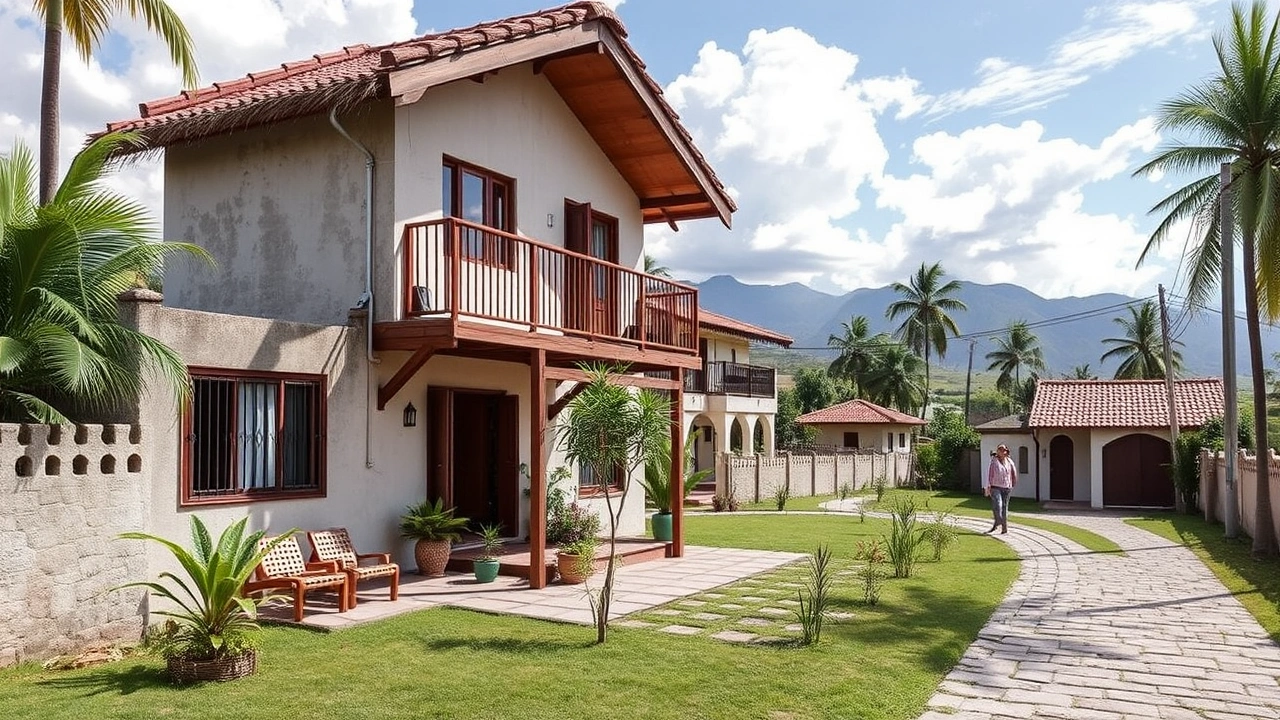
Pilot projects like “KuNa” (bamboo houses) and operations by Habitat for Humanity (extendable housing cores with solar panels and rainwater harvesting) propose sustainable solutions adapted to the tropical climate. Although marginal in volume, these models inspire innovation in the sector.
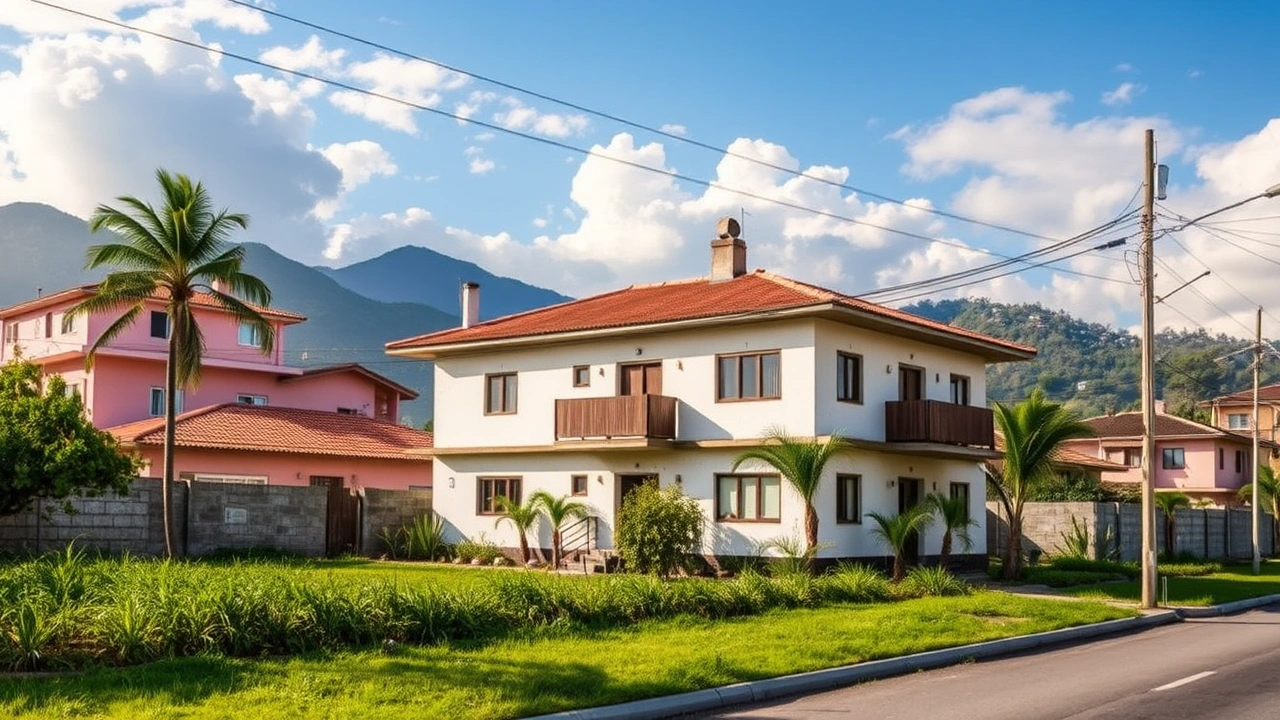
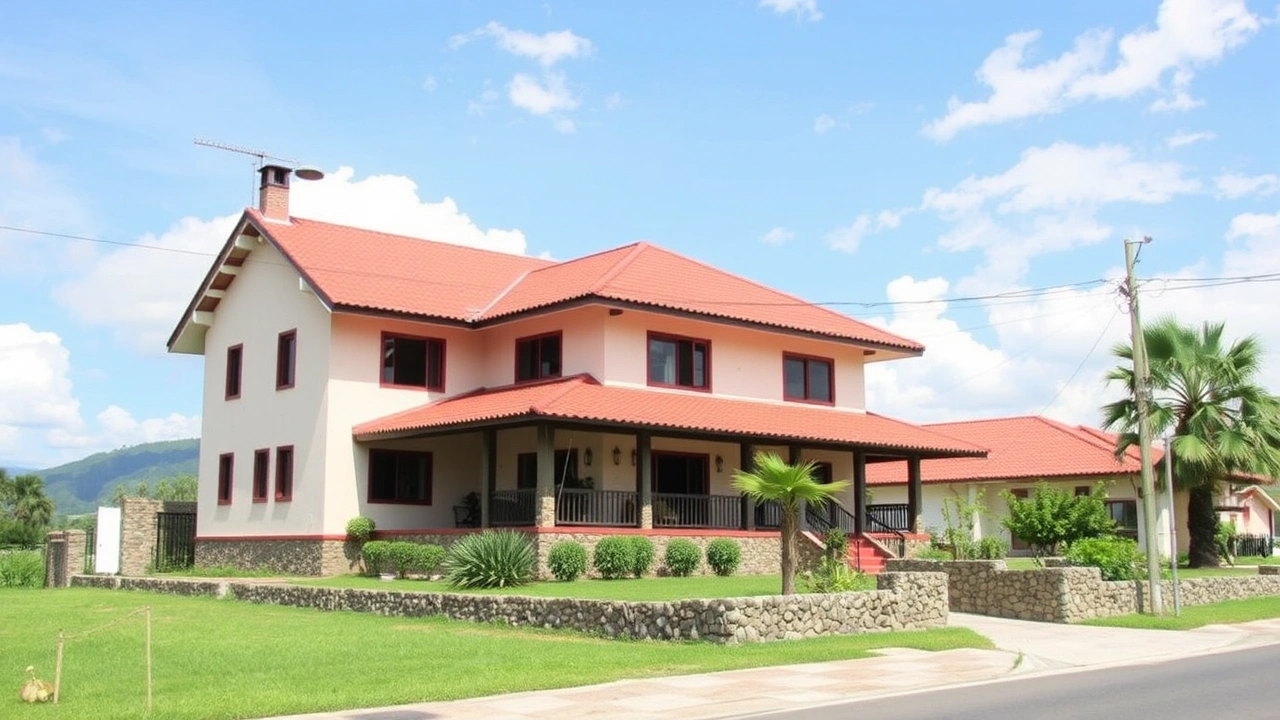
The private market is not lagging, driven by the growth of the urban middle class and foreign investment, especially in coastal areas and affluent neighborhoods of Managua. The development of planned communities like Gran Pacifica, Rancho Santana, or secure subdivisions in the capital (Villa Fontana Sur, Mirador de Santo Domingo) shows how urban growth is socially segmented, with offerings ranging from luxury residences to “turnkey” family homes under $150,000.
Special Economic Zones and a New Cycle of Urban Industrialization
The creation of Special Economic Zones under the “Belt and Road” Initiative opens a new chapter in Nicaraguan urbanization. Law 1264 offers an impressive incentive package: total exemption from income tax and dividends tax for ten years, renewable indefinitely if conditions are met, exemption from customs duties, VAT, consumption and municipal taxes, provision of one-stop administrative services, simplification of environmental and migratory procedures, preferential tariffs for energy and land.
Number of direct jobs generated by free trade zones in 2015, mainly in textiles, apparel, agribusiness, and services.
The locations envisaged for these SEZs indicate a more polycentric urbanization at the national level: Caribbean regions, Río San Juan, Ometepe Island, Pacific communities, areas along the new coastal highway. Hubs around cities like Jinotega, Matagalpa, or Estelí (cigar capital) are also mentioned, as well as sectors close to major road and port projects.
Foreign investment is governed by Law 1240, which directs it according to human development and poverty reduction priorities. Concretely, Chinese investors are very active in key sectors like infrastructure (roads, energy, telecoms), housing construction, modernization of Pacific ports, and renewable energy projects.
Public-Private Partnerships and Financing: A Sophisticated Mechanism
To support this avalanche of construction projects, Nicaragua relies on a specific legal arsenal: the law on public-private partnerships (PPPs). Adopted in the mid-2010s, it governs the entire project lifecycle – from design to operation – and distinguishes “self-sustaining” projects (financed by user fees) from those requiring state subsidies.
The General Directorate of Public Investments (DGIP) of the Ministry of Finance launches annual calls for private projects, requiring pre-feasibility studies. Selected projects follow a bidding schedule leading to contracts approved by Parliament via a specific law. These contracts include alternative dispute resolution clauses, ensuring legal security for investors.
The other financing pillar lies with multilateral banks. Since 2009, the EIB has committed about 410 million euros in the country for energy, water, and infrastructure. The CABEI, for its part, supports 24 public projects representing nearly $1.9 billion, covering roads, bridges, drinking water, sanitation, social housing, and energy. The IDB, KfW, the Nordic Fund, the World Bank, and others provide complementary loans and grants.
This complex arrangement finances an envelope of at least $500 million for Managua’s urban master plan (drainage, roads, public transport), and hundreds of millions more for highways, water networks, transport systems, and SEZs. But it also exposes the country to the vagaries of construction costs, raw material volatility, administrative delays, and potential disputes.
Environmental and Social Challenges: Reconciling Growth and Sustainability
Behind the ambition of the plans and the alignment of financing, several major challenges could condition the real success of these urban projects.
On the environmental front, the growth of Nicaraguan cities has often been at the expense of ecosystems: deforestation of watersheds, encroachment on groundwater recharge zones, pollution of lakes and rivers by untreated wastewater and agricultural runoff. Around Managua, the degradation of the Nejapa and Tiscapa lagoons, laden with sediment and solid waste, illustrates these tensions.
The country has 76 protected areas, including UNESCO biosphere reserves and key biodiversity zones.
The authorities express their willingness to strengthen urban resilience: updating risk maps, creating permanent disaster management units, training municipal technicians, integrating stormwater management into urban projects. But the practical application of environmental impact studies, combating informal urbanization in at-risk zones, and effective protection of “green corridors” around cities remain open challenges.
Major infrastructure projects like road axes, BRT, and SEZs can reshape economic opportunities, but they also carry social risks. They can lead to forced displacement and exacerbate spatial inequalities. The case of relocating hundreds of households in Managua for a BRT project is a crucial test. Its success, conditioned by genuine participation, fair compensation, and better access to services, could set a positive precedent. Conversely, a failure would reinforce distrust in this type of major development.
Social housing programs and land regularization, for their part, can help reduce the urban divide, provided that new neighborhoods are well-connected to jobs, public transport, and public facilities, and not just built as peripheral enclaves.
Nicaraguan Urbanism in Transition
The upcoming urban development projects in Nicaragua thus paint a paradoxical landscape: on one hand, an unprecedented acceleration of investment, supported by international partners and a range of incentive laws; on the other, a set of institutional, environmental, and social challenges that demand more than infrastructure – a true culture of urban planning and governance.
Nicaragua, with Managua as a regional laboratory, is driving a metropolitan transformation through its 2040 plan, BRT, parks, and experiments in sustainable urbanism. This dynamic extends beyond the capital, affecting León, Granada, intermediate cities, and coastal road corridors. The state directly links urban development, industrial strategy, and social policy through special economic zones, massive social housing programs, and major water and sanitation projects.
The final outcome will depend on the institutions’ ability to coordinate their actions, enforce environmental frameworks, train enough technicians, and maintain citizen participation. But one thing is certain: the urban face of Nicaragua in the coming decades will bear little resemblance to that of the country in the early 2000s. The construction sites are open; it is now their implementation, in all its complexity, that will determine whether this urban gamble will truly be a winning one for the Nicaraguan people.
Disclaimer: The information provided on this website is for informational purposes only and does not constitute financial, legal, or professional advice. We encourage you to consult qualified experts before making any investment, real estate, or expatriation decisions. Although we strive to maintain up-to-date and accurate information, we do not guarantee the completeness, accuracy, or timeliness of the proposed content. As investment and expatriation involve risks, we disclaim any liability for potential losses or damages arising from the use of this site. Your use of this site confirms your acceptance of these terms and your understanding of the associated risks.

Cyril Jarnias is an independent expert in international wealth management with over 20 years of experience. As an expatriate himself, he is dedicated to helping individuals and business leaders build, protect, and pass on their wealth with complete peace of mind.
On his website, cyriljarnias.com, he shares his expertise on international real estate, offshore company formation, and expatriation.
Thanks to his expertise, he offers sound advice to optimize his clients' wealth management. Cyril Jarnias is also recognized for his appearances in many prestigious media outlets such as BFM Business, les Français de l’étranger, Le Figaro, Les Echos, and Mieux vivre votre argent, where he shares his knowledge and know-how in wealth management.