 Published on and written by Cyril Jarnias
Podgorica was for a long time just a name you passed through on the way to the Adriatic coast. That era is behind us. Montenegro’s capital has now established itself as a genuine, full-fledged real estate market in its own right, with its own dynamics, solid rental yields, and prices still well below major European capitals and neighboring coastal resorts. For an investor, the question is no longer whether Podgorica deserves serious consideration, but rather how to enter the market intelligently.
This article provides a comprehensive analysis for investing in Podgorica real estate, based on recent market data, the tax and legal framework, supply and demand, as well as the specifics of the city’s different neighborhoods.
A Changing Capital that Attracts Investors
Podgorica is the economic, administrative, educational, and cultural center of Montenegro. This is where public institutions, large companies, bank headquarters, universities, courts, and a growing share of private services (clinics, international schools, shopping malls) are concentrated.
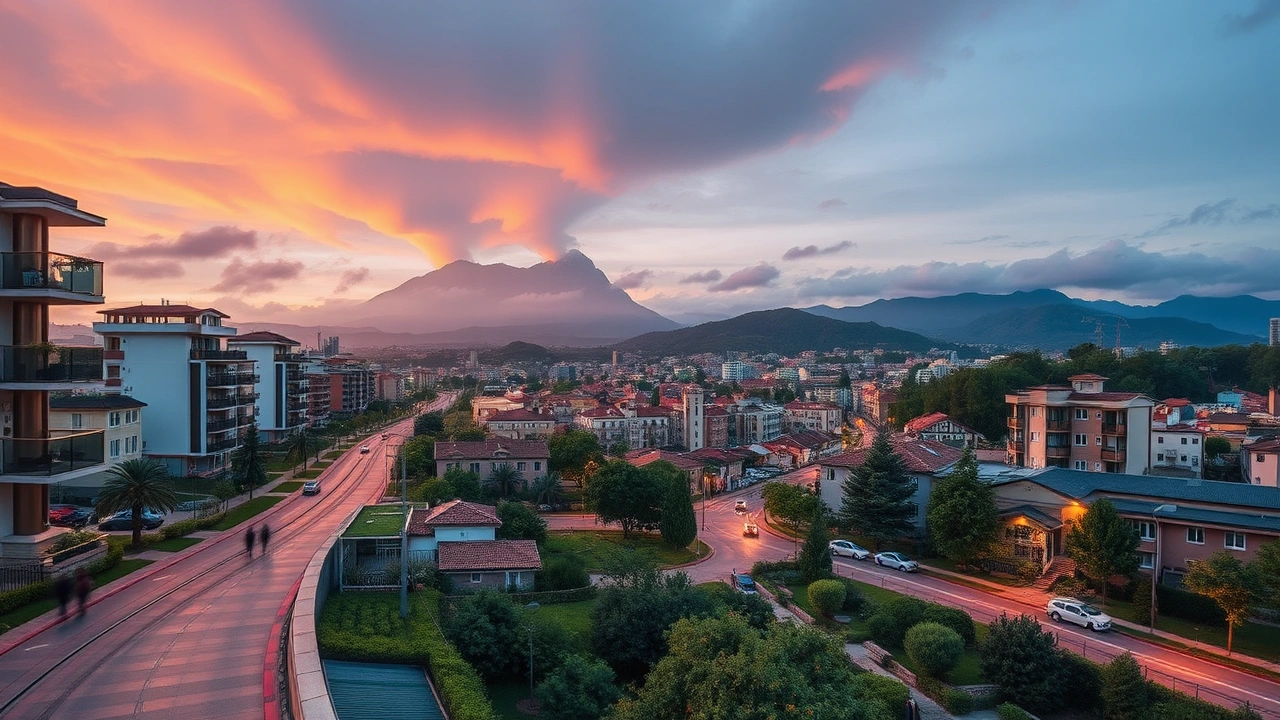
The city is no longer perceived as a mere “administrative hub”: it is transforming into a dynamic urban center, with a rising population, a modernized housing stock, and rental demand that knows no off-season, unlike coastal cities like Budva, Kotor, or Tivat, subject to the rollercoaster of summer tourism.
It is described as a “business hub” that is increasingly home to foreign companies, start-ups, diplomats, regional young professionals, and digital nomads. This highly diversified tenant base fuels continuous demand for modern apartments, close to business centers, schools, and transport axes.
Podgorica
On a macroeconomic level, the country shows GDP growth averaging around 3% in the medium term, following a very rapid post-COVID recovery cycle. Montenegro is a candidate for EU membership, already uses the euro as its currency, and relies on a dominant services sector (tourism leading) which accounts for about a quarter of GDP. These elements contribute to an environment perceived as relatively stable for real estate investment, even though the economy remains exposed to external shocks.
For the investor, this means a market that is still young, without a real estate bubble, but mature enough to offer sustained demand and an operational banking and legal infrastructure.
Price Levels: Where Does Podgorica Stand Today?
Recent figures show a clear increase in prices in Podgorica, but from a level that is still moderate on a European scale.
Nationally, the average price of new apartments has risen sharply in recent years, and the capital is following (and sometimes leading) this trend. In Podgorica, the data converges around a few key orders of magnitude.
Average Prices and Ranges by Property Type
Studies indicate that an apartment in Podgorica today typically trades between €1,700 and €2,250 per square meter, with a clear difference between new buildings and older housing stock.
For apartments:
| Property Type / Condition | Approximate Price per m² | Comment |
|---|---|---|
| New apartment | €2,000 – €2,250 | Modern residences, recent energy standards |
| Older apartment (established neighborhoods) | €1,700 – €1,900 | Often 10–20% cheaper than new, renovations frequent |
| Capital average (new + old combined) | ≈ €2,100 – €2,300 | Level observed in latest market data |
To visualize the real cost of a standard home, we can think in terms of total value. A 60 m² apartment in Podgorica costs approximately:
| Scenario | Price per m² | Estimated Total Cost (60 m²) |
|---|---|---|
| Older apartment | ≈ €1,700 | ≈ €102,000 |
| New apartment | ≈ €2,250 | ≈ €135,000 |
Ranges by typology are also well documented:
| Typology | Typical Purchase Price Range in Podgorica |
|---|---|
| 1 bedroom | ≈ €85,000 – €135,000 (several sources mention €103,000 – €126,000 for recent central segments) |
| 2 bedrooms | ≈ €137,000 – €172,000 |
| 3 bedrooms | ≈ €195,000 – €229,000 |
Houses and villas, especially in upscale residential neighborhoods like Gorica or certain areas of Tološi, have prices ranging overall between €1,500 and €3,000 per square meter, depending on the luxury level, land size, and proximity to the center.
Intra-Urban Disparities: Expensive Neighborhoods and More Affordable Areas
The Podgorica market is highly segmented by neighborhood. Some areas reach levels comparable to regional EU cities, while others remain significantly more accessible.
| Neighborhood / Area | Indicative Price per m² | Positioning |
|---|---|---|
| Central Point, City Kvart / Master, Preko Morače | ≈ €1,450 – €1,750 (some references go up to €2,000–€2,600 for the most in-demand segments) | Prime sectors, highly sought-after |
| Blok 5, Blok 6, Blok 9 | ≈ €2,200 – €2,600 | New family hubs, strong demand |
| Tološi / Tološka šuma | ≈ €2,200 – €2,800 | Green residential area, high-end projects |
| Gorica (Gorica C, Pod Goricom) | ≈ €1,300 – €2,000 (with peaks for ultra-high-end) | Diplomatic and political quarter |
| Zabjelo, Ljubović, Zagorič | ≈ €1,000 – €1,200 for older programs; €1,750 – €2,200 for recent residences | Development areas, still relatively affordable |
| Stari Aerodrom | ≈ €1,700 – €2,000 depending on building age | Neighborhood in full expansion, mixed residential/activity zone |
What clearly stands out is that central and “trendy” neighborhoods (City Kvart, Central Point, Preko Morače, Blok 5–6–9, Tološi, Gorica) are driving prices up, fueled by strong demand from upper-middle classes, expatriates, diplomats, and executives.
In contrast to central neighborhoods, areas like Zabjelo, Zagorič, or Stari Aerodrom still offer more accessible property values. They simultaneously benefit from rapid urbanization and significant improvements in public amenities, offering a good compromise between price and quality of life.
Comparison with Coastal Cities
For an investor hesitating between the capital and the sea, the price differential is significant. On the coast, notably in Budva, Kotor, Tivat or complexes like Porto Montenegro, levels rise quickly.
| Location | Typical Prices per m² | Comment |
|---|---|---|
| Podgorica (recent average) | ≈ €1,700 – €2,250 | Capital, moderate growth market |
| Budva (center / waterfront) | €1,500 – €3,000 (resales sometimes ≈ €3,700/m²) | Highly touristic resort |
| Tivat (including Porto Montenegro) | > €4,000/m² on average, up to €10,000 – €14,000/m² for luxury waterfront | Ultra-prime segment |
| Kotor (old town) | ≈ €3,700/m², over €5,300/m² in top locations | UNESCO heritage, limited supply |
Podgorica thus appears as a much more affordable market, with often higher yields, at the cost of a slightly less explosive long-term appreciation than in some ultra-luxury coastal enclaves.
Rental Yields: A Year-Round Rental Market
One of Podgorica’s main assets for the investor is the stability of rental demand over twelve months. The city concentrates institutions, companies, universities, and embassies, creating a constant flow of tenants: students, young professionals, families, expatriates, diplomats, corporate assignees, digital nomads.
Gross Yields by Typology
The gross yield data for Podgorica is particularly telling. For apartments, the annual yield is generally between 5% and 7%, with variations according to size.
| Apartment Typology | Average Gross Rental Yield |
|---|---|
| Studio (garsonera) | ≈ 6.9% |
| 1 bedroom (jednosoban) | ≈ 6.46% |
| 2 bedrooms (dvosoban) | ≈ 6.13% |
| 3 bedrooms (trosoban) | ≈ 6.06% |
| Overall apartment average | ≈ 6.39% |
Nationally, the average gross yield is around 5.6%, meaning Podgorica is one of the most profitable markets in the country, with performance superior to several coastal cities like Tivat (≈ 4.64%) or even Budva (≈ 5.85%), while offering much lower rental volatility than seaside resorts.
The frequent net rental yield for well-chosen products in Paris, considered high for a European capital.
Rent Levels in Podgorica
The monthly rents observed in Podgorica fall within a mid-range bracket, quite consistent with the local standard of living (average net salary around €914) and growing international demand.
For long-term rentals:
| Typology | Average Monthly Rent (city-wide) | Observed Range (long-term) |
|---|---|---|
| Studio | ≈ €345 (some cases from €200) | €200 – €350 |
| 1 bedroom | ≈ €500 | €250 – €400 (excluding premium segments) |
| 2 bedrooms | ≈ €700 | €350 – €550 (standard long-term) |
| 3 bedrooms | ≈ €1,000 | €500 – €750 (excluding prime locations) |
Looking more closely, rents are significantly higher in the best neighborhoods or in high-end residences.
| Location / Typology | Average Monthly Rent | Indicative Range |
|---|---|---|
| 1 bedroom city center | ≈ €548.80 | €450 – €650 |
| 1 bedroom outside center | ≈ €422.69 | €350 – €500 |
| 3 bedrooms city center | ≈ €985.83 | €800 – €1,200 |
| 3 bedrooms outside center | ≈ €735 | €600 – €1,000 |
| City Kvart, 1 bedroom | ≈ €350 | – |
| City Kvart, 2 bedrooms | ≈ €600 | – |
| Capital Plaza, 1 bedroom luxury | ≈ €670 (documented example) | – |
Most contracts are for 12 months, with a security deposit equivalent to one month’s rent. An important point for a foreign investor: almost all apartments are rented furnished, with appliances and domestic equipment included, which facilitates renting but requires an initial furniture budget.
Short-Term Rentals (Airbnb): A Niche to Handle with Discernment
Seasonal rentals like Airbnb exist in Podgorica, but do not offer the same explosiveness as on the coast. An analysis covering 472 active listings between late 2024 and 2025 shows a niche market, but profitable for the best operators.
| Indicator (Airbnb Podgorica) | Observed Value |
|---|---|
| Average Daily Rate (ADR) | ≈ $53 (slight monthly variations) |
| Average Occupancy Rate | ≈ 36% |
| Typical Annual Revenue | ≈ $5,031 (down 6.9% year-on-year) |
| Median Annual Revenue | ≈ $4,350 (≈ €4,350) |
| Median Monthly Revenue | ≈ $528 |
| Top 10% of listings | > $1,214/month, occupancy rate > 78% |
| Bottom 25% | ≈ $247/month, occupancy rate ≈ 17% |
What stands out: the market strongly rewards the best-positioned properties (central neighborhoods, City Kvart, Capital Plaza area, extended city center) and highly professional operators (high availability, excellent ratings, refined pricing strategy).
The supply structure is quite concentrated.
– About 64% of listings are one-bedroom apartments,
– studios and 2-bedrooms combined bring this figure to over 80%,
– properties with 3 bedrooms or more represent a niche barely above 2% of listings.
Another key point regarding client profile: about 94% of travelers are foreigners, with a majority being young (Generation Z would account for nearly half of bookings), and dominant origins being the United Kingdom, United States, and Germany. This justifies a modern and international positioning (English essential, contemporary decor, self check-in).
To exploit this segment, one must however account for a more demanding regulatory framework: obligation to register as a business activity, collection of a tourist tax of about €1 per person per night, need to declare business income, and management fees if the property is entrusted to a specialized agency (generally 10–20% of revenue).
Costs, Taxation, and Cost of Ownership
Net profitability will largely depend on the cost structure: taxes, maintenance, communal fees, management, utilities.
Property Tax and Local Taxation
Montenegro stands out for having relatively moderate property taxation compared to Western Europe.
– The annual property tax is generally between 0.25% and 1% of the property’s market value, with the higher end targeting rather tourist or exceptional coastal properties. In practice, for a standard apartment in Podgorica, it is often at the lower end of the range.
– Some sources mention a national average of 0.1–0.25% for ordinary residential properties, though municipalities have the possibility to increase rates.
– High-end properties or certain premium assets can be taxed up to 5.5% in tourist zones, which mainly concerns hotels and luxury villas on the coast rather than the capital.
On rental income:
For short-term rentals declared as a professional activity, income is subject to an income tax of about 15% after deduction of expenses (generally 30 to 50% of gross rent, depending on the chosen tax regime). Furthermore, a flat-rate income system may apply to this activity, and a tourist tax is levied in addition.
Upon resale, capital gains are in principle taxed at 15%, but an exemption may exist if the property was occupied as a primary residence for at least three years.
Transaction Costs
For any purchase in Podgorica, one must plan for fees in addition to the listed price:
– Real estate transfer tax on the secondary market, progressive around 3–6% depending on the property value (exempt if purchasing a new property subject to VAT),
– Notary fees, calculated on the property value, generally a few hundred to a few thousand euros,
– Lawyer fees if legal counsel is hired (highly recommended for a foreigner),
– Agency commission (often 3 to 5%, most often borne by the seller, but to be verified),
– Various cadastre registration fees, international bank fees, certified translations.
For a cautious investor, it’s wise to budget at least 8% of the purchase price to cover the ‘hidden bill’.
Condominium Fees, Management, and Utilities
In Podgorica, condominium fees are still reasonable compared to luxury seaside residences.
– Maintenance fees for common areas of residential buildings typically range between €1 and €2 per m² per month.
– Some management providers mention €0.2–€0.4 per m² for basic management services in residential complexes (surveillance, cleaning, green space maintenance), but high-end residences with concierge, underground parking, 24/7 security, or a pool can charge significantly more.
Utilities (electricity, water, internet, cable TV) for a standard 60–85 m² apartment cost on average between €70 and €120 per month, with peaks towards €150 in summer if air conditioning is used intensively. For an investor renting with charges included, this is an important factor in calculating the net margin.
Property management, if outsourced, represents:
– for long-term rentals: often 10–15% of the monthly rent for full services (listing, collection, tenant follow-up),
– for short-term rentals: 10–20% of revenue, sometimes more if management includes cleaning, welcome, marketing, pricing optimization.
Financing and Access to Credit for Foreigners
The Montenegrin market remains very “cash” oriented, especially for foreign buyers. It is possible to obtain a mortgage loan as a non-resident, but conditions are significantly stricter than for locals.
Main characteristics of loans for foreigners:
Main conditions and characteristics of real estate loans intended for foreign buyers.
Generally between 30% and 50% of the property price (i.e., financing of 50 to 70%). Some institutions may require up to 70% down payment.
Usually higher than for residents, with a typical range around 5.1% to 8%.
Limited, most often to a period of 7 to 15 years, compared to 20 to 30 years for Montenegrin borrowers.
Often capped, for example between €200,000 and €400,000.
Can take 30 to 45 days. Requires providing numerous documents: proof of income, bank statements, credit reports from the country of origin and their certified translations.
Some banks (Erste Bank, CKB, Hipotekarna, Lovćen Bank…) have products for foreigners, but policies change quickly and some institutions have, at times, suspended lending to non-residents. In practice, an investor with significant equity is in a better position.
Alternatives exist:
– staggered payment plans offered by developers (e.g., over 12 to 36 months, sometimes interest-free, with property transferred upon completion),
– using a mortgage in the home country by pledging a local property as collateral,
– structuring via a local company, which can access business credit lines.
Legal Framework and Property Security
Montenegro has a public online cadastre (ekatastar.me) that registers property rights and mortgages, and a set of laws governing real estate transactions, leases, urban planning, and construction.
Essential principles:
Foreigners can freely buy apartments and houses in urban areas of Podgorica in their own name. However, they cannot acquire certain lands in direct ownership (agricultural >5,000 m², forests, border areas, islands, strategic or heritage sites), which remains marginal for classic purchases. The acquisition must be formalized by a notarial deed and then registered in the cadastre for full legal security. Particular vigilance is required regarding the urban planning status and legalization of older constructions, through sometimes lengthy and costly regularization procedures.
For a non-resident investor, the support of an experienced local lawyer is highly recommended. They will verify:
– the continuity of property titles,
– the absence of encumbrances or ongoing disputes,
– urban planning compliance (compatibility with development plans),
– the effective possibility to rent (long-term or short-term) in accordance with local regulations.
Neighborhood Mapping: Where to Invest in Podgorica?
The key to a good investment lies in the choice of neighborhood. Podgorica offers a true mosaic of micro-markets, each with its tenant profile, price dynamics, and appreciation potential.
City Center (Centar / Nova Varoš)
The administrative and cultural heart of the city, with the Parliament, Central Bank, National Theatre, City Hall, major commercial boulevards (Hercegovačka, Slobode), and Independence Square. This is the ideal address for professionals who want to do everything on foot.
Apartments here hold their value very well and rent easily to expatriates, executives, and self-employed professionals. For short-term rentals, it’s also a logical choice: proximity to cafes, restaurants, leisure, transport.
Preko Morače: The “New Center”
Located on the other side of the Morača River, Preko Morače is often described as the “new center” of Podgorica. The neighborhood combines several assets: relatively calm environment, immediate proximity to the center, schools, universities, ministries, sports centers, walks along the river.
This sector, highly appreciated by affluent families, leaders, and expatriates, is one of the most expensive and in-demand in the city. Renovated small units here are extremely rare and sought after, and well-located properties sell very quickly. For a long-term investor, it represents one of the most defensive locations.
City Kvart and Central Point: The Hyper-Modern
City Kvart, adjacent to the Big Fashion shopping mall (formerly Delta City), has established itself as the symbol of the new Podgorica: modern buildings with underground parking, commercial ground floors filled with cafes, restaurants, gyms, offices, a very lively environment frequented by students, young professionals, and traveling executives alike.
Prices here are among the highest in the city, but the rental demand is such that yields remain interesting. A 1-bedroom rents for around €350 per month (in standard long-term, more in high-end furnished version), a 2-bedroom around €600, and premium segments (Central Point, around Capital Plaza) go much higher.
For short-term rentals, City Kvart and the surroundings of Capital Plaza are prime “spots”, very visible on platforms, with a flow of business travelers and urban tourists.
Blok 5, 6, and 9: The Sought-After Family Residential Area
These large residential complexes, with high towers surrounded by wide pedestrian spaces, parking lots, sports fields, and parks, are considered the most “family-friendly” neighborhoods in the capital. They feature:
– schools, nurseries, clinics,
– local shops,
– good road connections to the center and business areas.
Property prices can reach up to €2,600/m² for recent constructions in certain segments.
Larger units here easily find takers for long-term rentals, with solid yields in the family segment.
Tološi and Tološka šuma: Nature and Standing
To the west of the city, Tološi and the Tološi forest offer a green residential setting, highly sought after by those wanting to combine city and nature. This is where several upscale complexes are developing, with high-end apartments, urban villas, “smart living” concepts (home automation, enhanced security, energy efficiency).
Prices here are above average (€2,200–€2,800/m²), but the long-term appreciation potential is real, driven by the area’s development and the scarcity of this type of environment in Podgorica.
Gorica: The Diplomatic Address
The Gorica sector (notably Gorica C and Pod Goricom, on the slopes of the hill) is the reference address for political, economic, and diplomatic elites. You’ll find villas, grand-standing apartments, embassies, as well as a large wooded park.
In Geneva, property prices range from €1,300 to €2,000/m², with higher peaks in the most luxurious residences. This sector is a strategic choice for an investor targeting rentals to embassies, NGOs, or senior executives, offering the possibility of well-paid, long-term lease contracts.
Stari Aerodrom: Development and Potential
This planned neighborhood, with good road infrastructure, wide streets, and the presence of embassies (Albania, Poland), is experiencing a construction boom. Over 1,100 new homes are under construction, attracting shops, services, and infrastructure.
Prices remain lower than in the center or City Kvart, but the dynamics are very positive: it’s a good compromise for an investor looking for a lower entry ticket, with a prospect of rising values and rental demand driven by the urban middle class.
Zabjelo and Zagorič: Transition Zones
Zabjelo, long considered a working-class neighborhood on the southern periphery, is gradually transforming into a dynamic urban district. Proximity to the Big Fashion mall, road projects like the extension of Vojislavljevića street, and new residences keep prices at an attractive level while offering growth potential.
Zagorič, north of Gorica hill and along the Morača, combines a calmer environment and ongoing new developments. Prices for new projects stabilize around €1,000–€1,200/m² in some segments still under development, making it an interesting area for investors willing to bet on future urbanization.
Recent Projects and Urban Development: A Lever for Appreciation
The attractiveness of a real estate market also depends on public and private investment in infrastructure. In this regard, Podgorica is multiplying projects.
The municipality is investing heavily in:
Key city initiatives to modernize infrastructure, improve living standards, and accelerate the green transition.
Rehabilitation of boulevards, creation of ring roads, and improvement of access roads to the coast to ease traffic flow.
Development of modular surface parking, new areas near former military grounds, and studies for underground parking.
“Green City Pulse” and “MIKRO 020” projects to revitalize public spaces, with creation of new promenades along the Morača and on Ljubović hill.
Program of over €75M (European funding) for a modern wastewater treatment plant, new collectors, and network improvements.
Photovoltaic installations on public buildings and participation in European programs for a carbon-neutral city.
On the private side, several local and international developers are delivering or marketing modern residential complexes in Zabjelo, Stari Aerodrom, Tološi, City Kvart, Donja Gorica, etc., often with:
– underground parking,
– children’s playgrounds,
– green spaces,
– CCTV and controlled access security systems,
– improved energy certifications.
For the investor, the effect of these projects is twofold:
– improvement in quality of life, thus rental attractiveness,
– potential revaluation of properties located near new infrastructure.
Buying off-plan in a well-located project can allow one to enter at a price below the finished market price (a documented differential in some programs: €1,855/m² for cash payment during construction phases, versus higher values upon delivery).
Investment Strategies in Podgorica
Based on these elements, several investment approaches emerge.
Strategy 1: Small Apartment for Long-Term Rental
Target: Studios and 1-bedroom apartments in central or semi-central neighborhoods (City Kvart, Central Point, Preko Morače, Blok 5–6–9, city center).
Advantages:
– reasonable entry ticket (≈ €85,000–€130,000),
– strong demand from students, young professionals, couples, digital nomads,
– high gross yields (6–7%, sometimes more on well-placed studios),
– limited vacancy thanks to year-round demand.
Disadvantages:
– significant competition on some very standardized typologies,
– sensitivity to variations in local purchasing power.
Strategy 2: 2 or 3 Bedrooms for Families and Expatriates
Target: Blok 5–6–9, Preko Morače, Stari Aerodrom, some quiet sectors of Zabjelo, Tološi.
Advantages:
– higher rents (€700–€1,200 depending on neighborhood and size),
– more stable tenants (families, civil servants, expatriates, diplomats),
– good appreciation potential in transitioning neighborhoods.
Disadvantages:
– higher purchase price,
– narrower market if targeting a very high rent level.
Strategy 3: Targeted Short-Term Rental
Target: Hyper-center, City Kvart / Capital Plaza areas, Preko Morače, areas near hotels and business centers.
Advantages:
– high potential monthly revenue for the best products (top 10% on Airbnb above $1,200/month),
– solvent international clientele, very connected.
Disadvantages:
The sector presents a relatively low average occupancy rate (around 36%), requiring standing out among the best operators to succeed. It also involves significant management overhead with heavier regulation (professional status, tourist tax, controls), and generates more volatile income.
Strategy 4: Off-Plan Purchase in a Developing Neighborhood
Target: New projects in Zabjelo, Stari Aerodrom, Donja Gorica, certain pockets of Zagorič and Tološi.
Advantages:
– launch prices often below the delivered property market,
– possibility of staggered payment (e.g., 50/20/20/10%),
– positioning on urban growth axes supported by municipal plans.
Disadvantages:
– risk of delay or project modification,
– need to thoroughly audit the developer (references, financial strength).
Risks and Pitfalls to Avoid
A young and fast-growing market also carries specific risks.
Several points require attention and are regularly noted:
Several aspects require particular attention: the issue of illegal or partially regularized constructions, which can lead to future regularization costs; variable construction quality, making a technical audit advisable; a slow judiciary and sometimes incomplete cadastre, requiring thorough due diligence on titles and disputes; the difficulty of access to credit for non-residents, exposing to currency and liquidity risks; and finally, a non-transparent market, requiring meticulous price comparison work, potentially with the help of an independent appraiser.
Using a specialized lawyer, a reputable agency, and serious research tools (portals like Realitica, Oglasi.me, Estitor, Centrarium, etc.) is a minimum precaution.
Podgorica: For Which Investor Profile?
In summary, investing in real estate in the city of Podgorica is particularly suitable for several profiles:
– the “yield” investor looking for regular rental income, with relatively predictable cash flow and moderate vacancy,
– the “balance between yield and appreciation” investor, betting on continued price increases (3–5% per year expected in the capital) in a context of urban upgrading and progressive European integration,
– the foreign owner-occupier buyer (digital nomad, active retiree, expatriate executive) who wants both to live at a reasonable cost and maintain a decent resale value,
– the short-term rental professional, ready to manage their product finely to position themselves in the top tier on Airbnb and similar platforms.
Unlike ultra-touristic coastal micro-locations conducive to rapid speculation, Podgorica offers a more balanced risk-return profile. This stability is backed by a solid service economy and housing demand supported by durable fundamentals like employment, education, and public institutions.
For an investor willing to seriously delve into the detailed mapping of neighborhoods, urban regulations, and taxation, Podgorica establishes itself as one of the most rational and readable markets in the Balkans: a place where it is still possible to buy at affordable prices, earn decent rents, and let time and urban growth do their work.
Disclaimer: The information provided on this website is for informational purposes only and does not constitute financial, legal, or professional advice. We encourage you to consult qualified experts before making any investment, real estate, or expatriation decisions. Although we strive to maintain up-to-date and accurate information, we do not guarantee the completeness, accuracy, or timeliness of the proposed content. As investment and expatriation involve risks, we disclaim any liability for potential losses or damages arising from the use of this site. Your use of this site confirms your acceptance of these terms and your understanding of the associated risks.

Cyril Jarnias is an independent expert in international wealth management with over 20 years of experience. As an expatriate himself, he is dedicated to helping individuals and business leaders build, protect, and pass on their wealth with complete peace of mind.
On his website, cyriljarnias.com, he shares his expertise on international real estate, offshore company formation, and expatriation.
Thanks to his expertise, he offers sound advice to optimize his clients' wealth management. Cyril Jarnias is also recognized for his appearances in many prestigious media outlets such as BFM Business, les Français de l’étranger, Le Figaro, Les Echos, and Mieux vivre votre argent, where he shares his knowledge and know-how in wealth management.