
 Published on and written by Cyril Jarnias
Expatriating to Tunisia is increasingly appealing to retirees, relocating employees, freelancers, and digital nomads. Very affordable cost of living, mild climate, proximity to Europe, cultural richness… on paper, the country has solid arguments. But behind this postcard image, daily reality is more nuanced: low local salaries, administrative delays, uneven infrastructure, delicate political and security context, difficulties for certain groups (single women, families, LGBTQ+ individuals…).
This article provides a comprehensive and up-to-date analysis of the pros and cons of expatriating to Tunisia, based on substantiated arguments and recent data.
An Attractive Yet Nuanced General Framework
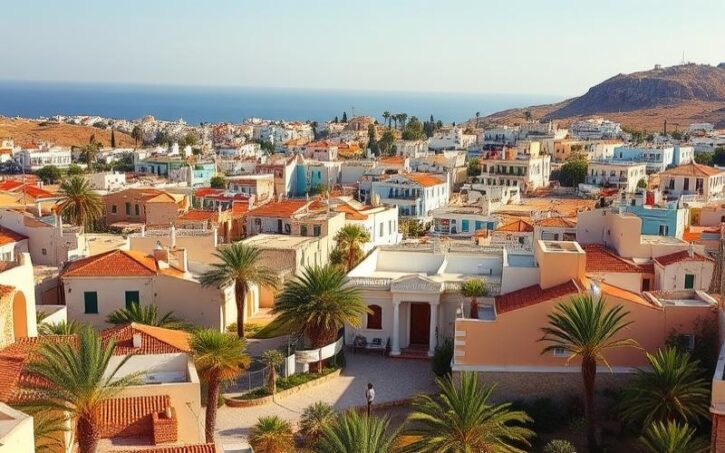
Tunisia is a republic in North Africa, at the crossroads of Europe, Africa, and the Middle East, bordered by Algeria, Libya, and the Mediterranean. It is the smallest country in the Maghreb, with just over 12 million inhabitants. Tunis, the capital, concentrates a large part of the economic activity, businesses, and expatriate community.
The official language is Arabic, but French is very widespread in administration, business, media, and hospitality. The Tunisian dialect (Derja) is used in daily life, and English is progressing, especially among young people and in the tech sector. A French-speaking expatriate can live and work without speaking Arabic, but knowing a few basics of Derja greatly facilitates integration and negotiations, for example on prices.
Society is predominantly Muslim, with small Christian and Jewish minorities. The country is often described as one of the most secular in the Arab world: alcohol is sold, women participate massively in public life, freedom of worship exists, and freedom of expression remains present, even though the political context has hardened since 2021. Alongside this relatively liberal image, however, very conservative laws persist (criminalization of homosexuality, penalized adultery), conservative social norms especially outside major cities, and a very present security apparatus.
An Unbeatable Cost of Living… Provided You Don’t Depend on a Local Salary
One of Tunisia’s main assets for an expatriate lies in its prices. All major indicators confirm it: the country ranks among the least expensive in the world.
Very Low Price Indices
International comparators place Tunisia around 188th out of 197 most expensive countries. The general cost of living index is around 27–28, or about 2.2 times cheaper than the world average. Compared to the West, the gaps are spectacular:
| Comparison | Cost of Living Difference (excl. rent) | With Rent | Rent Only |
|---|---|---|---|
| Tunisia vs. United States | –59.5% | –69.1% | –88.4% |
| Tunisia vs. France | approx. –52% | n/a | n/a |
| Tunisia vs. major US cities (global) | n/a | n/a | rent up to –85% |
To give an order of magnitude, several monthly estimates mention:
| Profile | Estimated Monthly Cost (USD) | Comment |
|---|---|---|
| Local | ~$305 | Average Tunisian lifestyle |
| “Classic” Expat | ~$720 | Excluding very comfortable expenses |
| Family (4 people) | ~$1,050–1,100 | Decent standard of living |
| Digital Nomad | ~$1,760–1,980 | More “premium” lifestyle |
Regarding euros/dinars, other sources mention around 5,800 TND (~€1,870) for a family of four, and about 2,600 TND (~€830) for a single person. Calculation methods vary, but one idea emerges: with a stable “Western” income (pension, foreign salary, freelance paid in euros or dollars), one lives very decently, even comfortably.
Housing: Steep Discount, But Significant Disparities
Rent is the expense where the gap with the West is most marked, but it all depends on the neighborhood, city, and desired standard.
Some benchmarks:
| Type of Housing | Situation | Monthly Rent Range (TND) |
|---|---|---|
| 45 m² furnished studio | “Expensive” neighborhood | ~1,700 TND |
| 45 m² furnished studio | “Normal” neighborhood | ~500–530 TND |
| 85 m² furnished | “Expensive” neighborhood | ~2,000 TND |
| 85 m² furnished | “Normal” neighborhood | ~1,000 TND |
| 1-bedroom downtown (generic) | Medium-sized city | 400–1,200 TND |
| 1-bedroom outside center | Medium-sized city | 300–800 TND |
| 3-bedroom house with garden | Sought-after suburbs | 1,000–2,500 TND |
In Tunis, a couple of expats cited in the data pays 1,600 TND for a recent apartment with utilities included, proof that by negotiating (a very common practice) you can get good deals even in the capital.
The neighborhoods most sought after by expatriates (La Marsa, Gammarth, Sidi Bou Saïd, Carthage, Les Berges du Lac, El Menzah) are the most expensive, with rents often exceeding 2000 TND. Alternatives like La Soukra, L’Aouina, Ariana, or El Ghazala offer better value for money while remaining well-connected.
Buying is also significantly cheaper than in Europe: the median price of a property is around $85,000–86,000. But purchasing by foreigners is regulated, with administrative permits sometimes difficult to obtain, even though foreign land ownership is legally possible.
Food and Dining: Very Affordable… Except for Imported Products
Food is another strong point. Markets are full of fruits, vegetables, and local products at very low prices for a European.
In practice:
The average price for a simple meal at a small restaurant in Tunisia is about 10 Tunisian dinars.
Regarding everyday products, the following orders of magnitude set the tone:
| Product | Average Price (TND) |
|---|---|
| 1 L whole milk | ~1.67 |
| 12 eggs | ~4–4.8 |
| 1 kg tomatoes | ~2.3 |
| 1 kg apples | ~4.8 |
| 500 g chicken | ~8 |
| Bread for 2/day | ~1 |
| 0.5 L local beer (supermarket) | ~3.6–6 |
| Bottle of mid-range red wine | ~20–36 |
For a single person, a grocery budget ranging between 300 and 500 TND per month is considered realistic. For a family of four, some estimates mention the equivalent of $550–600.
The caveats concern imported products (aged cheeses, avocados, mangoes, certain foreign brands) and increases linked to inflation. An American expatriate, for example, points out that “cheese, avocados, and mangoes” are significantly more expensive than back home.
Transportation and Common Expenses: Gentle Prices but Uneven Services
Public transportation is very economical: a light metro ticket in Tunis costs between 0.5 and 1 TND, a suburban train (TGM) ride between 0.8 and 1.25 TND, and a monthly pass around 30–50 TND. Taxis start at less than 1 TND and remain cheap, although the fare increases by about 50% at night.
The price of a new compact sedan in Tunisia can exceed 100,000 TND due to import taxes.
Leisure and personal care remain affordable by Western standards: a gym membership often costs between 90 and 180 TND, a simple haircut a few dinars, a movie ticket around ten TND.
The Real Downside: Very Low Local Salaries
The picture changes radically if one depends on a Tunisian salary. The average net salary after taxes is around 950–1,100 TND per month, or about €310–330; other sources even mention €280 as the average salary. Legal minimums (SMIG) are around 390–460 TND depending on whether the workweek is 40 or 48 hours.
Compared to the cost of living, an average salary barely covers 0.7 months of “standard” expenses for an expatriate. This explains why Tunisia is very comfortable for a retiree or an employee paid in strong currency, but much more challenging for a foreigner hired locally at the Tunisian rate, except for some highly skilled positions (engineering, tech, management, etc.).
A Pleasant Mediterranean Climate… But Increasingly Extreme
Tunisia appeals with its warm, sunny climate. The north of the country enjoys a Mediterranean climate: mild, rainy winters and hot, dry summers. The south shifts towards the desert and experiences much higher temperatures, with the sirocco – a hot, dry wind from the Sahara – which can push the thermometer above 40 °C, even 45 °C.
In Tunis, winters are around 15–16 °C during the day, and summers around 33–37 °C. The country benefits from very high annual sunshine (over 3,000 hours of sun), making it a pleasant destination for those fleeing gray weather.
The average temperature in France has increased by about 1.4 °C since 1901.
Concretely, for an expatriate coming from a temperate country, adapting to the heat can be tough: dehydration, fatigue, sleep disturbances, headaches are frequent in summer, especially without air conditioning. Basic recommendations (drink plenty, avoid physical activity during the hottest hours, wear light clothing, adjust schedules) are not superfluous.
Tunisia is under severe water stress, with water availability well below the poverty threshold defined by the UN. Rationing is applied, even in major cities and tourist areas. Tap water is generally not potable or of uncertain quality; it is strongly recommended to drink only bottled water.
In the long term, these strains on the resource could impact quality of life, agriculture (already affected by droughts), and the prices of certain products, especially on the coast where rising sea levels and saltwater intrusion threaten aquifers and beaches.
A Pleasurable Quality of Life: Sea, Cafés, Heritage, Rather Healthy Air
Despite these challenges, many expatriates emphasize the Tunisian sweetness of life. The pace is generally slower than in Europe, social life is very rich, cafés are omnipresent, and sociability is strong. Tunisians are known to be warm, hospitable, expressive, and it’s not uncommon to be invited to share tea or a meal after just a few encounters.
The coastline offers numerous beaches, water sports spots, clubs, and hotels. Places like Hammamet, Sousse, Monastir, or the island of Djerba are known for their combination of beaches, resorts, golf, and nightlife. The capital itself extends into highly sought-after coastal suburbs (La Marsa, Gammarth, La Goulette, Sidi Bou Saïd).
The country is relatively sparsely populated; some expatriates find it “spacious” and less stifling than major regional metropolises like Cairo. The air is generally of good quality, with an average AQI index of about 23, much better than in many capitals.
Tunisia boasts exceptional cultural heritage, with UNESCO-listed medinas, major archaeological sites like Carthage, Dougga, and the amphitheater of El Jem, as well as renowned institutions such as the Bardo Museum. Its contemporary art scene is also very dynamic, blending musical traditions (malouf, mezoued) and modern forms (rap, jazz), and expressed through visual arts, theater, and numerous international festivals like those of Carthage or Testour.
A Warm but Structurally Patriarchal Society
The core values are family, intergenerational solidarity, and respect for elders. Important decisions are often made within the family, hospitality is a fundamental social norm, and refusing an invitation can be interpreted as a sign of distance.
The country is often presented as a regional model for women’s rights (massive access to education and work, a formerly progressive Personal Status Code). But in the private sphere, gender roles remain pronounced: the man perceived as the main financial provider, the woman as the guarantor of the home and family cohesion. Inheritance generally remains unequal to the detriment of women, and in some families, they are still expected to renounce all or part of their share.
For a female expatriate, these norms can be felt very differently depending on the environment: in the affluent, international urban neighborhoods of Tunis, the lifestyle can be quite close to Europe’s; in more conservative or rural environments, expectations towards women are clearly more traditional. This is also reflected in safety: several sources consider the country “not safe for women” and not really “family-friendly,” due to street harassment, lack of suitable facilities, and the general perception of safety for minors.
Context of expatriation in Tunisia
For LGBTQ+ individuals, the situation is clearly unfavorable: consensual same-sex relations are penalized (up to three years in prison), social homophobia is significant, and testimonies report discrimination, violence, and blackmail. Some community initiatives exist (“gay-friendly” bars, occasional cultural events), but they remain discreet and without legal protection. For an LGBTQ+ expatriate, Tunisia often implies living one’s private life in a very compartmentalized and cautious manner.
Bureaucracy, Visas, and Residence Permits: Easy on Paper, Painful in Practice
In terms of migration, Tunisia is more open than many African countries. Many nationalities (including French, many Europeans, Americans…) can enter visa-free for short stays (up to 90 days, sometimes 4 months depending on nationality). To settle, everything gets more complicated.
Beyond three consecutive months (or six non-consecutive months within twelve), a residence permit is required. Two main categories exist: temporary residence card (1 to 2 years, renewable) and permanent residence card (10 years, renewable). Conditions vary depending on status (employee, entrepreneur, retiree, spouse of a Tunisian, student…).
In all cases, an application file is required, including notably:
– a valid passport;
– a rental contract or deed of ownership;
– an employment contract or proof of resources (pension, foreign income);
– ID photos;
– administrative forms, sometimes criminal record extracts, etc.
The application is made at the police station or the Ministry of the Interior, and the processing times are notoriously long: from a few weeks to six months. Meanwhile, one ends up with receipts or a “vague” status that can complicate certain procedures (opening a bank account, subscribing to certain services…).
Administrative procedures in Tunisia (internet, electricity, residence permit) are often slow and chaotic, requiring patience and follow-ups. An informal ‘unlimited stay authorization’ exists in some police stations to avoid fines, but it is precarious and does not allow obtaining a local driver’s license.
To work, a work permit is essential. It must be requested by the employer from the Ministry of Employment, demonstrating that no Tunisian can fill the position. This is a real filter: profiles without rare or highly sought-after skills (engineering, tech, management, niche specialists) have little chance of obtaining the precious permit. Permits are generally valid for 1 to 2 years, renewable, and obtaining them can take 4 to 12 weeks.
In summary, Tunisia is not the most bureaucratic country in the world, but one must accept:
– significant delays;
– rules sometimes applied unevenly;
– a certain opacity in administrative communication;
– risks of fines for overstaying.
Job Market: Nice Niches for Skilled Profiles, Little Interest for Others
The structure of the Tunisian economy relies on services (more than half of employment), industry (about one third), and agriculture. Strong sectors are tourism, textiles, phosphates, oil, agri-food. For about a decade, a technological ecosystem has developed rapidly: over a thousand start-ups, nearly 113,000 IT jobs, 82 specialized schools, ambitious national strategies (Digital Tunisia 2025, AI roadmap, CyberTN programs…).
In this context, opportunities for expatriates are concentrated in a few areas:
Discover the main business sectors and skill areas covered by our professional network.
Software development, data science, cybersecurity, mobile and blockchain development.
Expertise in oil, renewable energy, and industry sectors.
Language teaching, international schools, and private universities.
High-level management within international companies, NGOs, or institutions.
Salaries vary enormously. An experienced software engineer can aim for 2,000 to 3,500 TND per month in a good local company, more in an international firm. Highly skilled experts (blockchain, cybersecurity) can reach annual salaries above 150,000–200,000 TND. Conversely, a high school teacher often earns around 1,000–1,500 TND, and unskilled jobs remain close to the minimum wage.
For an expatriate wishing to ‘build a career’ locally, it is essential to carefully measure the commitment this represents, taking into account the specificities of the job market, professional culture, and legal requirements of the host country.
– structural unemployment is high;
– local competition is strong (many graduates, including those trained abroad);
– the administration filters work permits to preserve national employment;
– salaries remain low, even for skilled positions, compared to Western countries.
In short, Tunisia is more interesting as a living base for teleworking with a foreign employer or for occasional assignments, than as a country to build a career in salaried employment on-site, except for a few very specific cases.
Health: Good Level in Private Sector, Public Sector Overloaded and Uneven
Tunisia has a relatively advanced healthcare system compared to many African countries, with a three-tier architecture (primary care centers, regional hospitals, university hospitals). The country has positioned itself as a destination for medical tourism, especially for certain surgical or aesthetic procedures, with nearly 500,000 foreign patients hospitalized in 2019.
But the picture is nuanced:
– the public sector, funded by taxes and social security (CNAM), suffers from underinvestment, staff shortages, lack of modern equipment and is often saturated, especially outside major cities;
– 70% of modern medical equipment belongs to the private sector, where more than half of doctors, nearly three-quarters of dentists, and 80% of pharmacists practice.
For an expatriate, any consultation or hospitalization must be paid for, often in cash. It is therefore essential to take out a serious private health insurance policy, which may include coverage for medical evacuation.
In terms of prices, medicine remains much cheaper than in Europe:
| Medical Procedure (private) | Typical Price (TND) |
|---|---|
| General Practitioner (office) | 30–45 |
| Specialist | 50–90 |
| Home visit (GP) | 50–60 |
| Night in private room (clinic) | 100–180 (excluding procedures) |
| Vaginal delivery (public) | 500–700 |
| Cesarean section (private) | 1,000–2,000 |
| Dental implant (private) | 1,300–1,600 |
Doctors frequently speak French; some speak English, especially in the private sector. On the other hand, in many public facilities, English is rare.
For expatriates employed locally, affiliation with CNAM via the employer is mandatory, with partial reimbursement for care in the public and contracted private sectors. But many foreigners prefer to take out international insurance that covers care in private clinics and, if necessary, evacuation to Europe.
Infrastructure, Transport, and Services: The Country’s Weak Point
On the ground, many expatriates agree: the quality of services and infrastructure is the real Achilles’ heel of daily life in Tunisia.
Among recurrent problems:
– frequent power outages in certain neighborhoods and cities;
– fixed internet network long limited (ADSL averaging 5 Mb/s), even though fiber is developing (offers from ~45.9 TND/month for 20 Mb/s);
– tap water of uneven quality, not recommended for consumption;
– public transport often overcrowded, with unreliable schedules (buses), and slow, unreliable trains;
– hazardous roads: road mortality is significantly higher than in Europe, with aggressive driving, dangerous overtaking, poorly maintained vehicles, pedestrians on the road, two-wheelers without lighting…
In affluent neighborhoods of Tunis and tourist areas, infrastructure (roads, electricity, internet, transport) is generally better. However, these conditions deteriorate significantly when moving away from urban and tourist centers.
For a digital nomad or remote worker, this means:
– carefully choosing your neighborhood (Lac 1, Lac 2, Ariana, El Ghazala, La Marsa, etc.);
– prioritize accommodations with fiber or very good ADSL;
– rely on coworking spaces (Cogite, The Dot, Westerwelle Startup Haus, etc.) or cafés known for their connection (Les Indécis, Bleue Deli, Cosmitto…).
The country remains functional on a daily basis, but one must factor in a “cost” in time and energy related to these small (or large) infrastructure hassles.
Security: Generally Correct Feeling, But Real Risks
The perception of security in Tunisia depends greatly on perspective.
Street Crime and Petty Offenses
Regarding general delinquency, Tunisia has an intermediate level. Expats mainly mention:
– pickpockets in souks, markets, and crowded transport;
– snatch thefts, sometimes by scooter;
– burglaries, on the rise in some Tunis neighborhoods;
– various scams (romance scams, interested “friendships,” fraudulent online purchases, young men seeking a marriage of interest with older tourists, etc.).
Street harassment against women, especially foreigners, is common: remarks, whistles, sometimes groping in crowds. It increases in summer and in the evening, especially on certain beaches and nightlife spots.
Most incidents are opportunistic and non-violent, but constant vigilance is necessary. It is advisable to avoid any display of wealth, keep bags closed, not go out alone at night in less frequented areas, and prioritize accommodation in a reputable safe neighborhood.
Terrorism and Political Instability
Tunisia still bears the mark of the 2015 attacks (Bardo Museum, Sousse beach) which killed dozens of tourists, mainly British. Since then, the strategy of jihadist groups has evolved towards more “political” targets (security forces, embassies, synagogues, Jewish pilgrimages like in Djerba). Several knife attacks and shootings have occurred in recent years, primarily against police or sensitive sites.
The country has been under a quasi-permanent state of emergency since 2015. Security forces are very visible, checkpoints exist at the entrances to major cities, and entire areas are classified as military zones (southern desert, border mountains with Algeria, border with Libya). Many Western governments formally advise against traveling to these regions, or even to a wide strip near the borders.
For an expatriate living in Tunis, La Marsa, or on the tourist coast, the risk of being involved in an attack, although low, exists. It is imperative to avoid areas advised against by embassies, remain vigilant during large gatherings, demonstrations, religious or political events, and follow local news.
An Increasingly Security-Oriented State
Since 2021, the concentration of powers in the hands of President Kaïs Saïed, the suspension of Parliament, governance by decree, the arrests of opponents and journalists, have weakened the country’s democratic trajectory. The government is investing heavily in security forces, whose presence may reassure some residents, but is accompanied by more visible repression of dissenting voices.
For the vast majority of expatriates, these developments have a limited indirect impact on daily life, but they reflect a latent political tension and institutional fragility that weigh on the country’s image and long-term predictability.
Social Life, Integration, and the Language Barrier
Social integration is often perceived as one of the major positive points of expatriating to Tunisia, provided one makes the effort to adopt certain codes.
A Culture of Relationships and Hospitality
Communication is rather indirect, very focused on politeness, joking, and non-verbal cues. Using the informal “you” is not automatic, greeting formulas are important, and time is taken to chat before getting to the heart of a subject, even in business.
Hosting is an honor: inviting people to your home, offering mint tea, coffee, pastries is almost a moral duty. Systematically refusing these invitations can be interpreted as coldness. Conversely, a foreigner who shows respect, curiosity, and makes the effort to learn a few words of Arabic or Derja will often be very well received.
Expatriates benefit from a substantial network of associations including international women’s clubs, chambers of commerce, business networks, and online communities. Platforms like InterNations regularly organize meetups and events to facilitate integration.
Languages: The Real Key Integration Factor
While French already opens many doors, data shows that only about 8% of the population speaks English. For an English speaker who speaks neither French nor Arabic, the gap can therefore be significant: administrative procedures, interactions with tradespeople, public doctors, local merchants become complicated.
Learning French (or improving it) and acquiring some basics of Tunisian Arabic changes the game:
– better negotiation ability, especially on rents, work, purchases;
– access to a wider social circle;
– better level of perceived respect from interlocutors.
Many expatriates explicitly advise taking Arabic classes, if only to better understand the local context and reduce misunderstandings.
Social Norms to Integrate
Certain behaviors that are commonplace in Europe can be shocking in Tunisia:
Dress code: Prefer modest attire covering shoulders and knees, outside of beaches and tourist areas, especially in rural regions and religious sites. During Ramadan, avoid eating, drinking, or smoking conspicuously in public during the day. Alcohol consumption is tolerated only in licensed establishments (hotels, bars) and may be prohibited for sale on certain days. Addressing sensitive topics like religion, the Prophet, or the Israeli-Palestinian conflict requires great caution. Overt public displays of affection are generally poorly perceived.
For expatriates from very individualistic societies, the strong value placed on the group (family, neighborhood, colleagues) and social conformity may require an adjustment period.
Education and Schooling: International Offer but at a High Price
For expatriate families, the choice of schooling is a crucial point. Tunisia has a developed national education system, compulsory and free from ages 6 to 16. Public teaching is mostly in Arabic (with French and English introduced progressively), but the perceived quality is considered average, and mass education suffers from overcrowded classes.
This is why many expats turn to private and international schools, especially in Tunis, Sousse, and Djerba. One finds:
Tunisia hosts several international schools, notably American schools (like the American Cooperative School of Tunis), British schools (such as the British International School of Tunis and the English International School of Tunis), institutions following the French curriculum (like the Lycée Gustave Flaubert, the International School of Carthage, and those of the AEFE network), as well as Canadian, German, or IB (International Baccalaureate) program schools.
These establishments offer:
– internationally recognized programs;
– smaller class sizes;
– varied extracurricular activities;
– highly internationalized environments.
But the fees are high by local standards. Some orders of magnitude:
| Type of School | Level | Indicative Fees |
|---|---|---|
| Kindergarten/local private school | month | ~274–336 TND |
| International primary school | year | ~3,600–20,000 TND (varies widely) |
| Major American international school | year | $23,000–26,000 |
| IB schooling (e.g., Djerba) | year | ~5,900–6,500 TND (old rate) |
For some families, these amounts make the international option inaccessible without employer support. Others choose Tunisian public or private school, with the idea of filling gaps through tutoring or stays abroad. A few parents opt for distance learning or boarding schools in neighboring countries (Morocco, Spain, France).
Overall, Tunisia therefore offers satisfactory solutions for the education of expatriate children, but at the cost of a significant budget and in-depth reflection on the long-term educational trajectory.
Conclusion: For Whom is Tunisia a Good Expatriation Destination?
Given all the data, Tunisia’s advantages are real:
– extremely low cost of living compared to Europe and North America;
– sunny climate, varied landscapes, generally good air quality;
– cultural richness, historical heritage, warm social life;
– relative ease of entry into the territory for short stays, and residence procedures more accessible than in many African countries;
– good private healthcare offer at moderate prices, development of a dynamic tech sector;
– presence of pleasant urban neighborhoods around Tunis, with cafés, restaurants, coworking spaces, international schools.
But the disadvantages are just as significant:
Several major obstacles are to be anticipated: a difficult job market for non-specialists with low salaries, fragile infrastructure (electricity, water, internet, transport), slow and opaque bureaucracy, a warming climate with severe water stress, an environment perceived as unsafe for women and families and hostile towards LGBTQ+ individuals, an unstable political and security context with residual terrorist risk, as well as uneven quality of education and public services.
In other words, Tunisia can be an excellent living base for:
Morocco attracts a diversity of expatriate profiles, each seeking specific benefits related to lifestyle, professional, or academic opportunities.
Retirees with a foreign pension, seeking a low cost of living, sunshine, and a rich cultural life.
Well-paid workers from abroad (freelancers, full-remote employees) seeking a new living base.
Executives seconded by international companies or organizations, benefiting from a package including school, housing, and health insurance.
Students seeking a French and Arabic-speaking environment, at a lower cost, for a limited time.
On the other hand, for an expatriate who would have to live on a local salary without particular support, or for very vulnerable individuals (single women without a network, LGBTQ+ couples with children, families entirely dependent on public school), the challenges can prove heavy.
The essential thing, before taking the step, is therefore to approach Tunisia without naivety: it is a warm, lively, culturally fascinating, and extremely affordable country, but whose structural fragilities (economic, institutional, environmental) must not be underestimated. Well-informed, well-prepared, and with a realistic project, one can build a rich and balanced expatriation there; without these precautions, disillusionment can be swift.
Disclaimer: The information provided on this website is for informational purposes only and does not constitute financial, legal, or professional advice. We encourage you to consult qualified experts before making any investment, real estate, or expatriation decisions. Although we strive to maintain up-to-date and accurate information, we do not guarantee the completeness, accuracy, or timeliness of the proposed content. As investment and expatriation involve risks, we disclaim any liability for potential losses or damages arising from the use of this site. Your use of this site confirms your acceptance of these terms and your understanding of the associated risks.

Cyril Jarnias is an independent expert in international wealth management with over 20 years of experience. As an expatriate himself, he is dedicated to helping individuals and business leaders build, protect, and pass on their wealth with complete peace of mind.
On his website, cyriljarnias.com, he shares his expertise on international real estate, offshore company formation, and expatriation.
Thanks to his expertise, he offers sound advice to optimize his clients' wealth management. Cyril Jarnias is also recognized for his appearances in many prestigious media outlets such as BFM Business, les Français de l’étranger, Le Figaro, Les Echos, and Mieux vivre votre argent, where he shares his knowledge and know-how in wealth management.





