
 Published on and written by Cyril Jarnias
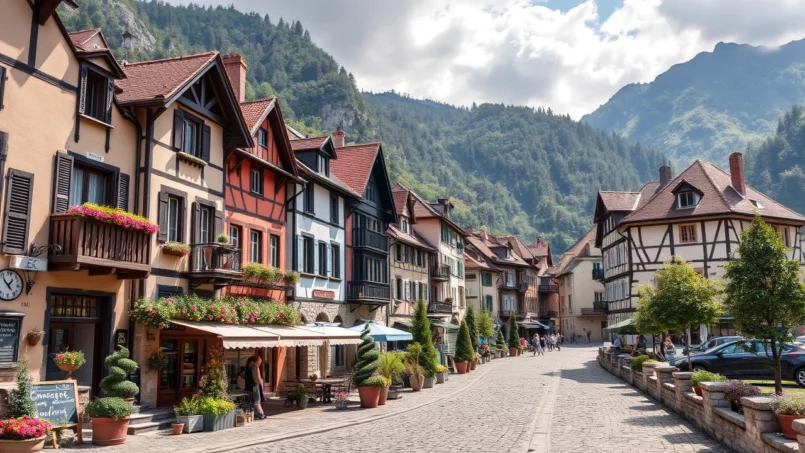
In Austria, tourism is no longer just about hotels, ski lifts, and museums. It has become one of the most powerful drivers of real estate market evolution, from the Baroque alleyways of Vienna to the Alpine valleys of Tyrol, Salzburg, or Vorarlberg. With roughly 150 million overnight stays per year, tourism contributing nearly 9% to GDP, and record visitor numbers in 2024, pressure on housing—both residential and tourist—is now at the heart of political, economic, and social debates.
Analyzing tourism’s impact on Austria’s real estate market must integrate several factors: the evolution of prices and rental yields, specific regulations for short-term rentals, legal restrictions on second homes, as well as national strategic orientations concerning sustainable development, infrastructure, and social housing.
A Stable Real Estate Market, Yet Strongly Stimulated by Tourism
The Austrian real estate market is often described as one of the most stable in Europe. Prices have risen significantly over the long term while remaining less volatile than in other OECD countries. The recent correction—a nationwide price drop of 2.1% at the end of 2024 after years of increases—is seen more as a breather than a fundamental downturn.
Tourism and Price Dynamics
This stability does not mean an absence of tension—quite the opposite. In the most tourist-heavy regions, tourism acts as a genuine price accelerator, particularly for second homes, apartments intended for seasonal rental, and hybrid products like “aparthotels” or tourist residences.
This is the number of French regions where tourism accounts for over 10% of total employment.
| Region / City | Average Price 150 m² House (approx.) | Estimated Average Price per m² | Dominant Tourist Profile |
|---|---|---|---|
| Tyrol | €1,074,519 | €7,163/m² | Skiing, mountain, four-season tourism |
| Vienna (average 150 m² house) | €962,144 | €6,414/m² | Urban tourism, business, conferences |
| Salzburg (region) | €868,421 | €5,789/m² | Cultural city + Alps, high visitor numbers |
| Vorarlberg | €825,000 | €5,500/m² | Alpine resorts, proximity to Switzerland |
| Styria | €474,375 | €3,163/m² | Regional cities, more diffuse tourism |
| Burgenland | €363,480 | €2,423/m² | Spa towns, lakes, rural tourism |
Simultaneously, urban tourist centers show very high values for apartments:
| Location | Price Range per m² (approx.) |
|---|---|
| Vienna – 1st district (Innere Stadt) | ~€24,977/m² on average, up to €30,000 |
| Vienna – historic center (general) | €10,000 – €16,000/m² |
| Salzburg – Old Town | €7,000 – €10,000/m² |
| Innsbruck – center | €6,000 – €9,000/m² |
| Kitzbühel – prime sectors | €10,000 – €25,000/m² |
| Lech-Zürs – resort center | €15,000 – €30,000/m² |
| Zell am See – lake / ski | €6,000 – €12,000/m² |
In these areas, tourist demand supports prices at levels difficult for local households to access, especially when the property’s primary use is seasonal rental or vacation home.
Demand Driven by Short-Term Rentals
The rise of platforms like Airbnb, Booking.com, or Vrbo has profoundly transformed the use of the real estate stock in tourist locations. Nationally, there are nearly 49,562 active listings on Airbnb, and the short-term rental market grew by over 12% in one year. In Vienna alone, there were approximately 10,830 active listings in 2024, with a median occupancy rate of 77% and 281 nights booked on average per year, for a typical revenue around €24,000 per property.
Average annual revenue generated by a tourist rental in Salzburg, up 15% year-on-year.
Vienna: Tourist Showcase and Regulatory Laboratory
Vienna perfectly illustrates this tension between tourist attractiveness and protection of the residential market. The capital combines several unique features: one of the highest rates of renters in the world (around 75–78% of households), a massive social housing system, sustained demographic growth, and a booming tourism sector.
Tourist Surge in the Capital
Before the pandemic, the city already recorded over 17 million overnight stays annually. In 2024, it broke all records with 18.865 million overnight stays, surpassing 2019, and €1.2 billion in revenue from overnight stays in the first eleven months of the year, up 12%. Nearly 82% of nights came from foreign visitors, notably from Germany, Austria (domestic tourism), the United States, Italy, the United Kingdom, Spain, and France.
This tourist vitality is reflected in real estate: prices for new homes rose from around €4,000/m² in 2016 to nearly €6,000/m² in 2023, representing an increase of over 22% for apartments in the recent period, and nearly 41% between 2015 and 2021 for houses. Rents follow the same trend: +8.2% in 2023, averaging around €473 per month, while regulated rents for some 750,000 tenants jumped by 8.6%.
A Social Housing Model That Absorbs Pressure
The Viennese uniqueness also lies in a massive social housing system that cushions, at least partially, the impact of tourism-related speculation. Nearly 60% of residents live in housing owned by the municipality or limited-profit housing associations. Nationally, these associations manage nearly 971,000 dwellings, about a quarter of the national stock, but in Vienna they represent almost half of all housing.
Some illuminating figures:
| Housing Indicators in Vienna | Approximate Value |
|---|---|
| Share of social housing in the stock (2019) | ~44% |
| Municipal housing (city-owned) | ~23% of households |
| Limited-profit social housing (associations) | ~21% of households |
| Share of population living in affordable housing | About two-thirds |
| Number of new affordable dwellings/year | Approx. 5,000 (social housing) |
| Annual budget for social housing (city) | ≈ $470 million (order of magnitude) |
This long-term policy—initiated with “Red Vienna” in the interwar period and continued after 1945—explains why rents there remain significantly below those of other major Western capitals, and why a large portion of households spends less than 27% of its net income on rent.
But even this proven model is reaching its limits in the face of rising unregulated tourist rentals and land scarcity in central neighborhoods.
The Battle Over Short-Term Rentals
Faced with the proliferation of seasonal rentals, the city has tightened its regulatory arsenal. A modification to the building code, effective July 2024, limits tourist rentals to 90 days per year per dwelling, unless an exemption is obtained. Exceeding this threshold or simply offering a property for more than 90 days on a platform without authorization is considered an offense, punishable by fines of up to €50,000 and, in cases of serious repeat offenses, prison sentences.
Exemptions are only granted if they meet a set of strictly defined conditions.
– less than 50% of the building’s dwellings can be used for short-term rental,
– no public housing funding must have been used,
– in residential zones, at least 80% of the usable area must remain dedicated to residential use,
– written consent from co-owners may be required.
Since these rules came into force, municipal services (MA 37) have received more than 1,500 reports, leading to about 300 proceedings, uncovered “illegal hotels” disguised in residential buildings, and processed over 800 exemption requests. The message is clear: Vienna wants to prevent entire sections of its residential stock from turning into clandestine hotels.
In Viennese municipal housing (Gemeindebau), subletting for tourist purposes is strictly forbidden. Between 2012 and 2022, 250 cases of illegal subletting were recorded. About a hundred of these cases, deemed serious, led to severe consequences for tenants: lease termination, permanent exclusion from the public housing stock, and an obligation to repay the income earned.
This policy is part of an explicit political vision: “housing is a fundamental right, not a business,” in the words of the city’s housing head.
Tourist Taxation: The Spectacular Rise in the Tourist Tax
Another lever used by Vienna: tourist taxation. The tourist tax (Ortstaxe or Nächtigungsabgabe), traditionally around 3.2% of the nightly rate, is to be increased to 8.5% starting December 2025. Concretely, for a €200-per-night room, the local tax will rise from about €6.40 to €17, or nearly £10.97 for a night billed at £129.
The stated objective: to fill a budget shortfall estimated at €500 million in 2025 and fund public investments in schools, roads, or “green” transport. The increase is expected to bring in about €81 million per year.
Hoteliers, via the Austrian Hotel Association (ÖHV), denounce a measure they say risks weakening the city’s competitiveness in the international conference market—while Vienna hosts over 6,600 conferences per year, with €1.32 billion in economic impact.
This tension perfectly illustrates the Austrian dilemma: how to capitalize on booming tourism to finance public services and housing… without driving away visitors and investors.
The Austrian Alps: Where Ski, Second Homes, and Regulation Collide
While Vienna focuses the debate on urban short-term rentals, it is the Alps that most visibly embody the face-off between tourism and the real estate market. Tyrol, Salzburg, Vorarlberg, Carinthia: these regions where 67% of Austrian overnight stays occur in rural areas have become true real estate “laboratories.”
Sustained Demand for Vacation Homes
The figures speak for themselves. In leading resorts:
– Kitzbühel shows prime prices from €10,000 to €25,000/m², with annual increases potentially reaching 8.5%.
– Lech-Zürs, a symbol of high-end skiing, ranges between €15,000 and €30,000/m².
– Zell am See, a lake and ski resort, ranges between €6,000 and €12,000/m².
Across the Alps, studies mention expected rental yields of 2.5–3.5% for year-round rentals in resorts, and 3–5% gross for well-managed seasonal rentals. In the most sought-after locations, annual price appreciation forecasts hover around 4–6%, with some scenarios projecting a total return of 40–45% over five years (combining roughly 3% rental yield and 5% capital gain per year).
These prospects logically attract investors, including foreigners, and push prices beyond the means of local households, particularly in regions with average incomes lower than Vienna’s.
Strict Purchase Rules to Curb Speculation
Faced with these tensions, several Alpine Länder have implemented drastic restrictions on the purchase of vacation homes, especially for non-residents. Land transfer laws (Grundverkehrsrecht) explicitly aim to protect national soil from purely speculative acquisitions and to preserve housing for residents.
The system rests on several pillars:
– Citizens of the EU/EEA generally have the same rights as Austrians.
– Non-EU/EEA nationals must obtain authorization from the land transfer authorities (Grundverkehrsbehörde), a process that can take 1 to 3 months, or even 4–6 months in the most protective regions like Tyrol or Vorarlberg.
– In certain tourist zones, particularly Alpine ones, the purchase of second homes by non-Europeans is heavily regulated, de facto often conditioned on using a European structure (company) or on commercial use (hotel, tourist residence).
A foreign investor buys a hotel (for CHF 15 to 100 million) via a holding company and leases it to a professional operator. This model aims for an annual yield of 6 to 8% and can, in some cases, circumvent strict residential real estate regulations.
Second Home Tax and Tourism Taxation
In several Alpine municipalities, the owner who occupies their property only part-time is subject to a specific tax known as a “vacation residence tax”, as soon as the dwelling is used for less than six months per year. The goal is twofold: to discourage “cold beds” (dwellings unoccupied for much of the year) and to generate revenue to fund tourist infrastructure.
In addition to this local tax is the widespread tourist tax (Kurtaxe, Ortstaxe, or Nächtigungsabgabe) in ski, spa, or hiking resorts. It can range from a few dozen cents to several euros per night per adult and is used to fund ski slopes, trails, events, tourist promotion.
| Element | Main Characteristics |
|---|---|
| Tourist Tax (Kurtaxe / Ortstaxe) | Approx. €0–€7/night, varies by municipality, paid by the tourist |
| “Vacation Residence” tax (some Länder) | Imposed on under-occupied dwellings (< 6 months/year) to limit cold beds |
| Use of Revenue | Maintenance of tourist infrastructure, promotion, services |
For owners who rent to tourists, this taxation adds to national taxes on rental income and capital gains, as well as transaction costs: transfer tax (3.5%), land registry entry (1.1%), notary or attorney fees (1.5–2% + VAT), agency commissions (around 3% + VAT), resulting in a total acquisition cost for a foreign investor on the order of 9–11% of the price.
Short-Term Rentals: A Booming, Yet Regulated Market
The rise of seasonal rentals, fueled by demand for “authentic” experiences and alternative accommodations to hotels, is one of the main forces linking tourism and real estate.
Sustained Demand Across the Country
For the 2024-2025 period, Austria has nearly 47,389 active listings on average for short-term rentals across all platforms, with annual growth of 12.1%. The market is very fragmented: a multitude of small owners coexists with professional operators managing portfolios of dozens of properties.
Occupancy rates peak at 68% in August in the DACH region, compared to 43% in January, illustrating strong seasonality.
Detailed studies on small markets like Reißeck (Carinthia) show how these rentals can structure the local economy: around 25 listings, occupancy rates ranging from 18% in low season to over 65% in high season, monthly revenues oscillating between $619 and $2,505, a stock overwhelmingly composed of 2-bedroom apartments for 4 people.
An Increasingly Dense Legal Framework
While Vienna has adopted one of the strictest frameworks in the country, other Länder also regulate tourist rentals, each in its own way.
In Salzburg, for example:
To rent a property to tourists, authorization from the urban planning service is generally required if the property changes from residential to tourist use. This authorization is not necessary if the property is the host’s primary residence, accommodates a maximum of 10 people or three units. Hosts must also register with the tax administration, obtain a tax number, and mention it in their listings. Finally, they collect a tourist tax on behalf of the municipality and contribute to a tourist promotion fund.
In Styria, hosts must also register for tax purposes, collect a tourist tax (children under 15 are generally exempt), and, in “tourist municipalities,” pay an annual promotion contribution.
In Tyrol, all tourist overnight stays are subject to tax, generally with an obligation to register with the tourism office and obtain a specific number for rentals.
| Land / City | Main Obligations for Short-Term Rentals |
|---|---|
| Vienna | 90-day/year limit except with exemption, host registry, local tax, MA 37 control |
| Salzburg | Urban planning authorization depending on use, tax registration, tourist tax, promotion fund |
| Styria | Tax registration, tourist tax, annual contribution in tourist municipalities |
| Tyrol | Registration with tourism office, per-bed tax, sometimes specific permit |
These frameworks all pursue the same goal: to find a balance between the major economic contribution of tourism and the need to preserve an affordable rental stock for residents, in a country where the homeownership rate (around 54%) remains below the OECD average and where overcrowding rates are significant.
Balancing Tourism, Housing, and Public Policy
One distinctive feature of the Austrian model is the scale of public intervention, whether to guide tourism development or to guarantee a large supply of non-profit housing.
Plan T: Towards More Sustainable Tourism… Hence More Demanding for Real Estate
The “Plan T – Master Plan for Tourism,” launched in 2019 and updated in 2025, constitutes the national roadmap. It makes sustainability the central axis, with the explicit ambition to contribute to the UN Sustainable Development Goals and make the country carbon neutral by 2040.
This plan emphasizes several points directly related to real estate:
– the need to reduce the environmental impacts of tourism (energy, mobility, land consumption),
– support for small family businesses and rural inns, at the heart of many villages,
– adaptation to short-term rental platforms,
– management of Alpine infrastructure in the context of climate change (less snow, snow cannons, summer diversification).
The Austrian Tourism Development Bank (OeHT) offers financial support mechanisms for tourism projects focused on the ecological and energy transition.
Financing for modernizing and improving the energy performance of existing infrastructure.
Support for construction projects of passive or positive energy buildings (BEPOS).
Grants and guarantees for projects favoring the use of locally sourced wood.
Credit lines for deploying renewable energy in hotels, ski lifts, and spas.
In 2022, the OeHT thus supported nearly €590 million in investments in 484 companies in the sector, while in 2024 a €1 billion package was announced to support the construction and renovation of residential housing. In other words, the state injects resources both into tourist accommodation supply and the residential stock, with the idea of containing the collateral effects of tourism growth on housing costs.
The Structuring Role of Limited-Profit Housing Associations
The weight of non-profit housing associations, governed by the WGG law, is another key element to understanding why Austria does not experience rent explosions comparable to those seen in other tourist destinations.
Nationally, these organizations own or manage about 25% of the housing stock. In Vienna, they represent nearly half of all housing, complementing municipal housing. Their model is based on a “cost rent” principle, with adjustments indexed to the consumer price index since 1998, which mechanically limits speculation.
Despite strong tourist pressure leading to rapid real estate price increases, particularly in the Alps and historic centers, the system has a capacity for adaptation. This allows authorities to regulate the effects of tourism, for example by favoring the construction of affordable housing.
Europe, a New Playing Field
Since the end of 2024, the European Union has shown increased interest in housing policies, with the creation of a European Commissioner dedicated to housing and the announcement of a future European Plan for Affordable Housing. In parallel, common rules on short-term rentals are set to come into force in 2026, aiming in particular to harmonize data collection from platforms and facilitate local control.
For a country like Austria, where competencies in tourism and housing are largely devolved to the nine Länder, this Europeanization of the subject adds an extra level of coordination. It can also provide political support to regional and municipal authorities attempting to better regulate the tourist use of the real estate stock.
Yields, Risks, and Strategies for Investors
From an investor’s perspective, the link between tourism and real estate in Austria is a mix of promise of yield and regulatory complexity.
Rental Yields and Price Outlooks
Nationally, average gross rental yields are around 3.5%. In major cities:
| City / Segment | Estimated Gross Yield Range |
|---|---|
| Vienna – Innere Stadt | 1.14 – 1.82% |
| Vienna – other districts | 2.38 – 6.87% |
| Vienna – overall average | ≈ 4.12% (Q1 2025) |
| Salzburg – apartments | 3.18 – 4.25%, average 3.66% |
| Graz – apartments | 2.00 – 3.13%, average 2.71% |
Residential price projections estimate, after the recent correction, moderate growth: between 0 and 1% in 2025, 1–2% in 2026, 2–3% in 2027, then 2–4% per year towards 2028‑2030, before a pace of 2–3% until 2045. In premium tourist zones, these figures can be higher, especially in high-altitude snow-sure resorts where land scarcity and climate adaptation (snowmaking, four-season diversification) protect property values.
The key then becomes location selection: an apartment in Salzburg or Innsbruck benefits from both tourism and sustained residential demand, whereas a purely seasonal residence in a village highly dependent on skiing and undiversified risks suffering more from climatic uncertainties and seasonality.
Risks to Consider
Investment in Austrian tourist real estate is not without risks:
The tourist real estate sector faces several major challenges: volatile visitor flows (exacerbated by the pandemic and declining winter overnight stays), tightening regulations on short-term rentals, rent caps (freeze in 2025 then limited increases), tightening credit conditions (KIM-VO rules), the impact of climate change on low-altitude resorts, lengthy authorization procedures for non-EU buyers in some Alpine areas, and growing social tension around housing.
To limit these risks, specialists recommend investors target quality properties in central locations, with mixed-use potential (residential + tourist), multi-seasonal appeal (summer + winter), and good energy performance, now sought by over 60% of buyers.
Between Tourism and Housing, a Constant Trade-off
Beyond purely financial questions, the impact of tourism on the Austrian real estate market refers to a fundamental political trade-off: how far to let tourist prices and uses develop at the risk of excluding residents?
Faced with problems of overtourism, traffic, city center saturation, buildings turning into hotels, and rising rents, authorities are implementing various measures. These include regulating short-term rentals, increasing tourist taxes, creating tourism-funded housing funds, and investments favoring renovation and quality (summarized by ‘not more beds, but better beds’) rather than increasing accommodation capacity.
In this logic, Austria’s future trajectory might resemble “value-added tourism”: fewer gross volumes of overnight stays, more high-value stays, more sustainable, better integrated into territories, with increased vigilance on housing access for residents and local workers.
Conclusion: A Shifting Balance Between Attractiveness and Accessibility
The impact of tourism on the real estate market in Austria plays out on several stages simultaneously: the Baroque alleyways of Vienna where Airbnb rentals neighbor century-old social housing buildings, the luxury resorts of Kitzbühel or Lech‑Zürs where chalets trade for over €20,000/m², small rural municipalities betting on agritourism to keep their farms operational, or medium-sized cities like Salzburg and Innsbruck which must house students, workers, and hordes of visitors.
The country benefits from two major assets to regulate its tourism sector: a vast stock of social and non-profit housing, and significant public action capacity (credits, subsidies, regulations, taxation). However, global tourist pressure remains strong, driven by demand for Alpine stays, Viennese city-breaks, and so-called ‘authentic’ experiences.
The coming years will be decisive in determining whether Austria succeeds in transforming this influx of tourists into a sustainable engine for financing housing and infrastructure, without sacrificing the accessibility of its residential stock. In other words, whether the country succeeds in making the strength of its tourism an ally, rather than an adversary, of its model of livable cities and mountains.
A French business owner around 50 years old, with a financial portfolio already well-structured in Europe, wanted to diversify part of his capital into rental real estate in Austria to seek regular yield and exposure to the euro outside France. Allocated budget: €400,000 to €600,000, without using credit.
After analyzing several markets (Vienna, Graz, Linz), the chosen strategy consisted of targeting a high-standard apartment in a recent building in Vienna or Graz, combining a target gross rental yield of 4 to 5%—keeping in mind that “the higher the yield, the greater the risk”—and medium-term appreciation potential, with an all-in ticket (acquisition + fees + possible renovations) of around €500,000. The mission included: city and neighborhood selection, connection with a local network (real estate agent, notary, tax advisor), choice of the most suitable structure (direct ownership or via an Austrian company), and a long-term wealth diversification plan.
Disclaimer: The information provided on this website is for informational purposes only and does not constitute financial, legal, or professional advice. We encourage you to consult qualified experts before making any investment, real estate, or expatriation decisions. Although we strive to maintain up-to-date and accurate information, we do not guarantee the completeness, accuracy, or timeliness of the proposed content. As investment and expatriation involve risks, we disclaim any liability for potential losses or damages arising from the use of this site. Your use of this site confirms your acceptance of these terms and your understanding of the associated risks.

Cyril Jarnias is an independent expert in international wealth management with over 20 years of experience. As an expatriate himself, he is dedicated to helping individuals and business leaders build, protect, and pass on their wealth with complete peace of mind.
On his website, cyriljarnias.com, he shares his expertise on international real estate, offshore company formation, and expatriation.
Thanks to his expertise, he offers sound advice to optimize his clients' wealth management. Cyril Jarnias is also recognized for his appearances in many prestigious media outlets such as BFM Business, les Français de l’étranger, Le Figaro, Les Echos, and Mieux vivre votre argent, where he shares his knowledge and know-how in wealth management.





