
 Published on and written by Cyril Jarnias
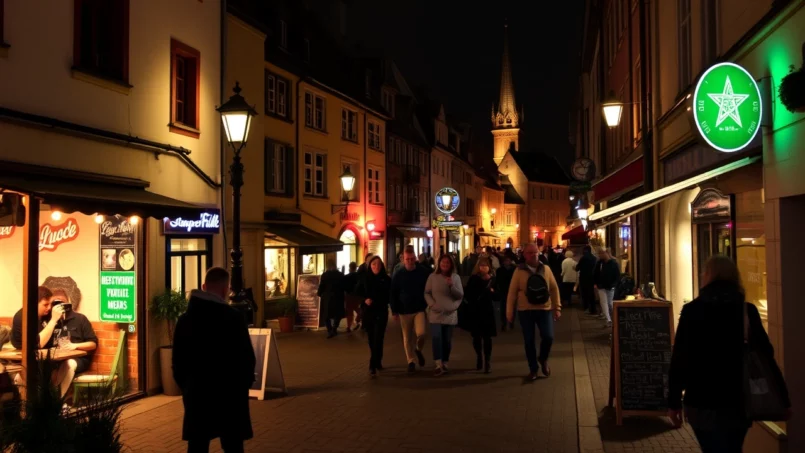
The image people often have of Austria is one of snowy peaks, Strauss waltzes, and cozy cafés. Yet once night falls, the country transforms into a true playground for night owls: ultra-creative cocktail bars, electro clubs, Heuriger nestled among vineyards, giant festivals, folkloric Tyrolean parties, classical dinner concerts, trendy rooftops… Austrian nightlife is far more varied than it appears, and it changes dramatically from one city to the next.
In this article, we traverse the country from Vienna to Innsbruck, from Linz to Graz, passing through Salzburg and the wine villages, to understand how to go out in the evening, where to go depending on your mood, and what makes the very special charm of Austrian nights.
Vienna: Capital of Cocktail Bars, Clubs, and Heuriger
Vienna concentrates almost everything Austria can offer at night: high culture, alternative scenes, cutting-edge clubbing, and popular traditions like wine taverns. The city long lived on its reputation as the capital of classical music, but its nightlife has diversified widely.
The Going-Out Neighborhoods and General Vibe
Hotspots are often tucked into specific streets or squares rather than sprawling districts. The “Bermuda Dreieck”, the former “Jewish Quarter” around St. Rupert’s Church, remains the most obvious starting point, with a concentration of bars, pubs, and clubs in the 1st district near the Danube Canal. Further out, the Gürtel, a major ring road lined with subway arches, hosts some of the city’s liveliest clubs and bars under its viaducts.
Around the Naschmarkt in the 4th district, you’ll find a great series of bars and restaurants with a trendy crowd. The Spittelberg quarter in the 7th, with its cobblestone lanes, mixes cozy bistros and bustling terraces. Along the Donaukanal in summer, outdoor bars line the banks, turning the waterfront into a giant festive promenade.
Viennese nights start late: many bars only open in the late afternoon, while clubs fill up around 11 p.m.–midnight and can close in the early morning. On weekends, the subway runs all night, making getting home much easier.
The Cocktail Bar Revolution
The cocktail scene in Austria, and especially in Vienna, has been undergoing a true transformation in recent years. Bartenders no longer see themselves merely as executors but as creators who draw on chemistry, physics, and haute cuisine to craft complex drinks. They are artisans, “trend scouts,” and entertainers, all within a global cocktail industry worth several billion dollars.
Several strong trends shape the new wave of mixology: the rise of “No-Low” drinks (non-alcoholic or low-alcohol), an obsession with sustainability, the use of technology, a comeback of forgotten recipes, the use of fermented products and ultra-local ingredients, as well as the importance of storytelling and immersive experience. Today, ordering a drink is also buying a narrative and a staging.
Among the emblematic venues, some Viennese bars have become references beyond borders:
| Bar / Venue | Notable Specificity |
|---|---|
| Loos American Bar | Historic bar from 1908 designed by Adolf Loos, true cocktail institution |
| Truth & Dare Cocktailbar | Named “Best Bar Austria” by Mixology in 2023, 2024, and 2025 |
| The Sign Cocktail Bar / Sign Lounge | Renowned for the creativity of Kan Zuo, a pioneer on the local scene |
| Josef Cocktailbar | Home of Espuma drinks and training center for international bartenders |
| Miranda Bar | Inventive scene, said to rival Berlin |
| Kleinod | Playful menu inspired by pop culture, including a “D. Ruffy” cocktail |
In these places, humor is claimed as an ingredient in its own right. At Truth & Dare, for example, you’ll find an “OnlyFans Martini” made with vodka, cranberry, Italian amaro, and champagne, served in a mini format with a menu that changes weekly. At Josef, an Old Fashioned is infused with Snickers; at Miranda, an “Irish Empire” marries Irish whiskey, Riesling vermouth, imperial beer, and soda; at Kleinod, a cocktail inspired by One Piece combines whiskey, banana liqueur, pineapple rum, and dark chocolate.
Spectacular cocktails abound: “Nuclear Daiquiri” for adventurous palates, “Blood and Sand” flawlessly executed, “Pamicillin” with Laphroaig, honey, and lemon, or highly technical variations from bartenders like Heinz Kaiser, a true “alchemist” with dozens of pages of recipes. In some establishments, they even offer a “custom” cocktail, crafted based on the customer’s tastes.
Clubs, Concerts, and Bars Under the Arches
On the clubbing front, Vienna has nothing to envy major European cities. Around the Donaukanal, Flex remains a reference for concerts and electronic nights. On the Gürtel, venues like B72 host rock, indie, and DJ sets late into the night. Clubs such as Pratersauna, housed in a former sauna complex with a pool, or Grelle Forelle, famous for its cutting-edge electronic programming, draw both local and international crowds.
In Vienna at night, many venues offer a mix of house, hip-hop, and EDM, sometimes with a selective door policy. On weekends, the crowd spreads out among the Gürtel arches, the Prater establishments (like Prater Dome, a multi-room club), and downtown spots such as the Volksgarten Club.
Heuriger: Wine Taverns and Green Evenings
You can’t talk about nightlife in Vienna without mentioning the Heuriger, those wine taverns that are both an extension of the vineyards and a pillar of Viennese identity. Austria is one of the few countries with a capital surrounded by vines: about 700 hectares and over 600 producers within Vienna alone.
A Heuriger, in the traditional sense, is where a winemaker sells “the wine of the year” and a few cold dishes from their own production. Sometimes called a “Buschenschank” when subject to strict rules, it can only offer its own wines and house juices, plus simple foods (cured meats, cheeses, salads, spreads). No beer or coffee in these authentic versions, and very seasonal openings, often limited to a few weeks or days per week, mostly between May and November.
In practice, several types exist today:
| Type of Heuriger | Main Characteristics |
|---|---|
| Traditional Heuriger | Wine from the estate, homemade cold dishes, no beer, limited opening |
| Buschenschank (protected) | Legally regulated, only own products, no external hot food |
| Stadtheuriger | Urban wine tavern, more “city-like,” sometimes more commercial |
| Mostheurige | Specializing in apple or pear cider |
| Großheuriger | Street festival gathering several Heuriger from a locality |
The classic indicator that a tavern is open? A bundle of fir branches hung above the door, sometimes accompanied by a lantern and the dialect word “Ausg’steckt.” The atmosphere is one of “Gemütlichkeit”: large wooden tables, courtyards and gardens overlooking the vineyards, live music with accordion or violin, nostalgic Viennese songs and “Schrammelmusik.”
In the glasses, you’ll find the great Austrian grape varieties (zesty, peppery Grüner Veltliner, typically Viennese Gemischter Satz, Riesling, Weißburgunder, Zweigelt, Blaufränkisch…). In autumn, “Sturm,” partially fermented wine, flows freely — sweet and deceptive. Locals often order a “G’spritzter” (white wine mixed with sparkling water), a lighter “Sommerspritzer,” or a “Kaiserspritzer” flavored with elderflower syrup.
The food served is hearty and substantial. It typically includes boards of cured meats and cheeses, potato salads, spreads (such as Liptauer, crispy bacon paste, or cheese potato mash), as well as smoked meats. In more commercial establishments, you can also find hot dishes like roast pork, grilled pork knuckle, or Schnitzel.
Where to Find Heuriger Around Vienna
The main Viennese wine-growing areas are mostly on the northern and western outskirts:
| Vienna District | Nightlife Particularities |
|---|---|
| Grinzing, Nussdorf, Heiligenstadt (19th) | Legendary wine villages, historic and touristy Heuriger |
| Neustift am Walde, Sievering | More rural taverns, village atmosphere |
| Stammersdorf, Strebersdorf (21st) | Quality wines, very local vibe |
| Ottakring (16th) | Neighborhood Heuriger, including the famous “10er Marie” |
| Mauer (23rd), Oberlaa (10th) | Family taverns, well-preserved tradition |
You can reach Grinzing by tram 38, Nussdorf via line D, Neustift by bus 35A, and other areas through a dense network of trams and buses. On weekends, a “Vienna Heurigen Express” even offers a hop-on hop-off circuit around the Kahlenberg hills.
For many Viennese, the ideal evening in spring or autumn consists simply of following an urban hiking trail through the vineyards, then stopping at several Heuriger in succession, following the “Ausg’steckt” signs.
Classical Nights, Dinner Shows, and Festivals
Vienna isn’t just about bars and taverns. It comes alive at night with concerts, operas, balls, and dinner shows throughout the year.
Major institutions like the State Opera, the Musikverein, or the Konzerthaus host opera performances, symphonies, and recitals. The ball season, with the famous Opernball, makes thousands dance waltzes in palaces transformed into temporary dance floors. At the Hofburg, a symphony orchestra performs Mozart, Strauss, and Lehár in an imperial setting, while dinner shows combine gastronomy and music in places like the Rathauskeller.
The city also lives to the rhythm of an impressive array of nighttime events: an open-air film festival on the Rathausplatz in summer, the Donauinselfest — Europe’s largest free open-air festival —, museum nights, Christmas markets open until evening, ice skating rinks in front of City Hall, Pride, design festivals, craft beer festivals, street food festivals, or cocktail festivals (Liquid Market)… Almost every month has its own lineup of events that stretch the day well past sunset.
Salzburg: Between Intimate Bars, Rock Caves, and Classical Evenings
Salzburg, smaller than Vienna, offers a dense nightlife but on a human scale. No megaclubs here, but a mosaic of bars, pubs, mid-sized clubs, and concert venues where students, locals, and visitors mingle.
The Hotspots: Rudolfskai, Gstättengasse, and Steingasse
Broadly speaking, nightlife can be divided into three hubs. On Rudolfskai, along the Salzach, you’ll find a row of mainstream bars and Irish pubs, sometimes a bit noisy, perfect for a pub crawl with friends. At the corner of Anton-Neumayr-Platz and Gstättengasse, almost every door leads to a bar or club, with a largely young clientele. Across the river, Steingasse and its neighboring alleys offer more intimate, often very characterful addresses in a medieval setting.
Most establishments close around 2 a.m. or 3 a.m., with a few clubs staying open later. Fridays and Saturdays are the liveliest nights, but the student population ensures some activity during the week.
Beer, Cocktails, and Irish Pubs
Salzburg remains a beer city, with flagship institutions like the Augustiner Bräustübl in Mülln, a huge monastic brewery with a spectacular beer garden, or Die Weiße, famous for its wheat beers. Irish pub lovers find their haven at Murphy’s Law or Shamrock, where draft beer, sports broadcasts, and karaoke nights attract an international crowd.
Spirit enthusiasts can visit the Salzburg Whiskey Museum, a museum-bar showcasing hundreds of rare bottles and offering guided tastings. For a different vibe, places like Mentor’s Bar, Academy Bar, or Glüxfall focus more on wine or creative cocktails, often served with small plates.
Clubs, Rock, and Jazz
For a more electric night, City Beats, right in the historic center, spans several floors with different vibes (mainstream, hip-hop, dance hits…). Rockhouse, as the name suggests, is a den for rock fans: concerts by local and international artists, with a legendary club atmosphere. In a more intimate vein, vaulted cellars like the Half Moon — one of the city’s first clubs, set under 600 years of stone — continue to host DJs and themed nights.
For jazz, Jazzit features a large stage for concerts and workshops, as well as a small bar where free jam sessions take place every Tuesday. This type of programming perfectly illustrates the Salzburg DNA: modest venues in size, but musically demanding.
Jazzit
Cultural Evenings and Beer Dinners
Salzburg remains the city of Mozart and the famous summer festival. In summer, the city pulses with operas, concerts, and nighttime theater performances, often in heritage venues like the Festspielhaus or the Mirabell Courtyard. The rest of the year, the Salzburger Landestheater, the opera house, the Salzburg Marionette Theatre, or concerts in baroque churches ensure a solid evening program.
Beer is never far away: brewery tours with tastings, tours combining castles, breweries, and meals, or even pub crawls where you sample a half-liter at each stop. A number of guided beer or wine tours take place in the early evening and end at a bar or brewery.
Linz: Digital Art, Nighttime Danube, and Friendly Bars
The capital of Upper Austria, Linz, long wore the label of “steel city.” It has since reinvented itself as a cultural metropolis, a member of the UNESCO “City of Media Arts” network. This transformation is also felt in its nightlife.
Cocktails, Pubs, and Alternative Scenes
The heart of the party scene is centered around Hauptplatz and along the Danube. The streets adjacent to the square and the quays host bars, pubs, and a few clubs. On weekends, places fill up quickly, especially on Fridays and Saturdays. The average price for a cocktail ranges between 10 and 15 euros, with a dress code generally “smart casual.”
Linz has a dynamic alternative scene with venues like Kapu, the Stadtwerkstatt (and its Café Strom), and the Solaris Bar for concerts, DJ sets, and performances. Pubs like Chelsea (rock, indie) and Smash Bar (punk, metal) offer a more underground register. In summer, the Stattstrand, a beach bar on the banks of the Danube, is a popular meeting point.
Nightlife and Major Cultural Events
Linz is not just a string of bars. Institutions like the Brucknerhaus, a concert hall dedicated to composer Anton Bruckner, or the Musiktheater, one of the most modern opera houses in Europe, draw large crowds in the evening. The Bruckner Orchestra performs regularly, while the city comes alive during the Brucknerfest, an annual classical festival.
Discover how the Ars Electronica Center and its festival transform Linz into a nocturnal playground for immersive artistic and technological experiences.
The Ars Electronica Center sometimes extends its exhibitions into the evening, offering unique immersive experiences around art and new technologies.
The Ars Electronica festival explores a theme linking art, science, and society each year, taking over the city with nighttime light performances and installations.
Major events like the Klangwolke — a sound-and-light show on the Danube — or the short film festival Crossing Europe attract tens of thousands of visitors each edition, and keep the bars along the “culture mile” of the quays buzzing.
Practical Info: Prices, Transport, and Vibe
Linz remains affordable compared to other European capitals. A glass of beer, a cocktail, or a concert ticket falls within a reasonable range. Public transport (trams, buses) runs efficiently, including in the evening, compensating for the lack of a subway.
Overall, nightlife in Linz reflects the city’s motto: “culture for all.” You’ll find everything from a techno night in a former factory to street food buffets during festivals, evening concerts in parks in summer, or late-night openings at gallery vernissages accompanied by a drink.
Graz: Student City and Clubs for Every Taste
Graz, the country’s second-largest city and a UNESCO City of Design, pulses with youth. With a high proportion of students, the nightlife is naturally lively, but more laid-back than in the capital.
Nightlife Shaped by Students
The “Univiertel,” around Karl-Franzens University, forms the beating heart of evenings: streets like Elisabethstraße or Zinzendorfgasse are lined with bars and small clubs. The historic center, around Hauptplatz, Herrengasse, and Sporgasse, is also very lively, with cafés, pubs, and lounges set among historic buildings. Along the Mur River, the districts of Murinsel, Lendkai, and Grieskai attract a bohemian crowd, while the Lend and Gries quarters offer a more alternative vibe.
Clubs often start around 10–11 p.m. and can go until early morning, with opening hours that can exceed 2 hours after bars close on weekdays.
A Typical Evening in Graz
A classic evening often begins with a drink at one of the many bars in the center or near the university, with beers between 3.50 and 5 euros and cocktails around 8–12 euros. Many places offer happy hours and student discounts, provided you show your student ID. Irish pubs (Flann O’Brien, Molly Malone, The Office Pub) sit alongside cocktail bars (Up25, for example, for panoramic views), café-concerts, and bars with a Latin or Caribbean vibe.
To extend the evening, clubs like Postgarage and PPC are renowned for their electronic nights. Since the city is compact, you can walk from one to another, making spontaneous bar crawls easy.
Graz is also a cultural city, with a very active opera and theater, as well as a dense program of concerts, festivals, creative markets, and student events that often spill into the night.
Innsbruck: Alpine Nights Between Student Bars and Ski Vibe
The capital of Tyrol, nestled between mountains, Innsbruck combines two powerful drivers for nightlife: a large student population and a massive influx of skiers in winter. Result: a small city in size, but one whose nights can stretch until 6 a.m. or 7 a.m.
Student Bars, Viaducts, and Clubs
Innsbruck has three universities and over 25,000 students out of about 125,000 residents. This translates into an exceptional density of bars around the campuses and the historic center. The viaduct arches — the “Bögen” — host a string of bars, some of which only close at daybreak. Plateau, for instance, is known as one of the last stops before heading home to sleep.
In a typical city center, you can find a wide variety of establishments. For example, cafés like Moustache (with its club Dachsbau), Dinzler, or Unicafé sit alongside relaxed bars like Weli’s, known for its board games, or Kater Noster. For beer lovers, Elferhaus offers a great selection. The range extends from elegant cocktail bars (Erlkönig, M+M, Cocktailbar Sillgasse) to traditional Irish pubs (Galway Bay, Limerick Bill’s), not forgetting lively student bars on the SOWI campus.
On the outskirts, nightclubs welcome clubbers and skiers: Blue Chip, Nachtschicht, Mausefalle, PlanB, and many more. In winter, between December and March, the clientele from nearby ski resorts gives a boost to local clubbing.
Evenings That Start Late
In Innsbruck, the real rush rarely starts before 1 a.m. People first go to bars, meet up with friends, then head to clubs later. This timing is accentuated during ski season, when days on the slopes end with apéritifs in mountain bars and then in town.
The city offers high-altitude events like parties at the Nordkette, igloo parties at the Seegrube restaurant, and “Dirndl parties” up in the mountains. The casino, open from afternoon until 3 a.m., adds a touch of glamour to the nightlife.
Tyrolean Evenings and Folklore
Nighttime in Innsbruck can also be an opportunity to discover Alpine folklore in a very organized format. The Gundolf family, considered musical ambassadors of Tyrol, for example, runs “Tyrolean evenings” in the Alpensaal hall, very close to the center and accessible by tram. Over 1.5 hours, musicians and dancers perform Schuhplattler, yodels, traditional dances, musical saw playing, alphorn, cowbells, zither and harp numbers.
Spectators can choose the show alone, or a package that includes a three-course typical Austrian dinner (pumpkin soup, roast pork, apple strudel) before or during the performance. Discounts even exist for holders of local tourist cards, and transfers are available for an extra fee. It’s a very structured but effective way to immerse yourself in a nighttime culture that bears no resemblance to urban clubbing.
Heuriger and Taverns: The Peaceful Side of Austrian Evenings
Beyond the big cities, Austria cultivates another form of night: that of wine taverns, inns, and “Gasthäuser” where people come more to chat and listen to music than to dance until dawn. The Viennese Heuriger are the best-known example, but similar concepts exist in other regions under different names (Buschenschank in Styria, Straußwirtschaften across the border, etc.).
These places particularly come to life from late summer until St. Martin’s Day (November 11), when the new wine arrives. The evening is marked by the arrival of families, groups of friends, and hikers, in a setting of vineyards and hills. Customers order a pitcher of wine or a “liter-liter” (a jug of wine and one of sparkling water to share), help themselves to the buffet of cured meats and salads, and listen to singers moving from table to table.
The contrast with the hustle and bustle of Viennese clubs or Innsbruck’s bars is striking: here, time seems to stretch. Many travelers combine cocktail evenings in the city center with a quieter night at a Heuriger in the countryside during the same trip.
Festivals and Major Nighttime Events
Austrian nightlife is not limited to bars and clubs: festivals, popular fairs, and cultural events regularly transform squares, riverbanks, and ski resorts into giant night venues.
Electric Love and the Electro Explosion
Among the major electronic festivals, the Electric Love Festival has established itself as one of the largest in the country. Set on the Salzburgring circuit near Salzburg, it attracts tens of thousands of fans each year. The biggest names in EDM and electronic music follow one another on several stages: a monumental Mainstage, club tents, hardstyle stages (long entrusted to labels like Q-Dance), electronic beaches on the shores of Fuschlsee…
The event combines a strong sensory experience, with opening ceremonies mixing DJ, choir, and orchestra, ambitious stage designs, and an international audience. Entertainment is non-stop, especially at the campsite where impromptu parties extend the sets. A notable environmental commitment includes a deposit system for trash bags.
Donauinselfest, Klangwolke, and Other Open-Air Nights
On the Danube in Vienna, the Donauinselfest turns a river island into a giant free festival for a few days: multiple stages, a huge selection of concerts for all tastes, food stalls, and a crowd from all over the country.
In Linz, the Klangwolke combines sounds and monumental projections over the Danube, surrounded by thousands of spectators gathered on the banks. Again, the surrounding areas remain very lively after the show, with bars and impromptu parties.
Summer in the city is marked by outdoor cultural activities such as open-air cinemas, street art festivals, and contemporary dance events like ImPulsTanz in Vienna. There are also classical music nights, with free concerts by the Philharmonic Orchestra in the gardens of Schönbrunn Palace. In the mountains, festivals like White Pearl Mountain Days in the Alps combine skiing with DJ sets at altitude.
Folk Festivals, Kirtage, and Almabtriebe
Austrian nightlife also has a decidedly traditional side. In summer and autumn, the Kirtage — village festivals associated with a patron saint — attract locals and visitors around stalls, rides, drink stands, and music stages. People dance to polkas and waltzes, drink wine and beer outdoors, often late into the night.
The Almabtriebe — festive descents of decorated herds leaving high pastures — also give rise to lively evenings in the villages: brass bands, specialty stalls, and concerts in tents set up for the occasion. In winter, the Perchtenläufe, parades of masked creatures meant to drive away evil spirits, turn the streets into an often-impressive nighttime theater.
Practical Tips for Enjoying Austrian Nights
The diversity of nightlife in Austria requires a few practical reflexes.
On the budget side, a glass of beer in a bar generally costs between 3.50 and 6 euros; a cocktail, from 8 to 15 euros depending on the city and establishment. Clubs often charge an entrance fee between 5 and 15 euros, sometimes free before a certain hour. A “full” evening (simple meal, a few drinks, club entry) remains generally less expensive than in London or Paris, especially outside Vienna.
Public transport networks in Austria are efficient, with extended night services on weekends (like the U-Bahn in Vienna) and night buses in larger cities. However, it is advisable to check the schedules for last departures on weekdays and to have an alternative like a taxi or rideshare if needed.
Safety is generally good, but universal recommendations apply: keep an eye on your belongings, avoid leaving your drink unattended, stick to well-lit streets, especially near train stations and parks late at night. Illicit drugs are severely penalized, and alcohol regulations impose age limits (16 for beer and wine, 18 for spirits).
Finally, Austrian nightlife remains relaxed about dress code: a neat casual style works almost everywhere; only certain clubs and casinos require more formal attire. For Heuriger or Gasthäuser, there’s no need to dress up: the important thing is to sit comfortably and take your time.
A Mosaic of Nights Rather Than a Single “Scene”
What strikes you when traveling through Austria at night is the coexistence of very different worlds just a few hours apart by train. In Vienna, futuristic cocktails, electro clubs, and Heuriger share the spotlight. In Salzburg, small vaulted cellars, monastic breweries, and classical concerts form a unique triptych. Linz reinvents itself at the crossroads of digital art, open-air festivals, and alternative bars. Graz lives to the rhythm of its student youth, Innsbruck at the intersection of skiing and Alpine culture.
Evenings in Austria are not just about partying. They offer a wide variety of cultural and traditional experiences, like listening to a choir in a baroque church, attending an outdoor screening by the Danube, tasting Sturm (young wine) in the vineyards, taking part in an Alpine mask parade, or dancing at a Viennese ball. By planning according to location and season, you can create a nighttime itinerary where each evening reveals a different facet of the country.
Disclaimer: The information provided on this website is for informational purposes only and does not constitute financial, legal, or professional advice. We encourage you to consult qualified experts before making any investment, real estate, or expatriation decisions. Although we strive to maintain up-to-date and accurate information, we do not guarantee the completeness, accuracy, or timeliness of the proposed content. As investment and expatriation involve risks, we disclaim any liability for potential losses or damages arising from the use of this site. Your use of this site confirms your acceptance of these terms and your understanding of the associated risks.

Cyril Jarnias is an independent expert in international wealth management with over 20 years of experience. As an expatriate himself, he is dedicated to helping individuals and business leaders build, protect, and pass on their wealth with complete peace of mind.
On his website, cyriljarnias.com, he shares his expertise on international real estate, offshore company formation, and expatriation.
Thanks to his expertise, he offers sound advice to optimize his clients' wealth management. Cyril Jarnias is also recognized for his appearances in many prestigious media outlets such as BFM Business, les Français de l’étranger, Le Figaro, Les Echos, and Mieux vivre votre argent, where he shares his knowledge and know-how in wealth management.





