
 Published on and written by Cyril Jarnias
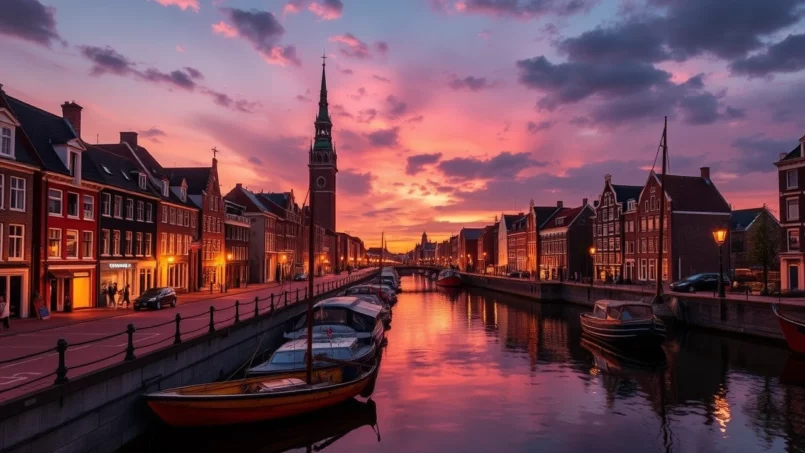
Between Amsterdam’s canals, Zeeland’s beaches, and the Veluwe’s nature parks, the Netherlands has become a prime playground for short-term rentals. But behind the postcard, investors quickly discover a market with two faces: highly profitable in some sectors, extremely regulated in others, and overall boosted by surging tourist demand.
This article provides a comprehensive analysis of the short-term rental market in the Netherlands, incorporating current market data, local regulations in effect, and the key trends reshaping the sector.
A Country Where Short-Term Rentals Are Booming
The Netherlands attracts a diverse range of tourists: art and museum lovers, nature and cycling enthusiasts, families seeking holiday parks, and digital nomads on city trips. This variety of profiles fuels a boom in stays at private accommodations, at the expense of traditional hotels.
Over 54,000 active listings are recorded nationwide on the Airbnb platform.
At the same time, tourist pressure is intensifying. On the Dutch coast, the number of overnight stays rose from 21.8 million in 2014 to 30.2 million in 2024, a growth of nearly 40% in ten years. Nationwide, the increase is similar, also fueled by business travel. Vacation rentals, both in cities and along the coast, are the big winners.
For property owners, this translates into high revenue potential, but also increasing competition and stricter requirements from local authorities.
Amsterdam: Golden Goose… Under Very Close Scrutiny
It’s impossible to talk about short-term rentals in the Netherlands without starting with Amsterdam. The capital concentrates both the highest returns and the strictest rules in Europe on the matter.
Impressive Earnings in a Tight Market
The latest data shows that Airbnb hosts in Amsterdam generate an average over 5,000 euros in gross revenue per month, with an occupancy rate around 80%. The ADR (average daily rate) is particularly high, around 220–240 euros depending on the source, with peaks above 300 euros in high season.
Another dataset (in dollars) illustrates the strength of the Amsterdam market:
| Indicator (Amsterdam) | Average Value | Top 25% | Top 10% |
|---|---|---|---|
| Monthly Revenue (USD) | 4,056 | 6,598+ | 9,964+ |
| Occupancy Rate | 56% | 79%+ | 91%+ |
| ADR (USD) | 273 | 377+ | 511+ |
It’s easy to see why, despite the regulatory straitjacket, many property owners still try to capitalize on the tourist demand. The scarcity of legal supply, combined with nearly inexhaustible international demand (almost 99% of visitors to the city are foreign, overwhelmingly British, American, and German), allows compliant listings to charge high rates and stay booked for much of the year.
One of Europe’s Toughest Regulatory Arsenals
The flip side of this appeal is an especially tight legal framework. Amsterdam is regularly cited as one of the most regulated cities for short-term rentals, with a clear goal: prevent residential homes from being massively turned into clandestine hotels, amid a chronic housing shortage.
Several layers of rules overlap:
– Mandatory national registration for all tourist rentals, with the registration number displayed on the listing.
– Mandatory advance notification to the municipality for each stay.
– Requirement to obtain a specific permit depending on the type of rental (entire home or private room in host-occupied property).
– Strict limit on the number of nights allowed for renting out an entire home.
Renting out an entire primary residence is limited to 30 nights per year. Bed & breakfasts (B&Bs) are exempt from this limit but require the host to be present and are capped at a maximum of four guests.
The city plans to go even further: as of April 2026, iconic neighborhoods such as Jordaan, the western and southern canal belts (Grachtengordel-West and -South), Nieuwmarkt/Lastage, and De Pijp are expected to move to an even tighter cap of 15 nights per year for renting out an entire home. A sort of “ladder” is even being considered, which could lead, in the most saturated areas, to a total freeze on new permits for three years.
The message is clear: the economic opportunity exists, but only for owners willing to play the 100% compliance card and adapt their model (for example, prioritizing room rentals over entire homes in certain neighborhoods).
Fines, Permits, Taxes: Profitability Under Constraint
Another dimension to factor in before investing in Amsterdam is compliance costs and financial risk in case of misstep.
The vacation rental permit costs just over 70 euros per year.
At the same time, the city pursues a very aggressive enforcement policy: unannounced inspections, systematic cross-referencing of online listings with municipal records, and the ability for neighbors to report violations anonymously. Penalties follow: first fines are around 1,500 euros and can soar above 20,000 euros for serious or repeat offenses. In the case of illegal rental of a social housing unit, amounts become spectacular, with caps exceeding 80,000 euros for a first offense.
Profitability is thus a tightrope walk: the best listings boast very high monthly revenues, but upfront costs, the drastic limitation on the number of nights, and regulatory pressure lead more and more owners either toward medium-term rentals (over 30 days) or toward renting out rooms in their own home, which is less regulated in terms of nights.
Rotterdam, The Hague, Utrecht, Haarlem: Strong but Tight Urban Markets
While Amsterdam hogs the spotlight, other major Dutch cities also offer solid opportunities for short-term rentals—again, provided you master a fairly strict regulatory environment.
Attractive Performance Figures
Aggregated data for the main cities shows average gross monthly revenues often exceeding 2,000 euros, with occupancy rates close to or above 70%.
| City | Average Monthly Revenue (EUR) | Average Occupancy Rate | Average ADR (EUR) | Regulation Level |
|---|---|---|---|---|
| Amsterdam | 5,054 | 81% | 228 | High |
| Rotterdam | 2,656 | 76% | 124 | High |
| Utrecht | 1,800–2,200 | 45–65% | 110–150 | High |
| Other cities* | 1,200–1,800 | 40–60% | 90–130 | Moderate to Low |
Medium and small cities outside major hubs.
Another ranking, based on a dollar approach, confirms this hierarchy: Amsterdam leads the national short-term rental market, followed by The Hague, Rotterdam, Zandvoort, Haarlem, and Utrecht, all with average monthly revenues above 2,000 dollars and ADRs regularly exceeding 180–200 dollars.
These gross figures are all the more remarkable given that they occur within an already well-defined fiscal and regulatory context. Demand is there, driven by international tourism as well as business travelers and digital nomads seeking stays from a few weeks to a few months.
Profitability Reduced by 20–30% from Costs and Taxes
For an investor, it is crucial to distinguish gross revenue from actual profitability.
On a short-term rental property in the Netherlands, various deductions quickly add up.
– Platform commissions (Airbnb, Booking): 3–5% of revenue,
– Tourist VAT (where applicable): 2–3% of revenue,
– Municipal tourist tax: 6–8% of revenue, often equivalent to about 7 euros per night in major cities,
– Income tax on rental income: approximately 3–5% of net income, depending on the host’s tax situation.
In total, these levies amount to roughly 14–16% of turnover. Add to that operating costs: cleaning, laundry, maintenance, consumables, management.
Average estimates show that: results are often more reliable when based on solid data.
– For a private room, monthly operating costs range between 200 and 500 euros;
– For an entire home, they easily exceed 400 euros per month and can go above 900 euros in larger cities, where the expected service level is higher.
Adding the cost of cleaning (15–25 euros per hour) and laundry (8–15 euros per set of linens), the net margin begins to shrink. Analyses converge on a reduction of 20–30% of gross profitability once all expenses and obligations are factored in.
An apartment generating €2,500 in gross rental revenue may, after all fixed and variable costs (excluding loan repayments), yield only between €1,700 and €2,000 net. This example shows that actual returns are often lower than gross revenues, challenging the idea of a simple, massive annuity.
Private Room or Entire Home: A Strategic Trade-off
In the major Dutch urban centers, the choice between renting out an entire home or offering a room in your primary residence becomes a strategic decision, especially when taking regulatory risks seriously.
Average figures suggest that:
– a private room in Amsterdam generally brings in between €1,500 and €3,000 per month,
– an entire home achieves higher gross revenues, but with significantly higher costs and risks.
Monthly expenses for an entire apartment typically range from €800 to over €1,200, compared to €300 to €600 for a room. The gap between gross and net narrows. At equivalent net profitability, room rentals can even become more attractive: the initial investment to set up a room (€2,000 to €6,000) is much lighter than the €8,000 to €22,000 needed for a full apartment.
For an owner-occupier, the regulatory advantage is also significant: most cities heavily limit tourist rentals of entire homes, but are more lenient (within certain limits) toward renting out rooms in the host’s home, as long as the host remains present and respects guest quotas.
Coastal Market and Holiday Parks: The Rise of Zeeland and Beach Resorts
The other big story of short-term rentals in the Netherlands unfolds far from Amsterdam’s canals, along the country’s coasts and within holiday parks. Zeeland, the Frisian Islands, and seaside resorts like Zandvoort and Noordwijk are experiencing soaring demand.
Zeeland: Champion of Upscale Vacation Homes
The province of Zeeland perfectly illustrates this trend. Year after year, it sees both rising tourist demand and an increase in the quality of its vacation home inventory.
A few figures summarize the scale of the phenomenon:
– over 15.6 million tourist overnight stays in the province,
– €810 million in spending related to these stays,
– 6.2 million additional overnight stays generated by second-home owners and annual pitches, accounting for €317 million in spending,
– over €2.6 billion spent by day-trippers.
The leisure sector generates a turnover of €3.4 billion in Zeeland.
In the vacation home segment, the upscaling is dramatic. Statistics highlight an increase of over 20% in the average asking price, now around €428,000. Nearly half of all vacation properties sold for over €500,000 in the country are located in Zeeland, proving that the very high end is concentrated there.
Nieuwvliet: A Textbook Case of a Profitable Coastal Market
Among Zeeland’s coastal destinations, Nieuwvliet emerges as an interesting laboratory for short-term rentals. Data compiled over a recent year (122 active listings) helps us understand how a typical coastal market works.
In terms of revenue and occupancy, seasonality is very pronounced:
| Period | Average Monthly Revenue (USD) | Average Occupancy Rate | Average ADR (USD) |
|---|---|---|---|
| High Season | 4,101 | 44.6% | 294 |
| Shoulder Seasons | 2,467 | 35.7% | 223 |
| Low Season | 1,198 | 20.3% | 183 |
| Absolute Peak (Month) | 4,679 | 47.1% | 321 |
| Lowest (Month) | 1,018 | 18.8% | 178 |
This model is typical of a seaside destination: a very profitable summer peak, extended by shoulder seasons in spring and early autumn, followed by a marked winter low. The best properties (top 10%) reach nearly $4,800 in monthly revenue, with ADRs approaching or exceeding $380.
The rental inventory is clearly positioned for families and groups:
This is the percentage of short-term rental listings for entire homes, according to the data analyzed.
This setup makes Zeeland’s vacation homes particularly suitable for German and Belgian families, two major customer bases on the Dutch coast. In Nieuwvliet, approximately 60% of international visitors are German and nearly 19% are Belgian. In total, more than four out of five travelers come from abroad.
Another key point for investors: the regulatory framework here remains, at this stage, relatively flexible, with the level of regulation for tourist rentals rated as “low.” Most listings are available more than 180 days per year and many show a minimum stay of 30 nights, indicating a mixed strategy between short- and medium-term rentals.
Holiday Parks: An Increasingly Institutional Asset Class
Beyond individual villas and apartments, holiday parks are playing a growing role in the Dutch short-term rental landscape. These complexes, found especially along the coast and in natural regions (Veluwe, Drenthe, etc.), have shown impressive resilience, including during the financial crisis and the pandemic, when they outperformed hotels.
Recent analyses show:
Recent analyses
– a more than 40% increase in overnight stays at holiday parks between 2012 and 2024,
– only a 26% increase in the number of vacation homes over the same period,
– a very strong interest from professional investors in this segment, with the arrival of major funds such as KKR (Roompot, Landal), Aroundtown (Center Parcs), Waterland (EuroParcs), and Blackstone (RCN).
Stated returns are attractive: a new park can target a stabilized yield of around 7.5–8% from the third year onward, while a strategy of selling units to individuals offers around 5.5% real estate yield. Combined with structural demand growth—especially from seniors, whose vacation spending is expected to jump by nearly 50% between 2022 and 2027—this segment logically attracts institutional capital.
For individuals, the challenge is to choose wisely: modernized or renovation-needed park, operating model (personal use + rental via an operator, purely rental product, etc.), annual charges (fees, maintenance, ground lease), planning restrictions. Again, the margin lies in the details.
A Tax and Regulatory Framework Not to Be Underestimated
Short-term rentals in the Netherlands are not just about posting a listing on a platform. From taxation of income to municipal permits, the environment is technical, sometimes changing, and varies greatly from one situation to another.
Income Taxes: Primary Residence, Secondary Residence, Professional Activity
The tax regime depends on the status of the property and the intensity of the activity:
1. Occasional rental of the primary residence When an owner temporarily rents out their primary residence (e.g., during their own vacation), 70% of the rent received is taxable as additional income. Expenses directly related to the rental (cleaning, agency fees, specific costs) are deductible. The deduction of mortgage interest on the primary residence is suspended for the rented period, but can be reactivated once the rental ends.
A specific tax regime, known as the “exempt room” (kamerverhuurvrijstelling), may apply to renting out a room in your primary residence. To qualify, you must share the same address as your tenant, the room must not be a self-contained dwelling, the rental must not be of a tourist or short-term nature, and the annual rental income must remain below a certain threshold (approximately €6,000 from 2025). If these conditions are met, the rent received is completely tax-exempt, while you still retain the tax benefits linked to your primary residence.
3. Rental of a secondary residence or investment property The rent is not directly taxed as income, but the property is included in taxable assets in “Box 3,” which applies a deemed return on net value (WOZ tax value minus associated debts). Expenses (maintenance, interest, etc.) are not deductible in this framework, but liabilities (loans) reduce the taxable base. There is an allowance on total assets.
If an owner manages multiple properties professionally (significant renovations, high turnover, extensive hotel-like services), the tax authorities may reclassify the rental activity as business income. In that case, all rent is taxable, but expenses (renovation, marketing, management fees) become fully deductible. This regime, while more complex, can be advantageous for large property portfolios.
VAT and Tourist Tax: Watch Out for Thresholds and Cross-Checks
Regarding VAT, many short-term rentals escape collecting this tax, but not all. For tourist accommodations considered similar to hotel activity, a reduced rate of 9% applies, which is set to increase to 21% as of 2026. However, a simplified scheme allows exemption for small activities with annual turnover below €20,000 (the KOR scheme).
Most cities add their own tourist tax, charged to travelers. In Amsterdam, for example, the tax includes a proportional portion of the rent and a fixed component of about €3 per night per person over 16. Some platforms collect and remit these amounts on behalf of hosts, but the ultimate responsibility for declaring lies with the owner.
Local Permits, Safety, and Insurance: The Hidden Side of Compliance
Beyond taxation, several regulatory aspects determine the legality of the rental:
To rent a property to tourists in the Netherlands, several legal obligations apply: registration in the tourist rental register is mandatory and the number obtained must be displayed. A specific permit is required, varying by city, for renting entire homes or bed & breakfasts. You must respect the annual night caps set by the municipality and strictly comply with fire safety standards (working smoke detectors, clear emergency exits, safe electrical installations, presence of fire extinguishers, etc.). Finally, it is forbidden to rent social housing or non-residential dependencies (such as sheds, boats, or garden annexes) to tourists.
Another often-overlooked point: insurance. Many home insurance policies in the Netherlands automatically exclude tourist rentals. Therefore, an extension or a specialized contract is essential to avoid being uncovered in case of an incident with guests.
Finally, the rules of homeowners’ associations (VvE) may prohibit or restrict short-term rentals. Before buying an apartment intended for tourist use, it is imperative to carefully read the statutes and internal regulations, or risk immediate conflict with the association.
Significant Entry Costs but Deep, Durable Demand
One of the key features of the Dutch short-term rental market is the combination of a significant upfront investment (capital, renovations, furnishing) and structurally strong demand, both tourist and residential.
An Initial Investment Typically Between €6,000 and €20,000 for a Rental-Ready Property
Turning a standard property into a competitive seasonal rental requires more than just buying a few pieces of furniture. Detailed estimates indicate:
– complete furnishing (furniture, appliances, bedding, dishes, decoration): €4,000 to €12,000 depending on quality,
– compliance and registration procedures (technical adjustments, inspection, administrative fees): €1,000 to €3,000,
– professional photography, optimized listings, and launch marketing budget: €500 to €1,300,
– additional cost for specialized insurance: €300 to €600 per year,
– possible security deposit with certain providers or for connections: €500 to €1,500.
This is the budget required, excluding purchase, to launch a one- or two-bedroom apartment in good conditions.
An Extremely Tight Residential and Rental Market as a Backdrop
Paradoxically, the strength of the Dutch seasonal market also stems from the extreme tightness of the residential market. The country suffers from a shortage of several hundred thousand homes. Private sector rents have surged, averaging €1,830 per month in the second quarter of 2025, an increase of more than 17% year-on-year. To qualify, tenants often need to prove an income three times the rent, i.e., nearly €5,500 gross per month.
The structural scarcity of housing in certain tourist areas creates two contradictory effects on the short-term rental market. On the one hand, it can drive up prices and create strong demand, making rentals very profitable for owners. On the other hand, this same scarcity limits available supply, potentially slowing the sector’s growth and reducing options for renters, which could eventually discourage tourist numbers.
– On one hand, it pushes authorities to regulate the tourist use of homes more and more firmly, to preserve year-round supply;
– On the other hand, it maintains price pressure and high profitability for properties that remain or become vacation rentals, especially in areas where hotels are overwhelmed by demand.
For an investor, this means planning a multi-year strategy: expect regulations to likely tighten further, especially in cities; but also anticipate that demand for stays from a few days to a few weeks, as well as real estate and nightly rates, should continue to grow in the medium term.
Strong Seasonality: Leveraging Peaks, Smoothing Out Troughs
Beyond annual averages, the key to successful seasonal operations in the Netherlands lies in the fine-tuned management of monthly demand fluctuations.
Spring and Late Summer: The Golden Periods
Data shows that the most lucrative months for short-term rentals are generally in spring (April–May, tulip season) and September. During these peaks, occupancy rates can rise 20–30% above annual averages, while nightly rates increase by €30–€50 in urban and coastal markets.
In Amsterdam, April is the most profitable month of the year, combining maximum occupancy and a high average daily rate (ADR). On the coast, July and August concentrate the majority of bookings, with generally longer stays due to family vacations.
Winter: A Low Season to Turn into Opportunity
Between November and February, especially in secondary cities, occupancy can drop to 50–65% of summer levels. Markets like Amsterdam fare better thanks to business tourism and indoor cultural activities, but winter remains more challenging everywhere.
Rather than passively enduring this low season, many owners use it to:
Key actions for hosts to optimize occupancy and revenue during off-peak periods.
Use the low-activity period for maintenance, modernization, or expansion work.
Test new offers such as long-stay packages, remote work deals, or “cozy winter” packages.
Lower prices to attract domestic customers less willing to pay high-season rates.
Data on booking windows confirms this dynamic: for summer stays, travelers book very far in advance (up to 100–120 days before arrival in some areas like Nieuwvliet), whereas in winter, decisions are made later. Adjusting prices in real time to these behaviors, using revenue management tools, becomes a major performance lever.
Conclusion: A Market Rich in Opportunities, Reserved for Structured Investors
The short-term rental opportunities in the Netherlands are undeniable. Whether through the spectacular revenues of some Amsterdam apartments, the rapid upscaling of vacation homes in Zeeland, or the dynamism of holiday parks backed by major investors, the country ticks all the boxes of an attractive market: growing tourist demand, limited supply, and regular increases in property prices and nightly rates.
But this potential comes with increasingly heavy constraints:
Creating a tourist accommodation in the Netherlands runs up against a highly developed local regulatory arsenal, especially in major cities, and a sophisticated tax system where the legal qualification of the activity (supplementary income, asset, quasi-business) radically changes the applicable rules. It also requires significant initial investments to meet the expectations of a demanding clientele. Finally, one must account for a real political risk of stricter rules in the short to medium term, particularly in neighborhoods already saturated with tourism.
In this context, the best opportunities are not necessarily where gross revenue is highest, but where a sustainable balance can be found between profitability, regulation, and local acceptance. For some, this will mean renting out rooms rather than entire homes in large cities; for others, acquiring family vacation homes in Zeeland or in less regulated seaside resorts; for still others, indirect investments in holiday parks managed by professional operators.
In the Netherlands, short-term rentals have become a structured sector dominated by professional investors. To succeed, you need to run your activity like a small business, mastering profitability, compliance with municipal regulations, safety, and guest experience.
Disclaimer: The information provided on this website is for informational purposes only and does not constitute financial, legal, or professional advice. We encourage you to consult qualified experts before making any investment, real estate, or expatriation decisions. Although we strive to maintain up-to-date and accurate information, we do not guarantee the completeness, accuracy, or timeliness of the proposed content. As investment and expatriation involve risks, we disclaim any liability for potential losses or damages arising from the use of this site. Your use of this site confirms your acceptance of these terms and your understanding of the associated risks.

Cyril Jarnias is an independent expert in international wealth management with over 20 years of experience. As an expatriate himself, he is dedicated to helping individuals and business leaders build, protect, and pass on their wealth with complete peace of mind.
On his website, cyriljarnias.com, he shares his expertise on international real estate, offshore company formation, and expatriation.
Thanks to his expertise, he offers sound advice to optimize his clients' wealth management. Cyril Jarnias is also recognized for his appearances in many prestigious media outlets such as BFM Business, les Français de l’étranger, Le Figaro, Les Echos, and Mieux vivre votre argent, where he shares his knowledge and know-how in wealth management.





