
 Published on and written by Cyril Jarnias
Located in the Persian Gulf, Qatar is a country surprisingly rich in geographic diversity despite its small size. This peninsula, primarily composed of arid deserts, hides a multitude of natural and cultural treasures. Its coasts are full of picturesque beaches and lush mangroves, while the interior, with its intriguing rock formations and rolling dunes, offers landscapes of raw beauty. The capital, Doha, stands as a modern jewel, seamlessly blending tradition and innovation, and provides an ideal starting point for exploring the many facets of this fascinating territory.
Geographic Location of Qatar
A Strategic Peninsula in the Heart of the Middle East
Qatar occupies a unique geographic position in the Middle East, extending like a finger into the turquoise waters of the Persian Gulf. This small peninsula of 11,586 km² projects about 160 km northward from the eastern coast of the Arabian Peninsula. Its strategic location gives it an importance disproportionate to its modest size.
To the south, Qatar shares its only land border with Saudi Arabia, stretching 60 km. This border, closed during the diplomatic crisis of 2017-2021, was reopened in January 2021, restoring a vital link between the two nations. To the west, separated by a sea channel, lies the island kingdom of Bahrain. To the east, across the Gulf waters, are the United Arab Emirates.
An Extensive and Varied Coastline
Qatar boasts a remarkably long coastline of 563 km, offering a diversity of coastal landscapes. The western coast is characterized by steep cliffs, while the eastern coast features fine sandy beaches and shallow bays. This geographic configuration has historically favored the development of maritime activities, from traditional pearl fishing to modern offshore hydrocarbon exploitation.
In the southeast of the country lies the spectacular Khor Al Adaid, nicknamed the “Inland Sea.” This vast expanse of saltwater, surrounded by impressive sand dunes, is one of Qatar’s natural gems.
Topography and Desert Climate
Qatar’s terrain is mostly flat, with a slight elevation towards the west. The country’s highest point, Qurayn Abu al Bawl, rises modestly to 103 meters above sea level. Most of the territory consists of desert plains, dotted with sand dunes and limestone rock formations.
Qatar’s climate is typically desert, characterized by extremely hot summers and mild winters. Summer temperatures can easily exceed 40°C, while winters see pleasant average temperatures around 17°C. Rainfall is scarce, with an annual average of barely 75 mm, mainly concentrated between October and March.
This unique geographic situation, combining a vast coastline and a desert interior, has shaped Qatar’s history and development. It has influenced not only its climate and ecology but also its geopolitical and economic role in the region, making this small state a significant player on the international stage.
Good to Know:
Qatar is a peninsula located on the northeastern coast of the Arabian Peninsula, extending into the Persian Gulf and sharing a land border with Saudi Arabia to the south. It is in close maritime proximity to Bahrain to the west and the United Arab Emirates to the southeast. With an area of about 11,586 square kilometers, Qatar is characterized by a complex coastline, alternating sandy beaches and lagoons. Its topography is mostly made up of desert plains, with a few low hills. The climate is typically desert, marked by very hot, dry summers, directly influencing human activities and local biodiversity. Frequent winds known as “shamals” can cause sandstorms, impacting living conditions.
The Main Regions of Qatar
Doha: The Dynamic Capital
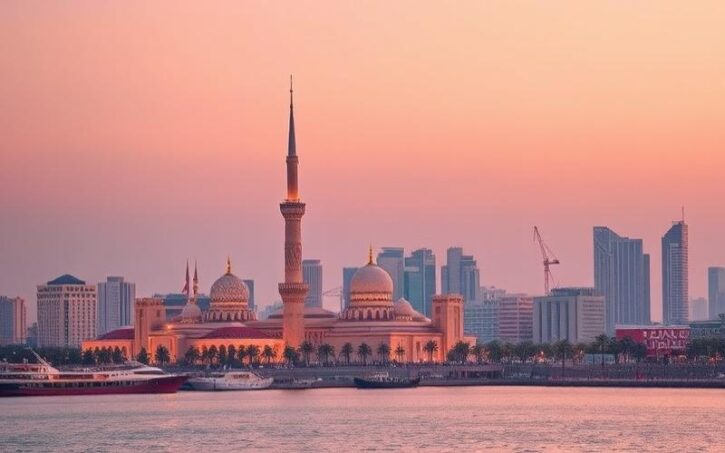
Doha, the capital of Qatar, embodies the fascinating blend of tradition and modernity that characterizes the country. Located on the east coast of the peninsula, this metropolis is home to nearly 2.4 million people, about 80% of Qatar’s total population. Its impressive skyline, dominated by futuristic skyscrapers, contrasts with its traditional souq, creating a unique atmosphere.
The city stretches along a crescent-shaped bay, offering a picturesque waterfront promenade called the Corniche. It is here that some of the city’s most iconic sites are found, such as the Museum of Islamic Art, whose architecture is inspired by ancient Islamic fortresses.
Doha plays a crucial role in Qatar’s economy, housing the headquarters of many international and Qatari companies, particularly in the oil, gas, and finance sectors. The city has undergone rapid transformation in recent decades, evolving from a small fishing port into a global metropolis.
Al Wakrah: The Historic Coastal City
Located about 15 kilometers south of Doha, Al Wakrah is the second-largest city in Qatar with a population of around 400,000. Once a small village of fishermen and pearl divers, the city has retained its historic charm while developing rapidly.
The recently restored Souq Al Wakrah offers a fascinating glimpse into traditional Qatari architecture. Its narrow alleys, craft shops, and seaside restaurants attract many visitors. Al Wakrah Beach, with its golden sand and calm waters, has become a popular destination for families and water sports enthusiasts.
The city also houses the Al Janoub Stadium, one of the venues that hosted the FIFA World Cup 2022. Its futuristic design, inspired by traditional dhows, perfectly illustrates the fusion of heritage and modernity that characterizes Al Wakrah.
Al Khor: The Jewel of the North
Al Khor, located about 50 kilometers north of Doha, is a coastal city of around 200,000 people. Its name, meaning “creek” in Arabic, refers to its natural harbor, which was long the center of Qatar’s pearl industry.
The city is renowned for its mangroves, a unique ecosystem in the region that hosts diverse wildlife, including flamingos. Al Khor Park offers an oasis of greenery in the middle of the desert, with lush gardens and children’s play areas.
Al Khor plays an important role in Qatar’s oil and gas industry, housing numerous facilities related to these sectors. The city has experienced rapid development in recent years, with the construction of new infrastructure and modern residential complexes.
Umm Salal: Land of History and Tradition
Umm Salal, located north of Doha, is a municipality with about 90,000 residents. It is famous for its Barzan Towers, 19th-century watchtowers that provided protection against invasions and were used to sight the moon for the Islamic lunar calendar.
The region is dotted with archaeological sites that testify to its rich past. The Umm Salal Mohammed Fort, built in the 19th century, is a remarkable example of traditional Qatari defensive architecture.
Umm Salal is also known for its rawdahs, natural depressions where rainwater accumulates, creating oases of greenery in the desert landscape. These areas have historically played a crucial role in local agriculture.
Madinat ash Shamal: The Gateway to the North
Madinat ash Shamal, also known as Ash-Shamal, is the northernmost municipality in Qatar. With a population of about 10,000, it is the least populated region of the country, offering a striking contrast to the bustle of Doha.
The region is renowned for its pristine beaches and crystal-clear waters, making it a popular destination for diving and fishing. The Al Zubarah Fort, a UNESCO World Heritage site, is nearby and offers a fascinating insight into Qatar’s 18th-century history.
Madinat ash Shamal plays an important role in preserving Qatar’s Bedouin traditions. Camel racing, a traditional sport, is particularly popular in this region. The municipality also houses several farms that contribute to the country’s food self-sufficiency.
Qatar’s landscape, though primarily desert, displays surprising diversity. From the sand dunes of the south to the limestone cliffs of the north, passing through coastal mangroves and inland oases, each region offers a unique glimpse into the country’s geography and ecology. This diversity, combined with a rich cultural heritage and rapid economic development, makes Qatar a fascinating destination to explore.
Good to Know:
Qatar, though small, possesses a rich regional diversity, with each region uniquely contributing to its identity. Doha, the capital, is the country’s dynamic center, concentrating its economic and political life, with an arid climate and modern attractions like the Museum of Islamic Art, while Al Wakrah stands out for its picturesque beaches and ancient markets. Al Khor, historically linked to the pearl industry, is surrounded by mangroves and known for its nature reserves popular with birdwatchers. Umm Salal is famous for its historic towers such as the Barzan Tower, which testify to Qatar’s ancient architecture. Madinat ash Shamal, gateway to the north, offers access to the beaches of Zubarah and the fortified archaeological site listed as a UNESCO World Heritage site. All these regions have a desert climate and also feature relatively flat topography, except for some dunes and coastal cliffs. Culturally and economically, these regions embody Qatar’s evolution, diversifying its landscape through activities such as tourism, fishing, and Bedouin traditions. According to 2023 statistics, Doha remains the most populous, favored by expatriates attracted by its economic opportunities, thus contributing to a unique cultural mosaic.
The Major Cities of Qatar
Doha: The Dynamic Capital of Qatar
Doha, the sparkling capital of Qatar, embodies the dynamism and rapid growth of the country. With a population of over 956,000, it is home to nearly 40% of Qatar’s total population. This cosmopolitan metropolis skillfully blends modernity and tradition, offering a spectacular urban landscape punctuated by futuristic skyscrapers and a lively corniche.
At the heart of Qatar’s cultural life, Doha houses prestigious institutions such as the Museum of Islamic Art, designed by renowned architect I.M. Pei, and the National Museum of Qatar, whose architecture is inspired by the desert rose crystal. These establishments testify to Qatar’s commitment to preserving its heritage while embracing artistic innovation.
Doha’s urban development is focused on sustainability and innovation, as evidenced by the Msheireb downtown regeneration project. This ambitious initiative aims to revitalize the city’s historic heart while integrating cutting-edge technologies for smart energy and water management. The district includes luxury residential spaces, high-end offices, and cultural centers, thus creating a harmonious and sustainable urban environment.
Economically, Doha is the engine of Qatar’s economic diversification. The city hosts the headquarters of many international companies and plays a crucial role in the country’s financial, energy, and tourism sectors. The Port of Doha and Hamad International Airport are key infrastructures that strengthen the city’s position as a regional hub.
Al Rayyan: A Blend of Tradition and Modernity
Al Rayyan, the second-largest city in Qatar by population with over 605,000 residents, stands out for its unique blend of Qatari tradition and modern lifestyle. Located west of Doha, it is an integral part of the capital’s metropolitan area.
The city is renowned for its rich cultural heritage and historical importance. Al Wajbah Fort, located 15 km west of old Doha, is an iconic site that recalls the 1893 battle between Qataris and Ottomans, considered a founding moment in the establishment of modern Qatar.
Al Rayyan has become a center of academic and research excellence thanks to Education City, a vast complex housing world-renowned universities and cutting-edge research institutes. This initiative reflects Qatar’s commitment to education and innovation as drivers of national development.
The city is also known for its world-class sports facilities, including the Ahmed bin Ali Stadium, one of the venues for the FIFA World Cup 2022. These modern infrastructures testify to Al Rayyan’s ambition to position itself as a major sports destination in the region.
In terms of sustainable development, Al Rayyan has implemented several initiatives aimed at promoting environmentally friendly practices. Al Rayyan Park, spanning over 160 hectares, provides a valuable green space in the heart of the city, fostering biodiversity and offering residents a place for relaxation and leisure.
Al Wakrah: A Coastal Gem in Transformation
Al Wakrah, the third-largest city in Qatar with a population of about 299,000, is located on the east coast of the country, south of Doha. Once a small village of fishermen and pearl divers, Al Wakrah has transformed into a dynamic city that retains its historic charm while embracing modernity.
Al Wakrah’s maritime heritage remains at the heart of its identity. The recently restored Souq Al Wakrah offers visitors an authentic glimpse into traditional Qatari life. This lively market, with its cafes, shops, and family beach, has become a major tourist attraction that celebrates the city’s history and culture.
Economically, Al Wakrah has gained importance due to its proximity to the Mesaieed Industrial Area, Qatar’s main industrial production center and oil terminal. This strategic location has stimulated the city’s economic development and attracted new residents.
Al Wakrah’s urban development emphasizes sustainability and innovation. The Al Janoub Stadium, designed by the famous architect Zaha Hadid for the 2022 World Cup, is a remarkable example of sustainable architecture. Its design is inspired by traditional Qatari dhows and incorporates advanced cooling technologies to reduce energy consumption.
The city has also benefited from significant investments in transport infrastructure. The integration of Al Wakrah into the red line of the Doha Metro in 2019 has significantly improved connectivity with the capital, thus fostering the economic and residential development of the region.
Al Wakrah positions itself as a model of sustainable urban development in the Gulf, balancing the preservation of its heritage with innovative ecological initiatives. The Al Wakrah Public Garden, a true green lung of the city, testifies to the local authorities’ commitment to creating environmentally friendly urban recreational spaces.
Good to Know:
Doha, the capital of Qatar, is home to about 2.7 million people and is the economic nerve center, housing major financial institutions and Qatar University, while being rich in cultural sites like the Museum of Islamic Art. A city of contrasts between tradition and modernity, it invests in transport infrastructure, with the metro serving thousands of passengers daily. Al Rayyan, the second-largest city, stands out for its green spaces and sporting heritage, notably hosting the Ahmad bin Ali Stadium, an emblem of the 2022 World Cup, while emphasizing urban development centered on sustainability with eco-districts. Al Wakrah, combining coastal charm and modern urban planning, has seen its population grow to 300,000 thanks to its revitalized port and the highway providing quick access to Doha, illustrating a thriving economic dynamic with a historic pearl market and a strong focus on green initiatives, such as the development of solar parks to reduce the carbon footprint.
Disclaimer: The information provided on this website is for informational purposes only and does not constitute financial, legal, or professional advice. We encourage you to consult qualified experts before making any investment, real estate, or expatriation decisions. Although we strive to maintain up-to-date and accurate information, we do not guarantee the completeness, accuracy, or timeliness of the proposed content. As investment and expatriation involve risks, we disclaim any liability for potential losses or damages arising from the use of this site. Your use of this site confirms your acceptance of these terms and your understanding of the associated risks.

Cyril Jarnias is an independent expert in international wealth management with over 20 years of experience. As an expatriate himself, he is dedicated to helping individuals and business leaders build, protect, and pass on their wealth with complete peace of mind.
On his website, cyriljarnias.com, he shares his expertise on international real estate, offshore company formation, and expatriation.
Thanks to his expertise, he offers sound advice to optimize his clients' wealth management. Cyril Jarnias is also recognized for his appearances in many prestigious media outlets such as BFM Business, les Français de l’étranger, Le Figaro, Les Echos, and Mieux vivre votre argent, where he shares his knowledge and know-how in wealth management.





