
 Published on and written by Cyril Jarnias
Vanuatu’s Real Estate Market Under International Influence
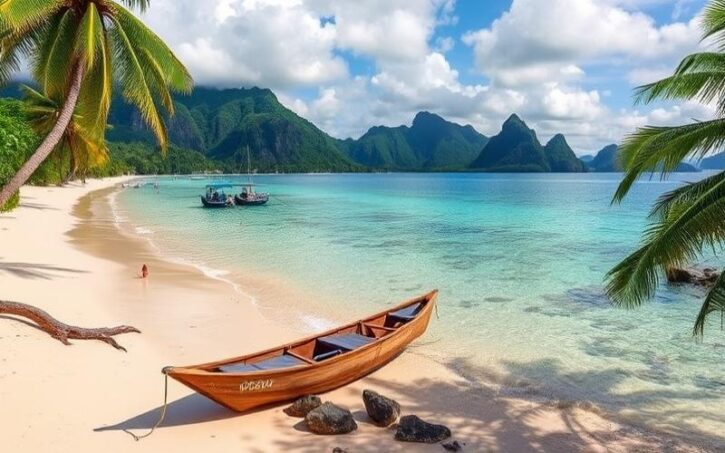
Nestled in the South Pacific, the island of Vanuatu attracts attention not only for its natural beauty but also for its intriguing real estate market, made even more complex by global events.
While one might think that European conflicts such as the war in Ukraine are distant and have no direct impact on this island territory, their repercussions on the global economy significantly influence the local real estate market.
The Effects of Geopolitical Turbulence
Fluctuations in foreign investments and changes in international interest rates, exacerbated by geopolitical uncertainty, unexpectedly affect both sellers and buyers in Vanuatu.
Opportunities and Challenges for Investors
In this article, we will explore how the shadow of the war in Ukraine extends to this corner of the world, transforming real estate market dynamics and presenting new challenges, but also opportunities for savvy investors.
Good to Know:
Vanuatu offers attractive tax benefits for foreign investors, but acquisition conditions may vary depending on international circumstances.
Analysis of the Geopolitical Consequences of the War in Ukraine on Vanuatu
The war in Ukraine has caused a series of global economic disruptions that indirectly influence Vanuatu’s real estate sector. Several interconnected factors must be considered to assess these impacts:
Fluctuations in Construction Material Prices and Supply Chains
Sanctions, logistical breakdowns, and shortages of certain materials, particularly cement, steel, and energy (gas, oil), have led to widespread cost increases in international markets.
This pressure on raw materials extends to the South Pacific: importing materials becomes more expensive and complex for an archipelago like Vanuatu.
Construction or renovation projects therefore inevitably face budget overruns.
| Factor | Direct Consequence in Vanuatu |
|---|---|
| Rising material prices | Increased construction costs |
| Shortage/tense logistics | Construction delays & cost increases |
| Import inflation | Impact on investment profitability |
Migration Trends and Increased Interest in Remote Regions
Geopolitical instability encourages some investors to seek land security in countries perceived as stable or “safe havens.” Remote island destinations thus benefit from renewed interest.
We observe a broadening of the typical foreign buyer profile to include those from regions affected by the war (Central/Eastern Europe, Middle East).
This phenomenon can lead to increased demand for high-end residential or vacation properties.
Changes in Foreign Investment Flows
International relations altered by the conflict sometimes redirect capital from risk zones to alternative markets. Funds from both Europe and Asia thus seek geographical diversification.
- Increased diversification of foreign investor profiles
- Partial redirection of Russian/Ukrainian/Middle Eastern flows
- Potential influx of new investors fleeing regional instabilities
Potential Impacts on Local Real Estate Demand
The combination of these factors suggests:
- Possible upward pressure on local real estate prices if capital/investor influx accelerates while supply remains constrained by rising costs and slow new construction.
- Increased risk that certain local social categories may be excluded from the market due to this imported inflation.
In summary:
The indirect economic consequences of the war in Ukraine – widespread inflation in construction, partial redirection of international capital toward stable “havens” like Vanuatu – could contribute to sustaining or even durably increasing demand and therefore potentially significantly raise the general level of local real estate prices.
Good to Know:
The war in Ukraine has generated disruptions in the global supply chain, causing fluctuations in construction material prices that could increase construction costs in Vanuatu. This situation, combined with geopolitical instability, is sparking increased interest in investing in remote regions like Vanuatu, considered a safe haven. Potential migration movements could also increase pressure on the local real estate market, leading to price increases. Furthermore, changes in international relations can influence the flow of foreign investments to Vanuatu, particularly from European countries seeking to diversify their investments. These combined factors could energize the real estate sector, although in the short term, dependence on imported materials remains a risk for construction projects.
Impact of the Ukrainian Crisis on Vanuatu’s Real Estate Market
The Ukrainian crisis has acted as a catalyst for transformations in many emerging real estate markets, including Pacific islands such as Vanuatu. Although there is little public data specific to the Vanuatu market, analyzing trends observed in comparable markets and the overall impact of geopolitical instabilities allows us to identify several indirect effects and dynamics at play.
Changes in Real Estate Prices
Increased volatility in international markets since 2022 has led to a redefinition of capital flows, with some investors seeking the security offered by real estate in jurisdictions deemed stable or remote from risk zones.
On other tourist islands (Bali, Mauritius), this period has resulted in continuous or sustained growth in prices for certain residential segments favored by foreigners. It is likely that Vanuatu has experienced a similar dynamic for its high-end properties intended for international investment.
However, the overall rise in global inflation and monetary tightening have limited purchasing power for more modest profiles.
| Factor | Observed/Expected Trend in Vanuatu |
|---|---|
| High-end prices | Increase or maintenance due to foreign demand |
| Local segment | Downward pressure linked to loss of purchasing power/inflation |
| Seasonal rentals | Post-Covid recovery driven by tourist return |
Evolution of Real Estate Demand and Supply
Global geopolitical instability (including Ukraine) has favored a partial shift of capital toward destinations perceived as safe havens. Investors are increasingly seeking to diversify their assets outside Central/Eastern Europe.
This trend manifests mainly through:
- Renewed interest in properties offering strong legal security
- Potential multiplication of turnkey rental offers meeting international expectations
Increased Attractiveness to Foreign Investors
European uncertainty reinforces Vanuatu’s relative appeal among:
- Europeans seeking a stable foothold outside the eurozone
- Certain Russian-speaking clients impacted by sanctions/banking restrictions in Europe
- Asian investors sometimes benefiting from European currency depreciations
Indirect Consequences Linked to Global Geopolitical Instability
The repercussions are multiple:
- Imported inflation: increased cost of materials/construction making launching or completing new real estate projects more expensive.
- International banking tightening: potentially more difficult access to credit even for solvent buyers depending on their nationality/banking origin.
Summary list:
- Selective increase or even general stagnation depending on real estate segment
- Relative increase in number of foreign buyers motivated by portfolio diversification/refuge
- Possible emphasis on premium offers with adapted international rental management
Future Perspectives
If the global context remains uncertain, two main scenarios emerge:
- Maintenance or even occasional strengthening of the high-end market thanks to international flows seeking stability and tropical second homes;
- Temporary slowdown in certain local segments under the combined effect of inflation/social tension/disrupted imports.
Vanuatu’s real estate market could therefore continue to benefit – despite its modest size – from its “crisis-free” safe haven image, while remaining vulnerable to global shocks affecting international financing and logistical costs.
Good to Know:
The Ukrainian crisis has had indirect repercussions on Vanuatu’s real estate market, notably with a slight increase in real estate prices due to global uncertainty pushing some investors to seek more stable markets remote from conflicts. Vanuatu, perceived as a safe refuge, is becoming increasingly attractive to these investors, although this remains limited by the size of the local market. Furthermore, the evolution of demand shows growing interest in residential and tourist properties, stimulated in part by expatriates seeking a new home away from geopolitical tension zones. Despite these trends, supply has not increased significantly, which helps maintain pressure on prices. In the medium term, Vanuatu could benefit from this new economic dynamic but remains vulnerable to global fluctuations and economic volatility generated by geopolitical crises such as that in Ukraine.
Influx of Ukrainian Refugees: Challenges and Opportunities for Housing in Vanuatu
Welcoming Ukrainian refugees to Vanuatu poses several immediate and long-term challenges, particularly for the local real estate market and infrastructure.
Immediate Challenges
- Housing availability: Vanuatu’s real estate stock is limited, mainly concentrated around Port-Vila. A sudden arrival of refugees accentuates the scarcity of affordable housing, leading to rapid rent increases.
- Pressure on existing infrastructure: The influx exerts additional pressure on drinking water, sanitation, and the already fragile electrical network. Outlying neighborhoods particularly feel this tension.
- Institutional reception capacity: The reduced number of specialized immigration agents slows administrative registration and complicates daily management of the flow.
Long-term Challenges
- Urban integration: The need to sustainably integrate refugees requires a coordinated effort to avoid creating precarious or informal neighborhoods on the outskirts of urban centers.
- Potential social tension: Increased competition for housing access can provoke frustration among the local population if no inclusive measures are taken.
- Regulatory adaptation: Urban planning codes will need to be adapted or strengthened to ensure harmonious development in the face of this unexpected influx.
| Challenge | Short Term | Long Term |
|---|---|---|
| Housing | Increased scarcity, high rents | Risk of slums/wild urbanization |
| Infrastructure | Overload of vital networks | Need for massive investment |
| Integration | Administrative complexity | Social cohesion threatened |
Government Measures Taken
- Creation of a special housing fund intended to temporarily subsidize rent payments for vulnerable newly arrived families
- Accelerated mobilization of available public land to erect prefabricated structures
- Partnerships with international NGOs to support logistics (materials) and social accompaniment
Potential Economic Opportunities
- Development of the real estate sector through accelerated construction of new social or intermediate housing; expected revitalization of the local construction sector
- Contribution of technical skills by certain refugee profiles (civil engineers, qualified artisans), favoring their integration into the local economy
- Cultural enrichment that could stimulate certain sectors like restaurants or cultural services
Recent Data on Number of Refugees Welcomed
Public data records less than a hundred* people having officially applied for asylum since 2022 in Vanuatu; however, no recent official figures specifically mention Ukrainians in this total (*estimate based on absence from main regional statistics).
“The main challenge remains that of available land combined with the specific climate requirements of the Pacific. Without strengthened urban planning or massive external support, it will be difficult to absorb even a few hundred new households without unbalancing the entire rental market,” explains an expert consulted by HDX Humanitarian Data Exchange.
A local official notes that “each new construction site also offers a direct professional opportunity not only to locals but also to the most qualified among these new arrivals.”
In summary, although the influx is still numerically limited compared to some European regions hosting several thousand or even millions of Ukrainian refugees recently – Germany (1,134,850), France (55,000) – its effects are proportionally amplified given the limited capacities of the island nation.
Good to Know:
Vanuatu, facing the influx of Ukrainian refugees, observes a tangible impact on its real estate market. With approximately 500 Ukrainian refugees welcomed, pressure on housing availability is increasing, posing a challenge for already limited infrastructure. To manage this influx, the government has implemented initiatives such as constructing temporary housing and developing new residential areas, hoping to alleviate long-term pressure. Experts like Julie Martin, real estate analyst, emphasize that this influx offers economic opportunities, notably by stimulating the construction sector and integrating refugee skills into the local economy. Furthermore, these new arrivals foster cultural enrichment and open prospects for diversifying economic activities, although local society must adapt to ensure harmonious integration.
Geopolitical Perspectives and Real Estate Investment in Vanuatu
Russia’s invasion of Ukraine has profoundly disrupted global geopolitical balances, with notable repercussions in the Asia-Pacific region and, by extension, on countries like Vanuatu. This conflict acts as a revealer and accelerator of strategic alliance reconfigurations, directly influencing risk perception and real estate investment dynamics in Vanuatu.
Redefinition of Strategic Alliances in Asia-Pacific
- The war in Ukraine has revived fears concerning the use of force in the Indo-Pacific, particularly regarding potential Chinese expansion.
- The United States has reinforced its regional engagement to contain this expansion and preserve its interests and those of its allies.
- Several Asian countries seek to maintain a delicate balance between relations with Washington, Moscow, and Beijing to avoid taking a clear stance that would threaten their economic or political stability.
- This strategic neutrality translates into increased caution in regional foreign policies, each actor fearing that too marked an alignment could lead to economic or cyber reprisals (as anticipated by Singapore or Japan).
Consequences for Vanuatu’s Political Stability
- Vanuatu finds itself in a sensitive geopolitical position: a small island state vulnerable to external pressures but also courted for its strategic maritime positions.
- Increased polarization between powers (United States/allies vs. China/Russia) reinforces the risk of political or economic interference that could destabilize the country.
- The generated uncertainty encourages greater vigilance regarding the future evolution of the local political landscape.
International Perception of Vanuatu’s Real Estate Market
International real estate investors now assess the Vanuatu market from several angles:
Opportunities
- Search for diversification outside zones more exposed to direct sanctions related to the Russo-Ukrainian conflict.
- Persistent attractiveness thanks to certain local tax benefits and mechanisms such as economic citizenship programs.
Risks
| Identified Risk | Description |
| Geopolitical instability | Possibility of external interference or sudden changes in diplomatic alignment |
| Economic vulnerability | Dependence on global logistical chains disrupted since 2022 |
| Cybersecurity | Growing threat linked to global intensification of cyberattacks against Western allies |
| Monetary fluctuation | Indirect impact on land value via global financial volatility |
Factors Influencing Real Estate Investment Decisions in Vanuatu Today
- Increased volatility due to regional strategic repositioning
- Greater need for each investor to assess not only rental yield but also macro-political risks
- Comparative advantage if instability is more marked elsewhere in Asia; disadvantage if local tensions rise rapidly
Good to Know:
The war in Ukraine has altered global geopolitical dynamics, pushing some investors to examine new opportunities in previously neglected regions, like Vanuatu. Due to the strategic repositioning of powers in Asia-Pacific, notably with China strengthening its economic exchanges in the region, Vanuatu could see increased real estate interest, perceived as a potential refuge during international turbulence. However, this increased attention carries risks. Economic dependence on a few major powers can increase the country’s vulnerability to external political fluctuations. Investors should therefore carefully assess the economic and legal viability of their projects, taking into account the still-developing infrastructure. Attractive tax benefits and relative political stability, despite strong Chinese influence, offer interesting opportunities but require rigorous due diligence to navigate this evolving context.
Disclaimer: The information provided on this website is for informational purposes only and does not constitute financial, legal, or professional advice. We encourage you to consult qualified experts before making any investment, real estate, or expatriation decisions. Although we strive to maintain up-to-date and accurate information, we do not guarantee the completeness, accuracy, or timeliness of the proposed content. As investment and expatriation involve risks, we disclaim any liability for potential losses or damages arising from the use of this site. Your use of this site confirms your acceptance of these terms and your understanding of the associated risks.

Cyril Jarnias is an independent expert in international wealth management with over 20 years of experience. As an expatriate himself, he is dedicated to helping individuals and business leaders build, protect, and pass on their wealth with complete peace of mind.
On his website, cyriljarnias.com, he shares his expertise on international real estate, offshore company formation, and expatriation.
Thanks to his expertise, he offers sound advice to optimize his clients' wealth management. Cyril Jarnias is also recognized for his appearances in many prestigious media outlets such as BFM Business, les Français de l’étranger, Le Figaro, Les Echos, and Mieux vivre votre argent, where he shares his knowledge and know-how in wealth management.





