
 Published on and written by Cyril Jarnias
Bahrain Real Estate: Spectacular Growth Projected by 2030
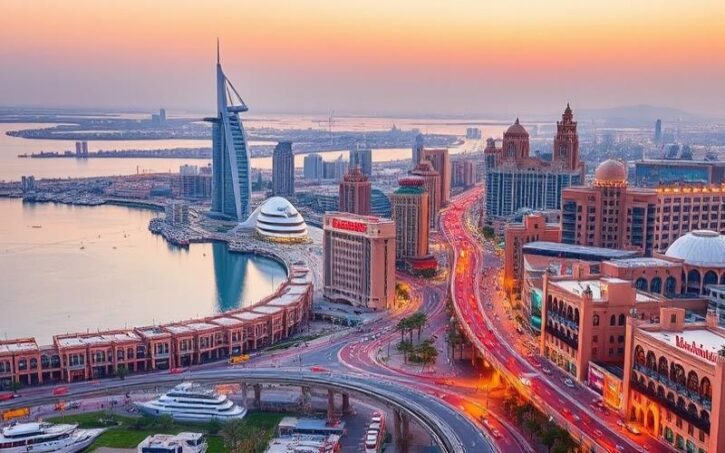
In an ever-changing world where rapid urbanization is transforming the economic landscape, the small kingdom of Bahrain is poised to experience a spectacular rise in real estate prices by 2030 in some of its key cities.
This phenomenon, driven by growing demand and booming infrastructure, could redefine investment opportunities and transform the region’s economic dynamics.
Therefore, understanding the drivers of this growth and identifying the cities that will benefit most from this real estate expansion becomes essential for investors and residents eager to seize opportunities in this evolving market.
Good to Know:
Bahrain is banking on ambitious real estate projects to attract foreign investors, with attractive tax benefits.
Promising Cities in Bahrain for Real Estate
Bahrain’s real estate market in 2025 shows steady growth driven by expatriate demand, expansion of freehold areas, and a very favorable tax environment for investors. This momentum is reinforced by government initiatives, major infrastructure projects, and positive evolution in real estate legislation.
| Key Indicator | Recent Value |
|---|---|
| Real Estate Transaction Growth (2022-2023) | 4.8% → 5.1% |
| Expatriate Share of Rental Market | >70% |
| Average Villa Prices (2024-2025) | +1.5% year-over-year |
| Entry-Level Residence Price | From €125,000 |
| Proportion of Expatriate Tenants | ~70% |
Major Trends:
- Growing demand for secondary residences, particularly in neighborhoods attractive to expatriates and investors.
- Price stability and high rental yields, exceeding those seen in Dubai or Qatar.
- Expansion of freehold areas, allowing full ownership access for foreigners in more neighborhoods.
- Rise of smart city projects (notably Bahrain Bay), boosting the high-end market and short/mid-term rentals.
- Development of affordable housing and mid-range apartments to attract local and regional families.
Factors Influencing Market Growth:
Major Infrastructure Projects: Road network extensions, creation of new urban neighborhoods, coastal area development (e.g., Amwaj Islands, Diyar Al Muharraq).
Government Initiatives: Legislative reforms to facilitate foreign investment, tax exemption on rental income, and development of social housing programs (e.g., Mazaya Finance).
Demographic Growth and Urbanization: The increase in expatriate population, representing over 70% of tenants, stimulates demand for modern, well-equipped housing close to main activity centers.
Neighborhoods and Cities with High Potential:
| Neighborhood/City | Benefits for Investors | Attractiveness for Buyers |
|---|---|---|
| Bahrain Bay | Smart city projects, strong rental demand, modern infrastructure | High-end urban lifestyle, business proximity |
| Amwaj Islands | Freehold area, beaches, strong tourist activity, seasonal rental yield | Direct sea access, international community |
| Juffair | Vibrant area, high expatriate concentration, furnished apartments | Nightlife, proximity to schools and shops |
| Diyar Al Muharraq | New developments, appreciation potential | Family housing, recent infrastructure |
Why These Areas Attract Investors:
- High rental yield due to strong expatriate demand and vibrant tourism.
- Facilitated property access for foreigners, with relatively low entry prices for the region.
- Urban and coastal projects offering modern, secure living environments attractive for both rental and primary/secondary residence.
Expert Testimonials and Opinions:
“Bahrain combines legal security, profitability, and accessibility, distinguishing it from other Gulf real estate markets.”
“The expansion of freehold areas and development of smart neighborhoods create unprecedented opportunities for medium-term investors.”
Demographic and Urbanization Outlook:
Continuous population growth, driven by arrival of skilled workers and GCC families.
Rapid urbanization of new neighborhoods, with focus on connected and sustainable lifestyles.
Summary of Benefits for Potential Investors and Buyers:
- Favorable taxation (no tax on rental income).
- Protective and clear legislation.
- Diverse offerings (from high-end to affordable housing).
- Accessible, dynamic market undergoing modernization.
Bahrain’s real estate market in 2025 positions itself as a strategic and profitable alternative within the Gulf, with solid prospects for investors seeking growth, security, and accessibility.
Good to Know:
In Bahrain, cities like Manama, Al-Hidd, and Madinat Hamad show remarkable growth potential in the real estate sector, attracting investor interest. Thanks to the implementation of major infrastructure projects such as special economic zones development and transportation network expansion, these localities benefit from increased attractiveness. For example, Manama’s population is expected to grow by 2.5% annually by 2030, according to experts. Government initiatives promoting energy efficiency in new buildings and streamlining investment processes also encourage rising real estate prices. Expert testimonials highlight that these promising cities offer both modern living environments and business opportunities, making them strategic choices for buyers seeking profitable long-term investments.
Long-Term Investment in Bahrain: Which Cities to Watch
Economic Analysis of Bahrain Real Estate Market Trends
Bahrain’s real estate market in 2025 shows growing demand, particularly in secondary residences and expatriate housing. There’s steady progression in real estate transactions (+4.8% in 2022, +5.1% in 2023), average villa prices rising 1.5% year-over-year, and strong participation (>70%) of expatriates in the rental market. Price stability combined with attractive yields positions Bahrain as a competitive destination compared to other Gulf markets.
| Indicator | Trend or Value |
| Transaction Growth | 4.8% (2022) → 5.1% (2023) |
| Average Villa Price | +1.5% (annual) |
| Expatriate Rental Share | >70% |
| Residence Entry Price | From €125,000 |
Forecasts indicate continuation of this momentum thanks to expansion of freehold areas and development of modern infrastructure.
Criteria Making Certain Cities Attractive for Long-Term Investment
- Demographic Growth: Continuous increase in expatriates seeking modern housing.
- Infrastructure Development: Major urban projects (smart cities), road network extension, and public service improvements.
- Favorable Government Policies:
- Progressive extension of areas where full ownership is permitted for foreigners.
- Tax exemption on rental income.
- State programs supporting affordable housing.
Most Promising Cities for Long-Term Investment
| City / Neighborhood | Main Strengths |
| Bahrain Bay | Smart city projects; strong short/mid-term rental demand |
| Amwaj Islands | Modern infrastructure; tourist appeal; freehold area |
| Juffair | Vibrant neighborhood; popular with expatriates; strong rental potential |
Concrete Examples of Projects or Urban Initiatives Positively Influencing Real Estate Value by 2030
- Continuous deployment of Bahrain Bay project with creation of mixed neighborhoods integrating innovative retail, high-tech offices, and premium housing.
- Planned expansion of Amwaj Islands, adding international hotels and high-end recreational facilities.
- Public initiatives targeting sustainable development (connected smart cities).
- Government program “Mazaya Finance” promoting access to affordable housing for young local families—thus stimulating residential demand.
Potential Risks Associated with These Investments & Mitigation Strategies
Risks:
- Possible volatility linked to regional or international economic cycles
- Local saturation in certain segments if supply suddenly exceeds demand
- Unforeseen regulatory changes regarding taxation or foreign eligibility
- Significant dependence on expatriate sector—susceptible to global migration/economic fluctuations
Recommended Strategies:
- Prioritize diversified portfolio across multiple neighborhoods/property categories
- Focus on areas with proven existing demand
- Regularly monitor local legislative evolution
- Rely on professional management to optimize occupancy/rental
- Maintain financial reserves to handle potential slow periods
Good to Know:
In Bahrain, long-term real estate investment primarily focuses on Manama and Muharraq, where prices are expected to rise by 2030 due to persistent economic growth and urban dynamism. Manama, the dynamic capital, benefits from foreign investment influx supported by favorable government policies, enhancing its appeal with infrastructure expansion such as the Bahrain Bay Project. Muharraq, with its rich cultural heritage and urban revitalization plans, also sees increasing real estate demand. Demographic growth and transportation improvement projects, like road network extension and the future Bahrain metro, strengthen these cities’ attractiveness. However, investors must consider risks related to regional volatility and economic dependence on oil, seeking to diversify their portfolio or choose projects with strong rental demand as mitigation strategy.
Growth Areas in Bahrain: 2030 Forecasts
Economic and Demographic Factors Driving Growth in Bahrain by 2030
Main growth drivers in certain Bahrain areas rely on:
- Private consumption dynamism (40% of GDP) and investment (30% of GDP).
- Monetary policy easing and interest rate decreases, favoring credit and household purchasing power.
- Moderate demographic growth, but sustained urbanization and young population attracted by emerging economic sectors.
- Economic Vision 2030: Transition from public sector-dominated economy to private model focused on sustainability, equity, and competitiveness.
Infrastructure Investments and Major Urban Projects
- Bapco refinery modernization: 42% increase in refining capacity, reaching 400,000 barrels/day.
- Massive infrastructure investments: Saudi sovereign fund (PIF) committed $5 billion USD.
- Urban development projects: Creation of new residential and commercial neighborhoods, Manama urban area extension, and Khalifa Bin Salman port development.
- Government initiatives for sustainable development: Measures for energy transition, environmental protection, and integration of UN Sustainable Development Goals (SDGs).
Promising Industrial and Technological Sectors
| Sector | Growth Prospects | Attractiveness Factors |
|---|---|---|
| Finance & Fintech | Strengthening regional hub status | Favorable regulatory environment |
| Professional Services | Growth linked to economic diversification | Increased demand from international companies |
| Light Manufacturing | Development supported by foreign investment | Incentive policies and efficient logistics |
| Renewable Energy | Energy transition initiatives and innovation | Government support, pilot projects |
| Information Technology | Development of digital hubs and startups | Access to talent, incubators, taxation |
| Tourism & Leisure | Urban planning and tourism infrastructure projects | International promotion and major events |
Demographic Forecasts, Urbanization and Real Estate Demand
- Population estimated at 1.8 million by 2030, with 1.7% annual growth rate.
- Increasing urbanization: Over 90% urban population, boosting residential and commercial demand.
- Expected real estate price increases linked to arrival of new residents, particularly in Manama, Amwaj Islands, and Diyar Al Muharraq areas.
Data and Expert Comments
- Strong non-oil GDP expansion, particularly in services and finance sectors.
- Areas benefiting most from growth are those integrating sustainable urban development projects and technological hubs.
- Experts emphasize that Bahrain’s attractiveness relies on its strategic position, skilled workforce, and openness policies for foreign investors.
Main Challenges and Points of Attention
Maintaining balance between economic development, environmental preservation, and social inclusion.
Accelerated diversification to reduce dependence on oil sector.
Key Takeaway:
Bahrain relies on major investments, rapid urbanization, and ambitious sectoral diversification to stimulate growth in certain strategic areas by 2030. Technological sectors and sustainable urban projects will attract new residents and businesses, strengthening real estate demand and the kingdom’s economic attractiveness.
Good to Know:
Growth areas in Bahrain by 2030 will be largely influenced by massive infrastructure investments, particularly Bahrain Bay Project development and Khalifa Bin Salman port expansion, which stimulate urbanization and influx of technology companies. Government initiatives for sustainable development, such as Bahrain’s Vision 2030, promote renewable energy and digital innovation, thus attracting thriving sectors like fintech and logistics. Demographic forecasts indicate increased working population, creating heightened demand for modern housing in Manama and surrounding areas. According to recent studies, this economic attractiveness and favorable regulatory framework should see real estate prices rise significantly in these regions. Experts emphasize these elements position Bahrain as a key regional hub, strengthening its central role in the Gulf.
Disclaimer: The information provided on this website is for informational purposes only and does not constitute financial, legal, or professional advice. We encourage you to consult qualified experts before making any investment, real estate, or expatriation decisions. Although we strive to maintain up-to-date and accurate information, we do not guarantee the completeness, accuracy, or timeliness of the proposed content. As investment and expatriation involve risks, we disclaim any liability for potential losses or damages arising from the use of this site. Your use of this site confirms your acceptance of these terms and your understanding of the associated risks.

Cyril Jarnias is an independent expert in international wealth management with over 20 years of experience. As an expatriate himself, he is dedicated to helping individuals and business leaders build, protect, and pass on their wealth with complete peace of mind.
On his website, cyriljarnias.com, he shares his expertise on international real estate, offshore company formation, and expatriation.
Thanks to his expertise, he offers sound advice to optimize his clients' wealth management. Cyril Jarnias is also recognized for his appearances in many prestigious media outlets such as BFM Business, les Français de l’étranger, Le Figaro, Les Echos, and Mieux vivre votre argent, where he shares his knowledge and know-how in wealth management.





