
 Published on and written by Cyril Jarnias
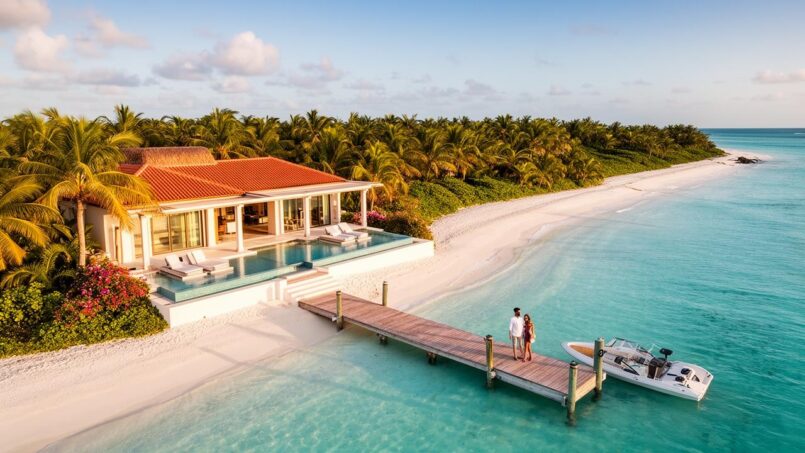
Buying a villa right on the sand or an apartment with a view of turquoise waters is a dream for many French people. But turning that fantasy into a concrete purchase in the Bahamas requires a real method, especially in 2026, in a market that remains highly competitive, driven by international buyers and near-paradise tax conditions.
This step-by-step guide helps the French buyer secure their investment, master the real costs, and potentially optimize their tax residence or obtain local residency.
Understanding the Bahamian Real Estate Market Before You Start
The archipelago is experiencing a phase of solid growth. Figures show that prices are not rising irrationally, but are increasing steadily due to sustained international demand and limited supply in the best locations.
In April 2025, the median sales price in Nassau reached $845,000, an increase of more than 20% year-over-year.
The Bahamas welcomed a record of approximately 12.5 million visitors in 2025, an increase of more than 11% compared to the previous year. This tourism dynamic fuels buyer confidence and strengthens the value of prime locations, especially beachfront properties and “branded residences” managed by hotel chains.
A Seller’s Market in Luxury Enclaves
On New Providence (Nassau), the supply of waterfront properties is becoming scarce. In the most sought-after gated communities, villas rarely change hands, and the most desirable properties are often sold before they even appear on public portals.
In 2025, waterfront prices on New Providence increased by approximately 15.45%, with an average selling time of 75 days for prime properties. For 2026, a national increase of 5 to 10% is expected, with stronger growth in luxury enclaves such as Lyford Cay, Paradise Island, Old Fort Bay, or Ocean Club Estates.
At the same time, activity on the so-called “Out Islands” — Exuma, Abaco, Eleuthera — is strengthening, driven by buyers seeking more seclusion but without giving up high-end services.
Where to Buy: Choosing Your Island and Neighborhood Wisely
For a French buyer, the first strategic decision is to choose the right sub-market. The Bahamas is not a homogeneous market: each island, each gated community, each bay has its own price dynamics, rental yield, and appreciation potential.
Comparing a few hotspots: Paradise Island, Exuma, Harbour Island, Lyford Cay
Research data from CMC Global Estates for 2026 highlights several major hubs. The amounts below are in Bahamian dollars (BSD), pegged 1:1 to the US dollar.
| Location | Average price per m² (BSD) | Average rental yield | Annual capital growth | Dominant buyer profile |
|---|---|---|---|---|
| Paradise Island | 14,985 | 4.1% | +18% | UHNW, international |
| Exuma | 11,988 | 5.8% | +7% | HNW, lifestyle seekers |
| Harbour Island | 9,990 | 5.5% | +10% | Investors, expats |
| Lyford Cay | 7,992 | 6.8% | +9% | Growth-focused investors |
These figures illustrate quite distinct positionings.
On Paradise Island, prices per square meter are the highest, driven by a very international, ultra-wealthy clientele attracted to waterfront condos, proximity to the Atlantis Resort, and branded residences. Gross rental yield is more modest, but capital appreciation is spectacular, with nearly 18% increase year-over-year according to some data.
Annual property value appreciation in Exuma is about 7%.
Harbour Island, famous for its pink sand beaches and frequented by celebrities like Lenny Kravitz, Eddie Murphy, or Sandra Bullock, offers an interesting balance between high prices, rental yield around 5.5%, and double-digit annual appreciation. Supply is very limited, explaining waterfront price ranges from about $2.5 to $15 million.
Lyford Cay, an ultra-secure community on New Providence, combines solid rental yields and steady price growth. The ultra-prime waterfront segment there often ranges between $5 and $30 million, with listings possibly reaching $45 million.
Another set of CMC estimates for 2026 highlights more conservative values, but consistent in terms of market hierarchy:
| Location | Average price per m² (BSD) | Average rental yield | Annual capital growth | Dominant buyer profile |
|---|---|---|---|---|
| Paradise Island | 7,515 | 5.0% | +14% | UHNW, international |
| Exuma | 6,012 | 5.2% | +15% | HNW, lifestyle seekers |
| Harbour Island | 5,010 | 9.5% | +12% | Investors, expats |
| Lyford Cay | 4,008 | 6.1% | +8% | Growth-focused investors |
Values vary depending on the segments studied, but the trend is clear: strong international demand, limited supply, and relatively attractive returns, especially considering the tax environment.
Price Levels for Villas, Condos, and Private Islands
To properly calibrate your project, it is essential to understand the price ranges in key areas.
The price of a waterfront apartment in a high-end complex in Nassau is often around $3 million.
On Cable Beach and Paradise Island, the entry-level luxury starts around $700,000 for a well-located condo. In the ultra-prime enclaves of Lyford Cay, Old Fort Bay, Albany, or Ocean Club Estates, the entry ticket for prestige properties is around $2 million, with high-end often between $5 and $25 million, and even more for exceptional settings.
Private islands represent a world of their own: prices start around $10 million and easily exceed $100 million depending on size, accessibility, and level of development (airstrips, docks, homes, utilities).
For the French, keep in mind that the Bahamian market is denominated in Bahamian or US dollars, practically interchangeable thanks to the 1:1 peg. Comparison with the euro therefore depends on the exchange rate at the time of the transaction, not on a difference in local currency.
Tax Framework: A Very Favorable Environment but Must Be Aligned with French Law
For a French investor, the appeal of the Bahamas lies largely in its status as a “tax-neutral” jurisdiction. The country levies no income tax, no capital gains tax, no inheritance or gift taxes. Direct taxes mainly concern the property itself.
Local Property Taxation
The main charge for foreign buyers is the VAT on real estate transfers, which replaced the former stamp duty system. For non-Bahamians, the rule is simple: 10% VAT on the property value, calculated on the higher of the sale price or market value. By custom, this amount is often split equally between seller and buyer in so-called “gross” sales, but this split remains fully negotiable.
For owner-occupied property: exemption on the first $300,000, then progressive rates of 0.625% and 1% on the excess. For non-owner-occupied or rental properties: 1% on the first band, 2% beyond. For commercial properties: rate of about 1.5%.
For foreign owners who occupy the property themselves, a specific rate of approximately 0.625% per year on the assessed value applies, with an annual cap around $200,000. Vacant land held by non-residents, on the other hand, is heavily taxed, up to 2% beyond certain thresholds.
Alignment with French Capital Gains Tax
If you buy a villa or apartment in the Bahamas as a French tax resident, the absence of local capital gains tax does not exempt you from French taxation upon resale.
In France, income tax is exempt after 22 years of ownership (gradual reduction from the 6th year). For social security contributions, full exemption occurs after 30 years (reduction of up to 9% per year after the 22nd year). The rate for a non-resident is 19% income tax + 17.2% social contributions, subject to specific provisions.
The Bahamas are on the French list of non-cooperative jurisdictions (ETNC) as of the most recent available date, which further complicates the picture: theoretically, a surtax of 75% on capital gains could apply, but the situation is nuanced by the existence of a bilateral tax treaty and case law from the French Council of State. On this specific point, advice from a French tax specialist is essential before buying, and even more so before reselling, to avoid unpleasant surprises.
The Legal Framework for a French Buyer: What You Can Buy, With or Without a Permit
Unlike some countries, the Bahamas grants foreigners similar property rights to those of citizens, based on British-inspired common law. So you can buy an apartment, house, villa, or land as freehold, without needing to set up a local entity.
The regime applicable to foreigners is defined by the International Persons Landholding Act. The permit requirement depends mainly on the size of the land, intended use, and number of purchases.
Property for Personal Use Under 2 Acres
If as a French buyer you purchase an apartment or house intended for your personal use, on a plot of less than two acres, no prior permit is required. The essential condition is that the property serves as a family residence, even if you do not occupy it year-round.
After signing the deed, you must register the transaction with the Bahamas Investment Authority (BIA). This registration allows the government to track foreign acquisitions and provides the investor with a clear legal framework, especially for capital repatriation.
When a Permit Becomes Mandatory
As soon as any of the following criteria are met, a government permit must be obtained before concluding the sale:
– the land exceeds two acres (or five acres under certain regimes for larger purchases);
– you plan to rent the property, even partially (including vacation rentals);
– the property is intended for commercial use or a development project;
– it is a second purchase above a certain threshold or with a clearly asset or commercial strategy.
The permit is issued by the BIA after reviewing your project, financial profile, and, if applicable, the expected economic impact. The official cost of these permits or certificates is around $1,000, although some texts still mention older amounts ($250 or $500).
The exact procedures depend on the specifics of your project. Your Bahamian attorney will be your point of contact to structure the application.
Registration and Formal Requirements
Once the transaction is concluded, the law imposes several deadline-related formalities:
– obtain a VAT invoice from the Department of Inland Revenue before signing the deed of transfer (conveyance);
– full payment of VAT within 180 days after execution of the deed;
– registration of the deed with the Registry of Records within 180 days;
– declaration of any change of ownership to the tax authorities within 30 days of signing, under penalty of a fine equivalent to 3% of the price.
The Bahamian land registration system is not fully “registered” like in France. Legal security therefore relies heavily on the title search that your attorney must conduct in various registries: deeds, companies register, civil proceedings, etc. The goal is to verify the absence of mortgages, disputes, or other encumbrances.
Step by Step: The Purchase Process for a French Buyer
For a buyer from France, the instinctive comparison is often with the French system where the notary plays a central role. In the Bahamas, this role is performed by a Bahamian real estate attorney. There is no notary in the French sense, and each party is represented by their own counsel.
1. Define the Overall Budget (Price + Fees + Exchange Rate)
Start by determining your total envelope including:
– the purchase price of the villa or apartment;
– closing costs, which for a foreigner often reach 7 to 12% of the price in a scenario where you share the VAT with the seller, and up to 12 to 18% in arrangements where you assume more costs (net sale, mortgage financing, expensive inspections, etc.);
– attorney fees (in practice often around 2.5% of the price, plus 10% VAT on these fees, with slightly lower negotiable percentages for very large amounts);
– costs for opening a bank account, international wire transfers, and the exchange rate margin applied by your bank or broker.
For a simple example, on an apartment of $1,000,000, in a classic gross sale with VAT sharing:
| Cost item | Estimated amount (USD/BSD) |
|---|---|
| 50% of transfer VAT (5%) | 50,000 |
| Attorney fees (2.5% + 10% VAT) | 27,500 |
| Title search, registration, miscellaneous | 5,000 to 10,000 |
| Inspections (structure, termites, etc.) | 1,000 to 2,000 |
| Approximate total closing costs | 83,500 to 89,500 |
So we are in a range of 8.3 to nearly 9% of the price, excluding possible financing costs. In the case of a net sale where you assume the entire VAT and certain seller costs, the total bill can easily climb to 12 to 18%.
2. Select the Island and Product Type
This step goes beyond a simple “love at first sight”. It must integrate:
– accessibility (air links to Europe, via Miami, New York, or Toronto);
– intended use: personal secondary residence, high-end vacation rental, permanent residence project, future economic residency application;
– your tolerance for rental vacancy risk, which will be higher on a remote Out Island than in Nassau or Paradise Island;
– the level of on-site services (healthcare, international schools, marinas, private clubs, golf, fine dining).
A French buyer who wants to combine personal use and secure rental income will often turn to:
Discover investment or residence options based on your lifestyle: beachfront condos, secure homes, or island villas.
A condo in Nassau, Paradise Island, or Cable Beach, managed like a resort-style residence, ideal for enjoying the beach and hotel services.
A house in a secure community like Lyford Cay or Old Fort Bay, offering privacy and exclusivity.
A villa or bungalow on Harbour Island or Exuma, in a very lifestyle-oriented segment, perfect for an authentic island experience.
3. Build Your Local Team: Agent, Attorney, Banker
The law requires the use of a Bahamian attorney for any transaction. Fees generally follow a scale set by the Bar Association, around 2.5% of the price, with variations upward for complex cases or unregistered land, and downward for very high amounts. Since early 2026, the minimum scale has been raised, with higher rates for properties on unregistered land (up to 5% according to some texts).
The real estate agent, on the other hand, is typically paid by the seller, at 6% for built properties and 10% for vacant land, plus VAT on the commission. As a buyer, you generally do not pay agency fees, unless otherwise agreed.
A local banker or broker may also be necessary if you plan to borrow locally or open an account in Bahamian or US dollars to manage rents and expenses.
4. Obtain a Preliminary Financing Agreement (If Not Paying Cash)
Local banks such as RBC Royal Bank, CIBC FirstCaribbean, or Scotiabank lend to non-residents, but on stricter terms than for Bahamians:
– down payment of at least 30 to 40%, sometimes 50% for foreigners;
– indicative interest rates between 6.5 and 9.5%, often variable, linked to a prime rate around 4.25%;
– amortization periods of 15 to 25 years in general;
– processing time of 4 to 8 weeks, subject to full documentation (bank statements, tax returns, employment certificates or company accounts, credit reports, etc.).
For a French buyer, an interesting alternative is to use credit from your home country (e.g., a mortgage backed by another property, a Lombard loan, a line of credit on a portfolio) at a potentially lower rate, to buy cash in the Bahamas. From the Bahamian seller’s perspective, you are then a cash buyer, which notably accelerates the transaction and can strengthen your negotiating power.
5. Search, Visit (Physically or Virtually), Make an Offer
Many foreign buyers rely on 3D virtual tours or virtual reality visits, which have become standard on the Bahamian market, especially for luxury residences. Still, it is highly recommended to plan a visit on-site before signing a formal promise, if only to check the actual environment, orientation, neighborhood, possible noise, beach quality, etc.
Once the property is identified, your agent helps you prepare a written offer (Letter of Intent or Heads of Terms) specifying:
– the proposed price;
– what is included (furniture, boat, moorings, etc.);
– contingencies (financing approval, satisfactory inspection results, government permit if necessary);
– proposed timelines for signing and closing.
In a market where some properties sell within weeks, especially on Paradise Island or Harbour Island, your ability to submit a clear offer, accompanied by proof of funds or a preliminary bank agreement, is decisive.
6. Due Diligence: Titles, Inspections, Compliance
The adage “Caveat Emptor” — “let the buyer beware” — applies fully in the Bahamas. The seller has an obligation to disclose known defects, but the ultimate responsibility lies with the buyer.
Your attorney performs:
– an exhaustive title search in the registries (Registry of Deeds, Supreme Court Civil Registry, Companies Registry if applicable) to ensure the seller has a clear and transferable title, free of unpaid mortgages or pending litigation;
– verification of any easements, rights of way, subdivision restrictions, specific rules of the gated community or homeowners association (HOA);
– preparation or review of the sale contract and appendices.
In parallel, it is strongly recommended to hire a professional inspector to check the condition of the building, electrical installations, roof, foundations, possibly hurricane protection systems, pool, etc. Even if banks do not always require it, this inspection is your best protection against unpleasant surprises in a tropical environment where salt, humidity, and cyclones leave their mark.
7. Permits, BIA Registration, VAT: Don’t Miss Deadlines
If your purchase requires a permit (large land area, structured rental project, commercial use, or second purchase above a certain threshold), your attorney submits the application to the BIA before closing. The permit may be automatically extended if the land is not acquired within 180 days, provided an extension request is filed on time and the corresponding fees are paid.
Before signing, it is mandatory to obtain a VAT invoice from the Department of Inland Revenue. This invoice serves as the basis for paying the 10% tax, which must be paid within 180 days following the signing of the transfer deed, under penalty of permit cancellation.
The deed, once signed, must be registered at the Registry of Records within the same 180-day period. A declaration must also be filed with the tax authorities within 30 days to report the change of ownership, under penalty of a fine of 3% of the price.
8. Signing (Closing) and Transfer of Funds
The closing typically takes place at one of the attorneys’ offices, or remotely with powers of attorney if you cannot travel. Funds are transferred to the attorney’s escrow account or according to a pre-agreed arrangement. Once all contingencies are waived, the VAT paid, and the deed signed, ownership is transferred.
For a French buyer, exchange rate management is a crucial point. The Bahamian dollar moves like the US dollar, but the euro’s value against the dollar fluctuated between about 1.15 and 1.18 at the 2025–2026 turn, according to European Central Bank data. A variation of a few cents can represent tens of thousands of euros on a multi-million purchase.
It can therefore be wise to:
– negotiate with your bank or an FX broker the best possible conditions for high-value transfers;
– possibly stagger transfers in several installments if the project timeline allows and you want to diversify exchange rate risk.
9. Post-Closing Registration and Ongoing Management
Once you are the owner, your attorney typically handles:
– finalizing the title registration;
– obtaining the BIA registration certificate if required;
– updating the owner’s details with the tax authorities for property tax.
You then need to organize yourself to:
– pay the annual property tax before the deadline (usually end of March), which may entitle you to a 10% discount if paid before the due date;
– properly insure the property, taking into account the cyclone risk;
– manage any vacation rentals (with VAT at 10% on holiday rental income for non-Bahamians);
– maintain the property, either directly or via a local property manager.
Residence and Lifestyle Planning: Beyond the Real Estate Investment
For many affluent French people, buying a property in the Bahamas is not just about an asset strategy, but also a lifestyle project or international tax optimization.
Resident Cards, Home Owner’s Card, and Economic Residency
Buying a residence opens doors in terms of migration status:
The Home Owner’s Card allows non-Bahamian owners, their spouse, and minor children to easily enter and exit without the right to work. The Annual Residence Permit offers a renewable annual stay. Permanent economic residency requires a minimum investment of BSD 1,000,000 (real estate or bonds), with accelerated processing from 1.5 million, and the property must be held for 10 years, under penalty of revocation of the status.
None of these options automatically give the right to work locally, nor do they mechanically lead to citizenship, but they offer sustainable access to a very favorable tax environment: no income tax, no capital gains tax, no wealth tax.
Caution on the French Side
Before switching your tax residency, a French buyer must assess with their advisor:
The conditions for severing the tax tie with France (center of economic interests, household, duration of stay), anti-abuse and CFC (controlled foreign corporation) rules, as well as the risk of reclassification as French tax resident if actual presence in the Bahamas is insufficient.
French authorities examine the reality of the presence abroad and the economic substance of the situation well beyond the mere fact of owning a villa in the Bahamas.
Practical Tips for a French Buyer in 2026
Buying a villa or apartment in the Bahamas requires combining Anglo-Saxon legal culture, local administrative constraints, and French tax obligations. A few reflexes can make the difference.
It is essential to:
Clarify from the start the personal or rental use, as this conditions the permit and tax (VAT on rents, property tax). Choose a Bahamian attorney used to European clients. Anticipate the full cost (VAT, fees, inspections, bank charges, insurance, maintenance). Actively manage the exchange rate by comparing rates and fees. Document the source of funds for KYC requirements.
The 2026 market remains favorable for early movers who can act quickly on quality properties in short supply, especially on Paradise Island, Lyford Cay, Exuma, or Harbour Island. But the ideal time for opportunistic deals is behind us: the price trajectory, very disciplined supply policies from developers, and the scarcity of available coastlines suggest more of a long-term holding logic than short-term speculation.
For a French buyer mastering the combination of a long-term perspective, well-structured international taxation, and genuine personal use (vacations, teleworking, partial retirement), a property in the Bahamas goes beyond a simple investment to become a cornerstone of wealth and lifestyle.
A wealth project or a question? Contact us now to speak with a wealth management expert.
Disclaimer: The information provided on this website is for informational purposes only and does not constitute financial, legal, or professional advice. We encourage you to consult qualified experts before making any investment, real estate, or expatriation decisions. Although we strive to maintain up-to-date and accurate information, we do not guarantee the completeness, accuracy, or timeliness of the proposed content. As investment and expatriation involve risks, we disclaim any liability for potential losses or damages arising from the use of this site. Your use of this site confirms your acceptance of these terms and your understanding of the associated risks.

Cyril Jarnias is an independent expert in international wealth management with over 20 years of experience. As an expatriate himself, he is dedicated to helping individuals and business leaders build, protect, and pass on their wealth with complete peace of mind.
On his website, cyriljarnias.com, he shares his expertise on international real estate, offshore company formation, and expatriation.
Thanks to his expertise, he offers sound advice to optimize his clients' wealth management. Cyril Jarnias is also recognized for his appearances in many prestigious media outlets such as BFM Business, les Français de l’étranger, Le Figaro, Les Echos, and Mieux vivre votre argent, where he shares his knowledge and know-how in wealth management.





