
 Published on and written by Cyril Jarnias
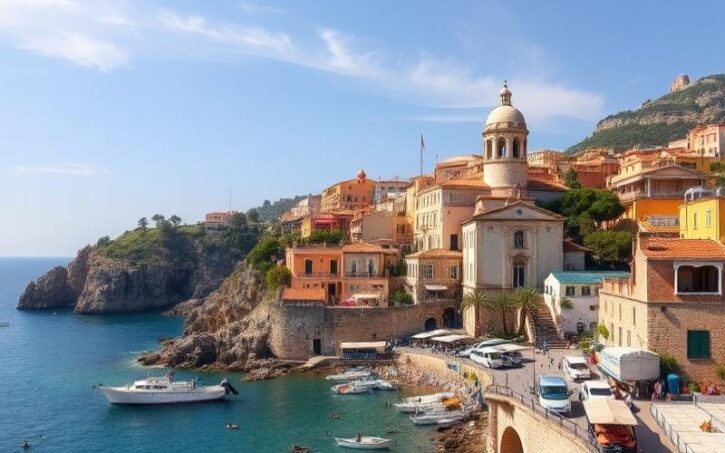
Italy, an iconic country in Southern Europe, is a destination that fascinates with the richness of its geography. From its Mediterranean coasts to its Alpine peaks, as well as its fertile plains and verdant hills, Italy offers a diversity of landscapes that makes it a unique destination in the world.
Geographic Location of Italy
Italy is located in the heart of the Mediterranean, extending on a boot-shaped peninsula that juts into the sea. The country covers an area of 301,340 km², making it the 72nd largest country in the world. Its strategic geographic position gives it crucial importance in exchanges between Europe, North Africa, and the Middle East.
To the north, Italy is bordered by the majestic Alps, which form a natural boundary with France, Switzerland, Austria, and Slovenia. To the east, the country is bathed by the Adriatic Sea, while to the west lies the Tyrrhenian Sea. To the south, the Strait of Sicily separates the Italian peninsula from North Africa.
The Main Regions of Italy
Italy is divided into 20 administrative regions, each with its own geographic and cultural characteristics. Among the most notable regions are:
- Lombardy: a northern region, with Milan as its capital
- Lazio: a central region housing Rome, the country’s capital
- Tuscany: famous for its picturesque landscapes and historic cities like Florence
- Campania: a southern region known for Naples and the Amalfi Coast
- Sicily: the largest island in the Mediterranean, located south of the peninsula
The Major Italian Cities
Italy has many important cities, each with its own character and historical significance. Rome, the capital, is the largest city in the country with about 2.8 million inhabitants. Here is an overview of other major Italian cities:
- Milan: economic and fashion capital, with about 1.4 million inhabitants
- Naples: the country’s third-largest city, known for its cultural heritage and cuisine
- Turin: an important industrial city in the northwest
- Florence: jewel of the Italian Renaissance
- Venice: famous for its canals and unique architecture
Italy’s Neighboring Countries
Italy shares its land borders with several European countries:
- France to the west
- Switzerland to the northwest
- Austria to the north
- Slovenia to the northeast
Additionally, Italy encompasses two independent microstates: Vatican City, located in the heart of Rome, and San Marino, landlocked in the northeastern part of the country.
Notable Geographic Features
Italian geography is characterized by a great diversity of landscapes. To the north, the Alps offer majestic peaks, including Mont Blanc, the highest point in the European Union at 4,810 meters above sea level.
The Apennine mountain range runs through the country from north to south, forming the backbone of the peninsula. This mountain range greatly influences the climate and vegetation of the different regions.
The Po Valley, in the north, is the largest plain in Italy. It covers about 46,000 km² and is one of the most fertile and industrialized regions of the country.
Italy also has many lakes, the most famous of which are Lake Como, Lake Maggiore, and Lake Garda, located in the Italian Alps region.
The Italian Islands
Italy has many islands, the most important of which are:
- Sicily: the largest island in the Mediterranean
- Sardinia: the second-largest Italian island
- Elba: famous for being the place of exile for Napoleon Bonaparte
These islands contribute to the geographic and cultural richness of the country, offering unique landscapes and a fascinating history.
The Italian Climate
Italy’s climate varies considerably from north to south. The north experiences a continental climate with cold winters and hot summers, while the south enjoys a Mediterranean climate with hot, dry summers and mild winters.
This climatic diversity contributes to the richness of Italian biodiversity and greatly influences agricultural practices and the lifestyle of its inhabitants.
Good to know:
Italy’s varied geography, ranging from the Alpine mountains to the Mediterranean coasts, as well as its fertile plains and picturesque islands, offers a diversity of landscapes and unique experiences for visitors.
The Impact of Geography on Culture and Economy
Italy’s geography has profoundly influenced its history, culture, and economy. The different regions have developed unique culinary traditions, dialects, and customs, largely shaped by their geographic environment.
The Italian economy is also strongly tied to its geography. The northern regions, benefiting from the fertile Po Valley and proximity to the rest of Europe, have become major industrial and economic centers. The coastal and island regions, on the other hand, have developed an economy based on tourism and maritime activities.
Italy’s Geographic Challenges
Despite its beauty, Italy’s geography also presents challenges. The country is located in an active seismic zone, making it vulnerable to earthquakes. Additionally, the presence of active volcanoes like Vesuvius and Mount Etna poses a constant risk to nearby populations.
Climate change also poses challenges, particularly in terms of coastal erosion and water resource management in the more arid southern regions.
Good to know:
Italy’s geography, while a source of its beauty and diversity, also presents significant challenges in terms of natural risks and environmental management.
In conclusion, Italy’s geography is a fundamental element of its identity. From the snowy peaks of the Alps to the sunny beaches of Sicily, as well as the Tuscan hills and the canals of Venice, Italy offers a geographic diversity that makes it a unique destination in the world. This geographic richness has shaped the country’s history, culture, and economy, creating a heritage of invaluable wealth.
Disclaimer: The information provided on this website is for informational purposes only and does not constitute financial, legal, or professional advice. We encourage you to consult qualified experts before making any investment, real estate, or expatriation decisions. Although we strive to maintain up-to-date and accurate information, we do not guarantee the completeness, accuracy, or timeliness of the proposed content. As investment and expatriation involve risks, we disclaim any liability for potential losses or damages arising from the use of this site. Your use of this site confirms your acceptance of these terms and your understanding of the associated risks.

Cyril Jarnias is an independent expert in international wealth management with over 20 years of experience. As an expatriate himself, he is dedicated to helping individuals and business leaders build, protect, and pass on their wealth with complete peace of mind.
On his website, cyriljarnias.com, he shares his expertise on international real estate, offshore company formation, and expatriation.
Thanks to his expertise, he offers sound advice to optimize his clients' wealth management. Cyril Jarnias is also recognized for his appearances in many prestigious media outlets such as BFM Business, les Français de l’étranger, Le Figaro, Les Echos, and Mieux vivre votre argent, where he shares his knowledge and know-how in wealth management.





