
 Published on and written by Cyril Jarnias
Moving to Jamaica is not just about changing your climate or standard of living. It’s about entering a society deeply shaped by its history, beliefs, music, and its relationship with time, family, authority… as well as by very concrete constraints related to security, natural disasters, and the health and education systems. Before you pack your bags, it’s better to understand these differences to avoid missteps, disillusionment… and to fully enjoy life on the island.
Understanding the Soul of the Country: History, Identity, and Diversity
Jamaican identity is the product of a long clash of cultures. First inhabited by the Taínos, the island was colonized by Spain, then taken by the British in the 17th century. It became a major sugar producer based on slavery, before abolition in the 19th century and the arrival of Indian and Chinese laborers. Independence was achieved in 1962, but the social scars of this history are still visible.
Persistent poverty rate in Jamaica in 2018.
This diversity is not theoretical: it is reflected in the ethnic makeup (nearly 91% Black population, 7.3% mixed-race or of mixed heritage, and Indian, Chinese, and white minorities), in the cuisine, festivals, music, and accents from one end of the island to the other.
A Culture Both Conservative and Explosive
Many expatriates are surprised by a dual face: a very expressive, creative society, driven by reggae, dancehall, partying, and colorful language… but at the same time fundamentally conservative on religious, moral, and social issues. Nearly 70% of the population identifies as Christian, predominantly Protestant, and Jamaica is often spoken of as the country with the highest number of churches per square mile.
Society is characterized by marked conservatism, particularly hostility towards homosexuality and repressive laws against male same-sex relations. Public behavior should be sober, with a rejection of drunkenness and nudity outside designated spaces. Respect for elders and authority is also a fundamental value.
For a Western expatriate accustomed to more liberal norms, this tension between artistic freedom and social rigidity can be destabilizing: you might encounter a deafeningly loud dancehall party, yet very explicit displays of affection between people of the same sex will remain frowned upon, even dangerous.
Language: Official English, Omnipresent Patois
English is the official language, used in administration, media, schools, and business. On paper, this seems reassuring for a French speaker who knows some English. But the reality of daily life is Jamaican Patois (or Patwa), a very vibrant creole blending English, African languages, Spanish, Portuguese, and French, with its own pronunciation and syntax.
For an expatriate arriving in Mauritius, the first cultural barrier is often linguistic. Although English is theoretically understood, it’s common not to follow an animated conversation in Mauritian Creole on the street, at the market, on public transport, or within families. This difficulty stems from the rhythm, accent, and unique expressions of this patois, which differ significantly from standard English.
Learning some basic Patois is not essential for work, but it is a huge lever for integration, relaxing exchanges, and showing respect for the local culture. Jamaicans are generally well-meaning towards foreigners’ stumbling attempts at their creole. Furthermore, the country explicitly values English/Patois bilingualism and encourages learning Spanish as a third language, which speaks volumes about the importance given to languages in shaping identity.
Religions, Rastafari, and Moral Values
Religion strongly structures social life. Churches define neighborhoods, Sunday mornings, and largely influence moral standards. Protestant denominations (Church of God, Seventh-day Adventists, Baptists, Pentecostals, Anglicans…) are clearly dominant, alongside a Catholic minority and more informal spiritual movements.
For an expatriate, it is essential to respect the frequent religious references in social and professional life, as well as the social weight of holidays like Christmas or Easter. This means avoiding cynical remarks or mocking faith to maintain good relations, without anyone expecting you to be a believer yourself.
Rastafari: Global Symbol, Complex Reality
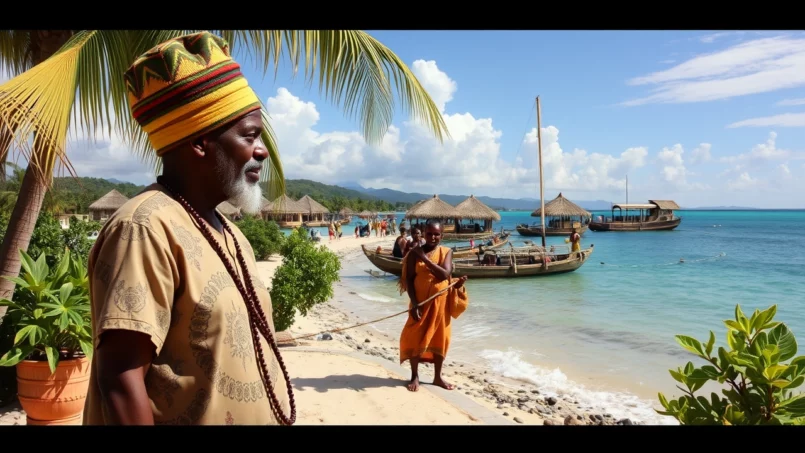
Rastafarianism and Jamaica are inseparable in the collective imagination, largely through the figure of Bob Marley. Yet, only a small percentage of the population identifies as Rasta. It is less an institutionalized religion than a collection of spiritual, political, and cultural movements advocating Black pride, a symbolic return to Ethiopia, criticism of “Babylon” (the system), and a search for a more natural lifestyle.
The main Rasta “houses” (Bobo Shanti, Nyahbinghi, Twelve Tribes of Israel) each have their own dress codes, rituals, and distinct interpretations of the figure of Emperor Haile Selassie. For an expatriate, it’s important to avoid reducing Jamaican culture to this single universe or treating it as mere tourist scenery, steering clear of clichés like intrusive photos or stereotypes about ganja and dreadlocks.
It is customary to ask for permission before photographing a Rasta, and some may ask for compensation. Again, the key is respect: do not exoticize, do not touch people’s hair, and do not assume all Jamaicans smoke cannabis or adhere to Rasta philosophy.
Politeness, Social Codes, and Relationship with Time
Jamaican society places great value on forms of politeness. Passing someone without greeting them is frowned upon; a “good morning” or “good afternoon” is expected, even with strangers, in an elevator or a small shop. In professional life, a firm handshake, direct but not aggressive eye contact, and the use of titles (“Mr.”, “Miss”, “Mrs.”, “Dr.”) remain the norm until your counterpart suggests using first names.
Elders enjoy a special status: they are respected, one avoids answering them curtly, and children are raised with this logic. An expatriate deemed impolite towards older people or figures of authority (police officers, teachers, religious leaders) may quickly be labeled as arrogant.
“Jamaican Time”: A Flexible Relationship with the Clock
Another common culture shock: time management. In the professional sphere, arriving on time is always appreciated and seen as a sign of seriousness. But in practice, many meetings start late, administrative procedures take longer than expected, and responses to requests can be delayed. For social events (parties, dinners), being a little late is not only tolerated but sometimes expected.
For expatriates, understanding and adapting to differences in time perception is a key step in integration.
For people from cultures where punctuality is sacred, frequent delays can fuel the frustration phase of culture shock.
This behavior generally does not reflect a lack of respect, but a different relationship with time, prioritizing connection and flexibility.
To adapt, it is advisable to build extra time into your schedule and avoid showing irritation publicly.
Family, Gender, and Privacy
Family is central to Jamaican life. It is not uncommon for three generations to live under the same roof, with a strong role for grandmothers, often the pillars of the household. Extended ties (aunts, distant cousins, “cousins” by affection) are integrated into the notion of family, and family obligations often take precedence over other commitments.
Family structures differ from what many Europeans know: formal marriages are less frequent, common-law unions and single-parent families are common. Nevertheless, traditional values (respect for elders, a strongly affirmed parental role, importance of motherhood) remain strong.
Regarding gender and sexual orientation, the gap can be significant for expatriates accustomed to more inclusive legislation and mindsets. Jamaica remains very hostile towards male homosexuality, both legally (laws inherited from the colonial era) and socially. LGBT+ people face insults, assaults, and sometimes murders. A few activist organizations like J-FLAG work to improve the situation, but for an LGBT+ expatriate, caution and discretion are unfortunately still necessary.
Cost of Living and Purchasing Power: The Paradox for Expatriates
Many analyses compare the cost of living to that of the United States. Overall, life in Jamaica is significantly cheaper than in the USA: between 33% and over 50% less when including housing, according to data platforms. Restaurant dining is much less expensive, rents are much lower, and childcare or private schooling cost a fraction of what they would in a major U.S. city.
The average net salary in Jamaica is more than 80% lower than the U.S. average.
Here, for example, is a very simplified overview of average price differences between Jamaica and the United States, based on recent collaborative databases:
| Expense Category | Jamaica vs. United States (approx.) |
|---|---|
| Cost of Living (excl. rent) | 22% to 29% lower |
| Cost of Living (incl. rent) | 34% to 54% lower |
| Restaurants | 38% to 59% lower |
| Rent | 57% to 160% lower |
| Utilities (water, electricity, etc.) | 32% to 48% lower |
| Childcare / Private Schooling | 83% to 89% lower |
This differential fuels a particular social dynamic: well-off expatriates can afford domestic help, private tutoring, even international schools for their children, whereas the majority of Jamaican families must severely budget their expenses.
Finding Housing: Neighborhoods, Safety, and Cultural Expectations
In Kingston, where a large part of economic life is concentrated, the urban landscape is rapidly changing. Many old single-family homes are giving way to apartment complexes, often gated, with video surveillance or guards. For many expatriates, living in a secure compound with an automatic gate, multiple access levels, and sometimes 24-hour security is the norm, even more so in a city with one of the highest homicide rates in the Western Hemisphere.
The neighborhoods favored by expatriates (Norbrook, Cherry Gardens, Jacks Hill, Beverley Hills, Long Mountain Country Club, Kingston 6, 8, and 10) offer proximity to services, city views, greenery, and relative safety. Conversely, it is advisable to avoid living in or walking without a local guide in high-crime neighborhoods, often located in disadvantaged areas of Kingston, Montego Bay, Spanish Town, Clarendon, Savanna-la-Mar, and May Pen.
This reality of urban violence deeply influences daily life: caution when moving about, frequent use of licensed taxis or intercity buses considered safer like Knutsford Express, refusal of unofficial taxis, attention to displaying signs of wealth. Expatriates used to walking or using informal public transport will have to adjust their habits: some local buses are overcrowded, poorly regulated, and incidents are frequent.
Health: A Dual System to Understand Well
Jamaica has a dual health system: a free public sector for citizens and permanent residents, and a private, fee-paying sector, used mostly by expatriates, the middle classes, and tourists.
The public health sector includes around twenty hospitals but suffers from overcrowding and staff shortages.
The private sector, concentrated mainly in Kingston and Montego Bay, offers faster and often higher quality care, particularly for orthopedic surgery, cardiology, or cosmetic surgery. But it is expensive and frequently requires immediate payment, sometimes without direct recognition of your international insurance.
For an expatriate, the cultural difference lies mainly in three elements:
The cost of medical evacuation from Jamaica can exceed USD 50,000, highlighting the need for strong international health insurance.
The advice given to the local population – assembling an emergency kit, preparing water and food for three days, knowing the instructions for hurricanes, earthquakes, or droughts – obviously also applies to you. Settling in without integrating these risks into your daily life is reckless.
Education: Local System, Academic Pressure, and International Schools
The Jamaican education system is largely modeled on the British system, with a structure of four main levels: early childhood (3‑5 years), primary (around 6‑11 years), secondary (12‑16 years), then post-secondary and tertiary education. At the end of primary school, students take a national exam, the Primary Exit Profile (PEP), which determines access to the most sought-after high schools.
The local school culture is marked by high academic pressure, with very heavy daily homework, extra classes after school and on weekends, and systematic student ranking. Many parents invest considerable sums to finance private tutoring to give their children a chance to get into the “good” schools. The system is also demanding on discipline, sometimes including punishments that some expatriates may find severe.
Local School Culture
In theory, public primary school is compulsory, but not entirely free: uniforms, specific shoes, transport, supplies, and various contributions weigh on budgets. Public secondary school remains fee-paying in practice, around USD 1,500 annually, which is far from negligible for a local family.
Options for Expatriate Families
Most expatriates opt for international or private schools, especially in Kingston and some major cities. You can find American, British, French, or International Baccalaureate programs, often in non-denominational institutions, sometimes religious ones. Class sizes are smaller, facilities more modern, with individualized follow-up, but tuition fees align more with international standards than Jamaican incomes.
Here is a comparative example illustrating the range of possibilities, without claiming to be exhaustive.
| Type of Institution | Main Characteristics | Indicative Cost (USD) |
|---|---|---|
| Public Primary School | National curriculum, crowded classes, exam pressure | Indirect fees, contributions |
| Public High School | Not free, strict discipline, CSEC/CAPE exams | ≈ 1,500 / year |
| International School (e.g., AISK) | US + IB curriculum, English instruction, French section | ≈ 7,500 – 15,700 / year |
| Major International School (e.g., Hillel) | IB, full curriculum ages 3‑18, strong international population | High amounts (tens of thousands) |
| Local Private Preparatory School | Schooling in English, often faith-based | Much cheaper than international |
Beyond cost, cultural differences play out in pedagogy (more or less focused on autonomy), the teacher-parent relationship, the place of religion, or student diversity. Some expatriates choose the Jamaican system to immerse their children, others prefer continuity with their home country’s educational path, especially if a future relocation is planned.
For those opting for homeschooling or online school, Jamaica allows regulated homeschooling: you must obtain authorization from the ministry, follow an approved curriculum, and accept checks. Again, this is an area where practices may differ from your country of origin.
Work: Hierarchy, Communication, and Negotiation
Jamaican business culture combines traits inherited from the Anglo-Saxon world (importance of contracts, procedures inspired by British or American models) and very marked local specificities.
Organizations generally remain hierarchical. Important decisions go up to senior management, respecting the chain of command is valued, and directly challenging a superior in a meeting is uncommon. For an expatriate in a management position, it’s necessary to find a subtle balance between clear leadership and accessibility, knowing that hierarchical distance remains more accepted than in some European countries.
Communication in Jamaica favors diplomacy and avoids head-on conflict. Criticism is nuanced and accompanied by positive comments. What is left unsaid, tone of voice, and body language are essential. Expressions like “we’ll see” can imply a polite refusal. A style that is too direct may be perceived as aggressive, while a distant attitude can be seen as contemptuous.
The start of a meeting is almost always dedicated to informal conversation: weather, family, news, sports (especially cricket and football), music, local events. Rushing into the agenda without going through this “socialization” phase is frowned upon and actually slows down the building of trust, which is essential for moving projects forward.
Negotiating in Jamaica
Jamaicans are described as skilled negotiators, who know how to play with margins, test the strength of the other party’s position, but for whom the relationship matters as much as the contract. Trying to go too fast, putting pressure on deadlines, or imposing a very aggressive “American-style” framework often backfires on the expatriate.
The decision-making process can seem long due to consultation at multiple levels and significant consideration of the impact on long-term relationships. It is crucial to conclude each meeting with a clear, written recap of agreed points, without assuming a spontaneously shared interpretation.
Justice, Security, and Risky Behaviors
Jamaica is regularly ranked among the most violent countries in the world in terms of homicide rate, which weighs heavily on expatriates’ perceptions. But this violence is geographically concentrated: many neighborhoods, especially in tourist areas or affluent suburbs, remain relatively safe on a daily basis, as long as certain precautions are followed.
The local safety culture is based on essential reflexes: avoid traveling alone at night, stay away from neighborhoods known to be dangerous, do not display valuables (jewelry, the latest smartphones, large sums of cash), use official taxis or reputable transportation, categorically refuse unmarked taxis, and know when to skip an outing if the atmosphere seems suspicious or threatening.
In the event of a robbery or attempted hold-up, the dominant recommendation is to not resist: hand over your belongings, avoid any escalation. For an expatriate used to more present or effective law enforcement, it is also necessary to understand that the Jamaican police lack resources, face highly organized armed crime, and cannot always provide the level of protection you are accustomed to.
To this are added quieter aspects, like scams (romance scams, fraudulent lotteries, credit card cloning) and a certain level of mistrust towards foreigners perceived as wealthy. The informal rule “don’t show off” – don’t boast, don’t show your wealth – is as much cultural as it is about security.
Climate, Natural Disasters, and Risk Culture
Another major difference: living in Jamaica means accepting a permanent exposure to climate risks. The island is located in the Atlantic hurricane belt and is among the countries most exposed in the world to multiple natural hazards (tropical storms, floods, landslides, earthquakes, droughts, storm surges).
Over 96% of the population and GDP are in areas threatened by at least two types of natural hazards, and over 80% of inhabitants live within five kilometers of the coast. Key economic infrastructure (ports, airports, tourist resorts) is overwhelmingly in coastal zones.
Number of days’ worth of supplies each household is recommended to stockpile to face disasters.
Yet, studies also show a form of fatalism or denial among the population and the private sector: some still consider the country “out of danger,” which hinders the widespread adoption of contingency plans. An expatriate who arrives without integrating this climate dimension misses a central aspect of local life. Preparing an emergency kit, finding out about the nearest shelters, following instructions during hurricane or earthquake alerts is not overreacting, but a rational adaptation.
Culture Shock, “Americanization,” and Globalization
As with any expatriation, culture shock often follows a cycle: initial enchantment (beaches, music, human warmth), then irritation (perceived slowness, bureaucracy, insecurity, conservative norms), before an adjustment phase and, for those who stay, a form of serene acceptance.
Urban Jamaican youth, particularly in Kingston, are strongly influenced by North American culture via media, food, social networks, and migration links. Research qualifies this phenomenon as “distance acculturation,” noting that some teenagers feel more influenced by it than by traditional Jamaican culture. This impacts their views on family, filial obligations, and their relationships with their parents.
For an expatriate, this context means you sometimes find a surprising mix: a visceral attachment to national symbols (reggae, Olympic sprinters, cuisine, patois) coexists with a high consumption of American products, series, and codes. It would therefore be simplistic to think “Jamaica = unchanging tradition”: the island is traversed by the same global tensions as many societies, simply within a very specific geographical and economic framework.
Integrating Without Isolating Yourself: Some Guidelines
Beyond numbers and public policies, the essential thing remains how you, as an expatriate, will fit into this social fabric. Some constants emerge from shared experiences:
To integrate well in Jamaica, it is crucial to respect local forms of politeness, such as systematic greetings and the use of titles. Avoid staying confined to an expatriate circle; instead, prioritize participation in local sports clubs (cricket, football), supporting neighborhood businesses, and attending cultural events to overcome culture shock. Be discreet about your private life and financial situation, especially initially, to prevent misunderstandings and potential exploitation. Finally, keep in mind that Jamaica is a small island state facing real challenges (climate change, economic crises, security), not simply a vacation destination; this awareness helps adjust expectations and show humility.
Living in Jamaica means learning to juggle the contradictions of a country that is both warm and tough, exuberant and conservative, vulnerable and incredibly resilient. Understanding these cultural differences in advance doesn’t eliminate surprises, but gives you keys to welcome them, rather than just endure them.
Disclaimer: The information provided on this website is for informational purposes only and does not constitute financial, legal, or professional advice. We encourage you to consult qualified experts before making any investment, real estate, or expatriation decisions. Although we strive to maintain up-to-date and accurate information, we do not guarantee the completeness, accuracy, or timeliness of the proposed content. As investment and expatriation involve risks, we disclaim any liability for potential losses or damages arising from the use of this site. Your use of this site confirms your acceptance of these terms and your understanding of the associated risks.

Cyril Jarnias is an independent expert in international wealth management with over 20 years of experience. As an expatriate himself, he is dedicated to helping individuals and business leaders build, protect, and pass on their wealth with complete peace of mind.
On his website, cyriljarnias.com, he shares his expertise on international real estate, offshore company formation, and expatriation.
Thanks to his expertise, he offers sound advice to optimize his clients' wealth management. Cyril Jarnias is also recognized for his appearances in many prestigious media outlets such as BFM Business, les Français de l’étranger, Le Figaro, Les Echos, and Mieux vivre votre argent, where he shares his knowledge and know-how in wealth management.





