
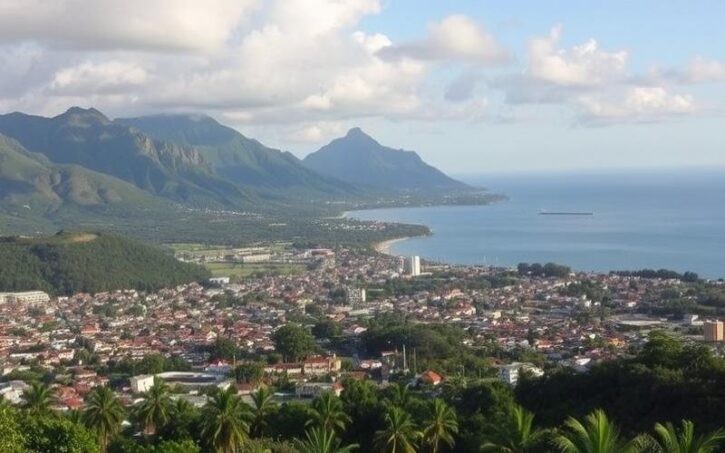
 Published on and written by Cyril Jarnias
Moving to Barbados is a dream: postcard-perfect beaches, year-round warm climate, welcoming population, and a relatively stable political environment. But behind the paradise image lies a much harsher budgetary reality. Barbados is one of the most expensive countries in the world, and among the priciest islands in the Caribbean. For an expatriate, living well there requires a solid budget, thorough preparation… and some strategies to avoid blowing your expenses.
This article details the cost of living in Barbados for expatriates, based on recent data from collaborative sources (Numbeo, Expatistan, Livingcost.org), official bodies, and expat testimonies.
Overview: A Paradise That Comes at a Price
Most international indexes agree: Barbados is significantly above the global average in terms of cost of living. According to several rankings, the country ranks around 40th–46th out of nearly 200 most expensive countries.
On average, the cost of living (excluding rent) is:
– approximately Bds$5,933 per month for a single person
– approximately Bds$12,094 for a family of four
Converted to U.S. dollars, this is roughly 2,500 USD per month for a single person and a little over 4,600 USD for a family of four, still excluding rent.
To situate Barbados relative to other countries, note that it is an independent island state located in the Caribbean. Comparatively, its land area is smaller than many countries, but its economic development and status as a parliamentary republic make it a notable example in the region.
| Comparison | Result |
|---|---|
| Compared to the United States (excluding rent) | Approximately 5–9% more expensive |
| Compared to the United States (with rent) | Approximately 13–16% cheaper |
| Compared to the global average | Approximately 1.19 times more expensive |
| Compared to the United Kingdom (housing) | Domestic costs are ~145% higher |
| Compared to the Dominican Republic | Approximately 1% more expensive |
| Compared to London | Bridgetown is ~50% cheaper |
| Compared to Newark (USA) | Bridgetown ~7% cheaper |
The Barbadian specificity is very pronounced: common goods and services are expensive, often twice as costly as in the United States, while housing is relatively more affordable than in major North American or European urban centers.
Another key piece of information for an expatriate planning to work locally: the local purchasing power remains limited. The average net salary is around Bds$2,300–2,400 (approximately 1,186 to 1,470 USD), barely enough to cover 1.1 months of “standard” expenses for one person. However, for a foreigner paid in hard currency (USD, EUR, CAD) and working remotely, the situation is more favorable.
Housing: The Category That Can Make or Break Your Budget
For an expatriate, the “housing” category can represent both the biggest expense… and the main source of savings compared to some Western countries. Rents are significantly lower than in major American, Canadian, or British cities, even though high-end properties come at a premium.
Rent Levels: Apartments and Houses
Recent data shows the following order of magnitude:
| Type of Housing | Location | Average Monthly Rent |
|---|---|---|
| Furnished 45 m² Studio | “Normal” Area | ~Bds$1,750 |
| Furnished 45 m² Studio | Expensive Area | ~Bds$4,000 |
| Furnished 85 m² Apartment | “Normal” Area | ~Bds$1,626 |
| Furnished 85 m² Apartment | Expensive Area | ~Bds$5,921 |
| 1 Bedroom, City Center | ~Bds$1,200–1,500 | |
| 1 Bedroom, Outside Center | ~Bds$1,000–1,300 | |
| 3 Bedrooms, City Center | ~Bds$3,400–3,600 | |
| 3 Bedrooms, Outside Center | ~Bds$2,500–2,800 |
In U.S. dollars, a one-bedroom apartment generally costs between 500 and 1,000 USD per month, and a three-bedroom unit runs around 1,100 to 3,250 USD, depending on location and standard. Houses follow the same logic: a three-bedroom house often ranges between Bds$2,500 and 5,000 (1,250 to 2,500 USD), while luxury villas, especially on the west coast, easily climb beyond Bds$8,000 (4,000+ USD) per month.
The areas favored by expatriates – Hastings, Worthing, St. Lawrence Gap on the south coast, Holetown on the west coast – have higher prices, especially during the peak tourist season (December–April) when rents and seasonal rentals spike.
Differences Between Towns and Areas
Bridgetown concentrates prices above the national average, while other regions (for example, some areas of St. Philip or the interior of the island) remain more affordable. Oistins, very popular for its “fish fry” nights and atmosphere, is among the more expensive spots.
The number of typical estimated monthly budgets including rent, to give an idea of expenses.
| Location | Profile | “Average” Monthly Budget | Tight Budget (Min) | Comfortable Budget (High) |
|---|---|---|---|---|
| Bridgetown | 1 Person | ~2,738 USD (with rent) | ~1,489 USD | ~5,461 USD |
| Bridgetown | Couple | ~3,873 USD | ~2,094 USD | ~7,651 USD |
| Bridgetown | Family of 4 | ~5,449 USD | ~2,969 USD | ~10,624 USD |
| Christ Church | 1 Person | ~3,253 USD | ~1,799 USD | ~5,743 USD |
| Christ Church | Couple | ~4,319 USD | ~2,406 USD | ~7,790 USD |
| Christ Church | Family of 4 | ~6,021 USD | ~3,370 USD | ~10,809 USD |
The gap between a minimalist budget and a comfortable lifestyle is considerable. A digital nomad living in a shared apartment or simple studio, cooking at home and traveling mainly by bus, can get by with much less than a family living in an air-conditioned villa, sending their children to private school, and regularly dining out.
Property Purchase: A High-End Investment
For expatriates considering buying, Barbados is in the very high-end Caribbean market. Prices generally run around 3,500 USD/m² for apartments in sought-after areas, with ranges from 2,024 to 3,500 USD/m² for city-center apartments. Beachfront villas on the west coast often start at 500,000 USD and go up very quickly.
The price per square foot is estimated at about Bds$650, both in the city center and in the suburbs, indicating a tight and homogeneous market. Foreigners can buy, but must obtain approval from the Central Bank of Barbados, which lengthens the process.
Utilities and Included Services
Most rentals intended for expatriates are furnished and fairly well equipped: refrigerator, stove, oven, microwave, dishwasher, washing machine, dryer. Air conditioning is sometimes present, but not systematically in all rooms.
Basic utility charges for a medium-sized apartment (85–90 m²) are often around Bds$250–320/month for electricity, water, and waste management, but can rise to Bds$400–500 if the air conditioning runs continuously. High-speed internet (60 Mbps or more, unlimited data) costs on average about Bds$120–130 per month, with a typical range of Bds$95 to 200.
There are also more modest packages: an 8 Mbps connection is around Bds$80/month. In some long-term rental cases, landlords and tenants agree on a utility cap, for example Bds$150 per month for water, electricity, TV, and internet.
Food and Groceries: The Real Price Shock
This is probably the category that most surprises newcomers. In Barbados, food products – especially imported ones – are noticeably more expensive than in most Western countries. Statistics indicate that supermarket shopping is about 55% more expensive than in the United States. Many expatriates complain of weekly grocery bills easily reaching Bds$400 for a couple, or even more for a family.
Typical Supermarket Prices
Here are some benchmark prices in Bds$ from the main chains (Massy, Jordans, Cost‑U‑Less, PriceSmart, etc.):
| Product | Average Price |
|---|---|
| Whole Milk 1 L | ~Bds$8 |
| White Bread (1 lb) | ~Bds$4.7–5.2 |
| White Rice (1 lb) | ~Bds$4.0–4.1 |
| Eggs (12, standard size) | ~Bds$11–15 |
| Chicken Fillets (1 lb) | ~Bds$10.5–11.9 |
| Beef (1 lb, round) | ~Bds$11.6–11.8 |
| Local Cheese (1 lb) | ~Bds$17.0–17.3 (or Bds$34 for 500g for some cheeses) |
| Apples (1 lb) | ~Bds$4.1–4.3 |
| Bananas (1 lb) | ~Bds$2.8–3.4 |
| Tomatoes (1 lb) | ~Bds$4.4–4.9 |
| Potatoes (1 lb) | ~Bds$3.1–5.0 |
| Water (1.5 L bottle) | ~Bds$4.7–5 |
| Mid-Range Wine (bottle) | ~Bds$29–32 |
| Local Beer (0.5 L, supermarket) | ~Bds$3.7–5.4 |
| Imported Beer (bottle) | ~Bds$6–7.4 |
| Coca‑Cola, 2 L | ~Bds$8 |
Converting to U.S. dollars, these amounts remain high: a kilo of tomatoes can exceed 8–9 USD, a liter of milk 4 USD, a dozen eggs 7–8 USD. Other data in USD confirms the extent of the phenomenon: about 3.60 USD for 1 liter of milk, nearly 12 USD for a kilo of chicken breast, almost 16 USD for a kilo of cheese.
A “minimum basket” calculation estimates that a person needs about Bds$21.7 to 27.4 per day for basic food, or Bds$670 to 850 per month. This is a theoretical minimum; an expatriate used to certain imported products (brand-name cereals, European cheeses, specific oils, snacks) will spend much more.
Particularly Expensive Products… and Some Good Deals
Several testimonies highlight the exorbitant cost of certain vegetables and imported products: zucchini at Bds$14/kg, broccoli at Bds$16/kg, imported avocados and fruits, brand-name sauces and dressings at 5 USD a bottle, high-end vegetable oils (extra-virgin olive oil at Bds$17–33 per bottle, canola oils at Bds$25–58).
Households of African origin also mention the scarcity – and cost – of products like gari or palm oil, sometimes unavailable outside small community networks.
Conversely, some local or regional products can reduce the bill: fresh fish (flying fish, marlin, “dolphin”/mahi‑mahi) often around 2.5 USD per pound directly from fishermen, local bread (“salt bread”), Barbadian onions or pumpkin.
How to Bring Down Your Food Bill
For an expatriate, the equation is simple: those who shop only in high-end supermarkets and buy a lot of imported products will pay very dearly. Several strategies emerge:
To reduce your food budget in Barbados, favor local markets like Cheapside Market in Bridgetown or roadside fruit and vegetable stalls, especially on Saturday mornings, where prices are often much lower than in supermarkets. Buy fish directly from fishermen or at coastal markets. Cook more at home, limiting prepared meals. For bulk purchases, turn to stores like Cost‑U‑Less or PriceSmart, which offer advantageous prices per liter or kilo. Finally, when allowed and cost-effective, consider bringing certain dry goods back in your luggage, like coffee, biscuits, cereals, or specific spices.
Also note that some residents don’t hesitate to make trips to the United States or Trinidad to buy in bulk and ship barrels of products, as the price difference can be significant despite transport costs.
Restaurants and Dining Out: From Very High-End… to Cheap Street Food
Barbados has a reputation for offering a very rich culinary scene, ranging from seaside fine dining restaurants to a multitude of local canteens, street stalls, and fish fries. The cost for an expatriate depends entirely on the frequency and style of dining out.
Restaurant Price Ranges
Available figures provide some benchmarks:
| Type of Meal | Typical Price (Bds$) | Comment |
|---|---|---|
| Simple Lunch Menu (business district) | ~Bds$35 | Main + drink |
| Cheap Restaurant Meal | Bds$20–80 (average ~Bds$40) | Roti, simple local meal |
| Fast-Food Meal (Chefette or equivalent) | ~Bds$20–22 | 8–10 USD |
| 3-Course Dinner for 2 (average restaurant) | Bds$120–225 (average ~Bds$200) | About 100 USD |
| Dinner for 2 in a neighborhood pub | ~Bds$95 | Meal + simple drinks |
| Dinner for 2 in an Italian in an expat area | ~Bds$275 | With wine |
| Cocktail in a downtown club | ~Bds$27 | |
| Cappuccino (expat area) | ~Bds$9–12 | |
| Beer in a pub (500 ml) | ~Bds$10 |
In U.S. dollars, this translates to bills of about 30 USD per person in a mid-range restaurant, and 100–150 USD for a dinner for two with cocktails in an upscale establishment. Iconic spots like west coast restaurants have prices comparable to major European capitals.
In Oistins, at barbecue stands like Just Grillin’ or street vans, you can find full plates (fish, rice, macaroni pie or sweet potatoes) for about Bds$15-20 (7-10 USD). These options are often considered to offer the best value for money for eating out regularly.
Alcoholic Drinks: Local vs. Imported
Drinks illustrate well the duality of Barbadian living costs. Local products, notably rum (Mount Gay, for example) and Banks beer, remain very affordable and of excellent quality, while imported spirits have high prices.
Some benchmarks:
| Drink | Average Price (Bds$) |
|---|---|
| Local Draft Beer (1 pint) | ~Bds$5 (restaurant) |
| Local Beer Bottle 0.5 L (supermarket) | ~Bds$4–5 |
| Imported Beer (bar, 12 oz) | ~Bds$6–8 |
| Imported Beer (supermarket) | ~Bds$7 |
| Mid-range Bottle of Wine | ~Bds$30 |
| Good Bottle of Table Red Wine | ~Bds$55 |
| Cocktail in a club | ~Bds$27 |
An expatriate fond of European wine or spirits will need to adjust their budget accordingly.
Transportation: Cheap Buses, Expensive Taxis and Cars
Mobility is another crucial item in an expatriate’s budget. The island isn’t huge, but the transport network is limited and a car is very often necessary once you move away from main roads.
The Bus: An Economical but Imperfect Solution
Public buses and minibuses are very cheap: a trip costs Bds$3.50 per person (approximately 1.75 USD) regardless of the distance. Some guides still mention Bds$2, but that rate is outdated.
The monthly public transport pass runs around Bds$52–140 depending on the plan and source, which remains well below North American or European fares. In comparison, a monthly transport subscription is about 60% cheaper than in the United States.
The flip side: the network remains limited, frequency is irregular on some routes, and several expatriates highlight the difficulty of relying solely on public transport, especially in the evening or for families.
Taxis: To Use With Caution
Taxis are significantly more expensive than in most major cities. The meter start (or base fare) is around Bds$25–35, much higher than in the US or Canada. A trip of about 9 km from the airport typically costs 24–28 USD. One hour of taxi waiting time costs about Bds$80.
The price per kilometer for a taxi can be 40% higher than the international average.
Personal Car: A Major Investment
Owning a car in Barbados is expensive, especially if you import your own vehicle. Customs duties, environmental levies, VAT, and excise taxes can increase the bill to up to 150–200% of the declared value of the vehicle. Even for cars bought locally, prices remain high due to import duties:
| New Vehicle | Average Price (Bds$) |
|---|---|
| Volkswagen Golf 1.4 TSI | ~Bds$80,000–90,000 |
| Toyota Corolla 1.6 | ~Bds$78,000–83,000 |
The main reason: import duties of around 45% on vehicles, excise taxes that can exceed 60% depending on engine size, and a 17.5% VAT, plus specific environmental fees. An example of an imported Nissan van shows a cumulative tax equivalent to over 80% of its CIF value, and for some powerful sedans, the total levies can reach 150%.
An expatriate spends about 100 Barbadian dollars on fuel every two weeks for a small 4×4.
Car rental isn’t cheap either: one couple mentions 353.77 USD for a one-week rental in high season, plus about 82 USD for gas. Finally, driving also involves some practical constraints: driving on the left, sometimes narrow and winding roads, and notorious rush hour traffic, noted by several residents.
Services, Health, Communication: Moderate Costs but to Anticipate Well
In some categories, Barbados is rather average for developed countries, or even below, which can partially compensate for the high cost of food.
Water, Electricity, Internet: Not Cheap, but Not Crazy
Utility bills depend hugely on air conditioning use. For an apartment of about 85 m² occupied by two people, average monthly expenses for electricity, water, and waste treatment run around Bds$250–320, with a very wide range (Bds$100–500) depending on habits. For a 45 m² studio occupied by one person, these charges remain just under Bds$300.
The price of electricity for households in Barbados is about Bds$0.66/kWh, or about 0.33 USD.
Fixed high-speed internet (60 Mbps or more, unlimited data) generally costs between Bds$95 and 220/month, averaging about Bds$120–130. Mobile plans with calls and over 10 GB of data are around Bds$99–116 per month, slightly below US prices.
Health: Affordable Care but Insurance is a Must
The Barbadian healthcare system is mixed, with a relatively accessible public sector and a more expensive private sector that offers shorter wait times and more modern equipment. For expatriates, the rule is simple: taking out private health insurance is highly recommended, especially as foreigners are generally not covered by universal care.
Some cost benchmarks:
| Service | Indicative Price (Bds$) |
|---|---|
| Short consultation with a private GP | ~Bds$180 |
| Cold medicine (6 days) | ~Bds$20 |
| Box of antibiotics (12 doses) | ~Bds$33 |
| Men’s haircut (expat area) | ~Bds$22 |
| Monthly mobile plan (10 GB+) | ~Bds$99 |
An annual full medical checkup cited by an expat comes to about 163 USD, a mammogram about 75 USD. Regarding insurance, expect between 150 and 300 USD per month per person for private international plans like Cigna, Allianz, AXA, IMG, or VUMI, often required for certain long-term visas (like the “Welcome Stamp” remote visa).
Phone, Housekeeping, Small Services
Daily services generally cost a bit more than in many countries but remain manageable within an overall hard-currency budget. Housekeeping per hour is charged around Bds$16, laundry (3 liters of detergent) about Bds$19, and a prepaid phone plan costs about Bds$0.73 per minute without promotions.
Education and Childcare: A Major Cost for Expat Families
Expatriate families planning to send their children to private or international schools must allocate a very significant budget to this item. Public education is free and of good quality for residents, but many foreigners opt for private or international schools for reasons of curriculum (British curriculum, IB, etc.) and educational continuity.
Daycare, Preschools, and Primary Schools
The average costs indicated by databases are as follows:
| Type of Institution | Average Cost |
|---|---|
| Private daycare/kindergarten (month, 1 child) | ~Bds$530 (~265 USD) |
| International primary school (year, 1 child) | ~Bds$14,833 (7,400–7,500 USD) |
Other private schools listed on the island have typical tuition fees ranging from Bds$1,200 to 2,700 per term, with variations depending on level and status (national, CARICOM, or international). For example, an Anglican school like St. Gabriel’s charges around Bds$2,600–3,600 per term per student, plus additional fees (capital contribution, supplies, activities).
This is the annual budget in dollars a family with two children in private primary school can spend on tuition, excluding additional fees.
Secondary and International Education
International institutions like The Codrington School, which offers the International Baccalaureate program, charge even higher fees, quoted in U.S. dollars:
| Level (Codrington) | Annual “Regular” Fees (USD) |
|---|---|
| PYP 1–2 (early primary) | ~11,094 USD |
| PYP 3–6 | ~13,730 USD |
| PYP 7–8 | ~14,300 USD |
| MYP1 – DP2 (middle/high school IB) | ~22,000 USD |
To this are added registration fees (400 USD), a reservation fee (1,050 USD), an admission fee (2,250 to 6,000 USD), as well as costs for additional language courses, learning support, IB Diploma exams (about 1,000 USD), etc.
For high-income families or those with expatriation packages, these amounts are manageable. For a self-employed couple or remote workers, they can represent a burden comparable to rent or the cost of food.
Leisure, Sports, and Entertainment: A Budget That Adds Up Quickly
Barbados offers many free outdoor activities – beaches, hiking, swimming – but as soon as you add organized excursions or subscriptions, the bill rises quickly.
Some price benchmarks:
| Activity / Service | Average Price (Bds$) |
|---|---|
| Gym membership (month) | Bds$142–160 |
| Tennis court rental (1 hr weekend) | ~Bds$22–32 |
| Movie ticket (international release) | ~Bds$20 |
| 2 movie tickets | ~Bds$40 |
| 2 theater tickets (best seats) | ~Bds$110 |
| Pack of Marlboro cigarettes (20) | ~Bds$18–20 |
Tourist excursions like Harrison’s Cave or St. Nicholas Abbey distillery often cost 60–65 USD per person, while catamaran cruises with lunch and snorkeling cost between 50 and 75 USD for 5 hours. For a family of four, two or three activities of this type per month quickly add up to several hundred dollars.
Comparisons with Other Countries and Caribbean Islands
To get an idea, it’s useful to compare Barbados with other popular expatriate destinations in the region.
| Country / Territory | Monthly Expenses 1 Person (excl. rent, USD) | Comment |
|---|---|---|
| Barbados | ~798 USD (estimate) | More expensive than most neighbors |
| Grenada | ~533 USD | |
| Dominica | ~508 USD | |
| St. Lucia | ~663 USD | |
| Dominican Republic | ~480 USD | |
| Bahamas | ~1,009 USD | More expensive than Barbados |
| Cayman Islands, US Virgin Islands | > Barbados | Very high-end |
We see that Barbados is in the high end of the Caribbean: less expensive than the Bahamas, the Cayman Islands, or the US Virgin Islands, but more expensive than most other tourist islands in the region.
For expatriates, Barbados offers a highly developed environment, good infrastructure, and political stability. However, the cost of living is high, particularly for imported goods.
Salary, Taxation, and Expatriate Purchasing Power
The average net salary in Barbados is, according to sources, around Bds$2,372 to 2,955 per month, or approximately 1,200–1,500 USD. This is significantly less than average North American or European incomes, which explains why local purchasing power is about 67% lower than in the United States.
For expatriates paid from abroad, this situation translates into a relative advantage: their income in hard currency retains its value in a context where rents are lower than in New York or London, even though groceries and services are expensive.
Income tax is progressive: 16% for income up to Bds$25,000, and a higher rate (about 28.5%) above that threshold, with a personal allowance for high incomes. Contributions to the National Insurance Scheme (NIS) are about 11% for the employee and 13% for the employer, providing entitlement to a pension and certain care within the public health system.
For remote workers on the “Welcome Stamp” visa, the situation is different: they are generally not taxed on their foreign income in Barbados, but in their country of fiscal residence, which can make the island more attractive despite its high internal prices.
Visas, Expatriate Status, and Administrative Costs
The immigration framework is a parameter to consider in the overall cost of living calculation. Obtaining certain visas or residence permits involves non-negligible fees.
The “Barbados Welcome Stamp” – a 12-month visa for remote workers – charges fees of 2,000 USD for an individual and 3,000 USD for a family. It also imposes a minimum annual income threshold of 50,000 USD from abroad and requires adequate health insurance.
The maximum cost of a permit combining permanent residence and work for wealthy or retired individuals in the Philippines.
Long-term leases (often one year or more) are favored by landlords, which implies a medium-term financial commitment. It is advisable to read rental contracts carefully and anticipate security deposits well.
Concrete Strategies to Manage Your Expatriate Budget
Facing a generally expensive environment, several levers can make life in Barbados more affordable for an expatriate, especially if they can adjust their lifestyle.
1. Optimize Your Housing
– Aim for apartments outside ultra-touristic zones, while remaining close to a bus route or shops;
– Prioritize 6–12 month leases over seasonal rentals, which are significantly more expensive per night;
– Choose a well-ventilated home to limit air conditioning, a major part of the electricity bill;
– Share a large house or apartment with other expatriates, which allows splitting rent, internet, and water costs.
2. Rethink Your Food Habits
– Dedicate a significant portion of meals to local products (fish, sweet potatoes, pumpkin, seasonal fruits) rather than imported goods;
– Do your fresh shopping at markets and roadside stalls rather than supermarkets, at least for fruits and vegetables;
– Cook at home and reserve “touristy” restaurants for special occasions;
– When possible and within customs regulations, plan to bring a small stock of favorite products from your home country.
3. Limit Transport Costs
– Use the public bus for simple trips, accepting a bit of discomfort and waiting;
– Reserve taxis for airport transfers or night outings;
– If a car is essential, consider buying a popular used car already on the island (Toyota, Nissan, Honda), rather than importing a personal vehicle subject to high taxes;
– Group outings and shopping trips to limit kilometers driven.
4. Anticipate Health and Education Expenses
– Subscribe to a solid international health insurance, also covering medical evacuation to a third country, integrating it into your monthly budget from the start;
– For families, research schools very early (fees, availability, curriculum) and check if the employer covers part of tuition costs;
– Use public healthcare when possible for basic care if you obtain a resident status that grants access, while keeping private care for cases requiring speed and comfort.
5. Enjoy What is Free or Cheap
– The beach, swimming, snorkeling near the shore, walks in the island’s interior are free;
– Barbadian social life revolves a lot around informal gatherings, neighborhood parties, and cultural events, often very affordable;
– Local bars and rum shops offer an authentic atmosphere at prices far below tourist hotels and clubs.
What is a Realistic Budget for an Expatriate in Barbados?
Expatriate testimonies indicate that some couples can live comfortably on an annual income of around 60,000 USD, especially if they don’t have dependent children in the international school system and adopt a reasonable lifestyle (long-term rental, frequent home cooking, modest car or heavy use of public transport).
Aggregated data suggests that: the trends observed in user behavior and preferences can have a significant impact on the strategic decision-making of companies.
Monthly budget in USD required for a family of four to maintain a comfortable standard of living abroad, excluding rent and private school tuition.
Barbados is therefore not a “cheap” destination for starting a new life in the sun. It is rather aimed at expatriates with comfortable incomes, corporate packages, or remote professionals paid at developed-country rates.
Conclusion: A Paradise That Demands Financially
Barbados combines many assets: ideal climate, overall safety superior to many countries, decent healthcare system, modern infrastructure, a well-established expatriate community, and a generally warm population. But this quality of life comes at the cost of high prices for goods and services, linked to dependence on imports, customs duties, and a relatively concentrated market.
Essential tips to properly prepare and manage your finances during your expatriation
Define a detailed budget by expense category: housing, food, transport, health, education, and leisure.
Analyze and understand cost of living gaps compared to your home country to adjust your expectations.
Quickly integrate some local practices to avoid unnecessary expenses and optimize your budget.
Those who settle with a stable income in hard currency, good health insurance, and a thoughtful approach to their spending can fully enjoy the Barbadian sweetness of life. For others, the Caribbean dream risks quickly turning into a budgetary disappointment. In Barbados, more than elsewhere, the sun is free, but almost everything else comes at a very high price.
Disclaimer: The information provided on this website is for informational purposes only and does not constitute financial, legal, or professional advice. We encourage you to consult qualified experts before making any investment, real estate, or expatriation decisions. Although we strive to maintain up-to-date and accurate information, we do not guarantee the completeness, accuracy, or timeliness of the proposed content. As investment and expatriation involve risks, we disclaim any liability for potential losses or damages arising from the use of this site. Your use of this site confirms your acceptance of these terms and your understanding of the associated risks.

Cyril Jarnias is an independent expert in international wealth management with over 20 years of experience. As an expatriate himself, he is dedicated to helping individuals and business leaders build, protect, and pass on their wealth with complete peace of mind.
On his website, cyriljarnias.com, he shares his expertise on international real estate, offshore company formation, and expatriation.
Thanks to his expertise, he offers sound advice to optimize his clients' wealth management. Cyril Jarnias is also recognized for his appearances in many prestigious media outlets such as BFM Business, les Français de l’étranger, Le Figaro, Les Echos, and Mieux vivre votre argent, where he shares his knowledge and know-how in wealth management.





