
 Published on and written by Cyril Jarnias
When choosing a new place to settle, many expatriates look towards Sydney, Melbourne, or Brisbane. Yet, more and more are setting down their suitcases a bit further south, in search of fresh air, nature, and a more relaxed pace of life: in Tasmania. The island state offers a rare combination of safety, a close-knit community, spectacular landscapes, and a cost of living that is still reasonable by Australian standards.
Not all towns and neighborhoods on the island are the same. Some offer skilled jobs, prestigious schools, and good healthcare services, while others provide a rural lifestyle, more affordable rents, and direct contact with nature. For an expatriate, this choice is therefore decisive for their settlement.
This article provides an overview of the most sought-after areas for newcomers – particularly expatriates – in Hobart, Launceston, and Tasmania’s main regions, based on data on prices, quality of life, transportation, infrastructure, and the job market.
Why Expatriates Choose Tasmania
The first thing that consistently comes up in testimonials from expatriates living on the island is the quality of life. The air is reputed to be the cleanest in the world, over a third of the territory is protected as national parks or World Heritage-listed areas, and the cities remain on a human scale, easy to navigate on foot, with a sense of safety that is rare even for Australia.
The average summer temperature in Hobart, Tasmania, is around 23 degrees Celsius.
In terms of daily life, typical expenses for a single person roughly range between 1,800 and 2,800 AUD per month in Hobart, including accommodation, depending on the desired standard and chosen neighborhood. A whole house rents for an average of around 550 AUD per week, a room in a shared house between 150 and 250 AUD. The weekly grocery bill is around 80 to 120 AUD, especially if you take advantage of farmers’ markets.
Tasmania’s cities offer a rich cultural life (museums, festivals, local cuisine) and immediate access to nature, with many activities like hiking, mountain biking, or surfing near urban areas.
For expatriates, another major advantage carries weight: all of Tasmania is considered “regional” in the Australian visa system. The island’s regions and towns therefore entitle applicants to additional points for certain visa categories (Subclass 190 and 491), which enhances the appeal of settling there long-term, especially for skilled profiles.
Hobart: The Cultural Heart and the “Premium” Neighborhoods for Expatriates
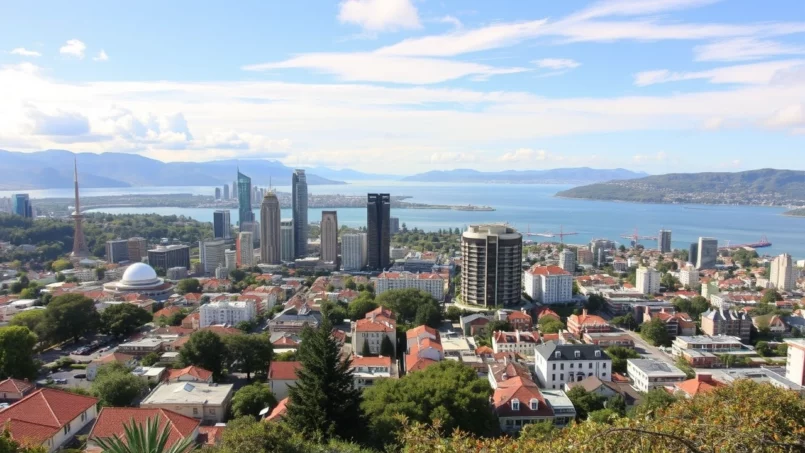
Capital of Tasmania and the state’s largest city, Hobart concentrates most of the economic activity, cultural institutions, events, and skilled service jobs. Situated between the Derwent River and the slopes of kunanyi / Mount Wellington, it offers spectacular topography: water views, hillside houses, historic sandstone neighborhoods, grand villas on the bay, or more modest subdivisions inland.
For expatriates, Hobart is often the natural entry point. Its real estate market is tight: the rental vacancy rate hovers around 0.4 to 0.6%, well below the equilibrium level of 3%, and the median house price is around 712,000–735,000 AUD, with units around 559,000 AUD. Rents for a house average around 600 AUD per week.
In this context, certain neighborhoods stand out clearly as the most coveted by newcomers, even at the cost of lower rental yields for investors.
Battery Point and Salamanca: Historic Charm and Dense Urban Life
Just below the city center, Battery Point perhaps embodies the most “postcard” image of Hobart. It is one of the city’s oldest neighborhoods, with its cobbled lanes and historic sandstone houses. Below it, Salamanca Place lines up former waterfront warehouses converted into cafes, restaurants, art galleries, and offices.
Together they form one of Tasmania’s cultural and nightlife hubs. Every Saturday, Salamanca Market, billed as Australia’s largest outdoor market, attracts up to 25,000 to 40,000 visitors around hundreds of stalls, and the old warehouses also house the Salamanca Arts Centre, a vast arts precinct bringing together artist studios, exhibition and performance spaces, visited annually by over 250,000 people.
For an expatriate seeking a dense, walkable urban lifestyle close to the arts and dining scene, this area is ideal. The long-term housing supply includes upscale residences (Salamanca Terraces, Salamanca Inn, Salamanca Suites). Rents and property values are high: median price of 710,000 to 735,000 AUD in Hobart CBD / inner suburbs, with annual growth of about 2.6%. However, gross rental yields are relatively low, around 3.5% to 3.6%, compared to outer areas.
This neighborhood mainly attracts executives on assignment, expatriates with a comfortable budget, or couples without children who accept high rent to live at the heart of the action and within a few minutes’ walk of offices, the waterfront, the ferry to MONA, and the city’s iconic events.
Sandy Bay: Upscale Residential, University, and Waterfront Living
Located just south of the center, Sandy Bay is one of Hobart’s most prestigious neighborhoods. Bordered by the Derwent, backed by the slopes of Mount Nelson, it combines waterfront villas with views, newer apartment buildings, beaches (Long Beach, Nutgrove, Red Chapel Beach), and many amenities. It is also home to the main campus of the University of Tasmania, making it an obvious base for expatriate teachers, researchers, or students.
The waterfront includes several yacht clubs (Royal Yacht Club of Tasmania, Derwent Sailing Squadron, rowing clubs), and the neighborhood offers a wide choice of reputable private schools, shops, cafes, banks, and services. The tree-lined streets, child-friendly beaches, and level of safety make it a highly sought-after area for expatriate families, as well as for “returning Tasmanians” and affluent retirees.
The downside is the prices: the most sought-after pockets, particularly the “golden mile” between Mawhera and Lipscombe Avenue on Sandy Bay Road, reach stratospheric levels. Sales of over 4.3–4.6 million AUD have been recorded for some waterfront properties. Rental yields here are therefore among the lowest in Hobart (around 3.0–3.6%), similar to Battery Point, but the area’s appeal remains strong for expatriates who prioritize lifestyle over rental returns.
West Hobart and South Hobart: Hillside Neighborhoods, Village Atmosphere
Perched on the slopes above the center, West Hobart and South Hobart are two neighborhoods highly appreciated by newcomers for their village atmosphere, local cafes, and proximity to nature. West Hobart overlooks the center with elevated houses offering spectacular views of the city and river, while remaining within walking distance of the CBD. It features parks, playgrounds, small schools, and a strong community feel.
South Hobart, nestled at the foot of kunanyi / Mount Wellington, is a picturesque and highly sought-after neighborhood, located just a few minutes’ drive from Hobart’s city center. It provides an immediate starting point for the hiking trails of Wellington Park. For an expatriate family, this area offers an excellent compromise: proximity to jobs and major healthcare facilities (like Hobart Private Hospital and Royal Hobart Hospital), quiet streets, a decent school network, and almost direct access to nature and the mountain.
Prices have naturally followed the enthusiasm: South Hobart, Hobart CBD, West Hobart, and North Hobart score high in quality-of-life rankings, with corresponding property values. On the western shore, New Town, Montagu Bay, and Glebe complete this string of highly sought-after residential neighborhoods, often with well-regarded schools and local shops.
Eastern Shore: Howrah, Bellerive, Lindisfarne, and Montagu Bay
On the other side of the Derwent, connected to the center by the Tasman and Bowen bridges, the Eastern Shore neighborhoods attract many expatriates seeking more space, water views, and a family-friendly environment without giving up reasonable access to the CBD.
Howrah, for example, is a bayside suburb with beaches, mountain views, a family atmosphere, and good road links. For units, data shows a median price around 605,000–607,500 AUD, with average annual growth of 8% over ten years and a rental yield close to 4.5%, which remains attractive given the scarcity of properties. Bellerive, its neighbor, is both a residential area and a sports hub (Bellerive Oval hosts cricket, among other sports), with units around a median price of 633,000 AUD and a yield close to 4.9%.
Lindisfarne follows a similar vein, with a median house price around 782,500 AUD, ten-year growth exceeding 7% per year, and a yield of 3.9%. Montagu Bay, Rosny, and Rose Bay round out this picture of a well-rated eastern fringe, combining bay views, schools, proximity to the Eastlands shopping center, and quick access to the CBD.
These neighborhoods form the core of the “upper middle class” suburbs on the eastern shore, favored by expatriates seeking a good compromise between prestige, schools, beaches, and reasonable commute times to the center.
Kingston, Blackmans Bay, and Kingston Beach: Family Life South of Hobart
About fifteen minutes south of the center via the Southern Outlet, Kingston and its coastal neighborhoods (Blackmans Bay, Kingston Beach) have become a preferred area for families, including expatriates. Kingston is a service hub with around 15,000 residents, a significant commercial base, and employment sectors in retail, health, and construction. The median house price there is around 650,000 AUD, which remains lower than some comparable neighborhoods in Hobart itself.
The Kingston Beach and Blackmans Bay neighborhoods offer a seaside, family-friendly atmosphere with accessible beaches, cafes, and schools. They are very highly rated for quality of life. Although road access to Hobart remains straightforward, one generally benefits from more space and larger gardens than in the city center.
For an expatriate with children, working, for example, in high-demand sectors (health, education, engineering) or for the local government (Kingborough Council), this area represents a logical choice: schools, facilities, housing still affordable by the capital’s standards, and a beach environment that promotes an active lifestyle.
More Affordable Suburbs: Glenorchy, Moonah, Rokeby and Co.
The price surge in historic and bayside neighborhoods is pushing some newcomers – especially those primarily seeking affordable rent – towards the more working-class northern and eastern suburbs. Glenorchy, Moonah, Claremont, Bridgewater, and Rokeby have thus become prime targets for investors seeking yield, with higher rents relative to purchase prices.
Moonah, for example, shows a median house price around 635,000 AUD, growth of about 8% per year over ten years, and a yield of 4.7%, with a vacancy rate below 1%. Rokeby, long perceived as challenging, remains one of Hobart’s most affordable segments with a median price of 590,000 AUD, average annual growth of 13% over ten years, and a yield around 5%. Risdon Vale, another eastern suburb, offers houses around 460,000 AUD, ten-year growth of 10%, and a yield close to 5.2%.
For an expatriate, these neighborhoods can be a realistic entry point when arriving without an unlimited budget, provided one accepts a more socially mixed environment and sometimes less developed amenities. Safety remains generally good by international standards, even if these areas face more socio-economic challenges than Battery Point or Sandy Bay.
Brief Comparison of Some Hobart Neighborhoods
| Neighborhood / Area | Dominant Profile | Median Price (Order of Magnitude) | Average Rental Yield | Key Attractions for Expatriates |
|---|---|---|---|---|
| Battery Point / Salamanca | Historic, High-End Urban | Very High (Several Million $) | ~3.0–3.5% | Cultural Life, Walkability, Restaurants, Market |
| Sandy Bay | Upscale Residential, UTAS | Very High | ~3.0–3.6% | Beaches, Private Schools, University, Yacht Clubs |
| West & South Hobart | Hills Close to Center | High | ~3.5–4.0% | Village Feel, Cafes, Mountain Access |
| Eastern Shore (Howrah, Bellerive, Lindisfarne) | Family-Oriented, Water Views | High but Varied | ~3.9–4.9% | Schools, Beaches, Views, CBD Access via Bridge |
| Kingston / Blackmans Bay / Kingston Beach | Family-Oriented, Seaside | Medium to High (~650k$) | ~4.0–4.5% | Good Price/Space Compromise, Beach Lifestyle |
| Moonah / Glenorchy / Rokeby / Risdon Vale | Working-Class, Investor-Focused | More Affordable | ~4.7–5.2% | More Accessible Rents, High Yield |
Launceston: The North’s “20-Minute City,” More Affordable and Foodie-Friendly
Tasmania’s second city, located at the confluence of the Esk and Tamar rivers, Launceston offers an attractive alternative to Hobart for expatriates seeking a lower cost of living while remaining in an urban setting with good infrastructure. With about 75,000–87,000 inhabitants, the city is large enough to offer a hospital, university, museums, restaurants, and cultural life, but compact enough to be crossed in about fifteen minutes.
The city is surrounded by hills, vineyards, and the Tamar Valley, with immediate access to major sites like Cataract Gorge, which is literally at the city’s doorstep. It is also recognized as a UNESCO City of Gastronomy, reflecting the importance of its culinary scene and farmers’ markets.
In terms of real estate, Launceston remains noticeably cheaper than Hobart. The median house price fluctuates around 460,000–550,000 AUD, well below the capital’s values. Rents for a one-bedroom apartment vary between 300 and 400 AUD per week, a three-bedroom house around 480 AUD. The rental vacancy rate has, however, dropped below 1–1.5%, a sign of increasing demand.
The Most Coveted Residential Neighborhoods Around the Center
Around the CBD, several neighborhoods tick the boxes sought by expatriates: good accessibility, schools, pleasant scenic setting, sense of safety.
Newstead is a leafy neighborhood highly popular with families, offering a strong concentration of quality schools like Scotch Oakburn College and Newstead College, parks such as Punchbowl Reserve, quiet streets, and immediate proximity to the city center. Expatriate forums frequently mention it as a preferred choice for settling with children.
East Launceston, very close to the CBD, is one of the city’s most prestigious areas. Its tree-lined streets, historic houses, and reputable schools (like Launceston Church Grammar School) make it the local equivalent of an upscale but residential neighborhood. Prices there are logically among Launceston’s highest but remain far below comparable areas in Hobart.
Trevallyn and West Launceston, perched on the hills west of the center, offer exceptional views over the city and river, direct access to Cataract Gorge, and a family atmosphere. West Launceston, in particular, is described as panoramic and still relatively affordable, with quick access to the center. Trevallyn attracts those who enjoy nature walks and trails while remaining a few minutes’ drive from offices.
Kings Meadows, just to the south, functions more as a commercial and service hub, with a very family-friendly atmosphere and a good network of schools. South Launceston, finally, mixes residential areas and health precincts, as it is home to Launceston General Hospital. For expatriates in the medical sector, it’s a very convenient location.
Family and Semi-Rural Suburbs: Norwood, Legana, Riverside, St Leonards
As one moves slightly away from the center, a second circle of neighborhoods attracts expatriates who prioritize space and greenery, even if it adds a few minutes’ drive to commutes.
Located about ten minutes from the city center, Norwood is an established community characterized by a very residential feel. The median age of about 47 indicates a population composed mainly of families and retirees. The neighborhood offers schools and services suited to daily life and enjoys a good perception of safety.
Riverside, along the Tamar, combines river views, more generous lots, schools (Riverside Primary and High School), a golf club, parks, and playgrounds. It’s one of the preferred areas for households with children wanting to combine water access, outdoor activities, and proximity to the center (a dozen minutes by car).
Legana, originally a semi-rural village about twelve kilometers north, is experiencing rapid growth. Its shopping center, primary school, and expanding infrastructure make it a target for young families seeking still attractive prices, a green environment, and good connection to Launceston. St Leonards, in a similar vein, offers a semi-rural setting with parks, river, a dog park, while maintaining reasonable access to the city.
Localities like Hadspen, Blackstone Heights, Relbia, or Longford, located 15–25 minutes from the city center, offer spacious properties, sometimes with river or vineyard views. Ideal for expatriates working remotely or those who don’t need to commute daily to the city center, they combine a rural quality of life with practical access to urban infrastructure.
Launceston for Expatriates: Advantages and Limitations
Launceston notably stands out for an extremely low average commute time: studies on commuting time indicate an average of about 13 minutes, the lowest in Australia for a city of this size. This compactness strengthens work-life balance, with more time to enjoy outdoor or family activities.
Employment is concentrated in health, education, retail, agri-tourism, and a growing tech sector. The city is home to the University of Tasmania (Newnham and Inveresk campuses), the Australian Maritime College, several hospitals, and research centers. However, for some specialized professions (market finance, big tech, etc.), opportunities may be more limited than in mainland metropolises.
For an expatriate, the city particularly suits those in the health, education, agri-food, engineering sectors, or those with remote jobs. The more moderate housing costs and the ability to quickly access the mountains, the north coast, or the Tamar Valley vineyards make it a popular base for families, active retirees, and those fleeing big cities without wanting to give up a minimum of urban life.
Comparison Table: Hobart vs Launceston for an Expatriate
| Criterion | Hobart | Launceston |
|---|---|---|
| City Size | ~213,000 inhabitants (greater area) | ~75,000–87,000 inhabitants |
| Role in the State | Capital, Political and Economic Center | Northern “Capital,” Regional Hub |
| Median House Price | ~712,000–735,000 AUD | ~460,000–550,000 AUD |
| 1-Bedroom Rent in Center | 420–500 AUD / week | 300–400 AUD / week |
| Climate & Environment | Sea, Mountain, Cultural Capital | Wine Valley, Gorges, Hills |
| Job Market | More Skilled Jobs | More Limited but Diversified |
| Average Commute Time | Low by Australian Standards | ~13 minutes (Very Low) |
| Cultural Life | Very Rich (MONA, Major Festivals) | Rich but on a Smaller Scale |
| Typical Expatriate Profile | Executives, Families, Students, Health | Families, Remote Workers, Health |
Regions and Small Towns: Rural Life, Softer Prices, and “Slow” Quality of Life
Beyond the two main cities, a large proportion of expatriates choose to settle in Tasmanian townships or small towns, drawn by the promise of a “tree change” (swapping the city for nature) or a “sea change” (moving to the coast). These places often offer lower property prices, a very quiet lifestyle, but also a more limited job market and sometimes restricted services.
Huonville and the Huon Valley: Tree Change South of Hobart
Huonville is the main town of the Huon Valley, south of Hobart, on the banks of the Huon River. With about 2,500 inhabitants, a median house price around 420,000 AUD, and economic sectors focused on agriculture, retail, and tourism, it represents a top destination for those seeking a nature-oriented lifestyle change.
The region attracts with its varied landscapes (vineyards, orchards, mountains like the Hartz Mountains), natural sites (Tahune Airwalk), and hiking trails (Mount Misery Trail). It also benefits from a dynamic food and wine scene, with producers such as Kate Hill Wines. Expatriates who settle there are mainly families or remote-working couples, as well as health or education professionals willing to live a reasonable driving distance from Hobart.
New Norfolk and the Derwent Valley: History and River
New Norfolk, a historic town on the Derwent River, west of Hobart, has about 5,500 inhabitants. Its median house price is around 465,000 AUD, significantly lower than suburbs close to the capital. Key sectors are health, tourism, and agriculture. The town maintains a district hospital, a community center, and basic services.
For expatriates, New Norfolk can function as a compromise between rural life and access to infrastructure: one benefits from the river, a tight-knit small community, a lower cost of living, while remaining connected to Hobart. It is also a gateway to the natural areas of southwest and central Tasmania.
Deloraine and the Island’s Center: Art, Craft, and Nature
Further inland, Deloraine stretches along the Meander River. With about 2,800 inhabitants, a median price of around 545,000 AUD, a Woolworths, and an active arts scene (Tasmanian Craft Fair, Yarns Artwork in Silk, Art as Mania galleries), the town attracts a mix of artisans, retirees, and newcomers seeking a tranquil lifestyle. Located half an hour from Launceston, it offers reasonable access to services while remaining deeply rural.
Again, expatriates who settle here are often remote workers, artists, farmers, or people looking for a peaceful environment, far from the real estate pressure of big cities but with a creative community.
Northwest and West Coast: Between Sea, Mines, and Unbeatable Rents
On the northwest coast, towns like Devonport, Burnie, Penguin, Wynyard, or Sheffield offer a range of lifestyles at attractive prices. Devonport, a town of 25,000 where the Spirit of Tasmania ferry arrives, combines a median price around 385,000 AUD, industries in commerce, health, manufacturing, and a tight-knit community. Burnie, more industrial, has an even lower median price (around 340,000 AUD) and serves as a gateway to coastal life with a regional hospital and museum.
Localities like Penguin (a very photogenic coastal town with a food culture and mountain biking/hiking trails) or Wynyard (a quiet seaside resort with an airport, supermarkets, and many retirees) attract expatriates seeking a budget-conscious “sea change”.
The median house price in Queenstown, Tasmania, one of the state’s most affordable areas.
East Coast and Small Seaside Towns: Beauty and Constraints
On the east coast, villages like St Helens (the largest town on this coast), Bicheno, Swansea, or Bridport are sometimes spotted by expatriates drawn to their sublime beaches, their sunnier climate – the east coast is nicknamed “Sun Coast” – and their permanent vacation atmosphere. But these areas often suffer from limited services (lack of high schools or hospitals, few supermarkets limited to more expensive IGAs) and a restricted job market, especially outside of tourism and agriculture.
Rents and property prices are also higher here than in the west or northwest: Bicheno, for example, has a median house price around 470,000 AUD, with barely 900 inhabitants. They are therefore ideal destinations for professionally independent expatriates (remote work, retirement, tourism entrepreneurs), but more challenging for families dependent on salaried jobs.
Examples of Median Prices in Some Small Towns (Order of Magnitude)
| Town / Region | Tasmania Region | Approx. Population | Median House Price (AUD) | Main Economic Sectors |
|---|---|---|---|---|
| Huonville | South (Huon Valley) | ~2,500 | ~420,000 | Agriculture, Tourism, Commerce |
| New Norfolk | Derwent Valley | ~5,500 | ~465,000 | Health, Agriculture, Tourism |
| Deloraine | Central | ~2,800 | ~545,000 | Arts, Tourism, Agriculture |
| Devonport | Northwest | ~25,000 | ~385,000 | Commerce, Health, Industry |
| Burnie | Northwest | ~20,000 | ~340,000 | Industry, Agriculture, Commerce |
| Bicheno | East Coast | ~900 | ~470,000 | Tourism, Fishing, Agriculture |
| Queenstown | West | ~? (small town) | ~170,000 | Mining, Tourism |
| Rosebery | West | — | ~188,000 | Mining, Tourism |
Housing Costs and Trade-offs for Expatriates
Across Tasmania, housing is the main adjustment variable for an expatriate. The state remains more affordable than Sydney or Melbourne, but real estate pressure has increased significantly in recent years, with average price growth of about 5% per year over the past decade, and rents rising faster than wages.
In Hobart, rents for a one-bedroom apartment in the city center range between 420 and 500 AUD per week, compared to 300–400 AUD in Launceston, and 250–350 AUD in regional towns like Devonport or Burnie. A three-bedroom house often rents for around 550–640 AUD in Hobart, and about 480 AUD in Launceston.
Electricity, water, and gas bills for a standard home in Australia typically range from 150 to 250 AUD per month.
Expatriates must factor in that the rental vacancy rate in the state is extremely low (often between 0.5 and 1.3%). In Hobart, it falls to around 0.4%. Rental properties go quickly, sometimes even before an ad is published. Some agencies even require an in-person inspection before signing a lease, which complicates remote renting. A common strategy is to initially book vacation accommodation or a serviced apartment in a target neighborhood (e.g., Salamanca, Sandy Bay, or New Town in Hobart), then organize viewings once on site.
The overall median property price in Tasmania is about 572,000 AUD, with a notable gap between the state’s north and south.
Work, Visas, and Region Choice
For an expatriate, the choice of a neighborhood or town cannot be made without considering the job market and the migration framework. As Tasmania is entirely classified as a regional area, it offers preferred pathways for skilled work visas, notably the Subclass 190 (Skilled Nominated) and 491 (Skilled Work Regional) visas, with additional points when nominated by the state.
High-demand sectors in Tasmania are health (doctors, nurses, dentists), education (teachers), construction, specialized agriculture, and certain engineering or IT roles. For maximum priority in some nomination pathways, an annual salary of at least 57,000 AUD may be required. Job opportunities are more concentrated in cities like Hobart and Launceston, as well as regional centers like Devonport and Burnie, rather than in small coastal towns or inland villages.
For self-employed workers, remote workers, or retirees, the map is more open: the choice of neighborhood then depends more heavily on budget, the desired lifestyle (city, country, sea, mountain), and essential services (access to a hospital, schools for children, reliable internet).
Practical Tips for Choosing Your Neighborhood in Tasmania
Beyond the numbers, some practical elements regularly appear in expatriate feedback:
First, it is important to honestly assess one’s dependence on certain services. A family with young children and no car would do well to prioritize an urban or suburban neighborhood well served by schools, shops, and accessible hospitals: for example, Sandy Bay, New Town, West Hobart, South Launceston, Newstead, or Riverside. Conversely, a remote-working couple without children could more serenely consider a village in the Huon Valley, Deloraine, or a small town on the north coast.
Before settling, it is crucial to evaluate the job market in Tasmania. Although opportunities exist in sectors like health, education, agriculture, and tourism, the market is more limited than on the Australian mainland. It is highly recommended to secure a job offer before your arrival, or failing that, to define a clear job search strategy. This precaution is all the more important as some visa types require a minimum duration of employment on site.
Transportation should not be underestimated. The island has no trains or trams: most travel relies on private cars, buses, and, in Hobart, a peak-hour ferry service. For an expatriate without a car, living within walking distance of shops and bus stops becomes critical, especially in winter. Cities like Hobart and Launceston remain very walkable in their centers, with relatively low average commute times, which partly compensates for the lack of rail.
The welcome is warm, but integration requires a proactive approach. To build connections, it is advisable to settle in neighborhoods with a strong local life like Battery Point, North Hobart, Salamanca, Newstead, West Launceston, Devonport, or Penguin. These areas, with their markets, associations, cafes, sports clubs, and community houses, facilitate meeting people and immersion in the community.
Conclusion: Several Tasmanias for Several Expatriate Profiles
Discussing the neighborhoods most favored by expatriates in Tasmania is not about designating a single “hotspot” where everyone should settle, but rather mapping types of places suited to different life projects.
Hobart stands out as the destination for those wanting the best access to skilled jobs, cultural life, and services, with flagship neighborhoods like Battery Point, Salamanca, Sandy Bay, West Hobart, South Hobart, and the Eastern Shore (Howrah, Bellerive, Lindisfarne, etc.), complemented by more affordable options to the north and east (Moonah, Glenorchy, Rokeby, Risdon Vale).
Launceston is a financially accessible and compact city, particularly attractive for families and remote workers. It allows access to more spacious homes, very short commute times, and benefits from a good educational offering. Recommended neighborhoods include Newstead, East Launceston, West Launceston, Trevallyn, Riverside, Legana, and Norwood.
Small towns and regions – Huonville, New Norfolk, Deloraine, Devonport, Burnie, Penguin, Wynyard, St Helens, Bicheno, Queenstown, or Rosebery – constitute an archipelago of possibilities for those betting on a radical lifestyle change, nature-oriented, with significantly lower housing costs but sometimes limited services.
A daily life where nature is always less than an hour’s drive away, where cities remain on a human scale, where commute time doesn’t absorb half the day, and where, even in the most urban neighborhoods, the night sky reminds you that you are indeed living on an island at the edge of the world. For expatriates ready to contend with a tight housing market and a more modest economy, Tasmania offers a palette of neighborhoods to explore, each embodying that work-life balance attracting newcomers from all over the world.
Description of Tasmania for Expatriates
Disclaimer: The information provided on this website is for informational purposes only and does not constitute financial, legal, or professional advice. We encourage you to consult qualified experts before making any investment, real estate, or expatriation decisions. Although we strive to maintain up-to-date and accurate information, we do not guarantee the completeness, accuracy, or timeliness of the proposed content. As investment and expatriation involve risks, we disclaim any liability for potential losses or damages arising from the use of this site. Your use of this site confirms your acceptance of these terms and your understanding of the associated risks.

Cyril Jarnias is an independent expert in international wealth management with over 20 years of experience. As an expatriate himself, he is dedicated to helping individuals and business leaders build, protect, and pass on their wealth with complete peace of mind.
On his website, cyriljarnias.com, he shares his expertise on international real estate, offshore company formation, and expatriation.
Thanks to his expertise, he offers sound advice to optimize his clients' wealth management. Cyril Jarnias is also recognized for his appearances in many prestigious media outlets such as BFM Business, les Français de l’étranger, Le Figaro, Les Echos, and Mieux vivre votre argent, where he shares his knowledge and know-how in wealth management.





