
 Published on and written by Cyril Jarnias
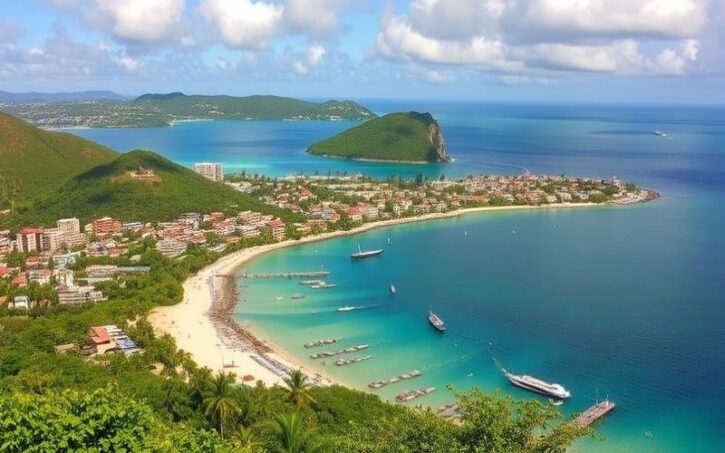
Moving to Trinidad and Tobago means choosing a Caribbean country that is at once an oil producer, multicultural, English-speaking, and sunny year-round. Between the skyscrapers of Port of Spain, the beachfront villas of Westmoorings, the beaches of Tobago, and “liming” evenings with friends, the lifestyle is attracting more and more professionals, families, and digital nomads.
A successful move requires a solid understanding of several key aspects: the job market, cost of living, safety, healthcare system, taxation, and the procedures for obtaining a work permit. This guide provides the essential benchmarks to prepare for your project with full knowledge of the facts.
Understanding the country before you go
Trinidad and Tobago is a parliamentary republic of 1.3 to 1.5 million inhabitants, composed of two main islands: Trinidad, the larger and more industrialized one, and Tobago, smaller, quieter, and very focused on beach tourism. The capital, Port of Spain, is on Trinidad.
English is the official and working language, although Trinidadian and Tobagonian English Creole dominates daily life. This linguistic ease is one of the country’s major assets for French-speaking expatriates already comfortable in English.
The country is famously multicultural, with a majority of descendants of Africans and Indians, as well as European, Chinese, Lebanese, Portuguese, and indigenous communities. This diversity is reflected in the practiced religions (Christianity, Hinduism, Islam, Afro-Caribbean faiths) and in a rich culture where artistic expressions like calypso, soca, and steelpan coexist, along with celebrations such as Divali, Eid, Christmas, and the famous Carnival.
The climate is tropical, with two distinct seasons: a dry season (January to May) and a rainy season (June to December). Temperatures remain stable between about 24 and 31°C (75–88°F), and daylight hours vary little as the country is close to the equator. Geographically, the islands lie south of the main hurricane belt, which limits, without completely excluding, the direct impacts of cyclones compared to other Caribbean territories.
Where to live: cities, neighborhoods, and atmospheres
One of the first major choices for an expatriate is their place of residence. Trinidad offers more of an urban and professional lifestyle, Tobago a beach and more relaxed vibe. Even within Trinidad, the neighborhoods favored by expatriates have very contrasting profiles.
Major urban areas to know
Trinidad concentrates the majority of the population and economic activity. Port of Spain is the political and financial heart, San Fernando an industrial hub in the south, Chaguanas a major commercial center in the island’s center, Arima an eastern town near the airport and the Northern Range mountains. Scarborough is the capital of Tobago.
A quick overview helps to get oriented:
| City / Region | Island | General Profile | Highlights for Expatriates |
|---|---|---|---|
| Port of Spain | Trinidad | Bustling capital, business and cultural center | Popular residential neighborhoods nearby, nightlife |
| San Fernando | Trinidad | Southern industrial hub, hilly terrain | Good compromise for industry managers |
| Chaguanas | Trinidad | Central commercial city | Easy access to malls, family housing |
| Arima | Trinidad | Eastern town near airport and nature | Interesting for commuters and hiking lovers |
| Scarborough | Tobago | Capital of Tobago, mid-sized town | Great beaches and calmer island life |
Popular neighborhoods around Port of Spain
Around the capital, several neighborhoods and suburbs are consistently recommended for expatriates, particularly those offering a good level of safety, international schools, and convenient access to business centers.
We can summarize their main characteristics as follows:
| Neighborhood / Area | Profile & Key Strengths |
|---|---|
| Westmoorings | Very upscale waterfront, villas with pools, West Mall, International School of Port of Spain |
| Goodwood Park | Gated community overlooking the sea, large properties, near the Yacht Club |
| Glencoe | Hillside with views of the Gulf of Paria, neighbors Westmoorings and Goodwood Park |
| Maraval / Moka | Green valley in the northwest, golf courses, upscale homes, relatively close to Maracas Bay |
| Cascade | Chic hillside neighborhood, near the Queen’s Park Savannah and botanical gardens |
| St. Ann’s | Residential/commercial mix, near the “Magnificent Seven”, the zoo, and Queen’s Hall |
| St. Clair / Federation Park | Very affluent sectors, embassies, large mansions, immediate proximity to downtown and Queen’s Park |
| Woodbrook / St. James | Lively neighborhood life, bars, restaurants, strong nightlife, on the Carnival route |
| Diego Martin / Petit Valley | Urban-suburban mix, variety of housing, highway access |
| Valsayn / Trincity | Eastern suburbs with gated communities, large malls (Trincity Mall, Valpark) |
Westmoorings, Goodwood Park, Glencoe, Moka, St. Clair, and Federation Park are often chosen by diplomats, senior executives, and families seeking maximum safety, comfort, and services (private pool, security, proximity to international schools). Woodbrook and St. James, on the other hand, attract more young professionals looking for an urban vibe, restaurants, and a rich nightlife.
Living in Tobago: a different atmosphere
Tobago offers a slower pace and a more preserved environment than Trinidad. Several areas are appreciated by expatriates or semi-residents:
| Area in Tobago | Characteristics for Expatriates |
|---|---|
| Tobago Plantations | Upscale residential estate with golf, beachfront villas and townhouses |
| Crown Point | Near the airport and Store Bay / Pigeon Point beaches, many restaurants and bars |
| Buccoo | Lively village (famous Sunday School party), direct access to Buccoo Reef |
| Castara | Picturesque small fishing village, community atmosphere and very peaceful |
| Scarborough | Capital of Tobago, basic urban services, road access to the rest of the island |
Rents are generally lower in Tobago than in Trinidad, but one must accept a more limited medical offering, more frequent water and power outages, and a more restricted job market if not working remotely or in tourism.
Real estate market and rental costs
The rental market is dynamic but fairly unregulated. Rents depend heavily on the neighborhood, accessibility, and level of safety. Most expatriates rent rather than buy, at least for the first few years.
Rental price ranges
Available data provides a good range of prices for Port of Spain and a few major cities:
| Type of Accommodation | Area | Approximate Monthly Rent (TT$) | Rough Equivalent (USD) |
|---|---|---|---|
| Furnished 45 m² studio, average area | Nationwide (average) | ~2,987 | ~441 |
| Furnished 45 m² studio, expensive area | Nationwide | ~5,701 | ~841 |
| 1-bedroom downtown (Port of Spain) | Center | 3,500 – 6,000 | ~515 – 880 |
| 1-bedroom outside center | Suburb | 2,000 – 4,000 | ~295 – 590 |
| 3-bedroom downtown (Port of Spain) | Center | 6,000 – 10,000 | ~880 – 1,470 |
| 3-bedroom outside center | Suburb | 4,000 – 7,000 | ~590 – 1,030 |
| 85 m² apartment, expensive area | Nationwide | ~7,229 | ~1,067 |
| 85 m² apartment, “average” area | Nationwide | ~3,899 | ~576 |
| Diego Martin – apartment | Diego Martin | 3,000 – 8,000 | |
| Diego Martin – house | Diego Martin | 6,000 – 15,000+ | |
| San Fernando – apartment | San Fernando | 2,500 – 7,500 | |
| San Fernando – house | San Fernando | 5,000 – 12,000 |
For the most sought-after neighborhoods by expatriates (Westmoorings, Goodwood Park, Maraval, Moka, Cascade, St. Ann’s, St. Clair, Federation Park), monthly rents often range from 4,000 to 6,000 USD for high-end houses or apartments with a pool and enhanced security. Examples of rents in dollars show:
The maximum monthly rent for housing in Trinidad can reach 6,500 USD for a 4-bedroom house with a pool in Westmoorings or a well-equipped apartment in certain neighborhoods.
The closure of a major refinery in the past led to the departure of many expatriates and a decline in high-end rents; prices are therefore more negotiable than during the peak oil boom era.
Lease types, deposits, and practices
One-year leases are the norm, but shorter terms (3 to 6 months) or longer ones (1 to 2 years) can be negotiated. The usual items to budget for are:
When signing a rental lease, you generally need to provide a security deposit equivalent to one or two months’ rent, refundable at the end of the contract if the final inspection is satisfactory. The first month’s rent is also payable upon signing. In some cases, an additional deposit for water or electricity meters may be requested.
Properties may be fully furnished or not. Unfurnished apartments typically already include major appliances (refrigerator, stove, washing machine). Furnished properties also include furniture, sometimes linens and dishes, but at a higher rent.
The law tends to favor landlords over tenants, and disputes can take a long time to be resolved in court. Careful review of the contract—ideally by a local lawyer—is therefore recommended to clarify duration, early termination terms, rent escalation, repairs for which the tenant or landlord is responsible, potential subletting prohibitions, etc.
Cost of living: what budget to plan for?
The standard of living in Trinidad and Tobago is generally lower than in the United States or the United Kingdom. Some estimates indicate a cost of living about 55% lower than in the USA, although the capital remains the most expensive part of the country.
Indicative monthly budget
Several sources provide a sense of the range:
– single person: approximately 10,245 TT$ per month (about 1,500 USD), excluding rent, with rent around 600 to 650 USD,
– family of four: approximately 24,332 TT$ (about 3,600 USD), excluding rent, with rent around 1,900 USD.
For a single expatriate, a comfortable budget would often range between 1,500 and 2,000 USD per month (excluding very high-end housing). For a family, it all depends on the rent level (expat-friendly property, house with pool, very secure neighborhood, etc.), but many households fall between 5,000 and 10,000 USD all-inclusive.
An example of a spending breakdown in Trinidad and Tobago dollars (TT$) for a family of three, covering main expenses like housing, food, transportation, and utilities.
| Expense Category | Typical Monthly Range (TT$) |
|---|---|
| Rent for family house | 5,000 – 10,000 |
| Food for 3 people | 3,000 – 4,000 |
| Electricity (with A/C) | 400 – 800 |
| Fuel (short commutes) | 400 – 600 |
| TV + Internet | ~500 |
| Mobile phone (per line) | ~150 + ~200 for data |
On top of this are tuition fees for international schools, private health insurance, a car (often expensive to purchase), and leisure activities.
Groceries, restaurants, and daily life
Local food and basic products remain relatively affordable, but anything imported (European cheeses, wines, organic products, electronics, vehicles, furniture) faces customs duties and becomes expensive.
Some price benchmarks in TT$:
– simple meal in an inexpensive restaurant: 60 to 68 TT$,
– fast food meal (e.g., combo): 50 to 60 TT$,
– dinner for two at a mid-range restaurant: 373 to 500 TT$,
– local beer at a bar (pint): 12 to 25 TT$,
– cappuccino: 24 to 30 TT$,
– white bread (500g): 14 to 15 TT$,
– dozen eggs: 28 to 39 TT$,
– chicken (500g of breast): ~36 TT$.
The range of products varies considerably depending on the type of store: modern supermarkets (like Massy), shopping malls (West Mall, Gulf City Mall, Trincity Mall, Valpark), or popular markets. Expatriates can generally find most international products there, but at higher prices than in their home country.
High-speed Internet subscriptions (fiber or cable) range, depending on speed, from about 171 to over 370 TT$ per month. Mobile plans with calls and 10 GB of data cost around 300 TT$ monthly.
Transportation and getting around
Public transportation is inexpensive but sometimes disorganized: public buses, maxi-taxis (shared minibuses), route taxis. A single trip on public transport generally costs 5 to 9 TT$. A monthly public transport pass can range between 400 and 685 TT$.
In practice, many expatriates prefer to have a personal car, despite the high price of vehicles (a new compact car can approach 230,000 to 260,000 TT$). Gasoline, however, remains relatively cheap (around 6 to 7 TT$ per liter).
Safety and choosing a neighborhood
The issue of safety is crucial in Trinidad and Tobago. The country has a high crime level, particularly in some working-class neighborhoods primarily affected by gangs. Expatriates are not the primary targets, but they must apply constant rules of caution.
One safety assessment mentions an overall safety index around 43/100, with risks rated as “high” for theft, assaults, scams, and risks for female solo travelers. Crimes range from pickpocketing during Carnival to home burglaries, carjackings, and armed robberies.
In broad terms:
Certain areas of Trinidad and Tobago, notably Laventille, Beetham, Sea Lots, Morvant, Cocorite north of the Western Main Road, as well as parts of Carenage and downtown Port of Spain, are strongly discouraged. For your safety, it is recommended to avoid isolated areas at night, not to walk alone in poorly lit neighborhoods, to limit outward displays of wealth, and to use reliable taxis or drivers.
This is one of the major reasons why so many expatriates choose gated communities or high-end neighborhoods with fences, alarms, gates, cameras, and sometimes private security patrols. Houses are often equipped with metal bars on windows and doors, which can be surprising at first but is part of the urban landscape.
As a rule, the combination of “good neighborhood + properly secured home + prudent habits” allows for peaceful living, while maintaining vigilance similar to what one would adopt in certain large American or Latin American cities.
Healthcare system: public, private, and insurance
Trinidad and Tobago has a two-tier healthcare system: a public sector, accessible to all and state-funded, and a private sector that is more modern, faster, but fee-paying.
Public hospitals and basic care
The Ministry of Health oversees a network of 12 public hospitals, 98 health centers, and 5 district health facilities. Primary care there is largely free for everyone, including foreigners (consultations at Health Centres, emergency services). However:
Certain medications are provided free of charge, but others, like insulin, may not be covered. The quality of care and waiting times may evoke Western standards from the 1970s—neither archaic nor equivalent to the best North American hospitals. Specialist consultations and major examinations often involve significant delays.
Major public hospitals include notably the Port of Spain General Hospital, San Fernando General Hospital, Sangre Grande Hospital, the Eric Williams Medical Sciences Complex (including the pediatric Wendy Fitzwilliam Hospital), and Scarborough General Hospital in Tobago.
Private hospitals and clinics
Many expatriates favor the private sector to reduce wait times and benefit from more modern equipment. You’ll find establishments like West Shore Medical Private Hospital, St. Augustine Private Hospital, Southern Medical Clinic (San Fernando), Gulf View Medical Centre, as well as specialized centers (cardiology, oncology, ophthalmology).
Private clinics generally require immediate payment (cash or card) before initiating certain treatments, especially surgical ones. For very serious cases (complex cancer, major heart surgery…), a medical transfer to Miami or another destination may be considered.
Hence the crucial importance, for an expatriate, to subscribe to an international health insurance covering:
– hospitalization in local private clinics,
– major expenses (imaging, surgery, maternity, etc.),
– medical evacuation and possibly medical repatriation.
Several international insurers are present (Cigna Global, Allianz, AXA, William Russell…) along with local players (Sagicor, Guardian Life, Colonial Life). Expatriates often prefer international plans, better suited to mobility.
Work, permits, and the job market
The economy of Trinidad and Tobago is classified as a high-income economy, driven by the oil industry, natural gas, petrochemicals, but also finance, electronics, tourism, and progressively services and tech. The local workforce is well-trained, which means authorities issue work permits only for skills not readily available locally.
Obtaining a work permit
Any foreigner coming to work for more than 30 days within a 12-month period needs a work permit. This permit:
– is tied to a specific employer and a defined position,
– is generally requested by the company from the Ministry of National Security (Work Permit Secretariat),
– is in principle granted for a maximum duration of three years, renewable under conditions.
The process is essentially as follows:
Key steps for a registered employer to obtain a work permit for a foreign national.
The employer submits an application via the TTBizLink platform (or a form for group applications of 10 permits or more) justifying the need for a foreign worker.
The candidate provides the required documents: passport, photos, diplomas, professional references, police record, employment contract, and health insurance.
Fees are paid online or at the ministry counter in Port of Spain.
After a processing time of 4 to 10 weeks, a decision is made on the permit grant.
If the permit is granted, the holder and their dependents must have a multiple-entry visa placed in their passport (except for exemptions for certain countries).
Fees vary by permit type, but examples include: driver’s licenses, work permits, and resident permits.
– temporary permit: 1,000 TT$,
– skilled work permit: 2,000 TT$,
– another source mentions a cost of about 1,770 USD for a standard permit, illustrating that exact amounts depend on current regulations and category.
Faced with the frequent complexity and administrative slowness, it’s crucial to stay calm, anticipate procedures, and submit complete dossiers from the first submission to avoid additional delays.
Job market for expatriates
The sectors most likely to hire expatriates are:
– energy (oil and gas, engineering, highly specialized roles),
– finance and certain corporate services,
– electronics, technology, IT,
– tourism and hospitality (especially in Tobago),
– education (international schools, universities).
Opportunities are often found through networking: recommendations, professional contacts, expatriate communities, specialized platforms. Personal relationships are very important in the local business culture. Companies may also use “Employer of Record” firms to manage payroll and compliance for international staff.
For digital nomads, there is no specific visa yet. They typically combine tourist visas, short-term work permits (less than 30 days of actual work per year), or settle with a hybrid status to be handled with legal caution.
Taxation: what an expatriate needs to know
Trinidadian taxation is based on a few clear principles.
Tax residency and rates
A person is considered tax resident if they stay in the country for more than 183 days in a calendar year. Residents (or “ordinarily resident”) are taxed on their worldwide income if it is repatriated to the country, while non-residents are taxed only on Trinidadian-source income.
The current personal income tax rates are, in simplified terms:
– 25% on taxable income up to 1 million TT$,
– 30% on income over 1 million TT$.
A personal allowance is provided (over 80,000 TT$ per year for a resident, with a scheduled increase to 90,000 TT$), which reduces tax for modest incomes. Other deductions exist (pension contributions, insurance, union dues, certain loan interest, etc.).
Self-employed individuals may be subject to a “business levy,” a charge on turnover above a certain revenue threshold. This levy applies if it is higher than the income tax calculated in the conventional way.
Interest, dividends, and capital gains
Several types of income are exempt for residents:
– interest on savings accounts or deposits with local financial institutions,
– dividends (excluding preference shares) from resident companies,
– distributions from local mutual funds.
Long-term capital gains are not taxed, unless a so-called “taxable” asset is sold within 12 months of acquisition. Gains from the sale of certain assets (personal car, primary residence below a certain value threshold) are also outside the tax net.
Withholding tax rate applicable to non-residents on certain income such as interest, royalties, and management fees.
Expatriates must absolutely register with the tax authority (Inland Revenue Division) and obtain a tax number (BIR number). Taxes on salaries are withheld at source (PAYE). Self-employed individuals pay quarterly installments and settle annually.
US citizens and green card holders must, in parallel, continue to fulfill their tax obligations to the IRS, potentially taking Trinidadian taxes into account as a foreign tax credit.
Education: public and international schools
Trinidad and Tobago boasts a good education level and a high literacy rate. Public education is free from ages 5 to 18, and schooling is compulsory from 5 to 16. In addition to the public network and faith-based schools, there are several international institutions, mostly around Port of Spain, highly sought after by expatriate families.
The main international schools
The following points allow comparison of major options for an English-language education aligned with foreign curricula:
| School | Location | Main Curriculum | Levels Covered |
|---|---|---|---|
| International School of Port of Spain (ISPS) | Westmoorings, Trinidad | American + IB | Kindergarten to Grade 12 |
| Maple Leaf International School | Port of Spain (Petit Valley) | Ontario (Canada) Curriculum | K-12 |
| The British Academy | Port of Spain (St. Clair) | British National Curriculum | Upper Primary to A-Levels |
| St. Andrew’s Private School | Port of Spain | British | Prep 1 to Primary 5 |
| Oxbridge International School (OXIS) | Trinidad | Cambridge Pathway (3‑19 years) | Early Years to High School |
| Trillium International School | Chaguanas | Canadian (Ontario) Curriculum | Primary and Secondary |
| Tobago International Academy | Tobago | International orientation (small classes) | Primary and early Secondary |
| St. Nicholas Primary School | Mt. Marie, Tobago | Independent Primary | Primary |
Tuition fees vary significantly, but annual fees of approximately 32,000 to 45,000 TT$ per child in primary at some international institutions are reported, equating to around 8,000 USD per year. This is therefore a major budget item for families.
Before selecting a school, it is advisable for parents to visit it, speak with other expatriate families, and verify the compatibility of the offered curriculum with a potential return to their home education system (ensuring recognition of qualifications like the brevet, baccalaureate, IB, or A‑levels).
For younger children, preschool structures exist, including reputed Montessori schools. Again, it’s better to plan ahead, as spots are sometimes limited in the best institutions.
Opening a bank account and managing your money
The Trinidadian banking system is modern and largely digitized. Major banks present include Scotiabank, First Citizens, JMMB, RBC, Republic Bank, and CIBC Caribbean. They offer checking accounts, savings accounts, debit cards, online banking, and mobile apps.
To open an account as a foreigner, you generally need:
To open a personal bank account, you must be of legal age (at least 18) and provide several documents: a valid ID (such as a passport), recent proof of address (utility bill or letter), proof of income or source of funds (pay stubs, bank statements, etc.), and sometimes a foreign bank reference letter, a work permit, or a residence permit.
Banks sometimes require two forms of ID and may ask to see originals. More and more institutions allow starting the process online (uploading documents, booking appointments), but an in-branch visit almost always remains necessary to finalize the opening and collect the card.
The Trinidad and Tobago dollar (TTD) is the local currency, but the US dollar is commonly accepted in many contexts. Some expatriates use international transfer services like Wise to reduce foreign exchange fees between their home country and Trinidad and Tobago.
Daily life, integration, and local culture
Beyond technical aspects, the appeal of Trinidad and Tobago lies largely in its way of life: beach, music, parties, lush nature, and street food.
In social life, “liming” is a key word: it means hanging out with friends, on a sidewalk, in a bar, on a beach, or around a barbecue. Friendliness is very strong, humor is omnipresent, but deep bonds are often built over time; many expatriates first form connections with other foreigners before truly entering local circles.
Some daily life benchmarks:
Immerse yourself in the vibrant culture and stunning landscapes of Trinidad and Tobago through its festivals, cuisine, and outdoor activities.
The premier annual event with costume parades, soca music, steelbands, “fetes,” and high-intensity atmosphere.
The Hindu celebration that illuminates neighborhoods and villages with its thousands of lamps.
A rich calendar including Christian, Muslim, and other Afro-Caribbean traditional celebrations.
Enjoy doubles (chickpea flatbread), roti, “bake and shark” at Maracas, and grilled fare at party stalls.
Hiking in the Northern Range, birdwatching at Caroni Swamp or Asa Wright, swimming and snorkeling in Tobago.
Enjoy Buccoo Reef, Nylon Pool, and Pigeon Point in Tobago, or play golf at Moka, Trincity, or Tobago Plantations.
For integration, it is advisable to:
– participate in cultural events, neighborhood parties, and associations,
– join expatriate groups (clubs, networks like InterNations, forums, Facebook groups),
– maintain some flexibility in the face of “island time,” this more relaxed rhythm where things sometimes take longer than expected.
Logistics of moving: water, electricity, transportation, imports
Most urban areas in Trinidad have modern infrastructure, but a few practical constraints surprise newcomers.
Running water is not guaranteed daily in all areas, especially in Tobago and certain residences, requiring accommodation with a water tank. The power grid, while generally reliable, can have outages, and Internet quality varies strongly between towns and the countryside. Traffic, which drives on the left, is heavy during peak hours around Port of Spain, recommending a trial of commutes before committing to a lease.
Many expatriates choose to ship their furniture from their home country, as quality furniture and appliances can be expensive locally. Certain specific products (high-end linens, particular spices, baby food, pet supplies, medications) are more reliable or cheaper if brought in. Importing medications must comply with local rules, as some substances are prohibited.
In summary
Relocating to Trinidad and Tobago as an expatriate offers a rare combination: English language, warm climate, cultural diversity, developed economy, and a Caribbean environment. But this destination requires careful preparation for the move, particularly regarding safety, neighborhood choice, housing budget, health insurance, and work permit procedures.
By taking the time to :
For a successful move, start by choosing a neighborhood that suits your profile (family, single, digital nomad, retiree). It’s crucial to understand the structure of rents and expenses. Secure a good health insurance policy and check the hospital options nearby. Clarify your tax obligations and the steps for your work permit. Finally, integrate gradually into local life through culture, festivities, and social networks.
you stack the odds in your favor to transform this dual island—between industrial Trinidad and beachy Tobago—into a new durable and enriching base for life.
Disclaimer: The information provided on this website is for informational purposes only and does not constitute financial, legal, or professional advice. We encourage you to consult qualified experts before making any investment, real estate, or expatriation decisions. Although we strive to maintain up-to-date and accurate information, we do not guarantee the completeness, accuracy, or timeliness of the proposed content. As investment and expatriation involve risks, we disclaim any liability for potential losses or damages arising from the use of this site. Your use of this site confirms your acceptance of these terms and your understanding of the associated risks.

Cyril Jarnias is an independent expert in international wealth management with over 20 years of experience. As an expatriate himself, he is dedicated to helping individuals and business leaders build, protect, and pass on their wealth with complete peace of mind.
On his website, cyriljarnias.com, he shares his expertise on international real estate, offshore company formation, and expatriation.
Thanks to his expertise, he offers sound advice to optimize his clients' wealth management. Cyril Jarnias is also recognized for his appearances in many prestigious media outlets such as BFM Business, les Français de l’étranger, Le Figaro, Les Echos, and Mieux vivre votre argent, where he shares his knowledge and know-how in wealth management.





