
 Published on and written by Cyril Jarnias
Moving to Fiji is a dream for many: translucent lagoons, tropical rainforests, a slower pace of life, and a population renowned for its warmth. This archipelago of over 300 islands in the heart of the South Pacific attracts retirees, digital nomads, humanitarian workers, and investors seeking a simpler, more nature-connected lifestyle.
Good to know:
Beyond the idyllic setting, settling in Fiji involves dealing with climate vulnerability (cyclones), an uneven healthcare system, a limited job market, fragile infrastructure, sometimes complex visa procedures, and exposure to economic shocks. It means accepting life in a developing environment.
This article provides a nuanced overview of the main advantages and disadvantages of expatriation to Fiji, based on available data on the cost of living, safety, climate, employment, health, education, and the legal framework.
A Spectacular Living Environment and a Unique Welcoming Culture
Fiji’s primary strength remains its perceived quality of life. The country is often described as “relaxed,” “peaceful,” with an atmosphere far from the stress of big cities.
The archipelago is home to approximately 900,000 inhabitants spread across 333 islands, only about a hundred of which are inhabited. Most of the population lives on the two main islands, Viti Levu (home to the capital, Suva, and the main air gateway, Nadi) and Vanua Levu.
“Bula Spirit” and Slow-Paced Living
Fiji’s reputation for hospitality is well-deserved. Many expatriates mention warm, open, and very welcoming locals. The greeting “Bula” resonates everywhere, and community life is particularly strong, especially in small towns and villages. Neighborly and family ties are central, solidarity is valued, and the concept of “community” extends far beyond the immediate family.
Tip:
In Fiji, ‘Fiji Time’ refers to a flexible and laid-back approach to schedules, where strict punctuality is not a priority. This perception of time can be experienced as a liberating luxury for those fleeing the pressure of overloaded agendas. Conversely, it can become a source of frustration for expatriates from cultures highly focused on efficiency and strict adherence to deadlines.
This relative slowness also permeates professional and administrative life and comes with a certain social conservatism. Society is very religious (Methodists, Catholics, other Protestants, but also Hindus and Muslims), and in villages, modest attire is expected, particularly covering shoulders and knees during traditional ceremonies or visits.
Exceptional Nature at Your Fingertips
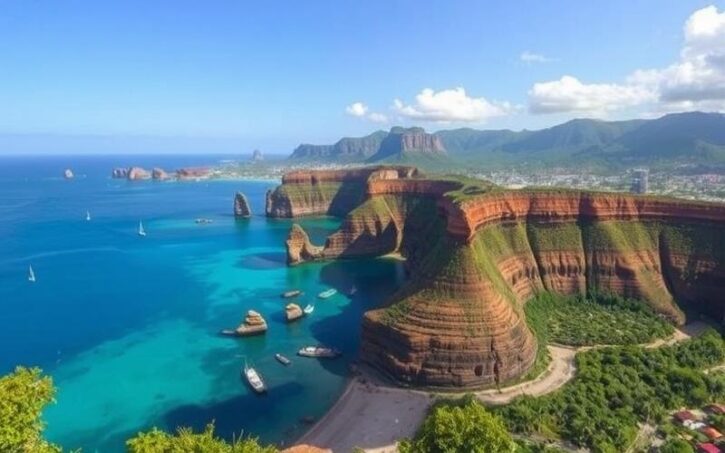
Fiji positions itself as a paradise for outdoor enthusiasts. White sand beaches, some of the planet’s richest coral reefs, lush forests, volcanic mountains, and mangroves compose an extraordinary daily backdrop.
10000
The archipelago is home to over 10,000 km² of coral reefs.
Many expatriates also highlight the simplicity of everyday pleasures: walking along Suva’s seawall, strolling through the forest at Colo-i-Suva (with necessary safety precautions), swimming minutes from home, or visiting a village to share kava around the tanoa, the traditional relaxing drink made from pepper root.
A Lively Social Scene, Especially for Expatriates
The country hosts a growing community of expatriates and digital nomads, mostly from Australia, New Zealand, and the United States. In urban centers like Suva or Nadi, you can find quiz nights, community meals, charity events, kava circles, hiking or diving clubs. Facebook expat groups, sports or cultural associations, and clubs like the Fiji Rucksack Club facilitate integration.
The flip side of this tight-knit social fabric is the almost total lack of anonymity: “everyone knows everything,” what locals sometimes call the “coconut wireless.” For some expatriates, this constant transparency can become burdensome.
Cost of Living: Affordable on Foreign Income, Tough on Local Salaries
The cost of living in Fiji is often described as “relatively low.” But this judgment depends heavily on the source of income. For an expatriate paid from abroad or receiving an international pension, life can be very comfortable. For someone employed locally, however, price levels remain high relative to local wages.
Overview: A Country Significantly Cheaper than the West
International comparisons indicate that the cost of living in Fiji is significantly lower than in major Western economies. On average, prices are about 50% lower than in the United States, all expenses considered. Rent, in particular, is much cheaper: around 60% less than in major American cities.
For a single expatriate, estimated monthly budgets (housing included) often range between $1,500 and $2,000 USD, varying based on the desired comfort level and location. A frugal “local” lifestyle, relying on public transport and fresh market products, can drop to around $700 to $800 USD per month, while a more luxurious style with high-end housing, frequent outings, and consumption of imports can exceed $3,000 USD.
For a family of four, a budget roughly between $2,000 and $3,000 USD per month is regularly cited as reasonably comfortable, excluding international school fees.
Overview of Estimates
A simplified summary of a few key estimates for quick understanding.
Cost Estimate
Preliminary evaluation of projected expenses for the project.
Timeline Estimate
Forecast of the time required to complete major milestones.
Resource Estimate
Assessment of staffing and material needs.
Risk Estimate
Identification and evaluation of major potential risks.
| Profile / Approximate Source | Estimated Monthly Cost (USD) |
|---|---|
| Single person, modest lifestyle | ~ $738 to $900 |
| Single person, comfortable | ~ $1,400 to $2,000 |
| Single person, high-end | ~ $3,000 |
| Couple, with rent | ~ $2,000 |
| Family of four, with rent | ~ $2,600 to $2,900 |
This cost level partly explains Fiji’s appeal for foreign retirees: living here on a Western pension is, financially, often easier than staying in one’s home country.
Local Salaries: Limited Purchasing Power
The flip side is the weakness of local incomes. GDP per capita is around $5,000 to $6,000 USD, far from Western standards. The average net monthly salary in local currency is, according to sources, around the equivalent of $650 to $1,200 USD. The minimum wage is around 4 to 5 FJD per hour, roughly one US dollar at the approximate conversion rate.
Putting these figures into perspective, the purchasing power index is significantly lower than in countries like the United States. In practice, this means an expatriate paid at the local level will find it harder to maintain a lifestyle similar to what they were used to, especially since certain expenses—imports, upscale rent, private schooling, Western foods—can be very high.
Housing: The Main Expense, Highly Variable by Area
Housing is generally the biggest budget item, especially in Suva and Nadi, where the supply of properties meeting Western standards is limited. In some desirable areas, waiting lists are long and rents are high, particularly in secure residential compounds with air conditioning and backup generators.
Example:
Some orders of magnitude: for instance, the size of an atom is on the order of 10⁻¹⁰ meters, the speed of light is about 3×10⁸ m/s, and the mass of Earth is approximately 6×10²⁴ kg. These reference values help situate and compare scales in the universe, from the microscopic to the cosmological.
| Type of Property (Location) | Approx. Monthly Rent (USD) |
|---|---|
| Studio/1 bedroom city center (Suva) | $550 to $900 |
| 1 bedroom outside center (Suva) | $330 to $500 |
| 3 bedrooms city center (Suva) | $1,400 to $1,800+ |
| 2–3 bedrooms Suva suburb | $800 to $1,200 |
| 1 bedroom in Nadi | $500 to $800 |
| 2–3 bedrooms near Nadi | $800 to $1,200 |
| Sea-view villa / secure residence (Suva or Nadi) | $1,500 to $2,500+ |
| 2 furnished bedrooms in Savusavu | $500 to $900 |
Older properties, sometimes less well-equipped, are naturally cheaper than modern so-called “executive” apartments. In small towns or rural areas, rents drop significantly, but services and infrastructure are more limited.
Expatriates often favor renting over buying, particularly due to complex land ownership rules and restrictions for non-citizens (inability to acquire certain freehold residential properties in cities, obligation to build within a defined timeframe, etc.). Foreigners find it easier to rent than to become owners, although options exist via 99-year leases on iTaukei land or purchasing units in tourist resort complexes.
Food: Cheap if Eating Local, Expensive if Importing
For groceries, the gap is huge between local products and imported goods. Municipal markets and street stalls sell fruit, vegetables, cassava, taro, fish, and kava at unbeatable prices. Dairy products, cereals, imported cheeses, Western “health” foods, and alcohol are, on the contrary, significantly more expensive than in Europe or North America.
Some average prices noted in markets and supermarkets:
| Product | Average Price (FJD) |
|---|---|
| White bread (1 lb) | ~ 1.15 |
| Milk (1 liter) | ~ 2.93 |
| Rice (1 kg) | ~ 2.55 |
| Dozen eggs | ~ 9.00 |
| Chicken (1 lb) | ~ 7.44 |
| Local cheese (1 lb) | ~ 9.12 |
| Mid-range wine (bottle) | ~ 19.00 |
| Local beer (0.5 L) | ~ 4.80 |
Most expatriates learn to juggle between the market (for fresh, cheap products) and modern supermarkets (Fresh Choice, New World, RB Patel, etc.) for more specific items, accepting a price premium on everything imported.
Attention:
Eating out remains relatively affordable: you can find simple dishes or street food for just a few Fijian dollars, while a more elaborate dinner at a chic restaurant can climb to around $40 to $50 USD per person.
Transportation: Very Cheap Buses, Complicated Car Ownership
The bus network, though not very comfortable, is very economical: a few dozen Fijian cents for an urban trip, around fifteen Fijian dollars for a several-hour Suva-Nadi journey. Taxis remain affordable compared to Western standards, even though the per-kilometer price has increased with fuel costs.
Cars, new or used, are expensive relative to local salaries. Used vehicles often suffer from inconsistent maintenance and a driving style considered “aggressive” or “reckless.” The condition of roads, outside main arteries, often leaves much to be desired: potholes, poor lighting, stray animals, pedestrians on the roadway.
For an expatriate, owning a car is therefore possible but costly and not always essential in areas well-served by public transport or taxis. Inter-island transport, by ferry or small planes, adds a layer of logistical complexity, especially during cyclone season.
Work and Finances: Targeted Opportunities, Limited Market
Professionally, Fiji is not a land of widespread opportunities for expatriates. The job market is modest, the employment rate relatively low, and priority is given to the local workforce, especially as the country itself faces a brain drain to Australia and New Zealand.
A Market Centered on a Few Sectors
Fiji’s economy relies primarily on services (especially tourism, which accounts for nearly 40% of GDP), agriculture, and fishing. Sectors likely to employ expatriates are concentrated in a few niches:
– international organizations, NGOs, UN agencies, embassies;
– development, environment, marine conservation, climate or humanitarian projects;
– high-end tourism, hotel management, professional diving in some specialized cases;
– IT, finance, management for very targeted senior or expert positions;
– higher or international education (international schools, universities like the University of the South Pacific).
Good to know:
Most jobs in basic hospitality, restaurants, retail, and service sectors are reserved for Fijian workers. Authorities require an employer to prove the impossibility of finding a local candidate before hiring a foreigner.
Work Permits and Visas: Plan Ahead Before Arrival
Obtaining a work permit or residency permit is not a mere administrative detail. Tourist visas (up to 4 months for many visa-waiver countries) obviously do not permit work. To engage in salaried activity, a permit must be approved by the Immigration Department before entering the country, with a complete file: employment contract, proof of qualifications, medical certificates, police clearance, proof of funds, as applicable.
Procedures can take several weeks, even several months, and authorities now apply Immigration Act provisions more rigorously. Some previous simplified schemes have been eliminated or restricted, requiring prospective expatriates to inform themselves well in advance.
For investors and retirees, specific schemes exist:
Several pathways exist to obtain residency rights in Fiji. The investor permit requires a minimum investment, often starting from 250,000 FJD. Residence visas are available for retirees, subject to age, bank deposit, and/or property purchase conditions. Finally, an “assured income” residence permit is possible by providing proof of substantial funds from abroad.
These schemes are one of the country’s assets for attracting foreign capital, but they do not all grant the right to salaried work. Many retirees simply choose to settle in Nadi, Suva, or quieter areas like Savusavu, with a pension or passive income received from abroad.
Starting Your Own Business: A More Realistic Option Than Finding a Job
For many foreigners, the most pragmatic route is to start their own business: guesthouse, small restaurant, dive operation, consultancy, tourism or ecotourism-related activity. The regulatory framework allows foreign investment, including through Fijian-registered companies, provided investment thresholds are met and required certificates are obtained (Foreign Investment Registration Certificate, etc.).
This choice, however, involves dealing with a still-fragile business environment: sometimes failing infrastructure, dependence on tourism and climate, changing regulations, operational costs influenced by imports and exchange rates.
Health, Education, Infrastructure: The Flip Side of a Developing Country Status
Living in Fiji also means accepting public services of an upper-middle-income country in transition. Quality gaps between major cities and remote islands are marked, whether in health, education, or access to water and electricity.
Healthcare System: Acceptable for Routine Care, Limited for Serious Issues
The Fijian healthcare system relies on a network of 25 hospitals, supplemented by dozens of health centers and nursing stations. Public facilities, tax-funded, provide free or highly subsidized care for citizens. Foreigners can use them but will often have to pay for some services.
The quality of care varies greatly:
– in urban areas (Suva, Nadi, Lautoka, Labasa), public hospitals and a few private clinics can manage common health problems, minor emergencies, routine medical follow-ups;
– in rural areas or on small islands, facilities are often rudimentary, under-equipped, and lacking staff and medicines.
Emergency infrastructure is limited: ambulances are few, sometimes poorly equipped, with long response times. Many residents prefer to take a taxi or private vehicle to the hospital in an emergency rather than wait for an ambulance.
The prevalence of non-communicable diseases (diabetes, cardiovascular diseases) is high, and mortality rates are largely dominated by these illnesses. Specific infectious risks add to this: dengue, Zika, chikungunya, leptospirosis, waterborne diseases, food poisoning. Mental health services, still underdeveloped, struggle to meet needs, especially as stigma around mental disorders remains strong.
For serious cases (major surgery, cancers, complex trauma, intensive care), many expatriates—and even wealthy Fijians—turn to Australia, New Zealand, or sometimes India. International medical evacuation is very costly and must absolutely be covered by appropriate international health insurance.
One of the major drawbacks of expatriation to Fiji, for families and seniors alike, therefore lies in the near-inevitability of needing to:
It is essential to take out private international health insurance, which must include coverage for medical evacuation. Furthermore, one must plan for the possibility of traveling abroad for specific medical care, such as surgeries or specialized treatments.
Education: Free but Unequal in Public, Expensive in Private
Public education is theoretically free and compulsory from ages 6 to 16. The country has hundreds of primary and secondary schools, but public resources are limited and disparities are significant.
In rural areas, it is not uncommon for one teacher to manage a class with multiple age levels, with up to fifty students, sometimes in very modest material conditions. Some children interrupt their schooling due to lack of transport or ancillary fees, or even forego formal education altogether.
Expatriates therefore overwhelmingly choose private schools and, especially, international schools, concentrated in Suva, Nadi, and to a lesser extent, Lautoka. These institutions (International School Suva, International School Nadi, etc.) often offer internationally recognized programs (IB, Cambridge, British or Australian curricula), with modern facilities, strong educational support, and pedagogy more familiar to Western families.
Annual tuition fees at international schools in Fiji often range between 10,000 and 20,000 FJD, and can be even higher for upper grades. For expatriates, it is highly recommended to negotiate coverage or a contribution from the employer for these fees.
For a couple moving independently without an expatriation package, international school is one of the largest budget items, to be factored in from the initial planning stage.
Infrastructure: Electricity, Water, Internet… Not Always Up to Expected Standards
Fiji remains a developing country. Basic infrastructure reflects this:
– power outages are common, especially during the rainy and cyclone season;
– access to drinking water remains dependent on rainfall, and the country suffers from insufficient storage and distribution capacity;
– fixed and mobile internet coverage is fairly good in major cities, but quality fluctuates, with modest speeds and possible outages. On remote islands, connection may be non-existent or very weak.
For digital nomads, freelancers, or remote workers, this reality requires backup solutions: SIM cards from multiple providers, 4G hotspots, UPS units, generators, or at minimum, choosing housing in better-served neighborhoods with stable services. Coworking spaces exist in urban areas, but the offering remains limited compared to Asian hubs.
Safety, Crime, and Social Norms: Generally Safe, But Not Without Risks
The archipelago is generally considered a safe country for visitors and expatriates. International comparisons often rank Fiji with a low to moderate risk level. But, again, the situation is nuanced.
Crime: Mostly Opportunistic Theft
Crime consists primarily of opportunistic offenses: pickpocketing, fights, burglaries and break-ins into homes or vehicles, particularly in certain urban neighborhoods of Suva or Nadi, or around tourist areas near slums.
Several points regularly appear in expatriate feedback and official advisories:
For your safety in Fiji, it is advised to avoid walking alone at night in isolated or poorly lit areas. Be particularly vigilant in Suva’s city center (Victoria Parade, waterfront) and in certain parks like Colo-i-Suva, where assaults and robberies have been reported. To secure your home, especially in areas prone to burglaries, prioritize installing window bars, alarms, or having security guards.
Violent assaults exist, including cases of sexual assault on tourists or expatriate women, but remain statistically less frequent than in many countries with comparable income levels. Firearm possession is very strictly regulated, and shootings are rare.
Scams often take the form of small cons: taxi refusing to use the meter, vendor inflating prices, sales of counterfeit goods, etc. Authorities also highlight a rise in cybercrime, credit card fraud, and online scams.
Social Norms, Religion, and Rights
Fijian society is generally conservative. Religion structures the rhythms of life, especially among the iTaukei (indigenous Melanesians) predominantly Protestant, and among Indo-Fijians who are predominantly Hindu or Muslim. Western dress codes are accepted in urban and tourist areas, but modest attire is expected in villages, churches, temples, and during kava ceremonies.
Homosexuality is decriminalized and the Constitution prohibits discrimination based on sexual orientation. However, social acceptance of LGBTQ+ individuals remains limited, particularly in rural areas. Public displays of affection between same-sex individuals are generally frowned upon.
The country has experienced several coups since the 1980s, but the political situation has stabilized in recent years, even though institutions remain marked by ethnic tensions and debates around the role of the military and traditional elites. Tourists and expatriates are advised to stay away from local political demonstrations and debates.
Tropical Climate… and Climate Crisis: A Factor That Can No Longer Be Ignored
The climate is one of Fiji’s great attractions: tropical marine, warm and humid year-round, with a cooler dry season (May–October) and a wet season (November–April). Temperatures generally range between 24 and 29 °C (75-84 °F), with higher peaks in coastal areas.
But this apparent mildness hides a heavy reality: the country is among the most exposed to climate change and natural disasters.
Cyclones, Floods, Sea Level Rise: A Tense Daily Reality
Climate data already shows a temperature increase since the 1950s and a sea-level rise significantly above the global average. Tropical cyclones, while not necessarily more frequent, are gaining intensity. Episodes of extreme heat, violent rainfall, El Niño-related droughts, coastal flooding, and shoreline erosion are multiplying.
Since 2016, Fiji has endured about a dozen cyclones, some highly destructive. Annual damage to infrastructure (roads, schools, networks, hospitals) weighs heavily on GDP. Facing erosion, flooding, and saltwater intrusion, villages like Vunidogoloa have already been relocated. Hundreds of other communities are vulnerable, with dozens identified as priorities for relocation by the government.
For an expatriate, this reality means:
– accepting a recurring natural risk during the cyclone season (November–April);
– closely following safety instructions, evacuation plans, and weather bulletins;
– choosing, if possible, housing built to anti-cyclonic standards, equipped with protections, water reserves, backup systems (generator, lights, etc.).
Over half of the population depends on natural resources threatened by the degradation of coastal ecosystems.
Ambitious Climate Policies, But Structural Vulnerability
Fiji is among the most active voices in climate diplomacy. The country quickly ratified the Paris Agreement, chaired a COP, adopted a climate change framework law, and aims for carbon neutrality by 2050, while setting short-term goals for 100% renewable electricity. Projects for vegetated seawalls, mangrove restoration, and innovative financing (parametric insurance, green funds) are underway.
For expatriates engaged in environmental, development, or climate resilience issues, the country offers a rarely rich field of action. But for everyone, structural vulnerability to cyclones, ocean warming, and sea-level rise remains a central element to integrate into a long-term life plan.
Visas, Residency, Property: A Relatively Open but Demanding Framework
Regarding migration, Fiji maintains a relatively friendly regime for short-term visitors. Many nationals from Western countries can enter visa-free for a tourist stay of up to four months, provided they hold a valid passport, a return ticket, and sufficient funds. This period can sometimes be extended for a few additional months while in the country.
For a long-term settlement, things get more complicated:
Work permits require a formal job offer and a complete file. Residency permits for retirees or investors require significant income or investments (bank deposits, property purchase, etc.). Land ownership is governed by complex rules, with a large portion of land reserved for iTaukei or public domain, generally accessible via leases.
Foreigners can acquire certain types of freehold, particularly outside urban centers or in integrated tourism projects (like Denarau or certain private islands), but they face construction obligations, investment thresholds, and sometimes specific taxes on property transfers. For the uninitiated, guidance from a local lawyer and reputable professionals is essential.
In practice, the most common combination remains:
– extended tourist visa, for digital nomads or retirees who do not work locally;
– retirement/investor-type residency for those wanting a more stable settlement and who meet the required resources;
– work permit tied to a contract with an international organization or a specific skilled position.
Advantages and Disadvantages: How to Decide?
In light of these elements, how to assess expatriation to Fiji? The strengths and limitations vary greatly depending on the profile: well-off retiree, young volunteer, family with children, remote worker, entrepreneur…
The Main Strengths for an Expatriate
For many, Fiji offers:
This region offers an exceptional natural environment with permanent access to the sea, forest, and unique marine biodiversity. The pace of life is slower and less stressful, allowing for reevaluation of time for oneself, family, and social relationships. The local population is generally kind, welcoming, and attached to community ties. The cost of living is competitive for those earning income in strong currencies. A close-knit expatriate community facilitates integration and exchange. Finally, it is a privileged ground for profiles engaged in humanitarian work, development, conservation, climate research, or regional educational projects.
The Limitations and Risks Not to Underestimate
Conversely, the main points of caution are recurrent:
Several essential factors to consider before expatriation: a limited healthcare system that may require costly medical evacuation; an unequal public education system pushing towards expensive international schools; high vulnerability to climate risks (cyclones, floods); a restricted job market for foreigners with generally low local salaries; sometimes fragile infrastructure (electricity, water, roads) leading to additional costs; a conservative social framework that may impact certain lifestyles; and geographic isolation implying long air travel.
How to Practically Prepare for Expatriation to Fiji?
For those who, despite the challenges, feel drawn to Fiji, meticulous preparation is essential.
First, it is crucial to clarify one’s priorities: is one primarily seeking a natural environment and a gentler pace of life, even if it means accepting some material discomfort? Are there school-aged children, chronic health issues, specific professional obligations? Is the project temporary (a few months or years) or a long-term settlement?
Next, it is strongly advised to:
For a successful settlement in Fiji, meticulous preparation is essential. It is recommended to spend several weeks on the ground, during different seasons, to test the humid climate, the rainy season, and local infrastructure. Compare cities: Suva for service offerings, Nadi for proximity to the airport and tourism, Savusavu for a more peaceful life. Meet expatriates via local groups to gather their feedback on neighborhoods, schools, doctors, and administrative hurdles. Consult legal, immigration, and real estate professionals to clarify your rights, obligations, and hidden costs. Finally, create a realistic budget including international health insurance, regular flights (for family visits or medical care), potential school fees, and unforeseen events related to natural disasters.
Finally, adopting a flexible attitude, ready to deal with “Fiji time,” the unexpected, power outages, administrative delays, is determining to avoid frustration. Those who succeed in their expatriation to Fiji are often those who accept adjusting their expectations, living with less material comfort, immersing themselves in the local culture, and investing in human relationships.
Living in Paradise… With Eyes Wide Open
Fiji embodies both the image of a tropical paradise and the reality of a vulnerable country, developing and on the front line of the climate crisis. For certain profiles—retirees with a good income level, flexible digital nomads, humanitarian workers, researchers, lovers of the sea and simple living—the archipelago can offer an invaluable quality of life, not offset by a few logistical inconveniences.
For others—families with serious medical needs, expatriates dependent on a dynamic job market, people very attached to a high level of public services—the required compromises may prove too heavy.
Expatriation to Fiji is neither a naïve dream nor a reckless folly. It is a deeply personal choice that requires looking beyond the turquoise waters and coconut trees, and lucidly assessing one’s resources, constraints, and priorities. By entering this reflection with complete and realistic information, everyone can decide with full knowledge whether Fiji will be a haven of peace… or a compromise that is too demanding.

Cyril Jarnias is an independent expert in international wealth management with over 20 years of experience. As an expatriate himself, he is dedicated to helping individuals and business leaders build, protect, and pass on their wealth with complete peace of mind.
On his website, cyriljarnias.com, he shares his expertise on international real estate, offshore company formation, and expatriation.
Thanks to his expertise, he offers sound advice to optimize his clients' wealth management. Cyril Jarnias is also recognized for his appearances in many prestigious media outlets such as BFM Business, les Français de l’étranger, Le Figaro, Les Echos, and Mieux vivre votre argent, where he shares his knowledge and know-how in wealth management.





