
 Published on and written by Cyril Jarnias
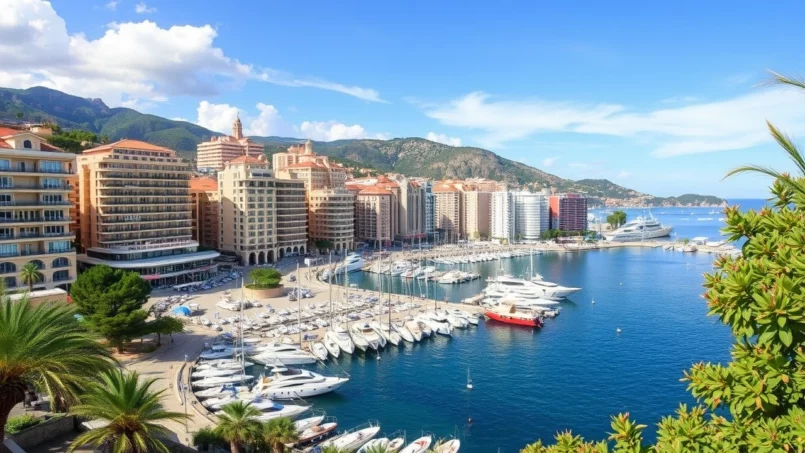
Moving to Monaco means landing in one of the world’s most sun-drenched, densest, and most urban micro-states, wedged between the sea and the mountains. For many expats, it’s easy to imagine long days on terraces, ideal weather, and a permanent tan. The reality is generally pleasant… but it does require real adjustment, especially if you’re coming from a continental, Nordic, or tropical climate.
Living in Monaco means adapting to an ultra-compact, steep city with abundant sunshine, occasionally heavy rain, high summer humidity, and dense traffic. This adaptation affects housing choices, work organization, commuting, health, wardrobe, and budget.
This article offers a very concrete look at the weather reality of the Principality and its practical implications, along with adaptation tips tailored for expats.
Understanding Monaco’s Climate to Better Adapt
Before adjusting your lifestyle, you need to understand the lay of the land. Monaco officially enjoys a Mediterranean climate, but its topography, tiny area (about 2 km²), and proximity to the sea create true microclimates.
Monaco is nestled at the foot of the Alps, which shield it from cold northern winds. The Mediterranean Sea regulates temperatures, limiting summer heat extremes and severe winter cold. The result is a milder climate than many European cities, but not uniform throughout the year.
Temperatures: General Mildness, Real Seasonal Contrasts
Temperatures are generally moderate, but with significant variations between winter and summer.
| Period | Typical Temperatures | Characteristics |
|---|---|---|
| Winter (Dec.–Feb.) | Around 46°F to 57°F (8°C to 14°C) | Moderate cold, rare frost, feels cooler with humidity and wind |
| Spring (Mar.–May) | Around 54°F to 72°F (12°C to 22°C) | Rapid transition, very pleasant days but changeable weather |
| Summer (Jun.–Aug.) | Around 68°F to 82°F (20°C to 28°C), peaks >86°F (30°C) possible | Humid heat, strong sun exposure, sometimes heavy nights |
| Fall (Sep.–Nov.) | Around 57°F to 73°F (14°C to 23°C) | Very pleasant early on, but rainiest period in October–November |
The stats highlight:
– an annual average around 61°F (16°C);
– August generally the hottest month, with an average high around 78.6°F (25.9°C);
– January the coolest month, with an average low around 46.4°F (8°C) and a high around 53.6°F (12°C).
Negative temperatures remain exceptional in Monaco. For an expat from Northern Europe, winter will feel almost mild. On the other hand, for someone used to a tropical climate, winter may feel colder than expected due to ambient humidity and wind. It’s therefore advisable to plan clothing suited to that damp chill.
Sunshine and Clouds: The Principality’s “Sunshine Capital”
Monaco boasts more than 300 sunny days a year and about 2,700 hours of annual sunshine. This is one of the main draws of local life, but also a factor not to underestimate for health and daily rhythm.
| Indicator | Approximate Value |
|---|---|
| Rainy days per year | ~60 |
| Rain-free days | ~300 |
| Sunshine hours/year | ~2,700 |
| Sunniest month | July (up to 11 hours of sun/day on average) |
| Least sunny month | December (~4.5 hours of sun/day) |
In summer, the sky is often clear or slightly hazy; winter remains surprisingly bright for much of the season. This affects outing habits, mood, and also how you manage heat in apartments—often glass-walled and sea-facing.
Rain, Storms, and Humidity: The Less Glamorous Side
While people often talk about “permanent good weather,” the Principality still gets around 770 to 800 mm of annual precipitation, concentrated mainly in autumn. October is the wettest month, and November often has the most rainy days.
| Month | Approx. Rainfall | Average Rainy Days | Comment |
|---|---|---|---|
| October | ~108 mm | ~6–7 | Sometimes heavy rain, storms |
| November | Slightly less than October | ~7 | Rainy period, cloudier skies |
| July | ~15–16 mm | ~2 | Very dry, rare brief showers |
Rain falls mainly as showers or intense storms, rather than long steady downpours. Urban surfaces and steep slopes can cause rapid runoff. As an expat, you need to think about this for commuting, clothing, and protecting your home (windows, balconies, minor water damage).
The notable average humidity percentage, which can make summer air feel heavy, especially in the evening.
Winds and Local Phenomena: Mistral, Breezes, and Microclimates
Even sheltered by the terrain, the Principality experiences some windy episodes. The famous Mistral, a cold, dry wind from the northwest, can occasionally hit Monaco in winter, with gusts of 33–45 mph (15–20 m/s). These episodes increase the chill factor, especially along the waterfront.
Most of the time, prevailing winds come from the east, with typical Mediterranean sea breezes: cooler air from the sea during the day, more stable air at night.
Finally, microclimates are very real: just a few hundred meters apart, between a high-altitude neighborhood and the seafront, the feel can change noticeably—especially in terms of wind, localized fog, or heat absorbed by concrete.
Sea Temperature: A Major Asset… Used Wisely
For expats who enjoy swimming, the Mediterranean is a key part of the “lived climate.”
| Month | Average Sea Temperature | Feel |
|---|---|---|
| February (minimum) | ~55.6°F (13.1°C) | Cool, short swim or for the brave |
| June | ~70–72°F (21–22°C) | Start of real swimming season for many |
| August (maximum) | ~74.7°F (23.7°C) | Very pleasant, ideal for swimming and water sports |
| October | ~68–70°F (20–21°C) | Still comfortable, but more unstable weather |
The best conditions for the beach and pools are from late June to late August, even into September depending on the year. To adapt, it’s helpful to think about equipment (light wetsuit if swimming long, specific sun protection for water activities, etc.).
Adapting Your Lifestyle to Monaco’s Seasons
Once the climate framework is set, how do you concretely adjust your expat life? This affects daily organization, vacation timing, sports, wardrobe, housing, and even some administrative steps.
Summer: Managing Heat, Sun, and Urban Density
In summer, average temperatures hover around 79°F (26°C), but the feel can quickly rise in the city. The concentration of concrete, asphalt, and tall buildings, combined with dense traffic (nearly 100,000 vehicles enter and leave the Principality each day), creates an urban heat island effect.
For a newcomer, the key is calibrating your schedule:
To move comfortably during high heat, it’s advisable to schedule physical activities early in the morning or late in the day, when the sun is lower. Avoid long walks in the full afternoon on exposed sections, especially in high-altitude neighborhoods. Finally, using the transport network (electric or bio-fuel buses, public elevators, escalators, moving walkways) helps reduce effort on slopes.
On the clothing front, lightweight is key, but within a chic and regulated context: casual wear is accepted, but you don’t walk around shirtless or barefoot outside beaches, or risk a fine. In certain places (casinos, upscale restaurants), a stricter dress code applies.
Winter: A “Fake” Winter, But Not Tropical
Monaco’s winter often surprises: no prolonged extreme cold, but a feeling of chill amplified by humidity and wind. With averages between 46°F and 57°F (8°C–14°C), many newcomers underestimate the need for a proper coat, especially for evenings near the sea or on Mistral days.
For an expat from very cold regions, apartments may seem poorly insulated: the focus is often on ventilation and air conditioning rather than high-performance heating. Hence the value, when searching for housing, of asking a few simple questions:
To accurately estimate an apartment’s energy consumption, several technical and structural elements must be considered. Notably, determine the type of heating installed (e.g., central system, individual electric heating, or reverse-cycle air conditioning). Exposure to climate conditions is also crucial: an apartment high up or exposed to prevailing winds will suffer greater heat loss. Finally, the quality of insulation—like the presence or absence of double-glazed windows—directly impacts energy efficiency.
These details directly affect winter comfort and your energy bill, even in a mild climate.
Spring and Fall: The Shoulder Seasons, Ideal for Settling In
For an expat who can choose their arrival date, aiming for spring (April–June) or fall (September–October) can make a real difference. The reasons are multiple:
– very pleasant temperatures, neither too hot nor too cold;
– generous sunshine, but less aggressive than in high summer;
– more moderate tourist crowds than in peak summer season;
– ideal conditions for exploring the Principality on foot and getting your bearings in different neighborhoods.
Fall, however, is marked by higher rainfall, especially in October and November. For an expat moving, this is a concrete factor: boxes, furniture, apartment viewings, and paperwork are easier in dry weather.
Climate, Housing, and Cost of Living: An Inseparable Trio
In Monaco, climate is closely intertwined with housing and budget issues. Some exposures are more sought-after for the view and sunlight, but can pose real challenges in terms of summer heat or ventilation.
Real Estate Prices and Climate Exposure
Real estate prices reach record levels: buying averages around $54,000 to $108,000 per m² in the center, with an average published sale price near $56,000/m² in 2024. For rentals, the ranges are staggering:
| Property Type | Location | Monthly Rent Range |
|---|---|---|
| 1-bedroom | Center | ~€1,800 to €13,000 |
| 1-bedroom | Outside center | ~€2,000 to €12,500 |
| 3-bedroom | Center | ~€9,000 to €78,000 |
| 3-bedroom | Outside center | ~€3,200 to €24,000 |
In this context, the property’s orientation becomes a strategic parameter. A south-facing apartment with large windows offers a postcard view but can become an oven in summer if the air conditioning isn’t top-notch. Conversely, a home slightly more set back, better ventilated, may offer superior climate comfort at a slightly lower price in some less prestigious neighborhoods.
For expats, adapting to the local climate is essential for well-being and health. Here are key tips for a successful transition.
Adopt a wardrobe suited to local temperatures and weather conditions for greater daily comfort.
Optimize your living space with solutions like insulation, air conditioning, or heating to create a pleasant indoor environment.
Choose a diet suited to the climate, such as warm meals in winter or hydrating foods in summer, to support your body.
Give yourself time to acclimate to changes in daylight and day length, especially if there’s a significant time difference.
Use appropriate sun protection, stay hydrated, and protect yourself from cold or humidity depending on your new region.
Seek advice from a doctor for personalized recommendations, especially on vaccines or prevention of local diseases.
– check for reverse-cycle air conditioning and its actual condition;
– ask about condo fees, which sometimes include certain services (maintenance, AC, heating);
– get input from residents or agents who know the building’s behavior in summer and winter.
Utilities, Energy, and Climate Adaptation
Basic utilities for an 85 m² apartment (water, electricity, heating, waste) often range between €187 and €500 per month, depending on consumption and building type. In practice, heavy air conditioning use in summer can drive up the bill.
For an expat, it’s therefore wise to:
– quickly learn to use air conditioning and heating systems properly;
– install, if possible, sun protection (blinds, thermal curtains) to reduce reliance on AC;
– take advantage of natural ventilation in the evening and at night, when temperatures drop.
In a country where the cost of living is about 128% higher than the global average, managing the climate’s impact on energy expenses is part of adapting.
Getting Around Without Suffering the Climate: Transport and Urban “Relief”
The pleasant climate encourages walking, but the terrain and traffic density require careful thought about transportation modes.
Walking in a Vertical, Sunny City
Crossing the Principality from east to west takes about 45 minutes on foot. On paper, that seems modest. In reality, repeated elevation changes, stairs, sun, and periods of intense heat can make some walks very physical.
To adapt:
– invest in good walking shoes, suited to urban terrain;
– identify and use the network of public elevators, escalators, and moving walkways (79 elevators, 35 escalators, 8 moving walkways), which reduce effort on steep areas;
– adjust walking times to cooler periods, especially in summer.
This vertical infrastructure is especially beneficial for expats who want to enjoy the climate while saving energy, particularly if they are not used to this type of terrain.
Public Transport: Allies for Climate, Budget, and Comfort
The Monaco Bus Company (CAM) operates several bus lines that tightly cover the territory. Frequency is high during the day (every 10 minutes on weekdays on main lines), and buses run on electricity or biofuels, limiting local pollution.
For an expat, regular bus use allows you to:
– avoid fatigue from uphill walks in the sun;
– reduce exposure to sudden storms, common in autumn;
– escape the stress of driving and parking in congested traffic.
This boat-bus is a practical and pleasant means of transport, ideal in high heat. The sea breeze cools, the trip is short, and you enjoy the outdoor light without the heat of the asphalt.
Private Car: Deceptive Comfort in This Climate
Despite the prestige associated with luxury cars in Monaco, daily use of a private vehicle is not optimal in such a dense and climatically demanding space. Between traffic jams, parking hunting, and frequent short trips, many residents ultimately prefer to combine:
– walking assisted by public elevators;
– public transport (buses, regional trains along the French Riviera);
– shared electric bikes (MonaBike);
– shared electric cars (Mobee).
For an expat, reducing car dependency not only allows for more harmonious climate adaptation but also limits carbon footprint and parking costs, while often saving time.
Health, Climate, and Healthcare System: Prepare Well
Monaco’s climate is generally health-friendly: mild winters, abundant sunshine, proximity to the sea, opportunities for outdoor sports year-round. But it doesn’t eliminate the need for precautions or good medical coverage.
Living Well with the Sun: Protection and Prevention
With over 2,700 hours of sunshine a year, the issue of sun protection isn’t trivial. For an expat settling in long-term, the risk isn’t just occasional summer sunburn, but chronic exposure.
A few reflexes to adopt:
For effective prevention, it is recommended to use appropriate sun protection (face, neck, hands) daily from April to October at minimum, even in the city. For longer walks, wear UV-filtering sunglasses and a hat. Prefer shade during the central hours of the day, especially in summer, including for outdoor professional meetings. Finally, monitor changes in your moles and consult a dermatologist if in doubt: the local medical offering is top-notch, with a very high number of doctors per capita.
The advantage of the Principality’s healthcare system is its recognized quality, whether in the public sector (Princess Grace Hospital Center and its advanced services) or private clinics. The cost, however, can be high, hence the need for expats to have proper insurance.
Humidity, Respiratory Infections, and Mild Winters
The mild climate doesn’t prevent winter infections. The contrast between humid outdoors and climate-controlled or heated indoors can promote colds, bronchitis, or sinusitis. For children or fragile individuals, winter remains a season to watch.
In practice, access to general practitioners is good, but consultation costs vary:
| Type of Consultation | Indicative Range |
|---|---|
| Public GP | ~€30 to €50 |
| Private GP | ~€100 to €200 |
| Public specialist | ~€70 to €100 |
| Private specialist | ~€200 to €400 |
| Hospital night (public) | ~€600 to €1,200 |
| Hospital night (private) | ~€2,000 to €3,000 |
Residents covered by the public system (Monaco Social Security) are largely reimbursed (usually 80%, sometimes more in certain cases). But expats without local salaried employment or awaiting coverage must absolutely take out private international health insurance covering these costs, including in the context of accidents related to outdoor sports activities.
Physical Activities: Enjoy the Climate Without Overexerting
The mild weather naturally encourages:
– jogging along the waterfront,
– tennis,
– swimming,
– water sports,
– cycling.
The flip side for athletic expats is the risk of overexertion during humid heat episodes in summer. It’s therefore essential to adapt your training during these periods to preserve your health.
– schedule sessions early morning or early evening in July–August;
– stay well hydrated, even when it’s “only” 77°F (25°C) but the sun is beating down;
– gradually adapt the intensity of effort upon arrival, giving your body time to adjust to this new climate.
Sports health facilities (sports medicine institute, specialized centers, cardiology) are of excellent standard, reassuring for performance monitoring or specific effort-related conditions.
Climate, Social Rhythm, and Events: Adjusting to a Unique Calendar
The Principality lives to the rhythm of a dense event calendar: Monaco Grand Prix, Yacht Show, festivals, galas, religious and cultural events. This calendar interacts with the climate and changes the city’s feel.
High Season: Sun, Crowds, and Meticulous Organization
Major international events generally take place during the most pleasant periods: spring and late spring for the Grand Prix, late summer and early fall for the Yacht Show. For a newly arrived expat, these periods combine:
The summer period brings ideal weather for outdoor activities, but also very large crowds that transform traffic and create temporary constraints like road closures or detours.
Faced with this, adapting your logistics is essential:
– even more so, prioritize walking, public elevators, and buses to avoid congested areas;
– plan trips to Nice or neighboring towns (bus, regional train, helicopter from Fontvieille heliport);
– avoid, if possible, scheduling a move or heavy paperwork right on event days.
Many residents take advantage of these periods to escape for a few days inland or to another part of the French Riviera, leaving the Principality to visitors.
Principality residents
Relative Low Season: A Climate Still Attractive
Even in winter, the mildness and sunshine retain some tourist appeal, but the pressure is much lower. For an expat, this season is particularly good for:
– deeper exploration of neighborhoods, without the summer crowds;
– testing walking or cycling routes for the home-to-work commute;
– gradually adjusting your equipment (clothing, rain protection, interior home organization).
The contrast with many large European cities, often cold, damp, and very gray at the same time, is striking. This greatly contributes to the psychological appeal of the Principality for expats seeking light.
Language, Social Climate, and Integration: Weather as a Conversation Starter
In a French-speaking country, having at least a basic grasp of French greatly facilitates integration, including when talking about the weather. The climate is an excellent small talk topic to get acquainted with local codes.
The Climate, a “Neutral” Conversation Topic for Building Connections
Initial discussions with residents or colleagues often revolve around:
– episodes of Mistral,
– the heavy autumn rains,
– the unusual mildness of a winter,
– the heat of a particular summer.
Knowing a few simple French expressions and being able to talk about your personal experience of the climate (e.g., mentioning a colder, more humid, or drier place) naturally allows for deeper exchanges.
For an expat, learning vocabulary related to weather, seasons, but also to transport and daily life, makes it easy to broach these topics:
– “It’s very humid today”;
– “The wind is strong, especially near the port”;
– “Fall is really rainy this year”;
– “Summer is more bearable by the seaside than in the city center.”
These types of phrases, beyond simple language learning, anchor the expat in the shared experience of residents.
Dress Codes and Social Climate
The mild climate naturally pushes toward light clothing. But the social context in Monaco remains very codified. To adapt without missteps:
For a summer stay, opt for a “smart casual” style with breathable fabrics but neat cuts. Plan more formal outfits for evenings, as air conditioning is often strong in upscale venues. Note that some establishments strictly prohibit shorts, t-shirts, or sports shoes, regardless of the temperature.
The climate thus becomes a parameter to integrate into professional and social dress codes as well, not just in choosing a comfortable outfit.
Settling In Long-Term: Combining Climate, Administrative Requirements, and Budget
Adapting to Monaco’s climate cannot be separated from the administrative and financial realities of a long-term move. The mild weather and sunshine are assets, but they fit into a highly selective overall framework.
Residency, Climate, and Quality of Life
Obtaining a residence permit requires proving:
– housing suitable for family size;
– sufficient resources (often a high bank deposit and/or solid income);
– health insurance covering needs, including in an expensive healthcare system.
In exchange, the expat gains access to an environment where:
– safety is exceptionally high;
– the climate is exceptionally favorable for well-being;
– access to the sea, outdoor spaces, and events is constant.
Living in a place where, in the middle of January, you can walk in the sun facing the sea without fear of ice or persistent sub-zero temperatures transforms the daily perception of urban life. Provided you accept the trade-offs: density, cost, strict regulations.
Resident of a sunny coastal metropolis
Anticipating Climate-Related Costs
Beyond the general cost of living, certain expense categories are directly influenced by the climate:
– air conditioning in summer and winter heating;
– clothing suited to a chic city but subject to intense summer heat and sudden rain;
– home insurance covering weather-related damage (leaks, water damage);
– health insurance covering long-term risks of high sun exposure.
Planning for these expenses from the expat’s preliminary budget avoids unpleasant surprises.
Conclusion: Making Monaco’s Climate an Ally, Not a Mirage
Monaco’s climate is one of its greatest assets: mild winters, sunny summers, temperate sea, almost constant brightness, rare snow or frost. But it’s also a tight, sloping, very mineral urban environment where heat can be intense, humidity is felt, and autumn brings powerful rains.
For an expat, adapting means:
To successfully settle in, it’s crucial to understand the real seasonal variations, beyond the cliché of permanent sunshine. This means choosing your housing, transport, and equipment accordingly. You also need to factor in the climate’s impact on your health, energy, and budget. Finally, the weather can become a social integration lever, through language learning and sharing experiences with locals.
Monaco offers a unique environment where, in just tens of minutes, you can go from a business meeting in a dense business district to a sunny walk along the sea. Provided you follow certain rules, protect yourself from the sun, deal with autumn rain, and master the urban terrain, the climate becomes a true partner in building an expat life that is comfortable, healthy, and sustainable.
Disclaimer: The information provided on this website is for informational purposes only and does not constitute financial, legal, or professional advice. We encourage you to consult qualified experts before making any investment, real estate, or expatriation decisions. Although we strive to maintain up-to-date and accurate information, we do not guarantee the completeness, accuracy, or timeliness of the proposed content. As investment and expatriation involve risks, we disclaim any liability for potential losses or damages arising from the use of this site. Your use of this site confirms your acceptance of these terms and your understanding of the associated risks.

Cyril Jarnias is an independent expert in international wealth management with over 20 years of experience. As an expatriate himself, he is dedicated to helping individuals and business leaders build, protect, and pass on their wealth with complete peace of mind.
On his website, cyriljarnias.com, he shares his expertise on international real estate, offshore company formation, and expatriation.
Thanks to his expertise, he offers sound advice to optimize his clients' wealth management. Cyril Jarnias is also recognized for his appearances in many prestigious media outlets such as BFM Business, les Français de l’étranger, Le Figaro, Les Echos, and Mieux vivre votre argent, where he shares his knowledge and know-how in wealth management.





