
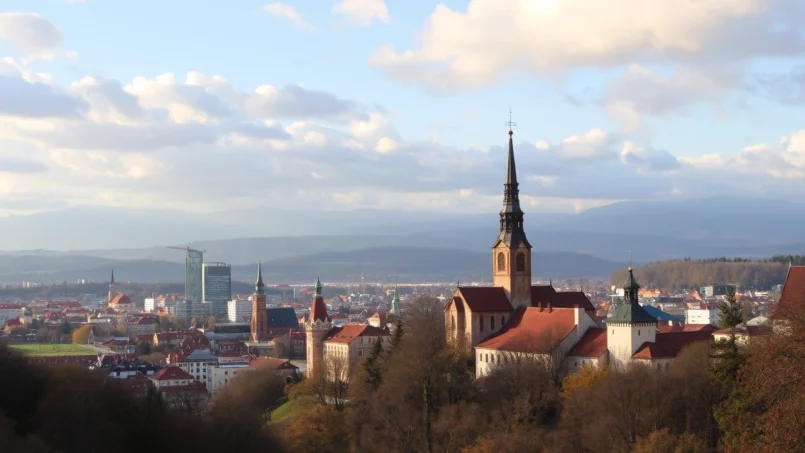
 Published on and written by Cyril Jarnias
Choosing to pursue higher education abroad is rarely a spur-of-the-moment decision. Between academic quality, cost of living, visa procedures, and degree recognition, every detail matters. In this landscape, Slovakia is increasingly establishing itself as a destination that is both accessible, academically solid, and well-connected to the rest of Europe. A eurozone country, a member of the European Union and the Schengen Area, it combines recognized universities, reasonable fees, and a safe environment, right in the heart of the continent.
This article details all aspects of studying in Slovakia: the university system, admission requirements, tuition fees, and available scholarships. It also covers the necessary administrative steps, student life on the ground, work opportunities during and after studies, as well as career prospects.
The Higher Education System in Slovakia
The Slovak higher education system is integrated into the European Higher Education Area. It is based on three degree levels, perfectly understandable for European employers and universities.
Czech higher education is organized into three main cycles: the first cycle is the bakalár (bachelor’s), the second is the magister or inžinier (master’s depending on the field), and the third is the doctorate (PhD). However, certain specific fields, such as medicine, law, or some artistic and technical programs, do not follow this division and instead offer a single, integrated program that directly combines the first and second cycles into one long course of study.
Institutions are divided into several categories: public universities, state universities (for specific military, police, or medical fields), private universities, and a few foreign institutions located locally. The majority of Slovak and international students are enrolled in public institutions, primarily funded by the state, with quality control ensured by the Ministry of Education, Science, Research, and Sport.
Universities offer all three cycles of study, unlike professional institutions focused on the first cycle. Their pedagogy combines theory and intensive practice, through lectures, seminars, tutorials, projects, internships, and research, with a strong emphasis on application and industry links.
The academic calendar usually begins on September 1st and ends on August 31st of the following year, most often divided into two semesters (fall and spring). Some schools operate on a trimester basis, but the two-semester logic remains the norm.
Why Slovakia is Attracting More and More International Students
Slovakia is often described as a “hidden gem” among European study destinations. Several factors explain this renewed interest: the quality of degrees, recognition within the EU, a cost of living lower than in Western European countries, a relatively safe environment, and an ideal geographical position, surrounded by Austria, the Czech Republic, Hungary, Poland, and Ukraine.
Slovakia’s major student cities (Bratislava, Košice, Žilina, Nitra, Banská Bystrica, Prešov, Trenčín) offer dynamic campuses, active cultural life, and a dense public transportation network. Students also enjoy privileged access to ubiquitous nature (Tatras, national parks, valleys, rivers) and a rich historical heritage, including castles, medieval city centers, Gothic churches, and several UNESCO sites.
The country also boasts a good level of English: nearly six out of ten Slovaks aged 18 to 65 are said to master English at an upper-intermediate level or higher. According to an international English proficiency index, Slovakia was recently in the top group of non-English speaking countries. For an international student, this makes daily procedures and integration significantly easier, especially in major university cities.
Types of Universities and Major University Centers
The Slovak university landscape is dense for a country of 5.4 million inhabitants, with over thirty universities and grandes écoles. Among the most cited institutions are Comenius University in Bratislava, the Slovak University of Technology in Bratislava (STU), the University of Žilina, the Technical University of Košice (TUKE), Pavol Jozef Šafárik University in Košice, the University of Economics in Bratislava, the University of Veterinary Medicine and Pharmacy in Košice, Matej Bel University in Banská Bystrica, and Constantine the Philosopher University in Nitra.
French higher education institutions offer a very diverse range of programs, covering a broad spectrum of disciplines.
Programs in medicine, health, engineering, computer science, agriculture, and environment.
Programs in economics, law, management, and international relations.
Courses in humanities, arts, performing arts, and other creative disciplines.
| University / Institution | City | Main Type of Disciplines Highlighted |
|---|---|---|
| Comenius University in Bratislava | Bratislava | Medicine, pharmacy, sciences, law, management, humanities |
| Slovak University of Technology in Bratislava (STU) | Bratislava | Engineering, architecture, information technology |
| University of Žilina | Žilina | Engineering, transport, management, technologies |
| Technical University of Košice (TUKE) | Košice | Engineering, computer science, production, materials |
| Pavol Jozef Šafárik University | Košice | Law, public administration, sciences, humanities |
| University of Veterinary Medicine and Pharmacy in Košice | Košice | Veterinary medicine, pharmacy |
| Matej Bel University | Banská Bystrica | Economics, management, social sciences, languages |
| Constantine the Philosopher University | Nitra | Teacher training, arts, humanities, social sciences |
| University of Economics in Bratislava | Bratislava | Economics, management, finance, international business |
In several international rankings (QS, Times Higher Education, ARWU, etc.), some of these universities appear, which reinforces the visibility of Slovak degrees. Comenius University remains the most frequently ranked institution, particularly for its medicine, pharmacy, and science programs.
Study Levels and Degrees
Higher education in Slovakia follows the standardized structure resulting from the Bologna Process.
To access a bachelor’s degree (first cycle, bakalár), the student must have completed secondary education and passed a final secondary school exam of the “Maturita” type or equivalent. Holders of the International Baccalaureate or comparable national diplomas are in principle eligible, subject to recognition.
Admission to a master’s program (second cycle) requires prior completion of a bachelor’s degree or an equivalent integrated program. Access to a doctorate (third cycle) is conditional on the successful completion of a second cycle. For this third cycle, universities often require a one- to two-page thesis project outline and may also request the intended name of the research supervisor.
Upon completion of studies, graduates receive a diploma, a diploma supplement detailing the program and results, and state exam certificates where applicable. These documents are designed to facilitate the recognition of qualifications throughout the European Higher Education Area and, more broadly, in the European Union.
Languages of Instruction: Slovak and English
One of the specificities of Slovakia is offering programs in both Slovak and English. For those considering long-term studies in the country, this choice has a direct impact on costs.
For programs in Slovak, the general rule is the tuition-free nature of full-time studies at public and state universities, including for international students, for the standard duration of the cycle. In practice, a student who has sufficient command of Slovak can complete a full program without paying tuition fees, which remains exceptional in Europe for a non-EU national.
Example of an annual fee for an English-language engineering program at the University of Žilina.
Language requirements are adapted to the program choice: for courses in Slovak, universities generally require a B1 or B2 level (or even C1 for some master’s programs) certified by a certificate issued by a language school recognized by the ministry. For English-language programs, international tests such as TOEFL, IELTS, Cambridge, PTE, or MELAB are the reference, often with a threshold around 6.0 on the IELTS or 80 on the TOEFL iBT. Some programs waive additional tests for native speakers or those who have already completed studies in English.
Students who do not immediately meet the language requirements can take preparatory courses, in Slovak or English. Comenius University offers pathways through its Institute for Language and Academic Preparation of Foreign Students, and many other universities also organize intensive language training.
Admission Procedure and Application File
Unlike some countries that have set up a centralized platform, Slovakia still operates on an admission-by-institution logic. Each university, and often each faculty, publishes its own entry criteria, forms, and deadlines.
The main steps, however, remain fairly homogeneous. The candidate begins by choosing the program and university, then submits an application file – often both online and in a signed paper version. It is possible to apply to several programs, but in principle a separate form must be completed for each.
Documents typically requested include a completed application form, a curriculum vitae, a letter of motivation detailing the study project and career plan, one or more letters of recommendation, secondary or higher education transcripts, copies of diplomas, proof of language level, and proof of payment of the application fee. For master’s and doctoral programs, a more academic version of the CV is sometimes expected, with a list of research work, publications, or artistic activities.
For some highly selective programs (medicine, arts, architecture, law, business), universities organize entrance exams: written knowledge tests, oral exams, individual interviews, portfolios for art schools, or combinations of these formats. Other programs recruit based on the application file, weighing the overall grade average from previous studies and possible tests.
Application deadlines vary depending on the type of institution and the start date. For a fall start, universities generally set their deadlines between February and May, sometimes extended into the summer. Art schools may require applications much earlier, sometimes as early as November for exams in January. Some institutions offer a spring start, with deadlines often in December or January.
Application fees remain generally moderate: depending on the faculty, they range from €0 to about €60, sometimes with a discount for fully electronic applications (for example, €20 for an online application versus €30 for a paper file).
Recognition of Foreign Degrees (Nostrification)
Even before thinking about entrance exams, an essential administrative point concerns the official recognition of the previous degree in the Slovak system, a procedure known as “nostrification”.
For secondary education diplomas (baccalaureate, foreign Maturita, etc.), the application is submitted to a Regional Office of School Administration. For higher education diplomas (bachelor’s, master’s), it is the Center for Recognition of Diplomas of the Ministry of Education or the Slovak university offering a comparable program that processes the file.
The necessary documents generally include a certified copy of the diploma and transcripts, accompanied by an official translation into Slovak, as well as an application form. Titles issued outside Slovakia must be authenticated, either via the apostille procedure or via “superlegalization,” depending on agreements between states.
The cost of this recognition is relatively symbolic: it is €7 if the country of origin of the diploma is linked to Slovakia by a bilateral recognition agreement (this is the case, for example, for the Czech Republic, Hungary, Germany, Poland, China, or Ukraine), and €40 in other cases. The procedure can take several weeks, or even months, so it is crucial to anticipate it so as not to miss the start of the academic year or the registration for entrance exams.
Studying for Free… If You Speak Slovak
One of the most powerful assets of Slovakia for a foreign student is the possibility of pursuing tuition-free higher education at public universities, provided you speak the country’s language and enroll in a Slovak-language program.
For international students, bachelor’s or master’s studies can be free under the condition of an intensive year of Slovak reaching B2/C1 levels. PhD students, on the other hand, have access to numerous research scholarships offered by universities or national programs.
Conversely, studies in English remain tuition-based, even at public institutions. Price ranges are very differentiated. The following table illustrates some typical figures observed at public universities for English-language programs, excluding highly specialized fields.
| Study Level | Language of Instruction | Type of Institution | Indicative Annual Tuition Fee Range |
|---|---|---|---|
| Bachelor’s | Slovak | Public | €0 (within the standard duration of the cycle) |
| Bachelor’s | English | Public | ~€1,500 to €6,000 |
| Master’s | Slovak | Public | €0 (within the standard duration of the cycle) |
| Master’s | English | Public | ~€1,500 to €6,000 |
| Doctorate | Slovak / English | Public | Depending on funding, often no direct fees |
| All levels | English / other | Private | ~€2,000 to €10,000 or more |
These amounts are provided for guidance only: each university sets its own rates, which may change from year to year. It is therefore essential to consult the website of the targeted faculty for up-to-date information.
Cost of Living and Student Budget
One of the strong arguments in favor of Slovakia is the cost of living, on average lower than in other eurozone countries like Germany or France. The monthly budget obviously depends on the city, type of accommodation, and lifestyle, but several sources converge on a realistic range of between €500 and €900 per month for a student, including housing.
Bratislava, the capital and largest city in the country, is the most expensive. Excluding rent, the monthly cost of living there is estimated around €590, to which housing is added. In smaller university cities like Košice, Nitra, or Žilina, expenses are often significantly lower.
The main monthly expense items can be summarized as follows, taking an overall average range for a student:
| Expense Item | Typical Monthly Range |
|---|---|
| Housing (dorm or shared apartment) | €80 – €500 |
| Food | €150 – €300 |
| Public Transportation | €20 – €40 (with student discounts) |
| Private Health Insurance (non-EU) | €20 – €60 |
| Phone / Internet | €15 – €30 |
| Miscellaneous (leisure, hygiene, outings) | €50 – €150 |
| Total Estimated | approx. €500 – €900 |
Housing remains the most sensitive variable. University dormitories (halls of residence) represent the most economical choice, with beds typically priced between €80 and €150 per month in many cities, sometimes a bit more depending on the standard and location. In the private sector, rents for a studio or one-bedroom apartment vary around €300–€600 per month (and more in central Bratislava).
The price of a single public transport ticket in France is often around 1 euro.
Student Housing: Dorms or Private Rental
For accommodation, most international students hesitate between university dormitories and private rental. Public universities generally have their own residences, but places are limited and allocated on a priority basis to exchange students or those within bilateral agreements. An international student outside these programs may be offered a bed, but this is never guaranteed.
Dormitory rooms are typically shared between 2 to 4 students, with a shared bathroom. They are furnished (bed, desk, wardrobe). Residences often have internet access, self-service laundries, discounted cafeterias (meals between €1.50 and €5, with additional discounts via the ISIC card), and sometimes sports facilities (gym, pool, fitness room).
In private rental, students can opt for a studio, a small apartment, or a shared apartment (colocation). Apartments are generally equipped (kitchen, washing machine, fridge, oven or microwave). The market is very dynamic in Bratislava, where demand is high and rents higher than elsewhere. Shared apartments remain the most effective way to reduce costs, especially in the capital.
To find housing, prioritize specialized portals, dedicated Facebook groups, or medium-term rental platforms. To secure the transaction, always sign a detailed rental contract and verify the landlord’s identity (via online cadastral records). Never transfer money before having visited the property and signed a clear contract, to avoid scam risks.
Visa, Residence Permit, and Procedures for Non-Europeans
For students from countries outside the European Union / European Economic Area / Switzerland, two major administrative aspects must be anticipated: the entry visa and the application for a temporary residence permit for studies.
For a stay of more than 90 days, a type D visa is required. The application must include: a university acceptance letter, proof of financial resources, proof of accommodation, health insurance, passport photos, and a valid passport. A criminal record extract may be requested. Some documents must be translated and certified into Slovak. Fees amount to a few tens of euros, with possible exemptions (e.g., some scholarship students).
Once in the country, or sometimes before departure, the student must submit a request for a temporary residence permit for studies to a Slovak embassy or the Foreign Police department. One of the Slovak particularities is that this residence permit application for studies is free for third-country nationals. However, the residence card itself incurs a modest issuance cost (a little over €4).
The residence permit application must include a form in Slovak, the admission letter, proof of resources, valid health insurance, proof of accommodation, a legalized and translated criminal record extract, as well as photos. All foreign documents must be apostilled or superlegalized and not be older than 90 days.
After obtaining the residence permit, the student must subscribe to health insurance within three days of collecting the card, and then undergo a medical examination at an approved institution within 30 days. This check aims to verify the absence of diseases posing a public health risk. The residence permit for studies is granted for the planned duration of studies, up to a limit of six years, and can be renewed as long as the student remains enrolled full-time.
Health Insurance and Access to Healthcare
In Slovakia, health insurance is mandatory. Slovak citizens and almost all residents are covered by a public insurance system financed by contributions representing about 4% of income, managed by several funds (Všeobecná zdravotná poisťovňa, Union, Dôvera).
European students with a European Health Insurance Card (EHIC) can access the local system on the same basis as residents, for medically necessary care during their stay. They must, however, check with their home fund for the exact coverage details.
Students from outside the European Union must generally take out private health insurance to obtain their residence permit and access healthcare. Local companies offer tailored packages, with monthly premiums often between €20 and €60 depending on coverage. Exceptions exist: students benefiting from certain state scholarships or intergovernmental agreements may be integrated into the public system and must register with a Slovak insurance fund.
The Slovak healthcare system is mixed (public and private institutions) and considered to be of a comparable level to that of major European countries like Germany or Italy. Entry into the system generally goes through a general practitioner who then refers to specialists if necessary.
Scholarships and Financial Aid
Several financial support mechanisms exist for international students wishing to come to Slovakia.
Approximate monthly amount in euros of a scholarship for a second-cycle student under the Slovak National Scholarship Program.
In parallel, the Slovak government offers targeted scholarships as part of its development cooperation, sometimes covering the entirety of tuition fees, accommodation, and part of living expenses, often for programs in the Slovak language. These schemes are very specific (certain nationalities, certain fields of study) and are based on strict criteria, such as an age limit or the obligation to first take an intensive Slovak course.
Maximum amount of the European scholarship offered to talented international students for strategic programs in Slovakia.
Finally, the universities themselves have internal scholarship systems (academic merit, financial need, sports excellence, etc.), tuition fee reductions for top students, or occasional support through solidarity funds.
Working During Studies
Slovak legislation offers work opportunities to students, but within a regulated framework.
For students who are nationals of the EU / EEA / Switzerland, there is no particular barrier: they can work under the same conditions as Slovak citizens, by signing a standard contract or a student contract, depending on their situation.
Non-EU students holding a study residence permit can work without a specific work permit, under certain conditions. The legal duration is limited to 20 hours per week. For less than 10 hours per week, no work permit is required. Temporary student contracts have a maximum duration of 12 months (renewable), with an average of 20h/week over the year and partial exemption from social contributions below a monthly income threshold.
The most common jobs for foreign students are in the food service industry (waiter, barista), retail, call centers, logistics (warehouses, deliveries), administrative assistance, or private language tutoring. Proficiency in Slovak remains a clear advantage, especially outside Bratislava and Košice, but some international companies or export-oriented sectors recruit with English as the main working language.
After Graduation: Staying to Work in Slovakia
Slovakia does not offer a strict “post-study work visa,” but it has set up a series of measures to allow foreign graduates to stay in the country and start their careers there.
Third-country students who graduate (bachelor’s, master’s, doctorate) in Slovakia benefit from a simplified procedure. They can convert their student residence permit into an employment-based permit without a classic work permit. Once hired, they obtain a single permit (residence and work) valid for the duration of their contract, renewable and for a limited period of a few years.
Furthermore, the study residence permit can be extended for up to nine months after the end of studies, to give the graduate time to look for a job or start a business project. During this period, they can legally remain in the country, meet employers, attend interviews, and finalize procedures.
The net monthly starting salaries for qualified profiles in high-demand sectors in France are generally within this range.
In the longer term, years spent in Slovakia as a student count for half in the calculation of permanent residence. After several years of continuous presence (combination of studies, work, possibly business creation), it is possible to apply for a long-term resident status, further facilitating mobility within the EU and access to the labor market without additional authorization.
Student Life, Culture, and Leisure
Student life in Slovakia is not limited to lecture halls and libraries. Each major university city has its cafés, clubs, theaters, cinemas, and festivals. Leisure costs remain moderate: a movie ticket often costs less than €6, a night out at a club with entry and a few drinks can stay under €10, a monthly gym membership is around €15–25.
Universities offer a wide range of clubs and associations, ranging from artistic troupes to international networks like the Erasmus Student Network (ESN), AIESEC, IAESTE, or ELSA. ESN, very active, organizes welcome events, cultural activities, discounted trips, and a buddy system for new students.
The ISIC card (International Student Identity Card) is a very useful tool. It provides access to discounts on transportation, some accommodations, cinemas, museums, or restaurant chains. With a European Youth Card (EURO 26), additional discounts are possible on various services, including preferential-price health insurance for those under 26.
In terms of nature, opportunities for hiking, skiing, biking, or water sports are plentiful. The Tatra mountains, national parks, lakes, and rivers make weekend getaways out of the city easy. With intercity transport being cheap for students, traveling across the country or to neighboring countries remains financially accessible.
Some Practical and Cultural Specificities
Adapting to daily life in Slovakia also involves considering certain practical aspects. The country uses two-prong plugs with grounding, at a voltage of 230 V / 50 Hz. Card and contactless payments have become widespread, although cash remains more common in rural areas.
Major Slovak cities are generally safe, with a relatively low crime rate. However, it is advisable to remain vigilant in tourist areas and on public transport. Foreign students often describe the country as peaceful and welcoming.
Linguistically, even though English is very widespread among young people, learning some basics of Slovak greatly facilitates daily interactions, especially outside major cities. Many language schools offer courses for foreigners in Bratislava, Košice, or Trnava, and some Erasmus programs include free Slovak courses.
Preparing Your Study Project in Slovakia
To build a coherent study project in Slovakia, several steps follow logically. The first is to clarify the intended field of study and the type of degree sought (bachelor’s, master’s, doctorate). Next comes the selection of the university and program, taking into account the language of instruction, the faculty’s reputation, the city environment, and career prospects.
It is crucial to decide in advance whether you want to join a tuition-based English-language program or learn Slovak to access tuition-free public studies. In the latter case, plan to fund a preparatory language year and be ready to make a sustained effort to reach the required level.
Preparing the academic file (degree recognition, document translation, recommendation letters, language tests) takes time, as does preparing consular procedures and the application for a temporary residence permit for studies. Financially, developing a realistic budget, considering tuition fees, cost of living, and possible insurance, makes it possible to identify scholarship or student work needs in advance.
To facilitate your procedures in Slovakia, rely on specialized information resources such as official higher education portals, ministry websites, and mobility information centers. When they exist, also seek out private or associative support structures that can guide you for admission, entrance exam preparation, visa application, and settling in.
Studying in Slovakia is not just about enjoying a lower cost of living. It is also about integrating into a transforming university environment, focused on research and innovation, open to Europe and seeking international talent, in a country where you can both obtain a recognized degree and build a sustainable career path, locally or elsewhere in the European Union.
Disclaimer: The information provided on this website is for informational purposes only and does not constitute financial, legal, or professional advice. We encourage you to consult qualified experts before making any investment, real estate, or expatriation decisions. Although we strive to maintain up-to-date and accurate information, we do not guarantee the completeness, accuracy, or timeliness of the proposed content. As investment and expatriation involve risks, we disclaim any liability for potential losses or damages arising from the use of this site. Your use of this site confirms your acceptance of these terms and your understanding of the associated risks.

Cyril Jarnias is an independent expert in international wealth management with over 20 years of experience. As an expatriate himself, he is dedicated to helping individuals and business leaders build, protect, and pass on their wealth with complete peace of mind.
On his website, cyriljarnias.com, he shares his expertise on international real estate, offshore company formation, and expatriation.
Thanks to his expertise, he offers sound advice to optimize his clients' wealth management. Cyril Jarnias is also recognized for his appearances in many prestigious media outlets such as BFM Business, les Français de l’étranger, Le Figaro, Les Echos, and Mieux vivre votre argent, where he shares his knowledge and know-how in wealth management.





