
 Published on and written by Cyril Jarnias
The Cayman Islands, a jewel of the British Caribbean, have become a popular destination for tourists from around the world over the years. This growing popularity has had a significant impact on the local real estate market, transforming the economic and urban landscape of the archipelago. In this article, we will explore in detail how tourism influences the real estate sector in the Cayman Islands, highlighting the opportunities and challenges that arise from it.
Tourist hotspots driving the Cayman real estate market
Tourism in the Cayman Islands is mainly concentrated on Grand Cayman, the largest and most developed island in the archipelago. Several areas stand out for their tourist appeal and real estate dynamism:
Seven Mile Beach: The Jewel of Grand Cayman
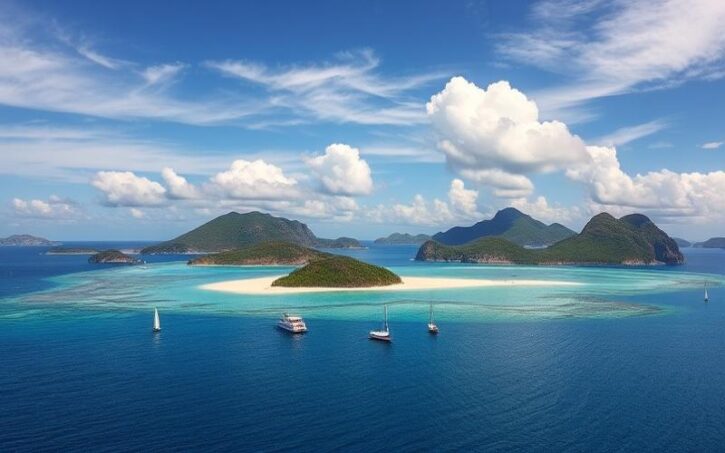
Seven Mile Beach is without a doubt the most sought-after area in the Cayman Islands. This white sand beach, bordered by crystal-clear waters, attracts thousands of visitors each year. Real estate here is particularly dynamic, with a high concentration of luxury hotel complexes, condominiums, and high-end villas. Waterfront properties are the most sought-after and command the highest prices on the island.
George Town: The Bustling Capital
George Town, the capital of the Cayman Islands, is another major tourist attraction hub. Its port regularly welcomes cruise ships, generating a constant flow of visitors. The city center is home to many shops, restaurants, and tourist attractions. The real estate market here is diverse, ranging from downtown apartments to single-family homes in outlying residential neighborhoods.
Rum Point and Cayman Kai: The Authentic Charm of the North
Located in the north of Grand Cayman, the areas of Rum Point and Cayman Kai offer a more relaxed and authentic atmosphere. These sectors attract tourists seeking tranquility and water activities. The real estate market here is characterized by luxury waterfront villas and more intimate residential complexes.
Soaring Prices: When Tourism Drives Up Real Estate Values
The constant influx of tourists to the Cayman Islands has had a significant impact on real estate prices, particularly in the most sought-after areas:
A Steady Rise in Property Values
In recent years, real estate prices in the Cayman Islands have experienced a steady increase. This trend is particularly pronounced in popular tourist areas like Seven Mile Beach, where prices per square meter have reached new heights. According to recent local real estate market data, the average price of a luxury waterfront apartment on Seven Mile Beach can exceed 10,000 Cayman Islands dollars (approximately 12,000 US dollars) per square meter.
Land Scarcity: An Amplifying Factor
The limited land area of the Cayman Islands, combined with growing demand linked to tourism, has led to a scarcity of available land. This situation has the effect of increasing upward pressure on real estate prices. Buildable lots, especially those located on the waterfront, have become extremely coveted and expensive assets.
A Booming Luxury Market
High-end tourism has fostered the development of a luxury real estate market in the Cayman Islands. Many prestigious residential and hotel complex projects have emerged in recent years, attracting wealthy clientele seeking exclusive real estate investments. This trend has contributed to driving prices upward, even in the more modest segments of the market.
Seasonal Rentals: An Eldorado for Real Estate Investors
The tourism dynamism of the Cayman Islands has paved the way for a thriving seasonal rental market, offering interesting opportunities for real estate investors:
Attractive Rental Yields
The strong demand for tourist accommodations allows property owners to benefit from attractive rental yields. Seasonal rentals, especially in sought-after areas like Seven Mile Beach, can generate substantial income during the high tourist season. According to industry estimates, a well-located apartment can achieve an occupancy rate of over 80% per year, with daily rates that can exceed 500 US dollars during peak season.
Diversification of Accommodation Offerings
The seasonal rental market has diversified considerably to meet the varied expectations of tourists. In addition to classic apartments and villas, there is a development of more original accommodation offerings, such as eco-lodges or residences with hotel services. This diversification allows investors to position themselves in specific and potentially more profitable niches.
The Rise of Online Rental Platforms
The emergence of online rental platforms like Airbnb has facilitated connections between property owners and tourists, further stimulating the seasonal rental market. This trend has encouraged many investors to acquire real estate properties specifically for the purpose of short-term tourist rentals.
Good to Know:
Foreign investors wishing to purchase real estate in the Cayman Islands must obtain a license from the local government. This procedure, although relatively straightforward, can take several weeks and incur administrative fees.
Challenges and Opportunities in the Cayman Real Estate Market
While tourism has undeniably boosted the Cayman Islands real estate market, it has also created certain challenges that local authorities and industry players must address:
Pressure on Local Housing
The rise in real estate prices, fueled by tourism, has made access to housing more difficult for the local population. Caymanian authorities are aware of this issue and are considering measures to preserve housing affordability for permanent residents, notably through affordable housing programs.
The Need for Sustainable Development
The real estate boom linked to tourism raises environmental questions, particularly regarding the preservation of coastal ecosystems. Authorities and real estate developers are increasingly sensitive to these issues, favoring construction projects that are environmentally friendly and incorporate sustainability standards.
Diversification Opportunities
The dynamism of the tourist real estate market opens the door to new diversification opportunities. There is notably a growing interest in luxury senior residences, wellness complexes, or real estate projects focused on ecotourism. These niches represent interesting prospects for investors looking for new market segments.
Future Outlook: A Constantly Evolving Real Estate Market
The future of the Cayman Islands real estate market looks promising, driven by a growing tourism sector. Several trends are emerging for the years to come:
Development of New Tourist Areas
To meet growing demand and relieve pressure on the most popular areas, new tourist zones are being developed. The Bodden Town area, east of Grand Cayman, is the subject of several large-scale real estate projects that could reshape the island’s tourist map.
Innovation in Real Estate Offerings
Real estate developers are competing with innovation to stand out in an increasingly competitive market. We are thus seeing the emergence of novel concepts such as floating residences, real estate complexes integrating cutting-edge renewable energy technologies, or projects combining luxury residences and marine research centers.
Strengthening Regulations
Faced with the challenges raised by tourism-related real estate development, Caymanian authorities are considering strengthening sector regulations. Measures aimed at more strictly regulating seasonal rentals, promoting the construction of affordable housing, or imposing stricter environmental standards could emerge in the coming years.
In conclusion, the impact of tourism on the Cayman Islands real estate market is undeniable. It has transformed the economic and urban landscape of the archipelago, offering numerous investment opportunities while raising challenges in terms of housing affordability and sustainability. In this dynamic context, the Cayman Islands continue to attract real estate investors from around the world, drawn by the yield prospects and exceptional quality of life that this Caribbean paradise offers.
Good to Know:
The Cayman Islands offer an attractive tax environment for real estate investors, with no income tax, property tax, or inheritance tax. However, it is important to thoroughly research the tax implications in your home country before investing.
Disclaimer: The information provided on this website is for informational purposes only and does not constitute financial, legal, or professional advice. We encourage you to consult qualified experts before making any investment, real estate, or expatriation decisions. Although we strive to maintain up-to-date and accurate information, we do not guarantee the completeness, accuracy, or timeliness of the proposed content. As investment and expatriation involve risks, we disclaim any liability for potential losses or damages arising from the use of this site. Your use of this site confirms your acceptance of these terms and your understanding of the associated risks.

Cyril Jarnias is an independent expert in international wealth management with over 20 years of experience. As an expatriate himself, he is dedicated to helping individuals and business leaders build, protect, and pass on their wealth with complete peace of mind.
On his website, cyriljarnias.com, he shares his expertise on international real estate, offshore company formation, and expatriation.
Thanks to his expertise, he offers sound advice to optimize his clients' wealth management. Cyril Jarnias is also recognized for his appearances in many prestigious media outlets such as BFM Business, les Français de l’étranger, Le Figaro, Les Echos, and Mieux vivre votre argent, where he shares his knowledge and know-how in wealth management.





