
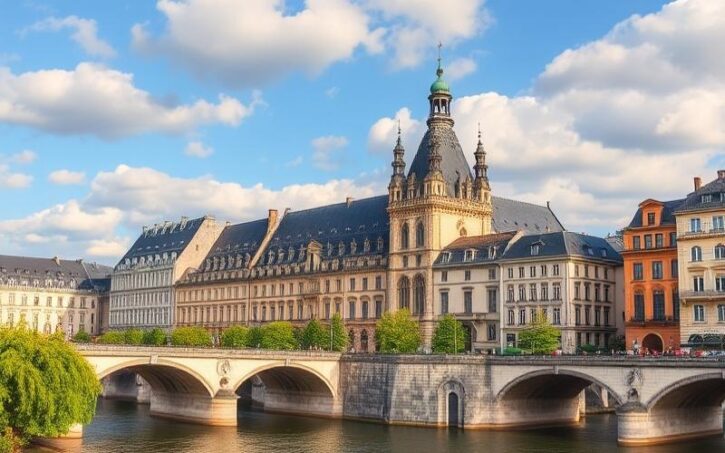
 Published on and written by Cyril Jarnias
The Grand Duchy of Luxembourg: A Popular Destination for the French
The Grand Duchy of Luxembourg, with its dynamic job market and exceptional quality of life, attracts numerous French citizens each year seeking new opportunities. But why do certain places seem to capture their attention more than others?
Between cosmopolitan cities like Luxembourg City, where the international atmosphere appeals to more and more expatriates, and suburban communities offering better access to nature and spacious housing, the residential choices of French citizens reveal interesting trends.
This article explores the reasons behind these choices and their implications for Luxembourg’s community landscape.
Understanding French Immigration to Luxembourg
The main reasons driving French citizens to settle in Luxembourg are:
- Employment Opportunities: The Luxembourg job market is dynamic, particularly in the financial sector, IT, logistics, and services. Salaries are generally higher than in neighboring French regions.
- Tax Benefits: Luxembourg’s tax system is attractive to many professionals and expatriates, with tax rates often lower than those in France.
- Geographic Proximity: For many French citizens from Lorraine or Alsace, Luxembourg represents an accessible destination that allows them to maintain strong family and cultural ties with France.
Typical Profiles of French Immigrants in Luxembourg
- Cross-border workers, residing in France but working daily in Luxembourg.
- Financial sector expatriates, holding skilled or managerial positions in banks, insurance companies, or international firms.
- Young graduates attracted by the local economic dynamism.
Comparative Table of Typical Profiles
| Profile | Main Characteristics | Preferred Sectors |
|---|---|---|
| Cross-border Workers | Resident in France; stable employment | Finance; administration; IT |
| Resident Expatriate | Complete relocation to Luxembourg | Banking; consulting; insurance |
| Young Graduate | Post-university mobility | Start-ups; tech |
Recent Statistics on French Population Growth
- As of January 1, 2024, Luxembourg’s total population reached 672,050 inhabitants, nearly half of whom are foreigners.
- The proportion of foreigners stands at 47.3%, with a strong French presence among them.
- Since 2014, French immigration has constituted a growing share of new arrivals.
List of Observed Migration Trends
- Continuous but moderate growth over the past two years (annual increase of +1.7%).
- Majority of young, male immigrants seeking professional advancement.
Illustrative Case Studies and Testimonials
“I chose Luxembourg for its professional prospects in finance. Integration is made easier by a very present French community here.”
— French banking executive
“As a cross-border worker from Metz, I benefit from the Luxembourg salary while maintaining my family home on the French side. This allows for a balance between a dynamic professional life and strong personal roots.”
— IT engineer
Key Points on Social Integration
Intercultural coexistence has become an integral part of Luxembourg’s policy thanks to a recent legislative reform promoting inclusion regardless of nationality.
List of Factors Facilitating Integration:
- Dynamic French-speaking community networks
- Multilingual education system
- Rich cultural life shared between local and foreign communities
Good to Know:
French immigration to Luxembourg is primarily motivated by employment opportunities in the financial sector and attractive tax benefits, complemented by geographic proximity facilitating commuting for cross-border workers. In 2023, French citizens accounted for approximately 18% of Luxembourg’s total population, with a significant portion of these residents working in finance or coming for enriching professional experiences. Among immigrants, typical profiles include expatriates attracted by major Luxembourg banks and cross-border workers usually residing in Lorraine. Case studies show that despite their successful professional integration, French citizens may face cultural challenges, although Franco-Luxembourg associations facilitate integration by regularly organizing social and cultural events. These dynamics contribute to an evolving socio-economic landscape, with French citizens often settling in communes near the capital like Esch-sur-Alzette, while strengthening historical ties between France and Luxembourg.
Neighborhoods Favored by French Expatriates
| Neighborhood | Main Characteristics | Advantages for French Expatriates | Demographic and Historical Information | Expatriate Testimonials |
|---|---|---|---|---|
| Limpertsberg | Upscale, residential neighborhood close to the center and Kirchberg. Numerous green spaces, prestigious schools, developed cultural offerings. | Immediate proximity to schools (Athénée, international schools), family-friendly setting, excellent transportation (tram, bus), cosmopolitan atmosphere, varied cultural and gastronomic life. | 11,521 inhabitants (2025), 131 nationalities, 71.91% foreigners. Bourgeois neighborhood, elegant architecture, highly sought after by European executives. | “The neighborhood is very lively, you meet French families on every street corner and everything is accessible on foot.” |
| Belair | Upscale, quiet, green residential neighborhood west of downtown. | Parks, quality schools, local shops, safety, easy access to the center. Perfect for families seeking comfort and tranquility without being isolated from the city. | Historic neighborhood of the Luxembourg bourgeoisie, varied housing (houses, apartments), high proportion of international executives. | “Here, we enjoy a serene living environment while remaining close to amenities.” |
| Kirchberg | Modern neighborhood, business center, European institutions, large green spaces. | Presence of international schools (including European School), sports/cultural infrastructure (Philharmonie, Mudam), easy tram access, international atmosphere, proximity to offices. | Neighborhood in full expansion since the 2000s, economic heart of the country, very international profile. | “Kirchberg is perfect for families: everything is new, functional, and there are many French children.” |
| Gasperich | Neighborhood in full development, new commercial area (Cloche d’Or), Vauban campus, large parks. | École Vauban (French high school), direct access to highways, modern transportation (tram), shopping center, numerous new housing options, attractive for young professionals and French families. | Strong demographic growth since 2019, many new buildings, multicultural neighborhood, popular among young couples and expatriate families. | “We chose Gasperich for the proximity to Lycée Vauban and the ease of transportation.” |
| Bonnevoie | Dynamic, popular neighborhood, interesting quality/price ratio, cultural diversity. | More affordable housing, lively atmosphere, numerous shops, neighborhood life, quick access to downtown, diversity of schools and services. | Multicultural neighborhood, undergoing transformation, appreciated for its authenticity and accessibility, high proportion of young families. | “Bonnevoie is perfect for starting out in Luxembourg, you find many French people there and the atmosphere is friendly.” |
| Ville-Haute | Historic heart, tourist and commercial area, exceptional architectural setting. | Immediate proximity to all services, restaurants, museums, transportation. Ideal for lovers of urban animation and heritage. | Historic neighborhood, former center of the fortified city, mix of ancient architecture and luxury shops, frequented by an international and affluent population. | “Living in Ville-Haute means enjoying Luxembourg’s beauty daily, even if prices are high.” |
Main Attractiveness Criteria for French Expatriates:
- Proximity to international and French schools (École Vauban, European School, Athénée)
- Easy access to public transportation (tramway, bus, highway access)
- Wide choice of shops, parks, and services
- Cosmopolitan atmosphere and strong French-speaking community
- Quality of life and safety
“In Luxembourg, there’s a real French community, especially around schools and neighborhoods like Limpertsberg, Belair, or Gasperich. We integrate quickly thanks to associations and local events.”
Statistics and Notable Facts:
- Over 70% foreigners in popular neighborhoods (e.g., Limpertsberg)
- Continuous increase in expatriate population in modern neighborhoods (Gasperich, Kirchberg)
- Very strong real estate demand, particularly around French-speaking and international educational institutions
Key Takeaways:
French expatriates favor neighborhoods offering both suitable school infrastructure, high quality of life, and an international atmosphere, thus facilitating their integration and that of their families.
Good to Know:
French expatriates in Luxembourg often favor neighborhoods such as Belair, Gasperich, and Kirchberg. Belair is sought after for its upscale residential setting and proximity to international schools like St. George’s, while offering green spaces and quality shops. Gasperich, in full development, attracts with its modern infrastructure and easy access to downtown thanks to a good bus network. Kirchberg, home to numerous European institutions, appeals for its amenities, cultural options, and recent apartments often favored by young professionals. According to an INS study, 15% of Kirchberg residents are of French origin, attracted by the international and community atmosphere. Expatriate testimonials highlight easy integration thanks to a dynamic French community and a myriad of social and cultural activities in these neighborhoods.
French-Speaking Networks and Their Influence
The history of French-speaking communities in Luxembourg is part of an ancient dynamic, marked by multilingualism and the persistent influence of French in the administrative, cultural, and economic spheres. Since the Middle Ages, Luxembourg territory has been characterized by the coexistence of French-speaking regions (Walloon influence in the west) and German-speaking regions (Moselle dialects in the east). This linguistic duality intensified after the French Revolution, when French became the language of administration and law, a status it still holds today in Luxembourg legislation.
Cultural and Economic Impacts of French-Speaking Presence
- French is today, along with German and Luxembourgish, one of the country’s three official languages, but it holds a privileged place in administrative, legal, and educational domains.
- The presence of a strong French-speaking community, particularly of French and Belgian origin, has fostered the development of cultural offerings in French: theaters, bookstores, festivals, and media.
- Economically, the French-speaking world attracts French companies and facilitates the integration of executives and cross-border workers, especially in finance, insurance, and services.
Role of French-Speaking Associations and Institutions
- Associations such as the Union of French Abroad (UFE Luxembourg), Français du Monde-ADFE, as well as business clubs and Franco-Luxembourg chambers of commerce play a central role in welcoming, orienting, and networking new arrivals.
- French schools and bilingual sections, like Lycée Vauban, offer families educational and cultural continuity, facilitating children’s integration.
- Cultural institutions (Alliances françaises, cultural centers) organize events, workshops, and meetings, strengthening the sense of belonging to the French-speaking community.
Concrete Examples of Integration Through French-Speaking Networks
- UFE’s “welcome coffees,” where new expatriates can meet other French citizens, obtain practical advice about life in Luxembourg, and benefit from personalized support.
- Professional integration and employment support workshops offered by mutual aid networks and French-speaking professional associations.
- Regular organization of cultural evenings, conferences, and sports meetings that promote intercommunity exchange.
Influence of French-Speaking Media
French-language media (newspapers, radio, news sites) such as Le Quotidien, Paperjam, or the French version of RTL Luxembourg, allow expatriates to stay informed and maintain strong cultural ties with their home country.
Social networks and online groups facilitate mutual aid, experience sharing, and dissemination of practical information for new arrivals.
Networks and Residential Attractiveness for French Citizens
| Neighborhood/Region | Main Characteristics | Attractiveness for French Speakers |
|---|---|---|
| Ville-Haute (Luxembourg) | Historic center, institutions, shops, cultural life | Very strong, presence of networks and events |
| Limpertsberg | Proximity to French schools, residential atmosphere, green spaces | Strong, French families and active associations |
| Belair | Sought-after residential neighborhood, schools and shops, community life | Strong, dynamic French community |
| Kirchberg | Business district, European institutions, modern housing | Attractive for executive expatriates |
| Esch-sur-Alzette | University town, cultural diversity, proximity to border | Significant French-speaking community |
French-speaking networks play a decisive role in settlement choices, offering a reassuring environment, adapted services, and a social fabric facilitating integration.
Neighborhoods where these networks are most dynamic naturally become attraction poles for new French-speaking arrivals, fostering the emergence of genuine “French villages” within Luxembourg.
Key Takeaways:The vitality of French-speaking networks in Luxembourg not only contributes to expatriate integration but also shapes the country’s cultural and economic landscape, while significantly influencing the settlement choices of recently arrived French citizens.
Good to Know:
French-speaking communities in Luxembourg emerged through a history of continuous immigration, contributing significantly both culturally and economically. Associations such as the Union of French Abroad and the Alliance Française play an essential role in helping new arrivals integrate, offering cultural events and support services. French-language media, including publications like “Le Quotidien,” strengthen the sense of community by providing a platform for expression and cohesion among expatriates. A marked presence of these networks exists particularly in neighborhoods like Belair and Limpertsberg, where the density of French-speaking resources often influences French citizens to choose these areas for their cultural dynamism and facilitated access to services.
Integration Challenges in Luxembourg Society
Language Barriers and Multiplicity of Official Languages
Luxembourg has three official languages: Luxembourgish, French, and German. This multiplicity creates challenges for new arrivals, including French citizens, who, although French-speaking, face the need to also master German (administrative and school language) and Luxembourgish (social and cultural integration language).
- French is the main language for approximately 14.9% of the population, but daily life and the job market often require trilingualism.
- Administrative procedures and certain public jobs require understanding Luxembourgish, which can hinder professional and social integration.
Cultural Differences Between French and Luxembourgers
- French expatriates note that Luxembourgers value discretion, punctuality, and reserve, while French are perceived as more direct and expressive.
- Work habits differ: management in Luxembourg is often more consensual and hierarchical.
- Lifestyles and local traditions (e.g., popular festivals, gastronomy, respect for rules) require an adaptation period.
Importance of Social and Professional Networks
- Social networks (Facebook groups, specialized forums) serve as information relays and support for new arrivals.
- Professional networks, such as the Franco-Luxembourg Chamber of Commerce or business clubs, facilitate access to employment and exchange of best practices.
“Without expatriate groups on social networks, I wouldn’t have found my first apartment or understood how the Luxembourg healthcare system works.”
(Pauline, arrived in Luxembourg in 2022)
Access to Job Market and Discrimination
Luxembourg offers a dynamic job market, but competition is strong and knowledge of multiple languages is a frequent prerequisite.
- Certain professions, particularly in public service, remain difficult to access without mastery of Luxembourgish.
- Expatriates report indirect discrimination:
- Priority given to candidates mastering the three official languages.
- Recruitment favoring long-term residents or those from local networks.
“Even with a good CV, I was excluded from several positions because I didn’t speak Luxembourgish fluently.”
(Jean, senior executive, 2023)
Role of Local Initiatives to Facilitate Integration
- Many municipalities offer free or reduced-cost Luxembourgish courses for expatriates.
- Associations (e.g., Integration.lu, Luxembourg Accueil) organize intercultural events, workshops, and information sessions.
- The City of Luxembourg implements sponsorship programs between Luxembourg residents and new arrivals.
Recent Statistics on French Population in Luxembourg
| Year | Number of French Residents | Share of Total Population |
| 1970 | ~2.5% | |
| 2023 | 49,104 | 7.43% |
| 2025 (est.) | >49,000 | ~7.5% |
- French represent the second largest foreign group in Luxembourg.
- Since 2011, the number of French residents has increased by 56.1%.
- 73.5% of French in Luxembourg were born in France, while the majority of those under 20 were born in Luxembourg.
Main Challenges Faced by French Expatriates
- Mastery of official languages, particularly Luxembourgish.
- Understanding and adaptation to social and cultural norms.
- Access to employment conditioned by multilingualism.
- Need to rely on community and professional networks to overcome isolation and administrative obstacles.
“You sometimes feel foreign even speaking French, because the cultural and institutional context is very different.”
(Sophie, teacher, 2024)
“Local initiatives allowed me to integrate, but you need to be proactive and step out of your comfort zone.”
(Alexandre, engineer, 2025)
Good to Know:
The integration of French citizens in Luxembourg presents several challenges, particularly due to language barriers resulting from the country’s three official languages: Luxembourgish, French, and German. In 2023, approximately 47,000 French citizens resided in Luxembourg, a 3% increase compared to 2022, highlighting the need for adaptation to this linguistic multiplicity. Cultural differences can also pose obstacles, with Luxembourgers placing great importance on punctuality and discretion, values sometimes less present in France. To integrate, it is crucial for expatriates to build strong social and professional networks while getting involved in local life through initiatives such as sports or cultural clubs, which offer opportunities for meeting and exchange. Access to the job market may encounter discrimination, though mitigated by growing demand for diverse labor. Initiatives like the Information Desk for New Residents (GINR) provide essential support by offering practical information and orientation sessions to acclimate new arrivals. Expatriate testimonials emphasize that learning Luxembourgish greatly facilitates integration, while online community platforms for French in Luxembourg are valuable for sharing tips and life experiences.
Disclaimer: The information provided on this website is for informational purposes only and does not constitute financial, legal, or professional advice. We encourage you to consult qualified experts before making any investment, real estate, or expatriation decisions. Although we strive to maintain up-to-date and accurate information, we do not guarantee the completeness, accuracy, or timeliness of the proposed content. As investment and expatriation involve risks, we disclaim any liability for potential losses or damages arising from the use of this site. Your use of this site confirms your acceptance of these terms and your understanding of the associated risks.

Cyril Jarnias is an independent expert in international wealth management with over 20 years of experience. As an expatriate himself, he is dedicated to helping individuals and business leaders build, protect, and pass on their wealth with complete peace of mind.
On his website, cyriljarnias.com, he shares his expertise on international real estate, offshore company formation, and expatriation.
Thanks to his expertise, he offers sound advice to optimize his clients' wealth management. Cyril Jarnias is also recognized for his appearances in many prestigious media outlets such as BFM Business, les Français de l’étranger, Le Figaro, Les Echos, and Mieux vivre votre argent, where he shares his knowledge and know-how in wealth management.





