
 Published on and written by Cyril Jarnias
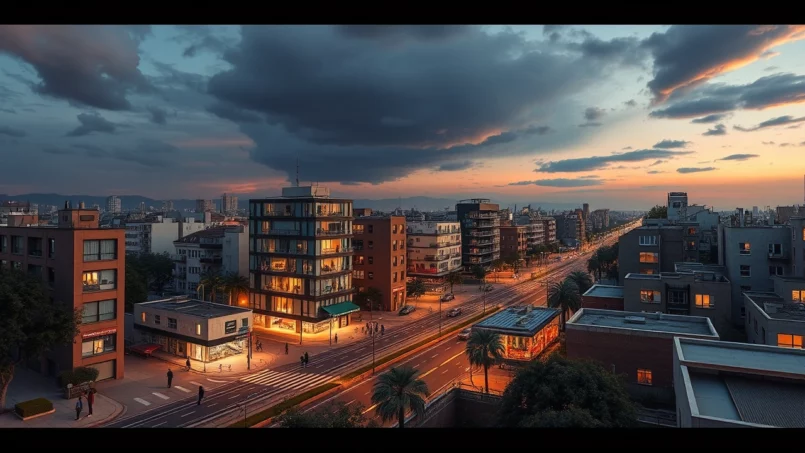
Peru’s urbanization is advancing at a rapid pace, but for a long time, it did so without a true compass. Uncontrolled expansion, informal settlements, lack of basic services, chaotic mobility: the country is now paying the price for decades of poorly planned urban growth. However, in recent years, a shift has begun. New laws, major metropolitan plans, neighborhood renovation programs, structuring transportation projects, smart city strategy: the upcoming urban development projects in Peru are painting a radically different landscape from that of the early 2000s.
Percentage of Peru’s urban population living in slums, informal settlements, or inadequate housing in 2020.
Faced with this severe diagnosis, the state, municipalities, international donors, and the private sector are rolling out a battery of projects that, if realized, could durably transform the country’s urban face.
A National Framework Under Complete Overhaul
At the heart of this transformation is a new legal and policy arsenal, which aims to break with the logic of urbanization through land “invasions” and subsequent regularization.
The National Housing and Urbanism Policy (PNVU), approved by supreme decree 012-2021-VIVIENDA, starts from a simple idea: the main public problem in urban matters is “the insufficiency of the population’s living conditions.” It identifies three major causes: the very low impact of territorial planning, inefficient land production and occupation, and reduced access to decent housing.
This policy sets goals for 2030: ensuring the sustainability of land occupation, improving access to adequate housing and external living conditions. It places the right to housing and the right to the city at the center, favoring a model of urban consolidation over expansion, and prioritizing poor or vulnerable populations.
The framework is complemented by the Law on Sustainable Urban Development (LDUS – Law 31313), which entered into force the same year. This law notably introduces the concept of “Special Zones of Social Interest”, allowing certain sectors to be declared a priority for urbanization, renovation, or regeneration. The idea is to concentrate public efforts on places where urban transformation can have the strongest social impact.
In parallel, the National Urban Development Policy (PNDU) sets ambitious numerical targets for Peruvian cities, including:
| National Urban Indicator | Recent Situation | Set Target |
|---|---|---|
| Urban Inequality Index | 0.95 (2020) | 0.70 (2030) |
| Housing Quality Index | 0.64 (2019) | 1.0 (2030) |
| Urban population without access to mobility services (roads/sidewalks) | 52 % (2017) | 40 % (2021, already achieved) |
This new legal framework is linked to the National Strategic Planning System (CEPLAN) and the National Infrastructure Plan for Competitiveness (PNIC), which identifies an infrastructure deficit of $110.2 billion for the period 2019-2038, with 44% for transportation and 20% for sanitation. In other words: the urban challenge is not limited to the city’s form; it affects its vital networks.
Housing, the Core of the Urban Battle
Nothing better summarizes Peru’s urban contradictions than the housing issue. In 2017, the country had a quantitative deficit of 566,667 households (missing housing) and a qualitative deficit of 997,985 households (inadequate housing), representing 6.9% and 12.1% of households, respectively. Other, more recent estimates mention nearly 2 million missing housing units in 2014, with an annual increase of 142,000 units, and a current deficit close to 2 million.
Percentage of self-built homes among the 6.6 million urban housing units, illustrating the dominance of the informal sector.
The formal market remains almost inaccessible for the majority: only 45% of families can afford to buy the cheapest new home on the formal market. Unsurprisingly, the deficit is concentrated in low and very low-income households (segments D and E, as well as low and lower-middle income households), which account for more than 80% of households in deficit.
Faced with this, the state is mobilizing an arsenal of programs, managed mainly by the Ministry of Housing, Construction and Sanitation (MVCS) and by Fondo MiVivienda (FMV), a public financial institution that acts as a second-tier bank.
Among these instruments are:
| Program / Instrument | Main Objective | Key Modalities |
|---|---|---|
| Techo Propio | Access to housing for modest households | Bono Familiar Habitacional (BFH) subsidy, purchase of new homes, construction on own land, home improvement |
| Nuevo Crédito MiVivienda (NCMV) | Mortgage credit for middle and lower-middle classes | Bono del Buen Pagador (BBP) subsidy, extension with an “integrator BBP” for the most vulnerable |
| MiVivienda, Mi Casa Más, Mi Construcción, Mi Terreno | Complementary products | Financing for purchase, construction, or land acquisition |
| Urban Land Generation Program (PGSU) | Produce urbanized land for social housing | Planning and servicing of land for real estate projects |
| Comprehensive Neighborhood Improvement Program (PMIB) | Upgrading of precarious neighborhoods | Improvement of public space and local mobility |
Despite these efforts, the gap between needs and resources remains abysmal. Between 1999 and 2014, approximately $3.3 billion was invested in housing programs, while some estimates suggest it would take up to $2 billion annually to truly close the housing “gap”. Upcoming urban development projects must therefore both consolidate what exists and correct its limitations, by further reorienting subsidies towards quality (qualitative deficit) and urban integration rather than mere quantitative production.
An important shift currently being designed aims to refocus FMV subsidies on citizens’ real needs (household, location, vulnerabilities) and better articulate them with the production of urbanized land from the PGSU, to avoid reproducing poorly serviced subdivisions.
Cities That Sprawl… but Seek to Densify
The figures for urban expansion summarize the scale of past excesses: between 2001 and 2018, 93% of newly occupied urban areas correspond to informal urbanization. In total, over 50% of Peru’s urban territory consists of marginal neighborhoods. In some cities like Piura, informal settlements cover about 70% of urbanized land.
This “bottom-up” urbanization has allowed millions of families to access a roof, but often in areas exposed to risks (floods, landslides, earthquakes) and without basic services. The El Niño episode of 2017 in Piura, which affected nearly 84,000 homes around the river and in Bajo Piura, illustrates the dramatic vulnerability of these spontaneous settlements.
New urban projects favor the consolidation of the existing city over its sprawl. The National City and Urbanism Policy (PNVU) aims to discourage informal and speculative land occupation and ensure the production of safe and serviced land. The Law on Urban and Social Development (LDUS) facilitates this approach by allowing the declaration of social interest zones, providing a framework for better-planned renewal or densification operations.
In several cities, recent urban studies favor, for example, the creation of “secondary centralities” rather than blanket expansion, and trend, moderate, or transformation scenarios are evaluated in terms of land consumption, infrastructure costs, and environmental impact.
The average price per square meter of urbanized lot in Carabayllo, Lima, rose from about $106 in 1998 to over $339 today.
Projects for urban land generation, which increased the stock of land ready for social projects from 11 hectares in 2018 to 116 hectares in 2021, or the state’s provision of 57 public properties that can accommodate 164,000 social housing units, show that another path is possible: planned urbanization, supported by public land.
Mobility and Major Transportation Projects: The City as Network
It is difficult to imagine urban transformation without a transportation revolution. In Peru, about 70% of urban trips are made by public transport, often under precarious conditions, through a network of buses, vans, and minibuses that are largely private and long unregulated. The legislative decrees of the 1990s indeed largely liberalized the sector, opening up a fragmented, poorly regulated market, generating congestion, road insecurity, and emissions.
Upcoming projects seek to reverse this logic. Several levels of planning overlap: the 2018 National Urban Transportation Policy (PNTU), the 2019 National Sustainable Urban Transportation Program (PROMOVILIDAD), and, at the local level, initiatives like Smart Lima 2030 or the CIMO program (Ciudades en Movimiento), which supports Piura, Arequipa, and Trujillo.
Length in kilometers of the Route of the Beltway, a structuring project for the Lima-Callao highway ring road.
These projects are part of an even broader transportation modernization program, led by the ProInversión agency through public-private partnerships. A $37 billion transportation infrastructure upgrade plan envisions not only urban networks but also doubling the national railway network (over 1,900 km new) and creating major corridors like the Lima–Ica high-speed train or the bioceanic corridor to Brazil.
Budget in millions of dollars for the modernization of the Huancayo–Huancavelica railway line in Peru.
At the local level, programs like PMIB act on a smaller scale, improving neighborhood roads and sidewalks to ensure a minimum of urban mobility. The percentage of urban dwellers without access to these basic services thus fell from 52% in 2017 to 40% in 2021, a notable reduction in a few years.
All these transportation projects only make sense if integrated into an overall vision. In Lima, this is the ambition of the Metropolitan Development Plan for 2040, part of which is dedicated to consolidating an “interconnected metropolis.” At the national level, the PNTU and PROMOVILIDAD seek to standardize mobility standards in large and medium-sized cities.
Lima, Laboratory of Urban Transformation
The capital alone accounts for nearly 45% of the country’s GDP and a major share of port traffic via Callao. It is therefore at the heart of the urban development strategy, but also of its contradictions: strong institutional fragmentation (49 district municipalities between Lima and Callao), overlapping jurisdictions, a deficit in metropolitan planning, and great dependence on national decisions.
For a long time, Lima operated with an outdated metropolitan plan (the 1990–2010 plan was not updated on time), and it is only recently that the Metropolitan Planning Institute (IMP) has relaunched substantive work, in coordination with the MVCS. The new Metropolitan Plan for 2040 proposes a twenty-year investment program of over 327 billion soles (approximately $82 billion), structured around five axes: just, interconnected, healthy, productive, and participatory metropolis.
Total number of projects identified, among which 28 have been declared priority, including a Smart City Master Plan for Lima.
Lima’s Historic Center: Heritage Renovation and a New Regime
Lima’s Historic Center, a UNESCO World Heritage site, is one of the most visible testing grounds for the new urban policy. After a first master plan in 1998, a new “Master Plan for the Historic Center of Lima until 2029, with a 2035 vision” was approved in 2019. This massive document of over 4000 pages, developed with the Ministry of Culture and UNESCO, combines heritage conservation, residential revitalization, regulation of commercial activities, and improvement of public space.
The municipal program ProLima leads targeted interventions to recover the historic center. This includes the restoration of religious monuments (Santo Domingo convent, Sanctuary of Saint Rose of Lima, La Recoleta), the requalification of public spaces in Barrios Altos, the creation of a tourism hub at Quinta Heeren, and a project for a school of traditional knowledge in the former San Andrés hospital. Studies have identified nearly 200 buildings in need of work, and pilot collective housing projects serve as models for heritage-respectful densification.
To secure long-term funding, a specific law (31980) now guarantees a stable annual budget for the center’s revitalization. Support from the Inter-American Development Bank, via a $30 million loan for urban and heritage rehabilitation, complements these efforts.
Sustainable City, Climate City: Towards New Regulation of Air and Public Space
Lima is also one of the testing grounds for global programs on sustainable cities. The “Sustainable Cities” project led by the Ministry of Environment, IUCN, IDB, and financed by the Global Environment Facility (GEF) plans to develop long-term planning tools based on ecosystem conservation, climate adaptation, land use planning, and transit-oriented development.
By 2035, the low-emission zone in Lima’s historic center could reduce fine particulate emissions by 96%.
These initiatives foreshadow Lima’s future urban regulations: progressive restriction of automobile traffic in certain zones, prioritization of collective and active transport, development of new parks and green spaces, promotion of sustainable construction. Initiatives like the “Ocupa tu Calle” project, which created the first “parklet” in Miraflores on a parking space, or the participatory revitalization of a 7,200 m² park in Villa El Salvador, show how micro-interventions on public space can accompany major projects.
Smart Cities: The Urban Digital Agenda
Upcoming urban development projects in Peru are not limited to concrete and asphalt. An increasingly visible dimension is that of “smart cities.” The country is currently developing a National Strategy for Smart and Sustainable Cities, coordinated by the Secretariat for Digital Government and Digital Transformation. A group of Peruvian, German, and South Korean experts is working on this document, which must articulate information technologies (IoT, artificial intelligence, big data) with urban policies.
Amount in Peruvian soles allocated to the pilot project for intelligent video surveillance in the Miraflores district of Lima.
Another example comes from the city of Huánuco, where a study showed that with an investment of about $5 million, it would be possible to deploy an operations center, a 30 km fiber optic network, 160 security cameras, a waste management system, and more connected health and education services. The estimated cost – just over $50 per inhabitant for implementation and then $20 per year for operation – makes it possible to gauge the potential feasibility of such initiatives in intermediate cities.
The private company Seven Star Internazionale plans to transform the cities of Trujillo, Chiclayo, Talara, and Piura into smart cities. Planned applications include innovative transportation solutions, digital tourism development, and the use of drones for beach cleaning.
These initiatives face structural challenges: still uneven digital infrastructure, limited municipal budgets, a deficit in technical skills. A 2023 survey of municipal officials in Lima, for example, showed that nearly half considered the level of open data unsatisfactory, 43% judged the integration of multimodal transport to be deficient, and 50% rated the municipal budget as “poor” in relation to the needs for smart transformation. However, the momentum has begun, supported by national innovation policies, tax incentives, and a rapidly growing smart cities market.
Secondary Cities and Regional Projects: Decentralizing Urban Development
While Lima captures much of the attention, many upcoming projects also concern intermediate cities, which are experiencing strong real estate dynamics and rapid urbanization: Arequipa, Trujillo, Piura, Chiclayo, Ica, Cusco, among others.
The city of Arequipa, Peru, facing urban pressure on its historic terraced agricultural landscapes, implemented a multi-stakeholder project regulated by municipal ordinances (such as Ordinances 432 and 454). This participatory strategy, based on environmental information and land regulation, reduced the conversion of agricultural land from 251 hectares (1997-2005) to less than one hectare during the implementation of the 2007-2008 action plan, illustrating a model of more compact and ecosystem-respectful urban development.
In other cities, projects focus more on infrastructure and mobility: extension or construction of roads, cable cars to access tourist sites like Choquequirao, road safety and bike parking programs (via CIMO), upgrading of water and sanitation networks. The National Sanitation Plan thus aims for universal coverage in sustainable services by 2030, with a current deficit of around $15 billion in the water-wastewater sector.
International actors (UN-Habitat, GEF, IDB) finance and support environmental programs in several Peruvian cities like Chiclayo, Tarapoto, Ayacucho, or Cuzco. These initiatives integrate nature-based solutions, such as wetland restoration, urban reforestation, and flood risk management, as well as integrated planning approaches.
The Growing Role of the Private Sector and PPPs
Upcoming urban development projects in Peru rely heavily on public-private partnership (PPP) mechanisms, the “Works for Taxes” scheme, and government-to-government (G2G) agreements. ProInversión promotes a particularly rich portfolio for the 2024–2026 period, with over 40 mature PPP projects representing $6.9 billion in potential investment, a large part of which is in water-sanitation, but also in transportation, real estate, health, and education.
Peru has concluded 24 free trade agreements to facilitate foreign investment in its major infrastructure projects.
On the real estate front, the development of investment vehicles like REITs (Real Estate Investment Trusts) also contributes to structuring the city. The IFC’s investment in Fibra Prime, the country’s first large listed real estate fund, illustrates the growing interest in formal urban assets (offices, logistics, commerce) and in the environmental upgrading of these assets (EDGE certifications, purchases of renewable energy certificates).
This flow of investment represents a considerable opportunity, but it also raises a central question: how to ensure that these projects truly serve the urban model change advocated by the PNVU – consolidation, equity, sustainability – rather than a simple short-term profitability agenda?
Towards What Kind of Peruvian City?
Beyond the numbers, a trend is emerging: Peru seeks to move from unplanned urbanization to planned urbanization. Upcoming urban development projects are unfolding on several fronts: legislative, land-related, infrastructural, social, digital, environmental. They tackle the most visible symptoms (housing, mobility, basic services) while attempting to correct the structural causes (informality, lack of integrated planning, weakness of local capacities).
A table allows visualization of the diversity of ongoing or announced projects.
| Domain | Key Projects and Instruments | Associated Urban Goals |
|---|---|---|
| Legal and Policy Framework | PNVU, LDUS, PNDU, PNTU, PNIC | Change the urban model, integrate planning and investment |
| Housing and Urban Land | Techo Propio, MiVivienda, PGSU, PMIB, public land for social housing | Reduce quantitative and qualitative deficits, produce serviced land |
| Mobility and Transport | Lima Metro (lines 2, 3, 4), El Metropolitano, Beltway Route, PROMOVILIDAD, CIMO | Improve mobility, reduce access inequalities |
| Heritage and Centralities | Master Plan for Lima’s Historic Center, ProLima, renovation of historic neighborhoods, development of secondary centralities | Revitalize centers, densify without exclusion |
| Environment and Climate | “Sustainable Cities” project, Climate Strategy, low-emission zones, nature-based solutions | Adapt cities to climate change, reduce emissions |
| Digital and Smart City | National Smart Cities Strategy, Smart City Lima, Miraflores project, prototypes in Huánuco and the north | Modernize urban management, strengthen security and services |
| Governance and Funding | PPPs, G2G, Works for Taxes, strengthening local capacities | Mobilize resources, improve implementation |
The success of this transformation will depend on several factors. First, on the ability to strengthen local governments, currently limited by weak financial resources, incomplete cadastre systems (only 8 districts out of 530 have a complete and up-to-date cadastre), and a deficit in planning training. Second, on the coherence between different levels of government, while overlapping jurisdictions (as between Lima and Callao, or between Lima and Huarochirí for transportation) have long paralyzed decision-making.
Urban projects must be designed as levers of spatial justice to achieve the objectives of the National City and Urbanism Policy (PNVU). In 2020, nearly half of city dwellers lived in informal or inadequate housing and more than a quarter in monetary poverty. Targets, such as reducing the quantitative housing deficit to 0.5% by 2029, will only be achievable if major transportation, energy, sanitation, or smart city projects explicitly contribute to reducing these inequalities.
The coming years will therefore be decisive. Between a pipeline of over $70 billion in PPP projects, renewed metropolitan plans, massive but underfunded housing programs, and strong social pressure for access to services and security, Peru’s urban future is being shaped now. The question remains whether all these projects, beyond their scale, will manage to produce not only more modern cities but above all more just, more resilient, and truly inclusive cities.
Disclaimer: The information provided on this website is for informational purposes only and does not constitute financial, legal, or professional advice. We encourage you to consult qualified experts before making any investment, real estate, or expatriation decisions. Although we strive to maintain up-to-date and accurate information, we do not guarantee the completeness, accuracy, or timeliness of the proposed content. As investment and expatriation involve risks, we disclaim any liability for potential losses or damages arising from the use of this site. Your use of this site confirms your acceptance of these terms and your understanding of the associated risks.

Cyril Jarnias is an independent expert in international wealth management with over 20 years of experience. As an expatriate himself, he is dedicated to helping individuals and business leaders build, protect, and pass on their wealth with complete peace of mind.
On his website, cyriljarnias.com, he shares his expertise on international real estate, offshore company formation, and expatriation.
Thanks to his expertise, he offers sound advice to optimize his clients' wealth management. Cyril Jarnias is also recognized for his appearances in many prestigious media outlets such as BFM Business, les Français de l’étranger, Le Figaro, Les Echos, and Mieux vivre votre argent, where he shares his knowledge and know-how in wealth management.





