
 Published on and written by Cyril Jarnias
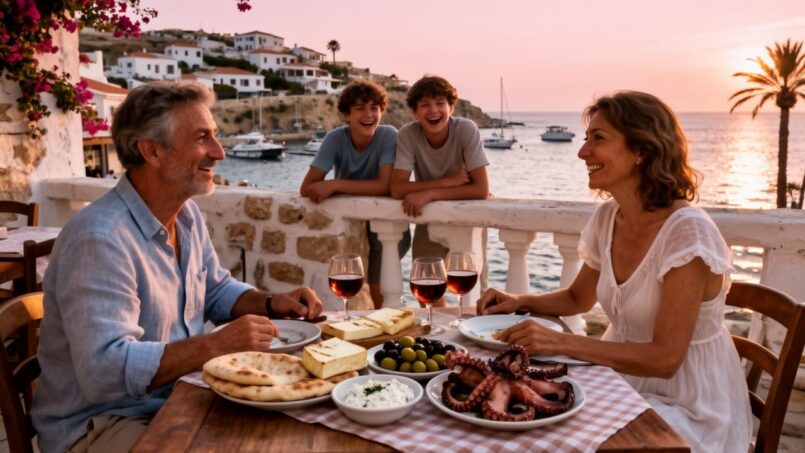
Nearly constant sunshine, favorable taxation, still affordable real estate compared to the French Riviera or Paris: on paper, moving to Cyprus sounds like a great plan for a French person seeking Mediterranean sweetness. But behind the postcard image, the reality is more nuanced: rapidly rising rents, relatively modest average salaries, cultural adaptation, European administrative constraints… Living in Cyprus remains attractive, but it is no longer a “cheap” and compromise-free destination.
This article provides a concrete overview of life in Cyprus for a French expat, covering monthly budget, differences between cities, the real estate market, employment, French-language education, the healthcare system, taxation, social integration, culture shock, and safety. It aims to help prepare a realistic life project.
Cost of Living: An Island No Longer So “Cheap”
Available figures show that Cyprus remains globally cheaper than France, but with a narrowing gap. The cost of living is about 12% lower than in the UK and around 30% lower than in Germany, while remaining significantly more affordable than Paris or major French cities. However, the recent trend is clear: housing is driving prices up, especially in Limassol.
Cyprus’s cost of living index sits between 55 and 60, classifying it as low to moderate in Europe, despite disparities between everyday expenses and rising rents in certain areas.
How Much to Budget Per Month to Live in Cyprus?
Aggregate data on budgets show wide ranges, depending on the city, desired comfort level, and whether or not you pay rent. For a French person renting their home, the situation can be summarized as follows.
Monthly Overall Budgets (Including Rent)
| Profile | “Realistic” Budget / Month | Comment |
|---|---|---|
| Single (tight budget) | €1,100 – €1,500 | Shared apartment or modest studio, few outings |
| Single (comfortable) | €1,500 – €2,000 outside Limassol / €1,800 – €2,500 in Limassol | Well-located 1-bedroom, some leisure |
| Couple (comfortable) | €1,700 – €2,200 in Paphos, Larnaca, Nicosia | Rent + car + restaurants 2–3 times/week |
| Couple (comfortable, Limassol) | €2,200 – €2,800 | Same lifestyle, but higher rent |
| Family of 4 | €2,800 – €6,000+ | Huge variation by city and schools |
These orders of magnitude align with multiple sources: on one hand, detailed estimates (line by line), and on the other, more theoretical national averages. The main takeaway for a French person: Cyprus remains affordable for a single person or a couple, especially outside Limassol. However, for a family with rent and private schools, the bill adds up very quickly.
Recurring Expenses Excluding Rent
We find fairly precise estimates of monthly expenses, without rent, for a single person and a family.
| Profile | Estimated Monthly Expenses Excluding Rent |
|---|---|
| Single | €700 – €750 (national average) |
| Family of 4 | €2,500 – €2,600 |
These amounts include food, transport, leisure, miscellaneous, but not housing. They correspond to a “normal” standard of living (neither ascetic nor luxurious).
For a French person used to life in the Paris region, the general impression will be that of a slightly softer day-to-day cost, but not “dirt cheap”: supermarket shopping, some services, and energy remain expensive, especially compared to local salaries.
Housing: The Real Heavy Cost, Especially in Limassol
Housing has become the most sensitive expense item in Cyprus. A French tenant will feel this impact very quickly, especially if aiming for a large coastal city.
Rent Levels: National Overview
Nationally, the following averages give a first idea:
| Type of Accommodation | Average Monthly Rent (approx.) |
|---|---|
| 1-bedroom in city center | €740 – €850 |
| 1-bedroom outside center | €600 – €720 |
| 3-bedroom in city center | €1,365 – €1,705 |
| 3-bedroom outside center | €1,120 – €1,390 |
For a single person, sources indicate a rent range of €600 to €1,200 depending on city and standard. For a family, it’s more like €1,200 to €3,000 monthly rent, highly dependent on location.
It is already clear that Cypriot rents are far from negligible, especially compared to the average net salary in the country (about €1,700 per month after taxes).
Limassol, Nicosia, Paphos, Larnaca: Very Different Markets
The city-by-city breakdown helps better understand the diversity of the situation.
Cost of Living Indices by City (Base 100 = New York)
| City | Cost of Living Index | Rent Index | Local Purchasing Power |
|---|---|---|---|
| Limassol | 64.8 | 36.5 | 106.0 |
| Nicosia | 59.3 | 20.9 | 84.7 |
| Paphos | 57.3 | 29.4 | 100.5 |
| Larnaca | 56.0 | 23.4 | 90.2 |
Limassol clearly stands out as the most expensive city, especially for housing. Paphos and Larnaca offer an interesting compromise: lower overall cost and high quality of life, with a still relatively accessible real estate market. Nicosia, the capital, remains slightly cheaper than Limassol, but the market is also tightening.
Concrete Example: A French Person Living in Larnaca
A numerical testimonial from someone living in Larnaca in 2025 gives a good idea of a “comfortable” standard of living for a single person:
– Rent for 1-bedroom in a good neighborhood: €650 to €800
– Utilities (electricity, water, internet): €100 to €150
– Groceries: €300 to €400
– Restaurants 2–3 times per week: €150 to €200
– Private health insurance: €50 to €80
– Transport (fuel): €80 to €100
This monthly amount is needed to live comfortably without excess.
Here we find the same orders of magnitude already mentioned: a single French person with a net income around €2,000–€2,500 lives comfortably in Larnaca, Paphos, or Nicosia. In Limassol, you’ll need to aim a bit higher for the same comfort.
Buying Property: Still Cheaper Than in France, But Prices Are Rising Fast
For purchasing, figures confirm that Cyprus remains well below major “premium” French regions, despite a pronounced increase in recent years.
Average Prices per Square Meter
Nationally, we find:
– In city center: about €2,800–€3,000/m²
– Outside center: around €1,700–€2,100/m²
More precisely, conversions per m² from data in £ or €/sq ft give consistent orders of magnitude, for example:
– Limassol center: ~ €2,700–€3,200/m², with much higher peaks on the seafront
– Nicosia center: ~ €2,100–€2,500/m²
– Paphos: often €1,800–€2,500/m², more in sought-after areas
– Larnaca: the range is wide depending on the neighborhood, between €2,200 and €3,200/m² for recent well-located developments
The national median price in France is about €2,500/m², with an annual increase of 5 to 8% since 2019
Property Types and Budgets
The following orders of magnitude can be summarized:
| Type of Property / Area | Typical Price Range |
|---|---|
| Studio / 1-bedroom in a mid-sized town | €100,000 – €150,000 |
| 2-bedroom in Paphos or Larnaca | €200,000 – €300,000 |
| 2-bedroom in Nicosia | €230,000 – €320,000 |
| 2-bedroom in Limassol (city) | €380,000 – €480,000 |
| 3-bedroom family house (non-luxury areas) | €300,000 – €500,000 |
| Villa / High-end house | €500,000 – several million |
For a French person comparing with the Côte d’Azur, these prices are often still considered “reasonable,” especially given the quality of life. But the margin is shrinking: in Limassol in particular, apartment prices have jumped about 20% in one year in some segments.
Rental Yield and Access to Credit
Average rental yields on apartments are around 4.5 to 5% gross, which is not bad for a eurozone country, especially with strong rental demand in coastal cities.
Mortgage interest rates average around 4% over 20 years, with a range of 3.4 to 6% depending on profile and bank. The banking system is well regulated, although credit conditions for a non-resident may be stricter.
For a French expatriate, buying in Cyprus can therefore make sense, provided you:
– choose the city wisely (avoid buying at the peak near Limassol Marina unless it’s a very long-term project),
– factor in ancillary costs (notary, VAT, fees) and rising energy costs,
– keep in mind that the market, though dynamic, remains that of a small island.
Groceries, Restaurants, and Leisure: Where Does Your Money Go Daily?
On the food front, Cyprus offers a mix of affordable local products (fruits, vegetables, olive oil, local meat, halloumi cheese) and fairly expensive imported products, especially those reminiscent of France or Northern Europe.
Supermarkets and Markets
Typical monthly food budgets are as follows:
| Profile | Monthly Grocery Budget |
|---|---|
| Single | €250 – €400 |
| Couple | €400 – €700 |
| Family of 4 | €700 – €1,200 |
These ranges vary depending on whether you cook a lot at home with local products or buy imported and prepared foods.
Some indicative prices:
Overview of average prices observed for some common food products in France.
Between €1.50 and €2.50 depending on the bakery.
About €1.60 per liter.
From €0.50 to €2 depending on brand and place of purchase.
Average price €7, with a range from €4 to €11.
About €2.25 for an imported bottle, slightly less for a local one.
Municipal markets and local producers allow you to reduce the bill for fruits, vegetables, and sometimes fish. For a French person who enjoys good food, the quality/price ratio of fresh products is often a pleasant surprise.
Eating Out or Going to a Café
Eating out is an integral part of life in Cyprus. Prices remain reasonable for a French person.
Overview of average restaurant costs (range and average in euros)
€10 – €30, average €15
€50 – €100, average €60 (3 courses, excluding wine)
€7 – €10
€2 – €5, average €4 (pint)
€2 – €5, average €3.40
€1 – €3
With a budget of €150 to €200 per month, a single person can already afford 2 to 3 outings per week in a simple tavern or café, which corresponds to a fairly typical lifestyle for young Cypriot and expat professionals.
Leisure and Sports
The leisure offer combines low-cost activities (beach, hiking, swimming, café outings) and some more expensive items:
– Gym: €50 – €90 / month (average around €68)
– Tennis court rental (1 hour on weekends): €12 – €40
– Cinema (international release): €9 – €15, average €10
Overall, leisure activities remain more affordable than in France, especially since many outdoor activities are free or cheap.
Transport: Limited Public Transit, Car Almost Essential
The issue of mobility is central for a French expatriate, especially if coming from a well-served large city like Paris, Lyon, or Toulouse.
Public Transport
Urban bus networks exist in the main cities, but they are far less developed than in French metropolises. Fares remain low:
– Single bus ticket: €1.50 – €2.50
– Monthly pass: €40 – €50
In practice, many residents find the bus sufficient for occasional use, but not well suited for intensive use, especially in the evenings or in the suburbs.
The Car: Almost Indispensable
Many expatriates end up buying a car, if only to get around with the family, go to the beach, or explore the interior of the island.
Overview of the main costs related to buying and maintaining a car in France
A liter of gasoline costs between €1.30 and €1.50.
A new small car like a Volkswagen Golf costs about €29,000.
A new Toyota Corolla costs between €28,500 and €30,000.
Older used models are available from €5,000.
Annual insurance costs between €300 and €600 depending on profile and vehicle.
For a single person or a couple, the monthly transport budget varies widely:
| Profile | Estimated Monthly Transport Budget |
|---|---|
| Single | €50 – €250 (bus or small car) |
| Couple | €100 – €400 |
| Family of 4 | €200 – €600 |
The higher amounts correspond to regular car use (fuel + insurance + maintenance). For a French person used to public transport, you need to anticipate this change of model.
Energy, Internet, Phone: An Item Not to Underestimate
Energy is one of the weak points of the cost of living in Cyprus. The country ranks among the most expensive in the EU for electricity, and the hot climate requires intensive use of air conditioning in summer.
Energy and Internet Bills
For a medium-sized apartment (80–90 m²), typical figures are:
| Item | Monthly Range |
|---|---|
| Electricity + water + garbage | €150 – €250 |
| Fixed internet (fiber, unlimited) | €30 – €50 |
| Mobile plan (10 GB and up) | €10 – €30 |
Over the year, electricity bills rise significantly between June and September due to air conditioning. Conversely, homes are little or not heated in winter, which often surprises the French: you end up buying thick pajamas and slippers to make up for the lack of central heating.
The overall ranges noted are intervals of values observed in a data set, allowing to define the minimum and maximum limits of an indicator or variable being analyzed.
– Single: €120 to €220 for energy,
– Couple: €150 to €300,
– Family: €200 to €450 (more in summer).
Healthcare: Public GESY System + Private Insurance
For a French expatriate, the healthcare chapter is crucial. Cyprus launched in 2019–2020 a universal public health system, GESY, which covers all legal residents (regardless of nationality), provided they are properly registered and contribute.
How Does GESY Work?
GESY (or GHS) is a single-payer system, funded by mandatory contributions deducted from income:
– Employee: 2.65% of gross salary (up to €180,000/year),
– Employer: 2.9%,
– Self-employed: 4% of their income,
– Pension income, interest, rent: specific contribution for residents subject to it.
Each enrollee chooses a general practitioner (GP) who serves as the entry point to specialists and hospitals. The system covers general medicine, specialists, hospitalization, emergencies, examinations, medications, maternity, rehabilitation, mental health, as well as some dental and ophthalmological care.
Co-payments are moderate:
– GP visit: usually free or €1
– Specialist with GP referral: €6
– Lab tests: about €1/test
– Medications: €1/medication
– Emergency service: co-payment around €10
Annual expenses are capped:
– Co-payment cap: €150/year per adult
– Reduced to €75 for those under 21 or with low incomes
In practice, for routine care, GESY covers about 90% of a resident’s medical needs.
Why Many Expatriates Also Take Out Private Insurance
Despite these advantages, many residents – including locals – take out complementary private health insurance. The main reasons:
– faster access to specialists,
– choice of high-end private clinics,
– better dental coverage,
– coverage abroad.
Premiums vary according to the insured person’s age and the chosen coverage level.
– Basic coverage (hospitalization only) for a family: €1,500 – €2,500/year
– Full coverage (hospitalization + routine care) for a family: €2,000 – €3,500/year
– Individual insurance for an adult: often €50 – €150/month
For a French person used to Social Security + mutual insurance, the duo GESY + private is the closest to the national system, with a generally satisfactory level, even though international indicators rate the quality of the Cypriot healthcare system only “moderate” compared to France.
Schools: What Options for French Families?
For families, school is a central expense, both financially and for the children’s integration.
Cypriot Public Schools
Public schools are free and offer a decent level, but instruction is mainly in Greek. This may suit families willing to settle long-term and invest heavily in language learning. English is taught, but French remains marginal, despite its rise in secondary education.
International and French Schools
The other option is private English-speaking international schools (American Academy, Pascal, etc.) or French schools. Fees are then significant.
Some cost benchmarks:
The annual cost of private universities can reach €15,000 per year.
For French families, the existence of a structured French educational network by the AEFE is a major asset:
– Franco-Cypriot School of Nicosia (EFCN), recognized by the French and Cypriot ministries,
– Annex in Limassol, opened in 2022, growing rapidly,
– Trilingual education (French, Greek, English) from kindergarten,
– Preparation for the French Baccalaureate, recognized everywhere.
Tuition fees at EFCN, depending on level, are around:
– Kindergarten: ~ €3,750/year
– Primary: ~ €4,755/year
– Secondary: €5,057 – €5,730/year
For a French family with two children in the French system, you quickly reach €10,000 to €15,000 in school fees per year, excluding lunch and extras. Combined with rent, this is often the item that makes Cyprus much less “cheap” than expected for households.
Work, Income, and Taxation: Real Advantages for Some Profiles
The financial question is not just about the cost of living: it also includes possible salaries and taxation.
Salary Levels and Job Market
The average net salary in Cyprus is around €1,700 per month. Some French people spontaneously think they can maintain their standard of living with a local job. In reality:
– salaries in tourism, retail, and hospitality remain modest,
– skilled jobs in finance, IT, online services can offer comfortable compensation, sometimes well above the local average.
Many companies based in Cyprus recruit French speakers: customer support, sales, financial services, iGaming, online platforms. You can find offers offering:
– net salaries between €1,000 and €2,000 for customer support (often with relocation package),
– higher compensation (base + commissions) for commercial positions in forex, affiliate marketing, etc.
The Cypriot market is small compared to France, but bilingual French-English profiles with commercial or technical skills find opportunities, especially in online sectors.
Taxation: A Very Favorable Framework for Some Expatriates
One of the major arguments for Cyprus for French people remains its tax regime for residents, especially those who obtain “non-domiciled” status.
Simplified overview:
– Progressive income tax, up to 35%, but with full exemption below €19,500.
– No wealth tax, no annual real estate wealth tax.
– No tax on most capital gains (except real estate located in Cyprus).
– Foreign dividends and interest: exempt from income tax for “non-dom” residents (only the GESY contribution of 2.65% applies up to €180,000 of income).
– Foreign pensions: possibility to opt for a flat rate of 5% above €3,420/year.
A French person living on dividends, interest, or non-real estate capital gains can benefit from a very low effective rate (a few percent) thanks to tax treaties with France, combining corporate tax and GESY.
However, you must:
– obtain Cypriot tax residency (183-day rule or, in some cases, the 60-day rule),
– not be considered domiciled in Cyprus (condition of “non-domicile”),
– take into account the potential French exit tax for large estates leaving France.
For a regular employee, the tax system remains attractive (many partial exemptions for new residents on qualified employment income), but the gain does not always compensate for lower salaries than in France. The real winners are often:
– international entrepreneurs and freelancers,
– executives paid partly in dividends,
– retirees with substantial private pensions.
Quality of Life: Sun, Safety, Slowness… and Some Limitations
International indices rate the quality of life in Cyprus as high, though slightly lower than in France. For example:
– Quality of Life Index around 160 for Cyprus (France: ~170),
– Climate: very high, with an index higher than France’s,
– Safety: High, significantly better than in France,
– Pollution: moderate,
– Commute time: very low (few prolonged traffic jams outside Nicosia).
Climate and Environment
Cyprus offers more than 300 days of sunshine per year, with:
– Very hot summers sometimes humid (especially on the coast),
– Mild winters but sometimes windy, with coastal temperatures between 12 and 18 °C,
– Snowy mountains a few weeks a year in Troodos, even allowing some skiing.
This environment allows for outdoor living all year round: walking along the sea, swimming (often possible from May to November), hiking, cycling, watersports.
On the flip side, summer heat is hard on newcomers, electricity bills skyrocket with air conditioning, and the damp winter cold is surprising due to lack of insulation.
Safety: A Real Strong Point
Cyprus is regularly ranked among the safest countries in Europe for expatriates. Data shows:
– very low homicide rate (0.8 per 100,000 inhabitants, below the European average),
– crime levels generally lower than in most major EU countries,
– high feeling of safety, including at night.
The problems present are mainly:
– petty theft in tourist areas,
– opportunistic burglaries in some neighborhoods,
– greater road risks (sometimes unpredictable driving, driving on the left, mountain roads).
For a French person used to certain large cities considered more tense, the effect is clear: you feel more at ease, especially for families.
Health, Education, Life Expectancy
In terms of life expectancy, Cyprus is slightly behind France (80 years versus about 83 years). Health indicators are good, but not at the level of the best Western European systems.
Cyprus spends a higher share of its GDP on education than France, and its network of private international schools is dense and expanding.
Social Life, Leisure, Mediterranean “Slowness”
French expatriates describe a lifestyle:
– very focused on cafés, taverns, beaches,
– marked by the unofficial motto “siga, siga” (“slowly, slowly”),
– where shared meals are important, often casual, with dishes to share,
– where summer evenings go on late, children playing in squares after 10 p.m.
Outdoor activities (hiking in Troodos, watersports, sports clubs, etc.) are easily accessible and contribute to a sense of well-being. Many expatriates, especially those from stressful big French cities, feel a marked sense of relief.
But this slowness can also irritate in the medium term:
– sometimes laborious administration,
– relative punctuality,
– delays for certain procedures (internet installation, permits, etc.).
Integration, Culture, and French Community
Integrating in Cyprus does not happen overnight. The shock is not so much cultural as rhythmic and linguistic.
Three Phases of Adaptation
Testimonials often describe a three-step process:
1. The honeymoon: first weeks or months, everything seems idyllic (sun, sea, prices softer than in France). 2. Disillusionment: then come concrete difficulties (Greek language barrier, administrative slowness, feeling of isolation, homesickness). 3. Adjustment: over time, you adopt local codes, build a social circle, life becomes smooth again.
This intermediate phase can be trying; some expatriates return to France at this stage, especially if the project was not well prepared.
Languages and Relations with Cypriots
Officially, the country’s language is Greek, and in the North, Turkish. In practice:
English is very widespread in major cities, services, and tourism, and many Cypriots are fluent. However, older people or those in rural areas are less English-speaking.
Learning some basics of Greek (greetings, polite phrases) is very appreciated and facilitates deeper contacts, even if English is enough to get by in major centers.
Cypriots may seem reserved at first contact compared to the French, but often become warm once trust is established. Meals, local festivals, and family events are key opportunities to build bonds.
The French Community: A Real Safety Net
The French community is estimated at about 3,000 people on the island, concentrated mainly in Limassol, Nicosia, Larnaca, and Paphos. The presence:
– of the embassy and consulate in Nicosia,
– of the French Institute of Cyprus,
– of the Franco-Cypriot School and its annex in Limassol,
– of networks like InterNations (with specific groups for French people in Limassol and Nicosia),
– of French overseas associations,
provides a reassuring framework, especially for families. Regular events (outings, workshops, meetups) help not feel alone in the first few months.
However, be careful: staying solely in the French-speaking bubble is tempting, but limits real integration into Cypriot society.
Legal and Administrative Aspects for French People
As EU citizens, French people have significant facilities for living and working in Cyprus.
Right of Residence and Basic Procedures
The main principles:
– No visa or work permit is required for a French national coming to Cyprus to live, work, or start a business.
– For stays up to 3 months, a valid passport or ID card is sufficient.
– For stays over 3 months, you must apply for a registration certificate (MEU1, often called “Yellow Slip”) within 4 months of arrival.
This procedure generally involves:
– proof of employment or sufficient resources,
– health insurance (GESY, private insurance, or entitlement to coverage from France),
– a local address.
Then, you need:
– to obtain a tax identification number (TIN) from the tax office,
– to register with the Cypriot social security if you work,
– to open a local bank account (Bank of Cyprus, Hellenic Bank, etc.)
After 5 years of continuous residence, an EU citizen can apply for permanent residence.
Residence by Investment (Non-EU, Spouses, etc.)
For non-Europeans (spouses of expatriates, investors), Cyprus offers permanent residence by investment schemes starting from €300,000 invested in real estate or other local instruments, with annual income requirements (minimum €50,000, plus supplements per family member). These schemes may interest some Franco-non-European couples.
Points of Vigilance and Limitations to Know
Despite everything in its favor, Cyprus is no paradise without constraints.
Cost of Living: More Uniform Than You Might Think
The idea of a uniformly cheap island is false. In 2026:
– many items remain moderately affordable (local food, cafés, public transport, basic leisure),
– but housing, private schools, electricity, and some services drive up the bill.
Living in Limassol can easily cost €500 to €1,500 more per month than living in Larnaca, Paphos, or Nicosia for the same comfort level, mainly due to housing.
Job Market: Limited in Volume
The job market is restricted: there are opportunities in certain sectors (IT, finance, online, niche tourism), but much less diversity than in France. For a French person, two strategies often work well:
– arriving with a job already secured or a relocating company,
– or working remotely for abroad (telecommuting, freelancing) while residing in Cyprus.
Arriving without a solid professional project, with the idea of “finding something on the ground,” is generally risky.
Infrastructure and Services: Sometimes Below French Standards
Without being deficient, some infrastructure is more basic than in France:
Limited public transport, mountain roads that are sometimes narrow or poorly maintained, slow administration, delays for certain installations (internet, works…), and a healthcare system of decent quality but not up to French high-end standards.
Global indicators reflect this: the Cypriot healthcare system, though effective overall, is rated “moderate” compared to France.
Climate: Asset and Constraint
The nearly constant sunshine is dreamy, but summers become overwhelming for some, with:
– need to stay indoors during the hottest hours,
– high electricity consumption for air conditioning,
– difficulty sleeping during heatwaves.
For fragile people, this constraint must be carefully assessed.
Conclusion: For Whom Does Life in Cyprus Really Make Sense?
Living in Cyprus is neither a low-cost El Dorado nor an administrative nightmare. It is a rather particular compromise, which suits mainly certain French profiles:
Three categories of people find in Cyprus an advantageous combination of taxation, quality of life, and professional opportunities.
Well-paid sectors (IT, online finance, international companies) or international remote work: good income, reasonable cost of living outside Limassol, attractive taxation, and outdoor quality of life.
Comfortable pensions or investment income: favorable climate and advantageous taxation of pensions (flat rate of 5%), despite distance from family in France.
Income structured as dividends, “non-dom” regime, and network of tax treaties, with lower operational costs than in France.
For other profiles, the calculation is tighter:
For families with children in private or French schools, the monthly budget can exceed that of France when combining rent, tuition, and a car, requiring substantial income. For young professionals aiming for a local unskilled job, low salaries and high rents make the situation harder than in France.
In summary, Cyprus offers a very good balance of quality of life / cost of living / taxation for a French person who arrives with a clear project, adequate income, and a sincere desire to integrate into a slower Mediterranean rhythm. But it is no longer a “low-cost” island for everyone: the big difference now lies in the chosen city, lifestyle, and how you earn your living.
An inheritance project or a question? Contact us now to speak with a wealth management expert.
Disclaimer: The information provided on this website is for informational purposes only and does not constitute financial, legal, or professional advice. We encourage you to consult qualified experts before making any investment, real estate, or expatriation decisions. Although we strive to maintain up-to-date and accurate information, we do not guarantee the completeness, accuracy, or timeliness of the proposed content. As investment and expatriation involve risks, we disclaim any liability for potential losses or damages arising from the use of this site. Your use of this site confirms your acceptance of these terms and your understanding of the associated risks.

Cyril Jarnias is an independent expert in international wealth management with over 20 years of experience. As an expatriate himself, he is dedicated to helping individuals and business leaders build, protect, and pass on their wealth with complete peace of mind.
On his website, cyriljarnias.com, he shares his expertise on international real estate, offshore company formation, and expatriation.
Thanks to his expertise, he offers sound advice to optimize his clients' wealth management. Cyril Jarnias is also recognized for his appearances in many prestigious media outlets such as BFM Business, les Français de l’étranger, Le Figaro, Les Echos, and Mieux vivre votre argent, where he shares his knowledge and know-how in wealth management.





