
 Published on and written by Cyril Jarnias
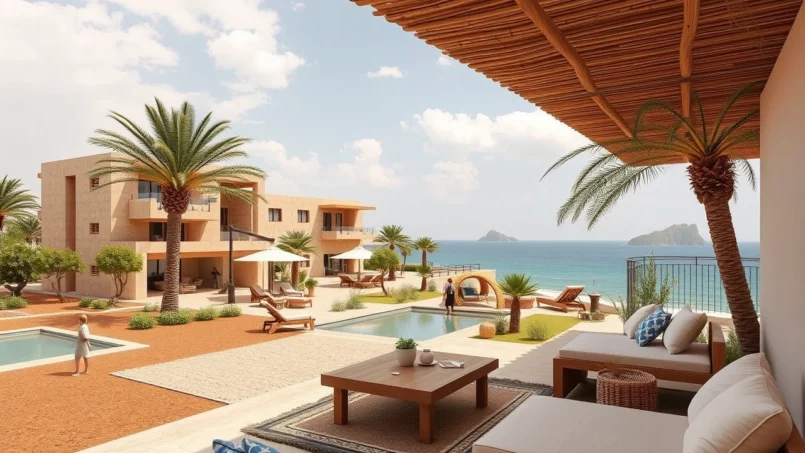
Nigeria has established itself as one of Africa’s most dynamic real estate markets, and within this vast sector, secondary homes are becoming increasingly prominent. In a country where the housing deficit exceeds 22 million units and where the majority of households still struggle to access a decent first home, one might think vacation homes or investment “pieds-à-terre” remain marginal. In reality, the opposite is true: the rise of a local elite, the growth of the diaspora, and the explosion of the short-term rental market are transforming secondary residences into genuine financial assets.
The Nigerian real estate market is worth over $2 trillion in 2025.
A Booming General Market
The starting point for understanding the secondary home market in Nigeria is the sheer size of the residential market itself. The country has more than 200 million inhabitants today and is heading towards 260 million in the very short term, with an annual population growth rate of about 2.5%. More than half of Nigerians already live in cities, and the urban proportion is expected to continue climbing in the coming decades.
Nigeria is experiencing strong demographic pressure and rapid urbanization. Lagos, a megalopolis of about 23 million inhabitants, is expected to see its population nearly double by 2050 according to the United Nations. The federal capital Abuja also attracts hundreds of thousands of new arrivals each year. Other major cities like Port Harcourt, Kano, Ibadan, Enugu, and Calabar are actively contributing to the country’s urbanization.
This growth translates directly into sector figures: residential contributes several points to GDP, and the entire real estate-construction sector represents nearly 17% of the national economy according to the most recent rebased data. Between January and October 2025, property values in several urban centers rose by 15 to 20%. In Lagos, mid-market areas gained 8 to 12% in six months, while the most luxurious neighborhoods still recorded increases of 5 to 8%.
In this context of soaring prices, a secondary home is no longer just a symbol of prestige for a few privileged individuals: it is becoming an investment tool for those with sufficient resources, notably the diaspora and an urban affluent class that is rapidly solidifying.
Secondary Residences: A Product at the Crossroads of Several Trends
Discussing the “secondary home market” in Nigeria actually involves talking about three overlapping uses:
– vacation or retirement homes (by the sea, in the countryside, or in calmer towns) for an affluent clientele;
– second homes in the city, used as a professional base, housing for student children, or for classic long-term rental;
– purely investment properties intended for short-term rental (like Airbnb, serviced apartments, vacation rentals).
Investors, particularly those in the Nigerian diaspora, are looking for one to three-bedroom apartments that are easy to rent out short-term. These properties must be close to transportation arteries and equipped with services like 24/7 security, generators, water supply, and property management. This demand illustrates the shift in preferences towards hybrid, connected, energy-efficient housing designed for flexible uses like remote work, short stays, or co-living.
Data shows that apartments already account for over 40% of property searches, ahead of single-family homes, and that studios, one, and two-bedroom units are gaining ground. This evolution directly benefits secondary residences, which fit perfectly into this compact, well-located, and profitable format.
The Driving Role of the Diaspora in the Second-Home Boom
It’s impossible to address this topic without mentioning the considerable impact of Nigerians living abroad. In 2024, diaspora remittances reached nearly $20.93 billion, an increase of 8.9% year-on-year. A significant portion of this capital is injected into real estate, primarily in Lagos and Abuja.
In August 2021, a report revealed that up to 70% of real estate purchases in Lagos were made by the diaspora. Recent testimonials from developers confirm that Nigerians living abroad often represent 55 to 65% of solvent demand for certain projects. Their primary motivation is not to live there immediately, but to secure an asset, prepare for a return to the country, house their family, or generate rental income.
Their strategy typically falls under secondary residence or pure rental investment: an apartment in Lekki Phase 1 for short-let, a house in Abuja for stays in the country, a villa in Enugu or Uyo for vacations, or land on the outskirts of Lagos (Epe, Ibeju-Lekki) intended for a future weekend home or seasonal rental.
The diaspora is also an actor that professionalizes the market: it demands more transparency (verified titles, escrow, independent inspections, profitability calculators), pushes developers to deliver finished or nearly completed products, and favors developers certified by organizations like REDAN, NIESV, or registered with the CAC.
Where are Secondary Homes Concentrated?
Secondary homes are not evenly distributed across the country. They are structured around economic hubs, infrastructure corridors, and cities with strong leisure or retirement appeal. Some are mature markets, while others are emerging rapidly.
Lagos: Economic Capital and Epicenter of Second Homes
Lagos is, by far, the main playground for secondary residences. It is where demographic pressure, diaspora flows, strong rental yields, and world-class infrastructure combine most intensely.
The most sought-after neighborhoods for a second home are:
– Ikoyi, Victoria Island and Banana Island, for ultra-high-end properties;
– Lekki Phase 1, Ikate, Ajah and the Lekki-Epe corridor for a mix of high-end and mid-market offerings, very oriented towards short-let;
– Ikeja GRA or certain areas of Yaba and Maryland, sought after as professional pieds-à-terre or student housing.
The price in millions of naira for a three-bedroom apartment on Banana Island, illustrating the high-end of Lagos’s real estate market.
Short-term rentals constitute an economic model pillar there. In the Ikate Elegushi sector, short-let occupancy rates jumped by over 50% in 2024. Developers indicate that this type of product can generate yields 100 to 150% higher than traditional annual leases. For an investor, a secondary home converted into a furnished apartment rented by the night can thus generate significant cash flow, especially in areas close to offices, shopping centers, and beaches.
A summary table helps visualize the investment logic in some Lagos neighborhoods highly associated with secondary residences and vacation rentals:
| Lagos Area | Typical Secondary Residence Use | Indicative Price Range (Residential) | Observed Dynamics |
|---|---|---|---|
| Ikoyi / Banana Island | Ultra-high-end residence, vacation home, luxury pied-à-terre | 3-bed apt. ≈ ₦750M, land > ₦1M/m² | Appreciation 5–9%/year, high scarcity |
| Victoria Island | Urban second home, business Airbnb | Price per m² increased from approx. ₦273k to ₦516k (2021–2023) | Sustained corporate rental demand |
| Lekki Phase 1 / Ikate | Short-let apartment, supplemental residence | ≈ ₦800k–₦1.5M/m², high demand for 1–3 bed units | Short-let occupancy rate +50% (Ikate) |
| Ajah, Sangotedo | Secondary family duplex, future retirement home | Prices surging, land prices doubled in some areas | 15–18% growth anticipated |
In this context, a secondary home is not just a luxury: it is also justified because it appreciates quickly and benefits from a tight rental market.
Abuja: Institutional Second Home and Comfortable Retirement
Abuja offers a different profile. A planned, greener, and quieter city, it attracts federal officials, diplomats, NGOs, corporate executives, and expatriates. Price levels there are reputed to be among the highest in the country, particularly in the neighborhoods of Maitama, Asokoro, Wuse II, or certain parts of Gwarinpa.
Secondary residences in this region come in several types: duplexes purchased by businesspeople whose primary residence is in Lagos or abroad, apartments intended to house children during their studies, houses acquired in anticipation of future retirement, or real estate assets held to cater to a high-end furnished rental clientele.
Price data illustrates the entry barrier: a four-bedroom duplex in sectors like Gwarinpa or Lokogoma easily ranges between 100 and 180 million naira. Plots in well-located neighborhoods fluctuate between 20 and 80 million. Abuja’s overall market grew by about 10 to 15% per year in the recent period.
In urban extensions – Katampe, Dakibiyu, Kaura, Lugbe, Kuje, Kurudu – the entry ticket is more affordable, making them preferred targets for second homes more oriented towards yield than prestige.
| Abuja Area | Secondary Residence Profile | Cited Price Level | Estimated Appreciation Potential |
|---|---|---|---|
| Maitama / Asokoro | Prestige villa, personal + diplomatic use | Luxury houses > ₦500M frequently | Mature market, 6–10%/year |
| Gwarinpa / Lokogoma | Family duplex, supplemental residence | 4 bed. ≈ ₦100–₦180M | Good liquidity, active market |
| Katampe / Kaura | Investment apartments, secondary residences | ≈ ₦1.8M/m² (Katampe) | 13–18% anticipated increase |
| Lugbe / Kuje / Kurudu | More affordable houses, mixed personal/rental use | Two-bedroom ≈ ₦800k–₦1.5M/year rent | Strong rental demand |
Abuja also benefits from major infrastructure projects: opening of new roads, extension of urbanization towards satellite towns, improvement of amenities. These works create pockets of value where second homes can be acquired at still reasonable prices, with strong resale or rental potential.
Port Harcourt, Kano, Ibadan, Enugu, Calabar: The Rise of Secondary Cities
While Lagos and Abuja concentrate the bulk of the flow, secondary homes are now spreading across a string of regional cities. Each offers a specific combination of factors: economic activity, tourism, cost of living, stability, relative calm, accessibility.
Annual rental yields in Port Harcourt, driven by demand from the oil sector.
Ibadan, close to Lagos but much more affordable, attracts households looking for a spacious house for weekends or retirement, while being able to rent it to university expatriates or local industry executives. A four-bedroom duplex can be purchased there for approximately 45 to 120 million naira, with annual rents ranging from 2 to 6 million depending on the location.
Enugu, Uyo, Calabar or Abeokuta position themselves as vacation destinations or places for a more peaceful life, making them natural candidates for secondary residences: milder climate, less congested traffic, lower land costs, but interesting appreciation prospects in developing neighborhoods. Investors there target land for building or turnkey houses, often within secured estates.
A comparative table helps situate some city profiles conducive to secondary homes:
| City | Main Attraction for a Secondary Residence | Estimated Annual Rental Yield | Annual Appreciation Range |
|---|---|---|---|
| Lagos | Economic and leisure hub, massive short-let | 6–10% | 15–25% (prime areas) |
| Abuja | Administrative capital, planned environment | 5–8% | 10–20% |
| Port Harcourt | Oil hub, foreign corporate clientele | 8–12% | 10–18% |
| Ibadan | Proximity to Lagos, lower cost</td | 5–7% | 12–18% |
| Enugu | Calm city, diaspora and retirees | 5–8% | 10–15% |
For the owner, having a second home in these cities means cumulating several advantages: geographic diversification, exposure to markets less saturated than Lagos, possibility of mixed use (personal + rental), while benefiting from urbanization dynamics and market upgrading.
The Rise of Short-Lets: When the Secondary Home Becomes a Mini-Hotel
The most striking feature of the Nigerian secondary home market is undoubtedly the growing weight of short-term rentals. One, two, or three-bedroom apartments in “serviced residences” or furnished tourist rentals often show yields 100 to 150% higher than annual leases. In a context where residential rents are already climbing faster than inflation, this gap attracts investors.
Short-term rental demand increased by 18% year-on-year, driven by tourism, business travel, and professional mobility.
In terms of strategy, many secondary homeowners opt for a hybrid model: personal use for a few weeks a year, and operation as a short-let for the rest of the time. Digital platforms – often of Nigerian origin – are multiplying to manage bookings, cleaning, maintenance, and customer relations, reducing friction for remote owners or those residing abroad.
Transforming a secondary home into a tourist rental (“hotelization”) turns it into an operational asset. In Lagos, a 4-bedroom apartment in traditional rental yields about $5,000 per month, with a gross yield of 4 to 6%. In short-term rental, with nightly rates billed in dollars or indexed naira, net profitability can exceed these figures, provided a high occupancy rate is maintained.
Structural Obstacles and Risks Specific to Secondary Homes
Despite the obvious potential, the Nigerian market for secondary homes remains fraught with pitfalls. Some difficulties are common to any real estate purchase in the country, others weigh more heavily on multi-property owners or remote investors.
Land, Material, and Construction Costs
The first brake is the cost of land in the most sought-after urban and peri-urban areas. In central neighborhoods of Lagos or Abuja, demand pressure, scarcity of well-located land, high administrative fees, and opaque practices contribute to very high price levels. In some premium segments, land represents a disproportionate share of the final cost.
Construction also suffers from abnormally high costs: heavy dependence on imported materials (tiles, equipment, finishes), volatility of the naira against the dollar, general inflation, difficult access to long-term financing for developers. The price of cement and steel rods, for example, doubled over certain recent periods, significantly increasing the cost of building a secondary home.
Land Titles, Disputes, and Fraud
The Land Use Act places ultimate land ownership with state governors. In practice, formalizing rights (Certificate of Occupancy, governor’s consent, registration) can take months, even years. Transfer procedures often involve 9 to 12 steps, with overall public fees that can represent over 11% of the property’s value. The country ranks among the worst in the world for ease of registering property.
In the Nigerian real estate market, several frauds are common: multiple sales of the same plot, sale of land already acquired by the government, extortion by ‘Omo Onile’ (informal land chiefs), and operations by fake agencies or developers. These risks are particularly high for the diaspora, who often buy remotely, leading to significant financial losses.
Financing: A Quasi-Cash Market
The Nigerian market for secondary homes is essentially a cash market. Approximately 70 to 80% of residential transactions are made without resorting to a mortgage. The reasons are simple: interest rates often above 18% per annum (and sometimes much higher from commercial banks), short loan tenors, strict eligibility criteria.
The mortgage loan stock represents less than 1% of GDP in Nigeria.
Taxation, Regulatory Uncertainties, and Macroeconomic Risks
Direct and indirect real estate taxation can be heavy: stamp duties, governor’s consent fees, registration, recurring property taxes. Pending tax reforms, which notably target real estate transactions and certain rental income, worry professionals who see a risk of reduced attractiveness.
Investors must also contend with high inflation, naira depreciation, and episodes of macroeconomic volatility. For a foreign owner or a member of the diaspora, this complicates assessing the real profitability of their secondary home and managing income flows in different currencies.
A table summarizes some of the main obstacles weighing on investment in secondary homes in Nigeria:
| Risk Category | Impact on Secondary Residence | Possible Consequences |
|---|---|---|
| Titles and Administration | Long delays, uncertain titles, risk of double sale | Financial losses, litigation |
| Construction Cost | Imported materials, inflation, infrastructure borne by developer | High final price, reduced margin |
| Financing | Rates >18%, short tenor, low mortgage supply | Market dominated by cash purchases |
| Taxation and Regulation | Multiple taxes, uncertain reforms, cumbersome procedures | Lower net yield, insecurity |
| Security and Environment | Illegal occupation, vandalism, flood/erosion risks | Protection costs, insurance |
For secondary homes – often acquired with a long-term logic – these risks argue for increased vigilance at purchase and active asset management.
Market Responses and Innovations Serving Multi-Property Owners
Faced with these constraints, the Nigerian market has not remained stagnant. Several structural evolutions could, over time, make the secondary home market more transparent, more liquid, and more accessible.
Land Reforms and Digitalization
Several states, starting with Lagos, have launched programs to digitalize land registries and cadastres. In the economic capital, over five million properties are said to have been mapped in a digital geospatial system. The goal is to reduce the proportion of untitled land (estimated at about 97% nationally), secure transactions, and limit opportunities for fraud.
Abuja has its own system (Abuja Geographic Information Systems – AGIS) to verify the validity of titles and the status of plots before development. In some states like Oyo, simplified mechanisms have been introduced to issue certificates of occupancy within more predictable timeframes.
For a secondary home buyer, the digitalization of the process allows for remote verification of a property title’s integrity, tracking the progress of procedures, and, ultimately, reducing the time and cost of finalizing the deed.
Proptech, Fractional Ownership, and New Financial Structures
Nigeria is establishing itself as an African champion of “proptech”. Platforms now use artificial intelligence to analyze markets, estimate rents, calculate expected yields, or detect anomalies in titles. Others offer virtual tours, secure payments, or centralized management of property portfolios (with booking tracking, automated rent collection, maintenance).
The most interesting innovation for secondary homes is undoubtedly the multiplication of “fractional ownership” solutions, which allow purchasing a share of a property – sometimes starting from a few hundred dollars – and receiving a proportional share of the rents and capital appreciation. These products, often positioned as alternatives to classic REITs, target young professionals and diaspora investors who want to build a portfolio of small stakes rather than a single highly capital-intensive property.
Different innovative approaches combining traditional financing and digital solutions for real estate.
Crowdfunding that enables collective investment in real estate projects.
Direct connection of borrowers and lenders for real estate transactions.
Progressive savings solutions towards home ownership, offered by proptech companies.
Collaborations between developers and institutions, like the Family Homes Fund, to build affordable housing estates.
Technical Solutions to Reduce Costs
On the technical side, experiments aim to reduce construction costs. The Federal Ministry of Innovation, Science and Technology and the Nigerian Institute of Building and Road Research, for example, are promoting the use of structured bamboo to build affordable “smart” housing. Other actors are exploring 3D printing, industrial prefabrication of components, or boosting local material supply chains to reduce dependence on imports.
While these innovations initially target the affordable housing segment, they will eventually permeate the entire sector, including secondary homes, through a gradual decrease in unit construction costs, better energy performance, and shorter construction timelines.
Demand That Doesn’t Weaken Despite the Affordability Crisis
One of the most striking paradoxes of the Nigerian landscape is the coexistence of two realities: on one side, an acute affordability crisis that excludes the majority of households from the formal market; on the other, sustained demand for secondary homes and highly speculative investment properties.
Affordability figures are unequivocal: only about 10% of urban households can afford to buy or build their home using formal channels, and nearly 70% of the population cannot access a mortgage at current rates. Nearly half the population lives below the national poverty line, and a considerable proportion of urban dwellers live in informal settlements or precarious housing.
The percentage of Nigerians who consider real estate the safest investment in an uncertain economic environment.
For the economy, this segment is not insignificant. Investments in secondary homes fuel construction, support jobs in construction, architecture, property management, private security, cleaning, or hospitality services. They contribute to the modernization of certain neighborhoods, even the redevelopment of urban brownfields transformed into mixed residential complexes.
Outlook: Towards a More Structured Secondary Home Market?
Looking a few years ahead, several plausible scenarios are emerging for the secondary home market in Nigeria.
On one hand, the fundamentals of demand remain strong: young demographics, rapid urbanization, growth in the number of affluent households, projected increase in the number of high-net-worth individuals on the continent, improving infrastructure (roads, bridges, airports, ports, rail lines, industrial corridors). Major projects – Lagos-Calabar coastal highway, Lagos fourth bridge, second international airport around Lagos – are all vectors for creating new hotspots where tomorrow’s secondary homes will be located.
Several factors could slow down or reshape the real estate market: the emergence of new taxes on property and rents, political uncertainties during election periods, possible oversupply in certain luxury segments, as well as the strengthening of construction standards and environmental constraints (flood-prone areas, coastal erosion, etc.).
The element most likely to deeply transform this market is undoubtedly how the country addresses the issue of land titling and access to medium-term financing. If land reforms materialize (digitalization, simplified procedures, harmonization of texts, wider adoption of effective mortgage foreclosure laws) and if interest rates gradually move towards single-digit figures for credible tenors, the framework would become conducive to a relative democratization of investment in second homes. We would likely see more middle-class or upper-middle-class households able to buy a small secondary apartment in Port Harcourt, a weekend duplex in Abeokuta, or a villa in Uyo, with structured financing rather than 100% cash.
This market is no longer an epiphenomenon. It has become a strategic segment of the residential sector, driven by the diaspora, tourism, new technologies, and the financialization of real estate. Its future will depend on public policies (land reforms, infrastructure, regulation) and the ability of private actors to offer more secure, transparent, and tailored products for a demanding investment demand.
Disclaimer: The information provided on this website is for informational purposes only and does not constitute financial, legal, or professional advice. We encourage you to consult qualified experts before making any investment, real estate, or expatriation decisions. Although we strive to maintain up-to-date and accurate information, we do not guarantee the completeness, accuracy, or timeliness of the proposed content. As investment and expatriation involve risks, we disclaim any liability for potential losses or damages arising from the use of this site. Your use of this site confirms your acceptance of these terms and your understanding of the associated risks.

Cyril Jarnias is an independent expert in international wealth management with over 20 years of experience. As an expatriate himself, he is dedicated to helping individuals and business leaders build, protect, and pass on their wealth with complete peace of mind.
On his website, cyriljarnias.com, he shares his expertise on international real estate, offshore company formation, and expatriation.
Thanks to his expertise, he offers sound advice to optimize his clients' wealth management. Cyril Jarnias is also recognized for his appearances in many prestigious media outlets such as BFM Business, les Français de l’étranger, Le Figaro, Les Echos, and Mieux vivre votre argent, where he shares his knowledge and know-how in wealth management.





