
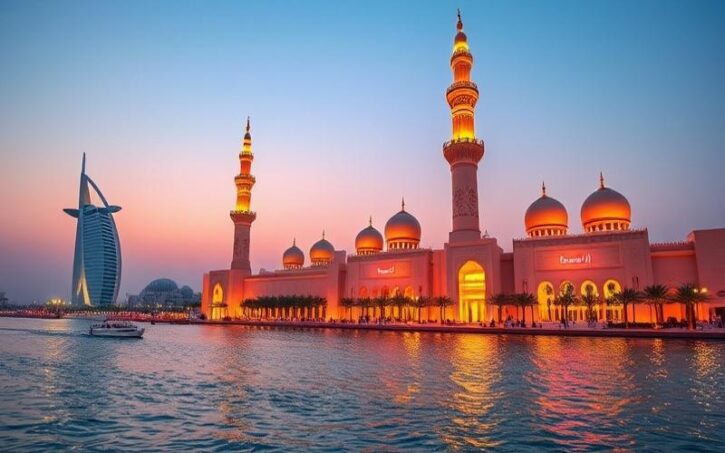
 Published on and written by Cyril Jarnias
Qatar, a small emirate in the Persian Gulf, has become one of the world’s wealthiest countries within just a few decades thanks to its vast natural gas reserves. This prosperity is reflected in its dynamic real estate market, particularly in its capital Doha, which is home to the majority of the population. Let’s dive into real estate prices in Qatar’s main cities and analyze upcoming trends for this booming market.
The significant price gap between Doha and secondary cities
Unsurprisingly, Doha has the highest real estate prices in Qatar. The capital concentrates the majority of infrastructure, jobs, and expatriates, which drives prices upward.
In Doha, the average price per square meter for a downtown apartment is about 7,500 Qatari riyals (approximately $2,050). In outlying neighborhoods, prices drop to around 5,000 riyals/m² ($1,370). For a villa, expect to pay an average of 10,000 riyals/m² ($2,740) in sought-after areas.
In comparison, prices are significantly more affordable in secondary cities:
- In Al Wakrah, the country’s second city located 15 km south of Doha, average prices range between 3,500 and 5,000 riyals/m² ($960 to $1,370)
- In Al Khor, Qatar’s third city 50 km north of the capital, the square meter averages between 3,000 and 4,500 riyals ($820 to $1,230)
- In Lusail, a new developing city north of Doha, prices vary significantly by neighborhood, from 4,000 to 8,000 riyals/m² ($1,095 to $2,190)
This significant differential is explained by the concentration of economic activities and infrastructure in the capital. Doha also attracts more high-income expatriates, which pushes prices higher.
Good to know:
Prices in Doha can be up to twice as high as in Qatar’s secondary cities. This gap reflects both the capital’s attractiveness and the development potential of other cities.
What are the prospects for Qatar’s real estate market?
After a period of strong growth in the 2000s-2010s, Qatar’s real estate market has slowed in recent years, particularly due to the diplomatic crisis with neighboring countries and the COVID-19 pandemic. However, several factors suggest a recovery in price increases in the coming years:
1. The 2022 World Cup as a catalyst
Hosting the 2022 FIFA World Cup led to significant investments in infrastructure and real estate. While the post-World Cup effect has been less pronounced than hoped, it nevertheless contributed to modernizing the real estate stock and increasing the country’s attractiveness.
2. Dynamic demographics
Qatar’s population continues to grow, particularly through immigration. This demographic increase supports real estate demand, especially in major cities.
3. Ambitious projects
Qatar continues its policy of major projects, such as the development of the new city of Lusail or the extension of Doha’s metro. These investments should help increase real estate values in certain areas.
4. Ongoing economic diversification
The country is seeking to reduce its dependence on hydrocarbons by developing new sectors (finance, tourism, technology). This diversification could attract new investors and support the real estate market.
Given these factors, experts anticipate a moderate but steady increase in real estate prices in the coming years, averaging 3 to 5% annually. This growth should be more pronounced in Doha and developing areas like Lusail.
Good to know:
While the overall trend is upward, Qatar’s real estate market remains sensitive to hydrocarbon price fluctuations and the regional geopolitical situation. Economic diversification could eventually reduce this volatility.
What opportunities exist for foreign investors?
Qatar has relaxed its legislation in recent years to attract foreign real estate investors. Since 2018, non-Qataris can acquire properties with full ownership in designated areas, primarily in Doha and Lusail.
The most interesting opportunities currently lie in:
- The new neighborhoods of Lusail, which offer good medium-term appreciation potential
- Developing areas around Doha’s new metro
- Secondary cities like Al Wakrah, which benefit from more affordable prices and significant growth potential
It’s important to note that real estate investment in Qatar remains subject to certain restrictions and requires good knowledge of the local market. It’s recommended to consult experienced professionals for any acquisition project.
Conclusion: a dynamic market to approach with caution
Qatar’s real estate market offers interesting opportunities, particularly thanks to the country’s political stability and economic growth prospects. The significant price differences between Doha and secondary cities allow investors to find properties suited to different budgets and objectives.
However, like any foreign investment, purchasing real estate in Qatar requires thorough analysis and a good understanding of local specifics. Potential volatility related to the regional context and hydrocarbon dependence must also be considered in any long-term investment strategy.
Good to know:
To maximize the chances of success for a real estate investment in Qatar, it’s crucial to work with experienced local professionals and thoroughly research the country’s specific legal and tax aspects.
Disclaimer: The information provided on this website is for informational purposes only and does not constitute financial, legal, or professional advice. We encourage you to consult qualified experts before making any investment, real estate, or expatriation decisions. Although we strive to maintain up-to-date and accurate information, we do not guarantee the completeness, accuracy, or timeliness of the proposed content. As investment and expatriation involve risks, we disclaim any liability for potential losses or damages arising from the use of this site. Your use of this site confirms your acceptance of these terms and your understanding of the associated risks.

Cyril Jarnias is an independent expert in international wealth management with over 20 years of experience. As an expatriate himself, he is dedicated to helping individuals and business leaders build, protect, and pass on their wealth with complete peace of mind.
On his website, cyriljarnias.com, he shares his expertise on international real estate, offshore company formation, and expatriation.
Thanks to his expertise, he offers sound advice to optimize his clients' wealth management. Cyril Jarnias is also recognized for his appearances in many prestigious media outlets such as BFM Business, les Français de l’étranger, Le Figaro, Les Echos, and Mieux vivre votre argent, where he shares his knowledge and know-how in wealth management.





