
 Published on and written by Cyril Jarnias
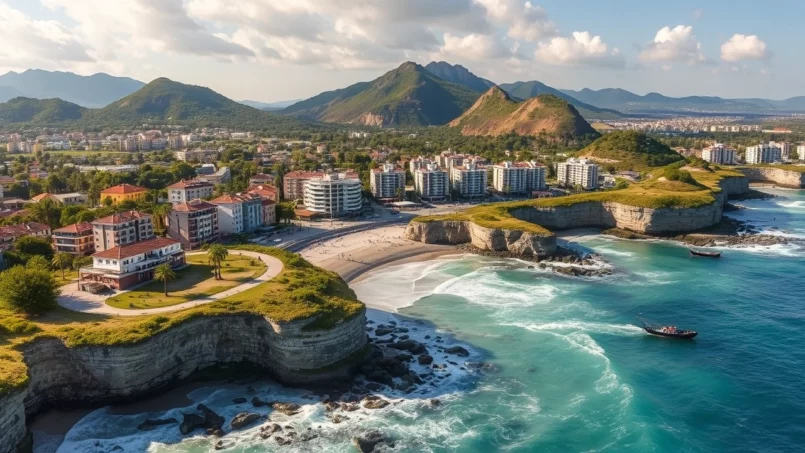
Uruguay is often presented as the “Switzerland of South America” for its political stability, safety, and quality of life. But for about fifteen years, another image has taken hold: that of a country where tourism has become a central economic engine and a powerful accelerator for the real estate market, especially along the coast. The interplay between these two dynamics – the tourism boom and the property boom – is now at the heart of Uruguay’s transformation, with its clear opportunities and very real tensions around housing access.
Tourism: An Economic Pillar… and Fuel for Real Estate
Tourism is no longer a secondary sector in Uruguay. It is officially recognized as a “strategic pillar” by the government and carries significant weight in the national accounts. The figures are clear: tourism’s direct contribution stands at around 9% of GDP, with over 7% of the workforce employed in the sector. In 2023, tourism revenues reached about $1.776 billion, then $1.75 billion in 2024, while spending per visitor increased by over 13% in a year.
Number of foreign visitors who set foot on Uruguayan soil in 2023, a figure close to the historical record.
This tourist windfall directly feeds the real estate market. On one hand, it supports a massive demand for short-term accommodations; on the other, some of the more affluent visitors end up becoming buyers, particularly on the coast. The result is visible in the overall numbers: the total value of the Uruguayan real estate market is projected at around $186.65 billion, with an estimated annual residential growth of 4.5% and, according to some sector projections, a market exceeding $260 billion in the short term.
The real estate market is experiencing sustained growth, with over 52,000 sales in 2024 (+3.3% year-on-year) and 27,533 transactions in the first seven months of 2025. The value of purchases and sales exceeded $1.17 billion in the first half of 2025, compared to about $1 billion a year earlier. Foreign investment is growing by 6 to 8% annually, driven notably by Argentine and Brazilian clientele, very active on the coast.
Montevideo: From Urban Tourism to Pressure on Central Neighborhoods
Montevideo, the country’s main gateway, alone accounts for a major share of real estate activity: over a third of transactions between January and July 2025. The political capital, economic center, and cultural hub welcomes over a million visitors per year, drawn by its urban beaches, its rambla, events, and conference offerings.
The rise of urban tourism, combined with the emergence of a flow of digital nomads and expatriates, has profoundly transformed certain neighborhoods. Ciudad Vieja, long neglected, is undergoing a vast redevelopment operation: old buildings are being renovated into high-end apartments, boutique hotels, co-working spaces, and tourist rentals. Pocitos, Punta Carretas, or Parque Rodó have become showcases for this mix of residential life, tourism, and services.
In the second quarter of 2025, the average price for new construction in Montevideo reached 117,000 UYU/m² (approximately $2,918), a nominal increase of 3.77% year-on-year. Adjusted for inflation, real prices have slightly declined, a movement reflecting both rising costs and moderation in dollar values. This trend, similar to 2024, illustrates the tension between tourist attractiveness and local purchasing power.
The hierarchy of neighborhoods is very pronounced, and the role of tourism is evident.
| Montevideo Neighborhood | Average Price (USD/m²) | Characteristics Related to Tourism and Demand |
|---|---|---|
| Carrasco | ≈ 4,266 | High-end residential, beach proximity, strong expatriate demand |
| Punta Carretas | > 4,000 | Shopping, golf, waterfront, strong short-term rental presence |
| Punta Gorda | > 4,000 | Sea views, sought-after family homes, affluent local and foreign clientele |
| Pocitos | ≈ 3,500 | Urban beach, cafes, high density of Airbnb and expatriates |
| Malvín | 3,500–3,800 | Mix of families/tourists, good price/location compromise |
| Parque Rodó | 3,500–3,800 | Near university, parks, attractive to youth and visitors |
| Centro / Cordón / La Blanqueada | Starting at $100,000 for a 1-bedroom | More accessible market, growing investor interest |
In premium sectors like Pocitos or Punta Carretas, rents and sale prices clearly align with a largely international demand. A small waterfront unit (40 m², one bedroom) in Punta Carretas or Pocitos trades around $250,000, while a three-bedroom house with garden and sea view in Malvín or Punta Gorda ranges between $500,000 and $1 million.
The average monthly rent in Uruguay stood at 20,772 UYU in July 2025.
The rise of short-term rentals, especially via Airbnb, contributes to reducing the stock available for long-term leases. In sought-after neighborhoods like Pocitos or Punta Carretas, vacancy rates for good properties fall below 5%, which supports prices and complicates the search for affordable housing for residents.
Punta del Este: Laboratory for Luxury Tourism and Real Estate Bubbles
If there is a symbol of tourism’s impact on real estate in Uruguay, it is undoubtedly Punta del Este. This beach resort, presented as the “Monaco of South America” or the “region’s Saint-Tropez,” has shifted in a decade from a seasonal destination to a year-round residential and investment hub.
Number of new residents settled in Punta del Este and Maldonado since the pandemic, attracted by the region’s stability.
This influx has translated into a surge in prices. The Punta del Este market recorded an increase of about 10% in one year, with luxury waterfront segments exceeding 12% annual appreciation. Forecasts remain bullish, with projections of an additional +3 to +7% for the rest of 2025. The average price hovers around $4,000/m², but some properties reach peaks.
| Segment in Punta del Este | Typical Price Range (USD) | Observations Related to Tourism |
|---|---|---|
| New “mid-range” apartments | 2,500 – < 7,000 / m² | Highly seasonal market, strong summer rental demand |
| Luxury residences (non-waterfront) | 2 – 6 million | Villas with services, often bought as secondary residences |
| Luxury waterfront houses | 7 – 20 million | Ultra-prime, high-end international clientele |
| Mouette & Trump Tower | 7,000 – 10,000 / m² | Icons of prestige real estate, closely tied to the resort’s glamorous image |
| Modest houses further inland | Starting at ≈ 200,000 | Two bedrooms, target upper-middle class and small investors |
The demand structure is emblematic of its dependence on tourism: according to professionals, about 75% of foreign buyers in Punta del Este are Argentine, 20% Brazilian, with the rest from other countries. These profiles seek both personal use (vacations, long stays) and rental yield via seasonal rentals.
Rents in Punta del Este are significantly higher than in Montevideo. For a one-bedroom apartment, the difference is about 46% (45,000 UYU vs. 24,000 UYU). For three bedrooms, the gap reaches nearly 63% (110,000 UYU vs. 40,760 UYU). In high season, prices skyrocket: a 1-bedroom can exceed $2,500 per month, with occupancy rates of 90–95% during the summer and daily rates around $136.
Gross yields on these vacation rentals can reach 10 to 12% cumulatively, provided one accepts high seasonality. On an annual average, Punta del Este yields rather oscillate between 3 and 4% when considering off-peak periods, but investors bet on capital appreciation and the resale potential of an asset located in a resort synonymous with prestige.
José Ignacio, La Barra, Rocha: The Coast Diversifies and Upscales
The success of Punta del Este has spread along the coast, creating a belt of real estate markets closely linked to tourism dynamics.
José Ignacio and La Barra, just a few kilometers away, have become the darlings of creatives, entrepreneurs, and high-net-worth individuals seeking a more intimate environment. In these transformed villages, where fishermen outnumbered developers not long ago, prices start around $3,000/m² and can exceed $7,000 for the most sought-after properties.
Further north, the department of Rocha is establishing itself as the “next frontier” for beach and ecological tourism. With its protected landscapes, wetlands, and near-virgin beaches, it attracts a clientele seeking authenticity and low density. On the real estate side, values range from $800 to $1,800/m² depending on the locality, but appreciation forecasts are high: some scenarios mention annual increases of 10 to 15% in the medium term, as road infrastructure – funded under a nearly $3.7 billion investment plan for roads – develops.
Rocha Department
This gradual shift of developers and investors towards more “natural” areas combines with the rise of ecotourism. The government actively promotes products like rural circuits, wildlife observation tourism, stays on estancias, and wine tourism. The real estate spillovers are visible: renovation of farms into lodges, construction of small eco-friendly units, and land value appreciation for previously neglected plots.
| Department / Coastal Area | Share of Transactions (Jan.–Jul. 2025) | Approximate Prices (USD/m²) | Dynamics Linked to Tourism |
|---|---|---|---|
| Maldonado (incl. Punta del Este) | 17.9% | ≈ 4,000 (Punta del Este avg.) | High-end beach tourism, strong foreign presence |
| Canelones (Costa de Oro) | 13.2% | 1,000 – 1,800 | Emerging market, family and weekend tourism |
| Rocha | 5.9% | 800 – 1,800 | Rapid growth, ecotourism and sustainable projects |
| Colonia | 5.2% | 1,800 – 3,000 (historic center) | Heritage tourism (UNESCO), strong short-term rental demand |
Costa de Oro, in the Canelones department, illustrates another phenomenon: the spread of weekend tourism from Montevideo. Accessible by car in a short time, the area attracts both Uruguayans and regional visitors for short stays. Prices there remain about 50% lower than those of major coastal hotspots, sparking growing interest from investors seeking a more affordable entry ticket.
Colonia del Sacramento and Historic Towns: UNESCO Effect and Rental Rush
Colonia del Sacramento, with its historic center listed as a UNESCO World Heritage site, is another striking example of the direct link between tourism and real estate. A colonial town a short distance from Buenos Aires, it has become the preferred destination for Argentines seeking a getaway weekend. Many residents of the Argentine capital have acquired a house or apartment there, reinforcing its secondary residential and resort dimension.
Estimated rental yields for well-managed properties in the historic quarter range from 5 to 8%.
Tourist Rental Boom: High Yields, Social Tensions
Nationally, the rise of short-term rentals is perhaps the most visible impact of tourism on the rental market. Montevideo, Punta del Este, and Colonia del Sacramento concentrate the majority of this supply, with thousands of listings on Airbnb and other platforms. Owners quickly realized that in certain neighborhoods and during certain periods, they could generate revenues 40% or more higher than those from a standard annual lease.
The figures illustrate the phenomenon:
Overview of average rental performance in different areas of the country, including occupancy rates and daily rates.
Average gross rental yields around 5% nationally.
Possibility of gross yields of 10 to 12% for properties operated as short-term rentals in tourist zones.
67% occupancy rate with an average daily rate of $55 in Montevideo.
46% occupancy rate and an average daily rate of $136 in Punta del Este, with significantly higher peaks in high season.
For investors, the equation is enticing: a highly dollarized market, strong property rights, no restrictions for foreigners, a clear tax framework (12% withholding tax on rental income for non-residents), and the possibility of combining personal use with seasonal income.
For residents, the rise of seasonal rentals in tourist or sought-after neighborhoods, like in Montevideo or Punta del Este, has contributed to shrinking the supply of long-term housing and driving up rents. Residents face increasing difficulties finding affordable apartments, especially in central areas. Although national data shows an increase of over 4% in the number of lease contracts in 2025, this growth is not enough to offset the pressure on certain market segments.
Affordable Housing: A Growingly Heated Debate
The issue of housing accessibility is becoming a political and social challenge in the most touristic regions. In Punta del Este, for example, the fact that buildings remain largely empty outside the summer – some expatriates tell of towers occupied only four months a year – contrasts with the difficulty for seasonal workers or service sector employees to find housing nearby.
In Montevideo, employees in the hospitality, restaurant, and tourism sectors working in central neighborhoods like Pocitos, Punta Carretas, or Ciudad Vieja are often forced to reside in cheaper areas, such as La Blanqueada, Cordón, or the north of the city, significantly lengthening their daily commute.
Faced with this tension, several avenues are being discussed: stricter regulation of short-term rentals, tax incentives for long-term leases, quotas for year-round resident housing in certain projects, or more massive development of social and intermediate housing. For now, Uruguay has not adopted a framework as restrictive as some major global cities, but the debate is clearly on the agenda, especially as tourism continues to grow.
A Legal and Tax Environment Tailored for Investors, Especially Touristic Ones
If Uruguay attracts so much international capital, it’s not just for its beaches. The country offers a legal framework particularly welcoming to foreign buyers: no restrictions on the type, location, or number of properties a non-resident can acquire, including in coastal or rural areas, which is rare in the region. Property rights are solidly enshrined in the Constitution, the judiciary is considered predictable, and expropriations of foreign assets are not part of recent history.
Real estate transactions are characterized by high transparency, overseen by a public notary (escribano) who verifies property titles, mortgages, and charges before finalizing the deed of sale. Furthermore, the majority of operations are conducted in US dollars, providing security for investors against currency devaluation risks in the region.
Regarding taxation, the regime is relatively competitive for investors oriented towards tourist rentals:
– A 12% tax (IRNR) on the gross rental income of non-residents, withheld at source;
– A real estate transfer tax (ITP) of 2% of the fiscal value, typically lower than the market value, paid by both buyer and seller;
– An annual property contribution generally between 0.2 and 0.35% of the market value;
– No inheritance tax.
The investment promotion regime in Morocco offers partial or total exemptions from corporate tax, VAT on imports of equipment and certain works, as well as reductions in property tax for several years for tourism projects. These benefits, detailed by decree, specifically target hotels, apart-hotels, and condo-hotels.
As part of an investment residency program, certain real estate amounts – starting at approximately $513,950 – can be considered to support an application for permanent residency. This link between real estate, migratory status, and long-stay tourism (expatriates, retirees, digital nomads) further strengthens the incentives to invest in properties that most often remain at least partially oriented towards tourist use.
Infrastructure and Major Projects: How Tourism Drives Construction
The relationship between tourism and real estate is not limited to beachfront apartments. It also involves major mixed-use projects, designed for residents, businesses, and visitors alike. In Punta del Este, the Atlántico complex, developed by Altius Group over nearly five hectares, is a good example. Launched in 2021 at an estimated cost of $130 million, it combines a shopping center, an 18-story residential tower, and a 14-story office tower, with its first phase completed in 2024.
This is the investment amount in millions of dollars for the World Trade Center Punta del Este tower.
Overall figures confirm this direction: about $7.2 billion in infrastructure investments until 2024, of which nearly $3.7 billion for the road network over five years. These expenditures improve the accessibility of tourist areas and contribute to valuing land and constructions located near major arteries.
The Rural Boom: Estancias, Vineyards, and Ecotourism to the Rescue of the Interior
Tourism’s impact on Uruguayan real estate is not confined to the coast. The countryside, wine regions, and natural areas are also experiencing a renaissance. The rise of ecotourism and rural tourism has revived demand for estancia, ranch, or vineyard-type properties, often renovated into charming accommodations or leisure properties for foreigners seeking tranquility.
The Carmelo region is emerging as a distinct investment hub from Punta del Este, attracting with its peaceful pace of life, its landscapes on the banks of the Río de la Plata, and its wine tourism. High-end properties near renowned hotels sell for high prices, but competition remains limited and the potential for capital appreciation is high, especially if tourism increases.
In other interior departments (Salto, Paysandú, Artigas, Soriano…), tourism related to hot springs, rivers, or nature also opens a niche for small real estate operations: cabins, lodges, family guesthouses. Often, these projects rely on public funds like contests aimed at “Tourism in Rural and Natural Spaces,” which finance initiatives in equestrian tourism, ecotourism, or agritourism. This type of development, more diffuse than a luxury seafront tower, nonetheless has a major local impact, generating jobs, renovation of existing buildings, and increases in land value.
Yields, Financing, and Investor Profiles: The Logic of Tourism
For an investor, Uruguay today offers a range of strategies where tourism often plays the key variable role:
Four targeted approaches to investing in the Uruguayan real estate market, capitalizing on local and tourist demand for different property types and locations.
Purchase in a high-demand neighborhood (Pocitos, Punta Carretas, Ciudad Vieja) for annual or mixed (short/long-term) rental. Expected gross yields: 4–6%.
Acquisition of a unit in Punta del Este, La Barra, or José Ignacio to optimize the high season (potential yield of 12–20% over 3 months) with reduced occupancy the rest of the year.
Investment in a character property in Colonia del Sacramento, benefiting from UNESCO status and stable demand for short stays.
Participation in condo-hotel or tourist residence projects benefiting from advantageous tax regimes.
The market being largely dollarized and operating largely in cash, the question of bank financing plays a lesser role than in Europe or North America. Institutions like Banco Hipotecario del Uruguay dominate domestic mortgage lending, but loans for non-residents remain limited and often more expensive (6 to 10% interest for dollar loans over twenty years, with a lower loan-to-value ratio). Therefore, many foreign buyers use their own resources or resort to structures like seller financing, developer financing, real estate crowdfunding, or tokenization of asset shares via specialized platforms.
| Key Indicator | Indicative Value | Link with Tourism / Real Estate |
|---|---|---|
| Average Gross Rental Yield (National) | ≈ 5.0% | Supported by short-term tourist demand |
| Montevideo Yield (Q2 2025) | 4.97% | Slight erosion linked to rising purchase prices |
| Short-Term Yield in Tourist Zones | 10–12% potential gross | Conditional on active management and seasonality |
| Estimated Annual Tourism Growth (until 2029) | ≈ 6.18% | Direct impact on rental demand and hotel investment |
| Annual Residential Growth (until 2028) | ≈ 4.51% | Fueled by the influx of capital and residents motivated by tourism |
Investor profiles are diversifying: historically dominant Argentines and Brazilians are now joined by Europeans, North Americans, but also a growing number of digital nomads and expatriates who see Uruguay as an attractive compromise between quality of life, connectivity, and legal security.
Sustainable Tourism and Green Real Estate: A New Layer of Value
Another more recent but rapidly growing aspect closely links tourism and real estate: that of sustainability. Uruguay already operates on nearly 98% renewable electricity, and the government has integrated sustainability into the core of its national tourism law. A “Tourism Green Seal” label rewards tourist accommodations that meet strict environmental criteria (water and waste management, energy efficiency, regulatory compliance).
Real estate projects integrating energy efficiency solutions, sustainable materials (wood, modular constructions), and smart home technologies benefit from easier-to-obtain bank financing and preferential rates. Furthermore, “green” certified properties generally sell faster and at higher prices, as they meet the expectations of a demanding tourist clientele and the country’s climate goals.
On the coast, this trend is expressed through the rejection of over-densification projects in favor of low-impact developments, notably in Rocha or certain protected areas. In cities, it translates into the renovation of old buildings into hotels or tourist residences respecting advanced environmental standards. For investors, these “green” assets thus combine several premiums: a sustainability premium, a tourism premium, and a scarcity premium.
A Fragile Balance to Build
Overall, tourism has acted as a powerful accelerator for the real estate market in Uruguay: upscaling of beach resorts, revival of historic centers, awakening of the countryside, multiplication of mixed-use major projects, general increase in volumes and values. For owners and investors, the country offers a rare cocktail in the region: macroeconomic stability, secure legal framework, tourist revenue, and still significant growth prospects.
Tourism growth puts pressure on affordable housing, creates competition with residents, increases infrastructure needs, and carries risks of overheating in the luxury segment. It also creates a dependency on neighboring economies (Argentina, Brazil), major sources of visitors and buyers.
The challenge for the coming years will therefore be Uruguay’s ability to refine its regulation without breaking the country’s attractiveness. This will involve better regulation of seasonal rental platforms, support for the affordable housing stock, more demanding urban and coastal planning, and the continuation of sustainable tourism policies. This is the price for ensuring that tourism’s impact on the real estate market can continue to translate into shared value creation, rather than a growing divide between those for whom the “Switzerland of South America” is an investment refuge and those who live there daily.
Disclaimer: The information provided on this website is for informational purposes only and does not constitute financial, legal, or professional advice. We encourage you to consult qualified experts before making any investment, real estate, or expatriation decisions. Although we strive to maintain up-to-date and accurate information, we do not guarantee the completeness, accuracy, or timeliness of the proposed content. As investment and expatriation involve risks, we disclaim any liability for potential losses or damages arising from the use of this site. Your use of this site confirms your acceptance of these terms and your understanding of the associated risks.

Cyril Jarnias is an independent expert in international wealth management with over 20 years of experience. As an expatriate himself, he is dedicated to helping individuals and business leaders build, protect, and pass on their wealth with complete peace of mind.
On his website, cyriljarnias.com, he shares his expertise on international real estate, offshore company formation, and expatriation.
Thanks to his expertise, he offers sound advice to optimize his clients' wealth management. Cyril Jarnias is also recognized for his appearances in many prestigious media outlets such as BFM Business, les Français de l’étranger, Le Figaro, Les Echos, and Mieux vivre votre argent, where he shares his knowledge and know-how in wealth management.





