
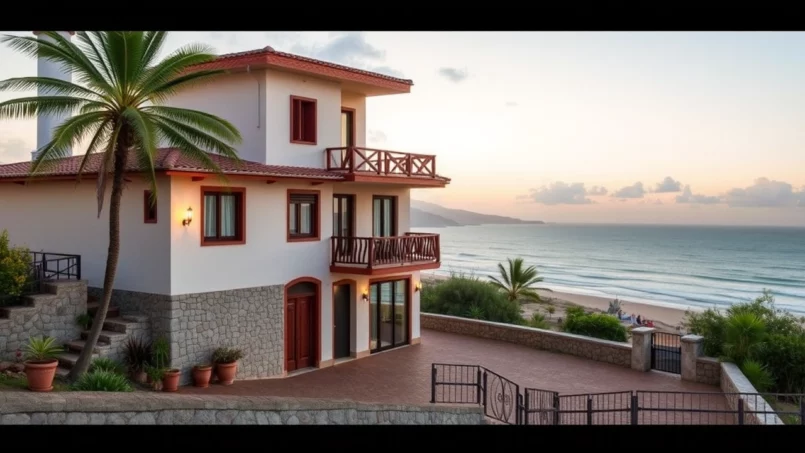
 Published on and written by Cyril Jarnias
Buying Real Estate in Uruguay is increasingly attracting Europeans and North Americans, drawn by political stability, safety, a transparent legal system, and a market described as one of the safest in Latin America. The country, often called the “Switzerland of South America,” grants foreigners the same property rights as local citizens, with no quotas, no residency requirements, and transactions primarily conducted in US dollars.
Despite a clear procedural framework and a centralized land registry, buying property in Uruguay remains a complex legal act. The feeling of ease and security can lead, especially for foreign buyers, to making costly mistakes. Thorough preparation, caution, and professional guidance are essential.
Underestimating the Specificity of the Uruguayan Legal System
The first common mistake is believing one can apply French, North American, or European purchasing habits to the Uruguayan context. The country operates under a codified civil law system, with a central player few foreigners truly master: the Escribano Público, or public notary.
In Uruguay, the involvement of an Escribano is legally mandatory for any real estate transaction. This state-licensed professional orchestrates the entire legal dimension: they verify the title for thirty years, check for debts and mortgages, ensure tax compliance, examine cadastral plans, validate the seller’s identity and capacity, and proceed with the final registration in the land registry.
Many foreigners make a double error. On one hand, some consider that the mandatory presence of the notary is enough to protect them from everything, including material defects in the property. On the other hand, others try to “simplify” the process by rushing the notary or reducing the scope of investigations to save a few weeks. In both cases, they expose themselves unnecessarily.
In reality, the strength of the Uruguayan system lies precisely in a thorough legal due diligence, typically conducted over a period of 30 to 60 days. Reducing it to an administrative formality is a major mistake.
Neglecting or Rushing Due Diligence
The crucial phase in Uruguay occurs between offer acceptance and the signing of the final deed (Escritura). This is when the Escribano conducts the Estudio de Títulos, a title search going back at least thirty years in public records. Skipping or rushing this step is one of the gravest errors.
The notary performs an in-depth examination of the property’s legal and financial history. This includes reconstructing the chain of ownership, checking for mortgages, liens, annotations of disputes, easements, as well as verifying arrears on property taxes (Contribución Inmobiliaria) and the primary education tax (Impuesto de Primaria). They also ensure compliance with tax and social security administrations and verify that the rights of third parties (spouse, heirs, co-owners) were respected in previous transfers.
Not allowing the notary the time to complete this work, or agreeing to limit its scope to speed up the sale, amounts to buying a property whose legal history is not truly known. In Uruguay, some debts and obligations follow the property, not the person. An unpaid property tax by the seller, for example, effectively becomes the buyer’s responsibility.
For a foreigner unfamiliar with the system, it is tempting to see this investigation as a luxury or unjustified slowness. It is exactly the opposite: it is the core of the buyer protection mechanism.
The Trap of Imprecise Titles and Poorly Defined Boundaries
Another often neglected aspect of due diligence concerns the cadastral dimension. The property is identified by a Padrón number and described in a Ficha Catastral and a survey plan (plano de mensura). However, many disputes arise from errors or obsolescence in these documents: undeclared extensions, moved fences, added annexes without updates, forgotten easements.
Do not rely solely on the visit and the seller’s word. To avoid costly disputes in a real estate purchase, an Escribano recommends having an architect or surveyor (agrimensor) verify the correspondence between the property and the official cadastral plans. Saving on this verification can lead to much higher expenses in case of a problem with a neighbor or during a resale.
Paying the Seller Directly: A Beginner’s Mistake
One of the most dangerous reflexes for a foreigner accustomed to other practices is to pay a deposit, or even all or part of the price, directly to the seller or an agent, outside the circuit controlled by the notary.
Percentage of a property’s price deposited into an escrow account in Uruguay upon signing the Boleto de Reserva.
Paying the seller directly, even “in good faith” or to “quickly secure the deal,” means forfeiting the system’s primary guarantee. In case of a title dispute, discovery of a mortgage, or if the seller disappears, recovering these funds can become extremely complicated, if not impossible.
Real estate fraud remains rare in Uruguay, precisely because of the central role of the Escribano and the land registry. But the few recorded scams often have one thing in common: the direct transfer of funds to the seller or an intermediary without going through the notary.
Misunderstanding Reservation and Promissory Contracts
The typical contractual sequence includes several steps: a verbal agreement transmitted by the agent, a reservation contract (Boleto de Reserva), then a legally binding Promesa de Compraventa (promise of sale), and finally the Escritura Definitiva (final deed).
A common mistake is signing these documents – drafted exclusively in Spanish – without grasping all their implications, relying on an agent’s rough translation or a partial understanding of the language.
In a real estate promissory contract (often called a ‘Reserva’), the agreement is not limited to a symbolic commitment. It specifies binding elements like the deposit amount, timelines, and withdrawal conditions. Crucially, it defines penalties for non-performance: if the buyer withdraws without valid reason, they typically lose the entire deposit. Conversely, if the seller backs out of the sale, they are often required to refund double the amount paid to the buyer.
Not having this contract reviewed by an independent professional, not demanding a faithful translation, or signing while thinking “we’ll adjust later” is an error that can be very costly. Once the Promesa de Compraventa is signed, modifying a clause requires agreement from both parties and can involve complex procedures.
Relying Solely on the Notary and Forgetting the Technical Inspection
Another frequent confusion: thinking the legal due diligence also covers the property’s physical condition. In Uruguay, the Escribano does not visit the site and does not inspect the building itself. Their mission is strictly legal and documentary.
However, many foreigners extrapolate the robustness of the legal system to the physical quality of the property and forgo an independent technical inspection, especially if the property seems in good condition to the naked eye.
This approach is particularly risky for three types of properties: old buildings in city centers (structural, humidity, and electrical problems), coastal houses (exposed to salt corrosion and humidity), and properties requiring significant work. The humid climate prevalent in the country accelerates material wear and favors leaks and mold.
The construction market is also costly. Construction and renovation costs have increased by approximately 10.6% in dollars over a recent reference period, and skilled labor is scarce and expensive. Discovering a major structural problem after the fact can turn a “good deal” into a financial pit.
Hiring an architect or engineer for a comprehensive inspection – structure, roof, plumbing, electricity, humidity, pests – is therefore a prudent expense, not an unnecessary luxury.
Underestimating the Real Weight of Fees and Taxes
The Uruguayan market is considered transparent, but the cost structure remains complex for those not used to it. A classic mistake is to focus only on the advertised purchase price, without correctly factoring in transaction costs and recurring charges.
Fees for the buyer of a property typically represent between 6% and 12% of the purchase price.
Here is a summary table of main transaction costs for a typical buyer:
| Cost Item | Basis of Calculation | Indicative Range for the Buyer |
|---|---|---|
| Transfer Tax (ITP) | 2% of fiscal value | ≈ 2% (fiscal value < market value) |
| Notary Fees | Property price | ≈ 3% + 22% VAT (≈ 3.66%) |
| Real Estate Agency Commission | Property price | ≈ 3% + 22% VAT (≈ 3.66%) |
| Registration & Stamp Fees | Property price | ≈ 0.5% |
| Miscellaneous (certificates, translations…) | Flat fee / services | Several hundred to a few thousand USD |
| Estimated Total | 6% to 12% of purchase price |
In addition to these entry costs are annual charges:
| Recurring Charge | Basis of Calculation | Order of Magnitude |
|---|---|---|
| Property Tax (Contribución Inmobiliaria) | Cadastral value (lower than market) | ≈ 0.15% to 0.30% (depending on municipality) |
| Primary Education Tax (Impuesto de Primaria) | Fiscal/cadastral value | ≈ 0.15% to 0.30% |
| Wealth Tax (Impuesto al Patrimonio) | Net assets in Uruguay (> ~130,000 USD) | Progressive rates up to ≈ 2.8% |
| Condominium / HOA Fees | Building budget / services | 200 to > 1,000 USD / month |
| Property Management (if renting) | Rental income | 5% to 10% (long term); 15%-25% seasonal |
Many foreign buyers make the mistake of not projecting these charges over several years, nor factoring in capital gains tax (generally 12% of the real gain adjusted for inflation) and tax on rental income. Result: the net return on investment turns out lower than expected, or cash flow becomes tight in case of prolonged vacancy.
Ignoring the Question of Fund Source and Anti-Money Laundering Rules
Uruguay has a strict anti-money laundering framework, with transparency obligations for notaries, banks, and professionals. Funds transferred for a real estate purchase, often large and in dollars, are subject to close scrutiny.
Simple proof of fund possession is insufficient. Banks and notaries require detailed documentation, such as bank statements spanning several months, previous sales contracts, inheritance certificates, or proof of income. Incomplete documentation can delay or block the transaction.
Buyers who make multiple fragmented transfers, change financial intermediaries inconsistently, or cannot explain the origin of funds exceeding 10,000 USD expose themselves to enhanced controls and additional delays. Not anticipating this aspect is a typical error for rushed investors.
The best practice is to prepare a clear “source of funds” dossier in advance, in coordination with one’s bank advisor and the Escribano, and to favor traceable international wire transfers to the notary’s escrow account.
Underestimating the Language Barrier and Cultural Nuances
Many documents, while standardized: standard contracts, certificates, registry extracts. But everything is in Spanish, often in dense legal language. Thinking one can “manage” because they have some basics or the agent speaks English is another classic mistake.
Real estate transactions in Uruguay illustrate a patient and formal negotiation approach, where decisions often involve multiple family members, advisors, and sometimes several generations. This collegial dynamic, less rushed than in some Western cultures, explains why timelines can stretch, without this reflecting bad faith from the parties.
Not respecting this pace, being too pushy, forgetting to validate each step in writing, or neglecting professional translation can generate misunderstandings, resentment, and blockages. Conversely, working with bilingual professionals (lawyer, notary, agent, sworn translator) significantly reduces the risk of misunderstanding a sensitive contract clause.
Accepting “Dual Agency” Without Understanding the Conflict of Interest
The absence of a centralized MLS and the market structure mean many agencies represent both the seller and the buyer in the same transaction. This “dual agency” is practiced in Uruguay, but it creates an obvious conflict of interest: how can an agent simultaneously optimize the sale price for the seller and the purchase terms for the buyer?
The mistake many foreigners make is getting excited about a “very helpful” agent without asking who they really represent. In most cases, the agent is mandated by the seller and is paid, at least in part, on the sale price. Therefore, they may not have an interest in negotiating downward or emphasizing property defects.
A safer strategy is to use a buyer’s agent who contractually commits to defending exclusively the buyer’s interests, or to rely on an independent lawyer to discuss financial and contractual terms. Ignoring this dimension is accepting to negotiate while being, de facto, alone against a professional versed in local practices.
Misjudging Rental Yield and Pro-Tenant Laws
Uruguay attracts many investors seeking rental income, especially in Montevideo and Punta del Este. But another frequent mistake is making optimistic projections without considering the legal framework highly protective of tenants.
Residential leases are governed by laws regulating minimum duration, rent increase methods (often indexed to official indices like the adjustable rent unit), and eviction procedures. The latter can last up to a year in some cases, meaning recovering a property in case of non-payment can be lengthy and costly.
Advertised gross yields (4% to 7% per year) do not reflect net profitability. Net yield must factor in management costs, miscellaneous fees, taxation, vacancy periods, and the risk associated with a difficult-to-evict tenant. A naive comparison with less regulated markets can be misleading.
The tourist segment, for example in Punta del Este, can show very high profitability rates during the high season, but concentrated in three summer months, with high vacancy the rest of the year. Not factoring this seasonality into projections, or assuming constant occupancy, is another classic error.
Overestimating Access to Local Credit and Over-Borrowing
In many countries, real estate is naturally financed through mortgage loans. In Uruguay, this reflex can lead to a bad surprise: bank financing for non-residents is rare, demanding, and expensive.
To obtain a local mortgage loan, foreigners generally must provide a personal down payment of 30% to 50% of the purchase price and present a banking history in the country. Applied interest rates range between 6% and 9% per year, with shorter repayment terms than in European or North American systems. It’s important to note that the loan approval process can extend the transaction by several months.
Many foreign investors nonetheless project bank financing without verifying their eligibility upfront. Result: signed purchase promises with unfeasible deadlines, deposits at stake, and sometimes the obligation to urgently find equity or alternative, more costly financing.
The most common solution is to buy cash, mobilize credit in the country of origin, or negotiate seller or developer financing for a few years. Not clarifying this financial aspect before signing a Boleto de Reserva is a strategic mistake.
Being Blinded by Promised Returns Without Analyzing the Local Market
The numbers can seem irresistible: average historical appreciation of 5% to 7% per year, forecasts of capital gains over five years of 6% to 10% depending on the region, potential rental yields of 5% to 7% in some segments, and even scenarios of total return close to 80% to 90% on some renovation projects in emerging areas.
The performance of a real estate investment in Uruguay heavily depends on the micro-market (specific neighborhood, property type and condition) and the investor’s profile. For example, a premium apartment in Pocitos will not behave the same as an old property to renovate in Ciudad Vieja or a house in a less structured area of the Atlantic coast.
It is essential to cross-reference advertised gross yield indicators with the reality of charges, local taxes, vacancy risks, quality of rental demand, neighborhood stability, infrastructure projects, and even climatic factors (coastal erosion, floods, humidity). The classic error is to settle for developers’ or agents’ presentations without conducting a real market analysis or requesting comparable recent sales.
Forgetting That Buying Property Does Not Guarantee Residency
One of the country’s strengths is offering several paths to residency and, eventually, citizenship. However, buying a property, even a substantial one, does not automatically grant a residence permit. Confusing property purchase and residency is a frequent misconception.
Investing a significant amount in real estate can support a residency application, especially in certain programs that link a high investment threshold to minimal physical presence. However, authorities also evaluate other essential criteria like income, real ties to the country, health status, criminal record, and integration.
A buyer who believes that simply signing the Escritura de facto opens the doors to residency and then citizenship risks being disappointed. Not consulting an immigration-specialized lawyer before buying, when the ultimate goal is to settle or become a tax resident, is a strategic wealth management error.
Neglecting Post-Purchase Management and Operational Dimension
Many foreigners see their purchase as a “turnkey” investment, which they then plan to manage from abroad. This choice is possible, but it requires a minimum of organization and local support. Ignoring this dimension is a final error, less spectacular but often very costly in the long term.
After acquiring a property, several administrative steps are essential: transferring electricity, water, and internet contracts, updating the tax situation with the municipality, obtaining insurance, and presenting oneself to the condominium administration. For an absentee owner, it is crucial to appoint a reliable local manager or contact. This person will oversee the property’s condition, pay bills, organize repairs, manage tenant relations, and ensure compliance with local regulations.
Property management costs, ranging from 5% to 10% of rents for annual leases and up to 15% to 25% for seasonal ones, must be factored in from the start. Owners who ignore or underestimate them often discover their net yield is well below initial forecasts.
How to Turn a Safe Market into a Truly Secure Investment
The paradox of the Uruguayan real estate market is as follows: everything is in place for a prudent investor to buy under conditions of above-average regional security – public registry, mandatory notary, strong property rights protection, no capital controls, increased transparency. Yet, many foreign buyers continue to make the same mistakes, often due to overconfidence or a desire to “act fast.”
Avoiding these pitfalls relies on a few simple principles, demanding in their implementation:
Accept that due diligence takes time, and use it to understand the acquisition in depth. Never pay money directly to the seller; always go through the escrituración procedure overseen by an Escribano. Have all contracts translated and reviewed by an independent professional. Integrate all costs, including taxes and management, into the profitability calculation. Do not count on hypothetical local credit without securing it in advance. Clearly distinguish between wealth investment and residency or personal tax strategy.
Uruguay offers international investors a rare combination of stability, transparency, and openness. In well-informed hands, a real estate purchase can become a solid pillar of wealth diversification. In rushed or poorly advised hands, the same advantages can become a confidence trap. The difference lies not in the country, but in the buyer’s preparation.
Disclaimer: The information provided on this website is for informational purposes only and does not constitute financial, legal, or professional advice. We encourage you to consult qualified experts before making any investment, real estate, or expatriation decisions. Although we strive to maintain up-to-date and accurate information, we do not guarantee the completeness, accuracy, or timeliness of the proposed content. As investment and expatriation involve risks, we disclaim any liability for potential losses or damages arising from the use of this site. Your use of this site confirms your acceptance of these terms and your understanding of the associated risks.

Cyril Jarnias is an independent expert in international wealth management with over 20 years of experience. As an expatriate himself, he is dedicated to helping individuals and business leaders build, protect, and pass on their wealth with complete peace of mind.
On his website, cyriljarnias.com, he shares his expertise on international real estate, offshore company formation, and expatriation.
Thanks to his expertise, he offers sound advice to optimize his clients' wealth management. Cyril Jarnias is also recognized for his appearances in many prestigious media outlets such as BFM Business, les Français de l’étranger, Le Figaro, Les Echos, and Mieux vivre votre argent, where he shares his knowledge and know-how in wealth management.





