
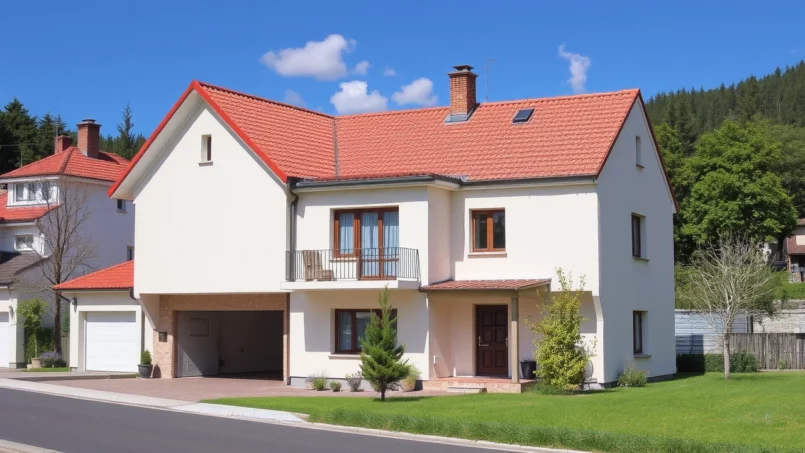
 Published on and written by Cyril Jarnias
Buying, renting, building, or renovating a property in Slovenia involves navigating a set of interlocking regulations: property law, spatial planning, housing, taxation, energy, short-term rentals, foreigner status, the role of the notary, etc. The country operates under civil law, with a strong culture of public registries and a marked influence of European law, particularly on energy and construction. Understanding this framework is essential to secure an investment, avoid unwelcome tax surprises, and stay compliant with energy performance requirements.
A Diverse but Coherent Legal Framework
The foundation of Slovenian real estate law rests on several general laws, supplemented by specialized regulations.
The Law of Property Code sets the rules for ownership, usufruct, mortgages, and co-ownership. It enshrines the principle of numerus clausus of real rights: only the categories provided by law can exist, which limits exotic structures. Property transfers must be based on a valid legal act (sales contract, gift, inheritance) and are only enforceable after registration in the land register.
The Code of Obligations governs the main contracts, including residential and commercial leases, sales promises, and guarantees. It defines the rules applicable to latent defects, contractual penalties, and termination clauses.
The land register (zemljiška knjiga) is the cornerstone of the system: managed by local courts, accessible online, it records ownership, easements, mortgages, seizures, and ongoing proceedings. In Slovenia, property is legally acquired only upon entry in the register, not upon signing the contract. A second register, the cadastre, complements this by describing the physical boundaries of plots and the characteristics of buildings.
The Slovenian real estate market is governed by several key sectoral laws: the Housing Act for rental, parties’ rights, and a Yugoslavian social heritage; the Land Register Act and the Real Estate Cadastre Act for land registries; the Building Act and the Spatial Management Act for construction, permits, and zoning; and finally the Real Estate Agency Act for the real estate agent profession.
Finally, the Slovenian Constitution protects private property while obligating the state to create conditions for adequate housing for citizens. This dual imperative influences many reforms, whether regarding the regulation of short-term rentals or energy renovation plans.
Buying a Property: From Contract to Land Register
Every Slovenian real estate transaction goes through a series of fairly standardized steps, with a strong requirement for publicity and formality.
The sales contract, or kupoprodajna pogodba, must be written and sufficiently detailed: cadastral description of the property, price, payment terms, date of possession handover, list of known liabilities, escrow arrangements, etc. For it to take effect at the land register, it must be drawn up as a notarial deed or, at the very least, bear the vendor’s signature authenticated by a notary, with an explicit clause authorizing registration.
Percentage of the price paid as a deposit when signing a preliminary real estate contract in Slovenia.
However, the transfer of ownership is not automatic: an application for registration must be submitted to the land register via the e-ZK electronic application, typically through a notary, lawyer, or agency. The registration takes effect on the date of application submission, which allows “locking in” the priority rank and prevents a competing mortgage or seizure from taking precedence.
The extract from the land register (izpisek iz zemljiške knjige) is essential to reveal co-owners, mortgages, easements, seizures, ongoing legal proceedings, and prenotations. It is recommended to analyze 10 to 20 years of history to detect complex title chains, restitutions of nationalized properties, or potential disputes.
The cadastre, accessible on the e-Prostor platform, allows verification that the physical boundaries and existing buildings match the plan, that the property does not encroach on a neighboring plot, and that there are no “black” (undeclared) constructions.
Simultaneously, a zoning certificate, or lokacijska informacija, issued by the municipality (občina), provides information on legal use (residential, agricultural, commercial), permitted dimensions, planning servitudes, and any protections (flood zone, heritage, sensitive environment). Buying land supposedly fit for construction without this document is one of the most common pitfalls.
Foreign Ownership Rights: The Reciprocity Rule
Slovenia applies a principle of reciprocity for foreign access to property ownership, as stated in Article 68 of the Constitution. In practice, this principle is largely open for nationals of the EU and economically close countries, more restrictive for others.
Citizens and legal entities from EU Member States, the European Economic Area, the OECD, and EFTA can acquire real estate in Slovenia under the same conditions as Slovenian nationals. No local entity or special permit is required for these acquisitions.
Nationals from EU candidate countries (Albania, North Macedonia, Montenegro, Serbia, Ukraine, Moldova, Bosnia and Herzegovina, Georgia, Türkiye) must apply to the Ministry of Justice for a reciprocity decision confirming that Slovenians enjoy similar rights in their country. The procedure takes several weeks and must be finalized before registration in the land register.
For nationals of states without a reciprocity agreement with Slovenia, direct purchase of real estate is impossible. Their only possibility for acquisition is through inheritance, and subject to reciprocity. However, they can create a Slovenian company (like a d.o.o.), which is not subject to these restrictions and can purchase freely. It is important to note that there are no quotas for foreign ownership in apartment buildings, nor a “golden visa” program. Owning property does not grant any automatic right to a residence permit or citizenship.
Beyond the right of ownership, foreigners must obtain a Slovenian tax identification number (davčna številka) via the DR-02 form on the eUprava portal. This number is required for any real estate transaction, rent collection, and taxation.
Notaries: A Central and Preventive Link
The notarial profession holds a pivotal place in Slovenian real estate transactions. Governed by the Notary Act, it is based on a logic of dispute prevention rather than advocacy for one party.
The notary acts as an impartial legal advisor: they must protect the interest of all parties, verify their identity, ensure their legal capacity, and check the legality and clarity of clauses. They have exclusive competence to authenticate signatures on authorizations for land register registration and to draw up public deeds (real estate sales contracts, life annuity contracts, life support agreements, certain wills…).
A notarial deed has the same probative force as a final judgment and can be directly enforceable in case of non-performance (e.g., non-payment). The notary is obligatorily insured (minimum guarantee of €33,300) and applies a tariff regulated by the Ministry of Justice, which they cannot exceed (except for authorized surcharges) nor arbitrarily reduce, although discounts are possible in some cases.
The Chamber of Notaries of Slovenia supervises the profession, manages the list of notaries, controls discipline, and contributes to client protection. The Ministry of Justice exercises state supervision. For the buyer or seller, using a notary means having an important legal filter against poorly drafted contracts, consent defects, or fraudulent schemes.
Building and Renovating: Permits, Use, and Control
Construction is the other major pillar of Slovenian real estate law, profoundly reformed with the adoption of the Building Act and the Spatial Management Act. The stated goal is to simplify procedures while protecting the public interest: building safety, environmental respect, landscape integration, preservation of cultural heritage.
Any project – new construction, extension, reconstruction with structural modification, change of use, or demolition – is subject to the principle of requiring a building permit (gradbeno dovoljenje), except for simple works. Introduced as early as 1967, the permit obligation means that a house built before that date, without subsequent modifications, is presumed regular.
The regulation distinguishes four categories. Simple buildings (garden shed, carport < 20 m², etc.) are exempt from a permit. Low-complexity buildings (garages, greenhouses up to 50 m², etc.) fall under a simplified procedure. Single-family houses are generally reduced-complexity buildings, requiring a complete application. Finally, large buildings, collective facilities, or shopping centers are classified as complex buildings.
The permit procedure follows several phases: verification of the spatial plan, obtaining location data, requesting project conditions from utility providers (water, electricity, roads…), preparing the permit application project (PGD), submitting the file to the local administrative unit. The standard review period is 60 days, extended to 5 months for projects subject to an integrated environmental assessment. Once the permit is issued, a 15-day period must pass for it to become final. Its validity period is 5 years to start construction.
Upon completion of construction, the use permit (uporabno dovoljenje) certifies that the works comply with the building permit. Now mandatory for new single-family houses in addition to multi-unit buildings, this document is indispensable for obtaining a house number, registering at the cadastre, declaring permanent residence, connecting to the electrical grid, and is required by the notary to instrument the sale of a recent building.
Some older buildings benefit from a presumption of authorization (construction before 1967, housing compliant with a permit issued before 2003 and already occupied before that date, etc.) but their owners sometimes need to request a formal administrative decision confirming this situation.
For the buyer, verifying the existence of the building permit and the use permit is part of the minimum due diligence, alongside checking the land register. The goal is to avoid becoming the owner of unauthorized extensions or floors, which carries the risk of penalties, or even a demolition order.
Energy Performance: A Strategic Aspect
Slovenia transposed the European directive on the energy performance of buildings (EPBD) very early into its law. The Ministry of Infrastructure leads this aspect, supported by the energy law, the Energy Efficiency Act, and a series of technical regulations. The challenge is twofold: reduce the energy consumption of buildings and green the energy mix, notably through renewables.
The PURES 2008, then PURES 2010 building codes introduced increasingly strict requirements: drastic reduction of transmission losses, limitation of heating and cooling needs, consideration of primary energy and CO₂ indicators, and especially the obligation, since 2008, to cover at least 25% of the energy needs of the building’s systems with renewable energy. This requirement applies to all new constructions, with even higher thresholds for nearly zero-energy buildings, which must reach a 50% share of renewables in final energy.
Distribution losses in heating systems must be limited to a maximum of 5% according to PURES requirements.
For major renovations, defined as affecting at least 25% of the building envelope, these same requirements largely apply. More modest works or small buildings under 50 m² are subject to reduced requirements, focused on U-values.
The Energy Performance Certificate (EPC): A Systemic Obligation
Introduced by the 2006 energy law and now governed by the Energy Efficiency Act, the Energy Performance Certificate has become an unavoidable cornerstone of the Slovenian real estate market.
This document, prepared by accredited independent experts and issued by authorized bodies, classifies buildings from A to G based on their heating needs, and provides three other calculated indicators: delivered final energy, primary energy, and CO₂ emissions. For residential buildings, only the calculated EPC is accepted, for the whole building or per apartment. For non-residential buildings, a measured EPC based on actual consumption can also be used.
The Energy Performance Certificate is mandatory in several cases: it is required for the acceptance of new buildings, must be communicated to any buyer or tenant before signing a contract for an existing property, and its performance indicator must mandatorily appear in any real estate advertisement. Public buildings over 250 m² and, since 2019, privately-owned buildings with high public traffic (like hotels, banks, or shops) must display it visibly. Finally, since 2015, all issued EPCs are registered in an electronic register of the Ministry of Infrastructure and accessible via the national real estate cadastre managed by the Surveying and Mapping Authority.
Slovenia is serious about compliance with these rules. The stipulated penalties are significant:
| EPC-related offense | Offender category | Fine amount (approx.) |
|---|---|---|
| Failure to display in a public building > 250 m² | Owner / user | €1,000 to €10,000 |
| Same – responsible person (manager, director) | Responsible natural person | €100 to €500 |
| Sale/rental advertisement without energy indicator | Owner | €250 |
| Sale or rental without a valid EPC | Owner | €300 |
| Misleading agency advertisement without EPC info | Real estate agency | Up to €2,500 |
The cost of the certificate remains reasonable: for a 60 m² apartment, expect €80 to €100 excluding possible travel fees or document retrieval costs. The time to obtain it depends on the quality of information provided by the owner: envelope surfaces, wall composition, window characteristics and orientation, heating type, boiler power, etc. Experts can be found via resources published by the ministry.
NZEB and Long-Term Renovation Strategy
Following the European “energy-climate” package, Slovenia adopted a national plan for nearly zero-energy buildings in 2015. It defines an NZEB as a building with very high energy performance, assessed in primary energy, with massive use of renewables.
Maximum primary energy consumption thresholds in kWh/m² for new buildings: 75 for a single-family house, 80 for a multi-unit building, and 55 for a non-residential building.
In parallel, a long-term renovation strategy plans to reduce the final energy consumption of buildings by 15% in 2020 and 30% in 2030 compared to 2005, with at least two-thirds covered by renewables, and to reduce sector emissions by 60% in 2020, 70% in 2030. By 2050, the goal is to have renovated 74% of single-family houses and 91% of multi-unit buildings. The necessary investment is estimated at €6.7 billion, partially financed via the Eco Fund (grants, low-interest loans for renovations and NZEB construction) and the national recovery and resilience plan, which allocates €86.05 million to sustainable construction and renovation.
Real Estate Taxation: Transfer, Holding, Income, and Capital Gains
Taxation occupies a central place in the Slovenian real estate landscape. It combines a transaction tax, taxation of rental income and capital gains, as well as annual fees linked to ownership.
Regarding transactions, a real estate transfer tax of 2% of the sale price applies to most sales of existing properties. It is, in principle, paid by the seller, but parties can decide otherwise. When the property is new (sale by a VAT-registered entity before first occupation or within two years thereafter) or when it is a building plot, VAT applies instead: generally at 22%, except for some social policy housing where a reduced rate of 9.5% may apply. There is no specific tax on transfers of company shares holding real estate, which explains why some structures opt for a share sale rather than an asset sale.
The total round-trip costs for a real estate transaction in France can reach up to 8% of the price, including ancillary fees and the transfer tax.
Capital gains on real estate for natural persons are taxed on the difference between the selling price and the acquisition price, after deduction of certain standardized expenses. The rate decreases with the holding period: around 25 to 27.5% for a property held less than 5 years, 20% beyond that, then 15%, up to full exemption after 15 to 20 years depending on the applicable regime. Properties acquired before 2002 are exempt, as are primary residences occupied for at least three years before the sale. Companies, on the other hand, include the capital gain in their taxable profit at the corporate income tax rate (19%, temporarily raised to 22% between 2024 and 2028).
For individuals, rental income is taxed proportionally, with a possible deduction of standard or actual expenses, leading to an effective rate of approximately 25%. Non-residents are taxed only on their Slovenian-source income. For companies, rental income is included in profits and taxed like other income.
Holding a property triggers a number of annual levies. There is a local property tax, calculated by municipalities as a percentage of the taxable value (typically 0.1 to 1% for residential, 0.15 to 1.25% for commercial premises), but with many partial exemptions, notably for the primary residence of less than 160 m². New owners often benefit from a 10-year reduction. Furthermore, the fee for the use of building land is payable by the direct user (owner or tenant), based on surface area and location, with typical annual amounts of €80 to €350 for an apartment and €200 to €900 for a house, sometimes with exemptions for low-income households or new housing.
A proposal for a real estate wealth tax at 1.45% of the market value of second homes and undeveloped land has been discussed, with an exemption for the primary residence. It aimed to combat the rental shortage by more heavily taxing unoccupied residences. This type of proposal has already been deemed unconstitutional in 2013 and continues to be controversial, making its effective implementation uncertain.
Residential Leasing: Regulated Contractual Freedom
The Slovenian rental market is primarily governed by the Housing Act. Since the major privatization wave of the 1990s, the country has a high share of owner-occupiers (nearly 88% of households) and a more limited rental stock, part of which is still held by public entities via the Housing Fund.
Residential leases can be concluded for a fixed term or an indefinite period. The amount of rent is freely set by the parties. They can also include an indexation clause, often based on the consumer price index. It is important to note that during a fixed-term lease, the owner cannot impose a rent increase unilaterally without the tenant’s agreement, unless an indexation clause was specifically included in the contract.
The security deposit is not capped by law, although practice gravitates around one to two months’ rent. Leases longer than one year must obligatorily be in writing. The rented accommodation must comply with health and safety standards (heating, water, sanitation), and the tenant has a right to privacy: the landlord cannot enter without notice or consent.
For an indefinite-term lease, the tenant can terminate with a 90-day notice without cause. The owner can only give notice for legal reasons (non-payment, serious personal need…), and any eviction requires a court decision. Rent is considered usurious if it exceeds the average local market rent by more than 50%.
Alongside classic leases, other instruments like life support contracts or life annuities, which must be executed before a notary, allow an elderly person to transfer their property in exchange for care and income until their death, with a significant impact on real estate inheritance.
Short-Term Rentals: A Tightening Regulatory Framework
Faced with the rise of tourist rental platforms, the Slovenian legislature is preparing a strengthening of rules via a new draft law on hospitality. This text plans to limit short-term rentals to 60 days per year for apartments located in multi-unit buildings, and to 150 days for individual housing units or two-family houses. Municipalities will be able to adjust these ceilings: between 30 and 90 days for multi-unit buildings, between 30 and 180 days for houses, depending on local housing and tourism pressures.
For multi-unit buildings, seasonal rental requires the agreement of 75% of the co-owners and the unanimous agreement of immediate neighbors, valid for three years. A reinforced register controls compliance with the rules and can temporarily suspend a property in case of infringement. In parallel, some cities, like Ljubljana, are considering restricting these rentals to the summer months to free up housing for students the rest of the year.
For an owner, this means that the Airbnb or Booking-type business model will have to contend with annual quotas, increased co-ownership formalities, and tighter administrative surveillance. Non-compliance exposes one to administrative and tax penalties, notably regarding the tourist tax.
Real Estate Agents: Status, Obligations, and Commission Caps
The real estate agent profession is strictly regulated by the Real Estate Agency Act. To be listed in the official register maintained by the ministry responsible for environment and spatial planning, an agent must obtain a national professional qualification, issued after an exam managed by the National Examination Centre. The test combines a written and an oral part, weighted equally, and covers at least three areas (real estate law, technical aspects, ethics), with a pass threshold of 60% in each.
The candidate must compile a complete personal file (CV, diplomas, proof of experience, training certificates) and present a clean criminal record extract for certain offenses. Fees are approximately €150 for the exam, then €33 for registration in the register, which requires a criminal record extract dated less than 30 days. Once certified, the agent is required to undergo continuing education at least every five years or upon any major regulatory change, under penalty of license suspension.
Slovenian law caps brokerage commissions at 4% of the property price for transactions over €10,000, all fees combined, with VAT applied. In practice, most agencies charge between 1 and 2% to each party, or a single rate shared between seller and buyer. They are required to have professional liability insurance, apply anti-money laundering procedures (identity verification, source of funds), and respect a code of good practice adopted by the professional association affiliated with the Chamber of Commerce.
The role of an experienced real estate agency in international transactions goes beyond simple matchmaking. It ensures essential services such as verifying property titles, collecting necessary planning documents, checking permits, and coordinating with the notary. It can also handle the submission of the application to the land register via the electronic e-ZK interface. For a foreign buyer, this professional assistance guarantees greater legal security and increased efficiency in the acquisition process.
Ownership, Succession, and Transfers
In case of death, Slovenian inheritance law applies, supplemented by the Law of Property Code for the division of joint ownership and by the law on inheritance and gift tax. Successions are handled by district courts, sometimes with the assistance of notaries for the inventory.
If a valid will exists, it determines the distribution of the estate, subject to the rights of forced heirs (descendants, spouse, parents in some cases) who can claim a minimum share, the statutory portion. In the absence of a will, the estate is distributed according to a precise order: first the descendants and the spouse or recognized partner, in equal shares; then, in the absence of descendants, the parents and the spouse; failing that, grandparents, then more distant heirs. If all renounce or if there are no heirs, the state becomes the owner of the assets.
Heirs inherit both assets and debts, but their liability is limited to the value of the inheritance. They can renounce entirely. The inheritance tax is very lenient towards the family circle: first-category heirs (spouse, descendants, adopted children, registered same-sex partners, son/daughter-in-law, stepchild) are exempt. Others face progressive rates from 5% to 39% depending on the degree of kinship and value.
Inter vivos transfers (gifts, life support contracts, life annuities) often must take the form of notarial deeds to produce all their effects and be enforceable, especially when they concern descendants who are heirs.
Strategy, Risks, and Best Practices for Investors
The layering of regulations may seem intimidating, but it outlines a relatively predictable and transparent environment, strongly backed by public registries and the intervention of regulated professionals. For an investor, a few reflexes can significantly limit risks.
First, never rely on an old extract from the land register: request a recent status, just before conclusion, and verify the absence of “encumbrances” (annotations indicating ongoing proceedings), seizure, undisclosed mortgage, or burdensome easement. Similarly, it is imprudent to take someone’s word that land is “buildable” without an official lokacijska informacija.
It is essential to demand and verify building permits and use permits, especially for extensions, verandas, additions, or changes of use. Although the notary must now verify the existence of the permit before authenticating the sales deed, independent due diligence remains strongly recommended for works carried out without authorization.
Energy performance issues also justify increased attention to the EPC: beyond the formal obligation, a poor rating will translate into higher renovation costs, lower rental attractiveness, and, potentially, future tightening measures (very low consumption zones, mandatory works). Conversely, an NZEB building or one close to classes A/B is a significant asset in a country where the national strategy aims for a deep renovation of the building stock by 2050.
The applicable taxation depends on the holding period of the property and the chosen tax status (natural person, sole proprietor, or company). Furthermore, acquiring real estate in France does not automatically grant a residence permit but can serve as proof of stability for an application based on other grounds (work, study, family reunification).
Finally, the dispersion of competencies – between the Ministry of Environment and Spatial Planning, Ministry of Infrastructure, FURS for taxes, courts for the land register, Chamber of Notaries, municipalities for local plans, agencies for EPCs – explains why a solid local team (specialized lawyer, notary, licensed real estate agent, engineer or architect, energy expert) is often the best guarantee of security. The Slovenian system is designed to be readable for those who master its codes; however, it is unforgiving of approximations and improvised procedures.
Disclaimer: The information provided on this website is for informational purposes only and does not constitute financial, legal, or professional advice. We encourage you to consult qualified experts before making any investment, real estate, or expatriation decisions. Although we strive to maintain up-to-date and accurate information, we do not guarantee the completeness, accuracy, or timeliness of the proposed content. As investment and expatriation involve risks, we disclaim any liability for potential losses or damages arising from the use of this site. Your use of this site confirms your acceptance of these terms and your understanding of the associated risks.

Cyril Jarnias is an independent expert in international wealth management with over 20 years of experience. As an expatriate himself, he is dedicated to helping individuals and business leaders build, protect, and pass on their wealth with complete peace of mind.
On his website, cyriljarnias.com, he shares his expertise on international real estate, offshore company formation, and expatriation.
Thanks to his expertise, he offers sound advice to optimize his clients' wealth management. Cyril Jarnias is also recognized for his appearances in many prestigious media outlets such as BFM Business, les Français de l’étranger, Le Figaro, Les Echos, and Mieux vivre votre argent, where he shares his knowledge and know-how in wealth management.





