
 Published on and written by Cyril Jarnias
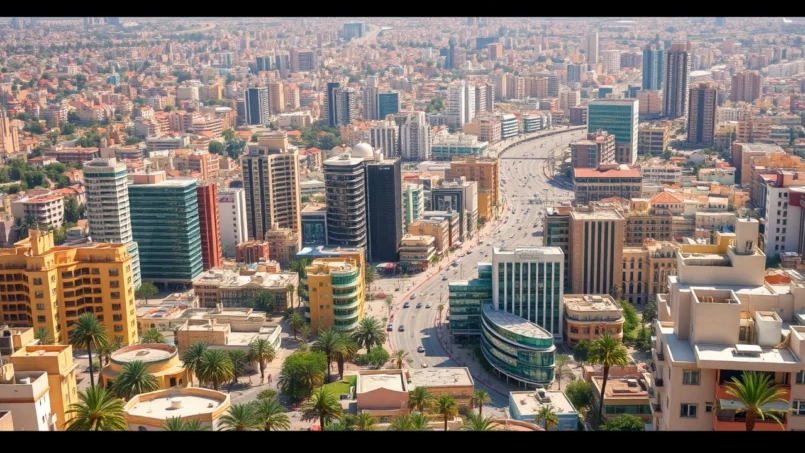
Settling in Egypt means embracing constant contrasts: millennia-old history alongside ultramodern peripheries, an attractive cost of living but legendary traffic jams, warm hospitality set against finicky bureaucracy. Within this landscape, certain neighborhoods clearly stand out as favorites among foreigners. They concentrate international schools, companies, embassies, trendy cafes, and, above all, a quality of life adapted to international standards.
Most expatriates live in major urban hubs like Cairo (with its distinct neighborhoods: upscale island, green suburbs, new cities, and gated communities), Alexandria, and, to a lesser extent, in the Red Sea and northern coastal resort cities.
Cairo, the Beating Heart of Expatriates in Egypt
Cairo remains the main gateway for foreigners. The political and economic capital, Egypt’s largest city and Africa’s second-largest metropolis, its metropolitan area exceeds twenty million inhabitants. The city concentrates embassies, NGOs, multinational headquarters, international universities, and business zones like Smart Village or the future government district in the New Administrative Capital.
This appeal has a flip side: heavy pollution, chronic traffic jams, informal neighborhoods where nearly half the population lives, and extreme contrasts between dilapidated buildings and ultra-secure compounds. Hence the importance for an expatriate to choose their neighborhood carefully, based on commute, schools, budget, and the desired degree of cultural immersion.
Zamalek, the Chic Island for Diplomats and Creatives
Zamalek, located on Gezira Island in the middle of the Nile, embodies the iconic expatriate neighborhood in Cairo. Sometimes nicknamed the local “Beverly Hills”, it is a compact, green, upscale enclave, packed with embassies, refined cafes, and art galleries.
The palm-lined streets, elegant old buildings, designer boutiques, and concentration of cultural venues—the Opera, Cairo Tower, Gezira Sporting Club, the Culture Wheel—make it a central yet relatively calm area, despite heavy traffic and difficult parking on main arteries.
Rents reflect this premium aura. For a one-bedroom apartment, typical ranges are between 18,000 and 25,000 EGP per month, and large apartments easily exceed 40,000 EGP monthly. Historically, price per square meter for sale has been among the highest in the country.
| Housing Indicators – Zamalek (Cairo) | Indicative Values |
|---|---|
| 1-Bedroom Rent (EGP/month) | 18,000 – 25,000 |
| Large Apartment Rent (EGP/month) | > 40,000 |
| Building Type | Old buildings, spacious apartments |
| Main Assets | Central location, safety, cultural life, cafes, embassies |
| Major Drawbacks | High rent, traffic, limited parking |
Lifestyle-wise, Zamalek suits singles, couples, or families who prioritize a walkable urban life, a dense cultural offer, and a very international environment. You’ll find international schools, reputable sports clubs, diverse restaurants, and even Nile dinner boats (Le Pacha, Nile Maxim, Blue Nile) popular with foreign communities.
The trade-off is twofold: rents requiring a comfortable budget and limited immersion in “popular Cairo.” For newcomers, however, it is an ideal base for getting to know the city.
Maadi, the Green Oasis for Expatriate Families
South of Cairo, on the eastern bank of the Nile, Maadi embodies the other historical pillar of expatriate life. Long a residential suburb for diplomats and multinational executives, the district has retained a very green and relatively peaceful identity, with shaded streets, old villas, and an almost suburban atmosphere.
Maadi is often described as the greenest and cleanest neighborhood in Cairo. The sub-districts of Sarayat El Maadi, with its large villas and embassies, and Degla Maadi, more lively and pedestrian-friendly, concentrate the foreign community. English is spoken on every street corner, international cafes and restaurants line Road 9 and around The Platform, and you can find both European bakeries and local shops.
Maadi is a neighborhood highly favored by families, offering a concentration of international and national schools, renowned sports clubs, as well as private clinics and reputable hospitals.
| Maadi – Overall Profile | Appraisal for Expatriates |
|---|---|
| Atmosphere | Residential, family-friendly, green |
| Expat Community | Very strong, diverse |
| International Schools | Exceptional offer (American, British, French, IB, etc.) |
| Access | Metro Line 1 + major roads |
| Budget | High for Cairo, but often considered more “cost-effective” than Zamalek |
In terms of prices, Maadi is in the top tier of Cairo, but often a notch below Zamalek for equivalent space. Large villas with gardens or pools, highly sought after by embassies, easily reach rents of several tens of thousands of pounds per month. Market figures (now outdated by inflation) indicated, for example, average purchase prices around 5,900 EGP/m² for apartments and 13,600 EGP/m² for villas. In the current rental market, listings for furnished high-end duplexes or apartments in Sarayat regularly exceed 70,000, 100,000 EGP per month and more.
Day-to-day, Maadi offers a real alternative to downtown: it’s easier to walk or cycle on quiet streets, while remaining about twenty minutes from Downtown (outside rush hour) and a reasonable distance from New Cairo. It is the combination of a pleasant living environment, a strong foreign community, and school and medical infrastructure that makes it one of the most sought-after neighborhoods for expatriates in Egypt.
New Cairo and the 5th Settlement, the New Hub for International Middle and Upper Classes
East of old Cairo, New Cairo and especially the 5th Settlement (Tagamoa el-Khames) constitute a planned new city to relieve congestion in the center. The area, already home to around five million inhabitants, has become in a decade one of the epicenters for the affluent middle class and expatriates.
The model is very different from Zamalek or Maadi: wide avenues, gated compounds, recent villas and buildings, modern shopping malls (Cairo Festival City, Waterway, City Square in Rehab, Emerald Twin Plaza…), the American university (AUC), corporate headquarters, and private clubs like Platinum Club. It is a clearly more “Western” environment in its urban planning, with more organized traffic and less pollution than downtown.
Regarding housing, most of it is in compounds: Katameya Heights and its golf villas, Mivida with its Mediterranean feel, Lake View Residence, Eastown, Mountain View, Palm Hills Capital Gardens, Hyde Park, Waterway, Rehab, and Madinaty. These gated communities combine 24/7 security, green spaces, pools, clubs, integrated shops, and private schools.
| New Cairo – Monthly Rent Ranges (Apartments) | Price Range |
|---|---|
| 1 Bedroom (Central Cairo neighborhoods) | 5,000 – 20,000 EGP (overall reference) |
| 1 Bedroom New Cairo (targeted expat areas) | 10,000 – 15,000 EGP |
| 3 Bedrooms New Cairo | 22,000 – 30,000 EGP |
| Water + Electricity (85 m², Cairo – order of magnitude) | 500 – 2,000 EGP |
Expatriates living in New Cairo appreciate the space, modern finishes, a certain predictability of services (stabilized electricity, parking, security) and proximity to major international schools: American International School in Egypt, Cairo English School, Canadian International School, GEMS, B School, etc. The American University in Cairo, anchored in the area, also attracts foreign students and professors.
The major downside is the almost total dependence on cars or ride-hailing services (Uber, Careem). Distances are long, sidewalks sometimes symbolic, and traffic jams towards central Cairo or Giza remain significant during rush hour. For families seeking a secure environment, with a daily life “in a compound” and easy access to schools, New Cairo ranks very high on the list of desirable neighborhoods.
Rehab and Madinaty, the “Mini-Cities” Favored by Newcomers
Among the compounds of New Cairo, Rehab and Madinaty occupy a special place. They are true private towns, developed by the same builder, Talaat Moustafa Group, with their own commercial fabric, mosques, schools, clinics, clubs, and even open-air malls.
This is the monthly rent in US dollars for a furnished three-bedroom apartment in the Rehab neighborhood of New Cairo, cited as competitive for its comprehensive setting.
Madinaty, even larger, is projected to eventually have nearly 800,000 inhabitants across about 9,000 acres. It features highly diverse residential zones, a large Open Air Mall, a growing restaurant scene, and housing often slightly more affordable than in the most “premium” compounds of New Cairo. An unfurnished two-bedroom apartment can be rented there for around 300–400 US dollars monthly, attracting both Egyptian families and foreigners.
These two town-compounds particularly appeal to expatriates seeking a very secure, walkable-inside environment, with young children and a controlled budget, even if it means being further from the cultural center and historical neighborhoods.
Heliopolis, Historic Charm and Proximity to the Airport
Heliopolis, founded in the early 20th century by Baron Empain, presents a contrasting face. On one hand, tree-lined boulevards, unique Art Deco or Neo-Moorish architecture, neighborhoods like Korba blending elegant cafes, shops, and historic buildings; on the other, congested roads and modern buildings with little harmony.
For an expatriate, Heliopolis offers several advantages: immediate proximity to the international airport, good connections to other city areas, presence of recognized hospitals (notably Queens Hospital), lively neighborhood life in some pockets, and rents lower than those in Zamalek or Maadi for comparable quality.
Average rents set the tone: a one-bedroom apartment typically ranges from 9,000 to 12,000 EGP, a three-bedroom in the 18,000 – 25,000 EGP range. It is home to an educated middle class, families, students, and a significant proportion of foreigners, although the expat community is less structured than in Maadi or Zamalek.
For profiles of frequent travelers (consultants, aviation professionals, NGO staff based near the airport) or couples seeking a compromise between budget, architectural character, and accessibility, Heliopolis is a solid choice.
Garden City, Diplomatic Enclave on the Banks of the Nile
Adjacent to downtown but surprisingly quiet, Garden City lines its stately villas and buildings along the Nile, between major international hotels and embassies. Originally designed on the model of English garden suburbs, the neighborhood retains a winding layout, gardens, and a hushed atmosphere.
The expatriates living here are mainly diplomats, international organization executives, or senior managers, attracted by proximity to ministries and the business district, while staying removed from the immediate bustle of Downtown. Housing consists mostly of old villas—sometimes superb but not always perfectly maintained—and characterful apartments.
Garden City offers a very secure environment, easy walking access to the capital’s administrative heart, and views of the Nile, but limited street life and a smaller dining scene than Zamalek or Maadi. For families who value tranquility or professionals whose offices are within walking distance, it is a highly sought-after address.
Mohandiseen, Dokki and Agouza, “Authentic Cairo” Upscale
On the west bank of the Nile, in Giza governorate, Mohandiseen, Dokki, and Agouza form a vast, dense urban area, heavily frequented by the Egyptian upper-middle class. Mohandiseen, literally “the engineers,” was designed in the 1950s and has over the decades become a hyper-commercial neighborhood, already described as one of the most expensive in Cairo.
For expatriates, Cairo’s popular neighborhoods offer direct immersion into local life with corner shops, local restaurants, and low-cost services. They also combine the presence of businesses, clinics, and offices. A major advantage is that rents are generally lower than in Zamalek, while benefiting from a central location.
But they suffer from deal-breaking drawbacks for some: lack of green spaces, saturated traffic, very high population density, constant noise. However, rental yield analyses show that Mohandiseen can offer gross yields around 13%, making it an attractive target for foreign investors, even if living conditions don’t suit all profiles.
These neighborhoods suit expatriates who have an office in Giza, a tighter budget, or a desire to immerse more in local daily life, rather than families seeking tranquility.
6th of October City and Sheikh Zayed, “American-Style” Suburban Living
West of Cairo, in the desert, 6th of October City and Sheikh Zayed City were created to absorb the capital’s demographic growth. Long perceived as distant, they are now among the most sought-after destinations for expatriates seeking space, security, and large houses, especially those working in industrial zones or at Smart Village.
The landscape is largely dominated by compounds: Dream Land, October Plaza, The Crown, Palm Hills October, Mountain View Chill Out Park, but especially a whole string of gated residences in Sheikh Zayed, some of which have become benchmarks in the Egyptian real estate market (Beverly Hills, Allegria, Zed, Cairo Gate, Greens, Al Rabwa, etc.).
These developments all offer more or less the same range: 24/7 security, gardens, pools, clubs, international schools, integrated retail, sometimes golf courses or shopping malls. The atmosphere resembles that of North American suburbs: cars everywhere, single-family homes, giant malls, and social life structured around clubs and schools.
Sale prices reflect the targeted positioning. In an iconic compound like Beverly Hills, an apartment can start around 900,000 EGP (for small units, old data devalued by inflation), while villas start at several million pounds. At Cairo Gate, by Emaar, apartments are advertised around 2.8 million EGP, with villas possibly exceeding 14 million EGP, with payment plans spread over 7 or 8 years.
| Sheikh Zayed – Examples of Sale Prices (old order of magnitude) | Starting Price (EGP) |
|---|---|
| Beverly Hills Apartment | ≈ 900,000 |
| Beverly Hills Villa | ≈ 4,700,000 |
| Cairo Gate Apartment | ≈ 2,779,888 |
| Cairo Gate Villa | > 12,000,000 |
| Zed Sheikh Zayed Apartment | ≈ 2,000,000 |
For rent, these areas can remain relatively affordable for expatriates with foreign currency incomes, especially since rental yields in Sheikh Zayed range between 5 and 8% depending on the segment. For a foreign household, the typical equation is: large spaces, garden, services and schools nearby, but an hour’s drive or more to reach central Cairo at bad times.
6th of October, for its part, attracts many who work in industry, automotive, big-box retail (Mall of Egypt, Mall of Arabia) or media (Media Production City). With Smart Village as a tech hub, the area has become a major center for IT and telecom executives.
Alexandria, the Mediterranean Alternative
While Cairo concentrates the majority of the foreign community, Alexandria, the country’s second city, attracts a different profile: teachers, retirees, remote workers, employees of shipping companies or local businesses, families seeking a milder climate and a mid-sized coastal city ambiance.
The cost of living in Alexandria is on average 17% lower than in Cairo.
| Monthly Cost of Living (Averages) | Alexandria | Cairo |
|---|---|---|
| Single Person | 384 USD | 473 USD |
| Family | 990 USD | 1,152 USD |
| Rent – Single Person | 95.7 USD | 189 USD |
| Rent – Family | 159 USD | 325 USD |
Expatriates appreciate the more intimate atmosphere, the corniche along the Mediterranean, the cafes and bookshops of the old city, iconic sites like the Citadel of Qaitbay, the catacombs of Kom el-Shoqafa, the Bibliotheca Alexandrina, or Montazah. The city offers a pleasant Mediterranean climate, with hot summers tempered by the sea and mild winters.
In terms of indicators, Alexandria actually achieves a quality of life index higher than Cairo’s (85.26 vs. 74.41), a slightly better safety level, and somewhat less extreme pollution, although traffic remains problematic.
The Smouha neighborhood in Alexandria is frequently cited by expatriates for its good value for money. Well-serviced with modern buildings, shops, and services, it represents a balanced choice. Rents vary: for example, a studio can cost around 220 dollars, with a range from 160 dollars for modest units to nearly 900 dollars for large apartments, depending on size and condition.
On the other hand, the Alexandrian rental market requires more vigilance than Cairo’s. Testimonies mention landlords reluctant to provide proper contracts, unclear administrative procedures, and variable building quality. Expatriates are encouraged to verify lease authenticity, rely on agents or advice from the international community (clubs, forums, local groups).
Red Sea and Northern Cities, Beach Paradises for Nomads and Retirees
Beyond the two major metropolises, some expatriates choose to settle in Red Sea resorts or on the Mediterranean coast. These are more retirees, tourism workers, or international freelancers than embassy or multinational employees.
On the Red Sea, El Gouna and Hurghada appear as the most structured for foreigners. El Gouna, in particular, is often presented as a lagoon-town designed for an international clientele, equipped with villas, hotels, marinas, schools, clinics, and services of international standard. Rental yields there are interesting, with national averages in the Hurghada region around 7.3% gross yield.
Once dedicated to summer tourism, the North Coast is transforming into an almost year-round residential and tourist destination thanks to major development projects.
A flagship project transforming the area into a modern city with comprehensive infrastructure and permanent residences.
An integrated destination offering high-end residential villages, hotels, and leisure facilities.
Coastal development contributing to residential expansion and the extended tourist appeal of the region.
Major project attracting substantial investment, notably from Gulf countries, to create a year-round destination.
Rapidly developing area, symbolizing the transition towards almost year-round use with enhanced infrastructure.
For an expatriate, these regions offer a very pleasant living environment – beaches, diving, climate, secure setting – but have practical constraints: fewer international schools, a more limited healthcare system outside resort private clinics, increased dependence on cars, and marked seasonality. They are therefore often chosen as secondary residences or retirement bases, rather than landing spots for families with school-aged children.
Housing Cost and Budget Trade-offs for Expatriates
From a strictly financial viewpoint, Egypt offers a cost of living much lower than Western countries: about 65% lower than in the United States and over 80% lower than in some European capitals, according to international comparisons. But these averages hide strong disparities between cities and neighborhoods.
Within Cairo itself, rents vary widely. For a one-bedroom apartment downtown, observed ranges go from 5,000 to 20,000 EGP per month; for a three-bedroom, from 10,000 to 50,000 EGP. Neighborhoods favored by expatriates, like Zamalek or Maadi, are clearly at the high end of these ranges, with furnished upscale apartments reaching 70,000 to 100,000 EGP or more in the most luxurious compounds.
| Monthly Rent – Cairo (order of magnitude) | Downtown | Urban Periphery |
|---|---|---|
| 1 Bedroom | 5,000 – 20,000 EGP | 3,000 – 15,000 EGP |
| 3 Bedrooms | 10,000 – 50,000 EGP | 8,000 – 30,000 EGP |
Meanwhile, an average expatriate earns around 9,200 EGP per month according to some data – a figure that mostly reflects the salaries of foreigners employed locally, not those sent by international companies. Expatriates with compensation in foreign currency have significantly higher purchasing power.
Compared to Cairo, Alexandria offers a lower cost of living: rents almost half the price, slightly lower food expenses, and healthcare costs (consultations, international schools) a very little bit lower. However, it presents a more limited international job market and a less dense offering of major foreign schools, although American, French, and German institutions are present.
What Expatriates Really Look For: Safety, Community, Services
Beyond the numbers, a neighborhood’s appeal for expatriates boils down to a few recurring criteria: perceived safety, accessibility, presence of other foreigners, school and healthcare infrastructure, quality of daily services, and, for some, the possibility of maintaining a relatively “Western” lifestyle without totally giving up contact with Egyptian culture.
The average gross rental yield nationwide in the Egyptian real estate market.
For an expatriate, these signals are important: they indicate dynamic markets, sustained rental demand, and thus the possibility of easily finding suitable housing or subletting in case of early departure. The rise of government programs like “Your Home in Egypt,” the easing of ownership rules for foreigners, and increased investment from Gulf countries contribute to making these neighborhoods preferred targets, not just for living but also for investment.
Practical Advice for Choosing Your Neighborhood in Egypt
Faced with this mosaic of possibilities, the first question to ask is often the simplest: where will you work, and where will your children study? In Cairo, covering 15 km can take an hour or more during rush hour; housing poorly located relative to the office or school can turn daily life into a logistical nightmare.
For a downtown or government institution position, neighborhoods like Zamalek, Garden City, parts of Downtown, or Heliopolis are logical options. For a tech or multinational job located at Smart Village, to the west, the areas of 6th of October and Sheikh Zayed become obvious. For an academic or organization-based role in New Cairo, it’s often rational to settle in Katameya, Rehab, Madinaty, or a nearby compound.
Families must also factor in the location of the international schools they are targeting. The main clusters are in Maadi, New Cairo, 6th of October/Sheikh Zayed, and El Rehab, with a few establishments in Zamalek and Heliopolis. A good reflex is to identify the target school, then restrict the housing search to a commute radius compatible with traffic.
The choice of where to live in Cairo is strongly influenced by the desired lifestyle. Young people, attracted by cafes, nightlife, and walkable neighborhoods, often opt for Zamalek or certain downtown sectors. Families and expatriates seeking tranquility and green spaces favor Maadi, New Cairo, or the residential compounds of the west. Finally, those desiring a more peaceful seaside rhythm turn to Alexandria or resort towns, despite often more limited professional and school offerings.
Whichever option is chosen, the empirical rule for expatriate communities in Egypt remains valid: take the time to test, via a short-term rental or Airbnb, before signing a long-term lease, and above all rely on networks of expats already on the ground—associations, clubs, platforms like InterNations or local groups—to gather on-the-ground feedback, always more valuable than developer brochures alone.
Disclaimer: The information provided on this website is for informational purposes only and does not constitute financial, legal, or professional advice. We encourage you to consult qualified experts before making any investment, real estate, or expatriation decisions. Although we strive to maintain up-to-date and accurate information, we do not guarantee the completeness, accuracy, or timeliness of the proposed content. As investment and expatriation involve risks, we disclaim any liability for potential losses or damages arising from the use of this site. Your use of this site confirms your acceptance of these terms and your understanding of the associated risks.

Cyril Jarnias is an independent expert in international wealth management with over 20 years of experience. As an expatriate himself, he is dedicated to helping individuals and business leaders build, protect, and pass on their wealth with complete peace of mind.
On his website, cyriljarnias.com, he shares his expertise on international real estate, offshore company formation, and expatriation.
Thanks to his expertise, he offers sound advice to optimize his clients' wealth management. Cyril Jarnias is also recognized for his appearances in many prestigious media outlets such as BFM Business, les Français de l’étranger, Le Figaro, Les Echos, and Mieux vivre votre argent, where he shares his knowledge and know-how in wealth management.





