
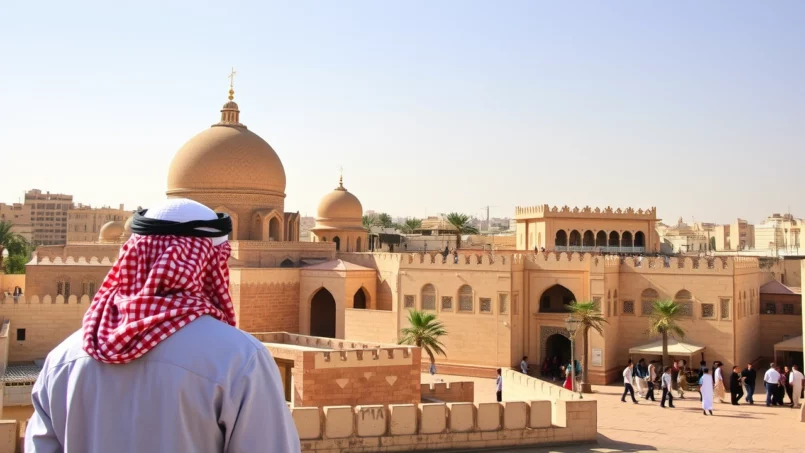
 Published on and written by Cyril Jarnias
Moving to Egypt is not just about changing countries, but entering a social, religious, and professional universe that is very different from that of most Western nations. Beyond the pyramids, the Nile, and the Red Sea beaches, daily life is governed by sometimes implicit codes that can surprise newcomers as much as they fascinate them.
Learning about cultural specifics before a stay in Egypt helps avoid misunderstandings, reduces culture shock, and allows for a better appreciation of the valuable aspects of local society: its human warmth, humor, and strong sense of hospitality.
A Country at the Crossroads of East and West
Egypt, officially the Arab Republic of Egypt, is often described as a bridge between East and West. Its strategic position along the Nile and the Suez Canal makes it a major commercial and cultural crossroads. The country has about 84 million inhabitants, and its economy has gradually shifted towards services, although industry, agriculture, oil, and gas remain important.
The cost of living in Egypt is significantly lower than in many Western countries, attracting entrepreneurs, teachers, employees, and digital nomads. Over half a million foreigners live there, mainly in Cairo and Alexandria. Their salary is typically three times the local average, creating a significant economic and social gap in daily interactions.
Language and Communication Codes
Egyptian Arabic is the official language and the language of the street. English is common in business, tourism, private hospitals, and major cities like Cairo or Alexandria. French speakers can also be found among educated elites and in some schools.
In Egypt, outside tourist or affluent areas, it’s very useful, even essential, to know simple Arabic phrases: greetings, thank you, polite ways to say no. An important detail: some Egyptians say “yes” out of politeness, even without fully understanding, which can lead to confusion. Learning a few phrases and accepting that communication isn’t always immediately perfect is part of the necessary adaptation.
Communication is often indirect. Saying no directly, criticizing someone in front of others, or putting an interlocutor on the spot are very poorly received. The art of circumventing, softening, using phrases like “inshallah,” “we’ll see,” or “maybe” is part of daily life as much as business. For an expatriate, the challenge is to decode this diplomatic language without systematically seeing bad faith in it.
The Weight of Religion in Daily Life
It’s impossible to discuss Egyptian culture without talking about religion. The country is predominantly Sunni Muslim (about 90% of the population) and has a significant Coptic Christian minority, one of the oldest Christian communities in the world.
A Society Rhythmed by Islam
The five daily prayers structure the day, whether one is a practicing believer or not. The call of the muezzin can be heard everywhere, sometimes from several mosques at once. The Friday prayer holds particular importance: it is the holy day of Islam, associated with the official weekend. Many offices are closed on Friday, and the workweek generally runs from Sunday to Thursday. In some government offices or companies, Thursday is already partially a day off.
Ramadan is a sacred month where Muslims fast from dawn to sunset, influencing schedules and the general pace. A festive atmosphere prevails at the time of iftar, the meal to break the fast. Out of respect, it is expected that non-Muslims do not eat, drink, or smoke conspicuously in public during the day.
The two major Islamic holidays, Eid al-Fitr (end of Ramadan) and Eid al-Adha (Feast of the Sacrifice), result in public holidays, large family gatherings, and slowed economic activity. This must be taken into account when planning administrative procedures, travel, or professional meetings.
Christian Practices and Religious Coexistence
Copts celebrate Christmas on January 7th and Easter on variable dates, preceded by long periods of vegan fasting. Again, these practices influence dietary, family, and sometimes professional rhythms. Historically, Muslims and Christians have coexisted in relative tolerance, although the Coptic minority has, at times, faced discrimination or targeted violence.
For an expatriate, it is crucial to be discreet regarding religious subjects. This involves avoiding debates about religion, refraining from any criticism of Islam or Christianity, and never encouraging someone to break their religious rules (such as drinking alcohol, consuming pork, or interrupting a prayer). For instance, offering a bottle of wine to a colleague without knowing their religious practice can prove to be a very clumsy and inappropriate gesture.
Family, Honor, and Hospitality: The Heart of Society
The family unit is the basis of social organization. Intergenerational ties are strong, important decisions are often made in consultation with parents, even grandparents. Living with one’s family until marriage—or very nearby, in the same building—is common. For an expatriate from a more individualistic culture, the central place of family can be surprising.
Extended Family and the Role of Elders
Multi-generational households are not the exception but a widespread norm. Elders command considerable respect: they are consulted, helped, and listened to. Not giving up a seat to an elderly person on a bus or not greeting a parent present in a room is very poorly regarded.
This family organization is accompanied by a powerful system of solidarity. One helps a cousin find a job, hosts a brother in case of difficulty, collectively contributes to financing a child’s education or wedding. It is also in this context that the concept of ‘wasta,’ this network of relationships and recommendations that greatly facilitates administrative or professional life, is embedded.
Family Organization and Solidarity System
Hospitality, a Quasi-Sacred Value
Hospitality in Egypt is not a tourist cliché but a genuine moral duty. The proverb “the guest is a blessing from God” sums up the general attitude well. You will spontaneously be offered tea, coffee, juice, sometimes even a full meal, including by people with modest incomes.
Systematically refusing an offer can be perceived negatively; it’s better to accept at least a drink, even if you only consume part of it. When invited, bringing a cake, pastries, chocolates, or a small gift typical of your country is appreciated. On the other hand, avoid offering alcohol unless you are certain your host consumes it.
Meals are plentiful, served in the middle of the table and shared. People eat with the right hand, sometimes with fingers, using bread as a utensil. Leaving a little food on your plate signals that you are full; finishing completely may be interpreted as an invitation to be served more. Adding salt or criticizing the dish at someone’s home is considered very impolite.
Table – Some Table Etiquette Codes
| Situation | Expected Behavior in Egypt |
|---|---|
| Entering the dining room | Wait for the host to indicate where to sit |
| Serving dishes | Let the elders be served first |
| Way of eating | Use primarily the right hand, avoid the left |
| End of the meal | Leave a small amount on the plate |
| Comment on the dish | Compliment, avoid any criticism or adding salt |
| Alcoholic beverages | Never offer unless sure it’s acceptable |
Gender Roles and Women’s Place: A Gap to Anticipate
Egypt remains a largely patriarchal society, even if things are evolving, especially in large cities and among educated classes. For an expatriate couple, and particularly for women, some realities can be disorienting.
An Officially Unequal Society
International studies regularly rank Egypt low on gender equality. Women’s participation in the labor market is low, around 15% compared to nearly 70% for men. Social norms remain marked by the idea that the man is the primary breadwinner and the woman the guardian of the home.
In many families, especially in popular circles or in Upper Egypt, women are expected to marry early, sometimes before 18, and to dedicate themselves mainly to the private sphere. Women who work often prefer public service, seen as more protective (shorter hours, maternity leave, stability), while the private sector is perceived as more hostile, with risks of harassment or damaged reputation.
About one quarter of managerial positions in the administration are occupied by women.
Street Harassment and Women’s Safety
One of the most frequent shocks for female expatriates concerns harassment. Studies show that the vast majority of Egyptian women and foreign women report having experienced forms of verbal or physical harassment. Whistling, insistent comments, leering, “accidental” brushing in crowds: these behaviors are not exceptional, especially in crowded areas or during celebrations.
To deal with it, several strategies are recommended for women:
For a safe stay, it is recommended for women to wear covering attire (shoulders and knees covered) outside beach areas, avoid moving alone at night in isolated neighborhoods, limit interactions with strangers to basic polite phrases, use the women-only carriages on the Cairo or Alexandria metro, and sit in the back in taxis and ride-hailing cars.
The government has begun to take stronger measures against harassment, but in practice, victims still hesitate to file complaints. For a female expatriate, the social network (colleagues, local friends, other expatriate women) remains one of the best protections, if only to know areas to avoid and good reflexes.
Expatriate Couples and Local Norms
Unmarried couples are more tolerated in international neighborhoods, large residences, and some high-end hotels, but the law and social norms remain conservative. Many employers or administrations only recognize a partner if the couple is officially married. In conversations, presenting your partner as “husband” rather than “boyfriend” avoids a lot of explanations.
Expatriate men who follow their spouse as “accompanying partners” can also surprise their Egyptian interlocutors, who are used to the opposite scheme. They sometimes elicit a form of curiosity, even admiration, but stepping outside the traditional male model requires being prepared to face remarks or misunderstandings.
Dress Codes and Public Behavior
Egypt is often described as one of the most open Muslim countries, but society remains overall conservative, especially outside affluent urban centers.
Dressing “Appropriately” According to Context
In popular residential neighborhoods, markets, cities of Upper Egypt, or religious sites, modest attire is expected from both women and men. For women, covering shoulders and legs to the knee is a prudent minimum; for men, walking shirtless or in a tank top is very poorly perceived outside the beach or pool.
In mosques, women must cover their head, arms, and legs with a scarf and long clothing. Men should avoid short shorts. It is mandatory to remove shoes upon entry. In Coptic churches, sober attire is also required.
In neighborhoods heavily frequented by expatriates, like certain areas of Maadi, Zamalek, or New Cairo, dress codes are a bit more relaxed, but staying modest and avoiding very tight or transparent clothing reduces misunderstandings.
Gestures and Body Language
Non-verbal language is very coded. A few points to know:
Pointing at someone with your finger is considered very impolite. Showing the soles of your feet or directing your shoe sole toward a person is perceived as an insult. The Western “thumbs up” gesture can also be offensive. Give and receive objects with the right hand (or both hands), the left being traditionally viewed as impure. Men may hold hands in public as a sign of friendship, with no romantic connotation. On the other hand, displays of affection between men and women (like hugging, kissing, or heavily intertwined hands) are generally frowned upon in public spaces.
Knowing how to read these signals and adopt them gradually avoids being labeled as disrespectful, even unintentionally.
Cairo Shock: Density, Noise, and Social Contrasts
Cairo, nicknamed “Umm al-Dunya” (the mother of the world), is at once the political capital, financial center, media hub, and sprawling metropolis where over 20 million people live in the urban area. It is in this city that the majority of expatriates settle—and it’s there that culture shock is often strongest.
An Extreme City: Traffic, Pollution, Informality
The first confrontation is often on the road: traffic seemingly fluid but chaotic, constant overtaking, perpetual honking, pedestrians crossing mid-traffic, vehicles sometimes driving without headlights at night. Traffic rules exist but remain very theoretical in many cases.
This is the percentage of residents in the greater metropolitan area living in informal housing neighborhoods, with limited access to public services.
Expatriate Neighborhoods with Very Different Vibes
The choice of neighborhood greatly conditions the expatriate experience. Some areas are known as “very expat,” with their international schools, sports clubs, and trendy cafes; others immerse you more in the Egyptian daily life.
Table – Some Major Types of Neighborhoods in Cairo
| Neighborhood | Cultural & Social Profile | Perception by Expatriates |
|---|---|---|
| Maadi | Residential, green, international & diplomatic community | “Village” atmosphere, popular with families |
| Zamalek | Central chic area, embassies, galleries, cafes & bars | Rich cultural life, but expensive & sometimes congested |
| Heliopolis / Korba | Former upscale suburb, European architecture, near airport | Mix of tradition and modernity |
| New Cairo / 5th Settlement | Gated compounds, villas, malls, international schools | Very “Western suburb” lifestyle |
| 6th of October / Sheikh Zayed | New cities to the west, shopping malls, industrial zones | Quieter, long distances by car |
| Downtown | Historic heart, crowds, popular cafes, very local nightlife | Very disorienting, sometimes exhausting over time |
The disparities in living standards are striking: just a few streets away from a high-end shopping mall, you find poorly maintained old buildings, marked by decades of rent freezes. For an expatriate paid in hard currency, this duality imposes a certain responsibility: negotiating prices without abusing purchasing power, being aware of the country’s social reality, avoiding attitudes of superiority.
Work, Hierarchy, and “Wasta”
The Egyptian professional world combines several specific traits: importance of personal relationships, strong hierarchy, more flexible timelines, and omnipresent bureaucracy.
The Relationship Before the Contract
In many sectors, doing business in Egypt first means building relationships. Meetings rarely start “on time” with a detailed agenda; they begin with a long phase of informal conversation: family, football, light current events, impressions of the country. Rushing to the heart of the matter is perceived as a form of coldness.
In the local context, trust is built gradually through social interactions. The concept of ‘wasta,’ a network of personal influence, is deeply rooted and often essential to facilitate administrative or professional procedures. Refusing to use these connections in the name of strict meritocracy can complicate an expatriate’s daily life, as personal connections remain decisive in many processes.
Hierarchy, Authority, and Decision-Making
Organizations are often very vertical. Respect for authority, linked to position but also age, is a pillar of work culture. Directly challenging a decision, especially in public, is very poorly received. In meetings, subordinates may avoid pointing out a problem or saying no clearly to avoid making a superior lose face.
Important decisions are made at the top, and the transmission of instructions can be slow. For an expatriate manager from a more horizontal culture, adaptation requires patience and a fine understanding of status. It is crucial to scrupulously respect titles like Engineer or Doctor.
Time Management and “Egyptian Time”
The relationship with time is more flexible than in many Western countries. Punctuality is appreciated but not always respected, appointments canceled at the last minute, administrative deadlines stretching without clear explanation: this gap can be frustrating. Yet, pushing too hard on efficiency demands risks being perceived as aggressive.
The challenge for the expatriate is to maintain professional standards while integrating the local reality. Multiplying confirmations (phone, messages), building in safety margins, formalizing in writing what was decided, and above all, integrating the “patience” factor into your way of working is often key.
Social Norms, Money, and Class Relations
Egypt is a very stratified society, with a marked gap between an educated, often English-speaking urban elite, and what some call the “street class,” more traditional and less oriented towards the West.
Tipping, Haggling, and “Small Services”
The practice of baksheesh (tip) is omnipresent. Porters, doormen, gas station attendants, deliverymen, small shopkeepers: many expect a small gratuity for a service rendered, even minimal. For an expatriate, the feeling of being constantly solicited can be unsettling, but it’s important to remember that these sums often supplement very low wages.
Haggling is common practice in souks, souvenir shops, and for some informal services (like camel rides). Accepting the first price offered often means paying well above the local value. Conversely, too aggressive negotiation or focusing on very small amounts can be perceived as disrespectful. The recommended approach is to find a balance: generally offer half or a third of the initial price, then gradually go up during the exchange. This allows you to participate in the bargaining culture while respecting the seller’s dignity.
A Contrasted Relationship with Money
The presence of expatriates earning much more than the average sometimes fuels a perception of inexhaustible wealth, which can translate into attempts at overcharging, especially in very touristy areas. Without falling into paranoia, it’s useful to ask local acquaintances about usual prices for a taxi, a service, or a specific purchase.
Egyptian society places great importance on almsgiving (zakat and sadaqa). During Ramadan, it’s common to see charity tables offering hot meals to the needy. For an expatriate, participating thoughtfully in this generosity can be a good way to integrate further.
Security, Public Space, and Authorities
Egypt presents a classic paradox: violent crime relatively low compared to other regions, but specific risks, notably linked to harassment, scams, and, in some cases, terrorism.
Very Visible Security Presence
In large cities and at tourist sites, the police presence is omnipresent: checkpoints, armed agents in front of hotels, vehicle searches at mall entrances, security scanners at museums and pharaonic sites. A specific tourist police is tasked with helping foreign visitors, with a dedicated phone number and English-speaking agents.
The omnipresent security in Egypt, a state priority to secure tourist areas and major infrastructure, comes with strict rules. These include prohibitions on photographing military installations, bridges, and certain administrative buildings, severe penalties for drug-related offenses, and laws governing gatherings. This presence can be perceived differently—reassuring or concerning—depending on one’s experience.
Demonstrations, Politics, and Sensitive Subjects
Political demonstrations, when they occur, can escalate quickly. Authorities do not hesitate to impose curfews or disperse gatherings. Foreigners are strongly encouraged to stay away from any form of protest, even peaceful. Discussing politics, the military, or very sensitive subjects like relations with certain neighboring countries publicly leads to misunderstandings, even trouble.
For an expatriate, prudence consists of respecting these red lines, staying informed of their embassy’s recommendations, and avoiding any involvement in local political life.
Health, Medical System, and Relationship with the Body
In terms of healthcare, Egypt juxtaposes under-resourced public infrastructure and a dynamic private sector, often well-equipped and relatively affordable for an expatriate.
Public vs. Private: Two Worlds
Public hospitals, managed by the Ministry of Health, generally suffer from a lack of resources: old equipment, very long wait times, sometimes insufficient hygiene. In large cities, reforms are underway and a universal health insurance system is progressing, but it mostly benefits citizens.
The cost of a sophisticated medical exam in a private Egyptian clinic, much lower than Western rates.
Hospitals frequently require cash payments or deposits before care, even with insurance; you then have to seek reimbursement. Therefore, a serious international health insurance policy is essential, not only to cover care in Egypt, but also potential repatriation or intervention in a third country if necessary.
Daily Health Habits
The hot, dry climate, urban pollution, and uneven quality of tap water impose some simple rules: drink bottled water, avoid ice of uncertain origin, be wary of raw food sold on the street, use strong sunscreen, and cover up during the hottest hours. Digestive issues are common among new arrivals, as are respiratory irritations in sensitive individuals.
Pharmacies are numerous in cities, often open 24/7, and offer home delivery. Many medications, including antibiotics, are available without a prescription. It is advisable to stock up at reputable pharmacies or those linked to private hospitals to avoid the risk of counterfeit drugs.
Integrating Without Losing Yourself: Managing Culture Shock
Even with serious preparation, settling in Egypt almost always brings culture shock, sometimes stronger than anticipated. The first phase—filled with curiosity and enthusiasm—often gives way to moments of weariness, irritation, or nostalgia for one’s home country.
Recognizing the Stages of Culture Shock
Specialists usually describe several phases: honeymoon, frustration, adjustment, adaptation. In Egypt, the frustration phase is fueled by very concrete elements: bewildering bureaucracy, slowness of certain procedures, noise, pollution, street harassment, the feeling of being constantly solicited financially.
Being aware that emotional reactions to culture shock are normal and shared by many expatriates helps to avoid dramatizing. Seeking support from a network—colleagues, neighbors, online or local communities—is beneficial to gain perspective and find practical solutions. Remembering that you are going through an adaptation process, with ups and downs, helps avoid interpreting a bad day as a failure.
Some Levers for Integration
Without claiming to provide a miracle recipe, several attitudes facilitate a more serene adaptation:
To facilitate your adaptation in Egypt, it is recommended to gradually learn everyday Arabic vocabulary. Accept slowing down your pace and take time to chat with people. Cultivate humor, a key resource in this society where joking helps ease tensions. Diversify your social relations, avoiding staying exclusively among expatriates. Finally, create comfort zones for yourself (clubs, parks, weekends by the Red Sea) without letting them become bubbles of isolation.
Above all, maintain kind curiosity: behind every disconcerting behavior lies a cultural logic, a value system, or a history. The more you understand them, the less you see them as a personal attack and the more you can respond in a nuanced way.
Conclusion: Living Egypt Instead of Just Observing It
Expatriating to Egypt means accepting to evolve in a contradictory environment: at once warm and disorienting, conservative and modern, chaotic and profoundly alive. The cultural differences are multiple: relationship to time, place of family, weight of religion, gender roles, etiquette codes, indirect language, practice of baksheesh, hierarchy at work.
For a successful expatriation, it is crucial to adopt an open and flexible attitude rather than a rigid one. Taking the time to observe, question, and adjust your habits allows you to discover the richness of the host society, where hospitality is authentic, human relationships take precedence over procedures, and humor helps overcome difficulties.
Knowing these differences in advance doesn’t eliminate unforeseen events or moments of fatigue, but it allows you to navigate them with more clarity and less tension. And it’s often at this price that Egypt stops being merely an exotic backdrop to become, at least for a time, a true adopted country.
Disclaimer: The information provided on this website is for informational purposes only and does not constitute financial, legal, or professional advice. We encourage you to consult qualified experts before making any investment, real estate, or expatriation decisions. Although we strive to maintain up-to-date and accurate information, we do not guarantee the completeness, accuracy, or timeliness of the proposed content. As investment and expatriation involve risks, we disclaim any liability for potential losses or damages arising from the use of this site. Your use of this site confirms your acceptance of these terms and your understanding of the associated risks.

Cyril Jarnias is an independent expert in international wealth management with over 20 years of experience. As an expatriate himself, he is dedicated to helping individuals and business leaders build, protect, and pass on their wealth with complete peace of mind.
On his website, cyriljarnias.com, he shares his expertise on international real estate, offshore company formation, and expatriation.
Thanks to his expertise, he offers sound advice to optimize his clients' wealth management. Cyril Jarnias is also recognized for his appearances in many prestigious media outlets such as BFM Business, les Français de l’étranger, Le Figaro, Les Echos, and Mieux vivre votre argent, where he shares his knowledge and know-how in wealth management.





