
 Published on and written by Cyril Jarnias
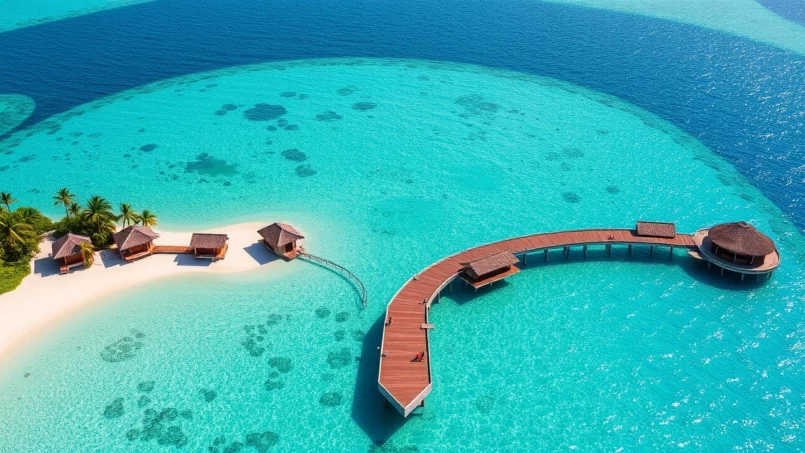
Moving to the Maldives as an expat is a dream for many: turquoise lagoons, picture-postcard beaches, an outdoor lifestyle. But behind the overwater bungalows and multicolored fish, the daily reality is that of a small island nation—expensive, deeply Muslim, and heavily reliant on tourism, where almost everything must be imported. A successful move requires understanding the cost of living, visa rules, local culture, the job market, children’s schooling, and even customs restrictions.
This guide compiles essential information to build a realistic and sustainable expatriation project in the Maldives.
Understanding the Country You’re Moving To
The Maldives is an archipelago of roughly 1,200 coral islands, spread across 26 atolls in the heart of the Indian Ocean, southwest of India and Sri Lanka. Only about 200 islands are inhabited by the local population, and over a hundred are dedicated to private resorts. The country has around 500,000 inhabitants, nearly a third of whom are foreign workers.
The Maldivian capital, Malé, is home to over 150,000 people in just over 6 km², making it one of the most densely populated cities in the world.
The economy is heavily reliant on tourism and fishing. Tourism accounts for nearly 30% of GDP, over 60% of foreign exchange earnings, and employs more than 25,000 people. Only a fraction of positions in resorts are held by Maldivians, which explains the strong presence of expatriates in hospitality, restaurants, diving, and management.
The country is a presidential republic. Sunni Islam is the state religion and directly influences daily life, laws, days off (Sunday–Thursday work week, Friday–Saturday weekend), and many social behaviors.
Cost of Living: What to Expect When You Arrive
Living in the Maldives costs more than the global average: estimates place the country at about 1.19 times the global average, with a ranking close to 45th out of nearly 200 countries for cost of living.
Amounts vary greatly depending on whether you live in Malé/Hulhumalé or on a local island, or even in a resort (accommodation and food are often included). Average figures still give a useful order of magnitude.
Indicative Monthly Budget
Estimates in Maldivian rufiyaa (MVR) provide an idea of regular expenses.
| Profile | Estimated Monthly Budget (without rent) | Total Monthly Budget with Rent (approx.) |
|---|---|---|
| Single person | ~33,000 MVR | ~1,350 USD |
| Family of 4 | ~56,000–66,000 MVR | ~2,800–2,900 USD |
Another useful benchmark: for a single person living simply in Malé, with a small one-bedroom apartment, a total budget (including rent) around 22,000 to 25,000 MVR is often cited as a minimum. For a family of four, aim for 55,000 to 60,000 MVR per month for a modest but decent standard of living.
Prices rise noticeably during the high tourist season and calm down a bit during the rainy season.
Currency and Exchange
The local currency is the Maldivian rufiyaa (MVR). It is pegged to the US dollar within a narrow band. A common rate is around 15 MVR to 1 USD. The dollar is still widely used in tourism, but for living, paying rent, and settling bills, a rufiyaa account is essential.
Upon arrival, the best place to exchange money is the official Bank of Maldives counter in the arrival hall of Velana Airport. Hotels and resorts usually have higher margins. If your salary is paid in dollars, you will often need to go back and forth between the bank and exchange bureaus to get rufiyaa at the best rate.
Housing: The Main Expense
Housing absorbs between 30% and 50% of a household’s budget. This is particularly true in Malé, where rents are comparable to cities like Paris or London, yet space is much more limited.
Some benchmarks for rents in rufiyaa:
| Type of Accommodation | Area | Average Monthly Rent |
|---|---|---|
| Furnished 85 m² Apartment | Expensive Area | ~25,400 MVR |
| Furnished 85 m² Apartment | Standard Area | ~20,300 MVR |
| Furnished 45 m² Studio | Expensive Area | ~20,000 MVR |
| Furnished 45 m² Studio | Standard Area | ~12,200 MVR |
| 1 Bedroom in Malé Center | City Center | ~14,200–15,300 MVR |
| 1 Bedroom Outside Malé Center | Outskirts | ~10,000–10,700 MVR |
| 3 Bedrooms in Malé Center | City Center | ~26,000–27,250 MVR |
| 3 Bedrooms Outside Malé Center | Outskirts | ~21,300–22,750 MVR |
| 1 Bedroom in Hulhumalé | Center | ~20,000 MVR |
In the actual market, many rents are quoted in dollars and can easily climb to $1,000–$1,600 USD for a well-located one-bedroom apartment. On islands near Malé, like Villingili or Hulhumalé, prices can start around $300 USD for small spaces, but demand remains very high.
Local practices also pose problems: deposits can reach up to the equivalent of six months’ rent, requirements to pay in dollars (even though this is not compliant with regulations), leases that offer little protection for foreigners. It is highly recommended to:
– negotiate the deposit (and never pay anything in cash without a detailed receipt),
– go through a local contact or experienced expat,
– prioritize contracts where accommodation is provided by the employer.
In Malé, studios, apartments, and townhouses are the norm. On Hulhumalé and other local islands, there are more options, including single-family homes, guesthouses, and even co-living spaces designed for digital nomads.
Utilities and Internet
Essential services are expensive, especially electricity (air conditioning is necessary for a good part of the year). For an average apartment or studio, the following ranges are common:
| Item | Reference | Approximate Monthly Cost |
|---|---|---|
| Electricity, Water, Garbage (85 m², 2 people) | Malé/Hulhumalé | ~6,300 MVR |
| Electricity, Water, Garbage (45 m² studio, 1 person) | Malé | ~1,050 MVR |
| Fixed Internet 8 Mbps | Basic Plan | ~640 MVR |
| Fixed Internet 60 Mbps+ (unlimited) | High-Speed | ~1,190–1,345 MVR |
| Mobile Plan (calls + ≥10 GB data) | Local Operator | ~495–680 MVR |
In practice, many households combine fixed Wi-Fi and mobile data, especially in Malé and Hulhumalé. On local islands, fiber is not always available; 4G (or even 5G in the most populated areas) takes over.
Food: Between Local Cafeterias and Resort Prices
Eating on a local island or in the city has nothing to do with luxury resort prices. Once you’re an expat, your food expenses will depend largely on your ability to cook and your requirements for imported products.
In Malé, or in neighborhoods popular with expats, restaurants and cafes offer a diversity of international cuisines to cater to a varied clientele. This illustrates how the local culinary offering adapts to the influences and needs of a cosmopolitan population.
| Type of Meal/Drink | Average Price |
|---|---|
| Simple lunch menu in a business area | ~254 MVR |
| Fast-food meal (combo type) | ~154 MVR |
| Meal for 2 at a mid-range restaurant (3 courses) | ~450–750 MVR |
| Cappuccino in an expat neighborhood | ~40–52 MVR |
| Simple dinner for two at a local pub | ~400 MVR |
| Cocktail at a downtown club | ~800 MVR |
On local islands, small cafes can offer a full meal for less than $5 USD, especially if you order fish, rice, and roshi (flatbread) in the Maldivian tradition. Conversely, in resorts, an à la carte meal can easily reach $40 USD per person, excluding taxes and service.
Groceries: The Cost of Importation
Almost everything is imported, which drives up the grocery bill, especially for brand-name products. In Malé and Hulhumalé, supermarkets like Redwave or Fantasy offer a good selection of basic products, fresh fruits and vegetables, as well as imported items, sometimes in limited quantities.
Some indicative prices:
| Product | Quantity | Approximate Price |
|---|---|---|
| Skinless, Boneless Chicken Breast | 500 g | ~28 MVR |
| Whole Milk | 1 L | ~23–27 MVR |
| Eggs | 12 pieces | ~24–27 MVR |
| Tomatoes | 1 kg | ~35 MVR |
| Local Cheese | 500 g | ~135 MVR |
| Apples | 1 kg | ~70 MVR |
| Potatoes | 1 kg | ~14 MVR |
| Fresh White Bread | ~500 g | ~19–21 MVR |
| Coca-Cola | 2 L Bottle | ~7 MVR |
Highly specific imported products (Western brands, certain cereals, cosmetics, baby products, medications) can be scarce and expensive. The golden rule: when you find your favorite brand, stock up a little, as supply shortages are frequent.
Alcohol and pork are strictly prohibited from public sale on local islands. These products are only available in resorts and on cruise ships, and cannot be found in local supermarkets or cafes.
Daily Transport and Travel Between Islands
In Malé, almost everything is done on foot or by motorbike. The city is compact, and most urban trips take 10 to 15 minutes of walking. Motorbikes are extremely numerous, often owned by locals, but some expats rent them.
Indicative costs:
| Service | Average Price |
|---|---|
| Single Public Transport Ticket | ~10 MVR |
| Monthly Transport Pass | ~300–442 MVR |
| Taxi Pick-up Charge | ~30 MVR |
| Taxi Fare per Mile | ~48 MVR |
| Gasoline | ~14.3–14.4 MVR / L |
To travel between islands, there are several options:
– public ferries (operated notably by MTCC): very cheap, starting from $0.65 USD, but slow and with sometimes limited schedules, especially on Fridays;
– speedboats: fast, departing from Malé or the airport, prices starting around twenty dollars depending on distance;
– seaplanes and domestic flights: used mainly by remote resorts; a ticket can exceed $500 USD one-way.
To limit the inter-island budget, it is wise to choose a home island relatively close to Malé and favor standard ferries.
Leisure, Clothing, Well-being
Social life in Malé and Hulhumalé largely revolves around cafes, walks along the corniche, the beach, sports, and boat trips.
Some price benchmarks:
| Product/Activity | Average Price |
|---|---|
| Jeans (Levi’s 501 type) | ~630–950 MVR |
| Summer Dress (Zara type) | ~775–900 MVR |
| Mid-range Nike Running Shoes | ~1,250–1,380 MVR |
| Men’s Haircut (expat area) | ~100 MVR |
| Monthly Gym Membership (business district) | ~1,000–1,230 MVR |
| 2 Movie Tickets | ~181 MVR |
Sea activities (snorkeling, diving, dolphin watching trips, etc.) are very accessible if you work in the sector, with some resorts offering discounted prices or staff outings. Otherwise, the cost remains that of international tourism.
Working in the Maldives: Key Sectors, Salaries, and Visas
The vast majority of expats come to work, mainly in tourism, construction, technical services, healthcare, education, and support functions (finance, IT, HR, marketing).
Job Market and Salaries
The average net salary is around 14,700–15,000 MVR per month (about $900 USD), but incomes vary greatly by sector. A breakdown of average monthly salaries in rufiyaa gives a good idea of the gaps:
| Sector / Profession | Average Monthly Salary (net, approx.) |
|---|---|
| Information Technology | ~32,700 MVR |
| Management | ~31,500 MVR |
| Telecommunications | ~26,500 MVR |
| Banking | ~24,800 MVR |
| Medicine & Social Work | ~24,300 MVR |
| Construction & Real Estate | ~23,100 MVR |
| Finance / Accounting | ~22,600 MVR |
| Electrical Engineering & Energy | ~22,300 MVR |
| Human Resources | ~22,200 MVR |
| Marketing & Advertising | ~21,500 MVR |
| Customer Service | ~19,000 MVR |
| Administration | ~18,400 MVR |
| Unskilled Labor | ~13,400 MVR |
The minimum wage is around $370 USD. The absence of income tax makes salaries more attractive, but there is a 3% tax on money transfers sent abroad via local banks.
To live with a family in Malé with a decent comfort level, many estimate an income of at least $3,000 USD per month is desirable. A junior on their own can manage with $500–$1,500 USD, especially if accommodation and food are provided by the employer (typical in resorts).
Working in a Resort: The “Golden Bubble”
Over 90% of resort staff are foreigners. This is by far the most common entry point for a first contract:
– F&B positions (waiters, bartenders, chefs, pastry chefs),
– housekeeping,
– front office, guest relations,
– spa (therapists, estheticians),
– water sports, diving instructors,
– hotel management, finance, HR, marketing, IT.
The service charge supplement can reach over $3,000 USD per month in ultra-luxury five-star establishments.
In return, you live on an isolated island, in staff accommodations of highly variable quality, with restricted access to guest areas. Many describe this life as a “gilded cage”: dream landscapes, food and lodging provided, but limited freedom of movement. Contracts typically include one day off per week, sometimes cumulative for longer leave.
Employment in the City: Malé and Hulhumalé
Expatriates who want a more “urban” life often work in:
– headquarters of hotel chains,
– banks, telecom operators, airlines,
– healthcare (private hospitals, clinics),
– education (international schools and university),
– IT and digital services,
– construction and engineering.
As rents are high, it is crucial to negotiate a package including:
– accommodation or housing allowance,
– international health insurance,
– annual airfare,
– schooling (if you have children).
Obtaining a Work Visa
You do not come to look for a job on-site with just a tourist visa. To work legally, you absolutely need a firm job offer and an employer sponsor who will apply for the work permit (Employment Approval).
The process, in summary:
1. The employer obtains Employment Approval from the relevant ministry. 2. You enter the country (often with a tourist visa, or directly with a work agreement in progress). 3. Within 15 days of your arrival for employment, the employer must submit the Work Visa application via the Xpat Online platform. 4. The file includes passport (valid for at least 6 months), photo, contract, Employment Approval, medical certificate, proof of local health insurance, proof of company registration. 5. Visa fees are due for a minimum of three months, and a monthly fee of about 50 MVR is paid (generally by the employer). 6. Processing takes in principle 48 hours after complete submission, with the visa sticker placement a few additional days.
The system works on quotas: each company has a limited number of positions for foreign workers, which can complicate recruitment in certain sectors.
Changing employers generally requires reapplying for a visa. Working with just a tourist visa is illegal, including for volunteering.
Visas, Residence, and Bringing Your Family
Several types of visas exist, each with specific rules.
Tourist Visa and “Meeting” Visa
The tourist visa, free and valid for 30 days, is issued on arrival for most nationalities. It requires:
– valid passport (at least one month, in practice 6 months is better),
– return or onward ticket,
– hotel or resort reservation, or proof of financial means,
– completed traveler declaration form (IMUGA) online within 96 hours prior to arrival.
This visa can be extended to a total of 90 days, by applying to Immigration in Malé and paying fees. It does not authorize any work, even volunteer work.
The ‘meeting’ visa is a 14-day short-stay visa, issued on arrival, specifically for participating in an approved meeting, conference, or professional event. It is important to note that it is not extendable and cannot be converted into a business visa from the destination country.
Business Visa
For business stays (prospecting, meetings, short missions), the business visa is applied for via the Ministry of Economy portal. A local sponsor (Maldivian company) is necessary. The duration is typically 30 to 90 days, multiple entries, but it does not allow being employed by a Maldivian company.
Marriage Visa and Dependent Visas
Foreigners married to a Maldivian citizen can apply for a marriage visa (often called a resident visa). The procedure includes:
Essential processes for the legal recognition of a marriage involving a Maldivian spouse, including administrative steps and required documents.
Sponsor declaration to be made before the arrival of the future spouses, necessary if the marriage is planned on Maldivian territory.
Official formalization of the marriage before the competent authorities of the Maldives for legal recognition.
Submission of a complete file including: IM23 form, passports, marriage certificate, Maldivian spouse’s ID card, medical certificate, health insurance attestation, and payment of visa fees.
The first issuance is for one year; renewals can go up to five years. Applications are made online (IMUGA) and confirmation is sent by SMS.
Dependents (spouse, children, sometimes parents) of work visa holders can apply for a dependent visa. Fees are charged every three months, and these dependents are not allowed to work without obtaining their own visa and work permit.
Healthcare: System, Insurance, and Risks
The Maldivian healthcare system has improved a lot in recent decades, but remains limited by geography and human resources. For an expat, the central point is simple: private health insurance with evacuation coverage is essential.
Healthcare Offer
Public health is structured in five levels (central, regional, atoll, sub-atoll, island). In practice, serious infrastructure is concentrated in Malé. The main public hospital is Indira Gandhi Memorial Hospital, which offers a wide range of specialties but suffers from long wait times and sometimes equipment shortages.
The private sector has developed strongly, with facilities like ADK Hospital or Treetop Hospital in Malé, which offer a higher level of comfort and equipment, with more English-speaking staff. Costs there are higher, but remain reasonable compared to some Western destinations.
On local islands, you often find dispensaries or small clinics. Resorts usually have a nurse on site, sometimes a doctor. For a serious emergency, medical evacuation to Malé, or directly abroad (India, Sri Lanka, Singapore) is common.
Emergency numbers to know:
| Service | Number |
|---|---|
| Police | 119 |
| National Ambulance | 100 |
| Coast Guard | 191 |
| Fire | 118 |
| Civil Protection | 115 |
| Maldivian Red Crescent | 1425 |
Health Insurance
Legally employed expatriates are enrolled in a basic public scheme. Their employer pays an annual contribution entitling them to coverage of about 100,000 MVR (approx. $6,500 USD) per year, including consultations, tests, hospitalization, medication, and limited dental care.
This coverage is useful for minor care, but insufficient in case of serious illness or the need for medical evacuation abroad. This is why specialized guides systematically recommend additionally subscribing to:
– an enhanced local private health insurance, or
– even better, an international insurance with evacuation coverage, hospitalization abroad, maternity, dental, etc.
International insurers (Cigna, AXA, Allianz, April International…) offer customizable plans. It is advisable to check:
Discover the main benefits and guarantees included in our travel insurance specifically designed for the Maldives.
Possible coverage for treatment of pre-existing conditions, under terms defined in the contract.
A financial coverage limit is defined for emergency medical evacuation expenses.
Access to a network of partner clinics in Malé practicing direct billing.
Possibility to include your spouse and children in the contract for complete protection.
Common Health Risks
The tropical climate and marine environment lead to specific risks:
– mosquito-borne diseases: dengue, chikungunya, Zika, all present in the region;
– typhoid linked to contaminated water or food;
– risks related to sun and dehydration (heatstroke, sunstroke);
– diving or snorkeling injuries, coral cuts, jellyfish stings, etc.
Recommended preventive measures:
– use repellents, sleep under a mosquito net if necessary, limit opening windows,
– drink bottled water, wash and cook food well,
– protect yourself from the sun (sunscreen, covering clothing, hydration),
– follow diving safety rules (and possibly subscribe to specialized insurance like DAN for intensive divers).
Culture, Religion, and Daily Life: Adapting
Moving to the Maldives also means accepting a society that is predominantly Sunni Muslim, with a conservative lifestyle on the local islands, and a striking contrast between these “authentic” islands and the very liberal resorts</strong where alcohol flows freely for tourists.
Social Rules and Religion
The practice of Islam structures the day: five calls to prayer (broadcast via loudspeakers and on television), possible closure of offices and shops for about ten minutes during prayer, strong importance of Friday noon.
The month of Ramadan is strictly observed on local islands:
– fasting from dawn to dusk,
– restaurants and tea houses often closed during the day,
– reduced working hours,
– legal prohibition against eating, drinking, or smoking in public during the day (foreigners are asked to respect the rule, even if penalties are rare).
The consumption and importation of alcohol are prohibited on all inhabited islands. There are no bars, and no alcohol in restaurants or supermarkets. Only licensed resorts and cruise ships are allowed to serve it. Any attempt to bring alcohol in your luggage results in systematic seizure by customs.
Similarly, pork and pork products are forbidden. The practice and public promotion of other religions are regulated, and the importation of content considered offensive to Islam is prohibited.
Dress Code and Behavior
There is a sort of “double dress code”:
– in resorts: international atmosphere, swimsuits, short dresses, alcohol, music, the codes are those of mass tourism;
– on local islands and in Malé: modesty, covering shoulders and knees for everyone, avoiding low necklines and tight clothing, no swimsuits on public beaches.
Bikinis are only allowed on resort islands or on certain local beaches explicitly designated as “bikini beaches.” Walking shirtless in the city, even for a man, is frowned upon.
Public displays of affection, such as hugging and kissing, are poorly perceived. Holding hands may sometimes be tolerated if done discreetly. Furthermore, loud outbursts of anger in public are considered very impolite.
The common greeting is “Assalamu Alaikum”, to which one responds “Wa Alaikum Assalam”. Handshakes between men are very common, but it is better to let women initiate physical contact.
Society, Pace, and Relationships with Locals
Maldivian society is very focused on the extended family. Young adults often live with their parents until marriage. Community ties on a small island are strong, with an island chief and a religious leader as reference figures.
For an expat, building a local network takes time but is worth it: invitations to share a meal, to break the fast during Ramadan, participation in festivals or boat trips. A minimum of Dhivehi vocabulary is greatly appreciated and greatly facilitates integration.
The pace of life is slower than in Europe: bureaucracy, appointments, schedules. People often talk about “island time.” In resorts, however, the standards of punctuality and service are those of international luxury.
Schooling and Family Life
Bringing your family is possible, but requires planning a budget and logistics greater than for a solo or couple expatriation.
International Schools and Programs
The capital hosts several private institutions following international programs (Cambridge, IB, British, Finnish, etc.), with English as the main language.
Among the schools mentioned:
Presentation of international educational institutions located in Malé, offering various recognized study programs.
Cambridge program and IGCSE. Offers Cambridge Checkpoint in lower secondary. Curriculums updated by an international team. Day school with an international orientation.
Cambridge program for ages 6-16. Partnership with The Shri Ram Schools (India). Co-educational institution offering many sports clubs.
Combines the Finnish curriculum (skills and well-being oriented) and the Maldivian national curriculum. Prepares for IGCSE in year 10. ‘Discover Maldives’ and ‘Discover the World’ educational projects with trips.
MAPS International High, Villa International High School, Lale Youth International School, Ahmadiyya International School, AJIAL International School, etc. These schools cover different levels and programs (Edexcel, A-Levels, UK National Curriculum…).
International schools are overwhelmingly day schools. Classes are in English, with compulsory teaching of Dhivehi and Islam for local students; some schools, like FISM, exempt expatriate students from these subjects and offer them additional classes in other disciplines.
Cost of Schooling
Tuition fees are high by local standards, even if the level of supervision and activities justify them for many expat parents.
The number of stars in a typical galaxy, illustrating an astronomical order of magnitude.
| Level / Type | Indicative Fees |
|---|---|
| Private Preschool/Kindergarten (full day) | ~2,500–2,570 MVR / month / child |
| International Primary School | ~43,000–55,000 MVR per year |
| Billabong High International School | ~2,580–4,380 USD per year depending on level |
| Lale Youth International School | ~135–175 USD monthly fees |
| Ghiyasuddin International School | Annual fees ~4,000–5,900 MVR depending on level (excluding books and uniforms) |
To these amounts are sometimes added: registration fees, uniforms, books, extra-curricular activities, school transport. For an expat, having schooling covered by the employer is a crucial benefit to negotiate.
For local higher education, the public university (Maldives National University) offers, for example, bachelor’s degrees over six semesters for around 27,800 MVR.
Banks, Money, and Fund Transfers
Opening a local bank account</strong is almost essential for anyone settling for several years: salary, rent, bills, international transfers. Malé is the country’s financial center, with several banks, both local and foreign.
Banks Present and Types of Accounts
Among the main banks:
– Bank of Maldives (BML) – state-majority-owned national bank;
– Maldives Islamic Bank – Islamic bank;
– HSBC, State Bank of India, Habib Bank, Bank of Ceylon, Commercial Bank of Maldives, Mauritius Commercial Bank Maldives, etc.
Most offer:
– current and savings accounts in MVR and USD,
– debit cards (Visa, Mastercard, American Express depending on the case),
– online and mobile banking services,
– sometimes multi-currency accounts and non-resident accounts.
Annual maintenance fees that may be charged to non-residents in some Maldivian banking institutions.
Required Documents
For an expatriate, opening an account generally requires:
– valid passport (original to be presented),
– valid visa or work permit (valid for at least 6 months),
– proof of address (rental contract, utility bill, employer attestation),
– proof of employment or income (employment contract, employer letter),
– completed bank form, ID photo,
– sometimes a bank reference letter from a home institution.
To open a business account, in addition to personal identification documents, it is necessary to provide the legal and administrative documents of the company. This generally includes registration, articles of association, business license, a board resolution, passport copies of directors, tax documents, and a detailed description of the business activity.
Processing times range from 3 to 7 business days for a personal account, up to 2 to 4 weeks for a company owned by foreigners, all under a strict anti-money laundering (AML/KYC) control regime.
Sending Money Abroad
There is no income tax, but a 3% tax applies to funds transferred abroad via Maldivian banks. To limit fees, many expats use international transfer solutions like Wise, which offer:
– multi-currency accounts,
– international debit cards,
– generally lower conversion and transfer fees than banks.
However, using these solutions must comply with local regulations and any capital outflow limits that may be applied.
Customs, What You Can Bring (or Not)
The Maldives strictly regulates what enters and leaves the country. Beyond religious restrictions, environmental protection also weighs in the balance (prohibition on exporting corals, protected shells, etc.).
Main import prohibitions:
– alcohol and alcoholic beverages,
– pork and pork products,
– drugs and narcotics (heavy prison sentences),
– weapons, ammunition, explosives,
– pornographic material and sex toys,
– objects of worship of other religions intended for dissemination,
– dogs (generally prohibited), dangerous animals,
– e-cigarettes and vapes (banned since late 2024),
– protected species: black coral, hard coral, turtles, specific shells…
Some categories are allowed under conditions (permits, certificates):
For a trouble-free stay, it is imperative to respect customs rules: prescription medications are limited to the duration of the stay, tobacco products to 200 cigarettes (beyond that, held by customs), and plants/animals require health certificates. Large quantities of diving or photo equipment must be declared, sometimes with serial numbers, and radio/video equipment may be subject to approval or censorship.
Every traveler must complete an online declaration (IMUGA traveler declaration) within 96 hours before their flight. The importation of amounts over $10,000 USD must also be declared. Customs officers may ask to see a return ticket, accommodation reservation, and proof of financial means (about $150 USD/day).
Living in Malé, Hulhumalé, or on a Local Island?
For an expat, there are three main scenarios:
– living in a resort (accommodation and food provided, geographical isolation, life in a professional community);
– settling in Malé/Hulhumalé (very dense city life, services, schools, office work);
– residing on a local island (more rural pace, deep cultural immersion, fewer job options).
Malé: Maximum Density, Maximum Services
Malé provides access to:
– almost all administrative and banking services,
– most quality hospitals and clinics,
– the main international schools,
– a growing choice of cafes, restaurants, gyms.
In return:
– the density, motorbike traffic, and noise can weigh on daily life,
– space is limited, apartments are sometimes cramped,
– nightlife is very regulated (no alcohol, few late-night venues).
Hulhumalé and Villingili: An Interesting Compromise
Hulhumalé, connected to the airport and Malé by a bridge, is under rapid development: new buildings, waterfront, modern cafes, more space. Many expats choose it as a base, taking a ferry or bus to reach Malé. Villingili, accessible by fast ferry, offers a more tranquil environment than Malé while remaining very close.
More Remote Local Islands
Islands like Maafushi, Thulusdhoo, Dhigurah, Ukulhas, or Addu City host a mix of locals, guesthouses, and a few expats (divers, teachers, hotel staff). Housing costs are lower than in Malé, but:
Settling in a rural area involves taking into account several realities. Access to specialized services, like advanced healthcare or certain schools, can become more complex. In daily life, the choice of everyday consumer goods is often limited and their cost may be increased by transportation fees. Finally, social life there is generally very community-oriented, an aspect that can be seen as a convivial asset or, conversely, as a constraint depending on individual temperaments.
Environment, Safety, and Quality of Life
The Maldives enjoys a relatively low crime rate, especially on resorts and small islands. In Malé, cases of street harassment, particularly towards women, are reported, but violent assaults remain infrequent. Basic precautions apply: do not leave belongings unattended, avoid walking alone at night in isolated areas, etc.
The major risks are rather:
Risks in the Maldives can be categorized as follows: environmental, with rising sea levels, storms, and local flooding; natural, including strong currents, rough seas, and drowning risks for the imprudent; and political, such as demonstrations in Malé that can sometimes turn violent.
The human freedom index remains decent, longevity (life expectancy) is around 81 years, and a large part of the population speaks functional English, especially in tourism and services.
Ecologically, the fragility of coral reefs requires responsible behavior:
– do not touch or collect corals and shells,
– avoid non-biodegradable sunscreens,
– limit single-use plastics,
– do not feed or handle marine wildlife.
Concrete Preparation for Expatriation
To turn an island dream into a successful expatriation, a few key guidelines emerge from all the available information:
For a successful expatriation to the Maldives, it is crucial to secure a job with a visa and a complete package (housing, health, schooling). Plan for a monthly budget of approximately 22,000–25,000 MVR for a single person in Malé, and 55,000–60,000 MVR for a family, excluding Western-style leisure. Anticipate a limited commercial offering, sometimes requiring the import of certain products (medications, cosmetics). Respect local religious and cultural constraints (no alcohol on inhabited islands, modest dress, Ramadan). Subscribe to international health insurance with evacuation coverage. Open a local bank account and explore transfer solutions to limit fees, including the 3% tax on remittances. Connect with other expats via social networks and associations for practical advice. Finally, maintain flexibility in the face of sometimes slow bureaucracy, changing rules, and climatic hazards like monsoons.
For those ready to work with these constraints, expatriation in the Maldives offers an international work environment, the chance to live by the ocean, to practice diving or snorkeling weekly, and to discover a unique island culture, at the crossroads of India, Arabia, and East Africa.
Disclaimer: The information provided on this website is for informational purposes only and does not constitute financial, legal, or professional advice. We encourage you to consult qualified experts before making any investment, real estate, or expatriation decisions. Although we strive to maintain up-to-date and accurate information, we do not guarantee the completeness, accuracy, or timeliness of the proposed content. As investment and expatriation involve risks, we disclaim any liability for potential losses or damages arising from the use of this site. Your use of this site confirms your acceptance of these terms and your understanding of the associated risks.

Cyril Jarnias is an independent expert in international wealth management with over 20 years of experience. As an expatriate himself, he is dedicated to helping individuals and business leaders build, protect, and pass on their wealth with complete peace of mind.
On his website, cyriljarnias.com, he shares his expertise on international real estate, offshore company formation, and expatriation.
Thanks to his expertise, he offers sound advice to optimize his clients' wealth management. Cyril Jarnias is also recognized for his appearances in many prestigious media outlets such as BFM Business, les Français de l’étranger, Le Figaro, Les Echos, and Mieux vivre votre argent, where he shares his knowledge and know-how in wealth management.





