
 Published on and written by Cyril Jarnias
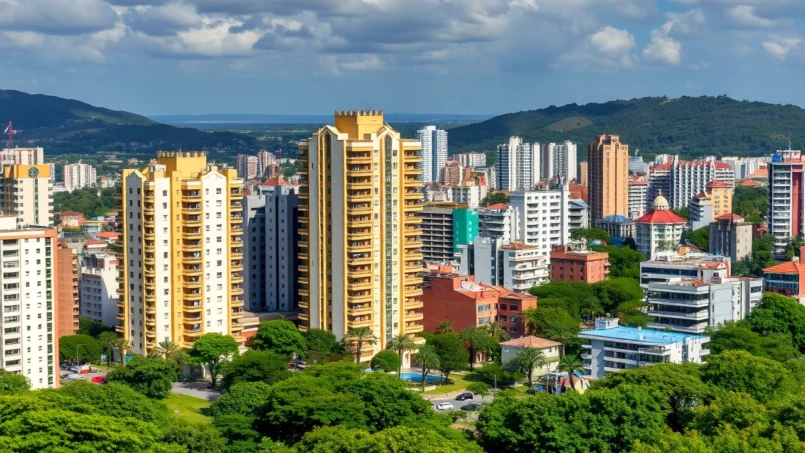
São Paulo has been attracting Brazilian and foreign real estate investors for several years. As the country’s economic capital, the largest city on the continent, and a true financial engine for South America, the metropolis combines massive demographics, a housing shortage, expanding infrastructure, and solid rental yields. The result: the market is dense, complex… but rich in opportunities for those who take the time to analyze it seriously.
Real estate investment in São Paulo requires analyzing market figures, strategic neighborhoods, prices, and rental yields. It also involves a solid understanding of specific risks and Brazilian legal aspects for a concrete vision of this investment.
A vast, dynamic market… and still affordable in strong currencies
São Paulo is both Brazil’s largest city and the country’s economic heart. The city has over 12 million inhabitants within its official limits, nearly 20 million in the metropolitan area, and a projection toward nearly 23 million inhabitants. The housing deficit reaches about 369,000 to 400,000 units in the city alone, and over 8 million households nationwide. In other words, structural demand is far from being met.
From a purely financial perspective, the market shows solid fundamentals. Prices per square meter have risen significantly since 2020 but remain attractive when converted to dollars or euros, thanks to the weakness of the Brazilian real.
Major price trends
In 2024 and 2025, data converges: prices continue to rise, but after a decade of high inflation, the real increase remains moderate. Over ten years, values have risen by about 39% nominally, but adjusted for inflation, they have fallen by about 25 to 30%. For an investor in strong currencies, this means entering a market that is not in a bubble, despite short-term dynamism.
Here are some benchmarks to help you gauge price levels:
| Indicator (City of São Paulo) | Indicative Value |
|---|---|
| Average Price 2024 (DataZAP / FipeZAP) | ~BRL 7,157 / m² |
| Average City Price (2025–early 2026, cross-referenced sources) | ~BRL 10,000–12,000 / m² |
| Median Price / m² early 2026 | ~BRL 12,000 / m² |
| Average Price São Paulo capital (some sources) | ~BRL 11,560 / m² |
| Nominal Annual Increase 2024–2025 | ~6.1% |
| Real Increase (inflation-adjusted) | ~0.5–1% |
| Projected Growth (next 12 months) | +3 to +7% |
| Estimated CAGR until 2030 | ~5.4% / year |
According to DataZAP / FipeZAP indices, prices per square meter increased by 11.5% over a recent period, well above official inflation (4.83%). Some central areas even saw increases exceeding 15%.
Simultaneously, rents are soaring: the FipeZAP rental index rose over 15% between 2021 and 2022, and rents increased by about 13.5% in 2024, significantly above inflation. This is one reason why gross yields in São Paulo remain higher than in many major Western metropolises.
Liquidity and sales volumes rising sharply
Another important signal: market liquidity. Home sales in São Paulo reached about 103,346 units in 2024, a +35.7% increase year-on-year. In just the first two months of 2025, there were already over 17,000 transactions (+40.6% vs. the previous year). New launches follow the same trend, with over 104,000 new homes launched in 2024 (+42.6%), and a +130% in launches in the first two months of 2025 compared to the same period, totaling nearly 16,940 units.
This sustained activity reflects two things: on one side, strong appetite from developers, and on the other, very real demand, driven both by Brazilian households and by a flow of local and international investors.
Analysis of the Brazilian real estate market
Note: the final sale price is concluded on average 7% below the initially asking price, showing that negotiation remains the norm.
What yields can be expected in São Paulo?
For an investor, rental yield is often the core of the matter. São Paulo positions itself rather well on the scale of Brazil and even Latin America.
Gross yields: a spectrum typically between 4 and 8%
Most sources place the average gross rental yield for apartments in São Paulo around 5.9–6% per year. Some studies mention a wider range, from 4 to 8%, depending on property type and neighborhood. Studios and small apartments close to transportation and employment hubs show the best ratios.
| Location / Neighborhood | Indicative Gross Rental Yield |
|---|---|
| City Average (Q1 2025) | ~5.94% |
| Expanded Center | ~7.9% |
| Vila Mariana | ~7.1% |
| Brooklin | ~7.0–7.7% (up to 8.5–9.6% for 1-bedroom) |
| Tatuapé | ~5.5–7% |
| Vila Madalena | ~5–6% |
| Pinheiros | ~4.5–5.5% |
| Moema | ~4–5% |
| Jardins | ~3.5–4.5% |
| Sé (historic center) | ~7.42% (record 2020) |
In terms of property types, the finding is clear: studios and one-bedroom apartments show the highest yields, often between 6% and 8% gross, with lower vacancy rates. Large family apartments or ultra-luxury properties see their yields drop to around 3.5–5%, even if their long-term appreciation potential remains interesting.
Net yields are 1.5 to 2 points lower than gross yields after deducting expenses, IPTU (property tax), management fees, and vacancy.
Overheated rental market
The rental market in São Paulo is particularly dynamic. Recent signals are telling:
– the leads-to-listings ratio increased by about 9.2% in 2024;
– rents for one-bedroom apartments increased over 15% in one year;
– studios and two-bedroom apartments (T2s) remain among the most sought-after options.
Business districts (Faria Lima, Itaim Bibi, Brooklin, Vila Olímpia), student areas (Butantã, Perdizes, Vila Mariana, Vila Madalena), and central sectors undergoing revitalization (Centro, Liberdade, República, Sé) concentrate a large part of this demand.
Understanding prices in São Paulo: extreme disparities between neighborhoods
Speaking of “average price” in São Paulo has limited value if one doesn’t look at the details by neighborhood. The city is divided into five large administrative zones (Center, North, East, West, South), each with its own dynamics. Price gaps can easily range from BRL 4,000 / m² on the periphery to over BRL 25,000 / m² in the most exclusive sectors.
Overview of price levels by neighborhood segment
The table below synthesizes some benchmarks from several sources for the city and some key neighborhoods.
| Zone / Neighborhood | Approximate Average Price (BRL / m²) | Comment |
|---|---|---|
| City of São Paulo (overall) | ~10,000–12,000 | Average across all neighborhoods |
| Emerging affordable neighborhoods | 7,000–9,000 | Tatuapé, Saúde, parts of Vila Prudente, Vila Andrade (~8,300) |
| “Trendy” / creative neighborhoods | 12,000–14,000 | Vila Madalena, Pinheiros (up to 18,400) |
| Premium “upper-middle-class” neighborhoods | 10,000–16,000 | Moema (~10,000), Vila Mariana (13,400–16,400), Alto de Pinheiros (~11,000) |
| High-end business districts | 14,000–20,000+ | Itaim Bibi (~19,400), Vila Olímpia, Brooklin (13,500–17,000) |
| Ultra-luxury (Jardins, Vila Nova Conceição, Jardim Europa) | 15,000–25,000+ | With peaks of 25,000 BRL/m² for high-end new builds |
Some figures in dollars confirm that, despite these levels, São Paulo remains competitive compared to major international capitals: neighborhoods like Jardins, Itaim Bibi, Faria Lima, or Vila Nova Conceição are around 3,200 to 5,000 USD / m², whereas New York or London far exceed 10,000 USD / m² in upscale neighborhoods.
What different budgets allow
For a foreign investor, it is often more meaningful to think in terms of total budget rather than price per square meter. Based on 2025–early 2026 data, we can outline some typical scenarios:
| Approximate Budget (in BRL) | Examples of accessible properties in São Paulo early 2026 |
|---|---|
| ~BRL 550,000 (≈ 100,000 USD) | 35–40 m² studio in Vila Andrade; 45–55 m² 1-bedroom in Santana; 30–40 m² studio in Bela Vista |
| ~BRL 1.1 million (≈ 200,000 USD) | 70–85 m² 2-bedroom in Vila Mariana; 75–95 m² 2-bedroom in Perdizes; renovated 55–70 m² 1–2 bedroom in Bela Vista / Paraíso |
| ~BRL 1.66 million (≈ 300,000 USD) | 100–120 m² 3-bedroom in Vila Mariana; 80–95 m² 2-bedroom high-standard in Moema; 75–90 m² 2-bedroom in Pinheiros |
| ~BRL 2.77 million (≈ 500,000 USD) | 110–140 m² prime 2-bedroom in Pinheiros; 140–180 m² high-standard 3-bedroom in Moema; large 160–220 m² family apartment in Perdizes |
| ~BRL 5.54 million (≈ 1 M USD) | Luxury 180–250 m² apartment in Itaim Bibi; large 250–350 m² apartment in Jardins; 220–320 m² penthouse in Pinheiros |
| ~BRL 11.08 million (≈ 2 M USD) | 350–500 m² penthouse in Itaim Bibi; 400–600 m² signature unit in Jardins; large 300–450 m² new apartment in Moema / bordering Itaim |
This grid shows how a budget of 200,000 to 300,000 USD already allows targeting highly sought-after neighborhoods like Vila Mariana, Perdizes, Moema, or even Pinheiros, with products suitable for quality long-term rental.
Key neighborhoods: where to invest in São Paulo?
The choice of neighborhood is probably the most determining decision for the success of a real estate investment in São Paulo. The city is officially divided into five large zones (Center, North, East, West, South), but, in practice, investors mainly concentrate on central and South/West zones, which are better served, safer, and more dynamic.
Premium and high-security neighborhoods
Several sectors combine high security, comprehensive service offerings, proximity to business, and prestige. They show high prices, moderate yields, but strong resilience and regular appreciation (6–8% per year on average over the last decade).
Among them:
– Jardins (Jardim Europa, Jardim América, Jardim Paulista, Cerqueira César, Jardim Paulistano): the most exclusive neighborhood in the city, comparable to Chelsea in London or the 16th arrondissement in Paris. Prices around 15,000 BRL/m², with peaks of 20–25,000 BRL/m² for very high-end developments. Low crime rate, strong diplomatic and luxury retail presence. Yields around 3.5–4.5%, but good price stability, especially during economic volatility.
– Itaim Bibi: heart of the Faria Lima financial district, highly sought after by finance executives and multinationals. In 2026, prices reach about 19,400 BRL/m², with a range of 2.1 to 5 million reais per property. Neighborhood compared to Manhattan or Canary Wharf. Gross yields around 3.6–5.5%, but high rents, strong demand from expatriates and executives, low vacancy.
– Vila Nova Conceição: chic residential neighborhood, adjacent to Ibirapuera Park, considered one of the safest areas in the city, with limited supply. Prices around 16,000–22,000 BRL/m², comparable to the Upper East Side in New York or Belgravia in London.
These highly leafy neighborhoods offer direct access to Ibirapuera Park and good transportation (buses, subway). Prices are around 10,000–12,000 BRL/m² for Moema (i.e., 2,500–3,200 USD/m²). With rental yields of 4–5%, they are highly sought after for their excellent quality of life, especially by families and retirees.
These neighborhoods mainly interest investors looking for asset security, prestige properties, or a personal pied-à-terre with occasional rental.
Business districts and “rising stars”
Several areas combine business, high-standard residential, and growth potential. They are at the heart of major development projects and the new tech economy.
– Brooklin / Brooklin Novo / Cidade Monções Brooklin is one of the big winners of the last decade: modern infrastructure, proximity to the Marginal Pinheiros and Avenida Berrini arteries, service by Line 5-Lilas and CPTM Line 9, presence of multinationals, luxury hotels, consulates. Prices around 13,500–17,000 BRL/m² are expected to increase further with ongoing projects. Brooklin Novo, more residential, experiences high volatility (annual variations 15–20%), offering interesting entry windows for investors who accept some risk. Rental yields there are among the best in the high-end segment, often above 7%.
– Faria Lima / Vila Olímpia / Vila Gertrudes The Faria Lima corridor concentrates a portion of the headquarters of major tech and financial companies. Prices range between 3,200 and 4,200 USD/m² depending on sub-sectors. Vila Olímpia is a business and entertainment hub, Vila Gertrudes is cited among the most profitable neighborhoods for residential investment. These areas are well-suited for high-end furnished rentals for executives.
– Barra Funda Neighborhood undergoing full urban revitalization, with numerous dense housing and mixed-use projects, and the extension of the future Metro Line 6. The demographic profile (young professionals), still reasonable prices, and improving connectivity make it a prime target for the medium term.
Creative and “lifestyle” neighborhoods: Vila Madalena, Pinheiros, Vila Mariana
The trio Vila Madalena–Pinheiros–Vila Mariana perfectly illustrates the strategy of “reasonable yield + strong appreciation potential”.
Vila Madalena, São Paulo’s bohemian neighborhood, is highly sought after by artists, young professionals, and digital nomads. It has over 200 bars and restaurants, around fifty galleries, and numerous cultural events like Arte da Vila. Real estate prices there are about 12,000 BRL/m² (up to 15,000 BRL/m² for luxury), with recent growth of 12 to 15% per year. Gross yields are around 6%, and prospects for 2025 predict price increases of +3 to +7%. It’s a typical neighborhood where a well-located small apartment, especially furnished, rents out very quickly.
– Pinheiros Very well-connected (Line 4-Yellow, rapid buses), trendy vibe, many tech companies and coworking spaces, intense nightlife. Prices vary greatly according to sources but are generally between 13,000 and 18,400 BRL/m², with peaks above 17–18,000 BRL/m². It’s one of the neighborhoods that recorded the highest annual increases (up to 15%). Gross yields between 4.5 and 5.5% for standard properties, higher for very well-located small units.
– Vila Mariana Neighborhood very popular with families and students, thanks to its schools, proximity to Avenida Paulista and Ibirapuera Park, and good transportation (Ana Rosa metro and other stations). Sometimes nicknamed “São Paulo’s Brooklyn” or compared to Shoreditch, it’s an interesting compromise between neighborhood life, accessibility, and rental potential. Prices per square meter oscillate between 13,400 and 16,400 BRL/m², for an estimated average gross yield around 7.1%, one of the highest among sought-after neighborhoods.
Family and stable residential neighborhoods
Several residential sectors offer a good combination of quality of life, security, green spaces, and sustained family demand, with prices often more reasonable than in the ultra-central area.
– Alto de Pinheiros: leafy suburban-style neighborhood, very quiet, appreciated by families and retirees. Prices around 11,000 BRL/m², with steady appreciation. Interesting for primary residence or long-term investments.
– Perdizes: close to PUC university, creative neighborhood, popular with students and families. Rental yields around 4.6% according to some data, but favorable prospects via transportation development.
Santana, located in the North Zone, is a sector in full transformation, offering good value for money for investors.
A market with average prices around 8,800 BRL/m², representing an interesting entry point for more modest budgets.
The neighborhood benefits from continuous improvement in terms of security, enhancing its attractiveness.
Benefits from Metro Line 2 extension projects, promising better connectivity and future added value.
– Tatuapé (East Zone): very dynamic neighborhood, in full gentrification, with good value for money. Prices there remain lower than the major West Zone neighborhoods but are rising (increase of about 3.6% per square meter over a recent period). Yields there oscillate between 4 and 6%, with rents of 2,000 to 3,500 BRL for a T2.
Central and revitalizing neighborhoods
São Paulo’s urban planning encourages densification around public transportation and redevelopment of historic centers. This creates opportunities for those who accept a bit more volatility and complexity.
Among sectors to watch:
– Centro / Sé / República / Santa Cecília / Liberdade The central region benefits from programs like “Reviver Centro” or “Requalifica Centro”, which encourage the conversion of office buildings into housing and offer tax and zoning incentives. Sé shows the best rental yield in the city (7.42% in 2020), República has yields around 6.85% with an average rent close to 1,953 BRL. Liberdade, very touristic and marked by Japanese culture, is a major Airbnb hub, with over 35,000 listings and high occupancy (about 230 nights per year). This type of sector allows targeting either cheap long-term rental or high-turnover short-term rental.
– Barra Funda, Campos Elíseos, Vila Buarque, Santa Cecília This northwest sector of the center attracts specialized investors in the renovation of 1950–1960 buildings. Companies like Brise buy large apartments for total renovation, invest about 400,000 BRL in structural work, and resell at around 12,000 BRL/m². This kind of “value-add” strategy requires excellent market and regulatory knowledge but illustrates the capital gain potential in redevelopment areas.
Transportation, urban planning, and impact on prices
In São Paulo, commute time is a determining factor. Traffic congestion is famous, and most residents seek to live 5–10 minutes walk from a subway station or a major bus artery. Buyer and renter behavior confirms this: access to subway/train is the number one criterion for purchase, and proximity to the workplace is the priority for rental.
Studies conducted on the extension of Line 5-Lilas unequivocally show the effect of the subway on real estate value: new stations led to a significant increase in built area, number of properties, and price increases of up to +19% in the immediate influence area.
In general:
– properties close to subway lines cost 15–20% more;
– within 200 m of a station, rental demand is about 25% higher, with faster sales cycles.
This premium explains the attraction to neighborhoods like Vila Mariana, Pinheiros, Liberdade, Brooklin, Moema, or Tatuapé, all well-connected to subway networks (Lines 1-Blue, 2-Green, 4-Yellow, 5-Lilas, 9-Emerald, 15-Silver, and the future 17-Gold).
A pro-density, transport-oriented master plan
São Paulo’s Master Plan explicitly encourages dense developments around mass transit axes. Recent zoning changes allow greater heights near stations, provided a percentage of affordable housing is integrated. This policy favors:
Homes under 45 m² already represent 83% of new real estate launches.
For an investor, monitoring new station projects – extension of Line 4 toward Taboão da Serra, Line 5 toward Jardim Ângela, construction of Line 6 “University” – is a defensive and offensive strategy at the same time: limit vacancy risk and capture part of the added value linked to improved accessibility.
Demand profiles: who rents and who buys in São Paulo?
Understanding who the end occupants are is crucial. In São Paulo, the market is primarily driven by domestic demand, although foreigners are returning to the luxury segment.
Tenants: three dominant main profiles
We mainly distinguish:
Main segments of the population looking for housing in São Paulo, with their specificities and preferred neighborhoods.
Often from tech, finance, or healthcare. Prefer dynamic neighborhoods (Pinheiros, Vila Madalena, Vila Olímpia, Brooklin, Barra Funda) and compact housing, close to the subway, with good access to nightlife and coworking spaces.
Concentrated around Butantã (USP), Perdizes (PUC), Vila Madalena / Higienópolis (Mackenzie). Primarily seek reasonable rent, proximity to campuses and transportation.
Turn to Vila Mariana, Moema, Alto de Pinheiros, Perdizes, Tatuapé, or the South Zone. Look for good schools (including international ones), green spaces (like Ibirapuera Park), and security.
Added to this is the significant segment of corporate tenants (expatriates, executives on assignment) in neighborhoods like Itaim Bibi, Vila Nova Conceição, Jardins, Brooklin, who rent high-end furnished apartments often above 10,000 BRL/month.
Buyers: the rise of Brazilian households
On the purchase side, the typical profile of the real estate consumer in São Paulo is – according to marketing studies – a woman, married, between 35 and 50 years old (Generation X), university-educated. She mostly prefers to stay in her current neighborhood and values proximity to the subway and transportation.
We also observe:
– a marked preference for apartments up to 70 m², 1 or 2 bedrooms, with 1 parking space for purchase (but often without parking for rental to reduce the rent);
– a real movement toward “compact living,” driven by high land costs, densification policies, and the desire to limit time spent in traffic.
For investors, this implies that well-located small units are not only easier to rent but also simpler to resell, as they correspond to the “core market.”
What does an investment in São Paulo really cost?
Beyond the property price, one must integrate a set of acquisition costs, taxation, and recurring expenses. São Paulo is known as one of Brazil’s most complex markets fiscally, but the framework remains relatively stable.
Acquisition costs and taxation upon purchase
For a standard purchase, one should budget in addition to the price:
| Cost Item | Approximate Magnitude in São Paulo |
|---|---|
| ITBI (municipal transfer tax) | ~3% of the price or the market value (whichever is higher) |
| Notary + registration (cartório) | ~1–1.5% of the price |
| Attorney fees | ~1–3% of the price (recommended, especially for foreigners) |
| Real estate agency commissions | 5–6% of the price (generally paid by the seller) |
| Miscellaneous (translations, inspections, etc.) | Variable (a few thousand BRL) |
Overall, taxes and acquisition fees represent approximately 6 to 12% of the property price for an investor, particularly a foreign one. For an apartment around 1.1 million reais, this means an additional budget of 88,000 to 132,000 BRL.
Recurring costs: IPTU, condominium fees, and maintenance
Once an owner, the main cost items are:
Percentage of gross rent typically charged for property management, often essential for a foreign investor.
These items obviously reduce the net yield but remain compatible with the objective of 4–6% net in many scenarios, especially for small units in high-demand neighborhoods.
Legal framework and financing: what foreigners need to know
Brazil is one of Latin America’s most open urban markets for foreign investors. The specific rules for São Paulo do not fundamentally differ from the rest of the country for urban real estate.
Foreigners’ property rights
Foreigners, residents or not, can freely purchase urban real estate in São Paulo (apartments, houses, offices, plots in urban zones), with no cap on the number of properties and no minimum investment amount. Restrictions mainly concern:
– rural land,
– protected areas,
– areas near national borders (150 km).
To purchase, you need:
For a secure real estate purchase in Brazil, you need to: obtain a CPF (tax ID number); sign a purchase agreement with a deposit; conduct a thorough legal due diligence of the property; sign the definitive deed (escritura pública) before a notary; and finally register the transaction at the real estate registry (Cartório de Registro de Imóveis), the only step conferring legal ownership.
There is no widespread equivalent of title insurance as in the United States, hence the crucial importance of due diligence and an experienced attorney.
Financing: possible, but often complicated for non-residents
Theoretically, nothing prohibits a foreigner from taking out a mortgage with a Brazilian bank. In practice:
– banks are very cautious with non-residents;
– interest rates, even falling from historical peaks, remain high (9–12% annual by end of 2025 for mortgages, while the Selic benchmark rate hovers around 14–15%);
– the down payment required is generally between 20 and 30% for a resident, but often 30–50% for a foreigner.
Foreign investors in São Paulo primarily use four financing methods: cash purchase, mortgage in their home country, developer financing for off-plan purchases (with staged payments and refinancing upon delivery), or setting up a Brazilian holding company for real estate.
Taxation of rental income and capital gains for a non-resident
For a non-resident investor:
– rental income is taxed at 15% on the gross amount, with no possibility to deduct expenses;
– capital gains upon resale are taxed at progressive rates from 15 to 22.5% depending on the gain amount (lowest bracket for gains under 5 million reais);
– the inheritance/gift tax in the State of São Paulo (ITCMD) is 4% on the transferred value.
Brazilian residents benefit from more favorable regimes (progressive scale with deductions, partial exemptions for primary residence, etc.), which may justify in the long term a change of status for an investor settling permanently.
Opportunities and risks: how to position yourself intelligently
Investing in real estate in São Paulo offers a rare cocktail: demographic growth, housing deficit, decent rental yields, relatively cheap market in strong currencies, and transport-oriented urban planning. But the city, like the country, is not without risks.
Opportunity areas
Several strategies emerge from the data:
1. Studios and small 1-bedroom/2-bedroom apartments near the subway This is the winning combination in terms of yield and liquidity. A 25–40 m² studio in a central or revitalizing neighborhood (Centro, Liberdade, Barra Funda, Tatuapé, Butantã) between 350,000 and 600,000 BRL can generate 6–8% gross, with strong market depth upon resale.
2. Family properties 2–3 bedrooms in intermediate neighborhoods Apartments of 70–120 m² in Vila Mariana, Perdizes, Moema, Brooklin, or Pinheiros, in the 700,000–2 million reais range, combine good rental demand and medium-term appreciation prospects, especially with the approach of new stations or redevelopment projects.
Buy apartments from the 1950s–60s in well-located but undervalued central neighborhoods (like Higienópolis, Santa Cecília, Vila Buarque, or Centro), carry out a heavy renovation, and reposition them on the market at around 12,000 BRL/m². This strategy requires rigorous construction oversight, a competent local team, and strong legal vigilance, but it can generate significant gross margins.
4. Betting on transforming neighborhoods Brooklin Novo, Barra Funda, some parts of Vila Prudente, Saúde, or even Santo Amaro benefit from new transport axes and the arrival of large companies. Entering these neighborhoods early, while prices remain in the lower part of the scale (7,000–10,000 BRL/m²), can offer the best risk/return ratio in terms of capital appreciation.
5. Short-term and targeted urban tourism Areas like Liberdade, Centro, Vila Madalena, República lend themselves well to short-term rentals (Airbnb, etc.), with potential net yields between 6 and 10% for well-managed properties, even though regulation and operational management are more demanding.
Main risks not to underestimate
Conversely, several points require vigilance:
Real estate investment in São Paulo presents several major risks to consider: legal and bureaucratic (property titles, debts, usucapião), requiring an independent attorney; macroeconomic and political (interest rates, inflation, uncertainties) affecting credit and taxation; related to security, crime strongly influencing value; environmental with floods impacting costs and value; credit risk with the high cost of loans limiting buyers; and exchange rate risk for foreign investors, with the volatility of the real.
Conclusion: São Paulo, a sophisticated market for patient and well-supported investors
Investing in real estate in São Paulo is neither a risk-free Eldorado nor a saturated market without prospects. The figures show a growing environment, driven by robust domestic demand, a chronic housing deficit, transport-oriented urbanization, and real market depth for small units.
For an investor who:
To optimize your rental investment, it is crucial to accept collaborating with local professionals such as attorneys, agents registered with CRECI, and managers. Focus on specific locations: proximity to public transportation (like the subway), areas undergoing redevelopment, and neighborhoods known for their security. Prioritize property types with high liquidity, such as well-located studios, 1-bedroom or 2-bedroom apartments, as well as 2 to 3-bedroom family apartments in established neighborhoods. Finally, rigorously integrate taxation and all associated costs into your financial model to ensure the project’s profitability.
São Paulo offers a rare combination of rental yields still attractive, appreciation potential moderate but steady, and geographic diversification in South America’s largest economy.
The market is demanding, technical, and requires a more “institutional” than speculative approach. But for those who take the time to study it and invest methodically, it can become a solid pillar of a long-term international real estate strategy.
Disclaimer: The information provided on this website is for informational purposes only and does not constitute financial, legal, or professional advice. We encourage you to consult qualified experts before making any investment, real estate, or expatriation decisions. Although we strive to maintain up-to-date and accurate information, we do not guarantee the completeness, accuracy, or timeliness of the proposed content. As investment and expatriation involve risks, we disclaim any liability for potential losses or damages arising from the use of this site. Your use of this site confirms your acceptance of these terms and your understanding of the associated risks.

Cyril Jarnias is an independent expert in international wealth management with over 20 years of experience. As an expatriate himself, he is dedicated to helping individuals and business leaders build, protect, and pass on their wealth with complete peace of mind.
On his website, cyriljarnias.com, he shares his expertise on international real estate, offshore company formation, and expatriation.
Thanks to his expertise, he offers sound advice to optimize his clients' wealth management. Cyril Jarnias is also recognized for his appearances in many prestigious media outlets such as BFM Business, les Français de l’étranger, Le Figaro, Les Echos, and Mieux vivre votre argent, where he shares his knowledge and know-how in wealth management.





