
 Published on and written by Cyril Jarnias
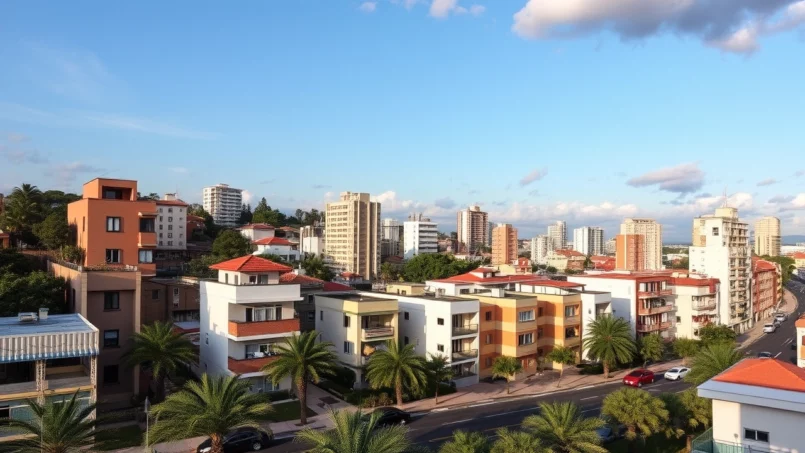
Curitiba is increasingly intriguing to foreign investors. As the capital of Paraná, a model city for sustainable urban planning, and an economic and technological hub, it ticks many boxes for those looking to invest in Brazilian real estate. But behind the “green city” and “smart city” image, what is the real value of its real estate market? What returns can be expected, at what prices, in which neighborhoods, and with what constraints for a non-resident investor?
This guide provides a comprehensive analysis of Curitiba’s real estate market, including prices, yields, strategic neighborhoods, as well as tax, financing, and legal aspects specific to foreign investors, all based on available data.
A Real Estate Market in Full Acceleration
Curitiba now stands as one of the most dynamic markets in the country. Figures from recent years show a clearly upward trajectory, driven by local demand, a rising middle class, economic dynamism, and quality of life.
Over the period 2014-2024, the average price per square meter for new properties increased by 117%, far exceeding the official inflation for the decade.
By the end of 2024, the average selling price was around R$ 10,703 per square meter, a level confirmed in early 2025. Local analysts anticipate further annual growth of around 8 to 10% in the coming years, driven by a market deemed robust, competitive, and fueled by limited land stock in central areas.
The average marketing time for an apartment fell from 140 days in 2023 to about 45 days in 2025, illustrating a clear market acceleration and a situation that has become favorable to sellers.
Table – Recent Price Dynamics in Curitiba
| Indicator | Value / Trend |
|---|---|
| Price increase over 5 years | +20% |
| Residential price increase in 2024 | +18% (1st among capitals) |
| Average new price 2014 | R$ 5,977/m² |
| Average new price 2024 | R$ 12,976/m² (+117%) |
| Average price end 2024 / Jan. 2025 | R$ 10,703/m² |
| Anticipated annual growth | 8–10% |
| Average sales time in 2025 | 45 days |
This dynamic is part of a favorable economic context: Curitiba has the fourth or fifth largest economy among Brazilian capitals, a municipal GDP approaching R$ 100 billion, and a per capita income 66% higher than the national average. The local economy, driven by the automotive industry, services, technology, and logistics, sustains strong real estate demand, both for primary residence and rental investment.
Who is Buying, and Why Here?
Demographics and buyer profiles play a central role in the market’s boom. The city has about 1.8 to 1.9 million inhabitants, but its urban area exceeds 3.5 million people, with steady growth in the metropolitan population. The “typical” buyer is around 35 years old, often a couple or young family, and looks for a medium-sized apartment, well-connected to transport.
The city attracts several profiles:
Discover the main profiles of buyers and investors attracted to the capital of Paraná, motivated by its quality of life, value for money, and opportunities.
Attracted by the relative safety, quality of the education system, and overall quality of life offered by the city.
Attracted by a reasonable cost of living (USD 700-1400/month), a high-performing healthcare system, and the presence of good international schools, including the International School of Curitiba.
Benefit from competitive real estate prices, a vulnerable Brazilian currency making assets affordable in strong foreign currencies, and prospects for obtaining an investor visa.
To this base of structural demand are added students and young professionals, often renters, as well as a growing population of hybrid or remote workers, who look for housing with remote work spaces, good internet connection, and proximity to services.
A Range of Properties, from Compact Studios to Luxury Penthouses
The property supply in Curitiba is very diverse. The apartment remains the dominant product, but with well-differentiated segments.
New developments offer units averaging around 70 m², ranging from about 60 m² for compact two-bedrooms to over 300 m² for high-end apartments in the most sought-after neighborhoods. Some buildings even have units up to 391 m², even 565 m² for very luxurious ones.
Recent condominiums generally offer standard amenities like 24/7 security, a pool, a gym, coworking spaces, and sometimes game rooms or private green areas. They also increasingly incorporate a sustainable dimension with features such as solar panels, rainwater harvesting systems, and the use of low-environmental-impact materials. Some large complexes, especially in Ecoville and Campo Comprido, may even obtain “green” certifications.
Single-family houses exist, from small family homes to prestige villas. A three-bedroom house trades for around R$ 800,000 on average, depending on location. “Sobrados” (townhouses in condominiums) and houses in gated communities (condomínios fechados) are highly sought after for their combination of space, security, and shared infrastructure.
The commercial segment is also seeing a renewed interest, especially in the center and in the Rebouças sector, where the presence of the Curitiba Industrial City (CIC) and thousands of companies creates demand for offices, retail spaces, and warehouses.
Luxury That Outperforms… in Volume
Luxury holds a special place in Curitiba. Apartments considered “luxury” are in the range of R$ 1.5 to 3 million, with an average price around R$ 1.5 million. These properties are concentrated mainly in Batel, Ecoville, Bigorrilho, or in certain sectors of Cabral and Água Verde.
Over the last reference year, sales of apartments priced between R$ 1.5 and 3 million jumped by 19.5%, exceeding the growth of the overall market.
However, this outperformance in volume raises a question about rental yield, as in the very high-end segment, rents have increased less rapidly than prices, which can squeeze gross yields. For a strictly rental investor, the luxury segment therefore requires a finer analysis than studios or small apartments, which are often proportionally more profitable.
Where are the Prices? Mapping Neighborhoods and Values
Curitiba is far from homogeneous. Prices vary greatly from one neighborhood to another, depending on reputation, safety, transport, and level of services.
At the end of 2024, in the most sought-after areas like Batel, Bigorrilho (also called Champagnat) or Juvevê, values ranged between R$ 11,297 and R$ 14,551 per square meter. Conversely, some peripheral sectors offer properties starting at R$ 6,500/m², or even less depending on the condition of the property and distance from the center.
Table – Examples of Price Levels by Sector
| Neighborhood / Segment | Price Indication |
|---|---|
| Batel / Bigorrilho / Juvevê (high-end) | R$ 11,297 to 14,551/m² |
| Santa Felicidade (median) | ≈ R$ 4,420/m² (median) |
| Affordable neighborhoods (Boa Vista, Portão…) | Starting from ≈ R$ 6,500/m² |
| Average city price (all types) | ≈ R$ 10,703/m² (2024–2025) |
| Median property price | ≈ R$ 511,000 |
| 3-bedroom house (average) | ≈ R$ 800,000 |
In 2024, some neighborhoods recorded spectacular increases: Campo Comprido, Batel, and Água Verde saw their prices climb between 13.2% and 32.2% in a single year. This surge reflects the arrival of new projects, improved infrastructure, and rising demand for greener, more modern environments.
The median property price in Santa Felicidade, a neighborhood known for its Italian heritage and gastronomy, is about R$ 1.69 million.
For an investor, the challenge is to find a compromise between:
– “Showcase” neighborhoods (Batel, Bigorrilho, Ecoville, Cabral, certain parts of Água Verde), where capital appreciation and liquidity are strong but rental yields tend to be lower;
– Intermediate or emerging sectors (Campo Comprido, Portão, Mossunguê, peripheral Santa Felicidade, some areas along the Linha Verde or near the CIC), where entry prices are more affordable and gross yields are often higher.
Renting in Curitiba: What Yields to Expect?
Curitiba is primarily a city of active renters: young professionals, students, families in transition, expatriates on assignment, etc. The rental demand is supported by steady demographic growth, limited supply in central sectors, and a dynamic job market.
Average gross yields are around 4.5 to 5.3% per year depending on sources and calculation methods, with significant dispersion depending on the type of property and neighborhood. Overall data generally indicates an average gross yield around 4.5–4.7% in the city, with slightly higher values in the immediate periphery than in the hyper-center.
More detailed analyses show that: results can vary significantly depending on the methods used.
Studios and small one-bedroom units (25–45 m²) generally offer the best gross yields (5 to 6.3%), especially if well located (close to the center or universities). Two-bedroom units are a good compromise with constant demand and moderate tenant turnover. On the other hand, three-bedroom apartments and highly equipped condominiums offer more modest yields (3.4 to 4.6%) but greater stability, suited to families.
For an investor, in Curitiba a gross yield of at least 5% is considered “good”, while above 4.9% is already in the zone of performing properties. The average net yield, after deducting condominium fees, local taxes, maintenance, vacancy, and management, is around 3.1% annually, with a typical spread of 1.4 to 1.5 percentage points between gross and net.
Table – Indicative Yield Structure
| Indicator | Indicative Value |
|---|---|
| Average gross yield (city) | ≈ 4.5–5.3% / year |
| Average net yield | ≈ 3.1% / year |
| Gross / Net spread | 1.4–1.5 percentage points |
| Studios / 1BR (25–45 m²) | ≈ 5.0–6.3% gross |
| 3BR and large apartments | ≈ 3.4–4.6% gross |
| Yield considered “good” | ≥ 5% |
| Threshold for “performing” gross yield | ≈ 4.9% |
In terms of rents, figures vary by segment. For long-term rentals, sources indicate for example:
The median rent for houses for rent in Brazil, all types combined, is about R$ 1,850 per month.
The more modest rents mentioned in some surveys (e.g., R$ 1,200–1,500 for a one-bedroom in the center and R$ 800–1,200 in the periphery) rather illustrate entry-level segments or less prestigious neighborhoods.
Vacancy rates are generally around 6% (i.e., 3 to 4 unoccupied weeks per year), with a lower rate (5%) in high-demand areas and a bit higher (8% and above) in very high-end sectors where rents are harder to secure. In practice, it is reasonable to plan for about one month of vacancy per year in your cash flow projections, or to set aside about 8% of the annual rental income for this variable.
Long-Term or Short-Term: Choosing Your Model
Curitiba lends itself to two major rental strategies:
– Long-term rental, aimed at local residents, students, or settled expatriates;
– Short-term rental (Airbnb-type or equivalents), driven by tourism and business travel.
For long-term rentals, the advantage is stability: less daily management, lower tenant turnover, and greater cash flow predictability. This model fits well-established residential neighborhoods (Água Verde, Ecoville, Santa Felicidade, Vila Izabel, etc.) or family-oriented properties.
The city hosted about 675,000 international tourists in 2024 and is the third business destination in the country. Major events (festivals, congresses, conferences) periodically boost demand, allowing rents to be adjusted upward. Analyses show increases of 30 to 50% in occupancy rates and 40 to 80% in rates during these peaks.
However, seasonal rentals involve much more active management: check-in/check-out, cleaning, online marketing, review management, etc. It is also essential to scrupulously check condominium rules: many condominiums, especially in Batel, Água Verde, Bigorrilho, Centro, and Juvevê, restrict or even prohibit Airbnb-type rentals.
Costs, Fees, and Taxation: What the Numbers Really Say
To assess the profitability of an investment in Curitiba, one must consider a set of recurring and one-time costs: local taxes, condominium fees, maintenance, insurance, management, as well as taxes on rental income.
Local Taxes (IPTU) and Transfer Taxes (ITBI)
The IPTU, equivalent to the property tax, is calculated on the fiscal value of the property. In Curitiba, the average rate is around 1.2% of the property value, with a typical annual bill for a standard apartment between R$ 1,500 and R$ 4,500, and for a house, between R$ 3,000 and R$ 12,000 depending on size and location. The city regularly offers a discount for early payers: in 2025, for example, a 10% discount is granted for payment before March 20.
The maximum residential rate was recently reduced from 1.1% to 0.65% for some segments, in the context of revising the “Planta Genérica de Valores” (PGV), the base tool for fiscal assessment.
When purchasing, the real estate transfer tax (ITBI) represents the largest closing cost item. In Curitiba, the rate is around 2.7% of the property value, with complementary estimates of 2.4% to 3–5% depending on sources or configurations, especially for foreign buyers. In addition to this:
The total of administrative fees (notary, registration, and certificates) represents this percentage of the purchase price of a property in Spain.
In total, closing costs usually range between 3.7% and 4.8% of the purchase price, excluding lawyer’s fees.
Recurring Fees and Expenses
Condominium fees are often the heaviest expense for a landlord. On average, they are around R$ 400 per month for the city, but can easily exceed R$ 800 in high-end residences in Batel and other prestigious neighborhoods. At this level, it is not uncommon for more than one percentage point of gross yield to go solely to condominium fees.
To these fees are added:
– Routine maintenance of the property, estimated on average at R$ 300/month;
– Costs of basic services (electricity, water, gas) during vacancy periods, typically between R$ 150 and R$ 350/month;
– Owner’s insurance (building + liability), often between R$ 500 and R$ 1,500 per year for an apartment, more for a house;
– An annual budget for maintenance and repairs recommended between 0.5% and 1% of the property value, or 5 to 10% of annual rents. For a typical apartment, this overall envelope (insurance + maintenance + repairs) ranges between R$ 3,000 and R$ 8,000 per year.
Full rental management services charge between 8 and 12% of the monthly rent.
Table – Average Cost Structure for a Landlord
| Item | Order of Magnitude |
|---|---|
| IPTU (property tax) | ≈ 1.2% of value / year |
| Condominium fees (average) | ≈ R$ 400/month (R$ 800+ in high-end) |
| Routine maintenance | ≈ R$ 300/month |
| Owner’s insurance | R$ 500–1,500/year (apartment) |
| Maintenance & repairs | 0.5–1% of value / year |
| Rental management | 8–12% of monthly rent |
| Vacancy to budget for | ≈ 1 month’s rent per year (8%) |
Renovation: A Value Lever… But Costly
The average age of the residential stock in Curitiba is about 25 years, with many buildings constructed during a boom in the early 2000s. Laws do not impose a systematic inspection or major renovation program, meaning many apartments can be technically functional but aesthetically dated.
Renovation costs are far from negligible. An average budget around R$ 50,000 is mentioned, but the actual range goes from R$ 800 to R$ 11,000/m² depending on the extent of work, materials chosen, and desired finish level. A full renovation of a 55 m² apartment can easily approach R$ 190,000, and a 100 m² unit may require between R$ 80,000 and R$ 1,000,000 in extreme cases. With material inflation, it is unlikely that costs will fall below R$ 700/m².
For the investor, renovation can be an excellent lever for value creation in transitioning neighborhoods (Água Verde, Campo Comprido, some central sectors), provided costs are well estimated, underestimations avoided, and positioning aligned with the target market (standard rental, high-end, coliving, etc.).
Rules of the Game for Foreigners: CPF, Ownership, and Constraints
For a foreign investor, Curitiba presents a major advantage: Brazil does not prohibit non-residents from buying urban properties, and the city itself is not part of the border areas subject to specific restrictions. A foreign national can therefore acquire and fully own apartments, houses, condos, sobrados, offices, or commercial premises in urban areas, in their own name.
Obtaining a CPF (Cadastro de Pessoas Físicas), the Brazilian tax identification number, is essential. Without it, it is impossible to register a property, open a local bank account, or pay taxes. The application is made at a Brazilian consulate abroad or directly with the tax administration (Receita Federal), sometimes online under certain conditions.
There is no quota limiting the share of units owned by foreigners in a building or condominium in Curitiba, nor any special authorization required for standard urban acquisitions. It is only in the case of rural-classified land (chácara, sítio on the periphery) that restrictive federal rules apply: constraints on area, ceiling on the proportion of municipal territory owned by foreigners, need for special authorizations, etc.
Buying a property in Curitiba does not automatically grant residency rights, but can contribute to a real estate investor visa application. At the country level, this visa requires a minimum investment of R$ 1,000,000 in an urban property in the South (thus Curitiba), with a process managed at the federal level.
The Step-by-Step Purchase Process
The acquisition procedure in Curitiba follows a relatively standard pattern for Brazil, but requires rigor and professional assistance.
The main steps are as follows:
The acquisition of a property in Brazil by a foreigner follows a structured procedure. It begins with obtaining the CPF (tax number). Then, property search and negotiation are conducted via specialized platforms or agencies. A thorough legal due diligence is conducted by a local lawyer, including verification of the title deed and absence of debts. Urban planning verification is also required. The parties then sign a preliminary contract with a down payment. The process continues with payment of transfer taxes (ITBI), signing of the public deed before a notary (possibly by proxy), and ends with registration of the deed at the Real Estate Registry, which definitively transfers ownership.
One of the most common mistakes foreigners make is to pay the full price before finalizing the escritura and registration, which opens the door to multiple risks. Another common error is neglecting the assistance of an independent lawyer and relying solely on the agent or notary, who do not necessarily defend the specific interests of the buyer.
Financing Your Investment: Loans, Rates, and Realities
Accessing Brazilian credit as a foreigner remains possible, but with constraints. For a local borrower, banks usually finance up to 80% of the property value, with interest rates around 10–11% for terms of 20 years. For a non-resident, requirements tighten: higher down payments (often 30 to 50%), interest rates between 10 and 15% per year, terms often shorter than for a resident.
In Curitiba, the institutions most open to international profiles are Caixa Econômica Federal, Santander Brasil, and Itaú. To significantly improve your chances of obtaining financing, it is essential to have resident status, a CPF (Brazilian tax identification number), a local bank account, and proof of income, whether from Brazil or abroad.
Fixed-rate products exist but remain in the minority; most loans are indexed to a base rate (like the TR) plus a spread. In the Brazilian context of high interest rates, many foreign investors prefer to buy cash, taking advantage of favorable exchange rates rather than borrowing locally.
In 2024, about 40% of real estate transactions in Curitiba were financed by bank credit, and Caixa’s financing portfolio grew by 23% until November, despite tightening conditions (reduction in the financeable percentage).
Curitiba, City and Neighborhoods: Reading the City to Invest Better
Understanding Curitiba’s urban fabric is crucial for choosing your investment.
The Centro (downtown) is the commercial, cultural, and historical heart, with optimal transport access. It attracts a varied clientele, from students to executives, and offers good rental prospects, especially for small apartments near BRT (Bus Rapid Transit) corridors.
Batel is the flagship luxury neighborhood: high-end buildings, restaurants, brand boutiques, vibrant nightlife, enhanced security. Prices peak here, and condominium fees are particularly high. Ideal for a wealth-building profile seeking prestige and long-term capital appreciation.
The progression of real estate prices in some sectors of Água Verde in 2024, illustrating its attractiveness.
Ecoville is the emblem of the sustainable and modern city: new residences, focus on green spaces, complete amenities, a rather young and affluent population. The neighborhood particularly appeals to families and tech professionals.
Santa Felicidade stands out for its Italian identity, restaurants, and more relaxed atmosphere. It has many houses and gated condominiums, appreciated by families seeking space and security. It is also still a promising area for new gated subdivisions.
Campo Comprido illustrates the transformation of a once peripheral neighborhood. Under the combined effect of new real estate projects, price pressure in other sectors, and improved infrastructure, this neighborhood has seen significant price increases, becoming a typical example of an area in urban transition.
Portão, Boa Vista, CIC (Cidade Industrial de Curitiba), or sectors along the Linha Verde offer opportunities for those seeking higher yields, thanks to lower entry prices and the presence of many industrial or transport jobs.
The overall quality of life remains a city asset: about 60 m² of green area per inhabitant (well beyond WHO standards), a BRT system that transports over a million passengers per day, top-tier hospitals and schools, safety considered better than in most major Brazilian metropolises, and a massive commitment to sustainability (carbon neutrality goal by 2050, solar energy projects, innovative waste management).
Structural Trends: Sustainability, Technology, Peripheries
Several trends are durably transforming Curitiba’s real estate market.
The first is sustainability. The city, already awarded as an ecological capital and “smart city”, strongly pushes for sustainable construction: eco-friendly materials, water reuse systems, solar rooftops, large urban parks adjacent to new projects. Buyers, especially younger ones and families, are increasingly sensitive to these aspects, which become real selling points and potential value appreciation factors.
The Brazilian real estate market is being transformed by technology, with over 1,200 proptechs in 2024. In Curitiba, 360° virtual tours, electronic signatures, and smart home solutions have become essential in new upscale projects. Properties with virtual tours generally sell faster and at a higher price.
The third is expansion towards the peripheries and new transport axes. Initiatives like transforming the old highway into the “Linha Verde”, improving the BRT, and planning high-density corridors encourage developers and buyers to look beyond the traditional center. Analysts estimate that neighborhoods benefiting from these projects could see rents increase 5 to 10% above general inflation in the coming years.
Nearly half of active workers operate in hybrid or partial remote work mode, which influences housing demand.
Risks, Challenges, and Precautions
Despite its many assets, investing in Curitiba – as anywhere in Brazil – involves a series of risks and constraints that are important to consider.
On the macroeconomic level, the country is exposed to high and volatile inflation, significant fluctuations in the real/dollar or euro exchange rate, and structurally high interest rates. These factors can impact both tenants’ purchasing power and the real value of collected rents and properties in the long term.
In Brazil, the absence of title insurance or escrow systems comparable to Anglo-Saxon countries makes buyer protection dependent on the reliability of notaries (cartórios) and the rigor of due diligence conducted by the lawyer. Risks such as incomplete titles, hidden debts, urban disputes, or compliance issues persist, even in Curitiba, which is reputed to be better organized.
At the property level, some condominiums may suffer from maintenance deficits, especially among 20 to 30-year-old buildings that have not undergone major renovation. The lack of strict legal obligations for structural upgrades imposes particular vigilance on the investor during technical inspections.
Although no limit on number or duration is currently imposed by the city, regulations can evolve. Condominium bylaws are subject to change, and municipal projects aiming to better regulate platforms like Airbnb (via registration or tax collection) are under study.
How to Approach the Market in Practice?
To leverage Curitiba’s potential while managing risks, several guidelines emerge from available data.
The first is to clearly identify your target segment. Studios and small one/two-bedroom units near the center, BRT stations, or universities combine reasonable entry prices, solid demand, and gross yields often above 5%. Conversely, large luxury apartments in the most expensive condominiums, while attractive from a wealth perspective, tend to offer more modest yields.
For a rental investment in Curitiba, the financial objective should guide the choice of neighborhood. If the priority is capital gains and liquidity, favor established and dynamic neighborhoods like Batel, Bigorrilho, Ecoville, certain parts of Água Verde or the Centro. If the main goal is to generate a high rental yield and immediate cash flow, look towards areas like Portão, the CIC (Cidade Industrial de Curitiba), transitioning sectors along the Linha Verde, or certain pockets of Santa Felicidade and Campo Comprido.
The third is to systematically integrate all costs into calculations: ITBI, notary and registration fees, IPTU, condominium fees, maintenance, insurance, rental management, vacancy. Observed gross yields around 5% can turn into net yields around 3%, which remains respectable in a context of strong potential capital appreciation, but requires a long-term view.
For real estate investment in Brazil, it is essential to assemble a team of local experts including a real estate specialized lawyer, an independent agent, and, if necessary, a rental manager. They will help you navigate Brazilian legal specifics (like the role of cartórios), the subtleties of each neighborhood, and identify hidden risks.
Finally, for a foreign investor, it is relevant to consider the role of currency in the project: cash purchase in a context of a weak real can offer a notable advantage, but also implies exposure to exchange rate risk upon resale or when repatriating rents.
Curitiba, A City Tailored for Patient Investment
Combining a diversified economy, an expanding real estate market, a strong culture of sustainable urban planning, and recognized quality of life, Curitiba positions itself as one of Brazil’s best real estate investment grounds. Data shows a market gaining depth, sophistication, and value, particularly over the past decade.
For an investor ready to collaborate with local professionals, conduct rigorous due diligence, and adopt a medium to long-term investment horizon, Curitiba presents an interesting profile. The city combines relative stability, capital appreciation potential, and reasonable rental yields. Its prices remain competitive compared to major metropolises, rental demand is supported by a young and skilled population, and urban policy is strongly focused on sustainability and technology, making it a serious option for diversifying an international real estate portfolio.
Disclaimer: The information provided on this website is for informational purposes only and does not constitute financial, legal, or professional advice. We encourage you to consult qualified experts before making any investment, real estate, or expatriation decisions. Although we strive to maintain up-to-date and accurate information, we do not guarantee the completeness, accuracy, or timeliness of the proposed content. As investment and expatriation involve risks, we disclaim any liability for potential losses or damages arising from the use of this site. Your use of this site confirms your acceptance of these terms and your understanding of the associated risks.

Cyril Jarnias is an independent expert in international wealth management with over 20 years of experience. As an expatriate himself, he is dedicated to helping individuals and business leaders build, protect, and pass on their wealth with complete peace of mind.
On his website, cyriljarnias.com, he shares his expertise on international real estate, offshore company formation, and expatriation.
Thanks to his expertise, he offers sound advice to optimize his clients' wealth management. Cyril Jarnias is also recognized for his appearances in many prestigious media outlets such as BFM Business, les Français de l’étranger, Le Figaro, Les Echos, and Mieux vivre votre argent, where he shares his knowledge and know-how in wealth management.





