
 Published on and written by Cyril Jarnias
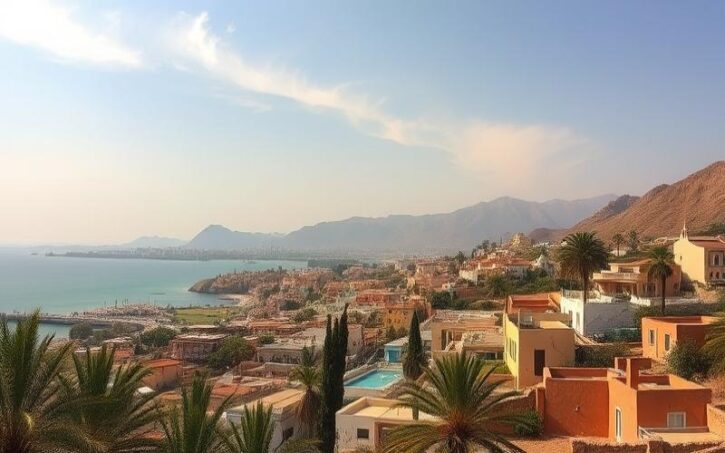
Moving to Fiji is a dream for many prospective expats: a tropical climate, a warm culture, picture-postcard beaches, and a more relaxed pace of life than in most major metropolises. But once the decision is made, a very practical question quickly arises: which neighborhoods are best for expats, couples, families, or digital nomads to live in Fiji?
Urban centers (Suva, Nadi, Lautoka) and tourist areas (Denarau, Pacific Harbour, Coral Coast, Savusavu) are the most attractive for foreigners. They concentrate the majority of modern amenities: housing, international schools, private healthcare, shops, coworking spaces, and expat social life.
This article provides a detailed overview of the neighborhoods and areas most favored by expats in Fiji, with a concrete look at rents, quality of life, available services, safety, and environment, based exclusively on data and facts from the research report.
Suva: The Urban and Political Heart that Attracts Expats
Suva, the country’s capital and main economic center, is home to a large proportion of expats: diplomats, staff from international organizations, NGOs, large corporations, as well as freelancers and families. The city is built on a peninsula, surrounded by a vast urban area known by authorities as the Greater Suva Urban Area, encompassing Suva City, Lami, Nasinu, and Nausori.
The pace is distinctly more urban than in the rest of the country, with upscale buildings, shopping malls, a wide range of restaurants, and a denser cultural life. In return, rents are among the highest in the country and rain is frequent.
Laucala Beach Estate: The High-End Residential Enclave for Expat Families
Among Suva’s neighborhoods, Laucala Beach Estate is one of the most sought-after by expats, particularly those moving with families. This secure residential area hosts the International School Suva (ISS), one of the country’s leading international schools, offering the International Baccalaureate (IB) curriculum from kindergarten to high school, with students from over 40 nationalities.
Living in Laucala Beach Estate thus allows for significantly reducing the home-to-school commute, a key factor for parents juggling demanding jobs and sometimes heavy traffic constraints. The neighborhood features modern houses and apartments, often of the “executive” type, with air conditioning, gardens, and sometimes pools, favored by executives from large institutions or families with relocation packages.
Rents reflect this high-end positioning. In Suva, the following benchmarks give an idea of the range:
| Housing Type in Suva | Location | Average Monthly Rent (FJ$) |
|---|---|---|
| Studio / 1 bedroom | City Center | 1,500 |
| Studio / 1 bedroom | Outside Center | 800 |
| 3 bedrooms | City Center | 4,200 |
| 3 bedrooms | Outside Center | 2,200 |
For a couple or small family seeking “executive” comfort, a two-bedroom apartment or house typically rents for between 2,500 and 4,000 FJ$ per month, while the most modern and luxurious properties range from 4,000 to 7,000 FJ$. Older homes, sometimes less renovated but still decent, range from 800 to 2,500 FJ$ depending on size and location.
The Laucala Beach Estate neighborhood is in the high-end range, making it particularly suitable for expats with a comfortable housing budget.
Lami: The Small Coastal Town Becoming an Expat Haven
Another increasingly popular hub: Lami, a town adjacent to Suva along the coast and integrated into the Greater Suva Urban Area. Historically a small coastal municipality, Lami is now described as a “booming hotspot” and a gateway to western Viti Levu. Hikers know it for access to natural areas, and expats see it as an interesting alternative to downtown Suva.
Several factors explain its growing appeal to foreigners:
– A more relaxed and residential atmosphere than downtown Suva;
– Reasonable proximity to the capital’s services (administration, large companies, hospitals, international schools);
– Rents often slightly more affordable than the most upscale neighborhoods of Suva City;
– The possibility of single-family homes with sea views or in quiet areas, while remaining in a structured urban zone.
Lami benefits from the infrastructure of the Greater Suva Urban Area: improved road network, electricity, drinking water (despite occasional shortages), and urban services. Authorities are also promoting mangrove replantation and climate adaptation projects, attracting environmentally conscious residents.
Suva Center and “Executive” Addresses: Berry Road, Nahina Apartments and Others
For expats who want to be at the heart of the action, right next to the Central Business District (CBD), restaurants, the central market, and institutions, downtown Suva remains essential. The CBD area and its immediate surroundings host a rapidly densifying real estate portfolio, with more and more multi-story buildings.
A prime example of a highly sought-after address is the three-bedroom penthouse in the Brightstar Apartments building on Berry Road, right in central Suva. This type of “executive” housing has everything to appeal:
– Location a few minutes from the CBD;
– Quick access to supermarkets, cafes, cinemas, and the Colonial War Memorial Hospital;
– Modern standard, full amenities, and professional management services.
Apartment complexes like Nahina Apartments are also cited as good compromises between comfort, central location, and efficient management, especially for digital nomads or single expats.
This type of neighborhood is particularly suitable for those who:
– Work in international institutions, ministries, or large downtown corporations;
– Prefer walking or short taxi rides;
– Place strong importance on urban social life (bars, events, restaurants).
In exchange for its advantages, housing costs are high, traffic is intense during rush hour, and frequent rainfall can make the city gray and humid at times. Furthermore, the most pleasant beaches are a 20 to 40-minute drive away.
Suva: Advantages for Expats, Costs and Daily Constraints
Suva offers a very particular living environment, both energetic and tropical. Expats appreciate:
– The density of shops, services, and restaurants, with a cuisine blending Fijian, Indian, Chinese, and European influences;
– The availability of quality international schools (International School Suva, reputable private institutions like Yat Sen or Suva Grammar School);
– Health infrastructure better equipped than elsewhere in the country, with the Colonial War Memorial Hospital and several private clinics (Oceania, MIOT, Nasese, etc.);
– Green spaces like Thurston Gardens and vibrant cultural life, with museums, festivals (including jazz and blues events), and a dense network of associations.
On the other hand, the overall cost of living for an expat is described as surprisingly high, especially aiming for a “Western” lifestyle: imported goods, modern housing, regular outings. On average, an expat is estimated to need 1,500 to 2,000 US dollars per month for a comfortable standard of living, with housing being the largest expense.
Cost of living comparisons between Suva and Nadi show: Price differences influence the choice of residence and consumption habits.
| City | Monthly Budget Needed for a Comparable Standard of Living* (FJ$) |
|---|---|
| Suva | 6,157 to 8,000 |
| Nadi | 6,500 to 8,437 |
*According to various comparison sources: some indicate it costs slightly more in Nadi, others the opposite, but the overall gap remains limited.
Rents are on average 5 to 30% higher in Suva depending on the databases used. This partly explains why some expats, when they have a choice of residence on Viti Levu, prefer Nadi for a better cost/quality of life ratio, provided their professional activity allows it.
Nadi: The International Gateway and Its Popular Neighborhoods
Nadi is seen as the country’s tourist capital. Located on Viti Levu, it hosts the main international airport and serves as a departure point for the Mamanuca and Yasawa archipelagos. For expats, it combines access to the world, sunshine, beaches, and a more seaside atmosphere than Suva.
Several areas of Nadi stand out for foreigners settling: Denarau, Martintar, and the Wailoaloa Beach area, each with its own character and level of luxury.
Denarau: The High-End Seaside Bubble
Denarau is probably the most emblematic address for expats seeking a decidedly “resort” lifestyle. Located a few minutes from central Nadi, this island connected to the mainland by a causeway concentrates:
– Luxury hotel complexes;
– A renowned golf course;
– A marina from which boats and catamarans depart for the Mamanucas and Yasawas;
– High-end villas and houses, often in secure compounds.
For expats, Denarau is a very secure area, patrolled by private guards. The environment is aesthetic with maintained beaches, and the clientele is primarily international and well-off. Services are adapted to Western standards, including restaurants, spas, shops, and water activities.
In terms of housing, it’s clearly in the top of the market. In 2024, average rents in US dollars give a good indication of the premium for Denarau:
| Location | Property Type | Average Monthly Rent (USD) |
|---|---|---|
| Suva | 1 bedroom | 500 – 1,500 |
| Nadi | 1 bedroom | 600 – 1,800 |
| Lautoka | 1 bedroom | 400 – 1,200 |
| Denarau | 1 bedroom | 1,500 – 4,000 |
| Location | Property Type | Average Monthly Rent (USD) |
|---|---|---|
| Suva | 3-bedroom house | 1,500 – 3,500 |
| Nadi | 3-bedroom house | 1,800 – 4,000 |
| Lautoka</td | 3-bedroom house | 1,200 – 3,000 |
| Denarau | 3-bedroom house | 3,500 – 8,000 |
Expats who choose Denarau are often:
– Senior executives on assignment;
– Entrepreneurs in hospitality, restaurants, or yachting;
– Retirees with significant financial means;
– Or real estate investors targeting seasonal rentals like Airbnb.
The main drawbacks are the very high cost and an environment sometimes perceived as a bit artificial, heavily focused on luxury tourism, with limited integration into local Fijian life.
Martintar and Nadi’s Residential Neighborhoods
For those seeking a compromise between authenticity, modern comfort, and reasonable budget, the residential areas of Nadi itself, particularly Martintar, are often preferred. Martintar is mentioned as a reference point for renting furnished apartments, with good accessibility to shops, restaurants, cafes, and the airport.
Rents are on average lower than in Suva for equivalent properties, with general estimates like:
| Housing Type | Nadi (town) – Indicative Range (FJ$/month) |
|---|---|
| Furnished apartment for nomad / couple | 600 – 900 |
Expats generally find here: a better standard of living, professional opportunities, an enriching cultural experience, and a more favorable environment for their family.
In Nadi, housing is mainly found in medium-sized buildings or small residences, offering an alternative to large complexes. The atmosphere is more relaxed than in Suva, the capital. The climate is also drier and sunnier. Finally, the city allows for easier trips to beaches and nearby islands, a major advantage for leisure.
Nadi also has international schools, notably International School Nadi and Nadi International School (offering IB and Cambridge programs respectively), which attract more and more expat families, especially since tuition fees for a primary international school can be significantly lower than in Suva according to some data (a cited range of 9,000 FJ$ in Nadi compared to over 20,000 FJ$ in Suva in some cases).
Wailoaloa Beach and Wailoca: Beach Lifestyle and Mid-Range Budgets
By the sea, the Wailoaloa Beach area, not far from Nadi, has become a gathering point for long-term travelers, digital nomads, and expats seeking a lifestyle very oriented towards the beach, kitesurfing, seaside cafes, and lively bars at sunset.
The Wailoca neighborhood in Lautoka is an interesting option for those seeking a less touristy alternative than Nadi. This second city of the country offers more local services, a large produce market, and generally more affordable housing costs.
For digital nomads or young expats, these areas offer: a stimulating living environment, coworking opportunities, dynamic communities, an affordable cost of living, and access to modern infrastructure.
– Hostels, small resorts, or beachfront accommodations;
– A very international social environment;
– Easy access to water sports;
– A reasonable cost of living if favoring markets and local products.
However, it’s important to keep in mind that these mixed-use areas, at the crossroads of tourism and residence, also attract some petty crime (snatch theft, hotel room break-ins), which requires carefully choosing accommodation and nighttime travel schedules.
Nadi vs Suva: Which Choice for an Expat?
For a foreigner still hesitating between Nadi and Suva, the following comparative table summarizes some key elements based on available data:
| Criterion | Suva | Nadi |
|---|---|---|
| Role | Political and economic capital | Tourist and air hub |
| Rent costs | Higher (up to +20–30% depending on data sets) | On average lower |
| Average net salary (FJ$/month) | ~2,050–2,150 | ~2,480 |
| Climate | Rainier | Sunnier |
| Internet | Faster (up to +33–50%) | Adequate but slightly slower |
| Safety | More pronounced urban crime | Slightly better safety (≈+5%) |
| International Schools | International School Suva (IB), other reputable schools | International School Nadi, Nadi International School |
| Healthcare | More developed infrastructure | Good level, but slightly behind |
In summary, Suva attracts those who want to be at the center of economic, political, and cultural action, with many schools and private clinics. Nadi appeals with its climate, proximity to islands, generally lower rents, and more seaside atmosphere, at the cost of a slightly less dense urban life.
Lautoka, Coral Coast, Pacific Harbour: The Coastal Appeal for Expats
Beyond Suva and Nadi, several coastal areas of Viti Levu appear on expats’ radars, each with its own identity: Lautoka, the Coral Coast, and Pacific Harbour.
Lautoka: The “Sugar City” Attracting with Softer Costs
Lautoka, the country’s second-largest city, gets its nickname “Sugar City” from its role in the sugar industry. It is located close to Nadi, allowing it to benefit from the west coast’s dynamism while retaining a more local and less touristy character.
For expats, Lautoka offers several advantages:
– Rents lower than Suva and often more reasonable than Nadi;
– The atmosphere of a medium-sized town, with a large market, shops, administrative services;
– More direct access to the local population, less filtered by the tourist lens.
Average rents, based on 2024 references, reflect this intermediate position:
| Housing Type | Lautoka – Indicative Range (USD/month) |
|---|---|
| 1 bedroom | 400 – 1,200 |
| 3-bedroom house | 1,200 – 3,000 |
Lautoka attracts expats seeking a lifestyle more integrated into Fijian society, while remaining on the main island and a reasonable distance from the international airport.
Coral Coast: Seaside Homes and Life at the Rhythm of the Tides
The Coral Coast is a long stretch of coastline south of Viti Levu, between Nadi and Suva, known for its beaches, coral reefs, and resorts. It features hotels, family complexes, but also single-family homes and land under development, attracting more and more foreign retirees, second-home owners, and expats seeking a balance between nature and services.
Discover the main characteristics of housing and services used by expats in this region.
Many expats opt for spacious residences with gardens, often equipped with a pool and direct beach access.
Towns like Sigatoka serve as main hubs for shopping, banking services, and daily needs.
Rents for a furnished apartment in small centers like Sigatoka or Tavua give an idea of the cost outside the major cities:
| Town / Area | Furnished Apartment Rent (FJ$/month, order of magnitude) |
|---|---|
| Sigatoka | 450 – 650 |
| Tavua | 350 – 550 |
| Levuka | 300 – 500 |
This region is particularly appreciated by:
Discover the types of residents and visitors who will find their happiness in the unique living environment offered by Taveuni.
Ideal for families who enjoy outdoor activities like diving, snorkeling, surfing, and hiking.
Suitable for remote workers who can accept an internet connection sometimes slower than in Suva, the capital.
Perfect for expats with stable remote income wanting a calmer, more peaceful living environment.
Pacific Harbour: The Seaside Resort and Future Expat “Riviera”?
On the south coast of Viti Levu, about 50 kilometers from Suva, Pacific Harbour is gradually building an image as a full-fledged “expat destination”. Initially developed around tourism, with resorts, a golf course, and activities like diving or rafting, this area is increasingly favored for purchasing second homes, retirement villas, or rental investments.
Several elements boost its attractiveness:
– Improved road access to Suva, allowing working in the capital while living by the sea;
– Still relatively affordable property prices compared to Denarau;
– A highly valued natural environment: beaches, lagoon, water activities, lush vegetation.
Pacific Harbour attracts a varied expat population: retirees, telecommuters, adventure tourism entrepreneurs, but also families seeking an alternative to the Suva–Nadi duo. Available properties range from land for building to villas with pools, to small units for seasonal rental.
Savusavu, Vanua Levu and the Islands: Paradise for Retirees and Eco-Expats
When venturing outside Viti Levu, the postcard image of Fiji takes on an even more pronounced dimension. Vanua Levu, the country’s second largest island, is home to Savusavu, often described as a “hidden gem” and a “Hidden Paradise”.
Savusavu: The Charming Village Appealing to Retirees and Eco-Tourists
Savusavu, a small coastal center on Vanua Levu, is experiencing growing enthusiasm among foreigners, particularly:
– Retirees seeking peace and preserved landscapes;
– Investors interested in eco-tourism projects;
– Expats looking for a sustainable lifestyle close to nature.
The starting price for houses in this region of Fiji, in US dollars, is reported as lower than in premium areas of Viti Levu.
In terms of services, Savusavu has a district hospital, some health services, basic shops, and a fairly close-knit expat community. Access to specialized care, however, requires trips to major centers on Vanua Levu (Labasa) or to Viti Levu.
Living Outside Viti Levu: Cultural Immersion and Logistical Constraints
Choosing to live on Vanua Levu or other islands means accepting:
Living in Fiji’s outer islands can present specific challenges, including an increased risk of power cuts and supply issues. Travel to urban centers like Suva or Nadi becomes more costly, whether by plane or boat. Finally, access to a diversity of consumer goods is generally more limited.
In exchange, the expat benefits from:
– A deeper immersion in iTaukei culture and, depending on the area, Indian or mixed culture;
– An exceptional maritime environment: reefs, lagoons, tropical forests;
– A community where social ties are closer, but where privacy can be difficult (“everything is known quickly”).
This profile often corresponds to retirees with stable income, eco-entrepreneurs, teachers, or professionals on assignment for specific projects.
Housing, Cost of Living and Consumption Habits: What Expats Really Look For
Beyond geography, data from the research report show that the most popular neighborhoods share three characteristics: a good level of infrastructure, access to essential services (health, education, shops), and perceived satisfactory safety. But the perception of the “good neighborhood” varies greatly depending on expat profiles.
Living “Like a Local” or Aiming for the “Executive” Standard
In Fiji, the cost difference between a “typical expat” lifestyle and a lifestyle closer to local practices is marked. The highly sought-after neighborhoods (Laucala Beach Estate, Berry Road, Denarau, certain areas of Nadi and Pacific Harbour) mainly host expats who:
Expats generally favor modern, fully equipped housing (apartments or villas), with air conditioning and a solution (generator or UPS) to cope with power cuts. Their consumption is largely oriented towards imported products available in large supermarket chains. For furnishing, they opt for new furniture, household appliances, and a personal vehicle.
Conversely, those who choose to live more simply, using local markets, public transport (very cheap buses, affordable taxis), and older housing, benefit from much lower monthly expenses.
Typical monthly expense categories can be summarized as follows:
| Expense Category | Indicative Range (FJ$/month) | Comment |
|---|---|---|
| Housing (1–2 bed, urban) | 800 – 2,000 | Depending on city, standard, neighborhood |
| “Executive” Housing | 2,500 – 7,000 | Suva, Denarau, high-end neighborhoods |
| Groceries (1 person) | 300 – 400 | Primarily supermarket shopping |
| Utilities (elec/water…) | 200 – 300 | For a modern dwelling |
| Internet | 80 – 120 | High-speed plans from Vodafone, Digicel |
| Local transport | 100 – 150 | Buses, occasional taxis |
For an expat, understanding this expense structure is crucial before choosing a neighborhood: it’s not just the address, but also the lifestyle it implies.
Safety, Power Cuts and Weather Hazards
The neighborhoods favored by expats are also those where safety and resilience to hazards are best assured. Several points stand out:
In major cities like Suva and Nadi, petty crime (theft, burglary) encourages favoring fenced neighborhoods with surveillance or secure complexes. Foreigners can be targeted in certain parks and tourist areas, steering expats towards quieter residential neighborhoods. Furthermore, frequent power cuts push many households to equip themselves with generators or UPS, especially in isolated homes or on the islands.
Thus, the most organized neighborhoods with good infrastructure levels (electricity, networks, roads) like Laucala Beach Estate, Lami, certain central areas of Suva, Denarau, or well-established residential zones in Nadi, are naturally favored.
Expat Families: Neighborhood, International Schools and Surrounding Services
For families, the equation of the “good neighborhood” often rests on three axes: proximity to an international school, access to a private healthcare facility, and a safe environment for children.
Suva: A Structured International Educational Hub
Suva concentrates several renowned institutions:
– International School Suva (IB, from kindergarten to high school) at Laucala Beach Estate;
– Yat Sen School (bilingual, anchored in the Sino-Fijian community);
– Suva Grammar School, Marist Brothers High School, etc.
Expats who prioritize international education therefore tend to cluster within a reasonable radius of these schools, further reinforcing the popularity of neighborhoods like Laucala Beach Estate and nearby residential areas.
Many parents negotiate coverage of tuition fees by their employer, as these schools, though quality, represent a high cost on the Fijian scale.
Nadi and the West Coast: A Developing Educational Offer
On the west coast, Nadi offers:
– International School Nadi (IB, full continuum PYP–MYP–DP);
– Nadi International School (Cambridge curriculum).
These institutions are gradually attracting families who do not wish to live in Suva but still want an international education for their children. Logically, neighborhoods offering quick access to these schools, while remaining close to the airport and beaches (Martintar, Nadi residential areas, Denarau for the wealthier), are seeing their expat population grow.
Lautoka, with the International School of Lautoka (IB, bilingual English–Fijian), is also starting to appear on some families’ radar.
Expats, Investments and Evolution of Popular Neighborhoods
The appeal of certain neighborhoods is not only about immediate quality of life; it is also part of a broader economic dynamic. Several notable trends are shaping the residential geography of expats in Fiji today.
Tourism Effect and Short-Term Rentals on Nadi, Suva and Lautoka
The development of Airbnb-type accommodations and second homes is influencing prices in several urban and tourist areas:
– In Nadi, Suva, and Lautoka, a growing share of the housing stock is purchased for short-term rental, which tends to support, even increase prices;
– In Denarau, demand for waterfront villas remains driven by an affluent international clientele;
– In Pacific Harbour and the Coral Coast, the rise of vacation homes and retirement villas also fuels the market.
Faced with rent pressure in central neighborhoods and highly sought-after seaside areas, expat renters can turn to alternatives like Lami, certain areas of Lautoka, or even Savusavu, which are generating increasing interest.
Major Investments and New Jobs
A major element reported is the announcement of a 200 million FJ$ investment by an international technology giant to establish a data center in Fiji, with the potential for several thousand jobs. Such a project is likely to further reinforce the attractiveness of certain urban corridors for skilled expats, notably:
– The Suva–Nausori corridor and the Tamavua ICT Park, already identified as development zones;
– Residential neighborhoods with good internet connectivity and modern infrastructure.
If this trend is confirmed, already popular neighborhoods could see their rental pressure intensify, while new, more affordable sectors today (outskirts of Suva, certain parts of Nadi and Lautoka) could move upscale.
Land Ownership Rules and Expat Choices
Fiji’s land tenure system, very specific, also influences the places where expats settle long-term:
The vast majority of land is communally owned iTaukei or state land, offered as leases. Freehold ownership is limited and the purchase of residential land in urban areas by foreigners is strictly regulated. Alternatives exist via long-term leases, strata-titled apartments, or within the framework of integrated tourist developments.
Expats wishing to purchase property often turn to established players like Raine & Horne Fiji, Bayleys, Knight Frank or other specialized agencies, who guide them towards areas and projects compatible with regulations: Denarau, certain sectors of Pacific Harbour, the Coral Coast, Savusavu, or Nadi.
How to Choose Your Neighborhood in Fiji as an Expat
Through all this data, a common thread emerges: there is no single “best” neighborhood for expats in Fiji, but rather a mosaic of areas suited to very different profiles.
Guide to recommended living areas for different resident types, based on service needs, budget, and lifestyle.
Prefer Suva (Laucala Beach Estate, central neighborhoods), Nadi–Denarau, or Pacific Harbour for a work/sea compromise, with access to international schools and private healthcare.
Opt for apartments in Martintar, accommodations in Wailoaloa, some complexes in central Suva, or affordable houses in Lautoka.
Head towards Savusavu, the Coral Coast, or quiet areas around Pacific Harbour, with a base in Suva or Nadi for medical or administrative needs.
In all cases, the most satisfied expats are those who take the time to: integrate into their new environment, build relationships, learn the local language, and engage in cultural activities.
Before committing long-term, it is advisable to test several neighborhoods by opting for short-term rentals. This trial period allows for concrete comparison of essential criteria: housing cost, daily commute time, internet connection quality, and proximity to schools and clinics. Once settled, to manage your budget, it is recommended to adapt your consumption habits by favoring local resources and products as much as possible, which helps limit a cost of living often surprisingly high for a small Pacific island.
The neighborhoods most favored by expats in Fiji are not only those with the most beautiful lagoon views; they are above all those that manage to combine this dream landscape with solid infrastructure, a welcoming social fabric, and a manageable balance between budget and quality of life. On this ground, Suva, Nadi, Denarau, Lami, Pacific Harbour, the Coral Coast, Lautoka, and Savusavu each have serious assets to offer.
Disclaimer: The information provided on this website is for informational purposes only and does not constitute financial, legal, or professional advice. We encourage you to consult qualified experts before making any investment, real estate, or expatriation decisions. Although we strive to maintain up-to-date and accurate information, we do not guarantee the completeness, accuracy, or timeliness of the proposed content. As investment and expatriation involve risks, we disclaim any liability for potential losses or damages arising from the use of this site. Your use of this site confirms your acceptance of these terms and your understanding of the associated risks.

Cyril Jarnias is an independent expert in international wealth management with over 20 years of experience. As an expatriate himself, he is dedicated to helping individuals and business leaders build, protect, and pass on their wealth with complete peace of mind.
On his website, cyriljarnias.com, he shares his expertise on international real estate, offshore company formation, and expatriation.
Thanks to his expertise, he offers sound advice to optimize his clients' wealth management. Cyril Jarnias is also recognized for his appearances in many prestigious media outlets such as BFM Business, les Français de l’étranger, Le Figaro, Les Echos, and Mieux vivre votre argent, where he shares his knowledge and know-how in wealth management.





