
 Published on and written by Cyril Jarnias
Kuwait lives and breathes sports. Between the passion for soccer, the explosion of fitness activities, the revival of martial arts, and the success of water sports along the Gulf, the country has built a genuine culture of athletic participation, extending far beyond just professional competitions. For residents and visitors alike, there is now an astonishingly wide range of disciplines to discover, indoors, outdoors, on the sand, or at sea.
This article analyzes popular sports in Kuwait, based on official data and the evolution of infrastructure. It explores a sports landscape in full transformation, driven by youth, technology, and a strong health-consciousness.
A Thriving Sports Landscape
Sport occupies a central place in Kuwaiti society. Since independence, the state has heavily invested in clubs, stadiums, federations, and youth programs. The first structured clubs appeared in the 1940s–1950s; today they have become true institutions, around which generations of amateur athletes revolve.
The country boasts stadiums meeting international standards, historic multi-sport clubs like Al Arabi SC, Kuwait SC, or Qadsia SC, and a vast network of gyms, pools, urban parks, and specialized centers. It also hosts the headquarters of the Olympic Council of Asia, highlighting Kuwait’s weight in the region on the sporting front.
Kuwaiti society, facing one of the highest obesity rates in the world, is seeing a strong fitness culture emerge. This trend is evidenced by increased gym attendance, the popularity of CrossFit and yoga, the rise of coaching apps and smartwatches. The fitness sector is booming, fueled by health awareness, rising wellness spending, and massive digital adoption.
This dynamism is also reflected in participation figures: among young people, over 68% report following more than one sport, and individual spending on fitness is rising sharply, whether for subscriptions, equipment, attire, or technology.
Soccer: The King of Sports, Played Everywhere
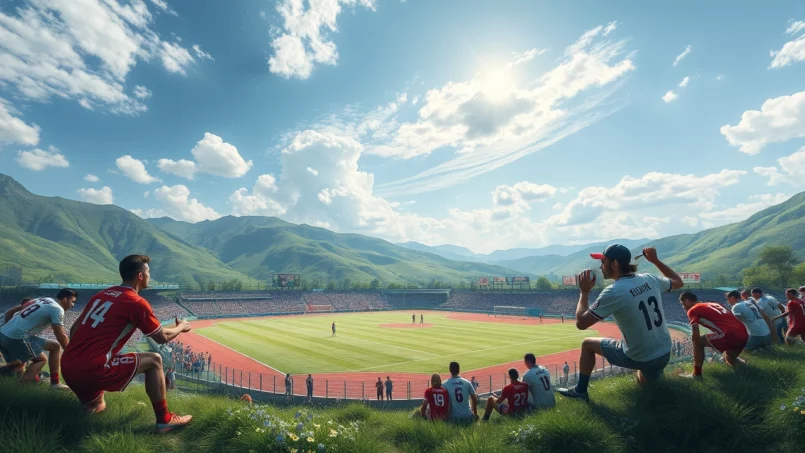
No sport dominates the Kuwaiti landscape like soccer. It is simultaneously the national sport, a social phenomenon, a neighborhood activity, and a high-level discipline.
A Structural Passion… and Very Accessible
Soccer is played everywhere: in schools, clubs, neighborhood pitches – over 120 soccer fields are scattered across the country. The number of players is estimated at around 250,000, a considerable figure relative to the population.
The Kuwait Football Association (KFA), founded in 1952 and affiliated with FIFA since 1962, oversees the entire discipline, from 11-a-side soccer to futsal. The top men’s tier competes in the Kuwaiti Premier League (often called the Zain Premier League after its sponsor), at the summit of a system that also includes the Division One and several national cups (Emir Cup, Crown Prince Cup, Super Cup).
This is the capacity of the Jaber Al-Ahmad International Stadium, the largest venue in Kuwait, serving as a showcase and engine to attract youth to soccer.
Playing Soccer as an Amateur
Recreational soccer isn’t limited to informal matches. Kuwait has seen the emergence of structured amateur leagues, like the Choose Kuwait Football League (CKL), billed as the country’s largest amateur league. These competitions offer adults – often professionals and expatriates – the chance to play in an organized setting with official referees, rankings, stats, and online communication.
For younger players, many academies have developed. An emblematic example is the Youth Academy at an international school in Kuwait City, which offers extracurricular soccer for 3rd to 5th graders, with bi-weekly sessions, friendly matches, participation in development leagues, and a clear focus on values (respect, teamwork, fair play). This type of initiative is multiplying, often in partnership with private schools and local clubs.
Discover the main opportunities to play soccer in Kuwait, whether you’re an amateur, professional, or seeking training.
Join a local club or soccer academy for coached practice, ranging from youth development to senior competitive levels.
Participate in various amateur leagues, corporate tournaments, or community competitions organized across the country.
Enjoy numerous futsal or indoor soccer centers for small-sided matches, accessible by reservation.
Use public soccer fields and equipped parks for informal matches with friends.
Join sports teams at higher education institutions and schools for practice integrated with studies.
Explore federation and sports body initiatives to scout and train emerging talent.
| Form of Play | Main Audience | Coaching/Supervision | Where to Play? |
|---|---|---|---|
| Neighborhood Soccer | Kids, Teens, Adults | Informal | Public fields, schools, beaches |
| KFA-Affiliated Clubs | Youth & Adults | Certified Coaches | Clubs like Al-Arabi, Qadsia, Kuwait SC |
| Amateur Leagues (e.g., CKL) | Adults | Private Organization | Designated urban fields |
| Private Youth Academies | Children/Teens | Educational Coaches | International schools, private centers |
| Futsal & 5-a-side | Youth & Adults | Variable | Indoor halls, multi-sport complexes |
For a newcomer, the easiest entry point remains the neighborhood field or signing up with a local club. For the more motivated, amateur leagues and academies offer a good compromise between competition, sociability, and regular practice.
A Track Record That Inspires Vocations
The passion for soccer also stems from the achievements accumulated over decades. The men’s national team made history by winning the AFC Asian Cup in 1980, reaching the final in 1976 and third place in 1984, and then qualifying for the 1982 FIFA World Cup in Spain. In military soccer, Kuwait has also won the Military World Cup several times.
The Premier League, officially launched in the early 1960s, has seen the domination of major clubs like Kuwait SC (20 titles), Al-Arabi (17 titles), Qadsia (17 titles), or Kazma and Al-Salmiya (4 titles each). These local dynasties inspire many young people, who dream of following in the footsteps of figures like Bader Al-Mutawa, the league’s all-time top scorer with 176 goals.
Basketball, Cricket, Rugby… The Rise of Team Sports
While soccer crushes everything in terms of popularity, other team sports have carved out a real place in Kuwait’s sports daily life.
Basketball: The Choice of Urban Youth
Introduced in the 1960s, basketball today has about 50,000 players. All major multi-sport structures have courts and teams, and the Kuwaiti Division I Basketball League offers a high-standard championship organized by the Kuwait Basketball Association.
Among youth, basketball is very popular, notably because it is easy to play: all you need is a half-court at a school, park, or neighborhood club. Many private academies, like some sections of the Youth Academy mentioned earlier, also offer training focused on technical progression and learning the rules.
NBA enthusiasts influence how teenagers appropriate the game, particularly through adopting dribble culture, three-point shooting, and highlight-reel plays. This is also accompanied by increased interest in specific physical preparation methods like plyometrics and strength training aimed at developing explosiveness.
Cricket: The Sport of South Asian Communities… and Beyond
Arriving in the 1980s via South Asian expatriates, cricket has firmly taken root. An estimated 40,000 players are in Kuwait, overseen by the Kuwait Cricket Association, an associate member of the ICC since 2005.
Initially strongly linked to communities from India, Pakistan, Bangladesh, or Sri Lanka, cricket is gradually attracting players from other backgrounds, who discover the game through colleagues or neighbors. Many dedicated grounds have been developed, and weekends are often punctuated by corporate or community leagues.
Rugby: A Passionate Core
Rugby, played since the 1970s, brings together a more modest community (around 20,000 enthusiasts) but one that is very committed. The practice is particularly dynamic among English-speaking expatriate circles, under the umbrella of the Kuwait Rugby Football Union, integrated into the Arabian Gulf regional structure.
Japan has a national team participating in regional competitions. Locally, many clubs organize training sessions, friendly matches, and 7-a-side tournaments, offering playing opportunities. The atmosphere is generally very inclusive, with growing youth and women’s sections, making it a welcoming environment for new players.
Comparative Figures for Major Team Sports
The relative weight of these disciplines in practice can be summarized as follows:
| Sport | Estimated Introduction Period | Number of Players (approx.) | Main Governance |
|---|---|---|---|
| Soccer | 1950s | ~250,000 | Kuwait Football Association (KFA) |
| Basketball | 1960s | ~50,000 | Kuwait Basketball Association (KBA) |
| Cricket | 1980s | ~40,000 | Kuwait Cricket Association |
| Rugby | 1970s | ~20,000 | Kuwait Rugby Football Union |
For a practitioner, these figures reflect two realities: the ease of finding a soccer partner or team, and the existence of very vibrant niches (cricket, rugby) where social integration happens quickly, especially if one comes from a country where these sports are kings.
Track & Field, Running, Cycling: The Rise of Endurance Sports
Track & Field and endurance sports have gained significant ground in Kuwait, linked to rising health concerns and the desire to engage in activities accessible without major equipment investment.
A Solid Base of Athletes and Runners
Track & field, introduced in the 1960s, has about 100,000 enthusiasts. The Kuwait Athletics Federation oversees track, jumping, throwing disciplines, as well as road races. Athletes like sprinter Fawzi Al-Shammari have flown the country’s colors high in Gulf and Asian championships.
But beyond the elite level, running has become a daily ritual for a part of the population, especially during the cool season (November to March). Major urban parks – Al Shaheed Park, Boulevard Park in Salmiya, the waterfront promenades – offer tracks for jogging, power walking, or interval training.
Simultaneously, events like the Kuwait International Marathon, half-marathons, desert trails, and obstacle races contribute to democratizing the practice. One can participate in various distances, from short races of a few kilometers to ultra-marathons, depending on one’s level.
The Cycling Boom
Introduced in the 1980s, cycling now gathers about 60,000 enthusiasts. Road cycling, mountain biking, cyclocross, or simple family rides, cycling is booming. The cycle paths of Boulevard Park or Green Island, quieter roads outside the city, or certain desert areas suit very different uses, from leisure rides to performance.
While major professional tours capture attention, cycling practice is mainly structured by local clubs, informal weekend rides, and organized events. Furthermore, many amateur cyclists now combine their practice with technologies like GPS computers, online training platforms, and smartwatches.
Triathlon, Duathlon, and Combined Sports
Following this rise in running and cycling, combined disciplines are attracting a growing audience. Marathons, triathlons (sprint, Olympic, half or ironman distances), duathlons, open water swim events are regularly organized or promoted by specialized platforms, allowing individuals to build a personal competition calendar.
Climate plays a decisive role: the high season for outdoor endurance sports runs from November to March, when temperatures are pleasant. In summer, practice shifts to early morning, late evening, or indoors.
Swimming and Water Sports: Enjoying the Gulf
With its long coastline on the Arabian Gulf, Kuwait is naturally oriented toward the sea. While swimming is a structured discipline overseen by the Kuwait Swimming Association (an estimated 100,000 enthusiasts), it’s the entire universe of water activities that has exploded in recent years.
Warm Water, Regular Winds, Calm Sea
Kuwait’s coasts offer an environment particularly conducive to water sports. The waters are warm, generally calm, rarely very rough. A frequent moderate wind creates ideal conditions for sailing, kitesurfing, or windsurfing.
Following the severe environmental damage caused by the Gulf War, significant cleanup efforts were undertaken. These actions helped restore water clarity and saw the return of abundant marine life. This regeneration has favored the development of tourist and recreational activities, notably scuba diving and sport fishing.
The Most Popular Disciplines
In this context, several activities stand out for their popularity:
| Water Activity | Type of Practice | Typical Practitioner Profile |
|---|---|---|
| Swimming (pool / sea) | Sport & Leisure | Children, families, competitive swimmers |
| Jet Ski | Thrills, Leisure | Young adults, groups of friends |
| Scuba Diving | Exploration, Sport | Nature lovers, specialized clubs |
| Kitesurfing / Windsurfing | Technical Sport, Gliding | Wind enthusiasts, regular practitioners |
| Sailing / Yachting | Sport & Cruising | Yacht club members, boat owners |
| Stand‑up Paddleboarding (SUP) | Zen Leisure, Fitness | Families, beginners, wellness enthusiasts |
| Wakeboarding / Water Skiing | Towed Gliding | Thrill-seekers, young athletes |
| Kayaking | Rides, Exploration | Individuals or couples, beginners |
| Sea Fishing | Leisure, Sport | Local fishermen, tourists |
Spots like Marina Beach, Messilah Beach, Salmiya, Fahaheel, Al Kout Beach, or the islands of Failaka, Kubbar, Qaruh, or Umm al‑Maradim are renowned for swimming, snorkeling, jet skiing, or diving. Structures like Kuwait Diving Team, Bubbles Diving Center, or Al‑Boom Diver Center offer certification courses (PADI, NAUI, CMAS) and trips to reefs and wrecks.
Sailing clubs – Kuwait Sailing Club, Kuwait Offshore Sailing Association (KOSA), marinas at Souq Sharq, Fahaheel, or Kuwait Yacht Club – structure the practice of yachting, regattas, and coastal cruising.
The Heritage of Pearl Diving
Beyond modern leisure, the sea in Kuwait carries strong cultural significance. Long before the oil era, the country’s wealth was based on pearl diving. Each year, a pearl diving festival commemorates this era, highlighting traditional wooden dhows, the traditional equipment of divers (wazar, fotam, dieng, hajer), and folk songs.
Participating in a dhow trip, even a tourist version, allows one to touch this part of the heritage while enjoying an accessible nautical experience.
Martial Arts and Combat Sports: Discipline and Confidence
Martial arts are experiencing genuine enthusiasm in Kuwait, particularly among families who see them as a means to instill discipline, self-confidence, and a sense of responsibility in their children.
An Extremely Diverse Offering
The country concentrates a remarkable variety of disciplines, often grouped in dojos or multi-sport centers:
– Striking Arts: karate, taekwondo, kickboxing, muay thai, kung‑fu, boxing.
– Grappling or Control Arts: judo, aikido, jiu‑jitsu, kudo.
– Hybrid and Modern Disciplines: MMA, kajukenbo, jeet kune do, kenpo, Brazilian jiu‑jitsu (BJJ).
Help popularize these sports, often through social media and regional events.
Local figures (Mohammad Al-De’ee, Hussam Qashou, Ahmed Al-Bossairy)
Centers like BK Sports develop structured martial arts academies built around an educational discourse: discipline, respect, positive self-image.
Why Families Champion These Sports
Several trends explain this popularity:
Martial arts meet the need for structure for children, especially in summer, and help develop self-confidence. They allow moving past stereotypes of violence by highlighting their educational and peaceful dimension. Their popularity is growing in the Arab world, driven by the media coverage of MMA, competitions like UFC or Brave Combat Federation, and the rise of jiu-jitsu.
This regional dynamism is confirmed by an Arab News–YouGov poll, according to which 86% of respondents in the Arab world are interested in at least one martial art, and 37% cite karate as the most attractive discipline.
Fitness, the New Lifestyle
Beyond organized sports, the major phenomenon of recent years remains the explosion of fitness in the broad sense. The “Kuwait Fitness Service Market Outlook to 2027F” report describes a growing, highly fragmented market, with a multitude of organized players (large gyms, studios) and non-organized ones (small independent gyms, private coaches, neighborhood clubs).
Gyms, Studios, and Digital: A Hybrid Ecosystem
Major international or regional names – Fitness First, Gold’s Gym, Orange Theory Fitness – coexist with a galaxy of local brands: Flex Fitness, Circuit Plus, Spark Athletic Center, Palms Beach Club, Al Corniche, Platinum Health Club, Desert Fitness, Peak Fitness, Hype Gym, Hero Gym, etc.
Alongside large mixed gyms, the market has seen the flourishing of very trendy specialized studios: CrossFit, HIIT, spinning (Lyfe Cycle), yoga and pilates (A Terre Studio), boxing (The Burrow), dance classes like Zumba, aqua aerobics… Beach clubs also play a role as social hubs, combining pools, tennis, squash, beach volleyball, and spa areas (jacuzzi, hammam, lounge).
Digital has profoundly changed sporting practices. A majority of regular practitioners now use wearables (smartwatches, smart scales) to track their activity and sleep. Furthermore, a growing share subscribes to online training programs or remote coaching, rather than just a gym membership.
A table helps visualize the diversity of the fitness offering:
| Type of Offering | Main Characteristics | Examples in Kuwait |
|---|---|---|
| Large Mixed Gyms | Complete equipment, long-term memberships | Fitness First, Gold’s Gym, Flex Fitness |
| Men’s / Women’s Gyms | Gender segmentation, respect for cultural norms | Ladies gyms, dedicated men’s gyms |
| Specialized Studios | Focus on one method (CrossFit, yoga, spin, pilates, boxing) | Circuit Plus, Lyfe Cycle, A Terre Studio |
| Beach Clubs / Resorts | Fitness + pool + beach + spa + racket sports | Palms Beach Club, Al Corniche |
| Home Coaching | Personalization, schedule flexibility | Independent coaches, coaching apps |
| Digital Platforms | Live or recorded classes, data tracking, gamification | International apps + local solutions |
Motivations, Obstacles, and Trends
Regional studies show that the main motivations for engaging in physical activity are improving overall health, body transformation (weight loss, muscle gain), gaining self-confidence, stress reduction, and the pursuit of strength.
On the other side, several obstacles regularly appear:
Nearly one in two practitioners feels intimidated at the gym, a phenomenon called ‘gymtimidation’.
To overcome these hurdles, many opt for home workouts, outdoor sessions (parks, waterfront), or small group classes in more intimate studios. The rise of women-only gyms also responds to the demand to practice in an environment perceived as safer and more comfortable.
Holistic Health: Sport, Nutrition, and Mental Well-being
Sports practice is increasingly part of a holistic wellness approach. A majority of respondents in regional surveys declare having a healthy diet, while a significant portion consume supplements (multivitamins, proteins). Mental health is also considered essential, and sport is seen as a major lever for managing stress.
Spending related to fitness is increasing: multiple memberships, technical apparel, connected gadgets, coaching and nutrition programs. Many Kuwaitis say they want to increase their wellness budget in the coming years.
Traditional Sports, Desert, and Outdoor Leisure
Kuwait is not just a country of air-conditioned halls and stadiums. Nature – desert and coastline – plays a major role in sports leisure, especially in winter when temperatures become pleasant.
The Desert, a Winter Playground
From November to March, desert camps (“kashta“) flourish. Families and groups of friends set up tents, organize barbecues, drive 4x4s on dunes, ride quad bikes, observe stars. The desert thus becomes a vast natural stadium for:
– Off-road motorized activities (dune bashing, buggy, quad).
– Hiking and trail running.
– Mountain biking and cyclocross.
– Camping and amateur astronomy.
Specialized agencies offer safaris combining adventure and culture. A typical circuit might include a visit to the Kuwait Towers, a stop at the iconic Sheikh Jaber Al-Ahmad Bridge, and immersion in a “Bedouin camp” with tasting of Arabic coffee and dates, all accompanied by traditional music.
Sports and Games Inherited from Tradition
Several practices refer directly to Bedouin roots and the history of the peninsula:
Discover the sporting activities and traditional games that shape Kuwaiti cultural life, from modern races to ancestral practices.
Organized mainly in winter at racecourses like Sabah Al-Ahmad Heritage Village, these races now use robot jockeys.
Renowned for their elegance, they are at the heart of major events like the Kuwait International Arabian Horse Festival.
Ancestral practices like Al‑Saghar, a form of wrestling, or Al‑Saqaq, a stone-throwing game.
Equestrianism, structured around the Hunting and Equestrian Club (tracks, pool, tennis, squash, bowling…), allows many young people to get introduced to equestrian sports in an organized setting.
A Very Marked Seasonality
The climate strongly conditions the practice of these leisure activities. The period:
– November–March is ideal for prolonged outdoor activities.
– April, May, and October remain feasible by choosing early morning or late afternoon slots.
– From June to September, most outdoor activities concentrate at sunrise or late evening, or move indoors (malls, gyms, ice rinks, indoor pools).
Seasonal sandstorms can also impose last-minute adjustments.
Women and Sport: A Revolution in Progress
Long marginalized, female sports participation is experiencing spectacular progress in Kuwait and across the Gulf. At the regional level, GCC Olympic Committees have committed to actively promoting women’s sports, with dedicated platforms, leadership programs, and strong decisions, like the obligation to open all disciplines to women in future Gulf Games.
In Kuwait itself, several signals show the depth of this transformation:
Notable initiatives and progress in promoting and structuring sports practice for women.
Creation of clubs, federations, and academies dedicated specifically to women to oversee their sports practice.
Expansion of women-only gyms, often equipped and coached by female trainers.
Active participation of Kuwaiti sportswomen in various disciplines: soccer, basketball, tennis, swimming, and martial arts.
Deployment of international women’s sports leadership training programs adapted to the local context.
The fitness market reflects this trend: demand for specifically female-oriented services is very strong and growing. Women’s gyms are no longer just “light” versions of mixed gyms; they offer their own concepts, with a strong community dimension and often a discourse centered on empowerment and self-confidence.
Technology, E‑sports, and New Ways to Exercise
The digital revolution doesn’t only affect fitness. It’s also reshaping how Kuwaitis practice, track, and experience sports.
Wearables, Virtual Coaching, and “Smart” Gyms
In Kuwait, as in the rest of the Gulf, a majority of regular practitioners use smartwatches, fitness trackers, or smart scales. This data feeds fitness apps, personalized coaching programs, and community challenges.
Major chains and some local startups now bet on: technological innovation, sustainability, customer experience, and adaptability to stand out in the market.
Discover our connected tools designed to optimize your training and simplify your sports tracking.
Book your classes, track your progress in detail, and receive personalized nutrition advice.
Use “smart” equipment that automatically adjusts resistance and records your performance.
Access live or on-demand classes, from your home or from our digital in-gym spaces.
This hybridization of in-person and virtual makes practice easier for those short on time or who feel intimidated by large gyms.
The Explosion of E‑sports
Among those under 30, e‑sports and competitive gaming have established themselves as a full-fledged component of sports culture. The number of competitive players has tripled between 2021 and 2024, and titles like Mobile Legends or FIFA (now EA Sports FC) unite massive communities.
Clubs, gaming cafés, and online leagues organize tournaments, sometimes with prize money, gradually professionalizing the sector. For a portion of the youth, “practicing a sport” now includes virtual competition, with training, strategies, team communication, and even performance tracking.
Infrastructure, Clubs, and Youth Programs: Where and How to Practice?
Kuwait offers a dense network of places to do sports, from major national infrastructure to small neighborhood centers.
Historic Clubs and Modern Complexes
Clubs like Salmiya Sporting Club, Qadsia SC, Sulaibikhat SC, or Fahaheel SC are as many entry points for coached practice of soccer, handball, martial arts, track & field, tennis, squash, swimming… Salmiya SC, for example, based at Thamir Stadium, offers a wide range of disciplines, from judo to futsal, including karate and track & field.
Major clubs like Kuwait SC or Al Arabi SC have modern multi-sport complexes, accessible to all ages and levels. They are essential for scouting and training talent, as well as promoting a daily sports culture.
Youth Centers and Specialized Facilities
In parallel, structures like Al Shamiya Youth Center or other centers managed by the Public Authority for Youth make facilities available to young people, often at accessible rates, with an emphasis on educational supervision.
Some infrastructures are very specialized:
Discover a selection of indoor and outdoor activities for all ages and tastes, from skating to motorsports.
Enjoy an Olympic-sized rink and a dedicated rink for women and children. Skating and hockey lessons, as well as equipment rental.
Discover skating in a fun and friendly setting within specially designed halls.
Four major bowling alleys are available: at the Hunting and Equestrian Club, Holiday Inn, and Safir.
The Amateur Car and Motorbike Association organizes car and motorbike races throughout the year.
School Programs and Private Academies
The Kuwait School Sports Federation has implemented a five‑year strategy to identify and support sports talent from school age. Young people are directed to specialized training centers according to their aptitudes and desires, under the supervision of qualified coaches.
Private academies – for soccer, basketball, tennis, swimming, but also combat sports – complement this system. The concept is often similar: bi-weekly sessions, emphasis on values, friendly matches, participation in regional leagues, and strong integration of parents in the process.
An Increasingly “Sporty” Society
Taking a step back, the emerging picture is of a country where sport has become a common language. It permeates:
Sport in Qatar goes beyond simple physical activity, influencing daily life, society, public policy, and the economy.
Jogging on the corniche, evening gym sessions, impromptu soccer matches, and family outings to the beach or desert.
For nearly half of practitioners, the gym is an important social hub, where friendships and sometimes relationships are formed.
Health programs, mass events like National Sports Day, creation of new infrastructure, and support for federations.
A booming fitness market, sports tourism (water activities, safaris, events), and development of technological solutions and local apps.
For a resident or visitor, this means two things. First, it is very easy to find a sports activity suited to one’s level, budget, and lifestyle, whether you prefer the electric atmosphere of a soccer stadium, the tranquility of a yoga session facing the sea, the sweat of a CrossFit WOD, or the adrenaline of jet skiing. Second, sport constitutes an excellent vector for integration: joining a club, an amateur league, a running group, or a dojo allows for quickly building connections, in a country where cultural diversity is strong but where the taste for shared effort transcends differences.
The country is reinventing itself beyond oil and commerce by becoming a space where popular sports, traditional practices, modern fitness, and e‑sport converge. This dynamic responds to a population increasingly concerned about its health and quality of life through physical activity.
Disclaimer: The information provided on this website is for informational purposes only and does not constitute financial, legal, or professional advice. We encourage you to consult qualified experts before making any investment, real estate, or expatriation decisions. Although we strive to maintain up-to-date and accurate information, we do not guarantee the completeness, accuracy, or timeliness of the proposed content. As investment and expatriation involve risks, we disclaim any liability for potential losses or damages arising from the use of this site. Your use of this site confirms your acceptance of these terms and your understanding of the associated risks.

Cyril Jarnias is an independent expert in international wealth management with over 20 years of experience. As an expatriate himself, he is dedicated to helping individuals and business leaders build, protect, and pass on their wealth with complete peace of mind.
On his website, cyriljarnias.com, he shares his expertise on international real estate, offshore company formation, and expatriation.
Thanks to his expertise, he offers sound advice to optimize his clients' wealth management. Cyril Jarnias is also recognized for his appearances in many prestigious media outlets such as BFM Business, les Français de l’étranger, Le Figaro, Les Echos, and Mieux vivre votre argent, where he shares his knowledge and know-how in wealth management.





