
 Published on and written by Cyril Jarnias
Moving to Monaco is often a dream for wealthy expatriates. In the collective imagination, the Principality is seen as a “tax haven” where one can live in the sun, far from the taxman and forms. The reality is more nuanced, but remains extremely attractive, especially for those coming from countries with high income and wealth taxes.
Monaco does not levy income tax or property tax for its residents. However, one must consider registration fees, residency conditions, exceptions for certain nationalities, and the tax implications related to assets held abroad.
A unique tax framework but not entirely “outside the system”
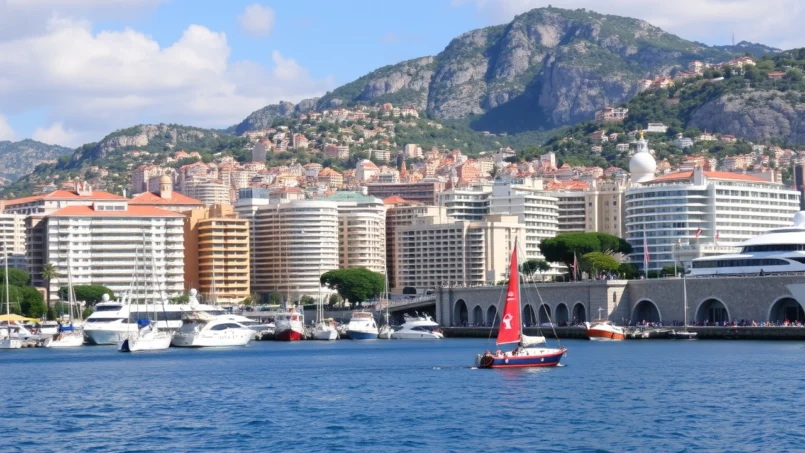
Monaco is a sovereign state of 2 km² on the French Riviera, independent but integrated into the French customs area and France’s VAT system. Long seen as an opaque refuge, the Principality is now considered by the OECD and the European Union as a cooperative jurisdiction, compliant with transparency and information exchange standards.
For the expatriate, Monaco offers very advantageous domestic taxation, but its international environment is strictly regulated. The principality has signed numerous double taxation treaties and information exchange agreements, applies the CRS standard, and participates in the OECD’s BEPS framework, thus ending the era of ‘absolute tax secrecy’.
Income tax: a 0% rate… except for certain French nationals
The core of Monaco’s attractiveness for individuals is simple: there is no income tax for residents. This rule, established by an 1869 ordinance, applies to all components of private income.
In practice, a resident not subject to a particular treaty does not pay any local tax or tax on:
– wages and professional compensation;
– dividends and interest;
– capital gains on securities (financial capital gains);
– capital gains on real estate located in Monaco;
– director’s fees or attendance fees;
– rental income from a property located in Monaco.
No withholding tax is applied in Monaco on these flows. For most expatriates, the only internal “tax obligation” is therefore to ensure their country of origin no longer considers them a tax resident.
Taxation for expatriates in Monaco
The French exception: a special case for income tax
The image of a Monaco with no income tax has one major limitation: French nationals. A bilateral agreement concluded in 1963 stipulates that French nationals domiciled in Monaco remain subject to French income taxation, except in special cases (e.g., very long-standing Monegasque residence predating certain reference dates).
In practice, a French person who moves to Monaco today can live there without paying local income tax, but must in principle continue to declare and pay their tax in France as if they still resided there. This mechanism is explicitly designed to prevent a tax exodus of French residents to the Principality.
For a French national, the promise of zero income tax in Monaco is generally not fulfilled, except in cases of exemptions provided by an old treaty. However, for other nationalities, once Monegasque tax residence is established, no tax is levied on private income.
American, British residents, and other countries with worldwide taxation
Beyond the French case, certain states – notably the United States – tax their citizens on their worldwide income, regardless of residence. A U.S. citizen living in Monaco is therefore still required to file a tax return with the U.S. IRS and pay any additional tax, even if Monaco does not tax this income.
For an expatriate, the key is therefore not only to understand Monegasque taxation, but also how their home country treats residence in Monaco and “foreign” income.
Absence of property tax: a central asset for homeowners
The other pillar of “Taxation: income tax, property tax Monaco for expatriates” is equally spectacular: there is no annual property tax on buildings.
No property tax, no residence tax, no recurrent municipal tax on real estate assets. For an owner accustomed to sometimes very high local tax bills in other countries, the long-term savings can be colossal, especially on a high-value property.
The costs borne by the owner are limited to condominium fees, maintenance, insurance, but no Monegasque authority levies an annual tax on the mere ownership of a building.
A trade-off: high acquisition costs at entry
This absence of property tax does not mean that real estate is entirely exempt from taxation. The main revenue related to property is concentrated on transactions and formalities (registration fees, stamp duties, VAT on certain operations).
For an expatriate acquiring property in France, the main tax effort occurs upon purchase. It consists of transfer duties, notary fees, and, in the case of buying a new-build property, VAT which is usually included in the sale price.
Here is a simplified overview of the main acquisition costs depending on the purchase structure, excluding agency commissions and attorney fees.
| Type of purchaser / operation | Main nature of the cost | Indicative rate on property price |
|---|---|---|
| Individual or “transparent” Monegasque civil company | Registration fee + notary | Approx. 6–7.5% (incl. ~1.5% notary) |
| “Opaque” company or entity | Increased registration fee | 7.5% to 10% depending on the case |
| New-build property subject to VAT | VAT included + reduced fee + notary | Approx. 2–3% excluding VAT (reduced fee + notary) |
These percentages vary depending on applicable regulations (notably law n° 1.381 on entities holding real estate) and the transparency of the structure (obligation to disclose beneficial owners). However, once the acquisition is complete, no annual tax like property tax burdens ownership.
Rental: a “mini‑tax” borne by the tenant
For expatriates who rent their home rather than buy, taxation is almost invisible. There is no “rental income tax” in Monaco: rent received by a physical person owner is not taxed locally. However, the tenant pays a registration fee when signing the lease.
The registration fee for non-resident leases is set at 1% of the annual rent including charges.
| Operation | Applied rate | Tax base | Usually paid by |
|---|---|---|---|
| Lease registration | 1% | Annual rent + charges | Tenant |
This mechanism remains marginal relative to the rents charged. For a studio rented at €3,000 per month, the one-time registration fee is around €360 (1% of 12 × €3,000), payable at the start of the contract. It is therefore not a recurrent tax.
No wealth tax or recurrent local tax
Monegasque taxation does not include an annual tax on the financial or real estate wealth of individuals. No tax of the “ISF” or “real estate wealth tax” type is levied at the Principality level.
For an expatriate from a country with high wealth taxation, the impact can be massive. In Monaco:
In Monaco, securities portfolios are not subject to local tax. Similarly, holding cash or financial assets is not taxed. Even owning multiple real estate properties in the principality does not trigger any annual taxation, apart from the usual condominium fees.
However, there remains a crucial nuance: this absence of wealth tax in Monaco does not prevent certain countries (like France for its nationals and for holding French properties) from continuing to tax their residents or nationals on their worldwide assets or assets located on their territory.
Capital gains: sales of real estate and securities
For individuals, the rule is surprisingly simple: private capital gains are not taxed in Monaco. The sale of an apartment, villa, or shares in a Monegasque company does not trigger a capital gains tax, provided the seller is an individual not subject to another regime (e.g., French obligations for certain sellers).
Monaco does not apply a local tax on capital gains, making it an attractive destination for real estate and financial investors. However, it is crucial to fully understand the taxation of other countries where assets are held, notably French taxation for real estate investments in France.
VAT and indirect taxation: a system modeled on France
Even though public discourse focuses on the absence of income tax and property tax, daily life in Monaco is still marked by indirect levies, chief among them being VAT.
By virtue of a customs union with France, Monaco applies the same VAT system as its neighbor:
| VAT rate in Monaco | Typical use (aligned with France) |
|---|---|
| 20% (standard rate) | Most goods and services, including some new real estate properties |
| 10% | Hospitality, restaurants, transport, certain renovation works |
| 5.5% | Basic foodstuffs, certain cultural goods |
| 2.1% | Specific medicines, certain publications |
For real estate, the 20% VAT notably applies to:
– the sale of building land by a VAT-registered entity;
– the sale of new or heavily renovated buildings by a VAT-registered developer.
In certain transactions, such as buying a new-build property, VAT is included in the advertised sale price and is not billed separately to the buyer. This integration influences the structure of the overall price and has a direct impact on the calculation of registration fees, which are usually at a reduced rate when VAT is applicable, unlike acquisitions of older properties subject to the land publicity tax.
Conversely, older buildings sold between individuals are not subject to VAT, but only to transfer duties.
Inheritance and gifts: taxation targeted on Monegasque assets
While income tax and property tax are nonexistent, Monaco is not a “no man’s land” regarding succession. The Principality levies inheritance and gift taxes, but only on assets situated in Monaco (real estate, accounts, shares in Monegasque companies, etc.).
The rate depends exclusively on the degree of kinship between the deceased (or donor) and the beneficiary:
| Relationship between deceased/donor and beneficiary | Tax rate (inheritance or gift) on assets located in Monaco |
|---|---|
| Spouse, parents, children | 0% |
| Civil union partner | 4% |
| Brothers and sisters | 8% |
| Uncles, aunts, nephews, nieces | 10% |
| Other relatives | 13% |
| Persons with no familial relationship | 16% |
These rates apply when the asset is located in Monaco, regardless of the residence or nationality of the persons involved. Gifts must be executed before a notary to be subject to these duties, and certain transfers to charitable institutions or to the Principality may be exempt.
For expatriates, inheritance taxes in Monaco are advantageous in direct line and between spouses, with a total exemption. However, for heirs outside this immediate family sphere, the tax rates become significant, a crucial factor to consider given the very high value of real estate in the principality.
Conditions for becoming a Monegasque tax resident
The tax advantages of Monaco are only accessible to those who manage to be recognized as residents. However, contrary to the idea of a “simple change of address,” obtaining residence in Monaco is subject to strict criteria, both administrative and fiscal.
Administrative residence: the starting point
Even before discussing tax residence, one must first obtain a Monegasque residence permit. Anyone wishing to reside for more than three months in Monaco must apply for a “carte de séjour” from the authorities.
The main steps are as follows:
To obtain a Monegasque resident card, several strict conditions must be met: having accommodation on-site (owned or rented), opening a local bank account, proving sufficient financial means (generally a significant deposit of several hundred thousand to over one million euros), presenting a clean criminal record from recent countries of residence, and undergoing an interview with the Residents Section of the Public Security.
Residence permits are issued in stages (one year renewable, then three years, then ten years for long-term residents), with moderate administrative fees but requirements for effective presence.
Tax residence certificate: the key to the “zero tax” advantage
To have one’s status as a tax resident recognized – useful particularly vis-à-vis other states – the expatriate must obtain a special certificate issued for tax purposes. The Monegasque authorities then base their decision on several criteria:
To be considered a Monegasque tax resident, three main criteria are considered: a majority physical presence in the territory (the frequent reference is more than 183 days per year), the location of the home or center of family life in the Principality, and the existence in Monaco of the center of one’s economic interests (investments, wealth management, or seat of activities).
Once issued, this certificate generally allows one to assert to other states that they are a resident of Monaco. But foreign tax authorities are increasingly scrutinizing the reality of this residence (effective length of stay, children’s schooling, place of professional activity, etc.).
Real estate in Monaco: costs, rents, and ownership taxation
The absence of property tax should not obscure the extreme costliness of property in Monaco. Available figures show price levels among the highest in the world, which explains why the Principality can afford to tax essentially transactions, while leaving ownership free of any annual tax.
Price and rent levels
Collected data shows an average price per square meter close to €52,000, with peaks well above that in certain emblematic neighborhoods. Rents follow the same logic, with wide variations depending on the size of the property.
| Type of property (order of magnitude) | Indication of price / approximate monthly rent |
|---|---|
| Average price per m² (purchase) | ≈ €52,000 / m² |
| Studio (rental) | ≈ €2,800 – €3,000 / month |
| 1 bedroom in city center | ≈ €3,500 – €7,000 / month |
| 3 bedrooms in city center | ≈ €7,000 – €20,000 / month, or more |
In this context, the savings of several thousand euros per year on a nonexistent property tax may seem marginal, but it grows in significance for high-value real estate portfolios held over the very long term.
Ownership via a company: transparency or opacity, a tax impact
Many expatriates purchase their Monegasque property via a company, whether a local civil company or a foreign entity. Monaco distinguishes, in practice, so-called “transparent” structures (where beneficial owners are clearly identified) and “opaque” structures (offshore or complex) for applying transfer duties and reporting obligations.
Law n° 1.381 imposes on entities holding real estate in Monaco:
For foreign or opaque companies owning a property, three main obligations apply: the appointment of a tax representative in France, the annual filing of a declaration identifying the beneficial owners, and the payment of a specific transfer duty in case of a change in the beneficial economic owner, calculated on the market value of the property.
For an expatriate, the choice of the acquisition structure therefore conditions not only the initial costs (4.5–4.75% for a “clear” Monegasque civil company vs. 7.5–10% for an opaque entity), but also the future flexibility for transfer and resale.
Implicit comparison with France: when the asset is not in Monaco
Describing “Taxation: income tax, property tax Monaco for expatriates” without mentioning the French situation would be incomplete, given the close geographic proximity and historical ties.
A Monegasque expatriate who holds real estate in France is fully subject to French tax law on these assets:
Purchasing a rental property incurs initial costs (transfer duties and notary fees of about 8%). Rental income is subject to income tax and social charges. A resale triggers taxation on the capital gain (approx. 19% tax + 17.2% social charges), with allowances increasing with the holding period. Finally, if the net value of your real estate assets in France exceeds €1.3 million, you may be subject to the Real Estate Wealth Tax (IFI).
Monaco offers no protection against these French taxes, as they are not assets located in the Principality. The expatriate remains liable for French reporting obligations (annual declarations of rental income, IFI if applicable, specific forms in case of ownership via a civil company, etc.).
In other words, the Monegasque advantage applies fully to:
– private income received in Monaco or abroad (except for countries taxing by nationality);
– the ownership and sale of assets located in Monaco.
As soon as an asset is located in another state, that state’s taxation applies, regardless of the expatriate’s Monegasque status.
The absence of income tax and property tax does not mean a total absence of levies. For expatriates who are professionally active or employers, social security contributions represent a substantial cost.
Rates vary depending on the schemes, but the communicated orders of magnitude show total employer contributions that can reach around 30 to 35% of gross salary, and employee contributions between 10 and 14%. These contributions fund health, pension, and social benefits, in a system autonomous from France’s.
In addition to these:
Tax rate applicable to the sale of a business.
For an expatriate primarily interested in the absence of income tax and property tax, these deductions remain secondary, but they contribute to financing the infrastructure and public services of a micro-state with high operating costs.
International transparency: the end of “fake residents”
One of the most important changes in recent years is the rise of automatic exchange of financial information. Monaco has adhered to the CRS standard and the mutual assistance convention, which implies:
– the collection, by Monegasque banks and financial institutions, of information on non-resident account holders and its annual transmission to partner states;
– the reception, by Monaco, of information on accounts held abroad by its residents.
Expatriates using a facade residence in Monaco to escape the taxation of their home country face rigorous scrutiny. Tax authorities check the consistency of length of stay, places of professional activity, and children’s schooling by cross-referencing data.
Highly publicized cases have shown that simply owning an apartment in Monaco and a few local bills is no longer enough to prove real residence. The trend is towards an increased requirement for “substance”: majority physical presence, economic and social integration, a clear break with the former country of residence, etc.
Monaco, a tax haven… for those who do it correctly
Ultimately, moving to Monaco as an expatriate offers a tax cocktail hard to match: no income tax, no property tax or residence tax, non‑taxation of private capital gains, no wealth tax, zero inheritance tax in direct line, no withholding tax on most outgoing flows.
But this environment is fully accessible only under three conditions:
An overview of the main challenges and requirements to consider to obtain and maintain resident status in the Principality of Monaco.
Meet the requirements for presence, accommodation, and financial means, then ensure the reality of life in the Principality to maintain status.
Manage interactions with the tax systems of the home country and countries where one holds real estate or conducts business.
Anticipate costs related to very expensive real estate, required bank deposits for residency, and substantial transfer duties upon acquisition.
For an entrepreneur or investor ready to organize their wealth and life around Monaco, this combination can nevertheless result in a spectacular reduction in overall tax pressure, without falling into illegality or concealment.
Monaco offers a near-total absence of income tax and property tax for residents whose life and assets are concentrated in the Principality. However, vigilance is essential if other jurisdictions, nationalities, or asset locations come into play. In an era of increasing tax transparency, Monaco is no longer a secret refuge but a powerful and assumed tax framework.
A 62-year-old retiree, with financial assets over one million euros well-structured in Europe, wanted to change his tax residence to optimize his taxable burden and diversify his investments, while maintaining a link with France. Allocated budget: €10,000 for complete support (tax advice, administrative formalities, relocation and wealth structuring), without forced sale of assets.
After analyzing several attractive destinations (Monaco, Greece, Cyprus, Mauritius), the chosen strategy was to target Monaco for the absence of income tax for non-French individuals and the stable tax environment, while offering a very secure lifestyle and an international financial ecosystem. The mission included: pre-expatriation tax audit (exit tax or not, tax deferral), obtaining Monegasque residence with rental or purchase of a primary residence, detachment from CNAS/CPAM, transfer of banking residence, plan for breaking French tax ties (183 days/year outside France, center of economic interests…), introduction to local network (lawyer, immigration, private banker, bilingual advisors) and wealth integration (analysis, redomiciliation and potential restructuring). This type of support enables significant tax savings, while managing risks (French tax audits, FR-MC treaty, adaptation to the high cost of living) and aligning this mobility with an overall diversification strategy.
Disclaimer: The information provided on this website is for informational purposes only and does not constitute financial, legal, or professional advice. We encourage you to consult qualified experts before making any investment, real estate, or expatriation decisions. Although we strive to maintain up-to-date and accurate information, we do not guarantee the completeness, accuracy, or timeliness of the proposed content. As investment and expatriation involve risks, we disclaim any liability for potential losses or damages arising from the use of this site. Your use of this site confirms your acceptance of these terms and your understanding of the associated risks.

Cyril Jarnias is an independent expert in international wealth management with over 20 years of experience. As an expatriate himself, he is dedicated to helping individuals and business leaders build, protect, and pass on their wealth with complete peace of mind.
On his website, cyriljarnias.com, he shares his expertise on international real estate, offshore company formation, and expatriation.
Thanks to his expertise, he offers sound advice to optimize his clients' wealth management. Cyril Jarnias is also recognized for his appearances in many prestigious media outlets such as BFM Business, les Français de l’étranger, Le Figaro, Les Echos, and Mieux vivre votre argent, where he shares his knowledge and know-how in wealth management.





