
 Published on and written by Cyril Jarnias
In a World Where International Mobility Continues to Grow
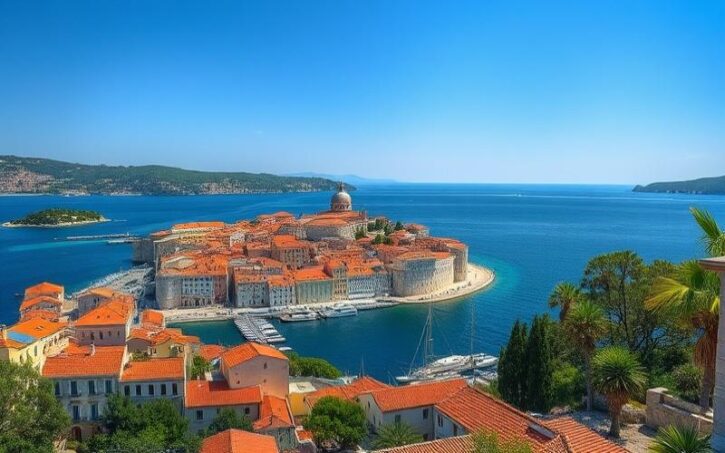
Many French citizens are choosing to relocate and settle in Croatia, a country with picturesque landscapes and rich culture. This article delves into the experiences of these expatriates who have become homeowners, sharing their inspiring stories and the reasons behind their choice.
Between the challenges faced and the joys of discovering a new life, learn how they made this country their home and the connections they built with the local community.
French Expatriates in Croatia: Successful Integration
Language Challenges and Solutions for French Expatriates in Croatia
The Croatian language can be a significant obstacle when settling in, as it is largely unfamiliar to French speakers.
Tips to Overcome This Challenge:
- Taking Croatian classes upon arrival, even at a basic level, shows a willingness to integrate that is appreciated by locals.
- Using mobile apps or enrolling in language workshops offered by certain associations.
- Practicing common phrases daily (hello = dobar dan, thank you = hvala), which facilitates contact and demonstrates respect.
Practical Tips for Adapting to the Local Culture
- Show curiosity and sample culinary specialties (pašticada, seafood…).
- Adopt local customs like removing shoes when entering homes.
- Actively participate in traditional festivals and popular events.
Clubs, Associations, and Initiatives Facilitating Social Integration
| Structure/Initiative | Description | Primary Location |
|---|---|---|
| Alliance Française | Language courses, French-speaking cultural events | Zagreb, Split |
| InterNations | International expatriate network offering regular meetups | Major cities |
| Facebook Groups “French in Croatia” | Sharing practical information, mutual support among expatriates | Online |
| Francophone Film Festivals | Annual event promoting cultural exchange | Zagreb |
Benefits:
- Facilitate networking
- Quickly find logistical or moral support
- Access group activities (hiking, cultural tours…)
Key Role of Social Events and Cultural Encounters
Local festivals (traditional music, cinema) are highly popular. Simply frequenting a neighborhood café regularly also helps break the ice with locals. The coffee tradition is central: meeting over an espresso often makes it easy to start conversations.
Understanding Croatian Customs & Traditions
For successful immersion:
- Respect formal politeness in greetings.
- Show genuine interest in national history, which can be painful; avoid certain sensitive topics unless invited to discuss them.
Participating in these customs quickly creates a sense of belonging.
Testimonials & Concrete Strategies Adopted by French Expatriates Who Successfully Integrated
“Joining the Alliance Française not only allowed me to stay connected with my native language but also to meet Croatians curious about discovering France. The exchanges became natural.”
“I started by learning a few key phrases in Croatian; it changed everything in my daily interactions with my neighbors who appreciated the effort.”
“Facebook groups were essential for finding my initial bearings—shared housing then weekly organized outings in different neighborhoods!”
Key Takeaways from Those Who Feel at Home Today:
- Invest time in local relationships through clubs or cafés
- Get involved in community events
- Be open to differences while maintaining your own identity
Practical Checklist: Recommended Steps Upon Arrival
- Register with a Franco-Croatian association or local club
- Active participation in popular festivals/sporting events
- Regular Croatian language learning (even basic)
Always prioritize intercultural dialogue: it not only speeds up your adaptation but deeply enriches your personal experience in Croatia.
Good to Know:
To successfully integrate in Croatia, French expatriates must overcome several challenges, including the language barrier; Croatian courses can facilitate this transition by helping communicate more easily. Adapting to the local culture is essential, and understanding customs, such as respecting local politeness conventions and participating in traditional festivities, helps create authentic bonds. Initiatives like the Francophone Club of Zagreb or local associations offer platforms to meet other expatriates and locals, fostering smoother integration. Cultural events and meetings organized by the French Embassy or Institut Français are also ideal opportunities to immerse in Croatian life. Charlotte, an expatriate living in Split, recommends attending local sporting events and engaging in common interest groups to expand your social circle. Being open to culinary traditions, such as tasting local specialties like pašticada or visiting food markets, also enriches the integration experience.
Buying Real Estate in Croatia: Expatriates’ Advice
Practical Tips from French Expatriates for Real Estate Purchase in Croatia
Administrative Procedures:
- Verify that you meet purchase conditions (for EU citizens, same rights as Croatians; for non-EU, need for a reciprocity agreement and sometimes ministry approval).
- Plan a local visit to choose the neighborhood wisely and absorb the environment.
- Always consult a real estate law specialist to check the property’s legal status (especially absence of disputes, debts, or restitution issues with previous owners).
- Have all contracts drafted and certified by a notary.
- Register the acquired property in the land registry after the transaction, an essential step to secure ownership.
Cultural Differences in Real Estate Transactions:
- Negotiations are often direct and informal, but it’s recommended to formalize everything in writing.
- Delays can be lengthy for obtaining authorizations, especially for non-resident foreigners.
- The use of cash in transactions may surprise some expatriates, although bank transfers remain common for securing payments.
Tips for Choosing the Right Location:
- Prioritize major cities like Zagreb, Split, or Dubrovnik for rental investment or resale.
- Coastal areas and islands are highly sought after but prices are higher there.
- Evaluate accessibility, proximity to amenities, and the area’s tourist appeal.
Most Sought-After Property Types:
| Property Type | Advantages | Points to Watch |
|---|---|---|
| City Apartment | High rental demand, easy resale | Higher price per square meter |
| Seaside House/Villa | Significant seasonal rental potential | Maintenance, coastal regulations |
| Buildable Land | Project flexibility | Verify buildability |
Personal Experiences and Expatriate Feedback:
- Some report longer than expected delays to finalize purchases, mainly due to administrative procedures and legal verifications.
- The language barrier can complicate exchanges with local administrations or sellers; it’s useful to work with bilingual professionals.
- Several expatriates emphasize the importance of having an independent local lawyer to avoid scams or hidden defects.
- Many note high satisfaction after purchase, especially regarding quality of life and property appreciation.
Common Pitfalls to Avoid:
- Neglecting to verify the property’s registration in the land registry.
- Buying a property without checking for debts or ongoing disputes.
- Relying solely on a real estate agent without consulting an independent lawyer.
- Underestimating additional fees (notary, lawyer, taxes).
Recommendations for Working with Local Professionals:
- Select a lawyer specialized in Croatian real estate law, ideally recommended by other expatriates.
- Involve a notary from the signing of the preliminary sales agreement.
- Rely on a reputable local real estate agency for search and negotiation.
Understanding the Local Market:
- Real estate prices in Croatia remain attractive compared to Western Europe but are rising in tourist areas.
- Stay informed about current regulations, especially restrictions on certain land types (agricultural, protected areas).
- Monitor price fluctuations, which can be significant depending on season or location.
Key Takeaways:
Support from local professionals, rigorous verification of property titles, and understanding cultural and administrative specifics are essential for successful real estate investment in Croatia.
Good to Know:
To buy real estate in Croatia, French expatriates recommend thoroughly researching complex administrative procedures, notably the need for an OIB (personal tax identification number) to conduct transactions. Cultural differences may surprise, such as haggling during price negotiations. It’s advised to choose a strategic location like Zagreb or the Dalmatian coast to ensure interesting appreciation. Traditional stone houses and apartments with sea views are particularly sought after. Challenges include local unfamiliarity with foreign purchase processes, where help from a French-speaking lawyer and notary is valuable. Many emphasize verifying property titles to avoid disputes. To better understand the market, following price fluctuations and local regulations seems crucial. Finally, beware of scams, especially by unlicensed real estate agents; a trusted local professional can be an indispensable ally.
Living in Croatia: Testimonials and Opinions from French Expatriates
Many French expatriates in Croatia share rich and varied experiences, often motivated by the search for a better quality of life, a family adventure, or a change in professional pace.
Main Reasons for Relocation:
- Search for meaning in professional and personal life.
- Desire to live differently, in line with one’s values and deep aspirations.
- Family project, especially to offer children bilingual education and growth in a preserved natural environment.
- Romantic or family encounters that make expatriation obvious.
Quality of Life in Croatia:
- Less stressful life, where “people aren’t stressed” and take their time for everything.
- Exceptional landscapes, well-preserved nature, daily proximity to the sea deemed “relaxing, restful, and inspiring.”
- General safety felt as superior to that of major European cities; “Croatia is a true little paradise.”
Ease of Integration:
Welcoming expat communities (notably French-speaking groups in Zagreb), quick integration thanks to regular events and mutual support among expatriates.
- List of facilitating factors:
- Tight-knit expat groups
- Frequent community activities
- Bar “Le Pif” in Zagreb as a central point for the French
- Croatian learning facilitated by family immersion but sometimes difficult for those without direct language ties. Children adapt quickly while maintaining French requires more parental effort (home teaching role).
Daily Challenges Faced by Expatriate Homeowners:
- Sometimes discouraging administrative slowness; lengthy procedures to obtain certain official documents or real estate-related permits
- Corruption still present in some administrative spheres
- Complexity of real estate procedures (official translation required, verification of land titles)
| Challenge | Testimonial/Anecdote |
|---|---|
| Slow Administration | “The administrative slowness sometimes discourages me” |
| Corruption | “Corruption remains quite present” |
| Housing Acquisition | “Procedures are long; you need to arm yourself with patience” |
Distinctive Cultural Anecdotes & Relations with Local Neighbors:
- Expatriate who gave birth locally testifies to cultural shock but also local support during major family events (“My mom found us on the highway before our departure…”).
“If you hadn’t gone, you would never have known what you were capable of… living far from my loved ones.”
- Generally warm relations with Croatian neighbors; spontaneous but discreet hospitality. Some note that certain sensitive topics related to recent past (ex-Yugoslav war) should be avoided.
- Life in a typical coastal village allows deep immersion in local tradition – fishermen sharing fresh catches or practical advice on Mediterranean gardening.
- Adaptation to Croatian pace:
“Here we take our time for everything!” - Creating one’s own professional activity after settling (“nomadic career,” entrepreneurship facilitated by peaceful setting).
Summary Checklist:
- Main expatriation reasons:
- Search for new professional/personal meaning
- Family project/bilingual children
- Desire for adventure/romantic connection
- Opinions on quality of life:
- Preserved nature/sea proximity/mild climate
- Absence of stress/relaxed pace/felt safety
- Social integration:
- Tight-knit expat groups/active mutual support/strong French-speaking presence
- Relative ease depending on linguistic/cultural involvement
- Homeowner daily challenges:
- Administrative slowness/corruption/complex procedures/official translations needed
- Notable cultural aspects & personal anecdotes:
"I gave birth here... it allowed me
to learn what I was capable of."

"Neighbors are discreet but always ready
to help when needed."

"Avoid certain sensitive historical topics during
 informal discussions."

"Creating my independent business was simpler here than in France,
 thanks to the peaceful setting."
The diversity of testimonials highlights both the remarkable attractions and concrete challenges faced by French expatriates settled in Croatia.
Good to Know:
French expatriates living in Croatia share varied opinions on their life experience, often highlighting the beauty of the coastline and the tranquility of the living environment here. Many choose to settle for the affordable cost of living and quality of life deemed superior to France’s. Integration into the local community is generally positive, although mastering Croatian greatly facilitates cultural immersion. Among encountered challenges, administrative procedures to become a homeowner can be complex and vary by region, sometimes requiring help from a local lawyer. Croatian neighbors are typically welcoming, and a frequently shared anecdote tells of locals’ hospitality often offering regional products. However, it’s recommended to be patient with bureaucracy and sometimes lengthy administrative delays.
Disclaimer: The information provided on this website is for informational purposes only and does not constitute financial, legal, or professional advice. We encourage you to consult qualified experts before making any investment, real estate, or expatriation decisions. Although we strive to maintain up-to-date and accurate information, we do not guarantee the completeness, accuracy, or timeliness of the proposed content. As investment and expatriation involve risks, we disclaim any liability for potential losses or damages arising from the use of this site. Your use of this site confirms your acceptance of these terms and your understanding of the associated risks.

Cyril Jarnias is an independent expert in international wealth management with over 20 years of experience. As an expatriate himself, he is dedicated to helping individuals and business leaders build, protect, and pass on their wealth with complete peace of mind.
On his website, cyriljarnias.com, he shares his expertise on international real estate, offshore company formation, and expatriation.
Thanks to his expertise, he offers sound advice to optimize his clients' wealth management. Cyril Jarnias is also recognized for his appearances in many prestigious media outlets such as BFM Business, les Français de l’étranger, Le Figaro, Les Echos, and Mieux vivre votre argent, where he shares his knowledge and know-how in wealth management.





