
 Published on and written by Cyril Jarnias
New Zealand and Its Real Estate Market Transformed by Tourism
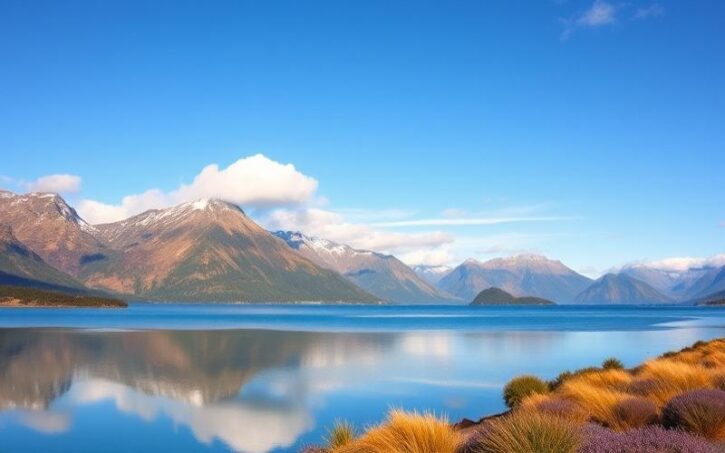
New Zealand, famous for its breathtaking landscapes and cultural diversity, has seen its real estate market transform over the years largely due to the tourism boom.
As visitors flock to discover this land of natural contrasts, demand for seasonal and long-term accommodations has significantly increased, leading to a rise in real estate prices and affecting housing availability for local residents.
This complex dynamic between tourism growth and the real estate market offers a fascinating look at how these two sectors can intertwine, creating both economic opportunities and challenges for local communities.
Good to Know:
The impact of tourism on New Zealand real estate is particularly visible in regions like Queenstown and Auckland, where demand for tourist accommodations has sharply increased in recent years.
The Rise of Popular Tourist Areas
Auckland, Queenstown, Rotorua, Wanaka, the Coromandel Peninsula, Abel Tasman, and Tongariro National Park are among the New Zealand regions that have become highly sought-after tourist destinations in recent years. These areas stand out for their diverse natural landscapes (white sand beaches, active volcanoes, spectacular fjords), varied activity offerings (alpine hiking on the Tongariro Crossing, water sports at Abel Tasman, or extreme adventures in Queenstown), and rich Māori cultural heritage.
Factors Contributing to Their Popularity:
- Exceptional natural attractions: beaches (Coromandel), fjords (Fiordland/Milford Sound), volcanoes and emerald lakes (Tongariro), glaciers (Franz Josef and Fox Glacier).
- Infrastructure development: modern accommodations ranging from hotels to luxury lodges and campgrounds; well-maintained road networks; transportation facilitating access to major sites.
- Active promotion: international marketing campaigns by Tourism New Zealand (“100% Pure New Zealand”), leveraging famous film productions like The Lord of the Rings at Hobbiton or in Fiordland.
- Local involvement: regional businesses developing customized guided tours and innovative sports activities.
Comparison Table of Key Areas
| Region/Destination | Main Asset | Infrastructure Type | Key Activities |
|---|---|---|---|
| Auckland | Dynamic port city | Urban hotels & marinas | Sailing, urban culture |
| Queenstown | Adventure & nature | Upscale resorts | Bungee jumping |
| Rotorua | Geothermal & culture | Thermal spas | Hot springs/Māori experiences |
| Wanaka | Mountain/lake | Eco-lodges | Hiking/MTB/skiing |
| Coromandel | Beaches/peninsulas | Beach motels/cabins | Kayaking/beach |
Consequences on Real Estate Demand:
- Rapid increase in land prices in iconic tourist areas.
- Gradual conversion of residential homes into seasonal rentals like Airbnb or vacation homes to meet growing tourist demand.
- Emergence of foreign real estate investments attracted by high rental yields.
Observed Socio-Demographic Impacts:
- Decrease in available housing for permanent residents in highly sought-after localities like Queenstown or Wanaka.
- Social tensions due to partial displacement of less affluent local populations to urban or rural peripheries.
- Gradual change in community fabric with a higher proportion of temporary residents/seasonal workers.
Issues Raised
List of Main Challenges:
- Increased pressure on local resources such as drinking water and waste management during tourist peaks
- Heightened risk to local biodiversity due to intensive development
- Difficulty maintaining balance between tourist economic vitality and preservation of traditional community lifestyle
- Need to adopt sustainable urban planning to avoid the phenomenon known as “overtourism”
- Necessary evolution toward more responsible tourism offerings incorporating strict environmental management
Thus, popular New Zealand regions see their social and real estate landscapes transformed under the combined effect of global tourism success.
Good to Know:
In New Zealand, regions like Queenstown and Rotorua have become prime destinations thanks to their stunning landscapes and robust tourist infrastructure, reinforced by effective government campaigns and local initiatives. This growing popularity has stimulated real estate demand, causing a significant price increase and transformation of the housing stock with numerous conversions to vacation rentals. This poses issues such as pressure on local resources, sustainability challenges, and the need to preserve community balance, prompting careful management to maintain harmonious development and avoid long-term negative effects.
How Tourism Influences Real Estate Prices
The tourism boom in New Zealand has strongly influenced real estate market dynamics, particularly in tourist areas such as Queenstown, Rotorua, and Auckland. The steady increase in international arrivals has led to heightened demand for short-term accommodations like Airbnbs and seasonal rentals, which puts pressure on the supply of housing available for residents.
Factors Contributing to Rising Real Estate Prices:
- Proliferation of short-term rentals (Airbnb, Booking) at the expense of traditional rental supply.
- Foreign investments motivated by tax attractiveness and high rental yields in tourist cities.
- Growing demand for luxury real estate fueled by flourishing international tourism.
| Tourist Area | Recent Median Increase (2020-2024) | Median Value December 2024 |
| Queenstown-Lakes | +34% | ~$1,350,000 NZD |
| Rotorua | +22% | ~$650,000 NZD |
| Auckland | +18% | ~$1,050,000 NZD |
In December 2024, the national median value stands at $804,366 NZD, still nearly seven times the median annual household income. In some cities highly popular with international or domestic tourists, this ratio is much higher.
Impact on Local Residents:
- Difficulty accessing homeownership: despite a recent slight national decline (from 10 times annual income in 2021 to about seven today), some households still devote up to half their income to mortgage repayments.
- Increase in rental costs due to scarcity of properties available for long-term lease.
- Forced departure or relocation away from city centers or attractive areas for many local families.
Role and Effect of Foreign Investments:
Tax benefits offered to non-resident investors particularly attract them to the premium market segment (coastal properties, alpine lodges). This speculation further intensifies real estate competition in already strained sectors.
Government Responses & Political Debates:
The New Zealand government has recently multiplied its interventions:
- Tripling since October 2024 of the tourist tax imposed on international travelers so they contribute more significantly to funding public and environmental infrastructure.
- Progressive restrictions on real estate purchases by non-residents in certain sensitive regions.
These measures spark national debate between supporters of strict regulation—who see it as an essential means to preserve local housing access—and economic actors worried about a potential brake on tourism development. Some operators also fear a deterrent effect on foreign investors essential to their hotel or para-hotel activities.
Future Outlook of the Real Estate Market Facing the Tourism Sector:
The future will largely depend on:
- The pace at which international tourist flow maintains or slows post-pandemic,
- New fiscal measures aimed at either curbing or encouraging certain types of investment,
- A possible evolution toward a hybrid model mixing classic/hotel accommodations with strengthened regulation on Airbnb & other seasonal platforms.
The recent lulls observed in early 2025 might only be a pause if the expected rebound in global tourism confirms itself after reaching nearly fifteen billion NZD annually in revenue last June. The challenge will therefore always be to find “the right balance” between economic vitality driven by tourism…and sustainable preservation of the local residential fabric.
Good to Know:
The tourism boom in New Zealand has significantly driven up real estate prices, particularly in popular areas like Queenstown and Rotorua, due to increased demand for short-term housing such as Airbnbs and seasonal rentals. According to a 2022 report, these regions saw real estate price increases of nearly 8% in one year. Furthermore, foreign real estate investments have intensified this dynamic, worrying local residents who see homeownership accessibility shrinking. To counter this trend, the government implemented restrictions on real estate purchases by non-residents and introduced specific taxes on vacant homes. However, these measures are debated, with some deeming them insufficient given the scale of the phenomenon. In the future, continued growth in the tourism sector is expected to strongly influence the real estate market, potentially forcing policymakers to adjust their policies to balance the interests of tourists and residents.
Opportunities and Challenges of Rental Investment
The tourist influx in New Zealand profoundly influences the real estate market, creating both opportunities and challenges for investors and local communities.
Positive Effects of Tourism on the Real Estate Market
- Increased demand for short-term rentals (like Airbnb) in tourist cities such as Queenstown, Rotorua, or Auckland.
- Potential increase in rental yield: tourist appeal often allows for higher rates than traditional long-term leases.
- Stimulation of the local economy through visitor spending and job creation in hospitality, property management, and ancillary services.
- Diversification of the housing stock: development of accommodations suited for temporary or seasonal stays, thus attracting a varied clientele.
| City | Tourist Impact | Median House Price (2025) | Special Feature |
| Queenstown | Very High | >$1,200,000 NZD | Strong Airbnb Growth |
| Auckland | High | ~$1,000,000 NZD | Urban Rentals |
| Rotorua | Moderate/High | ~$650,000 NZD | Nature/Thermal Tourism |
Negative Effects and Challenges Posed by Tourism
- Increased pressure on the supply of housing available for local residents; some neighborhoods experience rapid transformation with a shift toward short-term at the expense of classic residential.
- Rent inflation due to competition between long-term (residents) and short-term (tourists) rentals, making housing access difficult for some permanent inhabitants.
- Growing regulations aimed at controlling the phenomenon: several city councils now impose an annual cap on allowed short-term rental nights or require a specific license.
- Environmental risks: significant increase in local road traffic, pressure on public infrastructure, potential degradation of heavily frequented natural spaces.
Concrete Examples
In Queenstown, nearly 15% of the residential stock was dedicated to seasonal rentals by late 2024. This situation contributed to a local price surge (+9% in one year) but also to a critical shortage of affordable housing for essential workers.
Auckland also experiences notable growth in investments exclusively for the urban tourist rental market. This partially helps maintain its median price around one million NZD despite the recent national correction.
Recent Statistics
- Projected overall increase in New Zealand real estate prices: +3.8% in 2025 after a marked decline between 2021 and early 2024
- Estimated national volume: average annual growth expected around +4% until 2029
- The government is currently investing over $13 million NZD in the tourism sector to accelerate its recovery
Strategies to Balance Economic Benefits and Community Well-being
List of possible actions:
- Impose or strengthen quotas/standards on the maximum allowed proportion of homes dedicated to short-term rentals in each neighborhood
- Favor fiscally or regulatorily investment in accessible long-term housing rather than purely speculative/touristic
- Actively support new construction targeting: “build-to-rent” programs, specialized student accommodations, or innovative social housing adapted to the local context
- Establish—via citizen consultation—a balance between economic attractiveness linked to tourist real estate and preservation of the social/local fabric
Sustainable balance requires ongoing consultation between local authorities, private investors, tourism operators… but also active involvement of residents so that economic growth does not come at the expense of collective well-being or New Zealand’s unique natural environment.
Good to Know:
In New Zealand, tourism-related rental investment offers lucrative opportunities, especially with the rise of short-term rental platforms that increase property availability and profitability, particularly in sought-after cities like Queenstown or Rotorua. In 2022, tourist rentals accounted for 30% of the rental market in these regions, creating substantial economic benefits for investors. However, this tourist enthusiasm strains the housing supply for local residents, causing rent increases that reached 15% in one year in some areas. Investors must also navigate an increasingly strict regulatory environment to limit these impacts. Challenges also include sustainable management to avoid the adverse effects of mass tourism on local ecosystems. To balance economic returns with community well-being, it is recommended to adopt strategies such as investing in local preservation programs or diversifying investments to include affordable long-term housing.
Disclaimer: The information provided on this website is for informational purposes only and does not constitute financial, legal, or professional advice. We encourage you to consult qualified experts before making any investment, real estate, or expatriation decisions. Although we strive to maintain up-to-date and accurate information, we do not guarantee the completeness, accuracy, or timeliness of the proposed content. As investment and expatriation involve risks, we disclaim any liability for potential losses or damages arising from the use of this site. Your use of this site confirms your acceptance of these terms and your understanding of the associated risks.

Cyril Jarnias is an independent expert in international wealth management with over 20 years of experience. As an expatriate himself, he is dedicated to helping individuals and business leaders build, protect, and pass on their wealth with complete peace of mind.
On his website, cyriljarnias.com, he shares his expertise on international real estate, offshore company formation, and expatriation.
Thanks to his expertise, he offers sound advice to optimize his clients' wealth management. Cyril Jarnias is also recognized for his appearances in many prestigious media outlets such as BFM Business, les Français de l’étranger, Le Figaro, Les Echos, and Mieux vivre votre argent, where he shares his knowledge and know-how in wealth management.





